标签: Suriname

苏里南

  • Institutionele zelfverrijking onder het mom van ‘synchronisatie’

    Institutionele zelfverrijking onder het mom van ‘synchronisatie’

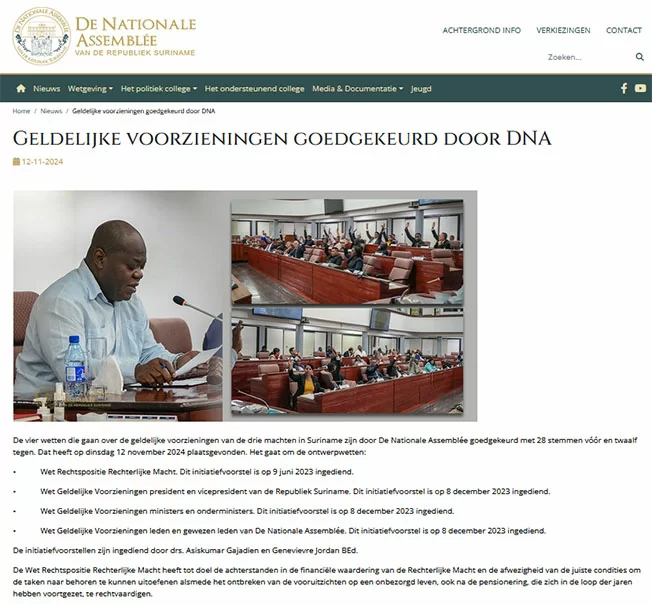
    A legislative package hailed in November 2024 as a historic correction of constitutional omissions since 1975 has been revealed as a fundamental restructuring of state income distribution that systematically benefits top officials. Under the misleading label of ‘synchronization,’ four laws governing remuneration for judiciary, presidential, vice-presidential, ministerial, and parliamentary positions created a system that disproportionately favors elite ranks while increasing state fiscal burdens and undermining public trust.

    The legislation, promoted by initiators Asis Gajadien (VHP) and Geneviévre Jordan (ABOP) with coalition support, was morally justified as eliminating double salaries, reducing privileges, raising retirement ages, promoting transparency, and improving state finances. However, instead of harmonization or savings, the laws engineered a dynamic income explosion at the top while leaving the rest of the state apparatus behind.

    Critical flaws emerged during parliamentary scrutiny. Opposition parties (NDP, BEP, NPS) repeatedly requested comprehensive financial impact assessments, multi-year projections, and scenario analyses incorporating periodic increments, service years, pension accruals, and tax exemptions. No independent financial evaluation or objective HRM valuation study comparing international benchmarks was presented before the vote, which passed with support from VHP, ABOP, PL, and BEP.

    The judicial compensation structure reveals the systemic bias: judges receive annual 5% increments, full credit for prior service years, pension structures reaching 100% of baseline salary, and tax exemptions on high allowances—benefits entirely absent from presidential compensation. This creates an asymmetrical growth mechanism where senior judicial officials with decades of service rapidly outpace their theoretical reference point (presidential salary), with some exceeding 500,000 SRD—multiple times the head of state’s remuneration.

    When public administrator Eugène van der San published calculations revealing these disparities, his analysis was initially dismissed as exaggerated. Subsequent official publications of salary scales and pay stubs confirmed net incomes far exceeded amounts suggested during parliamentary debates. Rather than acknowledging underestimation, initiators denied the discrepancies, exacerbating the credibility crisis.

    The laws were adopted while civil servants received minimal raises, teachers faced shortages and backlogs, healthcare workers operated under extreme pressure, and parliamentary support staff earned fractions of top-tier compensation. The state income structure has transformed from balanced hierarchy to disproportionate tower, with completely skewed ratios between national leadership and public workers.

    Unanswered questions demand immediate resolution: total budgetary impact over ten years including increments and pension obligations; cumulative salary increases across government branches; ratio between top incomes and average civil service wages; and why no independent financial simulation was presented before voting. Without transparent answers, suspicion remains that legislation was manipulated to structurally benefit elites.

    Presented as historic ordering before Suriname’s fiftieth independence anniversary, these laws risk becoming a historic error without correction. While judiciary deserves dignified legal status, the current consequences are morally unacceptable and socially unsustainable. If parliament fails to address this, society will correct parliament—typically through less friendly means. Trust in politics has drastically declined through this ‘synchronization’ process, awaiting concrete steps to rectify what many perceive as institutionalized self-enrichment.


  • NCD-afdeling krijgt groen licht voor uitvoering jaarplan 2026

    NCD-afdeling krijgt groen licht voor uitvoering jaarplan 2026

    Suriname’s Ministry of Health has formally approved an ambitious national strategy to address the growing burden of non-communicable diseases (NCDs) through a structured five-pillar approach for 2026. Health Minister André Misiekaba officially endorsed the comprehensive plan presented by the NCD Department focal point Cheshta Sewtahal and her team, signaling strong governmental commitment to tackling cardiovascular diseases, diabetes, cancer, and chronic respiratory conditions.

    The strategic framework centers on five critical domains: development of public policy and advocacy initiatives; health promotion and preventive measures; integrated care for both NCDs and mental health; enhanced surveillance, monitoring and evaluation systems; and strengthened cross-sectoral collaboration. Each priority area has been developed into specific core activities with measurable implementation targets for the coming year.

    Despite the comprehensive planning, officials acknowledged significant structural challenges including the absence of a national NCD policy coordination mechanism, constrained financial and human resources, and inadequate regulatory frameworks. The department emphasized that effective NCD management requires an integrated approach combining prevention, early detection, and quality care delivery.

    Key expected outcomes for 2026 include quality improvement in NCD care through HEARTS initiative implementation, accelerated execution of national prevention plans, establishment of a functional NCD and mental health surveillance system, integration of mental health services into primary care, and reinforcement of legal frameworks and intersectoral cooperation.

    With ministerial authorization now secured, the NCD department is positioned to execute a coordinated, evidence-based approach aimed at reducing disease prevalence and improving national health outcomes across Suriname.

  • Honden paraderen tijdens carnaval in Rio; protest tegen dierenmishandeling

    Honden paraderen tijdens carnaval in Rio; protest tegen dierenmishandeling

    In a vibrant display of solidarity against animal abuse, hundreds of costumed dogs and their owners gathered Saturday for Rio de Janeiro’s annual Blocao carnival celebration. The event, now in its third decade, transformed Barra da Tijuca district into a colorful spectacle where canines dressed as alligators, fairies, and superheroes enjoyed a specially adapted street festival.

    The gathering served dual purposes: celebrating the joy of human-animal bonds while raising awareness about pet protection. Organizers implemented special measures to ensure canine comfort in Rio’s 30°C heat, including shaded rest areas, water stations, and paw protection from hot asphalt. The two-hour celebration featured samba music, breakfast buffets for four-legged participants, and opportunities for socializing.

    Marco Antonio Marinho, 72, the event’s chief organizer, emphasized the familial bond: ‘Dogs are part of our families. When we’re sad at home, they stay with us and share our sadness. Now that we’re happy, they should be happy too.’

    The event took on poignant significance as attendees paid tribute to Orelha, a dog whose brutal killing in southern Brazil in January sparked national outrage. Participants waved white ribbons and sang memorial songs while calling for justice in the ongoing case, where a 15-year-old suspect faces juvenile court proceedings despite police recommendations for prosecution.

    First-time attendee Natalia Reis, 28, arrived with her 11-year-old dog Theo, visibly emotional during speeches about animal protection. ‘This tragedy could have happened to any of us,’ she stated, echoing widespread calls for increased awareness and stricter penalties for animal cruelty.

  • Directeur Belfor met pensioen na 33 jaar bij Arbeid

    Directeur Belfor met pensioen na 33 jaar bij Arbeid

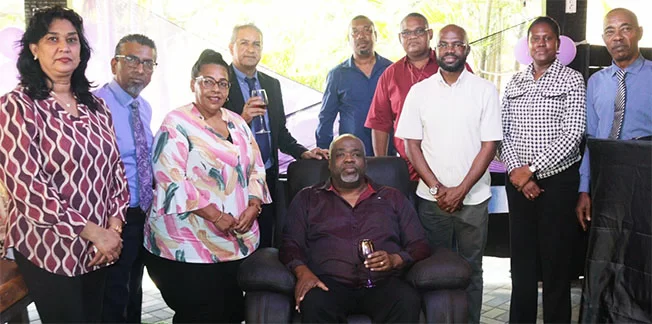
    Suriname’s Directorate of Welfare and Labor celebrated the distinguished career of Director Jimmy Belfor on Friday as he concluded his 33-year tenure in public service with an official retirement ceremony. Belfor’s extensive governmental career began in 1993 when he joined as a legal affairs officer before ascending to Undersecretary for Legal and International Affairs three years later—a position he maintained for nearly two decades. His subsequent thirteen-year leadership as director saw him guide numerous policy initiatives affecting labor relations and social welfare programs. Beyond his departmental responsibilities, Belfor chaired the Dismissal Committee for over thirty years and contributed significantly to the Labor Advisory Council. His international representation included multiple appearances at the International Labor Conference in Geneva and other global forums where he advocated for Suriname’s interests. Ministerial officials from the Health, Welfare, and Labor portfolio expressed profound gratitude during the farewell gathering, highlighting Belfor’s dedicated service and strategic leadership that shaped the nation’s labor policies and social protection frameworks.

  • Dood Navalny veroorzaakt door gif van pijlgifkikkers

    Dood Navalny veroorzaakt door gif van pijlgifkikkers

    Five European nations have jointly declared Russia responsible for the poisoning death of Kremlin critic Alexei Navalny, presenting what they describe as conclusive scientific evidence. The coordinated statement from Britain, France, Germany, Sweden, and Netherlands confirms that analysis of bodily samples from Navalny’s remains definitively identified epibatidine—a potent toxin derived from South American poison dart frogs that does not naturally occur in Russia.

    The announcement comes precisely two years after Navalny’s controversial death in an Arctic penal colony where he was serving sentences on extremism charges that he consistently denied. European officials stated that Moscow possessed “the means, motive, and opportunity” to administer the lethal substance given that Navalny died under state custody.

    British Foreign Secretary Yvette Cooper emphasized that UK scientists collaborated with European partners to uncover the truth, though officials declined to specify how the bodily samples were obtained or where testing occurred. The findings align with previous patterns of Russian chemical weapons use, including the 2018 Novichok attack on former double agent Sergei Skripal in Britain, which a public inquiry concluded was ordered by President Vladimir Putin.

    The revelation emerged during the Munich Security Conference, where Navalny’s widow Yulia Navalnaya addressed attendees virtually, expressing gratitude for the multinational investigation. “I was certain from day one that my husband was poisoned, but now we have evidence,” she stated via social media, calling for accountability from Russian leadership.

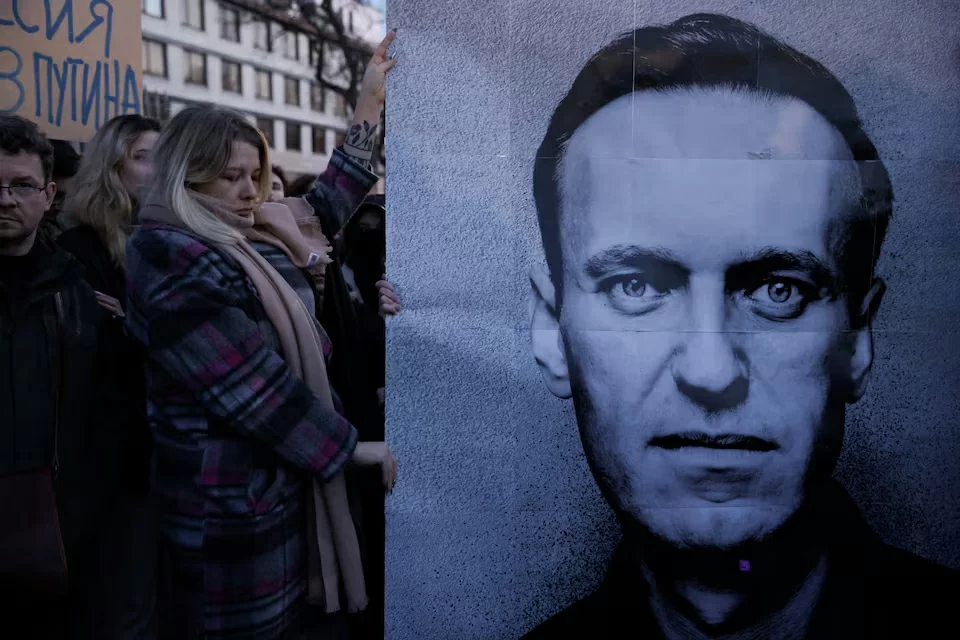
    European capitals witnessed memorial gatherings and protests following the announcement, with demonstrators in London, Berlin, Vilnius, and Rome condemning the Kremlin and demanding justice. The joint statement emphasized that Russia’s actions violate both the Chemical Weapons Convention and Biological and Toxin Weapons Convention, underscoring the urgent need for international accountability mechanisms.

  • Illegale landingsbaan en semi-duikboot in aanbouw ontdekt in Witagron

    Illegale landingsbaan en semi-duikboot in aanbouw ontdekt in Witagron

    In a significant counter-narcotics operation, Surinamese authorities have dismantled a sophisticated drug trafficking infrastructure in the Witagron region. During a specialized reconnaissance mission on February 12, 2026, a joint task force comprising members of the Judicial Intervention Team (JIT) and Directorate of National Security (DNV) discovered an illicit airstrip alongside multiple established camps.

    The operation, initially intended to map unauthorized landing strips in the interior, uncovered far more extensive criminal operations than anticipated. Security personnel encountered a complex network containing approximately 15,000 liters of diesel fuel, an arsenal of weapons and ammunition, various all-terrain vehicles, and substantial quantities of cash in multiple currencies.

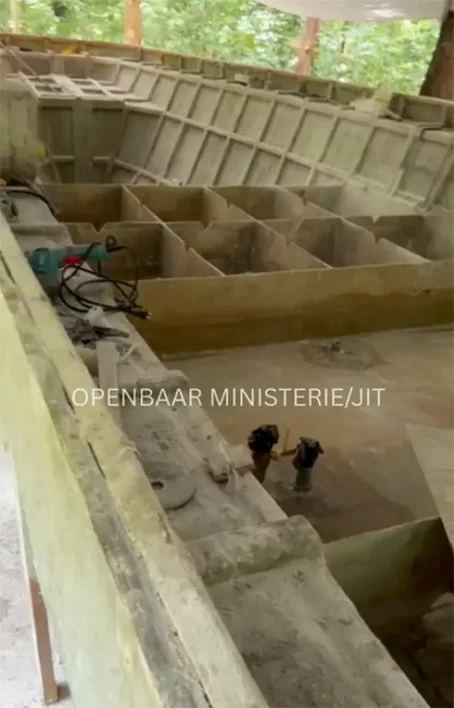
    The financial seizure included Colombian pesos, US dollars, Surinamese dollars, Venezuelan bolivars, and Brazilian reais, indicating the transnational nature of the criminal enterprise. Most notably, authorities discovered a partially constructed self-propelled semi-submersible vessel (SPSS) – a sophisticated naval craft designed specifically for covert drug transportation. Based on its dimensions, the vessel potentially could transport over 10 metric tons of cocaine.

    Law enforcement apprehended six individuals during the three-day operation: three Colombian nationals and three Surinamese citizens, with arrests occurring on February 12, 13, and 14. Several armed Colombian suspects managed to evade capture during the initial raid. The Public Prosecution Service’s Unit Public Relations has confirmed that manhunt operations for these fugitives are currently underway.

  • BGVS meldt verlies van US$ 1,3 miljoen aan vervallen medicijnen

    BGVS meldt verlies van US$ 1,3 miljoen aan vervallen medicijnen

    Suriname’s national drug supply agency faces a substantial financial and logistical challenge following the expiration of pharmaceuticals worth approximately $1.3 million. The Bedrijf Geneesmiddelenvoorziening Suriname (BGVS) has formally reported the situation to Health Minister André Misiekaba, detailing both the immediate disposal requirements and underlying systemic issues.

    According to BGVS Director Quincy Joemai, the expired medications represent previously purchased and paid-for supplies that were not utilized within their shelf life. The substantial volume of expired drugs has created significant storage complications, forcing the agency to relocate the materials to an external warehouse three times larger than their previous facility. ‘We faced a critical space shortage,’ Joemai explained through the Suriname Communication Service. ‘This warehouse allows secure storage pending destruction.’

    The disposal process presents considerable challenges, with BGVS currently negotiating with hospitals possessing incineration capabilities to ensure environmentally compliant destruction. Burial or dumping remains prohibited under national environmental regulations. ‘These materials require appropriate destruction methods, but the associated costs are substantial,’ Joemai noted.

    To mitigate financial pressures, authorities are exploring cost offsetting through outstanding hospital debts. Additionally, officials are developing a method to remove medications from their packaging before disposal, reducing volume and weight to lower transportation and destruction expenses. The complete disposal operation is projected to require one to two years given the massive scale of expired inventory.

    Beyond immediate disposal concerns, BGVS is implementing organizational reforms addressing deeper structural issues. Director Joemai inherited significant operational and financial challenges upon appointment, including critically low inventories and substantial debts. ‘We first needed rescue operations, now we’re in the recovery phase,’ he stated.

    Despite current challenges, the agency reports gradual improvement in medication availability, with drugs listed on the National Medicines Formulary increasing from 18% to 21% availability. ‘Quality remains our priority,’ Joemai emphasized. ‘Medications only receive distribution approval after thorough verification by our pharmacists and laboratory personnel.’

    Healthcare observers indicate this $1.3 million loss underscores the urgent need for enhanced inventory management, refined procurement planning, and improved distribution systems to prevent future recurrence of such substantial waste.

  • Brand in olieraffinaderij in Havana verergert Cubaanse brandstofcrisis

    Brand in olieraffinaderij in Havana verergert Cubaanse brandstofcrisis

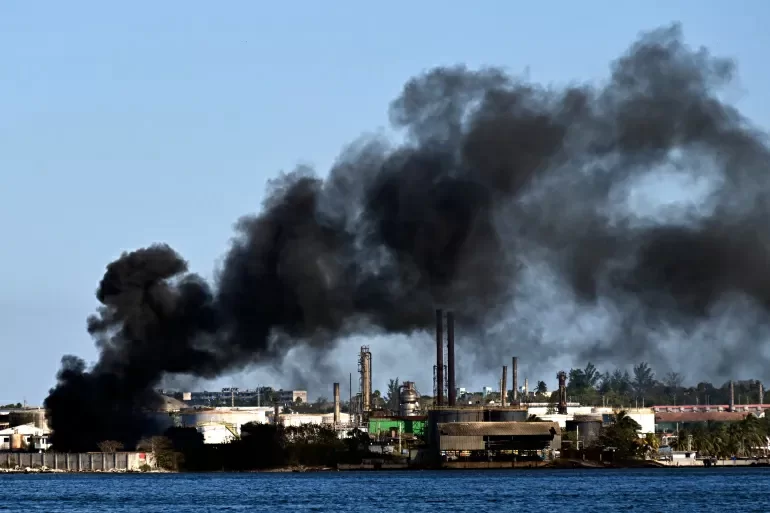
    A significant fire erupted at the Nico Lopez oil refinery in Havana Bay on Friday, threatening to intensify Cuba’s ongoing energy crisis as the nation grapples with a US-imposed fuel blockade. While the blaze originated in a storage warehouse rather than near critical oil tanks, the incident highlighted the country’s precarious energy situation.

    Cuban authorities confirmed the fire has been fully extinguished with no casualties reported. The Ministry of Energy and Mines stated that operations at the facility have returned to normal while investigations continue into the cause. The incident occurred near two oil tankers docked in Havana harbor, though the flames did not spread to adjacent areas.

    This industrial accident compounds Cuba’s severe economic challenges, particularly its dependence on imported fuel. The nation historically relied on Venezuelan oil imports, but these shipments ceased following last month’s abduction of Venezuelan leader Nicolás Maduro by US forces. President Donald Trump’s recent executive order further enables trade tariffs against any country supplying oil to the island nation.

    The fuel shortage has triggered widespread power outages across Cuba, disrupting public transportation and forcing reductions in hospital staffing. Educational institutions have limited operations, government employees work four-day weeks, and some hotels have temporarily closed.

    UN Secretary-General Antonio Guterres recently warned of potential humanitarian collapse in Cuba without immediate energy assistance. The arrival of two Mexican naval vessels carrying over 800 tons of humanitarian aid to Havana on Thursday underscores the growing international concern.

    Maritime tracking experts report no foreign fuel tankers have reached Cuban ports in weeks, leaving the country capable of producing only one-third of its total fuel requirements domestically. Cuban Vice Foreign Minister Carlos de Cossio accused the US of implementing “collective punishment” against the Cuban people, stating that fuel shortages damage transportation, healthcare, education, power generation, food production, and overall living standards.

    Mexican President Claudia Sheinbaum has criticized Washington’s oil restrictions as “unjust” while advocating for renewed dialogue between Cuba and the United States.

  • LVV start trainingstraject om lokale kipproductie fors te vergroten

    LVV start trainingstraject om lokale kipproductie fors te vergroten

    The Ministry of Agriculture, Livestock, and Fisheries (LVV) of Suriname will initiate a comprehensive nationwide training program in March, targeting young and aspiring entrepreneurs interested in entering the poultry sector. This strategic move aims to significantly increase domestic chicken production and reduce the country’s heavy reliance on imported poultry products.

    Currently, Suriname imports approximately 65% of its consumed chicken, with only 35% originating from local production—a balance the government is determined to change. “Increased domestic production directly translates to reduced imports. This is our focused objective,” stated Minister Mike Noersalim, emphasizing the ministry’s ongoing dialogue with industry stakeholders.

    The training program will commence in the Saramacca district, with plans for gradual expansion across all districts nationwide. While no participant cap has been established, applicants will undergo a screening process to ensure commitment. “We must avoid training individuals who may not utilize the acquired knowledge,” Minister Noersalim emphasized.

    The ministry identifies poultry farming as a low-barrier entry point for young entrepreneurs, requiring comparatively lower investment than sectors like cattle ranching. “Many already have coops or previous experience. Our responsibility is to provide proper knowledge and guidance, which are crucial for success,” Noersalim added.

    Beyond training, LVV is enhancing access to financing through the National Agribusiness Development Fund (NOFA) and a specialized youth fund at the National Development Bank (NOB). Simultaneously, the ministry encourages optimal land utilization, noting that many available terrains remain underutilized.

    This production expansion supports broader agro-projects, including a planned passion fruit processing facility at the Milk Center complex, requiring substantial fruit supply. LVV has engaged with large-scale passion fruit growers in Saramacca and residents capable of backyard cultivation. This initiative receives support from the Inter-American Development Bank (IDB).

    Additionally, the ministry has established partnerships with Granman Aboikoni of the Saramaccaners for two collaborative projects: raising local chickens (oso fowru) and cultivating highland rice, a staple crop in the Upper Suriname region.

    Minister Noersalim confirms this approach aligns with a broader district-specific strategy that leverages unique regional strengths. “We are systematically building a more productive agricultural sector and enhancing food security for Suriname,” he concluded.

  • Merz waarschuwt: ‘De regels van de wereldorde bestaan niet meer’

    Merz waarschuwt: ‘De regels van de wereldorde bestaan niet meer’

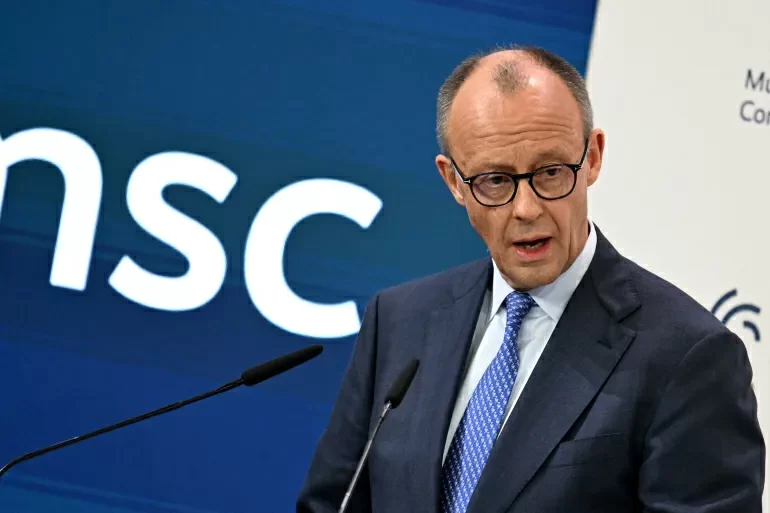
    German Chancellor Friedrich Merz delivered a stark assessment of the international order during his address at the 62nd Munich Security Conference, declaring that the rules-based global system that has underpinned international cooperation since the Cold War “no longer exists in its previous form.”

    Speaking before approximately fifty world leaders, Merz highlighted the “profound divide” emerging between Europe and the United States, emphasizing that European freedoms cannot be taken for granted in this new era of great power politics. “We must be prepared to make sacrifices,” the Chancellor stated during his keynote speech.

    The conference convened amidst escalating tensions within the trans-Atlantic alliance, particularly following controversial statements by President Donald Trump regarding the potential annexation of Greenland, a territory of the Kingdom of Denmark. Trump’s assertion that “Greenland wants us… We’re currently negotiating for Greenland” has significantly strained diplomatic relations between European nations and their traditional American allies.

    Further complicating matters, the United States has imposed new tariffs on European countries, which Merz characterized as fundamentally incompatible with Europe’s commitment to free trade principles. The Chancellor noted that the cultural conflict inherent in the “Make America Great Again” movement contradicts core European values regarding freedom of expression and human rights.

    Despite these mounting challenges, Merz advocated for rebuilding trans-Atlantic trust while revealing ongoing confidential discussions with French President Emmanuel Macron about developing a joint European nuclear deterrent. This proposal marks a potential seismic shift in European defense policy, which has historically relied on American nuclear protection through NATO frameworks.

    President Macron reinforced this strategic pivot by urging Europe to transform into a genuine geopolitical power. He called for accelerated military development and enhanced continental cooperation, particularly in response to the Ukraine conflict, which he described as an “existential challenge” for Europe.

    U.S. Secretary of State Marco Rubio addressed the conference by acknowledging a “new era in geopolitics” characterized by rapid global transformation. Rubio confirmed that the United States is prepared to reassess its role and relationships with European partners.

    The ongoing tensions between the U.S. and Denmark intensified following Trump’s unsubstantiated claims about Russian and Chinese military presence around Greenland. Danish Prime Minister Mette Frederiksen indicated her intention to discuss the American “threat” regarding Greenland, a fellow NATO member, with Secretary Rubio.

    This year’s Munich Security Conference focused primarily on European defense capabilities, trans-Atlantic relations, and the geopolitical ramifications of conflicts in Ukraine and rising West-China tensions. These developments collectively signal a fundamental restructuring of global power dynamics and the urgent need to redefine international cooperation within an increasingly fragmented geopolitical landscape.