标签: Suriname

苏里南

  • Xi: Hereniging China en Taiwan niet te stoppen

    Xi: Hereniging China en Taiwan niet te stoppen

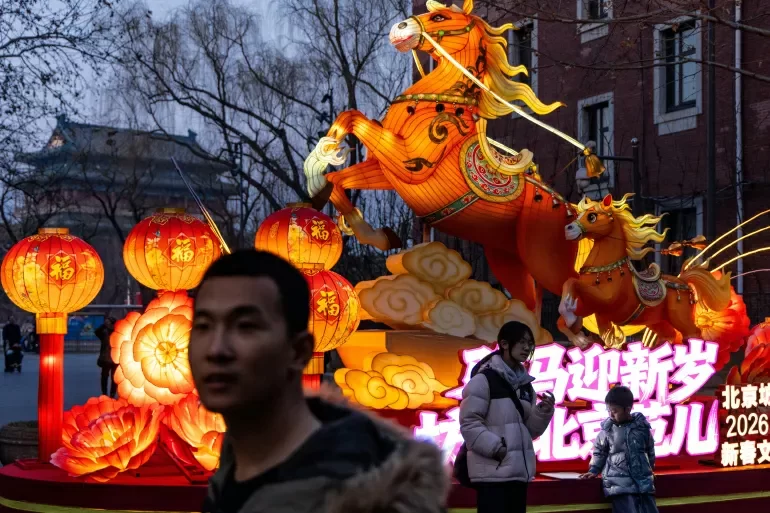
    Chinese President Xi Jinping has emphatically declared that China’s reunification with Taiwan represents an “unstoppable trend of the times,” delivering this message during his New Year address just one day after Beijing concluded extensive military exercises around the self-governing island. The speech, which invoked the “bond of blood and kinship” between peoples on both sides of the Taiwan Strait, came in response to what Chinese officials characterized as escalating separatist activities and external interference.

    The military maneuvers, codenamed “Justice Mission 2025,” marked the largest-ever geographical scope of exercises conducted around Taiwan, simulating a comprehensive blockade of the island using live ammunition. These demonstrations followed Washington’s approval of its largest-ever weapons package to Taipei, valued at $11.1 billion, further complicating the already tense cross-strait dynamics.

    President Xi additionally highlighted the establishment of an annual “Taiwan Restoration Day” commencing in 2025, commemorating the end of Japanese colonial rule after World War II. While emphasizing peaceful reunification, Xi reiterated Beijing’s longstanding position that considers Taiwan an inalienable part of Chinese territory, maintaining the option of using force if necessary.

    In a parallel New Year address, Taiwanese President William Lai Ching-te asserted the need for enhanced security and resilience, stating that Taiwan must “powerfully defend national sovereignty” and strengthen its defense mechanisms. Lai emphasized that the international community is watching whether the Taiwanese people possess the determination to defend themselves against China’s “expanding expansionist ambitions.

    Despite operating with its own government, military, passport system, and currency, Taiwan maintains official diplomatic recognition from only 11 countries and the Vatican. The United States, while not formally recognizing Taiwan, remains committed to supporting the island’s self-defense capabilities under the 1979 Taiwan Relations Act, though this legislation does not mandate direct military intervention in case of Chinese aggression.

    Recent polling indicates that most Taiwanese citizens prefer maintaining the current status quo, with only minor segments advocating for immediate formal independence or reunification with mainland China.

    Beyond geopolitical matters, President Xi’s address also celebrated China’s technological advancements, particularly in artificial intelligence and semiconductor development, noting that numerous large AI models have emerged while breakthroughs in domestic chip research have positioned China among the world’s fastest-growing innovation economies.

  • Column: Mentale gezondheidszorg nú prioriteit nummer één

    Column: Mentale gezondheidszorg nú prioriteit nummer één

    Suriname is confronting a severe mental health emergency that demands immediate policy action, with child protection emerging as the most critical priority. This urgent call transcends mere political intention or future policy notes—it requires immediate implementation with the UN Convention on the Rights of the Child serving as the foundational framework rather than just a symbolic endorsement. This represents both a political and societal obligation that cannot be deferred until after tragedies occur.

    Recent devastating incidents in Commewijne and Abrabroki’s Calcuttastraat have reignited public discourse, but these events are not isolated occurrences. They represent painful manifestations of a deeply entrenched structural problem that has been documented for years yet consistently ignored. Beyond the immediate emotional responses, these tragedies reveal how mentally unhealthy environments in Suriname have perpetuated cycles of violence, neglect, trauma, and ultimately fatal escalations, with children emerging as the primary and most vulnerable victims.

    Comprehensive data from both national and international sources paints a disturbing picture. UNICEF reports, research from the Institute for Graduate Studies and Research (IGSR), and parliamentary investigations leave little room for interpretation. The ‘Violence Against Children in Suriname’ report confirms alarmingly high levels of violence against minors. According to MICS data, 86% of children aged 2-14 have experienced at least one form of mental or physical punishment from household members, while six out of ten children endure corporal punishment.

    These statistics represent real children growing up in environments characterized by fear, stress, and normalized violence. Many eventually become stuck in destructive patterns—as victims, but sometimes as perpetrators themselves. Mental and spiritual health challenges thus perpetuate across generations, creating intergenerational trauma.

    The same pattern emerges in violence against women and girls, and among men trapped in a society that punishes vulnerability and views seeking help as weakness. Domestic violence, relational conflicts, and psychological dysregulation affect all societal segments regardless of ethnicity, political affiliation, region, education, or social class.

    Addressing this crisis requires avoiding the pitfalls of partisan politics or seeking quick blame. Multiple administrations have failed to establish a professional, effective, and cohesive mental healthcare system encompassing prevention, shelter, guidance, aftercare, legislation, and institutional safeguards. Existing facilities often function minimally or not at all, with helplines frequently inaccessible, shelter services fragmented, and prevention strategies underdeveloped.

    Effective mental healthcare requires institutions offering low-threshold, 24/7 accessibility, safe shelters for women and girls, and robust protection for children currently suffering violence behind closed doors. It also necessitates guidance for perpetrators and individuals with severe psychological issues before violence escalates. Prevention constitutes not a luxury but an absolute necessity.

    Society cannot continue treating mental healthcare as only urgent post-tragedy. Without sustained action, current discourse will fade within days until the next disaster occurs. A review of mental and spiritual violence cases over the past 5-10 years reveals how quickly attention dissipates after each incident.

    Genuine transformation demands political courage, policy discipline, and societal maturity. The question is not whether Suriname can afford to act, but how long it can afford inaction. Today’s National Day of Mourning must catalyze lasting change—otherwise, it risks becoming another empty gesture in a long history of unfulfilled promises.

  • Oecumenische rouwdienst sluit nationale rouwdag af

    Oecumenische rouwdienst sluit nationale rouwdag af

    Suriname will formally conclude its national day of mourning on Friday evening with an ecumenical memorial service at the Cathedral Basilica, honoring the victims of the devastating Commewijne tragedy that claimed nine lives, including five children. The service, organized as a collective response to the nation’s deepest grief, will center on prayer, hymns, and moments of silence.

    Bishop Karel Choennie of Paramaribo explained to Starnieuws that the interfaith approach was chosen to provide spiritual solace to a society grappling with unprecedented violence. “When a community faces a tragedy of this magnitude, people need rituals to process grief and sorrow,” stated Choennie. “This is especially true when an entire nation is in shock and words fail us.

    The service will feature participation from religious leaders representing the Christian Committee of Churches (CCK) and the Interreligious Council in Suriname (IRIS). Together with attendees, they will pray for the eternal rest of the deceased, comfort for the bereaved families, and healing for the broader society.

    Bishop Choennie emphasized that the Commewijne violence must be recognized as a national disaster. “This is something that has never occurred before in Suriname,” he noted. “It has left profound scars on our society and even gained international news coverage reaching as far as Australia. Precisely for this reason, it is crucial for us to come together as a nation.”

    The memorial will follow a solemn and restrained format, incorporating prayer and hymns similar to traditional Surinamese rituals like dede oso or aiti dey. “These forms are deeply embedded in our culture,” the bishop emphasized, “and help people collectively bear and conclude their grief.”

    The Cabinet of the President has committed to providing transportation services, deploying buses to enable family members and community residents to attend the service. This initiative aims to enhance accessibility to the gathering and create space for collective mourning.

    The ecumenical service, scheduled from 7:00 PM to 8:00 PM, officially concludes the national day of mourning, offering hope that this shared moment of reflection will contribute to healing, solidarity, and mutual care within Surinamese society.

  • Nieuwe Caricom-voorzitter: Regionale eenheid is geen keuze, maar noodzaak

    Nieuwe Caricom-voorzitter: Regionale eenheid is geen keuze, maar noodzaak

    In his inaugural New Year’s message as the new Chairman of the Caribbean Community (Caricom), St. Kitts and Nevis Prime Minister Terrance Drew delivered a compelling appeal for regional unity, solidarity, and self-sufficiency. Assuming the rotating Caricom leadership until June 30, 2026, Drew addressed Caribbean citizens both within the region and throughout the diaspora.

    Drew expressed profound gratitude for the developmental progress achieved across member states while emphasizing the critical importance of hope and collective determination amid growing global uncertainties. He specifically acknowledged the exemplary leadership of his predecessor, Jamaican Prime Minister Andrew Holness, who successfully navigated Caricom through turbulent times. Drew also extended appreciation to fellow government leaders, the Caricom Secretariat, and citizens of member nations for their sustained collaborative efforts toward regional advancement.

    Reflecting on Caricom’s foundational principles established through the 1973 Treaty of Chaguaramas, Drew reiterated that the organization emerged from the recognition that small, vulnerable states must collectively respond to global challenges. He identified four essential pillars for continued success: economic integration, coordinated foreign policy, functional cooperation, and maintaining a strong unified international voice.

    The Caricom chair highlighted tangible benefits of regional collaboration, including expanded markets, free movement of labor and skills, enhanced healthcare systems, improved disaster response capabilities, educational advancements, security cooperation, and climate diplomacy. Drew asserted that regional integration has transitioned from optional strategy to absolute necessity.

    Special attention was directed toward Haiti’s ongoing crisis, with Drew underscoring the imperative of sustained regional engagement to support stability and reconstruction efforts. This commitment aligns with preparations for planned 2026 elections and implementation of UN Security Council Resolution 2793.

    Drew celebrated the Caribbean’s extraordinary historical and cultural contributions to global literature, sports, music, political thought, and cultural heritage—achievements he attributed to regional resilience, discipline, and deeply ingrained self-belief.

    However, the chairman issued a sobering warning regarding recent geopolitical tensions and external policies affecting Caribbean citizens, emphasizing that the region must primarily rely on itself. “Nobody will come to save us; we must save ourselves,” he declared.

    While acknowledging that differences of opinion among member states may occasionally surface, Drew advocated for careful dialogue, mutual respect, and strengthened regional responsibility. He emphasized that Caricom serves precisely as the platform for internally and constructively addressing disagreements.

    Concluding his address, Drew announced that St. Kitts and Nevis will host the 50th Regular Meeting of the Conference of Heads of Government from February 24-27, 2026, inviting fellow leaders to actively participate in discussions concerning priority issues and regional welfare.

  • Palestina was in 2025 de dodelijkste plek voor journalisten

    Palestina was in 2025 de dodelijkste plek voor journalisten

    The Middle East emerged as the world’s most perilous region for media professionals in 2025, with Palestine representing the single deadliest location for journalists according to a comprehensive report by the International Federation of Journalists (IFJ). The global press freedom organization documented 128 journalist fatalities worldwide, with the Middle East accounting for 74 deaths—more than half of the total casualties.

    The IFJ’s annual report, published Wednesday, revealed disturbing patterns of violence against media workers. Palestinian journalists suffered the heaviest losses with 56 professionals killed while covering Israel’s military operations in Gaza. Yemen followed with 13 fatalities, Ukraine with eight, and Sudan with six. While the overwhelming majority of victims were male, the report noted 10 female journalists among those killed.

    IFJ Secretary-General Anthony Bellanger characterized the situation as a ‘global crisis,’ stating that these deaths represent ‘a brutal reminder that journalists are being attacked with impunity simply for doing their job.’

    The report highlighted several emblematic cases, including the killing of Al Jazeera journalist Anas al-Sharif. The 28-year-old reporter was killed alongside colleagues on August 10 when Israeli forces struck a media tent outside al-Shifa hospital in Gaza City. The attack also claimed the lives of Al Jazeera correspondent Mohammed Qreiqeh, cameramen Ibrahim Zaher and Mohammed Noufal, freelance cameraman Momen Aliwa, and freelance journalist Mohammed al-Khalidi.

    In another significant incident, the IFJ described an Israeli attack on a Yemeni newspaper office in early September as ‘one of the worst attacks ever on a media office.’ The strike killed 13 journalists and staff of the Houthi-affiliated ’26 September’ newspaper along with more than twenty other civilians.

    While the Middle East remained the deadliest region for the third consecutive year, the Asia-Pacific region recorded the highest number of imprisoned journalists. China and Hong Kong collectively detained 143 media professionals, followed by Myanmar with 49 and Vietnam with 37. Europe experienced a concerning 40% increase in journalist detentions, primarily due to heightened repression in Azerbaijan and Russia, totaling 149 cases.

    The report categorized nine deaths as accidental while noting that others—including two journalists in Syria and two in Iran—were ‘targeted and killed’ specifically because of their work.

  • Na jaren weer proefzending fruit en gewassen naar Frans-Guyana

    Na jaren weer proefzending fruit en gewassen naar Frans-Guyana

    In a significant development for Suriname’s agricultural sector, the first trial shipment of fruits and crops to French Guiana has been successfully conducted after years of inactivity. This milestone achievement stems directly from Agriculture, Livestock, and Fisheries Minister Mike Noersalim’s policy agenda focused on reducing imports while expanding export capabilities.

    Throughout the past year, the ministry has demonstrated exceptional commitment to this strategic shift. Minister Noersalim has outlined ambitious plans for 2026 to accelerate export growth, emphasizing that certain fundamental conditions must be established first. Critical institutions and departments require strengthening—a priority the ministry is currently addressing with urgency. Effective communication with exporters remains essential, as they need clear guidance on compliance requirements and standards.

    The ministry acknowledges its vital role in encouraging farmers to increase production, particularly of climate-resilient crops. “These are matters we intend to address expediently, in collaboration with entrepreneurs. The current challenge lies in moving forward collectively,” stated the minister. He stressed that success depends entirely on establishing mutual trust. To facilitate this, Noersalim advocates for increased funding to the NOVA fund, enabling more farmers to access low-interest loans and ramp up production.

    In a notable operational shift, the ministry has significantly reduced outsourcing of repair and maintenance work. Noersalim revealed that the Surinamese government had previously acquired equipment through loans specifically for agricultural purposes, yet these resources were seldom utilized as intended. Many machines were diverted for third-party use—a matter currently under investigation. Emergency tasks such as dam breach repairs or urgent drainage canal cleaning were consistently contracted out.

    “Over the past five months, we’ve managed all emergencies internally,” Noersalim announced. “The state incurred enormous costs from continuous outsourcing. We’ve completed these tasks at expenses substantially below contractor prices, often covering only labor costs, diesel, and machine maintenance. This policy will continue alongside ongoing support for cooperatives.”

    The minister champions fundamental solutions and establishing minimum baseline conditions for optimal operational processes. This approach extends to the rice sector, where significant improvements have been made. “When I assumed leadership, we essentially had half a pumping station operational. Today, three stations are functional with adequate water supplies and guaranteed fuel availability. We maintain ongoing dialogue with various organizations and sectors. These are all initiatives we’ll accelerate starting January, having established a solid foundation for progress.”

    During today’s year-end gathering, Minister Noersalim encouraged LVV staff to maintain courage and determination. Recent months have exposed several institutional issues that required addressing. The minister described this organizational overhaul as necessary for creating a robust foundation that will support accelerated agricultural development. He assured integrity-driven employees they have nothing to fear while promising continued efforts toward staff revaluation in the new year.

  • VS kondigt nieuwe sancties aan tegen de Venezolaanse oliesector

    VS kondigt nieuwe sancties aan tegen de Venezolaanse oliesector

    The United States has intensified its economic pressure campaign against Venezuelan President Nicolás Maduro’s administration by imposing sanctions on four companies operating in Venezuela’s oil sector along with their associated oil tankers. The Treasury Department announced these measures on Wednesday as part of President Donald Trump’s ongoing strategy to isolate Maduro’s government.

    These latest sanctions represent an escalation in Washington’s multifaceted approach, which has previously included enhanced U.S. military presence in the region and interdiction operations against vessels suspected of drug trafficking in Pacific and Caribbean waters. Earlier this month, Trump implemented a blockade preventing sanctioned ships from entering or exiting Venezuelan territorial waters, a move that has already cut Venezuela’s oil exports by approximately half compared to November levels.

    The targeted entities include oil traders allegedly facilitating sanctions evasion for Maduro’s government, with four tankers identified as part of what officials term a ‘shadow fleet’ – aging vessels with opaque ownership structures that transport sanctioned oil without required insurance coverage, operating outside international standards observed by major oil companies and ports.

    Among the specifically sanctioned vessels are the Panama-flagged Nord Star, Guinea-flagged Lunar Tide, and Hong Kong-flagged Della, all of which have transported Venezuelan crude oil or fuel to destinations in Asia and the Caribbean this year according to internal documents from Venezuela’s state energy company PDVSA and ship tracking data. The Hong Kong-flagged supertanker Valiant, owned by sanctioned company Aries Global Investment LTD, appears not to have carried Venezuelan crude based on available records.

    The Treasury Department emphasized that ‘today’s action makes clear that those involved in Venezuela’s oil trade continue to face significant sanctions risks.’ This follows earlier sanctions imposed this month against six additional Venezuela-linked tankers.

    Treasury Secretary Scott Bessent stated: ‘President Trump has been clear: we will not allow Maduro’s illegitimate regime to profit from oil exports while flooding the United States with deadly drugs.’ Venezuelan officials have consistently denied involvement in criminal activities and accuse the U.S. of pursuing regime change to control Venezuela’s substantial oil reserves.

    The cumulative effect of these measures has virtually paralyzed Venezuela’s export capabilities, creating fuel storage backups that threaten to force PDVSA to take extreme measures to prevent refinery shutdowns, as previously reported by Reuters.

  • Politieke transitie, economische uitdagingen en toekomstperspectief

    Politieke transitie, economische uitdagingen en toekomstperspectief

    The year 2025 marked a pivotal turning point for Suriname as the nation underwent significant political transformation, faced persistent economic challenges, and positioned itself for future energy prosperity. The landmark elections resulted in a surprising political configuration, with Jennifer Simons ascending to the presidency through a six-party coalition led by the National Democratic Party (NDP), which secured 18 parliamentary seats. The United Reform Party (VHP), obtaining 17 seats, transitioned to the opposition role, signaling a dramatic shift in the country’s political landscape.

    Economic conditions remained severe for most citizens throughout 2025. Despite the IMF recovery program initiated under former President Chan Santokhi providing macroeconomic stabilization, its March 2025 completion revealed limited improvements in monetary and social conditions. The Suriname Economic Oversight Board evaluations indicated inadequate results, with minimal social impact and negligible improvement in citizens’ economic reality. The Central Bank of Suriname maintained relative exchange rate stability and contained inflation, yet ordinary households continued grappling with soaring food prices, housing costs, and utility expenses.

    Social inequality and poverty persisted as critical concerns, disproportionately affecting low-income groups, single parents, and rural residents. Government support programs offered only fragmented relief, while reports emerged of funds intended for vulnerable populations being misappropriated. Public safety remained compromised despite official statistics showing decreased crime rates, tragically highlighted by the recent Commewijne incident that claimed nine lives, including multiple children.

    Suriname’s sports sector achieved remarkable breakthroughs, particularly in football where the national team neared unprecedented qualification for international finals. This success prompted coaching changes with Henk ten Cate replacing Stanley Menzo, reflecting heightened ambitions for professional advancement.

    The emerging oil and gas sector continued shaping strategic planning, with commercial production anticipated from 2028 onward. While offering economic promise, the sector presents risks of anticipatory oil euphoria without robust governance structures and transparent revenue management.

    President Simons’ New Year address emphasized 2026 as a period of recovery, repair, and foundation-building, underscoring the necessity for transcending ethnic divisions and fostering national cohesion to harness Suriname’s full potential.

  • Zon, wolkenvelden en buien

    Zon, wolkenvelden en buien

    Meteorological conditions across the region remained volatile on the inaugural day of the new year, with atmospheric instability prompting weather authorities to issue nationwide forecasts of intermittent cloud cover and dispersed rainfall activity throughout afternoon hours. Thermal readings consistently ranged between 28°C and 31°C across all monitored zones, accompanied by elevated humidity levels characteristic of the minor rainy season. Interior territories and southern districts experienced particularly pronounced thermal conditions, with meteorological models indicating increased precipitation probability during latter daylight hours. The combination of elevated temperatures and humidity created sultry conditions despite periodic rainfall, suggesting residents should prepare for rapid weather transitions throughout the day. Weather patterns align with typical seasonal expectations for this transitional meteorological phase, though the persistence of unstable atmospheric conditions warrants attention for outdoor activities. Regional meteorological services continue monitoring developments as the minor rainy season progresses into its peak phases.

  • Ontslagen SLM-directieleden misleidden president met onjuiste cijfers

    Ontslagen SLM-directieleden misleidden president met onjuiste cijfers

    Surinam Airways (SLM) has terminated two top executives after an external audit revealed significant financial discrepancies and potential misconduct. Former directors Steven Gonesh and Santosh Baidjoe were dismissed for presenting misleading financial data to President Jennifer Simons, according to Board Chairman Marlon Telting.

    The preliminary audit uncovered material inconsistencies between reported figures and actual accounting records. Telting stated that the executives’ presentation of inaccurate financial information compromised the shareholder’s decision-making process. The investigation revealed tens of millions of U.S. dollars in outstanding receivables from debtors—funds that could have sustained operations for nearly a year without state subsidies.

    Authorities are investigating why these substantial amounts remained uncollected and why lower revenue figures were reported in official presentations. The findings suggest potential crimes including document forgery, financial statement manipulation, and economic offenses. Specific concerns include possible embezzlement of airport fees collected through ticket sales and discrepancies in a loan agreement with Grassalco that exceeded recorded amounts.

    Telting attributed the situation to years of inadequate internal controls at SLM, noting a complete absence of checks and balances within the organization. The dismissed executives were given opportunity to respond to the allegations but failed to provide adequate justification for the discrepancies.

    The audit represents merely the initial phase of a comprehensive review. An accountant under contract with SLM will be questioned regarding missing audits that were due in 2024. The supervisory board aims to complete its deepened investigation by late January 2026 before making decisions regarding policy changes and potential partnerships.

    Concurrently, the board is restructuring the executive leadership framework, expanding it to four members with specific vacancies for operational and financial directors. Telting acknowledged the dedication of SLM employees who continued working through significant post-COVID measures and recognized that union concerns had previously been insufficiently addressed.

    Despite the challenges, Telting clarified that not all SLM operations are loss-making. While the core airline business operates at a deficit, catering, cargo, and other divisions remain profitable, contradicting narratives of comprehensive institutional failure.