标签: Suriname

苏里南

  • Jarbandhan vraagt president om uitleg over forse prijsstijgingen

    Jarbandhan vraagt president om uitleg over forse prijsstijgingen

    VHP Assembly Member Ameerani Jarbandhan has formally requested President Jennifer Simons to provide clarifications regarding Suriname’s alarming surge in consumer prices, as documented in recent statistical reports. In an official correspondence dated December 1st, the parliamentarian cited data from the General Statistics Bureau (ABS) revealing that retail prices in October 2025 were 11.9% higher compared to the same period in 2024.

    The statistical breakdown reveals particularly dramatic increases in specific sectors: (para)medical services experienced an unprecedented 115.7% price surge, while goods and services collectively rose by 21.5%. Children’s clothing prices increased by 20.2%, followed closely by bread, rolls, and snacks at 19.9%. Transportation services climbed by 15.3%, with housing, maintenance, repairs, and utilities rising by 14.6%.

    Jarbandhan emphasized the continuous nature of these price escalations and their direct impact on household economies and societal welfare. She notably contrasted the current figures with May 2025’s 5.6% year-over-year inflation rate, highlighting the accelerated pace of recent economic deterioration.

    The assembly member posed three critical questions to the president:

    1. Root Cause Analysis: Jarbandhan seeks clarification regarding the fundamental drivers behind the recent inflationary spike, specifically requesting input from the Minister of Economic Affairs, Entrepreneurship, and Technological Innovation.

    2. Economic Impact Assessment: She questions whether the government acknowledges that current currency devaluation effectively constitutes ‘purchasing power theft’ that undermines citizen economic stability.

    3. Policy Response: The legislator demands details about concrete measures the administration plans to implement to prevent further price increases and stabilize the economic situation.

    Copies of the formal inquiry have been concurrently delivered to the Ministry of Economic Affairs, Entrepreneurship, and Technological Innovation for coordinated response.

  • Brandweer rukt uit voor forse brand bij supermarkt

    Brandweer rukt uit voor forse brand bij supermarkt

    A significant fire emergency unfolded in the early hours of Wednesday when local residents reported intense flames and smoke emanating from a combined supermarket and residential building at the intersection of Evita and Allendestraat. The alarm was raised at precisely 4:31 AM after neighbors witnessed the alarming sight of fire consuming part of the structure.

    Emergency response teams reacted with immediate urgency, deploying multiple firefighting units to the scene. Police personnel were simultaneously dispatched to establish security perimeters and manage crowd control around the affected area.

    Initial reports from first responders confirmed that a substantial section of the supermarket was already fully engulfed in flames upon their arrival. Firefighting operations remain actively underway as crews work to contain the blaze and prevent further damage to adjacent properties. The exact cause of the fire and potential casualties remain undetermined at this stage of the ongoing emergency response.

  • Natio Uma speelt 2–2 tegen Dominicaanse Republiek

    Natio Uma speelt 2–2 tegen Dominicaanse Republiek

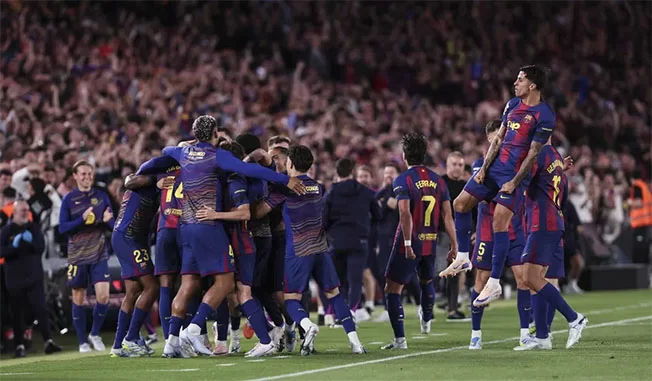
    In a thrilling Concacaf World Championship qualifier match on Tuesday evening, Suriname’s national women’s football team (Natio Uma) demonstrated remarkable resilience by securing a 2-2 draw against the Dominican Republic on their home turf. The match showcased dramatic momentum shifts that kept spectators on edge until the final whistle.

    The Surinamese squad exploded from the starting gates with an impressive offensive display, establishing a commanding two-goal advantage within the first five minutes of play. Isabelle Hoekstra initiated the scoring spree in the 3rd minute with a precise finish, immediately putting the hosts on the defensive. Merely two minutes later, Chanté Dompig extended the lead with a clinical strike that left the Dominican defense stunned and silenced the local supporters.

    However, the Caribbean hosts gradually regained their composure and mounted a determined comeback. Mia Asenjo ignited hope for the Dominican side in the 16th minute by reducing the deficit with a well-executed goal. This breakthrough intensified pressure on Suriname’s defensive line and transformed the game dynamics entirely.

    The subsequent phases evolved into an intense midfield battle with both teams creating scoring opportunities while demonstrating tactical discipline. As the match approached its conclusion, Asenjo emerged as the hero for the Dominican Republic, delivering the equalizer in the 85th minute to complete her brace and ensure the points were shared between the nations.

    This result represents a significant achievement for Surinamese women’s football against traditionally stronger regional opposition, providing valuable experience ahead of subsequent qualification matches.

  • EY schetst kansen en knelpunten voor Nederlandse bedrijven in Suriname

    EY schetst kansen en knelpunten voor Nederlandse bedrijven in Suriname

    PARAMARIBO, SURINAME – EY Suriname took center stage during a high-profile information session on December 2nd at the Royal Ballroom of Torarica, addressing Dutch business delegates accompanying the Dutch royal couple’s state visit to Suriname. The event, organized by VNO-NCW and MKB-Netherlands, focused on navigating Suriname’s business landscape with expert insights from one of the world’s leading professional services firms.

    During the keynote presentation, EY professionals including Tax Associate Partner Kimberly Schreuders provided comprehensive analysis of Suriname’s investment climate. The session covered critical aspects such as fiscal regulations, macroeconomic trends, cultural considerations, educational infrastructure, and workforce capabilities. Drawing from their extensive regional experience across Suriname, Guyana, Trinidad, Curaçao, and Aruba, EY presented both opportunities and challenges facing potential investors.

    Practical insights emerged as a key theme, with EY emphasizing that while Suriname offers substantial economic potential, success requires thorough preparation and understanding of local market dynamics. The firm highlighted specific sector opportunities, including agriculture modernization where Rob Baan, CEO of Koppert Cress, noted enormous possibilities in seed technology, water infrastructure, and crop protection under challenging climate conditions.

    EY’s Agida Biervliet, Consulting Senior Manager, stressed the importance of collaborative development: “Our role extends beyond identifying opportunities to helping businesses contribute meaningfully to sustainable development through knowledge sharing and local partnerships.”

    Notably, EY revealed its ongoing ‘Brain Gain’ campaign initiative aimed at encouraging Surinamese diaspora professionals to return home, thereby strengthening local capacity and accelerating economic progress. The firm positioned knowledge transfer, local talent development, and cross-border cooperation as essential components for successful market entry and long-term growth in Suriname.

  • Dag 2: Koningspaar bezoekt jeugd, onderwijs, buurtwerk en bedrijfsleven

    Dag 2: Koningspaar bezoekt jeugd, onderwijs, buurtwerk en bedrijfsleven

    King Willem-Alexander and Queen Máxima of the Netherlands continued their state visit to Suriname on Tuesday with a focus on youth engagement, cultural preservation, and bilateral cooperation. The second day of their diplomatic mission featured visits to key institutions demonstrating the nations’ shared commitment to education, innovation, and sustainable development.

    The royal itinerary began at Villa Zapakara Children’s Museum, where the monarchs and President Jennifer Simons explored interactive exhibitions blending art, culture, and education. The royal participants engaged in workshops including music production and video creation while learning about Javanese cultural elements such as gamelan music, batik art, poco-poco dance, and traditional cuisine. Director Coco Duivenvoorde emphasized the institution’s role in connecting youth with cultural heritage and global citizenship.

    At the Natural Technical Institute (NATIN), the delegation witnessed Suriname’s advancements in vocational education. Minister Dirk Currie highlighted the critical importance of technical training for developing nations during a tour of modern facilities featuring process technology and electrical engineering simulation equipment supported by oil companies including Staatsolie. The visit featured presentations from Hackathon Deltares participants developing solutions for climate resilience and water management, alongside Anton de Kom University students showcasing food security innovations from the WUR 2025 Food Systems Innovation Challenge.

    A significant milestone emerged with the launch of the Netherlands-Suriname Educational Cooperation Platform, formalizing collaboration between vocational, higher education, and university institutions through joint projects, exchanges, and research initiatives stemming from the 2023 Memorandum of Understanding.

    The royal couple subsequently visited Stibula community center in Latour, where coordinator Wilgo Koster demonstrated decades-long social programs operating without government subsidies. The center provides safe spaces for sports, cultural activities, and theater productions for both youth and seniors.

    At Fernandes Bottling Company, the monarchs examined production methodologies and quality control systems during a facility tour highlighting 45 years of Dutch partnership. Sustainability took center stage through discussions about the FUSE Kitchen project—a mobile mini-factory converting plastic waste into construction materials—developed in collaboration with green technology firm Great Plastic Bake Off to reduce pollution while creating local recycling employment.

    The day concluded with a CEO Roundtable addressing economic cooperation, investment climate improvement, talent development, workforce capacity building, and sustainable economic transition, followed by a gratitude concert featuring Dutch artist Sabrina Starke at Thalia Theater.

  • FAI-directeur aangehouden op verdenking van malversaties

    FAI-directeur aangehouden op verdenking van malversaties

    Suriname’s state-owned agricultural enterprise Food and Agriculture Industries (FAI) N.V. is confronting a severe financial crisis with accumulated debts reaching $22 million, prompting emergency government intervention. Operations Director Nitesh Ramlakhan has been arrested following allegations of financial misconduct, while General Director Permila Bissumbhar remains suspended—both under criminal investigation for suspected corruption and violation of national anticorruption laws.

    The Ministry of Agriculture, Livestock, and Fisheries (LVV) disclosed that despite approximately SRD 200 million in government subsidies over five years, FAI now faces critical liquidity shortages preventing payment of employee wages and essential operational expenses. Minister Mike Noersalim convened an urgent meeting with stakeholders including parliamentary representatives, union leaders, and board members to address what he described as “an extremely dire situation.”

    Investigations reveal multiple systemic failures: export operations to Barbados and Trinidad & Tobago have been suspended due to unpaid logistics contracts, while production has plummeted to 200 hectares—far below the 350-hectare break-even threshold. Outdated irrigation infrastructure and forced reductions in fertilizer use have exacerbated production declines.

    Minister Noersalim confirmed evidence of unauthorized asset sales, including non-seaworthy containers sold below market value, and salary increases implemented without board approval. With $8.5 million owed to Hakrinbank alone, the minister has initiated emergency talks with financial authorities to prevent collapse. “We cannot continue this way,” Noersalim stated, emphasizing government commitment to restoring FAI as Suriname’s banana sector leader through transparent restructuring.

    Stakeholders have pledged collaborative efforts to reduce debt burdens, revitalize production, and restore operational viability. The coming weeks are deemed critical for preserving export markets and ensuring the company’s survival.

  • AZP voert samen met Leiden en Den Haag 15 complexe neurochirurgische operaties uit

    AZP voert samen met Leiden en Den Haag 15 complexe neurochirurgische operaties uit

    Paramaribo Academic Hospital (AZP) has achieved a significant milestone in neurosurgical care through its seventh collaborative mission with Dutch medical specialists. From December 2nd, a joint team comprising neurosurgeons from Leiden, The Hague, and Suriname successfully performed fifteen complex brain and spinal procedures on patients with severe neurological conditions.

    The surgical interventions included advanced spinal reconstructions and delicate brain operations, with four pediatric cases among those treated. Several patients presented with existing neurological deficits, while others received preventive care to avoid impending damage. The mission featured a multidisciplinary approach that integrated expertise from maxillofacial surgeons from AZP, The Hague, and Utrecht University Medical Center.

    This ongoing partnership between Suriname’s neurosurgical program and the University Neurosurgical Center Holland has enabled increasingly sophisticated procedures to be performed locally. The collaboration has now progressed to training Surinamese medical professionals, with one candidate currently undergoing specialized training at the Dutch center.

    The surgical team was led by Professor W. Peul, working alongside Surinamese neurosurgeons Dr. H. Kort and Dr. R. Tjong Tjin Joe. They received operational support from Dutch neurosurgeons Dr. R. Nandoe Tewarie and Dr. W. Moojen for the brain surgeries. Critical assistance was provided by various AZP departments including operating theater staff, intensive care units, neurocare teams, and temporary Dutch operating room assistants.

    The Surinamese Ministry of Health provides structural support for this partnership, recognizing its vital role in developing local medical capabilities. The primary benefit remains that patients can now receive high-quality neurosurgical care within their own country, eliminating the need for expensive and logistically challenging medical referrals abroad.

  • SOVA:  Alleen beëdigd en ingeschreven advocaten mogen in Suriname optreden

    SOVA: Alleen beëdigd en ingeschreven advocaten mogen in Suriname optreden

    The Suriname Bar Association (SOVA) has issued a definitive clarification regarding legal service provision within the country, emphasizing that only attorneys formally sworn in by the Court of Justice and registered on the official tableau possess the authority to offer legal services. This statement comes in response to the recent establishment of a foreign law firm’s branch in Suriname.

    According to the nation’s Advocatenwet (Attorney Act), legal practitioners must meet three critical criteria: fulfill statutory educational requirements, receive formal swearing-in by the Court of Justice, and maintain active registration on the official tableau. The admission process involves soliciting advisory opinions from both the Prosecutor General and SOVA, with swearing-in ceremonies conducted only after positive recommendations and thorough verification of all qualifications. Any legal activities performed without proper tableau registration constitute a violation of Surinamese law.

    Foreign attorneys face additional regulatory hurdles. Regardless of their international qualifications, they cannot practice law in Suriname until completing the local admission process, including Court-administered swearing-in and official registration. Until fulfilling these requirements, they are prohibited from offering legal services or client representation.

    The legislation does provide limited exceptions for attorneys from countries with which Suriname maintains agreements on free movement of persons and services. These visiting lawyers must register with the Court and may only operate in collaboration with a locally registered Surinamese attorney. They cannot present themselves as fully licensed advocates and must strictly adhere to activities specified in their registration documentation.

    Legal consultants operate outside the Advocatenwet’s scope and consequently face no oversight from the Attorney Disciplinary College. This regulatory gap exposes citizens to heightened risks, as these consultants cannot perform functions exclusively reserved for licensed attorneys and operate without proper disciplinary safeguards.

    The Bar Association urges citizens to verify legal representatives’ credentials through SOVA’s official website, which maintains the complete registry of authorized practitioners. While Surinamese attorneys operate under clear disciplinary frameworks, foreign practitioners and consultants lack equivalent accountability mechanisms.

    SOVA reaffirmed its commitment to protecting both citizens’ legal rights and the integrity of the legal profession, vowing to ensure all foreign firms establishing local operations comply fully with Surinamese statutory requirements.

  • VSB en VNO-NCW versterken economische samenwerking met nieuw MoU

    VSB en VNO-NCW versterken economische samenwerking met nieuw MoU

    In a significant development for bilateral economic relations, the Association of Surinamese Business (VSB) and the Confederation of Netherlands Industry and Employers (VNO-NCW) have formalized a strategic partnership through a Memorandum of Understanding signed on December 1st. The signing ceremony occurred at Royal Torarica during the state visit of King Willem-Alexander, with VSB Chairwoman Rekha Bissumbhar and VNO-NCW Vice Chairman Maarten Schuurman representing their respective organizations.

    This landmark agreement establishes a framework for enhancing trade and investment flows between Suriname and the Netherlands through structured knowledge exchange programs, coordinated trade missions, and intensified collaboration among member enterprises. VNO-NCW, representing thousands of Dutch companies and industry associations, brings substantial institutional capacity in promoting entrepreneurship, innovation, and international cooperation to this partnership.

    The memorandum is founded upon principles of mutual respect, equality, and genuine partnership, with concrete initiatives including joint networking events, business forum participation, and the development of cross-border commercial partnerships. Both organizations have committed to creating tangible opportunities for their members while strengthening the historical, cultural, and economic ties between the two nations.

    The VSB characterizes this agreement as an initial step in a broader engagement strategy, with plans to incorporate additional local sector organizations as the collaboration evolves. This partnership represents a structured approach to leveraging the existing relationship between Suriname and the Netherlands for mutual economic benefit.

  • Willem-Alexander wil begrijpen hoe Surinaamse rechtspraak standhoudt onder druk

    Willem-Alexander wil begrijpen hoe Surinaamse rechtspraak standhoudt onder druk

    In a landmark engagement during their state visit to Suriname, King Willem-Alexander and Queen Máxima of the Netherlands were granted an unprecedented insight into the operational realities and systemic pressures facing the Caribbean nation’s judicial system. The Monday visit to Suriname’s Court of Justice, described by legal experts as “historic,” featured frank discussions about the state of justice administration and the mounting challenges confronting the judiciary.

    Acting Court President Iwan Rasoelbaks welcomed the royal delegation with a message that balanced national pride with sobering honesty. He emphasized that Suriname’s conscious choice for a democratic constitutional state in 1975 remains unwavering, with judiciary operations continuing to be grounded in principles of independence, impartiality and integrity. However, he openly acknowledged that “the pressure is immense and capacity remains limited.”

    The institution handles an extensive annual caseload of civil and criminal matters with merely 31 judges supported by just over 270 court staff members. This structural shortage has created significant case backlogs that directly impact both citizens and legal professionals.

    In response to these constraints, Suriname has initiated an intensive judicial training program (RAIO) in collaboration with the Netherlands. Eleven new judges are anticipated by early 2026—representing the first phase toward achieving the target of 57 judges by 2027, which the Court identifies as the minimum capacity required to manage its workload effectively.

    Rasoelbaks further highlighted another chronic challenge: geographical inequality in access to justice. First instance proceedings are currently only conducted in four districts, forcing residents from other regions to travel to Paramaribo for legal proceedings. While digital justice solutions could potentially address this disparity, satellite connections remain prohibitively expensive and technically unstable.

    King Willem-Alexander, participating actively in the discussions with evident preparation, posed pointed questions regarding equal access to justice. He inquired how rights are guaranteed for citizens unable to afford legal representation and how the system prevents legally inexperienced individuals from being disadvantaged against professional parties.

    Rasoelbaks referenced existing provisions for free legal aid and emphasized that criminal defendants always have access to defense counsel. Nonetheless, he conceded that further expansion of these services remains necessary to ensure genuine equality before the law.

    The conversation also addressed technological deficits within the judicial system. The monarch questioned what alternatives exist when justice administration in remote regions remains dependent on physical hearings in Paramaribo. The court president outlined both the potential and financial constraints of technological solutions.

    Notably, King Willem-Alexander explicitly referenced the December Murder trials, stating that the process had “confirmed the strength of the independent judiciary.”

    President Jennifer Simons concluded the visit with a definitive message: Suriname continues to work toward strengthening its constitutional state, including the future implementation of cassation jurisdiction. She indicated that these efforts build upon ongoing discussions maintained for years with partners including the Netherlands and the Caribbean Court of Justice. “The judiciary faces significant pressure, as the court president clearly explained,” she stated. “But we are working toward reinforcement. This process continues undiminished.”