标签: Suriname

苏里南

  • Suriname moet zich voorbereiden op nieuwe fiscale uitdagingen

    Suriname moet zich voorbereiden op nieuwe fiscale uitdagingen

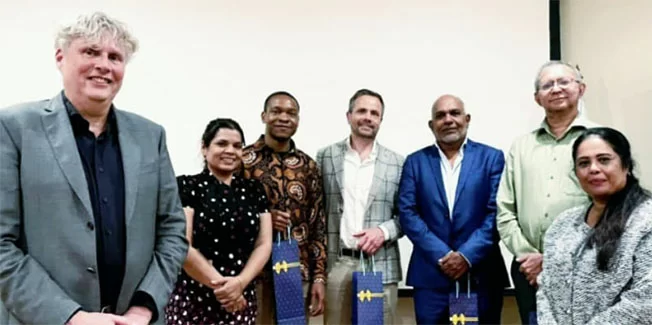
    A cross-institutional symposium bringing together the Anton de Kom University of Suriname (AdeKUS) and the University of Curaçao has opened a much-needed dialogue on pressing modern developments in Suriname’s tax regulatory framework, drawing tax policy experts and legal scholars from across the Caribbean and Europe to address gaps and opportunities in the country’s current tax system. Held as Suriname prepares for a major expansion of its oil and gas sector, the event brought forward targeted analysis and actionable recommendations to align Suriname’s tax laws with regional standards and growing international investment expectations.

    Opening the proceedings, Romano Graves, a Dutch tax specialist currently conducting doctoral research in cross-jurisdictional tax alignment, delivered a presentation focused on legal concordance in Suriname’s tax code. He outlined how greater harmonization and alignment with established tax principles from the Netherlands and Dutch Caribbean could deliver tangible economic and administrative benefits to Suriname, streamlining cross-border commerce and reducing regulatory friction for international businesses operating in the country.

    Arno van Suilen, a professor of tax law at the University of Curaçao, next turned attention to Suriname’s pending draft General Tax Law, currently moving through the national legislative process. The proposed legislation is designed to consolidate scattered formal tax provisions that are currently spread across dozens of separate tax acts, while also clearly defining the rights and obligations of taxpayers and codifying the regulatory powers of tax inspectors. Professor van Suilen emphasized the urgent need to coordinate the passage of this general law with a separate pending bill focused on professional appeals processes in tax disputes, arguing that aligned implementation would prevent regulatory gaps and ensure functional tax governance.

    Fiscal specialist Marcel Persad followed with a deep dive into unaddressed tax questions emerging from Suriname’s recently implemented new Civil Code. His analysis centered on the tax treatment of trusts, highlighting the core unresolved question of which party should legally qualify as the taxpayer: the trust itself, its beneficiaries, the appointed trustee, or the trust’s creator (settlor). Persad noted that existing Surinamese tax law only provides partial answers to this question, meaning targeted legislative amendments will almost certainly be required to clarify the framework. He added that Graves’ earlier research on regulatory concordance could offer a useful blueprint to resolve this ambiguity. Persad also examined the tax classification of purpose-built asset funds (known as doelvermogen in Dutch regulatory terminology), addressing how these structures should be treated under Suriname’s new trust rules and existing income tax legislation.

    After a break in proceedings, fiscal expert Ismaël Kalaykhan addressed attendees on the evolving concept of tax justice. He unpacked related core principles including tax equity and tax fairness, examining how these terms are defined and applied both in academic research and practical tax administration across jurisdictions. A key takeaway from Kalaykhan’s analysis was that significant ambiguity remains around the application of these concepts in Suriname’s context, and global research confirms there is no universal one-size-fits-all model to achieve meaningful tax justice. Kalaykhan also opened a discussion on citizen tax morale, comparing high rates of tax compliance and voluntary participation observed in Scandinavian countries to current trends in Suriname. He recommended that Suriname launch targeted, community-centered research to understand the actual experiences and perceptions of domestic taxpayers, as well as to assess whether the national tax authority and government operate in line with internationally accepted good governance standards for a fair tax system.

    Closing the formal presentations, Arnaud de Graaf, another professor from the University of Curaçao with decades of experience as a member of international negotiation teams drafting double taxation avoidance agreements, turned to Suriname’s current tax treaty policy. De Graaf noted that Suriname currently only has two active tax treaties in force: one with the Netherlands and one with Indonesia, with a third agreement awaiting ratification by the country’s National Assembly. Against the backdrop of upcoming large-scale oil and gas development projects set to launch in Suriname, De Graaf stressed that developing a clear, proactive tax treaty policy has become increasingly urgent. He emphasized that Suriname must now set clear priorities for which countries will be targeted first for future treaty negotiations, and define what negotiating position the country will adopt to protect its national economic interests.

    Overall, the symposium delivered valuable, timely insights into the ongoing evolution of Suriname’s tax law landscape, and made clear that a wide range of unresolved legal and policy questions remain that require further in-depth study and careful deliberation as the country prepares for a new era of economic growth driven by its emerging energy sector.
  • BOG start bespuitingscampagne tegen chikungunya in Blauwgrond

    BOG start bespuitingscampagne tegen chikungunya in Blauwgrond

    Public health authorities in Suriname have kicked off an aggressive targeted mosquito spraying campaign to combat the spread of chikungunya and address growing public nuisance from mosquito populations, with official operations launching Friday in the Blauwgrond district. The initiative represents a core component of a nationwide public health strategy designed to halt further transmission of the mosquito-borne viral infection.

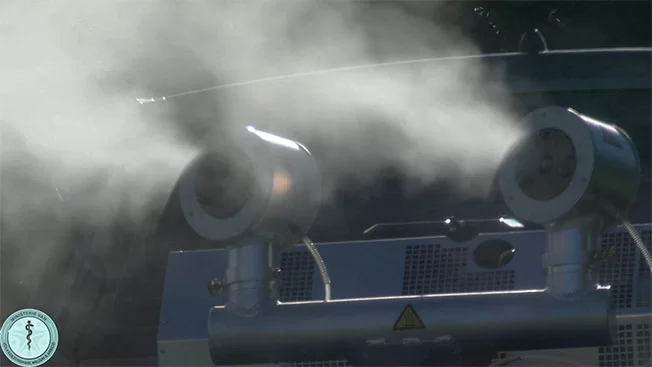
    Starting at 5:00 p.m. on the opening day, the specially adapted mosquito control vehicle, known locally as the denguewagen, traversed multiple streets and residential neighborhoods across Blauwgrond to carry out targeted insecticide applications. This proactive preventative measure is a joint effort by the country’s Ministry of Public Health, Welfare and Labor and the Bureau for Public Health (Bureau voor Openbare Gezondheidszorg, BOG), with two overarching goals: cutting down local mosquito populations and safeguarding community-wide public health.

    According to statements from the Ministry of Public Health, all spraying operations are being conducted exclusively by BOG teams that have undergone specialized training for vector control work. At the same time, public health officials have emphasized that successful chikungunya control cannot be achieved through government spraying alone. Active participation and cooperation from local residents are critical to long-term success in reducing mosquito breeding grounds.

    To this end, authorities have issued an urgent call for Blauwgrond residents to eliminate all sources of standing water around their homes and properties. Common spaces that act as ideal breeding grounds for mosquitoes include water collected in buckets, discarded bottles, plant pots, old tires, and clogged rain gutters, all of which can be easily removed or drained to stop new mosquito eggs from hatching.

    In addition to eliminating standing water, BOG has outlined a series of key precautionary measures for residents to follow while spraying is taking place in their neighborhood. These guidelines advise residents to keep windows and exterior doors open to allow insecticide to reach outdoor-adjacent mosquito resting spaces; cover all food and drinking water containers securely to avoid contamination; relocate pets and caged birds to protected areas away from sprayed zones; keep infants and individuals with pre-existing respiratory conditions in closed, unsprayed spaces during treatment hours; and store all loose clothing items indoors to prevent exposure to spray residue.

    Spraying operations will continue across different zones of Blauwgrond from Monday, May 18 through Friday, May 22, with all daily treatments scheduled to run between 5:00 p.m. and 9:00 p.m. The daily route breaks down as follows: May 18 will cover the Morgenstondstraat corridor, Anton Dragtenweg, Powisistraat, Kleinestraat, Verlengde Gompertstraat, Surivillage 1, 2 and 4, and all connecting inner roads; May 19 will include Powisistraat, Anton Dragtenweg, Bonistraat, Basitostraat, Abonestraat, Kristalstraat, and all linked inner streets; May 20 will treat the Bonistraat to Anton Dragtenweg corridor, Tweekinderweg/Mr. R.W. Thurkowstraat, Basitostraat, and connecting inner roads; May 21 will focus on Tweekinderweg, Anton Dragtenweg, Jan Steenstraat, Mr. R.W. Thurkowstraat, and adjacent inner roads; and May 22 will cover Copernicusstraat, Anton Dragtenweg, Plutostraat, and Mr. R.W. Thurkowstraat, including all connecting inner roads.

    BOG has also added a key caveat to the schedule: no spraying operations will be conducted during periods of heavy rainfall, as precipitation renders insecticide treatments ineffective against mosquito populations.

  • Simons wil structureel plan voor Paramaribo na aanhoudende wateroverlast

    Simons wil structureel plan voor Paramaribo na aanhoudende wateroverlast

    Recurring severe flooding driven by prolonged heavy rainfall has prompted Suriname President Jennifer Simons to outline a dual strategy combining immediate disaster relief for affected households and long-term structural reform to address the root causes of recurrent waterlogging across the country, particularly in the capital Paramaribo.

    Simons extended her deepest condolences to families and communities impacted by floodwaters that have swamped multiple regions of Suriname, including remote southern villages. With ongoing downpours threatening to wipe out entire crops across agricultural areas, national authorities are currently conducting a full needs assessment to determine whether large-scale food aid distributions will be required to support vulnerable communities.

    The president emphasized that flooding in Paramaribo is not a new crisis, but years of mismanagement and unregulated urban development have significantly worsened its impact. Past experience has shown that consistent maintenance of drainage canals and fully operational water pumping systems are critical to keeping flood levels manageable, a standard that has not been met in recent years. Simons noted that irresponsible urban expansion has seen large numbers of residential plots and homes constructed in low-lying, naturally flood-prone areas of the capital — a mistake the government will prohibit going forward.

    To address the immediate emergency, Simons has ordered the National Coordination Center for Disaster Management (NCCR) to deploy rapid aid to regions facing acute flood-related hardship. She has also called on civil society and local communities to remain vigilant, support vulnerable neighbors, and prepare for potential worsening conditions as the rainy season continues. The NCCR will maintain ongoing public communication about flood developments and is preparing to launch a dedicated flood support hotline, while severely affected households are advised to contact their district commissioners or local community leaders to register for assistance.

    Simons acknowledged that the Minister of Public Works and Spatial Planning inherited an unprecedented backlog of neglected drainage infrastructure, with roughly five years of deferred maintenance leaving the system underfunded, underequipped, and non-functional in key areas. Many pieces of heavy maintenance equipment were missing or unaccounted for when the current ministry leadership took office, requiring a full-scale effort to rebuild operational capacity. Even so, the president praised the progress the ministry has made in recent months, noting that the Directorate of Public Green and Waste Management has performed admirably with limited resources amid the record rainfall the country is currently experiencing.

    In a move to speed up response efforts, the government will streamline administrative procedures to allow faster deployment of additional heavy equipment to flood mitigation works, as the rainy season is far from over. Simons added that neighboring countries are also facing severe flood crises, highlighting the regional scale of the current extreme weather event. To build a more resilient capital for the future, the president announced that the government will develop a 15-year long-term development plan for Paramaribo, drawing on expertise from both international specialists and local Surinamese technical experts.

  • Surinaamse studenten behalen 3e plek op internationale PetroBowl-competitie in Argentinië

    Surinaamse studenten behalen 3e plek op internationale PetroBowl-competitie in Argentinië

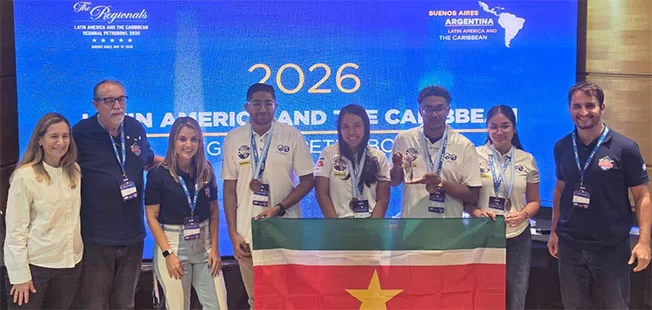
    A team of petroleum engineering students from Suriname has earned international recognition by claiming an impressive third-place finish at the 2026 SPE Latin America and Caribbean Regional PetroBowl Championship, held in Buenos Aires, Argentina. The competition, which took place on May 15 as a flagship feature of the regional Latin America and Caribbean Student Symposium, brought together 21 top university teams from across the region to test their expertise in the oil and gas sector.

    Organized by the Society of Petroleum Engineers (SPE), the PetroBowl is a globally recognized academic quiz competition that centers on petroleum technology, emerging industry trends, and modern developments across the oil and gas space. This year’s event drew talented student competitors from eight regional nations, including Argentina, Brazil, Ecuador, Colombia, Guyana, Venezuela, and Suriname, all vying for the top podium spot in a fast-paced, intense series of knowledge challenges.

    The Surinamese delegation, representing the SPE Student Chapter Suriname at Anton de Kom University of Suriname (AdeKUS), was made up of team captain Rishano Hapdoel and members Altaaf Sultan, Latusca Reboe, and Ariantxa Djojodikromo. The team was coached and mentored by academic advisors Manisha Ori and Shaïza Simons, with participation made possible through financial and logistical support from SPE Suriname and multiple industry partners.

    Against a stacked field of elite regional competitors, the young Surinamese team outperformed most expectations to secure a spot in the top three, finishing behind first-place winners Universidad de Buenos Aires and second-place holders Instituto Tecnológica de Buenos Aires. This result marks another major milestone for the AdeKUS student chapter, building on its historic 2024 regional championship win that first put Surinamese energy talent on the international map.

    Beyond the podium finish, the result underscores Suriname’s rapidly growing standing in the regional oil and gas sector, as the nation continues to expand its domestic energy industry and develop a new generation of skilled petroleum professionals. For the students, the competition delivered far more than an award: it provided a valuable opportunity to test their academic knowledge in a global arena, gain hands-on international experience, and build professional connections with peers and industry leaders across the region. As a long-standing initiative of SPE, the PetroBowl remains dedicated to nurturing academic growth and preparing the next generation of experts to lead the evolving global energy sector.

  • Putin bezoekt China kort na Trump om strategische samenwerking te versterken

    Putin bezoekt China kort na Trump om strategische samenwerking te versterken

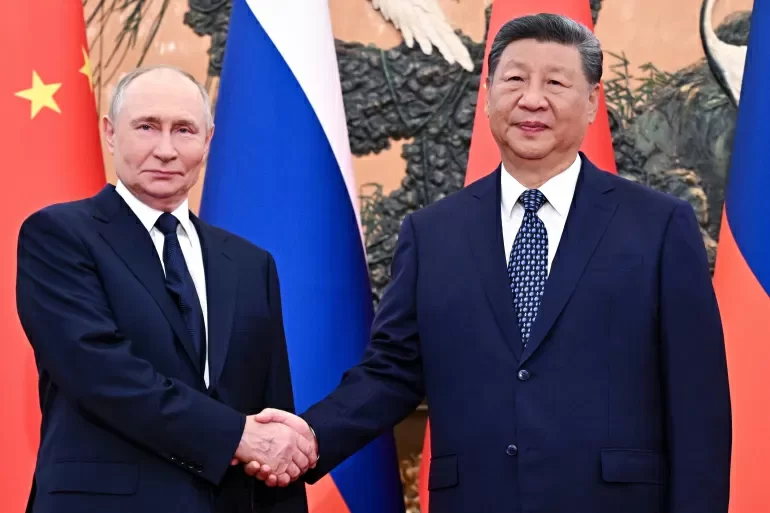
    Less than 24 hours after U.S. President Donald Trump wrapped up his first visit to Beijing in nearly a decade, Russian President Vladimir Putin is set to travel to China for a two-day official visit starting May 19, 2026, according to an official announcement from the Kremlin. The high-profile meeting between Putin and Chinese President Xi Jinping is designed to further strengthen the comprehensive partnership and strategic cooperation that forms the backbone of relations between Moscow and Beijing.

    During his stay in the Chinese capital, Putin is also scheduled to hold bilateral talks with Chinese Premier Li Qiang, with economic and trade cooperation topping the agenda for that discussion. The timing of the visit is particularly symbolic: it coincides with the 25th anniversary of the signing of the Treaty of Good-Neighborliness and Friendly Cooperation Between the People’s Republic of China and the Russian Federation, the landmark foundational agreement that has guided bilateral ties since it was first signed in 2001.

    Trump’s recent visit to China, which concluded just one day before Putin’s arrival, produced only limited outcomes. While the two leaders announced a handful of broad trade agreements, no visible progress was made on longstanding sensitive issues, including the status of Taiwan and ongoing tensions between the United States and Iran. In contrast, Sino-Russian relations have continued to deepen steadily in recent years, even though the two countries have stopped short of forming a formal military alliance. Today, China stands as Russia’s largest single trading partner, and the vast majority of bilateral trade transactions are now conducted using either Russian rubles or Chinese yuan, a deliberate shift away from Western-dominated reserve currencies that has accelerated amid international sanctions.

    China’s stance on the ongoing Russia-Ukraine conflict remains a point of international debate. Beijing has positioned itself as an officially neutral mediator working toward a peaceful resolution to the war, but its 2022 “no limits” partnership agreement with Russia has led many Western observers to question the credibility of that neutrality. Chinese authorities have repeatedly rejected accusations that Chinese state and private entities are providing material support to Russian drone production for use in the conflict.

    For both leaders, this upcoming meeting is more than a routine diplomatic engagement: it is a public reaffirmation of the close bilateral ties Moscow and Beijing have built over the past two decades, and a clear signal of their joint opposition to Western sanctions and what they frame as unilateralism in global affairs. Amid a rapidly shifting global balance of power, the two sides aim to use the visit to cement and expand their coordinated strategic cooperation for the years ahead.

  • Kwetsbare gezinnen kunnen zich aanmelden voor Schooltassenproject

    Kwetsbare gezinnen kunnen zich aanmelden voor Schooltassenproject

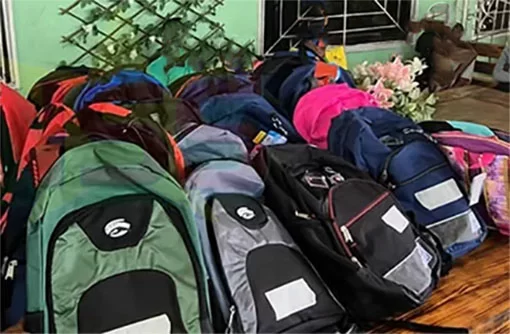
    Starting May 15, 2026, eligible applicants across Suriname can begin signing up for the 2026-2027 iteration of the national School Bag Project, a public welfare initiative run by the country’s Ministry of Youth Development and Sport (JOS). The registration window will remain open for two full months, closing officially on July 15, 2026, according to an official announcement from the ministry posted on May 16.

    Designed explicitly to address educational barriers for vulnerable populations, the initiative targets children and young people from low-income and socially disadvantaged households, providing them with the essential school supplies they need to participate fully in their education. Eligible participants fall between the ages of 6 and 25, and are currently enrolled in one of three recognized education tracks: GLO, VOJ, or VOS.

    The ministry has clarified that completing the online registration process does not guarantee automatic selection for the program. Due to limited funding and resource allocations, only a subset of registered applicants will be selected to receive support. The names of all approved beneficiaries will be published publicly through the ministry’s official communication and media channels once the selection process is finalized.

    To keep registered candidates informed of next steps, JOS has urged all applicants to follow the ministry’s official Facebook page to receive real-time updates, additional program details, and formal announcements related to the selection timeline and project rollout.

  • Suriname en Venezuela willen samenwerking uitbreiden op meerdere gebieden

    Suriname en Venezuela willen samenwerking uitbreiden op meerdere gebieden

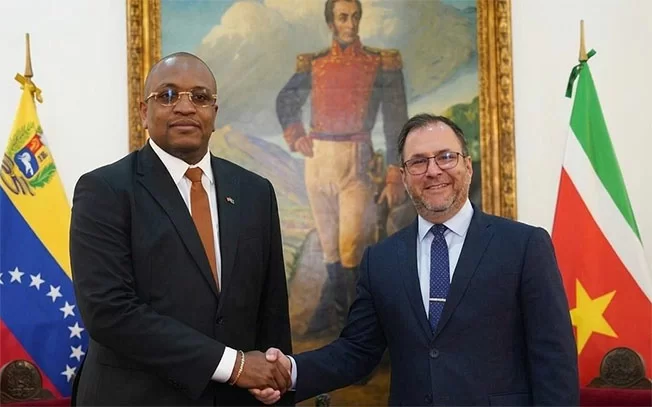
    On the 50th anniversary of the formal establishment of bilateral diplomatic relations between Suriname and Venezuela, senior diplomatic officials from both nations gathered in Caracas on Friday to take tangible new steps toward deepening cross-border partnership. The high-level meeting brought together Melvin Bouva, Suriname’s Minister of Foreign Affairs, International Trade and Cooperation, and his Venezuelan counterpart Yván Gil Pinto, with discussions centered on expanding collaboration across a range of strategically critical sectors.

    As both sides marked this golden milestone in diplomatic history, the two ministers jointly underscored the long-standing value of the ties binding their nations, and reaffirmed their shared commitment to strengthening the historical bonds that have shaped bilateral relations over five decades. The talks covered priority areas identified by both governments for expanded cooperation, including agriculture, fisheries, oil and energy, cross-border trade, tourism, education and diplomatic coordination.

    Officials from both the Surinamese and Venezuelan delegations confirmed that the meeting has formally opened a new chapter of targeted strategic partnership between the Republic of Suriname and the Bolivarian Republic of Venezuela, laying clear groundwork for concrete collaborative projects in the coming months. The anniversary summit reflects both nations’ shared interest in leveraging geographic proximity and complementary economic strengths to drive mutual development and stability in the region.

  • Aanklacht tegen Raul Castro markeert escalatie in VS-Cuba relatie

    Aanklacht tegen Raul Castro markeert escalatie in VS-Cuba relatie

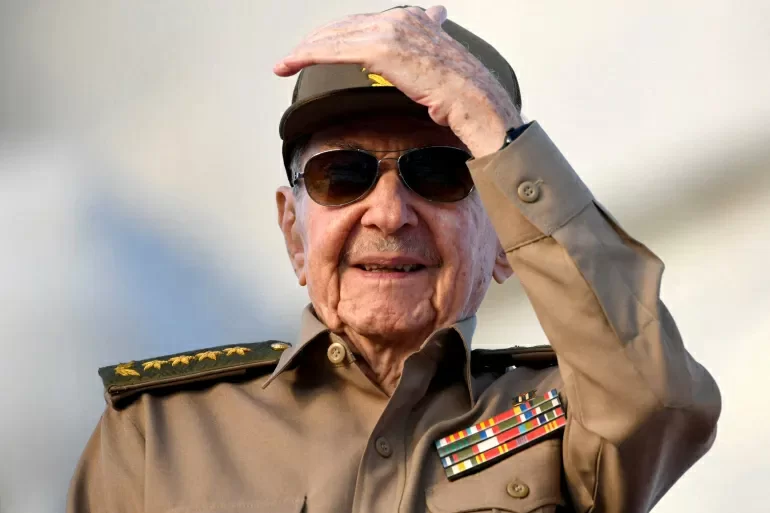
    Tensions between the United States and Cuba are on the brink of a sharp new escalation, as U.S. authorities are moving forward with plans to file formal criminal charges against former Cuban president Raúl Castro, multiple sources familiar with the matter confirm. The proposed charges stem from a 1996 incident in which the Cuban government shot down two civilian aircraft operated by Brothers to the Rescue, a U.S.-based anti-Castro dissident organization. Now 94 years old, Raúl Castro stepped down from the presidency in 2018 but remains widely recognized as the most powerful political figure in Cuba, leading the country’s long-ruling communist regime. Any formal charges will require approval from a U.S. grand jury before they can be officially filed, according to people briefed on the process.

    The news of the planned charges comes just days after a high-level U.S. delegation led by CIA director John Ratcliffe traveled to Havana for rare direct talks with Cuban officials. During that visit, the U.S. side offered up to $100 million in new humanitarian aid to the island, but tied the assistance to a requirement that Cuba implement what Washington calls “meaningful political and economic reforms.” The proposal was rejected by Cuban authorities, who view the conditional aid as unacceptable interference in the country’s internal affairs.

    This latest move against Raúl Castro comes amid a steady deterioration of U.S.-Cuba relations that began shortly after Donald Trump’s second inauguration as U.S. president in 2025. Trump has repeatedly made clear his goal of forcing the communist government out of power, openly identifying Cuba as the “next target” after Venezuelan leader Nicolás Maduro was removed from office in a military-led transition earlier this year. Since January 2025, the Trump administration has already implemented sweeping measures to increase economic pressure on Havana, including rolling back all remaining fuel shipments from U.S.-controlled Venezuela to Cuba and imposing harsh secondary sanctions on any third country that continues to supply crude oil and petroleum products to the island.

    Those sanctions have already created a catastrophic fuel crisis across Cuba, a country of 11 million people. The nearly complete fuel blockade has triggered widespread acute shortages of gasoline, diesel, and heating oil, as well as persistent, nationwide power outages that have crippled daily economic activity and public services. Earlier this month, Cuban Energy Minister Vicente de la O Levy issued a public warning confirming that the country has already exhausted its stockpiles of diesel and fuel oil, leaving critical sectors including transportation, agriculture, and public utilities on the brink of collapse. The fuel shortage has only deepened the already severe economic and social crisis that has gripped the island for years, driving widespread hardship for ordinary Cuban citizens.

    Beyond the charges against Raúl Castro, the U.S. Department of Justice’s Southern District of Florida, which has long overseen prosecutions related to the Cuban government, is also pursuing potential criminal charges against multiple senior Cuban officials believed to have been involved in the 1996 downing of the Brothers to the Rescue aircraft. U.S. officials frame the ongoing legal actions and planned charges as part of a broader, coordinated strategy to ramp up pressure on the Cuban government and force it to make the political and economic concessions Washington has demanded.

  • Sapoen: Pg desavoueert De Nationale Assemblée

    Sapoen: Pg desavoueert De Nationale Assemblée

    In a sharp rebuke issued on May 16, ruling National Democratic Party (NDP) assembly member Raymond Sapoen has publicly condemned Prosecutor General Garcia Paragsingh for her refusal to engage in a verbal briefing with a parliamentary investigative committee. The panel has been tasked with reviewing impeachment motions against three former cabinet ministers, and Paragsingh’s recent letter to the National Assembly explicitly stated she has no intention of meeting the committee in person.

    Sapoen argues that the prosecutor general’s dismissive response amounts to an outright repudiation of the country’s highest state institution. The investigative committee, formally appointed by full parliamentary vote, holds every legal right to question Paragsingh and request clarification on the impeachment motions she brought forward, he stressed. Under existing governing rules, the committee’s interaction with the prosecutor general would not involve prejudging the merits of the allegations against the former ministers, a point Sapoen highlighted to counter any potential pushback on the committee’s mandate.

    “The committee, appointed by the entire parliament, has every right to call on the prosecutor general to explain the impeachment motions she submitted as part of its inquiry, and this process is structured to avoid prejudging the validity of the case, as clearly outlined in existing law,” Sapoen emphasized.

    While Sapoen acknowledged that Paragsingh may have legitimate reasons for preferring to communicate exclusively in writing, he maintained that her approach failed to meet basic standards of respect and protocol toward the legislative branch. The standoff highlights growing institutional friction between the office of the prosecutor general and the National Assembly as it moves forward with the high-stakes impeachment process. Paragsingh has yet to issue a public response to Sapoen’s criticism as of the time of reporting.

  • OWRO waarschuwt voor wateroverlast door springtij en aanhoudende regenval

    OWRO waarschuwt voor wateroverlast door springtij en aanhoudende regenval

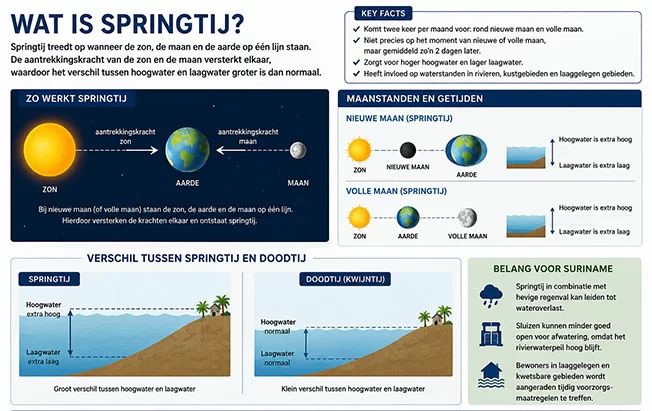
    Residents across multiple regions of Suriname are on high alert for severe flooding after the nation’s Ministry of Public Works and Spatial Planning (OWRO) issued an urgent warning, pointing to a dangerous combination of spring tides and sustained rainfall that is expected to push water levels well above normal thresholds. The alert was issued May 16, which coincides with a new moon — the astronomical event that triggers the formation of spring tides, a natural tidal phenomenon characterized by far stronger gravitational pull on ocean waters.

    During a spring tide event, the sun, moon, and Earth align almost perfectly along a single axis. This alignment combines the gravitational forces of the sun and moon, creating a much stronger pull on the world’s oceans than during non-spring tide periods. In Suriname, this amplified gravitational effect is driving higher than average high tide levels, and drastically slowing the rate at which inland water can drain out to the ocean.

    OWRO officials project that peak water levels could reach roughly 2.60 meters above standard benchmarks. Even at low tide, water levels will remain unusually high, leaving only very narrow windows when drainage sluices can be safely opened. If operators open the sluices when ocean levels remain elevated, there is a major risk that seawater will flow backward into inland low-lying areas rather than letting inland water drain out to sea.

    The outlook has grown even more concerning, as forecasters project substantial rainfall across Suriname this coming weekend, on Saturday and Sunday. With only extremely limited windows for safe sluice operation, the incoming rainwater will struggle to drain away from affected areas, raising the likelihood of prolonged, widespread inland flooding.

    Spring tides occur roughly twice every month, aligned with the new moon and full moon phases. During these events, the difference between high tide and low tide levels is far larger than during other parts of the tidal cycle. Coastal experts note that the most severe impacts of spring tides typically become most noticeable one to two days after the actual new moon, due to the modifying effects of ocean currents and wave patterns across the Atlantic basin.

    In line with the alert, the ministry has issued an urgent call to residents of low-lying and flood-prone regions across the country to put precautionary measures in place as soon as possible to protect their homes, vehicles, and other personal property from potential flood damage.