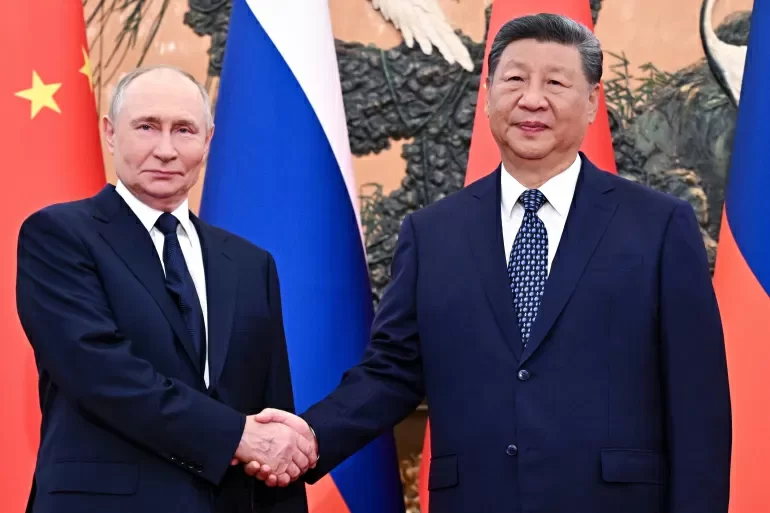
Less than 24 hours after U.S. President Donald Trump wrapped up his first visit to Beijing in nearly a decade, Russian President Vladimir Putin is set to travel to China for a two-day official visit starting May 19, 2026, according to an official announcement from the Kremlin. The high-profile meeting between Putin and Chinese President Xi Jinping is designed to further strengthen the comprehensive partnership and strategic cooperation that forms the backbone of relations between Moscow and Beijing.
During his stay in the Chinese capital, Putin is also scheduled to hold bilateral talks with Chinese Premier Li Qiang, with economic and trade cooperation topping the agenda for that discussion. The timing of the visit is particularly symbolic: it coincides with the 25th anniversary of the signing of the Treaty of Good-Neighborliness and Friendly Cooperation Between the People’s Republic of China and the Russian Federation, the landmark foundational agreement that has guided bilateral ties since it was first signed in 2001.
Trump’s recent visit to China, which concluded just one day before Putin’s arrival, produced only limited outcomes. While the two leaders announced a handful of broad trade agreements, no visible progress was made on longstanding sensitive issues, including the status of Taiwan and ongoing tensions between the United States and Iran. In contrast, Sino-Russian relations have continued to deepen steadily in recent years, even though the two countries have stopped short of forming a formal military alliance. Today, China stands as Russia’s largest single trading partner, and the vast majority of bilateral trade transactions are now conducted using either Russian rubles or Chinese yuan, a deliberate shift away from Western-dominated reserve currencies that has accelerated amid international sanctions.
China’s stance on the ongoing Russia-Ukraine conflict remains a point of international debate. Beijing has positioned itself as an officially neutral mediator working toward a peaceful resolution to the war, but its 2022 “no limits” partnership agreement with Russia has led many Western observers to question the credibility of that neutrality. Chinese authorities have repeatedly rejected accusations that Chinese state and private entities are providing material support to Russian drone production for use in the conflict.
For both leaders, this upcoming meeting is more than a routine diplomatic engagement: it is a public reaffirmation of the close bilateral ties Moscow and Beijing have built over the past two decades, and a clear signal of their joint opposition to Western sanctions and what they frame as unilateralism in global affairs. Amid a rapidly shifting global balance of power, the two sides aim to use the visit to cement and expand their coordinated strategic cooperation for the years ahead.