The Energy Authority Suriname (EAS) has responded to recent reports of widespread power outages across multiple districts, acknowledging the concerns of citizens and businesses. The regulator emphasized the critical importance of a reliable electricity supply for the nation. Since 2021, the EAS has laid the groundwork for improved regulation and modernization of the sector, with significant preparatory work addressing current challenges. The EAS has three core mandates: advising the government, regulating the electricity sector, and promoting a safe, reliable, and affordable power supply. Additionally, it approves kWh tariffs, ensures compliance with laws, and encourages sustainable energy solutions. Following a recent outage earlier this month, the EAS received information from the EBS and highlighted the need for better preventive maintenance, timely inspections, infrastructure modernization, and more transparent public communication. A key part of the solution lies in the Electricity Sector Plan, submitted to the government in May 2025 for approval. This plan includes a 20-year strategic vision, a five-year investment roadmap, technical recommendations, improved tariff methodologies, and proposals for strengthening legal frameworks. The EAS is also collaborating with sector partners and the Inter-American Development Bank on projects to modernize regulations, enhance oversight, build capacity, and invest in sustainable energy. A transparent framework for renewable energy project tenders has already been developed. The EAS has prepared necessary analyses, frameworks, and recommendations for future working groups, enabling the country to build on existing efforts rather than starting anew. The authority stressed that electricity is a basic necessity and is ready to support the government and sector partners with data, policy proposals, and international best practices. The recent outage underscores the urgency of implementing the Electricity Sector Plan to ensure Suriname achieves a reliable, affordable, and sustainable energy supply.
标签: Suriname
苏里南
-
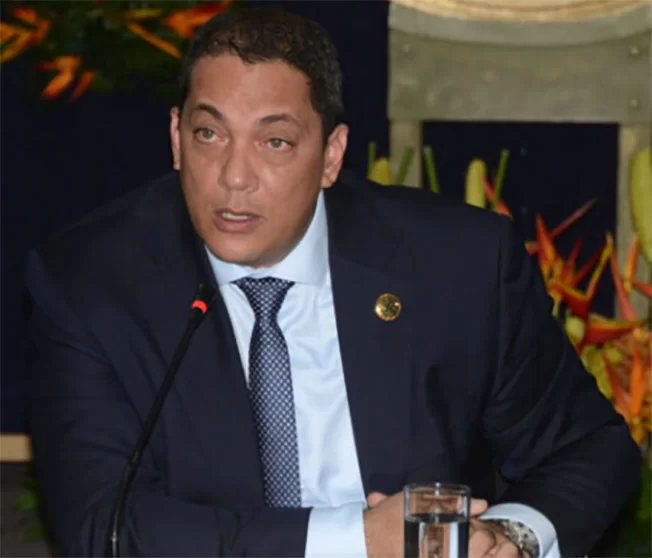
Van Trikt in nieuw strafrechtelijk onderzoek gedagvaard door Openbaar Ministerie
Robert van Trikt, the former Governor of the Central Bank of Suriname, has been summoned as a suspect in a new criminal investigation by the Public Prosecution Service (OM). He is required to appear before the examining magistrate on Wednesday, November 26. The allegations against Van Trikt include violating legal regulations, such as entering into agreements on behalf of or at the expense of the state or a state institution, as outlined in Article 13 of the Anti-Corruption Act. Additionally, he is accused of embezzlement of funds or valuable securities and fraud committed by a public official, involving a breach of a special duty or the misuse of power, opportunity, or means provided by his position. Van Trikt, who was previously convicted in a high-profile case related to the Central Bank of Suriname, is currently appealing this conviction. The appeal process is nearing completion, with Van Trikt having presented his final arguments, though the Court of Justice has yet to issue a ruling. Murwin Dubois, one of the lawyers involved in the case, expressed skepticism about the new investigation, suggesting it may be related to the use of cash reserves in 2019 during Van Trikt’s tenure. Dubois emphasized that multiple reports over the past five years have found no issues with the cash reserves. He also raised concerns about the principle of ne bis in idem, which prohibits prosecuting an individual twice for the same offense, noting that the new summons is based on the same legal provision as the ongoing case. Dubois questioned the basis of the judicial investigation, pointing out that no legal authority, including the Court of Audit, has raised concerns about the use of the cash reserves, even in the Central Bank’s annual report for the relevant period.
-
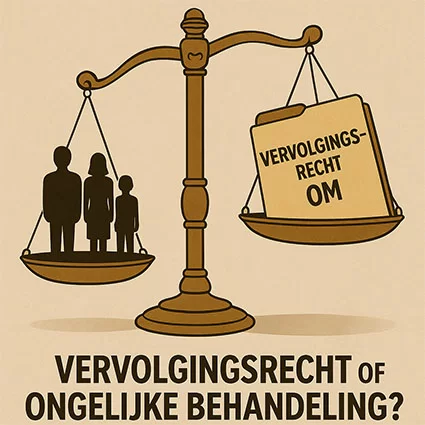
Column: Het vervolgingsrecht van OM – prerogatief of bron van ongelijkheid?
A concerning pattern has emerged within Suriname’s judicial system, as highlighted by the country’s Court of Audit. Over three consecutive years—2021, 2022, and 2023—the Court has documented significant irregularities in government operations. These are not mere administrative oversights but systemic violations, including the unlawful allocation of land, which have been explicitly labeled as illegal.
-
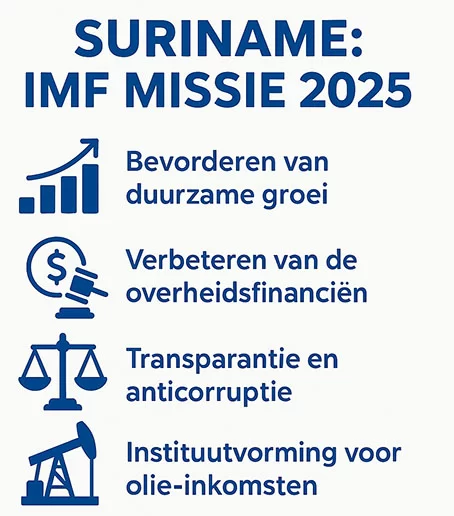
IMF ziet harde waarschuwing voor Suriname op weg naar 2028
Suriname, marking fifty years of independence, stands on the brink of a historic turning point, according to the International Monetary Fund (IMF). In its Staff Concluding Statement following the annual Article IV mission, the IMF highlights the nation’s progress in stabilizing its economy and strengthening institutions. However, with the imminent commencement of large-scale oil exploitation, the IMF emphasizes the urgent need for swift and targeted reforms to responsibly manage future revenues and improve citizens’ quality of life. The report warns that the hard-earned economic stability is showing signs of strain.
The IMF mission focused on economic developments, fiscal policy, the foreign exchange market, the role of state-owned enterprises, and preparations for expected revenues from the offshore oil field Block 58. While Suriname has a unique opportunity to transform its economy for future generations, the IMF cautions that delays in reforms could squander this potential.
Economic growth has remained modest but stable, with 1.7% in 2024 and 1.3% in 2025, projected to rise to nearly 4% by 2026. Despite a disappointing gold production this year, the development of the Block 58 oil project remains on track. The project’s construction phase will lead to increased imports and current account deficits from 2026 to 2028, financed by foreign investments. Oil production is expected to begin in 2028, potentially doubling the economy by 2030.
However, macroeconomic stability is under threat. Although Suriname achieved primary fiscal surpluses between 2022 and 2024, 2025 saw a deterioration due to election-related spending and a surge in overdue payments to suppliers. This has depleted government cash reserves and increased pressure on the exchange rate. Inflation rose from 6% to over 10% in 2025, prompting the Central Bank of Suriname to intervene in the foreign exchange market while allowing money supply growth to exceed targets.
The IMF stresses the need for robust fiscal discipline in 2026–2027, recommending measures such as restoring budgetary discipline, maintaining clear spending limits, strengthening public finances, and addressing supplier arrears. Social spending in education, healthcare, utilities, and infrastructure should be increased gradually to ensure effective implementation.
Key recommendations include restoring automatic electricity tariff indexing, phasing out subsidies, and reallocating resources to social programs and investments. The IMF also calls for stronger tax collection, addressing gold smuggling, and enhancing governance to ensure oil revenues benefit the population. Transparency in state-owned enterprises, stricter monetary policies, and operationalizing a legal framework for bank resolution are also urged.
The IMF concludes that timely and consistent reforms are essential for Suriname to leverage its oil revenues for sustainable development. The coming years will be pivotal in shaping the nation’s economic future.
-
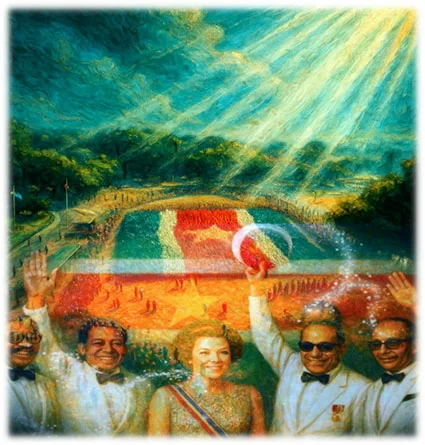
Voorbij de vlag: de Onvoltooide Onafhankelijkheid
As Suriname marks 50 years of independence, the nation finds itself reflecting on the deeper meaning of freedom. The journey since 1975, when Suriname formally severed ties with its colonial past, has been one of both pride and introspection. Yet, the question lingers: what has been achieved with this hard-won independence? True liberation, it seems, demands more than political autonomy; it requires a transformation within the people themselves. The scars of slavery, indentured labor, and colonial exploitation remain etched in the national consciousness, symbolized by monuments like the statue of Kwakoe, whose broken chains still hang from his wrists. These remnants of history serve as a reminder that while the nation is free in name, it remains bound by the invisible chains of division, distrust, and complacency. The relationship with the Netherlands, though complex, persists through shared language, culture, and familial ties. Rather than dwelling on past grievances, the call is for Suriname to view the Netherlands as a partner in progress, fostering collaboration in trade, education, and sustainable development. The true battle for independence, however, lies within. It is a fight against the internalized colonial mindset that perpetuates inequality and corruption. The promise of oil revenues offers economic potential, but it is not a panacea for the nation’s structural challenges. Real change will only come when Surinamese society confronts its own shortcomings, embraces unity, and takes collective responsibility for its future. Fifty years of independence is not just a milestone but a call to action—a reminder that true freedom is a daily commitment, requiring courage, character, and the recognition that liberation begins with self-transformation.
-

Gemaskerde rovers lossen schot Nieuwzorgweg
A violent street robbery unfolded on Nieuwzorgweg in the Latour district, where two masked assailants targeted a victim inside his car. According to police reports, the suspects fired a shot during the robbery, likely intended to intimidate the victim. The criminals managed to steal a necklace with a pendant before fleeing the scene. Witnesses reported that the perpetrators entered a red sedan and sped off toward Hiraweg. Local law enforcement, including the Latour police and other units, have launched an intensive investigation to identify and apprehend the suspects. Authorities are urging anyone with information to come forward to assist in the ongoing manhunt.
-
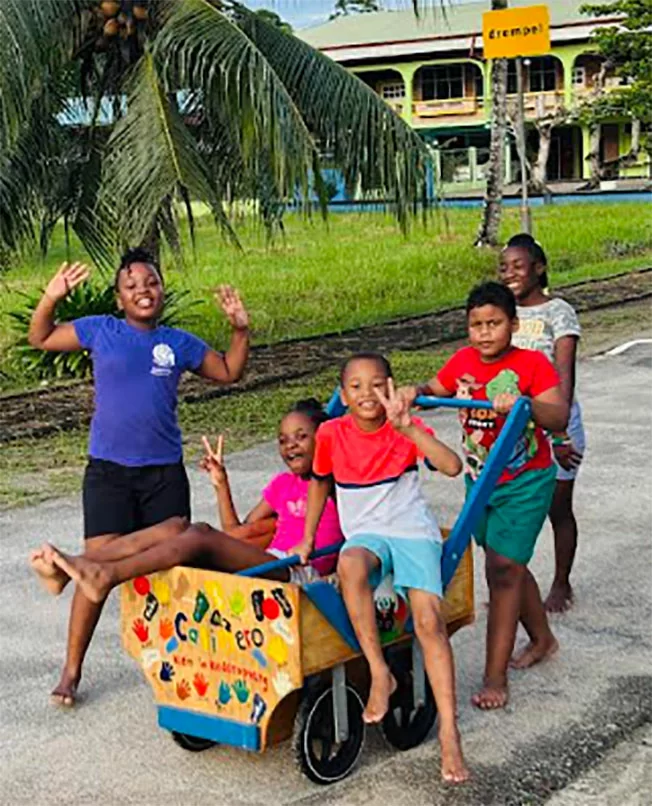
Internationale dag kinderrechten in een jubeljaar voor Suriname
Today marks a significant occasion as Suriname observes both its 50th anniversary as a republic and the international day for children’s rights. This dual celebration underscores the nation’s commitment to fostering a future where every child is guaranteed love, safety, education, respect, and a healthy environment. As Suriname reflects on five decades of resilience, struggle, and hope, the spotlight turns to the younger generation, who are the architects of the country’s next fifty years. The way children are nurtured today will determine the strength and vitality of Suriname tomorrow.
-
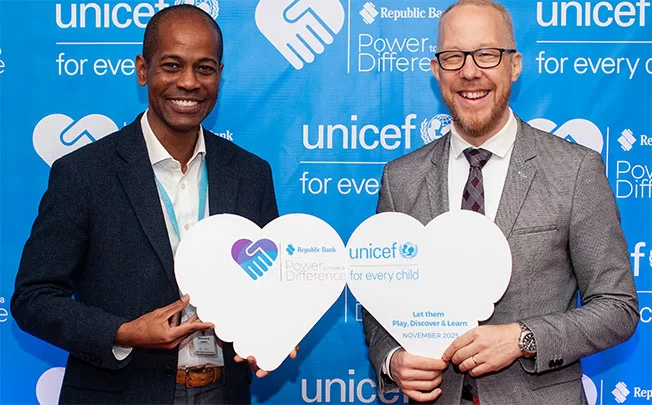
Republic Bank en UNICEF versterken vroegeducatie in Suriname
In a landmark collaboration aimed at enhancing early childhood education, Republic Bank (Suriname) N.V. and UNICEF Suriname have officially joined forces. The partnership, part of Republic Bank’s ‘Power to Make a Difference’ initiative, was launched during a signing ceremony held at the Marriott Hotel. Brian Alleyne, Managing Director of Republic Bank (Suriname) N.V., and Gabriel Vockel, UNICEF Representative for Suriname and Guyana, formalized the agreement with their signatures. The program focuses on equipping daycare centers with essential learning materials and educational tools, fostering inclusive and child-friendly environments, and enhancing the skills of caregivers in early stimulation and play-based learning. Parents will also receive practical guidance to support their children’s development at home. UNICEF emphasized the critical importance of investing in early education, noting that over half of Suriname’s three-year-olds are currently not enrolled in any learning program. Republic Bank echoed this sentiment, stating that investing in children is synonymous with investing in the future. The event was enlivened with performances by toddlers and concluded with the signing of a heart-shaped symbol, where young children placed colorful handprints as a symbol of hope and growth. Both organizations reaffirmed their commitment to ensuring every child in Suriname has the opportunity to learn, discover, and grow through play.
-
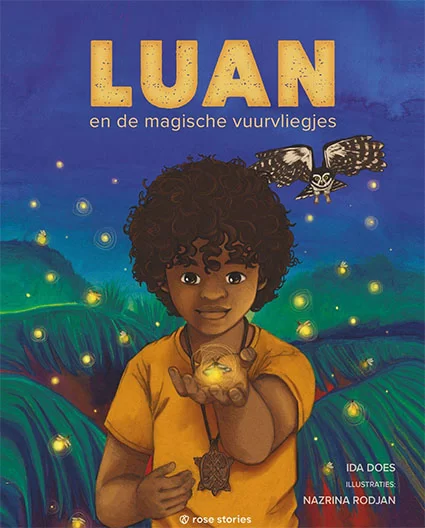
Prentenboek Ida Does brengt ode aan Trefossa’s Srefidensi
The newly released picture book, ‘Luan and the Magical Fireflies,’ by filmmaker and writer Ida Does and illustrator Nazrina Rodjan, was unveiled in a festive ceremony at the Children’s Book Museum in The Hague. The book commemorates the 50th anniversary of Srefidensi, a term coined by the poet Trefossa, who authored Suriname’s national anthem. Bertram Mourits, Head of Collections at the Literature Museum/Children’s Book Museum, opened the event by highlighting the literary significance of Trefossa’s poetry. Ida Does read excerpts from her work, which follows Luan, a boy attuned to nature, as he poetically explores the meaning of Srefidensi. The story also addresses the environmental impact of gold mining and deforestation on rivers and forests. A pivotal moment occurs when Luan notices the creek’s water has turned murky, subtly teaching young readers about the tension between nature and human intervention. Illustrator Nazrina Rodjan, who has Surinamese roots, shared how her recent visit to Suriname inspired her artwork. The first copy of the book was joyfully received by actress Gerda Havertong, who entertained the audience with her warmth and stage presence. Additionally, Ida Does announced that 200 copies will be donated to Suriname, distributed through the Writers’ School Paramaribo to schools, libraries, and children’s homes. The book will also include an educational guide created by the Writers’ School.
-
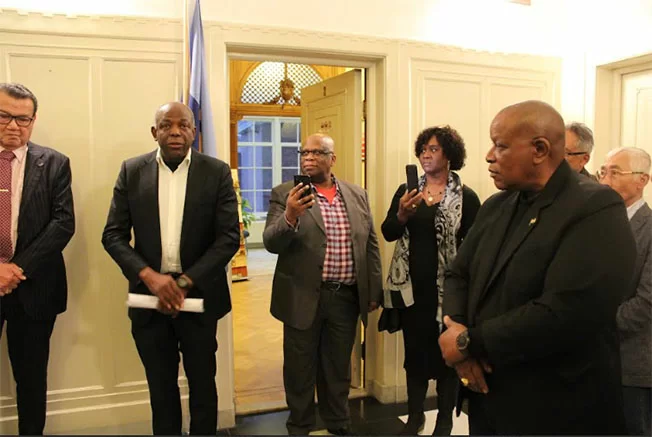
Warm welkom ambassadeur Panka op ambassade in Nederland
Ambassador Ricardo Panka was warmly welcomed at the Surinamese Embassy in The Hague on Friday, marking the beginning of his new diplomatic role. Upon his arrival at Schiphol Airport, he was escorted to the embassy, where he was greeted by the full embassy team, friends, acquaintances, and prominent members of the Surinamese-Dutch community. The reception included a blessing by Apostle Melvin Heuvel, who wished Panka success in his new duties. Panka was appointed as the Extraordinary and Plenipotentiary Ambassador of the Republic of Suriname by President Jennifer Geerlings-Simons on November 14, with The Hague as his permanent base. His appointment is seen as a significant step in strengthening diplomatic ties between Suriname and the Netherlands. Panka is expected to present his credentials to King Willem-Alexander soon, ahead of the king’s state visit to Suriname from December 1 to 3, coinciding with the country’s 50th anniversary of independence. Dutch Prime Minister Dick Schoof will also travel to Paramaribo next week for the official jubilee celebrations. Panka, known for his role as a connector with extensive experience in policy, community development, and diaspora initiatives, has previously worked on youth participation, educational programs, and cultural projects in Suriname and the diaspora. In the Netherlands, he has collaborated closely with social organizations and cultural institutions, making him a familiar figure within the Surinamese community. Upon his arrival, Panka expressed his focus on cultural exchange, economic cooperation, strengthening the agricultural sector, educational relations, and active involvement of the Surinamese community in development projects. He emphasized the importance of knowledge sharing and collaboration between the two countries. ‘The Surinamese community in the Netherlands serves as a vital bridge between our nations. I look forward to deepening this bond,’ he said. Panka also highlighted the recent reduction in the fee for the PSA pass (Persons of Surinamese Origin) by the Surinamese government but noted that high ticket prices remain a challenge for many.