标签: Suriname

苏里南

  • Rotary eert Wilgo ‘Hoppie Hopman’ Koster voor 40 jaar inzet voor jeugd

    Rotary eert Wilgo ‘Hoppie Hopman’ Koster voor 40 jaar inzet voor jeugd

    Surinamese community development pioneer Wilgo ‘Hoppie Hopman’ Koster has been distinguished with the prestigious Rotary Vocational Excellence Award for his four-decade commitment to youth empowerment and social betterment. The formal recognition ceremony occurred Thursday during a special assembly of Rotary Suriname at the Assuria High Rise venue.

    Koster received the honor specifically within the Youth and Welfare category, acknowledging his extensive leadership within scouting organizations, his dedicated involvement with the Stibula community center in Latour, and his consistent integration of Catholic values into his social outreach initiatives. The international Rotary award celebrates professionals demonstrating exceptional vocational excellence coupled with substantial community service contributions.

    In his acceptance address, Koster expressed profound gratitude while simultaneously advocating for increased recognition of youth work’s societal importance. He noted that welfare and youth development sectors frequently receive less public attention compared to sports and other activities. “Youth often mirror the examples set by adults—it’s that straightforward,” Koster emphasized, issuing a call for adults to model positive behavior for younger generations.

    The award includes a $2,000 monetary prize designated for charitable allocation. Koster revealed plans to dedicate portion of these funds toward renovating the urgently deteriorating scout clubhouse in Latour. Despite this accolade, Koster affirmed his unwavering commitment to community service, stating: “I will not rest on my laurels. I will continue to need your support.”

  • Drie woningen verwoest door brand in Nieuw Nickerie

    Drie woningen verwoest door brand in Nieuw Nickerie

    A devastating fire erupted in the early morning hours on Thursday, completely destroying three multi-story residences on Emmastraat in Nieuw Nickerie. The blaze ignited at approximately 3:42 AM and was promptly reported to the local fire department.

    Upon arrival, firefighters discovered three closely spaced concrete and wood-constructed homes sharing the same property compound. The minimal separation between structures allowed flames to propagate with alarming speed, resulting in the total destruction of all three buildings and their complete contents.

    The properties, while connected to the national grid operated by Energie Bedrijven Suriname (EBS), lacked any form of fire insurance coverage. Preliminary investigations suggest the catastrophe began when an electrical fan caught fire in one residence, creating an ignition point that rapidly expanded to adjacent homes.

    Despite the extensive property damage, no casualties were reported as occupants managed to evacuate safely before the situation escalated. Firefighting crews successfully contained the conflagration, preventing further spread to neighboring structures. Authorities have launched a formal investigation to determine the exact cause of the blaze.

  • World Disaster Report waarschuwt voor klimaatimpact in Latijns-Amerika

    World Disaster Report waarschuwt voor klimaatimpact in Latijns-Amerika

    The International Federation of Red Cross and Red Crescent Societies (IFRC) has released its comprehensive World Disaster Report 2026, revealing alarming trends in global natural disasters with particular focus on the escalating vulnerability of Caribbean and Latin American regions. The study documents a dangerous increase in extreme weather phenomena including intensified hurricanes, catastrophic flooding, and prolonged droughts that are systematically undermining community resilience across these territories.

    Climate change has dramatically amplified both the frequency and severity of destructive storms and unprecedented rainfall patterns throughout these regions, resulting in widespread infrastructure collapse, agricultural devastation, and profound social disruption. The geographical positioning and economic fragility of numerous nations within these zones exacerbate the catastrophic consequences, leaving populations increasingly exposed to systemic breakdowns in essential services and livelihood support systems.

    Emergency response agencies and local governments face monumental challenges in developing adequate disaster preparedness mechanisms amid rapidly evolving climate threats. The report emphasizes the critical need for enhanced international cooperation and substantial investments in sustainable prevention and recovery initiatives to address these growing vulnerabilities.

    A significant emerging threat identified in the report involves the proliferation of misinformation and false narratives during disaster events. The dissemination of inaccurate or deliberately misleading information severely compromises emergency response effectiveness, erodes public trust in humanitarian organizations, and triggers panic-driven decision-making among affected populations.

    The analysis underscores the vital importance of establishing reliable communication channels and strengthening public media literacy. Technological solutions to combat misinformation spread are now considered essential components of modern disaster management strategies.

    Beyond the Western Hemisphere, the report outlines concerning global patterns: natural disasters are increasing in both frequency and intensity worldwide due to interconnected factors including climate change, rapid urbanization, and socioeconomic pressures. From catastrophic wildfires across Australia and North America to devastating floods throughout Asia and persistent droughts in Africa, global vulnerability continues to escalate.

    The IFRC advocates for an integrated approach that simultaneously addresses climate adaptation measures, socioeconomic development, and comprehensive disaster risk reduction. Building resilience in high-risk regions and promoting international solidarity are identified as crucial strategies for mitigating disaster impacts in an increasingly volatile global environment.

    The World Disaster Report 2026 ultimately demonstrates that natural disaster challenges are growing in complexity worldwide, with misinformation adding new dimensions to existing threats. The Caribbean and Latin America emerge as focal points in this warning system, where effective communication and reliable information dissemination have become fundamental to saving lives and protecting vulnerable communities.

  • Column: Een rechtszaak die censuur betekent

    Column: Een rechtszaak die censuur betekent

    A landmark legal case in Suriname has ignited serious concerns about press freedom and potential censorship in the Caribbean nation. Burney Brunswijk, a prominent public figure, has initiated legal proceedings against media outlet DTV-Express over their reporting of an official criminal complaint filed against him and Grassalco director Wesley Rozenhout for alleged document forgery.

    The lawsuit demands the complete removal of the article from all DTV-Express platforms, requires a formal retraction, and most alarmingly, seeks to prevent future publications linking Brunswijk to criminal activities without prior official confirmation from the Public Prosecutor’s Office. Legal experts and press freedom advocates have characterized these demands as nothing less than attempted preventive censorship.

    This legal challenge emerges at a critical juncture in Suriname’s democratic development, where journalists have recently intensified investigative reporting on political scandals, potential corruption within state-owned enterprises, and judicial financial irregularities. The media’s professional approach to the Brunswijk case included standard journalistic practices of fact verification and right-of-reply, given that the mere existence of a formal complaint constitutes verifiable news.

    Press freedom advocates argue that requiring media to await official permission before reporting on filed complaints fundamentally undermines democratic principles. Such precedents could force journalists into self-censorship, particularly when covering influential figures. The case now rests with Suriname’s judiciary to determine whether the courts will enable the preemptive restriction of journalistic reporting—a decision with profound implications for the balance between individual reputation rights and society’s right to information in a functioning democracy.

  • Xillan Macrooy sluit SABI Literatuurfestival 2026 af met wervelende muzikale lezing

    Xillan Macrooy sluit SABI Literatuurfestival 2026 af met wervelende muzikale lezing

    Surinamese artist Xillan Macrooy delivered a mesmerizing multidisciplinary performance Wednesday evening, officially presenting his literary work ‘Mensen als zonnen en mensen als manen’ to a captivated Surinamese audience at a packed Spice Quest venue. The event marked both the triumphant homecoming of his Netherlands-published book and the grand finale of the SABI Literature Festival 2026.

    Macrooy masterfully intertwined poignant readings from his deeply personal narrative with musical interludes, demonstrating exceptional versatility as both writer and performer. His soulful vocals resonated through the hall during musical segments, enhanced by impeccable sound engineering, while musician Jonathan Moeslan provided atmospheric guitar accompaniment. The audience, comprising diverse age groups, remained enthralled throughout the evening, culminating in a spontaneous collective rendition of Macrooy’s earlier commercial work ‘Mi Kondre Tru’.

    The book itself courageously explores themes of identity, coming-of-age, and queer existence within the Surinamese context—particularly significant given the ongoing challenges surrounding LGBTQ+ discourse in the nation. Macrooy emphasized literature’s unique capacity to address such sensitive topics, expressing hope for increased dialogue and action regarding these and other social issues.

    During an intimate conversation with Sharda Ganga, Macrooy revealed his writing process and vulnerability within the text. Ganga observed his remarkable linguistic dexterity, noting how he ’employed the very language that once confined him as a tool for liberation.’ The author also reflected on the universal struggles of identity formation, particularly among youth, advising attendees not to fear inevitable change.

    The evening additionally honored writer Edgar Cairo, whose work profoundly influenced Macrooy’s artistic development. Beyond the main event, Macrooy recorded a podcast exploring queer legacy and visited the Nassy Brouwerschool with activist Sammy Doorson to discuss humanity and gender with students.

    Organized by Stichting Skrifi with support from the Dutch Foundation for Literature, the SABI Literature Festival aims to establish itself as a multi-day platform showcasing Surinamese literary innovation. Through partnerships with Surinamese and Dutch organizations, the foundation continues developing sustainable reading infrastructure despite limited resources, working to structurally strengthen the nation’s literary landscape through venues including Souposo, Spice Quest, and the university library.

  • WHO bevestigt 13 aanvallen op gezondheidsvoorzieningen in Iran

    WHO bevestigt 13 aanvallen op gezondheidsvoorzieningen in Iran

    The World Health Organization has officially verified 13 separate assaults on medical infrastructure in Iran during ongoing military operations involving the United States and Israel. The UN health agency is currently investigating reports indicating four healthcare workers have been killed and 25 others injured in these incidents.

    WHO Director-General Tedros Adhanom Ghebreyesus disclosed during a press briefing that approximately 100,000 individuals have fled Iran due to the conflict, while Lebanon has witnessed the displacement of over 60,000 people. The WHO chief made these statements without attributing blame to specific parties involved in the hostilities.

    Hanan Balkhy, a WHO representative, provided additional details confirming damage to four ambulances in Iran, with hospitals and other medical facilities sustaining minor damages from nearby bombardment operations. One Tehran-based hospital required complete evacuation according to earlier UN assessments.

    A WHO spokesperson confirmed to Reuters: “For Iran, we have verified 13 attacks on healthcare facilities, resulting in three fatalities and no injuries. In Lebanon, three attacks have been confirmed with three deaths and six injuries.”

    The Iranian ambassador to the UN in Geneva had previously submitted a formal communication to Tedros earlier this week, asserting that ten healthcare facilities had been impacted by military actions.

    Balkhy further noted that the WHO’s logistical hub in Dubai, which supplies medical provisions to dozens of countries, has been temporarily incapacitated due to regional transportation restrictions.

    The International Federation of Red Cross and Red Crescent Societies separately reported that three of its personnel sustained injuries from military strikes in Iran since February 28th.

    These confirmed attacks on medical infrastructure and the escalating displacement figures highlight the worsening humanitarian crisis emerging from the conflict. Aid organizations are raising alarms about the increasing challenges in delivering medical services and humanitarian assistance within an increasingly perilous operational environment.

  • Franse scholieren bezoeken Suriname Diplomaten Instituut

    Franse scholieren bezoeken Suriname Diplomaten Instituut

    A delegation of nineteen female students and two educators from Lycée Gaston Monnerville in Kourou, French Guiana, recently concluded an educational visit to the Suriname Diplomatic Institute (SDI) as part of their political science curriculum. The program, running from March 3-6, provided exceptional insights into international relations and governance structures.

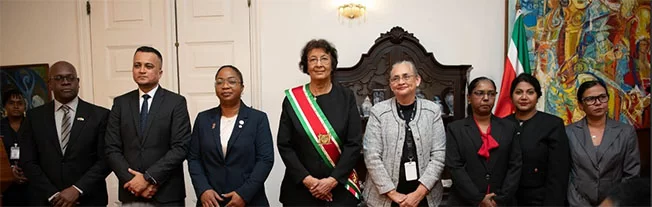
    Ambassador Miriam Mac Intosh, Director of Foreign Affairs, formally welcomed the exclusively female delegation on Wednesday—a significant coincidence given the approaching International Women’s Day on March 8. The visit was further enhanced by the participation of French Ambassador Nicolas de Lacoste and diplomatic staff from the French Embassy.

    The educational program featured comprehensive presentations on Suriname’s historical background, cultural heritage, and distinctive characteristics by Ambassador Liselle Blankendal, former Surinamese ambassador to Guyana. Additionally, Ambassadors Angela Ramkisoen and Gilbêrt van Lierop, with respective service in Brazil and Belgium, shared practical expertise in diplomatic practice and international relations.

    Beyond the institutional visit, the students engaged in diverse cultural and educational activities throughout their stay. They participated in Phagwa festival celebrations, visited the National Assembly, and conducted an exchange program with students from Algemene Middelbare School (AMS) in collaboration with the Women Rights Center Suriname. These sessions focused on international conventions concerning women’s rights and their practical implementation.

    The program concluded with a collaborative session at Alliance Française Suriname, organized with French shipping company CMA CGM Suriname N.V., addressing women’s societal roles and career opportunities in both Surinamese and French contexts.

  • Langzamere groei centraal op Chinees Volkscongres

    Langzamere groei centraal op Chinees Volkscongres

    Beijing witnessed the commencement of the 14th National People’s Congress (NPC) on March 5, 2026, with President Xi Jinping and senior Chinese leadership presiding over the pivotal political gathering. The annual session unveiled China’s economic blueprint for the coming year, featuring a notably conservative GDP growth target of 4.5-5%—marking the first instance of sub-5% targeting in the nation’s recent economic history.

    This calibrated growth projection reflects China’s strategic response to persistent economic headwinds, predominantly driven by the collapse of its real estate sector which previously constituted 25-30% of GDP. Economic analyst Tianchen Xu from the Economist Intelligence Unit interprets this adjustment as signaling a fundamental policy shift: moving from quantitative expansion metrics toward qualitative growth indicators emphasizing household income elevation and enhanced public service accessibility.

    Concurrent with economic recalibration, China announced a 7% defense budget increase—the smallest increment in five years yet remaining regionally competitive. The nation continues its technological pivot with sustained state subsidies for strategic sectors including integrated circuits, aerospace, biomedicine, and drone application ecosystems termed the ‘low-altitude economy’.

    Social governance priorities featured prominently in congressional deliberations, with policies addressing demographic challenges through enhanced childcare support systems and elderly care services for China’s aging population. Environmental commitments reaffirmed the 2030 carbon emissions peak target while accelerating transition timelines toward renewable energy adoption.

    The parallel convening of the Chinese People’s Political Consultative Conference (CPPCC) complements NPC proceedings, collectively forming the ‘Two Sessions’ that shape China’s policy trajectory. A seminal outcome emerges through the presentation of the 15th Five-Year Plan (2026-2030), outlining medium-term development objectives targeting doubled per-capita GDP by 2035 relative to 2020 benchmarks.

  • De triasleer: Scheiding of spreiding der machten?

    De triasleer: Scheiding of spreiding der machten?

    A significant constitutional debate has emerged within Suriname’s National Assembly (DNA) regarding the fundamental relationship between legislative, executive, and judicial powers. This discussion gains particular relevance amid pending legislative proposals addressing the structure and compensation of judicial authorities, prompting a thorough reexamination of the traditional separation of powers doctrine.

    The current parliamentary deliberations focus substantially on the judicial branch’s position, including constitutional amendment proposals that would establish a third instance within the judicial organization. These developments have revitalized academic interest in the philosophical foundations of power distribution systems, particularly the theories of French jurist Montesquieu (1689-1755), traditionally credited with formulating the Trias Politica concept.

    Constitutional scholars increasingly emphasize that Montesquieu’s original vision centered not on absolute separation but rather on a system of checks and balances—a mechanism where “power checks power” to prevent despotism. Inspired by English philosopher John Locke, Montesquieu’s seminal work “De l’esprit des lois” (The Spirit of Laws) presented a normative framework for power equilibrium aimed at safeguarding civil liberties through preventing concentration of authority.

    Suriname’s constitutional reality, as articulated in Article 70, demonstrates the practical application of this principle: legislative power is jointly exercised by the National Assembly and the Government, indicating inherent interdependence rather than strict separation. The legislative process typically initiates with the executive branch, progresses through parliamentary deliberation and adoption, and culminates in presidential ratification—illustrating how governmental branches functionally complement and constrain one another.

    The judicial function has evolved significantly beyond Montesquieu’s characterization of judges as merely “la bouche de la loi” (the mouth of the law). As noted by former Court of Justice President John von Niesewand (2008), the judiciary has transformed into a guardian of constitutional integrity, exercising oversight over political organs even when they invoke political legitimacy. This evolution has prompted some observers to describe a transition from a “rechtsstaat” (rule of law state) toward a “rechtersstaat” (judges’ state), though this characterization remains debated.

    Contemporary constitutional scholars suggest that the terminology of “power distribution” or “power balance” more accurately reflects modern governance realities than “separation of powers.” The constitutional system operates not as hermetically sealed power blocks but as a dynamic equilibrium where governmental branches mutually influence, control, and delimit each other’s authority. This intricate balance constitutes the essential foundation of democratic constitutional governance.

  • Sri Lanka beschermt Iraans schip te midden van VS-Iran conflict

    Sri Lanka beschermt Iraans schip te midden van VS-Iran conflict

    Sri Lanka finds itself in a delicate diplomatic position as it attempts to mediate humanitarian concerns surrounding a second Iranian warship operating near its territorial waters. This development comes just one day after a U.S. submarine torpedoed and sank the Iranian frigate Iris Dena in international waters off the Sri Lankan coast, resulting in more than 80 casualties with dozens still missing.

    Cabinet spokesman Nalinda Jayatissa confirmed Thursday that Colombo is “making every effort to preserve lives” regarding the second vessel, which currently remains within Sri Lanka’s exclusive economic zone. The warship carries over 100 crew members and appears to be heading toward the same area where its companion vessel was destroyed, raising concerns about another potential attack.

    According to Al Jazeera correspondent Minelle Fernandez reporting from Colombo, the second ship likely belongs to a group of three Iranian naval vessels returning from an international maritime conference in India. The vessel has reportedly experienced mechanical difficulties and has formally requested permission to dock in Sri Lankan ports—a request that remains under consideration as communications continue.

    The situation places Sri Lanka in a precarious position as the expanding conflict between the United States, Israel and Iran creates ripple effects across the region and beyond. What began five days ago with American and Israeli airstrikes on Iran—which resulted in the death of Supreme Leader Ayatollah Ali Khamenei—has escalated into retaliatory attacks by Iranian-backed groups on U.S. and Israeli targets across Bahrain, Saudi Arabia, Qatar, UAE, Iraq and Cyprus.

    The geopolitical turmoil has already triggered significant disruptions to global energy markets, with oil and gas prices soaring worldwide. Shipping routes, particularly around the critical Strait of Hormuz, have experienced substantial interruptions. Qatar has temporarily suspended liquefied natural gas production following attacks on energy infrastructure.

    International observers warn that prolonged conflict could have severe consequences for regional stability and the global economy, while nations including China and Russia join growing worldwide calls for peaceful resolution through diplomatic channels.