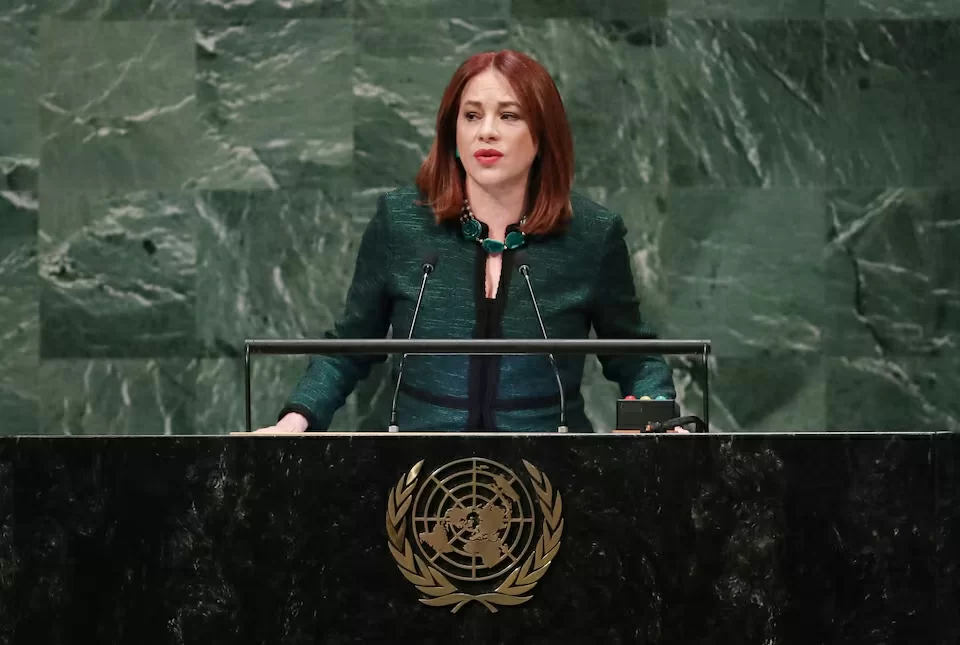
A historic shift in the race for the world’s most prominent diplomatic role is taking shape, as veteran Ecuadorian diplomat Maria Fernanda Espinosa Garces has officially been put forward as a candidate for the next Secretary-General of the United Nations. The nomination was submitted Tuesday by the government of Antigua and Barbuda, a senior United Nations official confirmed to international news agency Reuters.
Espinosa brings decades of high-level experience to the contest, with a long and distinguished track record in global diplomacy, multilateral cooperation and human rights advocacy. Between 2018 and 2019, she served as President of the UN General Assembly, holding one of the body’s most visible leadership roles before. She also previously served as Ecuador’s minister of both Foreign Affairs and Defense, giving her deep experience in national and international governance.
With Espinosa’s entry into the race, the field of candidates vying to succeed incumbent Secretary-General António Guterres now stands at five. Notably, three of the five contenders are women, meaning the 2026 selection process could end with the appointment of the first female Secretary-General in the United Nations’ 81-year history. The election for this critical global leadership post is scheduled to take place later in 2026, and the successful candidate will begin a five-year term starting on January 1, 2027.
The role of UN Secretary-General is widely regarded as one of the most influential positions in modern world politics. Tasked with leading the UN’s sprawling bureaucracy, the officeholder is responsible for advancing global peace and security, coordinating cross-border cooperation on a wide range of pressing global issues, from human rights protections and sustainable development to large-scale humanitarian response efforts.
Guterres, who first took office in 2017, has spent his two terms navigating an unprecedented string of global crises, ranging from protracted regional armed conflicts to the accelerating impacts of climate change and the global COVID-19 pandemic. Whoever succeeds him will inherit a complex set of interconnected challenges, and will face the urgent task of rebuilding broad global confidence in multilateral cooperation at a time of rising geopolitical division.
The presence of three women in the current candidate pool reflects a growing, years-long global demand for greater gender parity at the highest levels of international institutional leadership. For decades, advocacy groups have pushed for the United Nations to break the long-standing pattern of male-only leadership at the organization, arguing that greater gender diversity at the top will lead to more inclusive and effective global governance.