
Hadassah Ollivierre, a 12-year-old student from St. Vincent Girls’ High School and a resident of Bequia, has been honored with the bronze award in the Queen’s Commonwealth Essay Competition (QCEC) 2025. This competition, recognized as the world’s oldest and most esteemed international writing contest, celebrated its 75th anniversary this year under the theme “Our Commonwealth Journey.” Organized by the Royal Commonwealth Society, the event aims to inspire young writers from across the Commonwealth to express their ideas, dreams, and experiences through creative writing. Ollivierre competed in the junior category, open to participants under 14, with her imaginative story titled “Through the Garden Door: A Secret Garden Adventure with Mysteries of the Heart.” Her essay, inspired by the prompt “A very special journey when you discover a secret door that takes you into your favourite book,” stood out among 53,434 entries from 897 schools across 54 Commonwealth nations. The judging panel, featuring renowned authors and cultural figures such as Sir Ben Okri OBE and Imtiaz Dharker, ensured a thorough and inspiring evaluation process. Ollivierre’s achievement highlights her creativity, discipline, and passion for storytelling, as well as the support of her teachers and family. Her success not only brings pride to Bequia and St. Vincent and the Grenadines but also showcases the literary potential of young Caribbean writers on a global platform. The QCEC continues to empower young voices to explore themes of identity, belonging, and shared humanity across the Commonwealth’s diverse cultures.
标签: Saint Vincent and the Grenadines
圣文森特和格林纳丁斯
-

Putting the dual citizenship question to rest
A heated debate has emerged in St. Vincent and the Grenadines over the eligibility of two NDP candidates, who hold dual Canadian and Vincentian citizenship, to stand for parliamentary elections. The controversy stems from differing interpretations of constitutional provisions, particularly sections 25 and 26 of the Constitution of St. Vincent and the Grenadines, which outline qualifications and disqualifications for representatives and senators.
-

Vaccine Mandate Case sent to Privy Council for final decision
The Court of Appeal in St. Vincent and the Grenadines (SVG) has granted conditional permission for the contentious ‘Vaccine Mandate Case’ to be referred to the Privy Council in London, the nation’s highest judicial authority, for a definitive resolution. This legal battle stems from the November 2021 decision by the Ralph Gonsalves-led Unity Labour Party (ULP) government, which declared that public sector workers refusing to comply with the COVID-19 vaccination mandate had effectively abandoned their jobs. The Public Service Union, SVG Teachers’ Union, and Police Welfare Association spearheaded the lawsuit, which initially saw High Court Judge Justice Esco Henry rule in favor of the workers in March 2023. However, a subsequent 2-1 decision by the Court of Appeal in February 2025 overturned this ruling, prompting the workers to seek the Privy Council’s intervention. During a virtual hearing in Kingstown, the government’s legal team, led by senior counsel Anthony Astaphan, opted not to present oral arguments, leaving the decision entirely to the court. Cara Shillingford, lead counsel for the workers, emphasized the case’s constitutional significance, particularly regarding property and pension rights under Section 99 of SVG’s Constitution. She also highlighted the High Court’s finding that the vaccine mandate violated Section 77, which governs the Public Service Commission’s independence. The court acknowledged the substantial public interest in resolving this critical constitutional issue. The panel, comprising Justices Trevor Ward, Peter Foster, and Reginald Armour, noted the undisputed value of the workers’ pensions, which far exceeded $1,500, as evidenced by affidavit submissions.
-

‘Psychological analysis’ finds ULP likely to win 8-7
A groundbreaking psychological analysis conducted in St. Vincent and the Grenadines (SVG) suggests that the incumbent Unity Labour Party (ULP) is poised to secure a historic sixth consecutive term in the upcoming general election on November 27. The study, led by Grenadian data analyst Cleophas Justine Pierre, predicts an 8-7 victory for the ULP over the New Democratic Party (NDP). The research, which employed a unique methodology popular in India for decades, analyzed voter behavior across 15 constituencies using random stratified sampling of 2,402 individuals. The margin of error was approximately 2%. The findings reveal a strong base of support for the ULP, with 83% of its voters expressing loyalty, compared to a 72.5% retention rate for the NDP. Notably, the defection rate from ULP to NDP was 8.5%, while the reverse was 10.2%, favoring the ULP. The study also highlighted a generational divide, with older voters leaning towards the ULP and younger, urban voters favoring the NDP. Women, particularly single mothers, showed consistent support for the ULP, while unemployed or underemployed young men in urban areas were more inclined towards the NDP. Pierre emphasized that the research aimed to provide an unbiased, scientific analysis of the electorate, with findings presented to both political parties. The study’s innovative approach, which includes geospatial data grids and focus groups, has accurately predicted eight consecutive elections in the Caribbean. Pierre’s ultimate goal is to introduce this technology to the United States, where he sees significant market potential.
-

‘Street kid’ stabs, kills teen in Kingstown
An 18-year-old youth, identified as Gary Butler from Campden Park, was fatally stabbed in Kingstown on Tuesday morning, marking the third homicide in St. Vincent and the Grenadines in less than a week. The incident occurred around 10:45 a.m. near Gonsalves Liquor on Middle and Melville streets. According to an eyewitness, the assailant, described as a ‘street kid,’ retrieved what appeared to be an ice pick from a window ledge and stabbed Butler once in the chest, causing him to collapse. Butler was rushed to Milton Cato Memorial Hospital but later succumbed to his injuries. Police have yet to comment on the incident, which has raised the year’s homicide count to 36. The killing has reignited concerns about the growing number of children, particularly teenage boys, living or frequently seen on the streets of Kingstown. This issue has been repeatedly highlighted in public forums, including radio shows, with complaints about their aggressive behavior and violence towards each other. The incident follows the recent discovery of Lee-Chang Anthony’s body in a shallow grave and the fatal shooting of Shem Walker, who was killed in Akers just 25 days before his 26th birthday. Walker’s death came after he received multiple threatening comments on his Instagram account. The community is now grappling with the escalating violence and the urgent need for interventions to address the plight of street children.
-
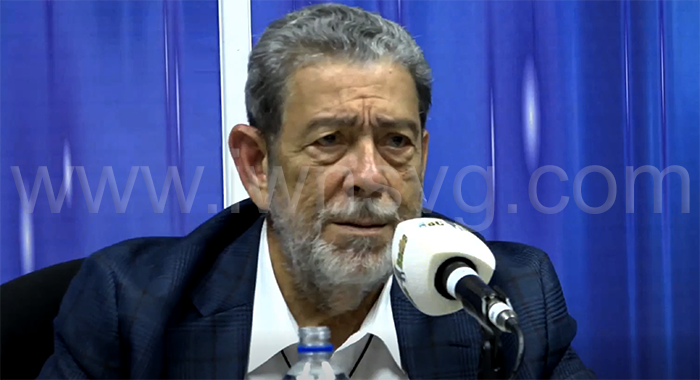
Gonsalves dismisses ‘political rant’ statements by Trinidad housing minister
Prime Minister Ralph Gonsalves of St. Vincent and the Grenadines has vehemently dismissed allegations made by Trinidad and Tobago’s junior housing minister, Anil Roberts, labeling them as a “political rant.” Roberts claimed that Gonsalves’ wife and two children received preferential treatment in obtaining government-subsidized housing in Trinidad, a charge Gonsalves refuted during his weekly radio program. He accused Roberts of spreading falsehoods and innuendos aimed at damaging his family’s reputation. Gonsalves emphasized that his family’s housing transactions were legal, ethical, and devoid of any undue influence. He also clarified that his disagreement with Trinidad and Tobago’s Prime Minister Kamla Persad-Bissessar over the Caribbean being declared a zone of peace was not a personal attack but a policy critique. Gonsalves suggested that Roberts’ accusations might be politically motivated, aimed at aiding the opposition in St. Vincent’s upcoming general election. He expressed confidence that his Unity Labour Party would secure a decisive victory, citing public disapproval of Roberts’ conduct. The controversy has sparked a broader debate about regional politics, housing policies, and diplomatic relations in the Caribbean.
-
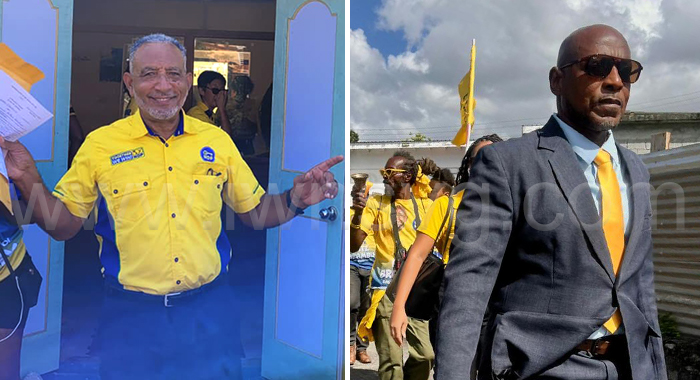
PM promises lawsuit over opposition candidates’ Canadian citizenship
KINGSTOWN, St. Vincent — As the November 27 general election approaches, Prime Minister Ralph Gonsalves has vowed to challenge the eligibility of opposition candidates with dual citizenship in court. Addressing supporters of the ruling Unity Labour Party (ULP) on Tuesday night, Gonsalves, who is seeking a historic sixth consecutive term, confirmed attempts to block the nomination of New Democratic Party (NDP) leader Godwin Friday and East Kingstown candidate Fitz Bramble due to their Canadian citizenship. Both Friday and Bramble, born in St. Vincent and the Grenadines, obtained Canadian citizenship as adults. Gonsalves cited Section 26 of the Constitution, which disqualifies individuals who voluntarily acknowledge allegiance to a foreign power, and referenced a 2020 Court of Appeal ruling that clarified the legal stance on such matters. Despite objections, the Returning Officer allowed their nominations, leaving the final decision to the courts. Friday, a lawyer, dismissed the challenge as a ‘dirty trick’ and expressed confidence in his re-election. Gonsalves urged voters not to ‘waste their vote’ on candidates with dual citizenship, emphasizing the legal and constitutional implications. The controversy has sparked heated debates, with both parties gearing up for a contentious election.
-
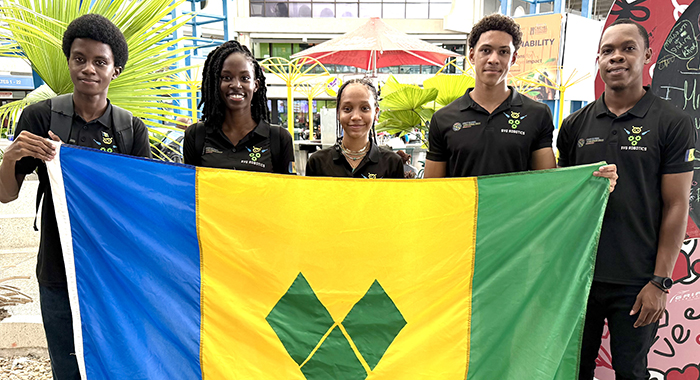
Team SVG Robotics excels at first global challenge in Panama
Team SVG Robotics, representing St. Vincent and the Grenadines, made a remarkable impact at the 2025 FIRST Global Challenge held in Panama City from October 29 to November 1. Comprising Kai Francis, Alexys Liverpool, Amara Adams, Kuba Francis, and Malik Maragh, and guided by mentors Brodlon Daniel and Ozni Daniel, the team secured impressive regional rankings, placing 2nd among OECS countries and 3rd in the Caribbean, trailing only The Bahamas and the British Virgin Islands.
-

PM says he’s not trying to give Wace Canouan land lease
Prime Minister Ralph Gonsalves of St. Vincent and the Grenadines has refuted allegations of attempting to transfer the Canouan land lease to investor Ian Wace, who reportedly contributed $25 million to recovery efforts following Hurricane Beryl in July 2025. The dispute centers on the leaseholder, Andrea Pignataro, a billionaire with whom the government has been at odds since 2023 due to stalled land sales since 2017, depriving the government of revenue. Gonsalves accused the Opposition New Democratic Party (NDP) of siding with Pignataro, framing the issue as a key point in the upcoming November 27 general election. On October 24, Gonsalves sent a letter to Pignataro offering EC$36.5 million for the remaining leased land and proposed a meeting to discuss the offer. He assured that the government would cover employee salaries if the developers took adverse actions. Gonsalves emphasized that the government does not intend to manage the resort but seeks a resolution in the public interest. The prime minister framed the election as a choice between his administration, which prioritizes the people, and the NDP, which he claims supports the developers. Gonsalves also highlighted historical criticisms of the 99-year lease signed by the NDP in 1990, which granted investors control over two-thirds of Canouan. Despite initial cordial relations with investors, Gonsalves has recently voiced concerns over limited revenue and access issues for locals. The Canouan Jetport, closed for night flights, remains a contentious issue, with the government facing calls to invest $40 million in its rehabilitation.
-

Who stands to lose?
The 2025 election in St. Vincent is not just another political event; it is a historic moment that lays bare the stark inequalities within the nation. For 25 years, a significant portion of the population has struggled to make ends meet, with opportunities flowing disproportionately to a privileged few. This select group, comfortably ensconced in their green pastures, has reaped the benefits of multiple jobs, real estate advantages, and exclusive opportunities, while the majority has been left to survive on the scraps tossed their way. The prospect of change threatens the lifestyle these elites have enjoyed for decades, and they are prepared to take extreme measures to preserve it. However, the tide is turning. Vincentians are awakening, no longer blinded by propaganda or fear. They are thinking collectively, not just individually. On election day, it will be clear who stands to lose: not the struggling single mother, the young graduate, the farmer, or the nurse, but the fattened cows on the green pasture who refuse to share the field. The people of St. Vincent are done groveling for scraps; they are ready to rise, eat well, and prosper. The battle is not against flesh and blood but against the principalities and powers in high places. The question echoing across the nation is: who, exactly, stands to lose? The answer is clear: it will not be the people.