标签: Saint Vincent and the Grenadines

圣文森特和格林纳丁斯

  • PM pledges to tackle ‘substandard’ conditions for public servants

    PM pledges to tackle ‘substandard’ conditions for public servants

    In his inaugural address at the annual Public Service Week Thanksgiving Service held in Kingstown, St. Vincent and the Grenadines Prime Minister Godwin Friday has delivered a landmark dual-message speech that confronts longstanding systemic challenges in the country’s public sector. The newly sworn-in premier, whose administration took office on November 28, openly acknowledged that thousands of public servants across the nation are currently forced to carry out their duties in severely deficient, even life-endangering work environments — and called for shared accountability to drive progress.

    Friday opened by reframing the core identity of public service, pushing back against harmful cultural narratives rooted in the nation’s history of slavery that have tied service to the stigma of servitude. Speaking to the gathering of public officers under the event’s theme “Transforming Public Institutions: Advancing Innovation, Participation and Inclusion”, he emphasized that public service is fundamentally a calling to support fellow citizens. “We are called to serve, and it’s incumbent upon us to do our very best in whatever our roles are,” he told attendees. “Service means being a help to your neighbour, to your friend, to the people who have a right to expect us to do our best for them.”

    He lauded public servants as the backbone of the country’s economy, describing them as some of the “best educated, most talented, hardworking, dedicated people in St. Vincent and the Grenadines”. Friday noted that the consistent work of public employees lays the foundational framework that enables private sector growth and broader national economic activity.

    Tying the country’s ongoing economic challenges — including heavy national debt and persistent fiscal pressures — to public sector performance, the prime minister argued that boosting productivity within government agencies is a critical step to improving national financial health. “Productivity is what creates whatever the surplus is, the increase in wealth that helps to deal with all of those things. That can be done within the public service as well, because you set the context of what everybody else does out there,” he explained.

    Friday urged public officers to eliminate unnecessary delays that stall services for citizens and private businesses, warning that bureaucratic procrastination acts as a dead weight on the entire national economy. He acknowledged that frontline workers often face overwhelming frustration when tackling persistent, unresolved problems, but stressed that unprofessional or dismissive interactions with the public fail to meet the obligations of public service. Echoing a prior appeal from Deputy Prime Minister and Public Service Minister St. Clair Leacock, Friday called on all public employees to “lift your game”, saying, “Let us decide that we are going to do better. Imagine if all of us decide to lift our game.”

    He reinforced that citizens accessing public services are not asking for special favors, but exercising the rights they have earned as taxpayers, and are inherently entitled to high-quality, timely support. Framing the work of public service in both moral and spiritual terms, he added that each workday represents both a blessing and a core obligation to serve the public good.

    In some of his most sharply critical remarks, the prime minister turned to the dire physical working conditions he has personally observed across government facilities since taking office. “I’ve seen it. I’ve seen enough to know that we have to put our best foot forward, as well, as permanent secretaries, as ministers, as the people who are in charge of the various offices that you inhabit,” he said.

    He specifically called out the dilapidated housing at the decommissioned police training school in Old Montrose, where serving officers still reside. He described the conditions at the site as “terrible”, noting that plans to demolish and rehabilitate the complex were first drafted back in 2016, but have languished for years without progress. Quoting John Lennon’s famous line that “life is what happens when you’re making plans”, Friday criticized the prolonged delay: “Those plans have been under work since 2016 and people are still required to come to work and to give of their best when we tell them, by the conditions in which we ask them to work, that we don’t value you. That is not fair, it’s not right. And it bothered me.”

    The prime minister stressed that poor conditions are not isolated to the police service, adding that police facilities are simply the worst affected. Even the central administrative complex that houses the prime minister’s own offices, he noted, falls far short of acceptable standards. Friday went on to confirm that many workplaces across the public sector pose direct risks to employee health: “It’s a health hazard to have people working in mouldy buildings, and that’s happening all over the public service. It’s demeaning to tell somebody to work out of a closet rather than an office, to tell them to work in the corridors because we don’t have space for you.”

    Against this backdrop, Friday issued a formal public commitment to partner with public servants to improve their working environments, even amid the government’s tight fiscal constraints. “We are going to be a partner with you to ensure that we do our very best within the limited resources we have to provide better conditions to you, so that you can do your work and so that you can be productive,” he said, adding that “money isn’t everything” when it comes to meaningful reform.

    The prime minister announced his administration will pursue a wide range of creative solutions to upgrade public facilities, and signaled he is willing to face political criticism for the steps his government will take. “I don’t care what people say. I’m going to do it, because I know what we’re doing is … going to help you, it’s going to help the country, it’s going to help everybody,” he said.

    Addressing potential critics and naysayers, he closed by reaffirming the shared goal of progress: “For those who are naysayers and want to find fault and pick faults for everything, watch the result and you will see that we are going to deliver for you as public servants, and we ask you, lift your game. Let us deliver for the people of this country. They deserve nothing less.”

  • Only police allowed guns in park during carnival

    Only police allowed guns in park during carnival

    As St. Vincent and the Grenadines prepares to host its first national Vincymas carnival following the recent eruption of inter-gang conflict across the country, law enforcement officials have unveiled a strict new security measure: all licensed civilian firearm holders will be barred from bringing weapons into Independence Park during festival events.

    Acting Deputy Commissioner of Police Trevor “Buju” Bailey made the announcement official during a press briefing held by the Carnival Development Corporation (CDC) in Kingstown on Wednesday, June 17, 2026. Notably, Bailey referenced the venue by its former name, Victoria Park, which was officially renamed last October.

    To accommodate the new rule without unnecessary inconvenience to licensed gun owners attending shows, Bailey confirmed that police will operate a dedicated temporary storage booth just outside the park’s entrance. The facility will be staffed by uniformed police officers, who will manage a formal check-in and check-out process. Visitors with legally held firearms will be required to register their weapon in an official log, leave it in police custody for the duration of their time in the park, and complete a second sign-off when collecting their property at the end of their visit. Bailey also issued a clear recommendation that gun owners verify the serial number of their weapon upon collection to ensure they retrieve the correct firearm.

    Under the new restriction, only on-duty police officers assigned to security detail for Vincymas 2026 will be permitted to carry firearms within park grounds during festival events.

    The policy comes against a tense backdrop: this year’s Vincymas marks the first national carnival held after violent clashes between two rival gangs, 6ixx and 7even, spread across multiple communities in the country. Bailey stressed that law enforcement has already successfully overseen a series of smaller regional rural carnival events without any recorded incidents of violence, crediting close collaborative work between the police force and event organizers.

    Repeating CDC’s framing of the Royal St. Vincent and the Grenadines Police Force as the organization’s “number one partner” in delivering a safe celebration, Bailey emphasized that the longstanding working relationship between the two groups remains strong this year. From crowd management and public behavior monitoring to restrictions on glass containers and the new firearms rule, Bailey positioned layered security planning as the core foundation of this year’s festival.

    The senior officer also issued a direct public warning to any individuals seeking to bring gang-related violence into the capital Kingstown during Vincymas. “If you bring any 6ixx and 7even violence into Kingstown, you will come head on with number one,” Bailey said, referencing the police force. “We get serious when it comes to that.”

  • CDC moves to regulate AI use in Vincymas music (+video)

    CDC moves to regulate AI use in Vincymas music (+video)

    As artificial intelligence reshapes creative industries across the globe, one of the southern Caribbean’s most iconic cultural celebrations is moving to set clear boundaries for the emerging technology — to safeguard its centuries-old cultural roots without rejecting innovation entirely.

    The Carnival Development Corporation (CDC), the governing body of Vincymas, St. Vincent and the Grenadines’ premier annual carnival, is currently developing a formal policy that will limit and regulate the use of AI in festival music. The initiative comes amid growing concern that unregulated overreliance on generative AI could erode the unique cultural authenticity that defines the centuries-old regional celebration.

    CDC Chairman Ricardo Adams outlined the organization’s plan during a press conference focused on preparations for the 2026 iteration of Vincymas, confirming that event organisers have already identified AI-generated musical submissions among tracks released for this year’s festival. Rather than pushing for an all-out ban on the technology, Adams framed the new rules as a defensive measure to protect human creativity and local cultural ownership, core pillars of the southern Caribbean carnival tradition.

    “We’ve had a very robust discussion on the introduction of AI into our creative space, and we recognise that there is a place for AI,” Adams explained during the briefing in Kingstown. “I’m not going to say that we should ignore AI, or completely eliminate it. But AI cannot become your creative juice. AI can help you refine your creation, but it cannot become the core of your work.”

    Adams warned that without clear guardrails, Vincymas risks losing the raw passion and cultural specificity that makes it unique, eventually devolving into a series of events centered on generic, algorithm-generated content disconnected from local heritage. “Otherwise, we’ll all be jumping up to metadata-created music with no input of the passion and the energy and the culture of what is Vincy Mas,” he said.

    While Adams did not disclose specific regulatory thresholds or draft rules during the press conference, his comments confirm that formal guidelines will apply to all future competitions and official performances overseen by the CDC. The organization is currently collaborating directly with local artists to shape the policy, which aims to strike a deliberate balance between innovation and preservation: AI will be permitted as a supporting tool for editing, mixing and refining tracks, but all core creative work — including melody composition, lyric writing, and core performance — must be completed by human creators rooted in local cultural experience.

    Adams tied the AI regulation debate to a broader, longstanding concern about cultural sovereignty for Caribbean creators. He reminded stakeholders that foundational elements of modern carnival culture, including steelpan instrumentation, mas design, and soca music, originated in the southern Caribbean and remain driven by regional artists. Unchecked AI adoption, he argued, risks reducing local creators to passive consumers of generic content produced outside the region, stripping them of control over an art form they built.

    The policy push also comes as the CDC works to address a larger shift in global carnival culture: the gradual erosion of artistic and cultural identity driven by a turn toward commercialization. Adams noted that without intentional guardrails, Vincymas could drift from its cultural roots to become nothing more than a series of high-priced commercial parties, prioritizing convenience and volume over the artistic expression that has long defined the event. He framed unregulated AI as one more shortcut that could hollow out the festival’s core artistic identity if left unaddressed.

    The debate over AI regulation comes as the CDC enters a pivotal period for the festival: the organization is currently pushing for a formal economic impact analysis of Vincymas, recognizing it as both a core cultural expression and a major local creative industry, and preparations are underway for the 50th anniversary of Vincymas’ current June-July schedule, a milestone branded the “Road to 50”.

    Adams emphasized that protecting the festival’s cultural authenticity through responsible AI governance now is critical to building a credible, meaningful celebration for the golden anniversary and future iterations. “The best way to promote next year’s milestone is to ensure that when people come here this year, we give them a safe festival, we let them experience the warmth and the energy that is St. Vincent and the Grenadines, Vincymas,” he said.

    Vincymas’ move to regulate AI places the festival among a fast-growing group of global cultural institutions and creative industries grappling with the same question: what role should generative AI play in reshaping traditional art forms? For Adams and the CDC, the answer is not outright rejection of new technology, but a deliberate reaffirmation that human creators and local culture must remain at the center of the celebration.

  • Culture Minister urges unity for Vincymas 2026

    Culture Minister urges unity for Vincymas 2026

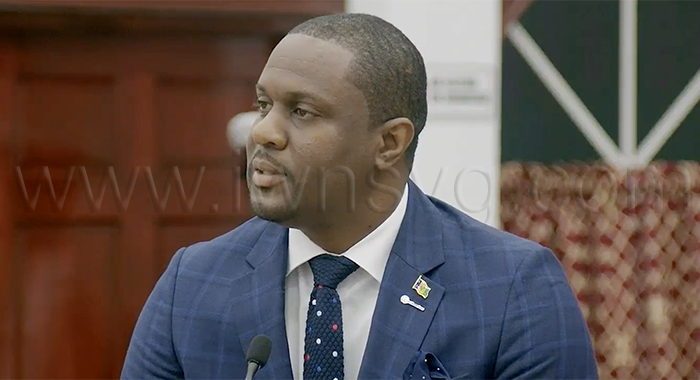
    St. Vincent and the Grenadines is gearing up for its first Vincymas carnival since the November general election that brought the New Democratic Party to power, marking a key milestone for the island nation’s new administration. This event also holds special significance as the first press conference attended by newly appointed Minister of Culture and the Creative Industries, Kaschaka Cupid, who also holds youth and sports portfolios, since he assumed leadership of the ministry that oversees the country’s flagship cultural festival.

    During Wednesday’s press conference — his first public appearance focused on carnival planning since taking office — Cupid offered public commendation to the Carnival Development Corporation (CDC) board, event staff, and local law enforcement for their relentless work to deliver the festival amid tight budget limitations. He emphasized that the public often only sees the polished final event, while most of the demanding behind-the-scenes work goes unacknowledged, noting that the CDC board was even putting in overtime hours on the morning of the press conference itself.

    Drawing on his prior experience in the sports sector, Cupid outlined his commitment to a hands-on, practical leadership approach for the ministry. He explained that prioritizing close, collaborative relationship-building with the CDC board was a top priority, as the body is responsible for delivering the government’s cultural policy mandates. Unlike frameworks that treat the annual carnival as just a one-off seasonal celebration, Cupid framed Vincymas as the country’s most compelling cultural attraction, positioning it as a core pillar of a broader long-term strategy that ties cultural preservation to economic development.

    On the topic of event safety, Cupid echoed and endorsed earlier remarks from Acting Deputy Commissioner of Police Trevor “Buju” Bailey, and publicly praised the Royal St. Vincent and the Grenadines Police Force for its successful oversight of preceding rural carnival events. He extended special recognition to Deputy Prime Minister St. Clair, who oversees the national security portfolio, crediting the sustained, visible police presence for the complete absence of reported violence or major infractions during rural celebrations, even when events tend to draw large, energetic crowds. Cupid noted that robust security directly builds public and visitor confidence: when attendees feel safe at festival events, they are far more likely to return for future celebrations, boosting the long-term reputation and appeal of Vincymas as a tourist and cultural destination.

    Looking ahead to 2026’s iteration of the post-Lenten festival, which marks its 49th anniversary, Cupid framed the celebration as both a tribute to Vincentian cultural identity and a unifying force to bridge political and social divisions across the country. Using a familiar cricket metaphor, he warned against getting ahead of oneself by focusing too far in advance on the upcoming 50th anniversary celebration scheduled for 2027. He aligned his vision with the 2026 theme, “The Great Escape”, explaining that the festival is designed to give all Vincentians a space to decompress from everyday stress and connect with their community.

    He added that Vincymas provides an unmatched platform for local creative talent: musicians, artisans, cultural practitioners and other creatives get the opportunity to showcase their skills not just to a local audience, but to regional and international guests, putting Vincentian culture on the global map. Most importantly, Cupid stressed that the festival can bring a divided nation back together at a time of ongoing political and social challenges. He urged all Vincentians to set aside differences, leaning on the shared rallying cry “We are one Vincy” to embrace a shared national and cultural identity during the celebration.

    Beyond just encouraging ticket sales and event attendance, Cupid issued a heartfelt call for widespread public support for the artists and cultural workers that make Vincymas possible. He noted that performers and creators face significant pressure to deliver high-quality displays and performances year after year, and that public support goes far beyond just buying a ticket. Small acts of encouragement, kind words, and public respect for creative workers make a meaningful difference in their work, he argued, noting that as a politician, he understands firsthand the pressures of public-facing work, and that empathy and positive reinforcement drive better outcomes across every sector.

    Cupid closed by reaffirming his ministry’s commitment to providing ongoing, hands-on support to the CDC throughout the 2026 Vincymas process, framing the festival as a rare shared opportunity to deliver both national unity and tangible economic benefits for communities across St. Vincent and the Grenadines.

  • ‘No 6ixx and 7even violence’ for carnival – ‘Buju’

    ‘No 6ixx and 7even violence’ for carnival – ‘Buju’

    As preparations ramp up for one of the Caribbean’s most anticipated annual cultural celebrations, the acting deputy commissioner of the Royal St. Vincent and the Grenadines Police Force, Trevor “Buju” Bailey, has issued a bold public guarantee: the 2026 iteration of Vincy Mas will retain its long-held reputation as the safest carnival in the entire region.

    Bailey delivered his firm security pledge during an official press conference hosted by the Carnival Development Corporation (CDC) on Wednesday, sending a direct warning to any potential troublemakers: anyone who attempts to bring violent conflict into the capital city of Kingstown during the 10-day festival will be confronted head-on by law enforcement.

    In recent months, local public safety has been roiled by rising gang-related tensions, with two rival groups identified by the numerical monikers “6ixx” and “7even” emerging as the primary sources of conflict. Bailey addressed these tensions head-on, reframing the numerical narrative around carnival security to center the unified force of law enforcement. “I want to replace the six and the seven with one number — one Royal St. Vincent and the Grenadines Police Force. That is the only number that we carry: one,” he stated.

    To potential gang members planning to bring inter-group violence to the celebrations, Bailey delivered an unmistakeable message: “If you have any bad intention, keep your intention to yourself. If you bring it to Kingstown, you will come head on with number one, and we will flex our muscles, and I’m saying it boldly. We will flex our muscles as hard as we can if you bring any 6ixx and 7even violence… because we get serious when it comes to that.”

    Bailey structured his security advocacy around a striking “10 to 1” framework, highlighting the broad cross-section of stakeholders united in their demand for a peaceful festival. He counted the Minister of National Security, the Commissioner of Police, the CDC, the Ministry of Health, local vendors, event promoters, school children, the national taxi association, and local merchants as nine of the ten voices calling for calm — with the unified police force representing the tenth. This aligns with the well-known local idiom “ten to one is murder,” meaning overwhelming advantage for the side holding majority support.

    “Now, if I give you 10, there’s that old saying ‘10 to one is…’ and I’m leaving it right there. I am not saying the other word,” Bailey noted. “I’m just saying 10 to one is — so there are 10 of us against you alone. So don’t bring no 6ixx and 7even violence into our carnival. We’re going to stamp that out.”

    As a key demonstration of the force’s preparation, Bailey pointed to recent successful security operations at smaller rural carnival events held across St. Vincent. Two major regional carnivals, held the prior weekend in Georgetown and Chateaubelair, were policed with reinforced personnel numbers, and passed without major incidents. That model, he confirmed, will be scaled up for the national 2026 event.

    “None of those events had a shortage of police. We ensured that there were more than enough security personnel on the ground, and that is an indication that come 2026 for the national carnival, there’s going to be no shortage of police presence in and around Kingstown,” Bailey said.

    The acting deputy commissioner acknowledged that carnival inherently brings large crowds, widespread alcohol consumption, and public revelry, and emphasized that law enforcement has no intention of disrupting the festive atmosphere. Rather, the police’s goal is to create a controlled, secure environment where all attendees can celebrate safely. “We know that for the 10‑day period, people are going to come to Kingstown, they’re going to consume the alcohol, they’re going to enjoy all of the shows, they’re going to patronise the bars, and we want people to come and do that,” he said. “You will be doing so in an environment that is safe and secure.”

    To deliver on that promise, Bailey confirmed that uniformed officers will maintain high visibility across all areas of Kingstown throughout the festival. “At every corner, at every junction, when you travel Kingstown, you will interface with police officers who are dressed in the uniform of the Royal St. Vincent and the Grenadines Police Force, so the environment to party, the environment to revel will be safe,” he said.

    In a nod to the festive context, Bailey confirmed that officers have received internal guidance to exercise measured tolerance for minor misbehavior linked to alcohol and celebration, such as occasional offensive language. Officers are instructed to de-escalate first, issuing a verbal warning to misbehaving attendees before turning to formal arrest. For example, officers may simply remind intoxicated attendees to adjust their behavior and encourage them to head home if they have overconsumed.

    However, Bailey stressed that this flexibility is not a free pass for serious disorder. “It is not a licence for you to come to Kingstown and drink and misbehave and figure that because I say we’re going to be flexible, you come and mash up the place,” he warned. “We will not allow that behaviour to get too excessive.”

    A core pillar of the 2026 security plan is a strict “no glass bottle” policy across all of Kingstown and surrounding carnival venues. Under the new rule, all vendors will be required to serve alcoholic and non-alcoholic drinks in disposable plastic cups, and attendees will be prohibited from carrying glass containers through public festival areas. The policy will be formalized by Minister of National Security St. Clair Leacock, who will officially designate the relevant areas as no-glass-bottle zones.

    “It is an offence to traverse the streets walking with your Guinness and your beer in the bottle like that. We don’t want to have to arrest anyone for that violation. All we simply ask is that you pour your drink into a plastic glass and enjoy your drink,” Bailey explained. Officers have also been instructed to enforce the rule with flexibility: rather than confiscating and pouring out drinks from attendees found with glass, officers will ask holders to either pour the beverage into a provided plastic cup or finish the drink on-site before surrendering the container.

    Reaffirming the police force’s commitment as a core partner to the CDC, Bailey closed by repeating his guarantee that the 2026 Vincy Mas will live up to its regional reputation for safety. “Vincy Mas is indeed the safest carnival in the region, and… 2026 is going to be no exception,” he said. “We’re going to give the full, full support and ensure that Vincymas is a successful one.”

  • Vincymas must be culture over ‘a festival of fetes’ – CDC chair

    Vincymas must be culture over ‘a festival of fetes’ – CDC chair

    Ahead of the 10-day launch of St. Vincent and the Grenadines’ flagship annual celebration Vincymas 2026, the top leader of the festival’s organizing body has issued a urgent call to safeguard the event’s deep cultural roots amid growing pressure to prioritize profit-driven, high-cost commercial events.

    Ricardo “Ricky” Adams, chairman of the Carnival Development Corporation (CDC), made the remarks Wednesday during the final pre-festival press briefing, laying out his concerns that overcommercialization risks stripping Vincymas of the cultural identity forged by generations of southern Caribbean creators.

    Adams argued that while premium, paid events have a valid role in modern carnival programming, centering the festival exclusively on high-priced all-inclusive fetes — some costing as much as $300 to $400 per night — creates unnecessary barriers for ordinary Vincentians, locking out low- and middle-income residents from participating in a celebration that belongs to the entire community. Beyond exclusion, he warned, this shift weakens the cultural core that makes Vincymas and similar Caribbean carnivals unique globally.

    “Sadly, some stakeholders now believe the future of carnival lies in reducing it to nothing more than a sequence of commercial parties, where only those who can afford the biggest, most expensive events get to enjoy the celebration,” Adams told reporters. “We cannot forget that not everyone can manage those price points. If we abandon our cultural foundation, we will no longer stand out as a distinct cultural celebration — we will just be another generic festival of music and parties.”

    The CDC chairman emphasized that the southern Caribbean is the original birthplace of many of carnival’s most iconic art forms, a legacy that must be actively protected rather than sidelined for short-term commercial gain. He pointed to data that the vast majority of skilled steelpan players, tuners, and arrangers worldwide hail from the southern Caribbean or are descendants of regional creators. The same holds true for mas (costume) band designers across global carnival markets, and soca music itself, the genre that defines modern carnival, originated entirely in the southern Caribbean, Adams noted.

    Without intentional investment and protection of this local creative legacy, he warned, the region risks ceding control of its own cultural tradition to outside forces, reducing Vincentians from creators and stewards to mere consumers of carnival content produced elsewhere. “If we fail to protect this core part of our identity, we will end up just paying to consume music, creativity, and pan that was made in other places,” he said.

    Adams also addressed the emerging influence of artificial intelligence on carnival music, noting that the festival’s planning has centered on prioritizing local Vincentian creativity even as the technology becomes more widespread in the industry.

    Branded “The Great Escape,” Vincymas 2026 is entering its final stretch of preparations, with a full schedule of events balancing new cultural and commercial initiatives, a strong focus on youth participation, and a commitment to broad public access. The festival’s rural segments are already underway, and the official 10-day run of core events will kick off June 26.

    Adams walked reporters through the full remaining calendar, kicking off with a cultural welcome activation at Argyle International Airport this Sunday, a tradition CDC launched last year to greet arriving visitors with local performances, merchandise, and authentic cultural experiences. New this year is a post-festival departure activation called “Promise to Come Back,” which will collect attendee feedback to help organizers refine future programming to match what local and visiting attendees actually want to see.

    The first major core event is Fantastic Friday, the Calypso Semifinals, scheduled for June 26. The last weekend of June will host Junior Festival Weekend, featuring Junior Carnival on June 27, Junior Panorama on June 28, and Junior Calypso and Soca on June 30. During this period, Victoria Park will be transformed into a family-friendly “mini Coney Island” for attendees of all ages.

    Running from July 1 to July 8 at the E.T. Joshua Tarmac, the Flavours of Vincy Mas Food Village will showcase local culinary traditions. July 2 will bring Steel & Glitter, the senior Panorama competition, followed by the return of the popular all-white signature event Evo – A Night in the Clouds on July 3.

    One of the festival’s most anticipated events, the Soca Monarch competition, will take place on July 4, and Adams reported overwhelming interest from artists this year, with 179 preliminary entries. After semifinal judging, 25 finalists were selected, and organizers added a new “Wild Card” slot to tap into public enthusiasm, allowing fans to vote for any additional artist they want to see in the finals. The initiative drew 3,700 votes in just the first 24 hours after opening, a sign of strong public buy-in that Adams said gives young fans more agency over the festival lineup.

    July 5 will see Dimanche Gras, featuring the band king and queen competition alongside the Calypso finals. On July 6, J’ouvert and Monday Jam will take over the streets of Kingstown, with organizers reporting a resurgence of interest in traditional carnival forms. Adams highlighted ongoing work by cultural advocates to revive iconic traditional traditions including the Monkey Band and the Boosy Back. The festival will conclude with the grand Mardi Gras parade on Carnival Tuesday, which will bring the full spectacle of mas back to the streets for the traditional closing celebration.

    Adams closed by reaffirming the festival’s goal: to deliver a safe, culturally rooted event that delivers meaningful economic benefits to St. Vincent and the Grenadines and connects with the wider global Vincentian diaspora.

  • OECS free movement — the wind beneath our wings?

    OECS free movement — the wind beneath our wings?

    Fifteen years after its founding, the Organization of Eastern Caribbean States (OECS) Economic Union has fundamentally redefined conceptions of regional borders and shared citizenship for member states across the Eastern Caribbean archipelago.

    Established under the Revised Treaty of Basseterre, the union’s free movement protocol grants citizens of seven participating member states — including St. Vincent and the Grenadines — unprecedented freedoms: the ability to travel across member borders using only a national identification card, the right to reside indefinitely in any participating nation, and permission to work without the burdensome administrative requirements of a traditional work permit. This framework represents an ambitious, forward-looking vision of a borderless sub-region. But against the backdrop of today’s shifting national and regional economic realities, a critical question demands attention: has this integration project delivered on its promise of shared growth, or is the region navigating unaddressed turbulence that threatens its long-term success?

    There is no question that the right to free movement has become an invaluable lifeline for the region’s small island states. These nations face inherent structural vulnerabilities and constant exposure to external shocks, from extreme climate events to global economic volatility. When catastrophic disasters strike — as seen during Hurricane Maria’s devastation of Dominica, the eruption of the La Soufriere volcano, and more recently Hurricane Beryl — the ability of displaced citizens to relocate immediately to neighboring islands without bureaucratic red tape has allowed them to access safety, emergency shelter, and new livelihoods when their home nations’ infrastructure is destroyed. This represents a landmark step beyond traditional disaster response, reflecting a proactive commitment to regional solidarity from OECS heads of government.

    Beyond crisis response, streamlined labor mobility addresses a long-standing, crippling economic mismatch across the bloc. Many member islands currently face crippling labor shortages in key economic sectors including agriculture, tourism, and construction, while neighboring nations grapple with high rates of underemployment and limited job opportunities. The free movement framework allows surplus workers from labor-glutted states to seamlessly fill gaps in understaffed sectors across the region. More than just a short-term fix, this integration creates a single unified economic space that expands the bloc’s fragmented small local markets, turning a scattered archipelago of small economies into a single, stronger competitive force.

    Still, on-the-ground perspectives reveal that the benefits of integration have not been evenly distributed across all member states and populations. Smaller host nations have voiced quiet but persistent anxiety about the strain that gradual population inflows place on localized public infrastructure. Concerns range from overcrowded primary school classrooms to increased pressure on under-resourced public health systems, and long-term solvency risks for national social safety net programs including national insurance schemes. It is important to note that official data does not support fears of a sudden, unmanageable influx, showing instead a slow, steady pattern of movement across the bloc.

    At the same time, lower-income member states face growing brain drain, an issue that has become a major barrier to national development. Experienced, qualified professionals including teachers, nurses, and skilled technical workers often leave their home nations for higher wages and better benefits in more affluent OECS member states, leaving critical gaps in core public services and private sector development in their countries of origin.

    Compounding these structural challenges, persistent inconsistencies in port of entry processing across the bloc reveal that administrative cultural change lags far behind formal treaty commitments. Even when travelers present valid national identification cards in line with protocol rules, many still face lengthy interrogations and unnecessary delays from immigration officials, meaning the promise of truly hassle-free cross-border movement remains unfulfilled, existing only on paper rather than in practice.

    Fortunately, regional governing bodies have begun taking intentional action to address these systemic gaps. On June 10, the OECS Commission hosted a public webinar focused on “Free Movement of People, Contingent Rights and Border Services,” where leaders pushed for widespread adoption of the proposed Contingent Rights Model Bill. While this landmark piece of legislation does not resolve every challenge facing the union, it establishes critical protections: when an OECS citizen relocates to another member state, their spouse and dependent children will automatically gain equal access to primary healthcare, primary education, and social protection programs across the bloc. True freedom of movement cannot only grant the right to cross a border; it must also grant the right to build a stable, secure life in a new host nation.

    The free movement regime at the heart of the OECS Economic Union carries enormous potential to lift the entire region to unprecedented shared economic prosperity. But to unlock this potential, member state governments must move beyond empty political rhetoric around integration. They need to fully harmonize conflicting domestic legislation, make targeted, substantial investments in public infrastructure to accommodate gradual population movement, and enact the Contingent Rights Model Bill into national law across all participating states.

    Only when the social rights of mobile workers and their families are fully protected will this regional integration framework stop feeling like a volatile crosswind that threatens stability, and become the steady, lifting wind that carries the entire bloc toward shared prosperity. Ultimately, the lessons and progress from OECS integration can serve as a model for the broader Caribbean Community (CARICOM) as it works toward achieving truly seamless, equitable economic integration across the entire Caribbean region.

    *The views expressed in this commentary are those of the author and do not necessarily represent the official editorial position of iWitness News.*

  • Shallow says cruise port deal a ‘no-brainer’

    Shallow says cruise port deal a ‘no-brainer’

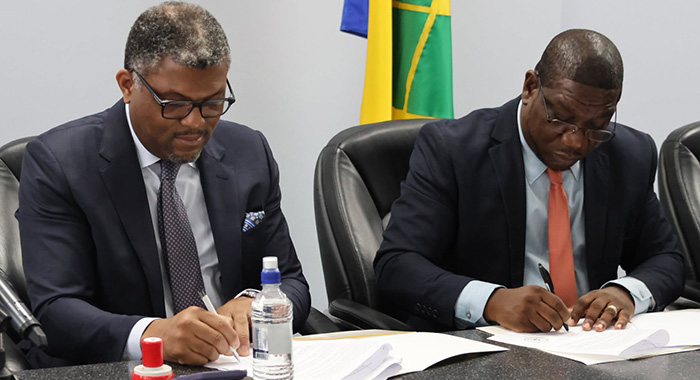
    St. Vincent and the Grenadines’ new government has entered into a landmark 30-year concession partnership with Global Ports Holdings (GPH), the world’s largest cruise port operator, to revitalize the aging Kingstown Cruise Terminal and boost the country’s underperforming cruise tourism sector. The partnership, formalized via a signed memorandum of understanding (MoU) by the newly elected New Democratic Party (NDP) administration, will bring a phased total investment of up to EC$255 million into the terminal and national tourism infrastructure over the course of the agreement.

    The Kingstown Cruise Terminal, which was originally constructed by the NDP in the late 1990s, has not received any major expansion or comprehensive upgrade in more than 25 years. After the Unity Labour Party took office in 2001 and held power until its election defeat in November 2024, the facility remained the country’s only purpose-built cruise ship pier, falling badly behind competing regional destinations in infrastructure and service quality.

    Tourism Minister Kishore Shallow has defended the partnership as an obvious strategic decision given the terminal’s consistent financial drain on public coffers and the country’s strained national budget. Speaking on local radio station Hot 97 FM, Shallow disclosed that the terminal has operated at a net loss for four of the past five years, forcing the government to inject more than EC$15 million in public funds just to keep the facility operational over that period. Only 2023 delivered a small profit, totaling just EC$266,000 — a figure that highlights how little the current publicly run model benefits the public purse, Shallow argued.

    Shallow framed the deal as a clear choice between taking on costly new public debt to fund much-needed upgrades, or partnering with a global industry leader that brings both the required capital and specialized expertise to the project. “Do we have the capital now to invest in our port? The answer to that is no. Can we access it as a loan? Yes. Do we want more loan? No. Not for the port, certainly,” he told radio listeners.

    Unlike many similar regional public-private partnerships, the St. Vincent and the Grenadines agreement includes two unprecedented provisions that prioritize local stakeholder participation, Shallow noted. Up to 30% of equity in the concession operating company will be reserved for ordinary Vincentian investors, and the arrangement guarantees at least one local representative on the company’s board of directors to permanently protect national interests. A public prospectus detailing revenue streams, fee structures and other key terms of the investment will be released to allow potential local investors to make informed decisions before they commit to buying equity. Any dividends generated by the concession will be distributed to shareholders, with 30% of all profits returning to local investors, Shallow added.

    The minister emphasized that the 30-year concession does not equate to selling off the national asset. After the agreement expires, full ownership of the upgraded terminal and all related infrastructure will revert to the government and people of St. Vincent and the Grenadines. “So just imagine you invest 250-something million dollars, and then after that we own the entire thing… They’re not walking with the port when they leave,” he explained.

    Beyond upgrading the terminal itself, the partnership is designed to address deep structural gaps that have held back St. Vincent and the Grenadines’ cruise tourism competitiveness. Official data shows that average annual cruise passenger arrivals over the past five years (excluding the COVID-19 pandemic travel shutdown) have hovered around just 230,000, far lower than peer regional destinations. Average per-passenger spending in St. Vincent is only around US$59, the lowest rate across the Caribbean. The current out-of-date infrastructure also means the country cannot accommodate larger, more modern cruise vessels that carry higher-spending tourists, and the country lacks the diversified onshore tourism attractions that draw longer visits and greater spending.

    The first phase of the project, which will require an initial investment of more than EC$55 million, focuses on urgent upgrades to the existing terminal, including a full renovation and transformation of the terminal building, improved pedestrian connections between the port and downtown Kingstown, and targeted investment in tourism attractions across all of the country’s islands. Shallow explained that this investment in broader national tourism sites was a key negotiated priority to ensure the partnership delivers widespread benefits across the country, not just at the port itself.

    Shallow noted that redirecting the EC$15 million in annual public subsidies that currently prop up the loss-making terminal to core public services would bring immediate benefits to all Vincentians. “Just imagine if we didn’t have to spend that 15 million there, and we could invest that in healthcare, education, [and] improve our roads. That is what is in front of us here,” he said.

  • ‘Missing plane’ found; investigation ‘very delicate’ — Leacock

    ‘Missing plane’ found; investigation ‘very delicate’ — Leacock

    A missing Dominican-registered light aircraft that disappeared en route from St. Vincent and the Grenadines to Tobago earlier this month has been located, with no fatalities or crash having occurred, according to the country’s top security official. But St. Clair Leacock, Deputy Prime Minister and Minister of National Security, has urged the public to remain patient as investigators navigate what he calls a highly sensitive ongoing security operation, limiting what details can be released publicly.

    The incident unfolded on June 12, when a twin-engine Beechcraft Baron B58T, registered HI1145, departed Argyle International Airport at 11:52 a.m. local time, bound for Tobago’s A.N.R. Robinson International Airport. Two people were on board, and the flight was scheduled to take just one hour and five minutes. Civil aviation authorities confirmed that the aircraft maintained normal radio communication with Argyle air traffic control until it reached a point 40 nautical miles south of the airport, the southern boundary of St. Vincent and the Grenadines’ controlled airspace. After communication was handed off to the next air traffic control jurisdiction, contact with the plane was lost, and it never arrived at its destination.

    The loss of contact triggered an immediate alert and the activation of a formal distress phase, with search and rescue operations launched shortly after. In a public statement, the Ministry of Tourism, Civil Aviation and Sustainable Development confirmed it remained committed to upholding safe and secure flight operations within the country’s airspace, and pledged to share new updates as they become available.

    Speaking on the ruling New Democratic Party’s weekly radio programme “New Times” on NICE Radio this Monday, Leacock shared the first official confirmation that the missing aircraft has been located. Drawing on information provided by regional and international security partners, the minister confirmed the plane had not crashed, and no lives have been lost. He emphasized that the situation remains an extremely delicate security matter, and that strict operational confidentiality constraints limit what he can disclose to the public.

    Leacock told listeners he has been in constant contact with St. Vincent and the Grenadines’ Police Commissioner as well as regional security agencies since contact with the plane was lost on Sunday. “I have been very guarded in what I say,” he noted, adding that the investigation remains at a stage where specific details of the outcome cannot be released publicly. “To the best of my knowledge, the aircraft has not crashed and there had not been a loss of life, and international, regional, and national agencies are following developments very closely. Aircraft don’t fly themselves — there are people operating that aircraft, so agencies are working to determine the appropriate course of action,” Leacock said.

    Leacock acknowledged that the public’s desire for more details is understandable, but said his office must balance the public’s right to transparency with critical operational security requirements. “I, out of professional duties and responsibilities, cannot at this time provide the public with more details as to what is happening in this very delicate security matter,” he said.

    This is not the first such unexplained aircraft incident in St. Vincent and the Grenadines in recent years, Leacock confirmed. In December 2023, a 21-seat Gulfstream aircraft departed the island of Canouan for a scheduled sightseeing trip, with three passengers and one pilot on board. The plane was expected to return to Canouan two hours after departure, but all contact was lost just six minutes after takeoff. The aircraft was eventually located thousands of miles away in Africa months later. Then-prime minister Ralph Gonsalves reported at the time that intelligence from regional and international partners suggested the plane’s transponder had been intentionally turned off, and Vincentian authorities were in contact with relevant Latin American governments over the case.

    Responding to a caller on the radio programme who pressed for more details and public reassurance, Leacock reiterated that he is barred from sharing additional specifics, but confirmed that relevant security agencies already have full knowledge of the aircraft’s current location, flight history, and the identities of the people on board. “I can tell you that no lives are lost. The international agencies know where the plane is. The regional agencies — the CARICOM IMPACS, regional security system — our own police force know where the plane is, they have names, they know the flight history… but they are still in the middle of an active operation, and speaking prematurely would compromise the quality of the work that’s taking place,” Leacock said. “Those who would like me to speak in more specific terms have to understand that sometimes for the Minister of National Security, less said is better,” he added.

    Leacock also addressed growing criticism of his handling of the case on social media, where he said users have resorted to personal attacks and name-calling. “I see people on social media call me by all kind of bad word names, and so forth, but sometimes I still got to keep a wise head,” he said. He warned that disclosing sensitive details prematurely could put both the ongoing operation and personal safety at risk, noting “I have to look at my own safety and welfare and well-being, and others as well.”

    One caller raised broader institutional questions, arguing that two unexplained aircraft disappearance incidents in just a few years demonstrate that civil aviation oversight should be moved from the Ministry of Tourism, where it currently sits, to the Ministry of National Security, given the clear national security implications of these events. Leacock responded that the assignment of ministerial portfolios is ultimately a decision for the prime minister, and the arrangement is not as clear-cut as critics suggest. “Civil aviation can have a relationship too with tourism, because it’s dealing with airports, dealing with aeroplanes, dealing with pilots… It can logically be placed there. But in the same breath, airports fall under infrastructure alongside seaports, and wherever you have aviation and airport travel, there’s a huge element of security… So it could also fall under national security,” Leacock explained. He stressed that even though civil aviation does not formally fall under his portfolio, national security agencies have played a central role in the response to this incident from the start. “It is not fixed and cast in stone… It is now not under national security, but that doesn’t mean that national security doesn’t have an interest,” he said.

    Leacock also connected the current response to broader regional security cooperation efforts he has participated in recently, noting that during recent meetings in Trinidad and Tobago and Barbados, he received briefings on joint regional systems designed to track both air and maritime movements across the Caribbean. He noted that as the U.S. government has reduced its maritime patrol presence in the region, the number of unvetted vessels and aircraft transiting Caribbean airspace and waters has increased, making shared regional surveillance capabilities more critical than ever. The same network of agencies and tracking technology used for broader regional security is now being deployed in this aircraft investigation, Leacock confirmed.

  • The revolution eats its own

    The revolution eats its own

    In the aftermath of St. Vincent and the Grenadines’ 2025 general election, one of the most striking shifts in the nation’s political landscape has gone largely underexamined: the growing disconnect between a group of self-styled reform advocates who campaigned for regime change, and their inability to adjust to the reality of democratic governance after their preferred party took power.