标签: Saint Vincent and the Grenadines

圣文森特和格林纳丁斯

  • Youth violence in SVG giving COP ‘headache’

    Youth violence in SVG giving COP ‘headache’

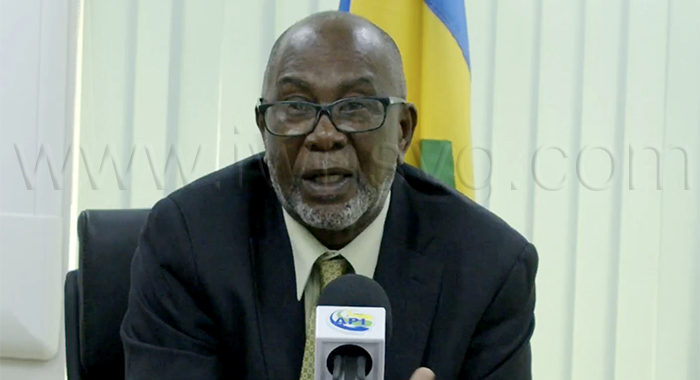
    During a joint press briefing with Minister of National Security St. Clair Leacock, St. Vincent and the Grenadines Commissioner of Police Enville Williams has identified youth violence as the most pressing public safety challenge currently facing the Caribbean nation, pushing law enforcement to pivot beyond traditional arrest-focused strategies toward community-centered prevention.

    The remarks from Williams came shortly after he and Leacock returned from a four-day regional security gathering in Castries, St. Lucia, where Leacock formally assumed the one-year rotating chairmanship of the Regional Security System (RSS), a bloc of eight Caribbean nations focused on cross-border security coordination. At the meeting, member states prioritized developing tailored, jurisdiction-appropriate responses to the growing crisis of youth involvement in violent and antisocial behavior, a concern shared across the entire region.

    Williams explained that in line with National Security Ministry policy that favors preventive “soft force” engagement over reactive enforcement, local law enforcement has already held internal consultations to design alternative strategies that intervene before young people commit crimes. He argued that early community outreach delivers far greater long-term benefits for the entire nation than mass incarceration of youth offenders. “If we engage young people from a community standpoint before they commit a crime, that the outcome is far greater for us as a country as a whole, as opposed to sending a young person to prison,” Williams said, outlining the core philosophy behind the new approach.

    Regional security leaders have collectively restarted their strategic planning process to develop community-focused engagement tactics that go beyond routine arrest and prosecution. Williams outlined that these strategies range from having officers participate in local youth sports activities to deploying police and military bands for casual community performances, all aimed at building positive connections between law enforcement and young residents. The overarching goal, he emphasized, is to shift police-youth interactions away from purely punitive encounters, to help marginalized young people develop a sense of belonging in broader society — a factor Williams says is often missing for young people who turn to antisocial behavior.

    As a successful existing model, Williams highlighted the mentorship program run by the Stubbs Police Youth Club, and called for expanding the initiative to reach young people who are not currently part of the club’s membership, noting that many at-risk youth simply need consistent guidance and a trusted person to talk to. Since taking office as police commissioner in 2023, Williams has also actively reached out to local media outlets, particularly morning radio talk show hosts, to partner on prevention efforts.

    A key point of collaboration Williams is pushing for is changes to radio programming, arguing that the constant stream of violent lyrical content and gang-glorifying music played on popular stations has a measurable subconscious impact on impressionable young people. He noted that regional security leaders have specifically observed that youth involved with two prominent gangs, Sixx and 7even, repeatedly consume music and music videos that glorify gang violence, normalizing harmful behavior before they ever engage in criminal activity. If media outlets agree to reduce the circulation of this harmful content, Williams argued, law enforcement will be far more successful at reaching at-risk youth with positive messaging.

    Williams stressed that while the crisis is urgent, it is not irreversible — but collective, immediate action from all sectors of society is non-negotiable. “I don’t think we have gone too far, but I think we need to step in now. Now is the appropriate time for us to rub shoulders together as a nation and do something for our young people,” he said. As a small island nation, St. Vincent and the Grenadines cannot afford to lose an entire generation to violence, Williams warned, emphasizing that continued inaction would lead to devastating long-term consequences for the country.

  • Region faces structural challenge to dev’t — ECCB governor

    Region faces structural challenge to dev’t — ECCB governor

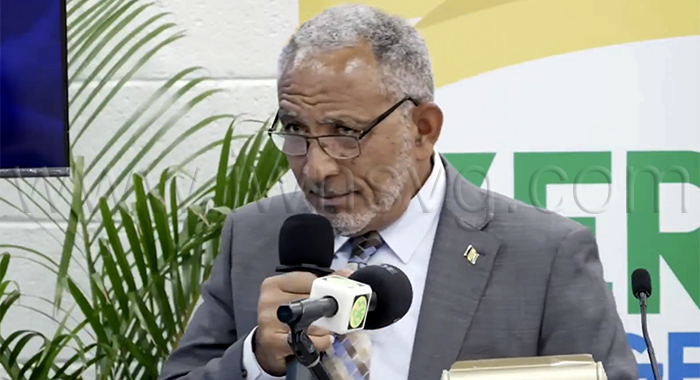
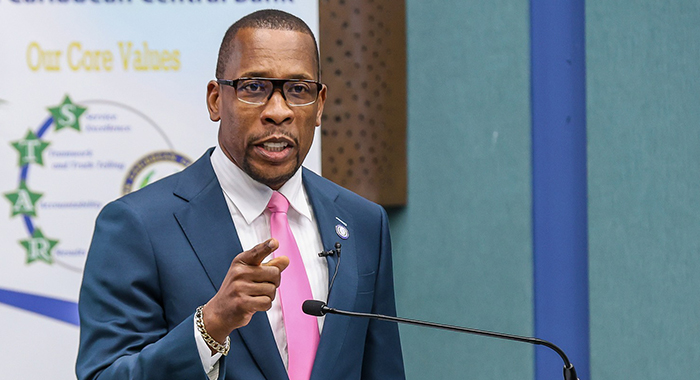
    At a high-profile launch event this Thursday, Eastern Caribbean Central Bank (ECCB) Governor Timothy Antoine has laid out a bold, decade-long strategic plan aimed at doubling the Eastern Caribbean Currency Union (ECCU)’s total GDP and lifting collective citizen prosperity, centered on an initiative branded “The Big Push: Collective Action for Shared Prosperity in the ECCU”.

    Three years in the making, the plan began as a provocative question Antoine posed to regional stakeholders: what would it take to double the size of the ECCU’s economies over 10 years? Today, that hypothetical vision has transitioned into a concrete, actionable roadmap for transformative change. To deliver meaningful, inclusive growth that residents can actually feel — not just measure on spreadsheets — Antoine argues the region must completely reimagine its long-standing development model, and confront a series of unvarnished, unavoidable structural challenges holding back progress.

    Contrary to framing the region’s stagnation as a temporary, cyclical downturn, Antoine emphasizes that the ECCU’s growth obstacles are deeply structural. He outlined several critical constraints that demand urgent attention: over 80 percent of the food consumed across the bloc is imported, driving exorbitant food import costs and contributing to elevated rates of diet-related disease and mortality. Nearly 90 percent of the region’s energy comes from polluting fossil fuels, pushing up electricity prices for households and businesses and eroding the international competitiveness of local industries. Intra-regional connectivity is another persistent pain point: transport links are so costly and inefficient that it is often cheaper for ECCU residents to travel to major North American hubs like New York or Miami than to neighboring Caribbean nations such as Barbados or Trinidad.

    Additional systemic challenges include stagnant or falling labor productivity across the bloc, paired with ongoing population decline that creates a major headwind for economic expansion. Antoine also highlighted that access to credit for private sector businesses remains far too limited, a gap that stifles entrepreneurship and job creation. “How do you grow and double the size of an economy with a falling population? We have to arrest this issue, folks. We have to wrestle with these issues and we have to solve them,” he stressed.

    Antoine was clear that “The Big Push” is no empty political slogan. Instead, it is a coordinated transformation strategy that relies on cross-regional collaboration and consistent execution, with core priorities of economic diversification, enhanced climate and economic resilience, improved competitiveness, and above all, shared prosperity that puts people first. The plan’s ultimate goals are deeply tied to everyday livelihoods: it aims to create meaningful professional opportunities for young graduates at home, so they do not have to leave their communities to build careers; support local farmers to produce competitively and cut reliance on food imports; and create the conditions for small businesses to expand and generate new local jobs.

    “Taken together, these hard truths are not mere inconveniences. They are structural constraints on our growth, our resilience, and our sovereignty,” Antoine said. He warned that continued inaction on these long-standing issues carries steep costs, noting that “inaction is not neutral; it compounds and accelerates decline” — making delay no viable option for regional leaders and stakeholders.

    The ECCB governor emphasized that the 10-year plan is designed to address these gaps head-on, but stressed that the central bank cannot deliver the initiative alone. “The big push is not a panacea and it is not the responsibility of the ECCB alone,” he explained. “We can choose to either curse darkness or light a candle. This strategic plan lights candles on many of these issues, but we cannot do it alone.”

    Antoine added that while the plan is undeniably ambitious, it is a necessary step forward for the region. The ECCB’s core role is not to generate growth directly, but to create the stable, enabling conditions that make growth possible: maintaining a strong Eastern Caribbean Dollar, safeguarding the regional financial system, and building sustained confidence among investors and residents alike. Collective action across public, private, and civil society stakeholders, he said, will be the key to turning the vision of doubled, shared prosperity into a reality for all people of the ECCU.

  • US drone strikes pose ‘zero threat’ to Vincy fishers — COP

    US drone strikes pose ‘zero threat’ to Vincy fishers — COP

    A cloud of uncertainty has hung over Caribbean fishing communities in recent weeks after a series of lethal US military drone strikes on vessels operating in regional waters, including one strike carried out in the exclusive economic zone of St. Vincent and the Grenadines (SVG) back in February. The United States has justified the operations by stating the targeted boats were involved in illicit narcotics trafficking, but the incident has sparked significant backlash after claims emerged that three deceased individuals from St. Lucia were actually legitimate small-scale fishermen, not drug traffickers, according to their family members.

    In the wake of growing public anxiety among SVG’s fishing community, top security officials have moved to address widespread fears, delivering public reassurance that local fishermen can return to their work on the open ocean without fear of accidental targeting. The joint announcement came during a press conference held in Kingstown on Wednesday, April 1, shortly after National Security Minister St. Clair Leacock and Police Commissioner Enville Williams returned from the Regional Security System (RSS) Council of Ministers’ Meeting held in St. Lucia between March 23 and 27.

    During the summit, Leacock formally took over the rotating one-year chairmanship of the eight-member regional security bloc from St. Lucia Prime Minister Phillip Pierre. Addressing reporters’ questions about the February strikes directly, Commissioner Williams delivered a clear, unqualified assurance to local fishing workers. “I want to take the opportunity to say to our fisherfolk that there is no threat to you going to sea to ply your trade; like zero threat to you. None,” Williams stated, emphasizing that US counter-narcotics operations are exclusively focused on criminal actors violating local and international drug trafficking laws. “So, ordinary fishermen and women who are going to sea to ply their trade have nothing to fear, absolutely nothing to fear. And that’s the solemn and honest truth,” he added.

    Williams went on to outline the core mandate and operational structure of the RSS, explaining that the alliance brings together member states to pool shared security resources, align common operating protocols for issues ranging from immigration management to national emergency response, and coordinate action across all areas that impact citizen safety across the Caribbean. “So everything within the member states as it relates to defence and security and response to hazards in case of NEMO (National Emergency Management Organisation) and all of that that touches and concerns citizen security is treated by this alliance as one,” he explained, noting that the bloc operates under a unified security framework to address shared threats.

    Despite the reassurance for fishermen, reporters pressed Williams on critical unanswered questions surrounding the US strikes: why the United States launched operations that destroyed at least three vessels in regional waters, including one in SVG’s EEZ, whether regional authorities granted formal authorization for the US military to operate in these waters, what progress has been made in ongoing investigations into the incident, and what information has been shared with the families of the deceased Caribbean fishermen.

    In response, Williams clarified that inquiries about authorization for the US operations fall outside the scope of law enforcement, framing the issue as a political matter that must be addressed by the country’s political leadership rather than police command. He did confirm, however, that the RSS has opened formal discussions with US counterparts about the incident, and that these talks remain ongoing. Williams added that the head of US Joint Interagency Task Force South (JIATF South), the US military command responsible for counter-narcotics operations in the Caribbean, attended the first two days of the RSS summit in St. Lucia and responded to the same questions raised by local reporters, but that these discussions were held behind closed doors and he could not disclose details of the closed-session exchanges.

    Reporters continued to press officials, presenting a photograph of one of the destroyed boats to challenge the US narrative that the vessels were carrying large drug shipments. Pointing to the small size of the boat, the reporter noted that the minister had previously referenced a 500-million-dollar cocaine seizure connected to the strike, and observed that many legitimate fishing boats across the Caribbean operate with multiple outboard motors, a characteristic the US has cited as evidence of drug trafficking activity.

    At this juncture, Minister Leacock intervened, noting that political questions about the incident should not be directed to the police commissioner, and provided updated context on the discussions held at the RSS summit. Leacock confirmed that during the meeting, RSS delegates were informed that the US has adjusted its previous position of refusing to provide explanations for prior strikes, and has now softened its stance, agreeing to show greater respect for the national sovereignty of Caribbean nations – a shift that emerged as a central topic of negotiation at the summit.

    “ I believe, through the skilful negotiations of the RSS and heads of government and others who will be involved in this exercise, we can anticipate that over time, there will be an increased level of responsiveness and sensitivity to Caribbean jurisdictions and to that key expression that was used: the Caribbean being a zone of peace,” Leacock said, adding that ongoing negotiations are progressing and that the region expects to achieve the transparent, accountable outcomes that Caribbean governments and communities are entitled to.

  • Missing Owia fisherman presumed dead

    Missing Owia fisherman presumed dead

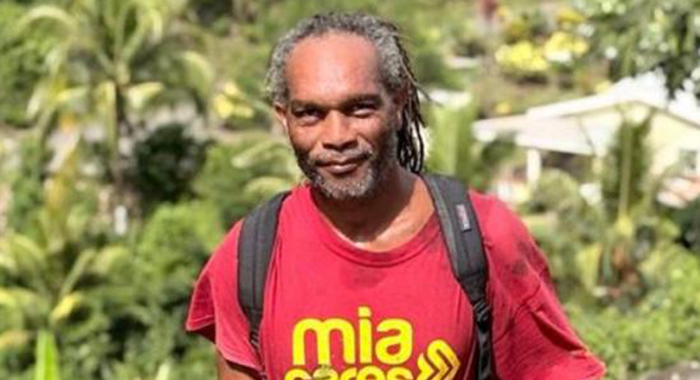
    A widespread search and rescue operation is underway off the coast of northeastern St. Vincent after a 51-year-old local fisherman and farmer failed to return from a solo fishing trip, leaving his long-term partner convinced he has been lost to the dangerous waters the region is known for. Robert Lavia, widely known to local residents as Robbie, set out from his home in Owia at approximately 5 a.m. Wednesday, heading to a stretch of coastline between Rock Gutter and Cramacou, a fishing spot he had frequented in the past.

    According to Annis “Janice” Hoyte, Lavia’s common-law wife for more than two decades, the experienced outdoorsman prepared for his trip a day in advance. On Tuesday, he traveled to a local river to catch crayfish, which he planned to use as bait for his scheduled fishing excursion. Like almost all of his fishing outings, Lavia embarked on this trip alone, carrying only a bucket, a bag, a cutlass, and his fishing lines.

    As the hours stretched into midday Wednesday with no sign of Lavia’s return, Hoyte began to grow concerned. Unused to him staying out this long without checking in, she alerted Lavia’s brother of her worry before filing an official missing person report with the Owia Police Station. The entire village mobilized quickly to launch an initial ground and shore search for the missing man, but as of Thursday, no trace of Lavia has been found beyond a single recovered fishing reel – details of where and by whom the reel was found remain unconfirmed.

    With no signs of life and the well-documented hazards of the area’s waters, Hoyte says she has abandoned hope of finding Lavia alive. Speaking through tears to reporters from iWitness News on Thursday, she shared her theory of what likely befell her partner: “Lavia was on a rock and a swell knocked him off the rock and he knocked his head and he fell in the water.”

    The coastal waters of northeastern St. Vincent have a long-standing reputation for strong, unpredictable currents and unexpectedly large waves, conditions that have proven dangerous for even experienced local fishermen in the past. Hoyte described Lavia as a quiet, reserved man, and said she is overwhelmed by grief at the prospect of having lost him.

    Local authorities have confirmed they received the missing person report on Wednesday, and official search efforts have expanded in the days since. On Thursday, a vessel from the St. Vincent and the Grenadines Coast Guard was spotted conducting patrols and search operations in the coastal stretch between Owia and Fancy, as authorities continue to comb the area for any sign of the missing man.

  • Zero hunger fund must not just feed but ensure food security — PM

    Zero hunger fund must not just feed but ensure food security — PM

    During a 10th-anniversary commemoration for the Zero Hunger Trust Fund (ZHTF) held in Kingstown on Wednesday, St. Vincent and the Grenadines Prime Minister Godwin Friday laid out a transformative new roadmap for the organization, shifting its core mission from emergency food provision to long-term national food self-sufficiency. A decade into the fund’s operations, Friday argues that the next stage of its work must center on empowering Vincentians to produce their own food sustainably, rather than relying on ongoing charitable distribution.

  • No penalty for C’bean countries refusing US deportees — Leacock

    No penalty for C’bean countries refusing US deportees — Leacock

    A key regional security leader has delivered a landmark clarification for Caribbean nations navigating U.S. pressure to accept relocated third-country nationals (TCNs): nations that opt out of accepting these transfers will face no retaliatory action from Washington.

    St. Clair Leacock, St. Vincent and the Grenadines’ Deputy Prime Minister and Minister of National Security and Immigration, took up the annual rotating chairmanship of the eight-nation Regional Security System (RSS), a CARICOM-affiliated security alliance, just last week. Leacock shared details of U.S. responses to regional concerns during a media briefing in Kingstown on Wednesday, following a high-level RSS meeting held last week in St. Lucia.

    Since 2023, the U.S. has ramped up diplomatic outreach to Caribbean countries, pressing for them to accept TCNs — non-U.S. citizens who the U.S. is seeking to deport or relocate, who cannot be immediately returned to their home countries. The push sparked widespread anxiety across the Caribbean, with local leaders and communities voicing fears that relocated individuals could include criminals or people deemed undesirable, and that unmanaged arrivals would strain small national social and administrative systems.

    Leacock confirmed that the U.S. sent clear written responses to a list of pressing questions raised by RSS member states, addressing everything from penalty threats to documentation, legal status, support funding, and background screening. The most consequential clarification: Washington will not impose any punishments on nations that reject TCN transfers, and each Caribbean nation retains full authority to decide which individuals, if any, it will accept, regardless of whether another Caribbean nation has already rejected that person.

    On the question of valid travel documentation — a core concern, since nations without valid documents for TCNs cannot facilitate their onward return to their home countries — the U.S. acknowledged that some individuals may lack official paperwork from their country of origin. However, U.S. officials noted that barriers to return do not stem from formal entry bans or restrictions imposed by the TCN’s home country, and that the International Organization for Migration (IOM) is on hand to support the process of securing replacement documentation, with no major disruptions expected.

    The U.S. also confirmed that individual receiving nations retain full authority to set the legal immigration status for any TCNs they agree to accept, in line with their own domestic immigration laws. Washington noted that in past transfer programs, nearly all relocated TCNs prioritize moving onward from the third-country host as quickly as possible, rather than seeking permanent residency. If nations face funding needs beyond the support already offered by IOM, the U.S. has indicated it is open to reviewing additional funding requests on a case-by-case basis.

    For all transferred TCNs, the U.S. Department of Homeland Security has committed to sharing full available background and health information, including biometric data, date of birth, nationality, whether the individual is traveling with companions, any confirmed criminal history, and pre-travel medical screening records. All transfers include a pre-departure medical clearance check conducted by an in-flight medical professional, covering tuberculosis screening, existing medical conditions, ongoing treatments, and required medications during travel.

    The IOM’s global Assisted Voluntary Return (AVR) program will lead on facilitating onward movement for TCNs who choose to relocate again, and will cover immediate basic needs including food, shelter, and emergency medical care for up to one week after arrival, while helping TCNs explore options for voluntary return to their home country or relocation to another accepting nation. For any TCNs who choose to remain in the host Caribbean nation, the U.S. confirmed that the host nation may handle the individual in full compliance with its own domestic immigration laws.

    Summarizing the U.S. position for the public, Leacock emphasized that the outcome removes the core threat hanging over regional decision-making. “This question of deportees from the United States to Caribbean countries, who generally are not welcoming them with open arms, is that they will not force you. … If you don’t want them, they will not force you, and there will be no penalties for not accepting refugees,” he said. “I think that that came out to be very, very clear. If you do not want and you did not accept, there would be no penalty. So, in the end, it will be left up to the Caribbean countries to accept and or reject deportees coming from the United States of America.”

  • Man approaching cop with hand in waist found with illegal gun

    Man approaching cop with hand in waist found with illegal gun

    A tense confrontation at a St. Vincent gas station ended in the arrest of an armed local man last weekend, after an off-duty police sergeant’s quick reaction prevented what could have become a deadly incident, iWitness News has confirmed. The incident unfolded Sunday at the Richardson gas station in Arnos Vale, where Sergeant of Police Dwight James was waiting in his vehicle as part of a line of motorists refueling.

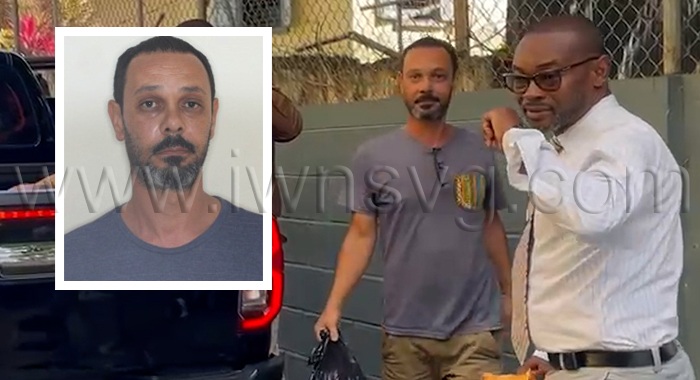
    Trouble began when a female driver cut the waiting line of vehicles, parking before stepping away to attend to personal errands. James, who was in plain clothes at the time, called out to the driver to address the line cutting, but received no response. Minutes later, an agitated man identified as 46-year-old Nicholas Huggins of Golden Vale approached James with his hand pressed firmly to his waistband, visibly angry and making aggressive comments toward the sergeant.

    James repeatedly asked Huggins to calm down and step back, but the man continued advancing, his hand never leaving his waist, creating an immediate, credible threat to the officer’s life. When Huggins closed to within feet of the sergeant’s vehicle, James drew his service weapon, stopping the advancing man in his tracks. A subsequent check confirmed what James had suspected: Huggins was carrying a loaded, unlicensed firearm at his waist.

    Alerts were immediately sent to the nearby Drug Squad Base, and officers from the Narcotics Unit arrived within minutes to assist their colleague. Law enforcement took Huggins into custody at the scene, and later charged him with two weapons-related offenses: unlawful possession of a Taurus revolver with serial number FR9291, and unlawful possession of two .38 caliber rounds of ammunition.

    Huggins appeared before the Serious Offences Court this Tuesday, where he entered a formal plea of not guilty to both charges. Prosecutor Inspector of Police Renrick Cato did not oppose a grant of bail, but requested the court impose strict conditions including a qualified surety, mandatory regular check-ins with police, and the surrender of all travel documents to prevent flight risk.

    Chief Magistrate Colin John granted bail set at EC$15,000 with one approved surety, matching the prosecution’s requested conditions. Huggins was ordered to report in person to the Calliaqua Police Station every Tuesday for the duration of the proceedings, and to surrender all valid travel documents to authorities. The court also issued a directive to place stop notices at every port of entry and exit across St. Vincent to prevent Huggins from leaving the country ahead of his next court date. The case has been adjourned until April 7, and will be transferred to the Calliaqua Magistrate’s Court for ongoing proceedings.

  • New champions in tighly-contested Shevern John netball tourney

    New champions in tighly-contested Shevern John netball tourney

    On a thrilling Sunday of competitive netball hosted in their home village of Fancy, Ball Blazers of Fancy pulled off a dramatic late comeback to secure the top title at the 2025 Shevern John North Windward Netball Tournament, finishing the tournament undefeated with a narrow 38-37 one-point win over final opponent Trail Blazers of Owia.

    The road to the final delivered its own major upset, shaking up the tournament’s established hierarchy. Overland Netball Team, which had claimed the championship title in every iteration of the competition since its launch in 2022, was unexpectedly eliminated in the semifinal round, clearing the way for Trail Blazers of Owia to advance to the championship match.

    Play unfolded with a clear advantage for Trail Blazers through the first three quarters of the final. The Owia-based squad held narrow leads through each stage: 8-7 after the first quarter, 17-16 after the second, and 29-26 heading into the final 15 minutes of play. But in a stunning fourth-quarter turnaround, the home team Ball Blazers rallied, outscoring their opponents to flip the scoreline and clinch the championship on their home turf.

    In addition to the open senior division, the tournament hosted two lower age and developmental competitive categories. In the junior division, the Sandy Bay Police Youth Club was awarded an automatic default victory after their opponent, Sandy Bay Secondary School, failed to appear for the scheduled championship match. The developmental division delivered another close match, with Sandy Bay Government School edging out Fancy Beamers by a single goal to take the category title, finishing the match 8-7.

    Following the conclusion of all matches, the tournament’s organizer and North Windward Parliamentary Representative Shevern John spoke at the official awards and presentation ceremony. During his address, John announced that the next major local sporting event organized under his framework, the Shevern John North Windward T10 softball cricket competition, is scheduled to kick off in May this year, building on the momentum of the successful netball tournament to support grassroots sports in the region.

  • Police officer suspected of attempted murder — prosecutor

    Police officer suspected of attempted murder — prosecutor

    In a high-profile court hearing held Tuesday at the Serious Offences Court in St. Vincent and the Grenadines, a sitting officer of the national police force has found himself at the center of multiple overlapping criminal investigations, sparking heated debate over procedural fairness and institutional transparency. Prosecutor Inspector Renrick Cato made the bombshell disclosure that Police Constable Phillip Arrindell, who currently faces a single charge of theft, is a named suspect in an ongoing probe into attempted murder and illegal possession of a firearm. Arrindell appeared before the court this week to answer to the theft allegation, which accuses him of stealing a Suzuki vehicle key belonging to Jahriel Griffin, a resident of Villa, between March 15 and 20, 2026, in the area spanning Kingstown to Calliaqua. The officer has formally entered a not guilty plea to the theft charge. Cato urged Chief Magistrate Colin John to reject any application for bail and remand Arrindell into custody for a seven-day period to allow investigators to wrap up their work on the more serious criminal allegations. The prosecutor argued that releasing Arrindell on bail would create an unacceptable risk that he would tamper with evidence, intimidate witnesses, or otherwise obstruct the ongoing investigations. The request for pre-trial detention was immediately challenged by Arrindell’s defense counsel, Grant Connell, who denounced the prosecution’s position as fundamentally unfair, describing the broader investigation into the attempted murder and firearm charges as a baseless “fishing expedition” that lacks credible evidence. Connell told the court that his client has already been held in police custody since Monday, and he detailed a troubling experience when he attempted to access Arrindell at the local police station. According to the defense lawyer, station staff initially denied that Arrindell was being held at the facility, only for Connell to encounter an elderly woman outside the station who confirmed the officer was indeed in custody. This discrepancy, Connell argued, has eroded trust in the institutional process, noting that the incident deviates from the fundamental legal principle that guides the jurisdiction: that a defendant is presumed innocent until proven guilty beyond a reasonable doubt. Instead, the defense claimed, law enforcement appears to be operating under a reversed standard where Arrindell is assumed guilty and forced to prove his own innocence. Connell further revealed that he had obtained a formal notice indicating that Arrindell has already been suspended from the police force on unpaid leave, a move he described as “draconian” and evidence of a personal vendetta against his client. Prosecutor Cato responded that he had no prior knowledge of any unpaid suspension for the defendant. In a sharp rebuke of the prosecution’s case, Connell told the court he planned to conduct a rigorous cross-examination of all prosecution witnesses when the case goes to trial, saying “We will do the post mortem during trial, not after.” After considering the prosecution’s argument that Arrindell poses a flight risk and a threat to the integrity of the investigation, Chief Magistrate John ultimately ruled to deny bail and scheduled the next hearing in the case for Tuesday, April 7.

  • 16-y-o charged; stepfather in hospital with cutlass wounds

    16-y-o charged; stepfather in hospital with cutlass wounds

    A violent domestic altercation in Redemption Sharpes has resulted in severe injuries and criminal charges, according to court proceedings on Tuesday. Norman Seymour remains hospitalized at Milton Cato Memorial Hospital in Kingstown with critical cutlass wounds to both hands, one of which was nearly severed during the March 22 incident.

    The alleged perpetrator, 16-year-old Tyrik Malcolm of the same address, appeared before the Serious Offences Court facing charges of unlawfully and maliciously causing grievous bodily harm to his stepfather with intent. Malcolm entered a plea of not guilty to the charges despite the severity of the injuries sustained by the victim.

    Prosecutor Inspector Renrick Cato detailed the ongoing medical treatment Seymour has required since the attack, noting his continued presence in the Male Surgical Ward. While the prosecution did not oppose bail arrangements, Inspector Cato expressed concern about the shared residence between the defendant and victim, highlighting potential safety issues.

    The court granted Malcolm bail set at EC$10,000 with one surety requirement. Additional bail conditions mandate weekly reporting to the Central Police Station every Monday until the case concludes. The matter has been adjourned until April 30 and will be transferred to the Kingstown Magistrate’s Court for further proceedings.