标签: Saint Lucia

圣卢西亚

  • Taxi union moves to close ranks after resignations

    Taxi union moves to close ranks after resignations

    Against a backdrop of internal restructuring and long-delayed industry reform, Saint Lucia’s National Taxi Union (NTU) held a landmark general meeting this week, bringing members together to address growing uncertainty, lay out a clear path for sector modernization, and resolve internal leadership disruptions.

    NTU President Terry Valcin framed the gathering as a deliberate push for transparency, designed to update rank-and-file stakeholders on the organization’s ongoing work and put to rest persistent rumors swirling around the union’s legal standing. The meeting came on the heels of a recent internal shakeup, which saw two sitting executive committee members step down after publicly raising concerns about the current leadership’s strategic direction. Valcin emphasized that the organization prioritized open dialogue with members throughout the event, creating space to clear up widespread misconceptions and align the broader membership on the NTU’s official stance on key industry issues.

    One of the most critical topics on the meeting’s agenda was the long-awaited official taxi permit system, a reform the union says will unlock stronger regulatory oversight and greater industry accountability. Valcin noted that the new permit framework will position the NTU and local regulators to enforce existing taxi laws far more effectively, grounding enforcement actions in clear, formal authorization aligned with Saint Lucian legislation.

    For years, the sector has struggled with unregulated operations: despite existing laws requiring formal authorization to work as a taxi driver, widespread permit issuance delays have left regulators unable to crack down on unlicensed operators, who have crowded the market and undercut licensed drivers. Valcin confirmed that this administrative logjam has finally been resolved, announcing that all licensed taxi drivers with TX plates across the island will receive their official operating permits by the end of September, bringing every authorized operator into full compliance with national law.

    Once full rollout is complete, Valcin explained, law enforcement will gain clear authority to act against unlicensed operators: police will be empowered to stop vehicles marked with H, P, or Q number plates—categories not legally eligible for taxi work—and issue penalties for unlicensed service, a change that will cut down on unfair competition for licensed drivers. To help drivers prepare for the new regulatory regime, the NTU is urging members to complete all required paperwork during the current industry off-season, a slower period when most drivers have extra time to handle administrative requirements ahead of the September deadline.

    Beyond regulatory reform, the meeting also highlighted the NTU’s push to bring the sector into the digital age. Members were introduced to a new custom-built mobile app designed to modernize taxi services and boost the industry’s competitiveness against emerging ride-hailing platforms. Valcin shared that development and planning for the app has been underway for months, with a live demonstration held during the meeting to walk drivers of all experience levels through its core features. He stressed that adapting to rapid technological change is non-negotiable for the sector’s survival, framing the global shift toward digital services as a technological revolution that Saint Lucian taxi drivers cannot afford to ignore. The union is committed to supporting all members in making the transition, even those with decades of experience who may be less familiar with digital tools, to ensure every driver can update their skills to match modern industry expectations. A core part of this cultural shift, Valcin added, is encouraging drivers to reframe their work as a formal business rather than casual employment, and to take an active role in driving the sector’s long-term growth.

    Following the close of the general meeting, the NTU executive committee held closed-door discussions to fill the two vacant leadership positions left by recent resignations. Valcin confirmed that the roles have already been filled, with plans for a wider reshuffle of executive responsibilities to strengthen the organization’s overall capacity. New executive members were drawn from different regions across the island, including both northern and southern Saint Lucia, creating a more geographically balanced leadership team that better represents the full membership. Valcin praised the new appointees as experienced, reliable leaders who bring diverse areas of expertise to the table, saying the union can count on their support at every turn. With these changes in place, Valcin said, the NTU is now well-positioned to guide the sector through ongoing transition and deliver on the modernization goals that will secure its future in a changing global market.

  • Former Saint Lucia Governor General Sir Neville Cenac dies at 86

    Former Saint Lucia Governor General Sir Neville Cenac dies at 86

    One of Saint Lucia’s most consequential and controversial political figures, Sir Neville Cenac, who held the nation’s top ceremonial office as Governor General and previously served as Foreign Minister, has passed away at the age of 86. His death was confirmed on Tuesday, closing a decades-long chapter in the island country’s political development.

    Cenac’s tenure as Governor General, the representative of the British monarch in the independent Caribbean nation, spanned from January 12, 2018, through October 31, 2021. He took on the ceremonial role during the administration of the United Workers Party (UWP), the party he would align with in the latter half of his political career.

    The late politician’s journey in public service began long before his appointment as Governor General, with early roots in the Saint Lucia Labour Party (SLP). In 1982, he served as leader of the parliamentary opposition while a member of the SLP, and in the 1987 general elections, he secured victory for two separate seats representing the constituency of Laborie on the Labour Party ticket. During his early years with the SLP, Cenac emerged as a vocal critic of the UWP leadership, condemning what he framed as an authoritarian governing style from the party’s head.

    A pivotal and still-debated turning point in Cenac’s political career came when he made the decision to cross the floor and join the UWP. His party switch reshaped the island’s parliamentary landscape: the defection helped the UWP claim a slim one-seat majority in the legislature, holding 9 seats to the SLP’s 8. Following the shift, UWP founder Sir John Compton appointed Cenac to the cabinet as Minister of Foreign Affairs, a portfolio he held from the party switch through 1992.

    The high-profile party change sparked intense public debate across the island, even inspiring a collection of popular calypso songs that reflected the public’s divided reaction to the move. It still stands as one of the most controversial episodes in modern Saint Lucian political history.

    Late in his life, in 2024, Cenac moved to set the record straight on his decades-long political career with the release of his autobiography, titled *C’est L’huere – Crossing the Divide*. In the memoir, he offered his personal account of major political events unfolding from his entry into politics with the SLP in 1961 through the end of his cabinet tenure in 1992, aiming to address longstanding misconceptions about his decisions and career.

  • $215 000 project to clean Savannes Bay, support seamoss farmers

    $215 000 project to clean Savannes Bay, support seamoss farmers

    On June 1, a landmark initiative focused on repairing degraded coastal ecosystems and upgrading working conditions for small-scale sea moss farmers officially kicked off in Saint Lucia, launched with a formal cheque handover ceremony marking the start of on-ground work.

    The Saint Lucia National Conservation Fund (SLUNCF) confirmed that EC$215,000 in financing from the France-based Agence Française de Développement (AFD) will back the project, which combines large-scale marine debris cleanup with the rollout of sustainable raft infrastructure for sea moss producers in Savannes Bay. The funding is routed through the Caribbean Biodiversity Fund as part of the broader Caribbean Regional Architecture for Biodiversity, a regional initiative focused on conservation and community livelihood support.

    Over the course of the project, teams will clear accumulated plastic and discarded fishing gear from roughly 10 hectares of coastal waters in Savannes Bay. Beyond cleanup, the initiative will install 20 new eco-friendly modified PVC raft systems designed to replace less sustainable traditional gear. The new infrastructure not only makes cultivation easier for local sea moss farmers but also reduces the risk of future debris accumulation in the bay’s sensitive marine ecosystem.

    A core priority of the project is centering local stakeholders: fishers and sea moss producers from the Savannes Bay community will be actively involved in all stages of implementation. Thomas Nelson, Deputy Chief Fisheries Officer of Saint Lucia, emphasized that this community-centered approach comes at a particularly critical moment for coastal livelihoods across the island.

    “Savannes Bay holds enormous untapped potential for sustainable, climate-resilient sea moss production, but that potential can only be realized if we protect the health of the marine ecosystems that producers depend on,” Nelson explained. He added that local marine-dependent communities are already grappling with growing climate-driven pressures that threaten their incomes, making targeted interventions like this more urgent than ever.

    Karolin Troubetzkoy, chair of the SLUNCF Board, highlighted the cross-sector collaboration that made the project possible, bringing together local community groups, national government agencies, and international conservation and funding partners around a shared goal. “When communities, government agencies, and conservation partners come together with a shared vision, we can create projects that not only restore damaged ecosystems but also create real, long-term opportunities for people and communities to thrive,” Troubetzkoy said.

    The initiative is being executed in formal partnership with Saint Lucia’s Ministry of Agriculture, Fisheries and Food Security, aligning with national goals to boost sustainable blue economy development across the island.

    Project organizers note that the Savannes Bay model is designed to be replicable for other coastal communities across Saint Lucia that face similar challenges of marine debris and unsustainable farming practices. Early plans already identify potential expansion sites in other coastal districts including Laborie and Dennery, setting the stage for island-wide impact if the pilot proves successful.

  • Hope stresses attention to detail ahead of Sri Lanka ODIs

    Hope stresses attention to detail ahead of Sri Lanka ODIs

    As West Indies prepares to kick off a critical three-match ODI series against Sri Lanka on Wednesday at Kingston’s Sabina Park, captain Shai Hope has voiced unwavering confidence in his side’s ability to extend their dominant home run and claim crucial World Cup qualification points.

    Hope’s comments come on the heels of a focused pre-series training camp held in Antigua, where the squad honed specific skills tailored to challenge a formidable Sri Lankan side. Under Hope’s leadership, the West Indies Men’s ODI team, affectionately known as the Men in Maroon, have not dropped a home series in four consecutive outings — a streak the side is determined to push to five when they take the field this week.

    “One thing that we’ve done really well as a group, we’ve defended home court really nicely,” Hope noted in his post-camp remarks.

    The series carries high stakes for the Caribbean side, with direct points on offer that will determine whether they secure automatic qualification for the 2025 ICC 50-over World Cup. Currently sitting 10th in the global rankings, West Indies fall outside the cut-off for automatic qualification, and a poor showing could see them miss out on a third consecutive major 50-over ICC tournament, having already failed to qualify for the 2023 World Cup and the most recent Champions Trophy.

    Acknowledging the challenge ahead, Hope emphasized that Sri Lanka ranks among the most competitive sides in international cricket, requiring meticulous preparation from his squad. The training camp focused heavily on two key areas: tightening batting performance by reducing unnecessary dot balls and boosting bowling aggression by prioritizing early wickets to put opposition lineups under pressure.

    “Sri Lanka is a very strong team, such as everyone else in the international field. So, that attention to detail that we need to pay goes a long way … understanding what they’re trying to throw at us and finding ways to score as batters, limiting that dot-ball percentage, something we focused on a lot in the recent past,” Hope explained. “And, as bowlers, trying to find ways to keep picking up wickets, because when you put batting lineups under pressure with wickets, it’s a lot easier to control in the back end when things may start to go helter-skelter.”

    A major boost to the side’s prospects ahead of the series is the return of star fast bowler Alzarri Joseph, who takes the field for West Indies for the first time in more than a year. Prior to his break from international cricket, Joseph was widely regarded as the leader of the team’s ODI bowling attack, and Hope said his comeback has already lifted team morale.

    “It’s great having Alzarri back. He’s been one of our strongest bowlers, especially in this format, for quite some time. And seeing him looking so fit, looking so strong, looking so refreshed, I think that’s going to be a big boost for us. Not putting any pressure on him, but I’m looking forward to seeing him go well and do great things for the West Indies again,” Hope said.

    With preparation wrapped up and the opening match just days away, Hope said the squad is fully aware of what is at stake over the course of the series, and is ready to compete for the results that will keep their World Cup dream alive. “So, just understanding that we have a lot to play for as well, especially now with the points up for grabs. The preparation is going really nicely and just understanding what’s required within the next few days against Sri Lanka,” he added.

  • Health ministry monitoring Ebola situation

    Health ministry monitoring Ebola situation

    As the ongoing Ebola outbreak in Central Africa, which has been categorized as a Public Health Emergency of International Concern by the World Health Organization (WHO), continues to spread, public health institutions across the Caribbean are ramping up surveillance and preparedness measures, even though regional health bodies have assessed the overall risk of the virus reaching the bloc as low.

    On May 17, the WHO formally designated the outbreak currently impacting the Democratic Republic of Congo (DRC) and neighboring Uganda as a PHEIC, the highest level of global public health alert. The outbreak, which is concentrated in eastern regions of the DRC and multiple areas of Uganda including its capital Kampala, is linked to the Bundibugyo strain of the Ebola virus—a variant for which no commercially licensed vaccines or targeted, proven antiviral treatments currently exist. As of May 27, official data tallies 1,018 confirmed and probable cases across the two affected nations, with 234 registered deaths; the overwhelming share of both cases and fatalities have been recorded in the DRC.

    In an official public statement released Monday, Dr. Sharon Belmar-George, Chief Medical Officer for the Ministry of Health, Wellness and Nutrition, emphasized that to date, no confirmed cases of Ebola have been detected anywhere in the Caribbean. She echoed the assessment of the Caribbean Public Health Agency, which has concluded the current risk of the virus establishing a presence in the region remains low. Even so, public health officials have stressed that vigilance cannot be relaxed, noting the virus could still be introduced to the Caribbean via unregulated or undetected international travel from affected regions.

    “While the outbreak has not been classified as a pandemic at this stage, coordinated cross-border and global action remains critical to containing its spread,” Dr. Belmar-George explained. To strengthen regional and national readiness, the ministry has rolled out a series of proactive measures: enhanced entry screening at all ports of entry, including systematic checks of traveler history from high-risk areas; a full review of existing national outbreak response plans; upgrades to infection prevention and control protocols across all healthcare facilities; inventory assessments of personal protective equipment (PPE) stockpiles; and targeted training and awareness building for frontline healthcare workers.

    Notably, Ebola testing capacity is not currently available within any Caribbean nation. To address this gap, the ministry is working closely with regional public health agencies to establish standardized protocols for sample collection and secure transport to the U.S. Centers for Disease Control and Prevention (CDC) headquarters in Atlanta should testing be required for any suspected case. Officials are also scheduling cross-sector coordination meetings with stakeholders from the health, tourism, education, and business sectors to align preparedness efforts across all parts of regional society.

    The ministry’s Health Education and Communication Unit is also developing a comprehensive public risk communication plan, designed to deliver clear, evidence-based information to the general public. This initiative will cover key topics including how to recognize early Ebola symptoms and how to comply with national public health safety guidelines.

    Ebola is an acute viral illness that is often fatal if left untreated. It spreads through direct contact with the blood or other bodily fluids of an infected person, contact with materials contaminated by the virus, or exposure to infected wild animal populations. Common early symptoms include fever, intense headache, muscle soreness, general weakness and fatigue, sore throat, vomiting, diarrhea, abdominal pain, and unusual bleeding or bruising. The ministry confirmed it will continue to monitor the evolution of the African outbreak closely and issue regular public updates as new information becomes available.

  • Officials urge storm readiness despite ‘slow’ forecast

    Officials urge storm readiness despite ‘slow’ forecast

    The 2026 Atlantic hurricane and wet season officially kicked off on June 1, bringing with it a mixed forecast that has regional leaders stressing preparedness over complacency. Meteorologists predict the six-month season, which runs through November 30, will be unusually subdued, driven by the formation of a strong El Niño — a climate pattern historically linked to suppressed hurricane activity in the Atlantic basin. The Caribbean Institute for Meteorology and Hydrology (CIMH) projects just 14 named storms will form over the season, a below-average total that has led many to lower risk expectations.

    But this calm projection has not eased warnings from disaster management officials across the Caribbean, who warn that even a single landfalling hurricane or weak tropical system can trigger catastrophic damage for small island nations. History bears out this caution: in 1994, the relatively weak Tropical Storm Debby dumped extreme rainfall across the region, triggering widespread flooding that destroyed bridges, damaged residential homes, crippled critical public infrastructure, and destroyed agricultural lands. Total economic damage from the storm topped $103 million, a devastating blow for small regional economies.

    Speaking at an official briefing this week, Elizabeth Riley, Executive Director of the Caribbean Disaster Emergency Management Agency (CDEMA), emphasized that lower projected activity does not equal zero risk. “Even one hurricane making landfall can cause serious damage,” Riley noted in a prepared statement, outlining that the agency’s core mission centers on protecting people, communities, and livelihoods across the region’s participating states. “Every plan we develop, every exercise we conduct, and every partnership that we pursue is directed towards saving lives and reducing losses when hazards occur.”

    Riley added that disaster readiness should not be restricted to the official June-to-November hurricane season window, noting the Caribbean faces a wide range of natural and manmade hazards year-round. Even so, she expressed confidence in the region’s collective ability to respond, pointing to decades of coordinated action and shared solidarity that have strengthened disaster response capacity. “We enter the season with experience, lessons learned, partnerships and a renewed commitment to readiness,” she said, noting that shifting global geopolitics and associated uncertainties make regional cooperation and self-reliance more important than ever. “Our long-standing regional commitment to solidarity is even more important at this time… [preparedness, coordination, and timely action] have continued to shape our commitment to strengthening regional cooperation, regional self-reliance and supporting our participating States in reducing disaster risks, improving readiness and response capacities.”

    The call for urgent preparedness was echoed by St. Lucia Prime Minister Philip J. Pierre, who also chairs the National Emergency Management Advisory Committee (NEMAC). Speaking at Monday’s pre-Cabinet press briefing, Pierre reiterated that even one severe storm is enough to reverse decades of development for small island nations. “The forecast says that because of that weather pattern (El Niño), there may be a little variant in terms of the intensity of the storms. But as you know, we cannot predict that; one storm can create damage that can put the country back one hundred years,” Pierre said, urging all citizens to begin completing necessary preparation steps immediately.

    To support public readiness, the National Emergency Management Organisation (NEMO) is set to launch a targeted community outreach initiative dubbed the “zip-lock” program this week. The campaign will distribute free essential emergency preparedness kits and educate local residents on practical, low-cost steps to protect their homes, families, and property ahead of any storm.

  • National Taxi Union explores local app amid Uber competition

    National Taxi Union explores local app amid Uber competition

    When ride-hailing giant Uber launched its operations on the Caribbean island of Saint Lucia in early 2024, it immediately upended the local ground transportation market, posing sharp new competitive pressure to the island’s established traditional taxi industry. In a targeted move to retain its existing market share, modernize service offerings for both drivers and passengers, and keep ride-hailing revenue within the local taxi community, the National Taxi Union (NTU) has partnered with local tech firm Converge Solutions to build a custom native ride-hailing app tailored to its members.

    Christian Antoine, the lead software engineer on the project from Converge Solutions, detailed the three-tiered platform design in an interview with local publication St Lucia Times. Unlike generic ride-hailing tools, the app is built to serve three distinct user groups: passengers seeking rides, licensed local taxi drivers, and the NTU itself, which will act as the central administrative body overseeing the platform.

    For drivers, the platform unlocks a suite of digital tools designed to streamline daily operations and improve operational transparency. All NTU members and drivers affiliated with the union’s local sub-associations can create verified accounts linked directly to their respective groups. Fleet operators gain access to advanced management features, allowing them to assign ride requests and allocate vehicles across their teams seamlessly. Additionally, all drivers can access real-time work records on the app, including complete trip history and segmented financial logs, eliminating the need for manual record-keeping and bringing much-needed clarity to day-to-day earnings.

    Passengers using the new app will get a user experience on par with global ride-hailing platforms that many are already accustomed to. Riders can book rides directly through the application, bypassing the traditional phone-based dispatch system many local taxis rely on, and complete payments digitally via a range of popular methods including credit cards and PayPal. The cashless payment option addresses longstanding convenience gaps for both tourists and local commuters who prefer contactless transactions.

    The project, which is still in the development and stakeholder engagement phase, has not been without questions from NTU members. During recent consultation sessions, multiple participating drivers raised key concerns about the app’s operational structure, long-term management framework, and payout protocols for completed rides booked through the platform. Project leaders have moved quickly to clarify that the recent sessions were not launch events, but rather introductory consultations intended to gather feedback and help union members fully understand the app’s design and the broader strategic response to Uber’s arrival in Saint Lucia. The app remains in active development as the NTU works to address member concerns ahead of a full public rollout.

  • Auguste returns to Windies Squad for Sri Lanka ODI Series ​

    Auguste returns to Windies Squad for Sri Lanka ODI Series ​

    West Indies cricket has finalised its 15-man One Day International squad for the upcoming three-match ODI series against Sri Lanka, with multiple key players returning from injury and rest ahead of the high-stakes contest that doubles as critical preparation for the 2027 ICC Men’s ODI World Cup.

    The Sri Lankan full tour of the Caribbean, which kicks off June 3 and runs through early July, includes two Test matches, three T20Is and the three ODIs scheduled between June 3 and 8. The ODI series will open at Kingston’s iconic Sabina Park on Wednesday, and it will mark Saint Lucian all-rounder Ackeem Auguste’s first appearance in the senior West Indies Maroon uniform of 2026. The left-hander has been sidelined since his last international outing against New Zealand in November 2025, where he picked up a season-ending injury that kept him out of competitive selection for months.

    Joining Auguste in the comeback cohort is star fast bowler Alzarri Joseph, who returns to international action after a back injury forced him out of all cricket matches starting in July 2025. Spin bowler Gudakesh Motie is also back in the ODI fold, having been given a mandatory rest period during the recent away series against New Zealand. Dynamic batter Shimron Hetmyer rounds out the group of returning players, named to the squad as part of the team’s long-term strategy to build match readiness for the 2027 50-over World Cup, which will be co-hosted by South Africa, Zimbabwe and Namibia this October and November.

    For the West Indies, this series carries more than just bilateral prestige: the side needs to collect valuable ICC ODI ranking points to secure automatic qualification for the 2027 World Cup, making every match a critical competition. Head coach Daren Sammy, a former West Indies World Cup-winning captain, has expressed quiet confidence in his side’s ability to rise to the challenge, pointing to the team’s current four-match consecutive home ODI series win streak that the squad is eager to extend.

    In a pre-series statement, Sammy acknowledged the quality of the upcoming opposition, noting that Sri Lanka has built a reputation as a disciplined, tactically sharp ODI unit that excels in slow, testing conditions that require patience and smart decision-making. “For us, this series is about setting the standard: intensity in the field, clarity with the bat, and consistency with the ball,” Sammy said. “We want to play fearless but intelligent cricket and continue building the identity we believe West Indies cricket should represent.”

    Sammy added that the team’s long-running focus on collective performance over individual heroics will remain central to the side’s game plan, as the staff work to turn home venues into an unbeatable fortress for ODI cricket. “In our desire to make home a fortress in ODI cricket, I want the team to win moments consistently rather than relying on individual brilliance, which we have stressed for the last 18 months,” he explained.

    The full 15-member West Indies ODI squad is led by captain Shai Hope, and includes Ackeem Auguste, John Campbell, Keacy Carty, Roston Chase, Matthew Forde, Justin Greaves, Shimron Hetmyer, wicketkeeper Amir Jangoo, Alzarri Joseph, Shamar Joseph, Gudakesh Motie, Sherfane Rutherford, Jayden Seales and Shamar Springer.

  • Saint Lucia’s rugby teams suffer crushing losses

    Saint Lucia’s rugby teams suffer crushing losses

    It was a challenging weekend of international rugby for Saint Lucia’s national and youth representative sides, which ended in two lopsided losses against higher-ranked opposition. But rugby officials across the island country are framing the results as a critical stepping stone for long-term growth, particularly for the program’s rising young academy talent.

    The back-to-back matches unfolded on Saturday evening at the Francis Baba Lastic Playing Field, located in the northern Saint Lucian district of Gros Islet. In the opening 15-a-side friendly fixture, Saint Lucia’s under-20 youth side went head-to-head with Martinique’s under-19 squad, with 8 local players earning their first under-20 international caps in the contest. By the final whistle, Martinique claimed a 45-10 victory over the young home side.

    In the headline cross-tier Test match organized by Rugby Americas North, Saint Lucia’s senior men’s national team faced a formidable Jamaican side. The encounter ended in an 82-0 win for the visiting Caribbean rugby powerhouse, marking a difficult result for the home side.

    Despite the one-sided scorelines, the Saint Lucia Rugby Football Union (SLRFU) has emphasized that the outcomes do not overshadow the clear progress both squads demonstrated over the course of the fixtures. Officials say the performances stand as proof that the country’s ongoing rugby development program is delivering tangible success for emerging players.

    Wayne Pantor, technical director for the SLRFU, noted that the program’s up-and-coming athletes gained irreplaceable match experience competing against seasoned international opposition. This exposure, he explained, is a foundational component of accelerating individual player progression and strengthening the overall standing of rugby across the island’s local sporting ecosystem.

    Wedrel St Clair, head coach of Saint Lucia’s senior national side, echoed that sentiment, noting that while the final results were far from what the squad hoped for, the effort shown by young players integrated into the senior setup confirms that the program is moving in the right direction. “We are investing in our youth, and these experiences will pave the way for stronger performances in the future,” St Clair said.

    Looking ahead, Saint Lucia’s rugby program has a full slate of upcoming fixtures lined up to continue this developmental momentum. The youth under-20 side is scheduled to travel to Martinique on June 20 for a much-anticipated return friendly match. Beyond that fixture, both the senior men’s side and the national women’s sevens team are set to compete against a collection of French Caribbean teams in coming months.

    For the women’s sevens squad, these upcoming matches serve as critical preparation for two major upcoming events. Saint Lucia is set to host the annual Carnival Sevens tournament starting July 31, after which the side will travel to Trinidad & Tobago to compete in the Rugby Americas North Regional Qualifiers in November, a key tournament that shapes regional sevens rankings and qualification pathways for larger global competitions.

  • Pierre defends crime strategy, slams UWP criticism as ‘disrespectful’

    Pierre defends crime strategy, slams UWP criticism as ‘disrespectful’

    A heated political exchange over public safety has erupted in Saint Lucia, as Prime Minister Philip J. Pierre pushed back against sharp criticism from the opposition United Workers Party (UWP) during Monday’s weekly Cabinet press briefing. The clash followed a UWP-hosted press conference the prior week, where senior party figures and electoral candidates Sarah Flood-Beaubrun, Laura Jn Pierre-Noel and Titus Preville took aim at the incumbent administration’s response to a surge in violent crime, calling for bolder action and a cohesive national plan to reverse rising insecurity.

    The opposition’s critique was anchored in growing public anger over recent violent incidents, most notably the fatal killing of 24-year-old Joy St Omer, whose estranged husband has been formally charged with her murder. Speaking to reporters on May 28, Jn Pierre-Noel emphasized that the killing served as a devastating reminder that hundreds of women across the island live in silent fear of gender-based violence. Beyond domestic violence, opposition leaders also highlighted that the national homicide rate has already climbed to 36 this year, a figure they say demands urgent, coordinated intervention from the national government.

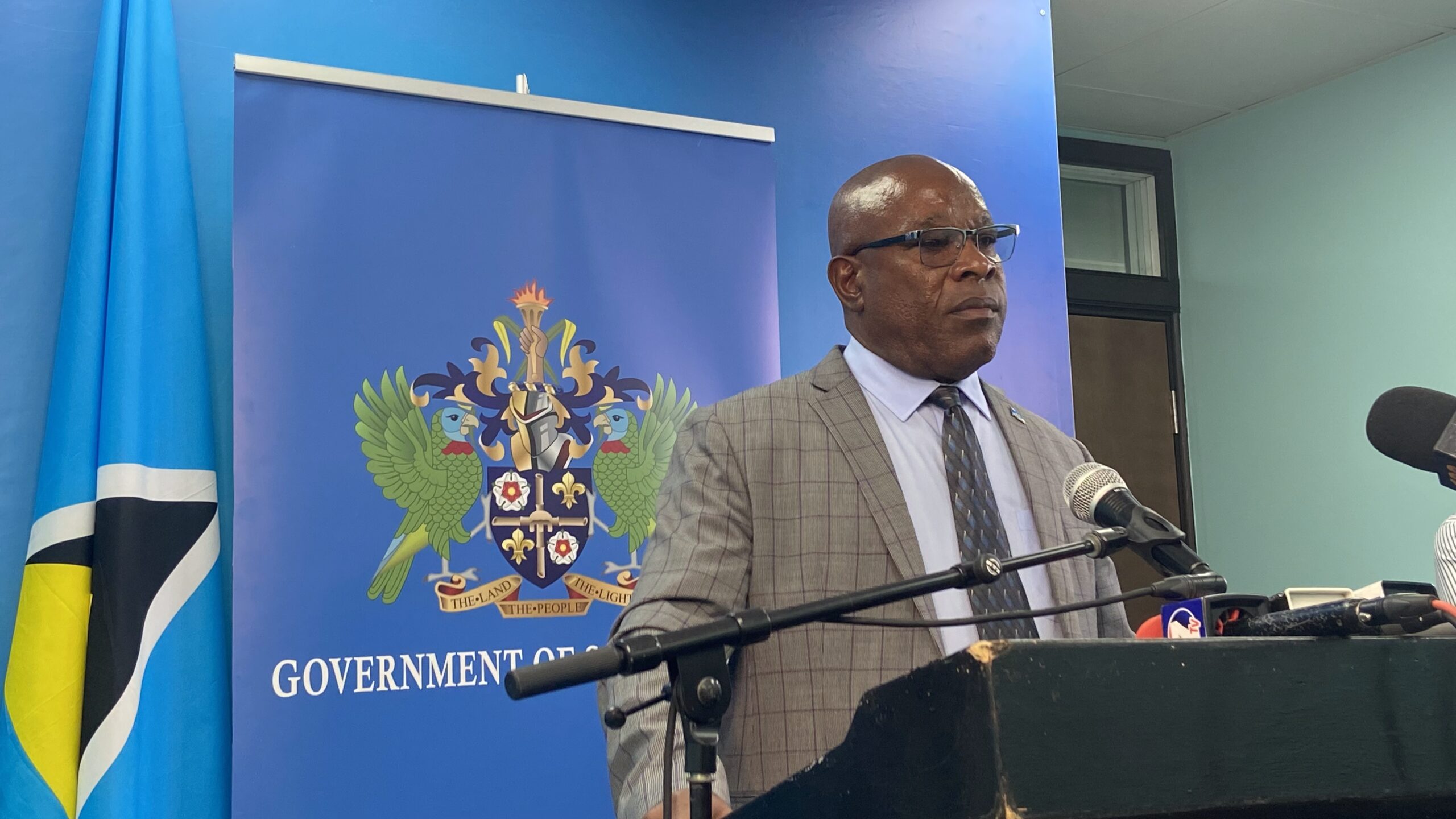
    When pressed by journalists to address the opposition’s demands, Pierre rejected the criticism outright, framing it as a disrespectful and opportunistic power grab. He argued that opposition leaders unfairly hold the government responsible for crimes rooted in personal passion and interpersonal conflict. “It shows a lack of respect to the people of Saint Lucia when you speak about crimes of passion and crimes of emotion and lay it on the backs of a government,” Pierre told reporters. “It’s disrespectful, it’s scornful, it’s contemptuous!”

    The Prime Minister went on to defend his administration’s approach, outlining a multi-pronged, holistic strategy that combines law enforcement resourcing, social intervention, education reform, and targeted youth economic support to reduce criminal activity. A core component of the plan is enhanced investment in the Royal Saint Lucia Police Force, with Pierre noting that additional details on new policing initiatives would be unveiled to the public in the near future.

    As part of the government’s upstream social intervention efforts, Pierre announced that the administration will launch a major crackdown on student truancy, linking disengagement from school to higher risks of youth involvement in crime. The government is also prioritizing expanded access to Technical and Vocational Education and Training (TVET), designed to give diverse learners practical, marketable skills aligned with their interests. Pierre argued that an inclusive, flexible education system that meets the needs of all students is a critical long-term tool to steer young people away from criminal pathways.

    Economic empowerment for young Saint Lucians forms another key pillar of the crime reduction strategy, with the Prime Minister pointing to targeted grant programs and small business support delivered through the national Youth Economy Agency. He also highlighted ongoing investments in early childhood education and free emotional support services run by the Saint Lucia Social Development Fund (SSDF) that address underlying mental and social drivers of violence.

    UWP economist and former Babonneau electoral candidate Titus Preville had pushed back on the government’s inaction ahead of the briefing, describing rising crime as a crippling burden that harms individual residents, destabilizes local communities, and drags down the island’s economic performance. Preville argued that all sectors of Saint Lucian society—including community groups, religious institutions, business leaders, and political parties—have a responsibility to address the growing public safety crisis.

    Pierre, however, dismissed the opposition’s calls as empty and politically motivated. He claimed that the criticism comes from failed electoral candidates seeking to exploit public anxiety over crime to win political support they did not earn in past elections and are unlikely to gain in future contests. “That is why I respond in that way, when rejected politicians try to use crime to get votes that they did not get, to get votes that they most likely will not get. This is what is distasteful,” Pierre said. Closing his remarks, the Prime Minister extended an open invitation to any stakeholders with concrete, actionable policy proposals to collaborate, reiterating that the opposition’s current criticism lacks substance.