标签: Saint Lucia

圣卢西亚

  • Iconic Laborians Centre, Anse Kawet Crafters Gift Shop unveiled

    Iconic Laborians Centre, Anse Kawet Crafters Gift Shop unveiled

    Last Friday marked a landmark milestone for cultural preservation and community development in Laborie, as officials and local stakeholders gathered for the official inauguration of two upgraded community assets: the Iconic Laborians Centre and the Anse Kawet Crafters Gift Shop. Hosted at the existing Papel Craft Centre, the opening ceremony celebrated the transformation of a once-modest underutilized space into a contemporary, interactive hub dedicated to celebrating local heritage, amplifying community storytelling, and fostering shared regional pride.

    This transformative initiative was brought to fruition through a collaborative cross-sector partnership under the umbrella of the Community Business Revitalisation Project, bringing together local community organizations and international stakeholders. The project received core financial backing from Taiwan’s Ministry of Agriculture, paired with widespread grassroots support from the Laborie community that anchored the development process from concept to completion.

    At the core of the new Iconic Laborians Centre is a permanent tribute to 13 distinguished local figures who have left indelible, lasting impacts on the Laborie community and beyond. The honorees include Dame Calliopa Pearlette Louisy, the 13th Governor-General of Saint Lucia; former politician Sir Allan Fitzgerald Louisy; and prominent community leaders, educators, artists and public figures Rudy Thomas John, Joseph “Ives” Simeon, Dr Donatus “Keith” St Aimee, Dr Emsco Remy, Rick Wayne, Hilary Mervyn Darcheville, Yves Renard, Dr Velon Leo John, Pascal Watson Louis, Agatha Jn Panel and Desmond Collymore.

    Louis Tsou, project manager for the Community Business Revitalisation Project, emphasized that the redevelopment went far beyond cosmetic upgrades. “This special space has evolved from a basic display room into a modern cultural venue that is well designed, interactive and full of stories,” Tsou explained. To move beyond static exhibits, the upgraded centre integrates both physical and digital storytelling tools to deepen visitor engagement. A standout innovative feature is the addition of QR codes next to each honoree’s profile, which allow visitors to access audio recordings of biographical and personal stories, bringing the legacies of iconic Laborians to life in an immersive format.

    The project also prioritized long-term operational sustainability, with a community-funded donation system installed to support ongoing maintenance and programming, ensuring the centre can serve the community for decades to come.

    Parallel to the centre’s redevelopment, the Anse Kawet Crafters Gift Shop also completed a full renovation, repositioning the space from a simple retail outlet to an extension of the site’s cultural experience. Visitors can purchase handcrafted local goods while learning about the region’s artisanal traditions, tying craft production to the broader community history celebrated at the centre.

    Augustine Dominique, executive officer of the Laborie Development Foundation, reflected that the project’s journey to completion stretches back nearly 10 years. “Nearly a decade ago, the Dame Pearlette Louisy Legacy Committee… envisioned a space for the stories of our most distinguished sons and daughters to be preserved and celebrated,” Dominique shared. The founding vision was always to create a permanent tribute to local trailblazers whose work transformed the Laborie community and extended its influence far beyond the region.

    “ The centre was conceived as a beacon of identity and heritage,” Dominique said, noting that the decade-long effort came to fruition through “careful planning, community efforts and international cooperation.” He described the finished space as “a gallery of memory and meaning,” designed to ensure that “large stories will continue to be told and [local trailblazers] celebrated” for generations.

    Government representatives echoed the importance of the new centre, noting that cultural preservation requires ongoing engagement beyond the walls of the venue. Alva Baptiste, Saint Lucia’s External Affairs Minister and the representative for the Laborie constituency, stressed that passing these legacies on to younger generations is the most critical step to ensuring they endure. “We must continue to tell our young people about these great icons that shaped our lives,” Baptiste said. “Placing them in a room is good but continuing to speak about them will allow their legacy to live on.”

  • ‘One of the Region’s Highest’: Inside Saint Lucia’s gender-based violence crisis

    ‘One of the Region’s Highest’: Inside Saint Lucia’s gender-based violence crisis

    For decades, the specific names and cases change, but the grim, recurring headlines about gender-based violence (GBV) in Saint Lucia have stayed the same. Reports of women murdered by current or former romantic partners, children forced to grow up surrounded by routine domestic abuse, and survivors who suffer in silence for years before seeking help — or choose never to report their abuse at all — have become normalized.

    Despite sustained public outcry and repeated demands for systemic intervention, GBV remains a pervasive, devastating public crisis across the small Caribbean island nation. Even as experts acknowledge that official records are far from complete, the available data paints a troubling picture of a problem that is far more widespread than most citizens and policymakers recognize.

    Data collected in 2015 from three key Saint Lucian institutions — the Royal Saint Lucia Police Force, the Department of Gender Relations, and the Women’s Support Centre — recorded 419 reported cases of violence committed by current or former intimate partners per 100,000 women across social service agencies. That same year, the now-defunct Division of Human Services and Family Affairs recorded 1,268 reported cases of violence against girls per 100,000 girls. Gender-based violence advocates widely agree that these official counts represent only a small fraction of the total actual incidents that occur across the country.

    This pattern of underreporting aligns with global research, which consistently finds that most victims of intimate partner violence never come forward. Common barriers include fear of violent retaliation from abusers, economic dependence on perpetrators, deep-seated social shame, worries about losing custody of or endangering their children, and widespread lack of trust in the national justice system to hold abusers accountable.

    The most alarming finding comes from 2020 United Nations research on global gender-based violence. The UN Global Database on Violence Against Women ranked Saint Lucia among the countries with the highest recorded femicide rates in Latin America and the Caribbean. The database estimates that 4.4 out of every 100,000 women in Saint Lucia are killed as a result of gender-based violence. Femicide, defined as the intentional killing of women specifically because of their gender, is most often committed by intimate partners or family members. Notably, Saint Lucia’s legal system does not currently recognize femicide as a distinct criminal offense, but international bodies continue to track these deaths because they almost always follow long histories of escalating domestic abuse and coercive control.

    For a small island nation with a total population of fewer than 200,000 people, this high ranking — which places Saint Lucia alongside far larger nations also grappling with endemic violence against women — is a sobering wake-up call.

    Ironically, one of the single biggest barriers to addressing the GBV crisis is the lack of comprehensive, standardized national data. Without regular, nationwide prevalence studies, policymakers are forced to rely on fragmented data from police reports, hospital admissions records, and social service agency case files, each of which captures only a partial view of the full scope of abuse.

    UN Women confirms that Saint Lucia continues to face significant gaps in gender-disaggregated data, especially regarding violence against women. These gaps make it nearly impossible to accurately track long-term trends, measure the effectiveness of existing intervention programs, or understand the true scale of abuse across the country. Researchers warn that without reliable, complete data, the country is stuck in a reactive cycle: authorities only intervene after violence has already escalated into fatal or life-threatening harm.

    Global research consistently confirms that femicide is almost never a random, unforeseen event. Joint research conducted by UN Women and the United Nations Office on Drugs and Crime (UNODC) found that women murdered by intimate partners almost always experience months or even years of escalating abuse before their deaths — including physical violence, repeated threats, stalking, emotional abuse, and coercive control over their daily lives. The two UN agencies characterize femicide as “the most extreme and preventable form of violence against women,” noting that targeted early intervention by families, communities, and state institutions can save lives before violence turns fatal.

    Campaigners against GBV argue that framing the crisis solely as a law enforcement issue ignores the deeper structural and social roots of the problem. Systemic gender inequality, harmful cultural social norms, economic disempowerment that leaves women dependent on abusers, childhood exposure to domestic violence, and inadequate support services for survivors all create an environment where abuse can go unchallenged and escalate.

    While Saint Lucia has made incremental progress in recent years — strengthening domestic violence legislation and expanding support services through organizations like the Women’s Support Centre and the Department of Gender Relations — advocates emphasize that prevention work must begin long before a survivor feels forced to contact police. They are calling for targeted increased investment in public education to challenge harmful norms, expanded accessible counselling services for survivors and at-risk communities, evidence-based early intervention programs, improved systematic national data collection, and stronger legal accountability for perpetrators of abuse.

    As advocates often note, official statistics can only ever tell a small part of the story. Behind every police report is a survivor who has endured unthinkable harm. Behind every court-ordered protection order is a family grappling with crisis. And behind every femicide statistic is a woman whose death was likely preceded by clear, unaddressed warning signs that could have led to intervention if systems had been in place to act.

  • CPMC explains historic Carnival Queen tie, announces rule review

    CPMC explains historic Carnival Queen tie, announces rule review

    For the first time in the 72-year history of Saint Lucia’s National Carnival Queen pageant, two contestants have walked away with the crown – a historic outcome that has sparked public conversation and prompted organizers to launch a full review of the event’s competition rules.

    In an official statement released Monday, the Carnival Planning & Management Committee (CPMC) laid out a detailed breakdown of how the unprecedented joint win came together, addressing widespread public questions that emerged after Saturday’s surprise final result. The dual winners are Nyaley Lewis, representing the Bank of Saint Lucia, and Faith Edward, the contestant from the Saint Lucia Tourism Authority. Both candidates finished the competition with identical final scores, a deadlock that had never occurred in the event’s seven-decade history.

    The CPMC explained that the 2024 pageant was adjudicated by a panel of nine judges, split between six local experts and three regional specialists. Each judge was assigned to score only the competition segments that aligned with their specific areas of expertise, a framework designed to keep scoring objective and specialized. All scores were submitted digitally through certified, pre-vetted judging software, and the final results were sent to the Office of the Director of Audit for full independent verification before any announcement was made. The audit process definitively confirmed that Lewis and Edward had matching final scores.

    Once judges complete their scoring, no post-scoring deliberation is permitted under current pageant rules. The CPMC noted that this policy is intentionally structured as a safeguard, designed to eliminate any room for bias, external influence, or last-minute adjustments that could compromise the fairness of the result.

    After the dual win was announced, many members of the public questioned why a tie-break mechanism was not activated to select a single winner. In response, the organizing committee confirmed that the pageant’s official rulebook has never included a tie-break provision for first place. For 72 years, a first-place tie had never happened, so the rule was never added. The CPMC emphasized that introducing a tie-breaker after scores had already been fully audited and verified would have undermined the integrity and impartiality of the entire competition process.

    “ The only outcome consistent with the verified scores and the existing rules was to declare both delegates National Carnival Queen, ” the statement from the committee read.

    In a break with tradition that matches the historic outcome, both queens will receive the full standard winner’s package. This includes a $25,000 cash prize, a fully funded academic scholarship, and an all-expenses-paid cruise vacation. The CPMC stressed that the 2024 result is final and will not be revisited or revised.

    At the same time, the committee acknowledged that the unprecedented deadlock exposed a gap in the event’s governing rules, and confirmed that a formal review of competition policies has already begun. Any necessary rule updates, including the addition of a clear tie-break provision, will be published publicly well ahead of the next National Carnival Queen pageant to ensure that contestants, judges, and the general public have full clarity on the procedures that will govern future competitions.

  • Gordon, Robinson capture CARICOM 10K elite titles

    Gordon, Robinson capture CARICOM 10K elite titles

    The 19th annual Caribbean Community (CARICOM) 10K Run wrapped up an exciting day of competitive distance running on Sunday, July 7, hosted at Saint Lucia’s Daren Sammy Cricket Ground, which served as both the starting and finishing line for the event. The race’s signature gently undulating route created ideal conditions that produced fast finish times across all divisions, drawing more than 300 registered athletes to compete in both 10K and 5K race categories. By the end of the day, Jamaica’s Garfield Gordon and Barbados’ Carlie Robinson claimed the top honors in the men’s and women’s elite invitational divisions, respectively.

    For 29-year-old Gordon, the win marked a dramatic turnaround from his 2024 performance, where he took second place as a first-time competitor on his home Jamaican course. Running alongside Alex Ekesa, the defending champion of the open division, Gordon maintained a strong, steady pace throughout the race, crossing the finish line in 30 minutes and 58 seconds to secure the gold medal. He finished well ahead of second-place Odida Parkinson of Guyana and third-place Kamar Thomas of Antigua & Barbuda, both of whom recorded matching times of 35 minutes and 4 seconds.

    In the women’s elite invitational race, 39-year-old Carlie Robinson pulled off a thrilling come-from-behind victory to earn her first CARICOM 10K gold medal. Sitting outside of medal contention at the race’s halfway mark, the Barbadian runner found her advantage on the mostly downhill return leg from Rodney Bay Village, building up significant momentum to overtake the leading pack. She crossed the finish line in a personal best time of 39 minutes and 32 seconds, edging out 2023 champion Attoya Harvey of Guyana, who finished second in 40 minutes 24 seconds. 2025 title holder Alexia John of Trinidad & Tobago rounded out the podium in third place with a time of 42 minutes 31 seconds. This marked Robinson’s fourth appearance at the CARICOM 10K, after previous finishes of third place twice and second place once.

    “Oh my God, oh my God, I am so happy,” Robinson shared in her post-race interview. “This is my fourth CARICOM race, and I’ve been really wanting to win. I came third, I came third, I came second. I was honestly quite surprised with my time. So yesterday, we did course recon. And we realised, you all have hills in this country. We don’t have them in Barbados. And these are not the real hills? You guys were very kind to give us a ‘flat’ race today. Lots of hills, that’s definitely a weakness for me. So, I was like, I know that that doesn’t play to my strengths, but let’s see what happens. The first half of the race was very tough; that’s where most of the hill work is, and the other girls had a good gap on me. So I was working, working, working, and then I managed to pass them and have a really strong finish, which is what I was hoping for. So I came in under 40 minutes, and I’m very happy.”

    Following the race, Gordon was presented with the CARICOM Chairman’s Trophy by Saint Lucia’s Minister for Sports Kenson Casimir, who stood in for CARICOM Chair and Prime Minister Philip J Pierre. Robinson received the CARICOM Secretary-General’s Trophy from Dr. Carla Barnett, CARICOM Secretary-General. Both elite champions took home a prize purse of US$1,000 for their victories.

    The open 10K division, which attracted competitors from as far as Kenya and Guadeloupe, saw Alex Ekesa—who currently resides in Trinidad & Tobago—take the men’s title in 30:24, with Cleveland Thomas of Guyana claiming second place. In the women’s open race, French competitor Sunilda Calme secured gold with a time of 38:03, finishing comfortably ahead of second-place Jelesa Wright of Guyana and third-place McKayla Olivier of host nation Saint Lucia.

    Host nation Saint Lucia claimed clean sweeps of both the men’s and women’s 5K podiums. US-based Saint Lucian athlete Asa Francis took the men’s 5K title in 17:24, followed by Lufan Fortune in second and Kenrick James in third. In a surprising standout performance, 12-year-old Danielle Lambert claimed the women’s 5K crown with a time of 24:43. She was followed on the podium by Martinique-based teen runner Janicia Joseph in second and Chrysan Florius in third.

    In addition to podium awards, the event also presented the inaugural Elma Gene Isaac Award to Esmond Reid, Jamaica’s ambassador to CARICOM. Special recognition was also given to the youngest competitors, Adam Ramdatt and Nadel Joseph, as well as the oldest participating runners, Wendell Samuel and Sherri Sayers.

    Sunday’s running event was held as a precursor to the upcoming Fiftieth Regular Meeting of the Conference of Heads of Government of CARICOM, tying regional sport to the bloc’s major diplomatic gathering.

  • Domestic women’s T20 cricket gets underway

    Domestic women’s T20 cricket gets underway

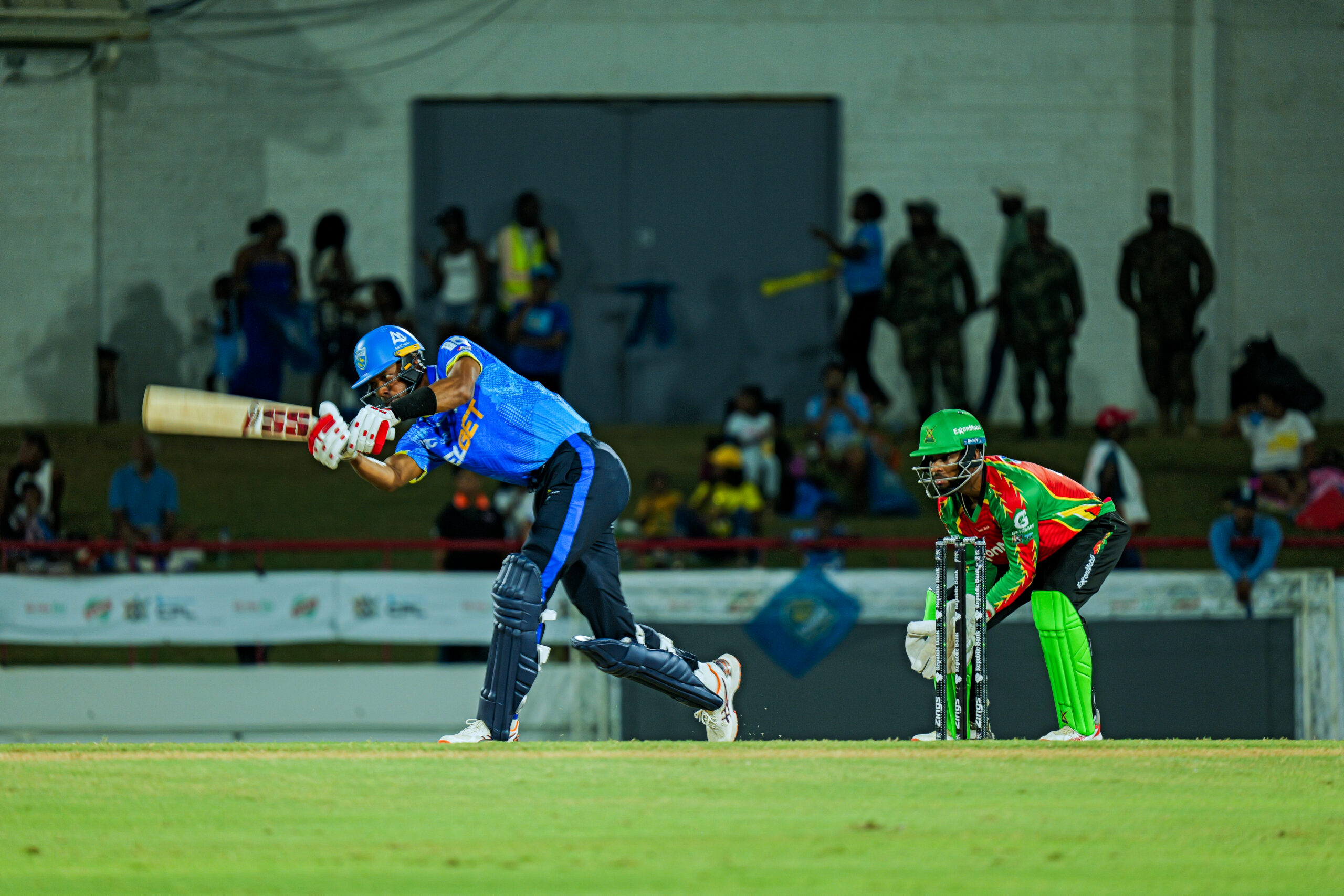
    After a multi-year hiatus for local elite women’s cricket in Saint Lucia, competitive action finally returned on Saturday, July 4, as the first matches of the island’s new Women’s T20 Tournament got underway at the La Fargue Playing Field, hosted in the district of Choiseul. This 2024 edition marks the first official local women’s cricket tournament held on the island since 2021, bringing much-anticipated competitive play back to emerging female cricketers across the country.

    The opening fixture of the tournament drew a lively local crowd for a hotly contested west coast derby between host side Choiseul and nearby district Laborie. In a rain-shortened 15-over per side format, Laborie won the toss and elected to bat first, posting a competitive total of 101 runs for the loss of 8 wickets. The innings was anchored by a standout individual performance from batter Skyy Smith, who remained unbeaten at the crease with a half-century off 43 deliveries, smashing six boundaries and one maximum over the rope to carry her side’s total. Choiseul’s spin bowler Swaylin Williams turned in a dominant performance with the ball, claiming three Laborie wickets for just eight runs across her three overs, putting the hosts firmly in control heading into their run chase.

    A key source of Choiseul’s success came from unforced errors by Laborie, which conceded 34 extra runs through no-balls, wides and other deliveries that gifted free runs to the host batting line-up. Though Choiseul lost early wickets, an unbroken late-wicket partnership between Roylin Cooper and Alicia Herman steered the side across the finish line with overs to spare. Cooper finished unbeaten on 23 runs off 18 deliveries, including two fours, while Herman contributed a steady 22 runs off 29 balls. Choiseul reached the required 102 runs for the loss of just three wickets in 12.2 overs, securing a seven-wicket victory in the opening derby.

    The second opening match of the tournament saw the Saint Lucia National Cricket Association (SLNCA) Development XI face off against South Castries, in another 15-over contest that went down to the final over. The Development side batted first and put up an imposing total of 147 runs for the loss of seven wickets, powered by a sensational opening partnership from star batters Namiah Marcellin and Natalia Phillip. Marcellin top-scored for the side with 60 runs off 44 deliveries, hitting seven fours and one six, while Phillip provided explosive support with 41 runs off just 26 balls, including five fours and a six.

    In response, South Castries’ chase got off to a flying start thanks to a quickfire innings from West Indies international player Nerissa Crafton, who led the line with 35 runs off only 16 deliveries, knocking three fours and two sixes before being dismissed. With Crafton back in the pavilion, South Castries’ batting order struggled to maintain the required run rate, even as Krushner Joseph turned in a strong all-round performance for the side, claiming two wickets for 21 runs across three overs and taking a sharp catch in the field. Though the Development XI conceded an uncharacteristic 46 extra runs, the team’s leading stars Marcellin and Phillip delivered with the ball as well as the bat, each claiming two wickets. Marcellin notched two wickets for just seven runs in 1.5 overs, while Phillip took two wickets for 24 runs across three overs and completed a run out to cap her all-round performance. South Castries were bowled out for 140 runs in 14.5 overs, falling just seven runs short of the target and giving the Development XI its first win of the tournament.

  • Saint Lucia earn six medals at ANOCES Athletics

    Saint Lucia earn six medals at ANOCES Athletics

    Against all odds, a six-athlete delegation from the Caribbean island nation of Saint Lucia delivered a standout performance at the 2026 ANOCES Athletics Championships, securing six total medals including three golds to cap an unforgettable weekend of competition in Basseterre, St Kitts & Nevis. Held 4–5 July at the Kim Collins Athletic Stadium, the regional meet brought together top track and field talent from across the Organisation of Eastern Caribbean States (OECS), organized by the Association of National Olympic Committees of the Eastern Caribbean. Out of nine competing nations, Saint Lucia – with one of the smallest rosters in the entire field – claimed seventh place overall in the team standings, an achievement made all the more impressive by its dominant individual results.

    Leading the charge for Saint Lucia was 17-year-old sprint phenom Jady Emmanuel, a native of Laborie who already carried a reputation as one of the Caribbean’s rising young stars following her double gold win at the 2025 CARIFTA Games. Emmanuel did not disappoint, shattering both the venue record and her own personal best to take gold in the women’s 100m final with a blistering time of 11.39 seconds. Held directly to a final on Sunday, the race saw Emmanuel outpace second-place finisher Geolyna Dowdye of Antigua & Barbuda (11.47) and bronze medalist Soniya Jones (11.64) to claim the top spot. With a legal +0.7 m/s tailwind backing her run, Emmanuel’s time ranks as the 10th fastest ever posted by an Under-18 female sprinter globally this year. The result also punched her ticket to next month’s World Athletics Under-20 Championships in Eugene, Oregon, marking a major career milestone for the teen talent. Prior to this meet, Emmanuel held Saint Lucia’s existing national Under-18 100m record with a 11.50-second run posted in 2025.

    Emmanuel was far from the only Saint Lucia athlete to stand atop the podium at the championships. Joy Edward, a thrower competing for the University of Charleston, claimed the women’s shot put gold in dominant fashion. On her very first attempt, Edward launched the shot 14.56m – a mark that would ultimately hold up for gold. Though the result fell short of her own national record of 15.63m, Edward was the only competitor in the field to record a throw over 14 meters, hitting the 14-meter benchmark on four of her six total attempts.

    Rounding out Saint Lucia’s three gold medals was 400m runner Hannah Charles, who trains in Jamaica. Running from Lane 5, Charles crossed the finish line in 54.86 seconds, finishing well clear of silver medalist De’Cheynelle Thomas, a former CARIFTA champion representing host nation St Kitts & Nevis, to take the top spot.

    The island’s medal haul began on the opening day of competition, when Naya Jules claimed Saint Lucia’s first medal of the meet with a bronze-winning throw of 41.98m in the women’s javelin. Two silvers were added to the team’s total on the final day of competition. Khailan Vitalis, who is set to represent Saint Lucia at both the upcoming Commonwealth Games and Central American and Caribbean Games, took silver in the men’s sprint hurdles, finishing in 14.43 seconds behind winner Tejaun Webbe of host St Kitts & Nevis, following a late non-start from Grenada’s Kyle Nedd that left the field undersubscribed. In the men’s 100m, Stephan Stephen earned silver after entering the final as the top qualifier. Stephen clocked 10.37 seconds in the preliminary round to lead the field, before running 10.41 seconds from Lane 4 in the final to finish second behind Jaleel Croal of the British Virgin Islands, who took gold in 10.19 seconds.

    In the final team rankings, host St Kitts & Nevis claimed first place with 180 total points, followed by Antigua & Barbuda in second with 171 points. St Vincent & the Grenadines took third with 134 points, just edging out the British Virgin Islands (130 points) for the podium spot. Despite sending just six competitors, Saint Lucia amassed 70 total points to secure seventh place in the final standings, turning a small roster into one of the meet’s most talked-about successful campaigns.

  • July 4: CARICOM Day as a Caribbean national holiday?

    July 4: CARICOM Day as a Caribbean national holiday?

    Five years after a public call to action was first published in Jamaica’s *Jamaica Gleaner*, Caribbean policymakers are once again being urged to revisit a long-overlooked question: why has CARICOM Day not been designated a universal national holiday across all member states of the Caribbean Community?

    The date at the center of this discussion is 4 July 1973, when four trailblazing regional leaders — Errol Barrow of Barbados, Forbes Burnham of Guyana, Michael Manley of Jamaica, and Eric Williams of Trinidad and Tobago — gathered in Chaguaramas to sign the foundational Treaty of Chaguaramas. That historic agreement gave birth to the Caribbean Community, launching the most ambitious regional integration project ever undertaken by small developing states globally. Far from a trivial historical marker, this date marks the birth of the Caribbean regional identity, forging a shared community out of many distinct nations.

    Public national holidays serve a purpose that extends far beyond honoring the past. They are deliberate tools for strengthening present-day social cohesion and shaping collective future identity. Across the world, key national observances from Independence Day to Emancipation Day give societies an opportunity to reaffirm shared core values, preserve collective collective memory, and nurture intergenerational belonging and continuity. These annual moments remind citizens not just of what happened on a historic date, but why it matters, and who they are as a connected people.

    Today, the Caribbean Community holds a unique, contradictory position: it has built most of the structural attributes of a unified economic space, with shared regional institutions, a common legal heritage, interconnected educational systems, and an increasingly integrated single market. Yet it lacks a collective, simultaneous annual moment to celebrate the regional integration project that made all these achievements possible. Designating CARICOM Day as a universal public holiday would fill this critical gap in regional life.

    Cohesive communities are built not just on geography and institutions, but on shared symbols, traditions and rituals. Long-term sustainability of any communal project relies on regular moments that let citizens see themselves as part of a shared undertaking. A universal CARICOM Day observance would create exactly this kind of moment. Instead of drawing a boundary on a map, it would carve out a shared space in time, setting aside one day each year for all Caribbean people to reflect on the regional integration project and the shared aspirations that continue to drive it forward.

    Coincidentally, the 4 July date that marks CARICOM’s founding also aligns with the United States’ annual celebration of its 250th anniversary of independence this year. As Americans gather annually to mark the birth of their nation, Caribbean people have a ready-made opportunity on the same date to reflect on the birth and ongoing evolution of their own regional community.

    The founding leaders who gathered in Chaguaramas half a century ago understood that regional integration would not be a quick project, but a multi-generational undertaking. The vision they launched has been carried forward by successive waves of regional leadership: P.J. Patterson, Basdeo Panday, Owen Arthur, and Bharrat Jagdeo advanced economic integration and strengthened regional institutions in the decades after founding, while contemporary leaders including Kenny Anthony, Patrick Manning, Ralph Gonsalves, and Mia Mottley have continued to champion cross-border cooperation, adapting the integration movement to meet 21st century challenges. CARICOM is not the achievement of one generation; it is a shared inheritance for all Caribbean people, past and future.

    An annual regional holiday would give Caribbean people a regular chance to reflect both on how far the integration project has come, and how much work remains ahead. CARICOM has endured and matured through changing national governments, economic volatility, devastating natural disasters, and shifting global power dynamics. It has persisted because its core idea remains as compelling today as it was in 1973: that cooperation across diverse Caribbean nations, despite differing histories and ancestries, delivers greater welfare, security, and shared prosperity than any small state can achieve alone.

    Two decades ago, the entry into force of the Revised Treaty of Chaguaramas and the launch of the CARICOM Single Market and Economy (CSME) marked a major milestone in the realization of that founding vision. Today, Caribbean nationals enjoy opportunities that were unimaginable to earlier generations: citizens can travel freely across member states, establish cross-border businesses, offer services across regional borders, pursue employment outside their home country, and invest across the Caribbean. The movement toward full free movement of all CARICOM nationals continues to advance, with each step reinforcing a simple, powerful truth: every citizen of a CARICOM member state is also a citizen of the wider Caribbean Community. The CARICOM passport stands as a visible, powerful symbol of that shared identity.

    Regional integration institutions have also become one of the Caribbean’s greatest collective strengths. The University of the West Indies has educated generations of regional leaders, scholars, professionals, and public servants. The Caribbean Examinations Council offers qualifications recognized across the region and around the globe. The Caribbean Development Bank has financed critical development projects across all member states. The Caribbean Public Health Agency strengthened collective regional response during public health emergencies, while the Caribbean Disaster Emergency Management Agency coordinates cross-border disaster relief when hurricanes and other crises strike.

    As President of the Caribbean Court of Justice (CCJ), I can speak to the role of this institution as both the highest appellate court for participating member states and the judicial guardian of the rights enshrined in the CARICOM framework. The CCJ holds a unique mandate to adjudicate matters that shape Caribbean life, and it has made significant progress in ruling on cases that touch the daily lives of people across the region. The court belongs to the people of the Caribbean, a truth embodied in its official motto: “One People. One Region. One Court.” All Caribbean residents are invited to engage with the court, whether through an in-person visit to its Port-of-Spain headquarters or via its official website and social media channels, to learn more about its work and how it impacts communities from Kingston to Georgetown.

    These far-reaching integration achievements should never be taken for granted. That makes the case for a universal CARICOM Day holiday even more pressing.

    The proposed universal holiday would be observed on 4 July each year, with a fallback to the first Monday in July when the date falls on a weekend (for 2026, that would be 6 July). It would be far more than just an extra day off or a remembrance of the past. It would act as a catalyst for regional education: giving schools a clear occasion to teach the history of regional integration, allowing national governments to highlight the impact and achievements of shared regional institutions, giving businesses and civil society space to celebrate Caribbean enterprise and innovation, and inviting individual citizens to reflect on the shared inheritance that binds all Caribbean people together.

    Currently, only two CARICOM member states — Antigua and Barbuda, and Guyana — already recognize CARICOM Day as a formal public holiday. Their experience proves that universal recognition is both practical and appropriate for the entire region.

    Caribbean policymakers are urged not to let another five years pass without taking serious action to establish a universal CARICOM Day holiday that celebrates the region’s shared history and collective future. Every 4 July, all Caribbean people deserve the chance to pause, celebrate the gains we have made together, reflect on our shared journey, and renew our commitment to the regional integration project. At the end of the day, regional solidarity is our most valuable shared asset — imperfections and all.

  • ‘I gave my very best’: Vernick Fulgence reflects on road to Miss District High crown

    ‘I gave my very best’: Vernick Fulgence reflects on road to Miss District High crown

    On Saturday, June 27, 17-year-old Vernick Fulgence earned a life-changing victory when she was named Miss District High 2026 at the Human Resource Development Centre in Gros Islet, Saint Lucia. A recent graduate of the St. Lucia TVET Institute’s School of Sustainable Agriculture and Culinary Arts and a native of Dennery who competed under the banner of Miss DBS TV, Fulgence called the moment of her crowning “surreal” — a feeling she says is hard to put into words, even as she knows firsthand the relentless effort that led her to the stage.\n\nFulgence shared that preparing for the pageant stands as one of the most challenging but fulfilling experiences she has ever completed. The first major hurdle she faced was learning to balance her existing personal and academic commitments with the grueling schedule of pageant training. For months, she poured countless hours into refining her performance, pushing through periods of exhaustion and self-doubt by keeping her core goals top of mind.\n\nThat unwavering dedication delivered exceptional results: before claiming the overall title, Fulgence won four individual segment awards: Best Introduction, Best in Swimwear, Best Talent, and Best Interview. When the announcer called her name as the winner, she was overcome with emotion, breaking into happy tears after months of hard work and small sacrifices finally culminated in victory. “That moment is one I will cherish forever,” she said.\n\nBeyond the crown and the accolades, Fulgence says the pageant experience has shaped her personal growth in profound ways. She leaves the competition with greater independence and self-confidence, a deeper appreciation for the power of persistence, improved skills for staying composed under pressure and communicating clearly, and a strong drive to encourage other young people to pursue their dreams. “I want to show others that success comes through determination, consistency, and the courage to keep moving forward, even when challenges feel insurmountable,” she explained. The outpouring of support she has received since her win has also inspired her to continue competing in future pageants.\n\nTreasure Actille, the organizer of Miss District High 2026, echoed the public’s praise for Fulgence in a post-event interview with St. Lucia Times. He called the new titleholder the most consistent competitor on competition night, noting that she was deeply committed to bringing the crown to both her sponsor DBS TV and her hometown of Dennery.\n\nThe full results of the competition saw Kayla Edmund, competing as Miss Pretty Reflections, take first runner-up and also claim the Miss Photogenic award. Second runner-up honors went to Evanelle Faucher of Miss Caribbean Grains Ltd, who also won two additional honors: Best in Evening Wear and the newly introduced Best in District Wear segment. Hayley Noley, Miss DJ C4 Soundsystem, finished as third runner-up, while Kizzy Philgence of Miss NSDC claimed fourth runner-up and the Miss Congeniality award. Actille also confirmed that three of the eight contestants originally announced for the competition did not participate in the final event.\n\nWhile the pageant received widespread praise for the contestants’ performances and Fulgence’s historic win, it was not without controversy. Public feedback has raised questions about the event’s operations, on-site logistics, and overall organizational structure. Additionally, footage of an altercation involving Actille and a group of unidentified individuals that took place after the competition circulated widely across local social media platforms. Actille has declined to provide any comment on the post-event incident.\n\nLooking ahead, Fulgence is set to represent Saint Lucia in her first regional pageant competition this coming December.

  • ‘It’s not what it used to be’: Has Rodney Bay lost its appeal?

    ‘It’s not what it used to be’: Has Rodney Bay lost its appeal?

    On a typical Friday night at 9:30, Rodney Bay — long celebrated as Saint Lucia’s top destination for dining, nightlife and tourist recreation — should hum with the energy of crowds spilling from restaurants and laughter echoing along its main strip. But a recent on-site visit in mid-June revealed a starkly different scene: parked vehicles line the curbs in far greater numbers than pedestrians, and the majority of dining tables sit empty across the area’s once-popular hospitality venues.

    A local property manager and real estate professional, who has deep ties to Rodney Bay’s tourism industry and spoke on condition of anonymity, recently shared his deep frustration with the area’s steady decline with the St. Lucia Times. For years, he has overseen multiple commercial and residential properties in the heart of what Tourism Minister Ernest Hilaire has officially called Saint Lucia’s “premier entertainment strip”, and he says the transformation of the area over recent years has been dramatic.

    “Where you once saw dozens of active restaurants operating along the strip, many have closed their doors,” he explained. “Some former hospitality spaces have been converted into short-term accommodation, others have been demolished entirely, and many more sit vacant, waiting for new tenants or development.” Where the district once drew consistent heavy foot traffic from both tourists and local residents day and night, that flow of visitors has dwindled to a trickle, leaving empty streets and a growing sense of unease among those who still work and visit the area.

    A drive along the iconic strip — bordered by the Rodney Bay Police Station, the Rodney Bay Pavilion, and an overgrown empty lot where the demolished Mystique Hotel once stood — confirmed this lull. Foot traffic is so scarce that passersby are a rare sight, with only one or two people occasionally emerging from parked cars to enter the handful of operating restaurants, where only a small fraction of tables are occupied. “For Sale” signs hang on the gates of multiple shuttered properties, including the well-remembered former venue Ginger Lily.

    “The void we’re seeing now isn’t just about the lack of crowds,” the businessman noted. “Large vacant lots where hotels like Mystique and Starfish once stood are now overgrown with brush, and that creates real safety risks. Without constant foot traffic moving between hotels, restaurants, bars and clubs, quiet, underlit streets become far more dangerous for anyone walking through the area, especially visitors unfamiliar with the surroundings.” He told the St. Lucia Times he knows of at least three separate robberies involving his own guests in the district, with incidents occurring near the main road and one close to a short-term rental on Flamboyant Drive.

    The concerns extend beyond the main entertainment strip, he added. Along the district’s second, busier thoroughfare — home to Baywalk Mall, major chain outlets, commercial banks and multiple small food and beverage venues — only one establishment, local favorite Keebees, saw all tables occupied during the Friday night visit, as patrons gathered to watch a World Cup match.

    What has changed most, the businessman argued, is the district’s core character, which has been altered by the rise of unregulated informal vendors selling goods from car trunks and roadside stands. “You have men sitting in open spots selling cigarettes and rum informally, and there’s speculation that other illicit substances are also being sold here,” he said. “This doesn’t just look unprofessional — it creates an unsafe atmosphere, and it attracts people who are more likely to engage in unsavory activities. I’ve seen vendors make inappropriate comments to women in groups of passing families, and that’s not the experience any tourist comes to Saint Lucia for.”

    To reverse these declines, the businessman has called for two key changes: increased uniformed police presence across the district, and stricter regulation of informal vending to crack down on unlicensed activity.

    Official police data confirms that concerns over tourist safety in Rodney Bay are not unfounded. Most recently, on June 30, police reported a robbery targeting two tourists near a hotel entrance in the district. The Royal Saint Lucia Police Force (RSLPF) has also confirmed that 2025 saw a measurable spike in robberies targeting visitors across the Rodney Bay area.

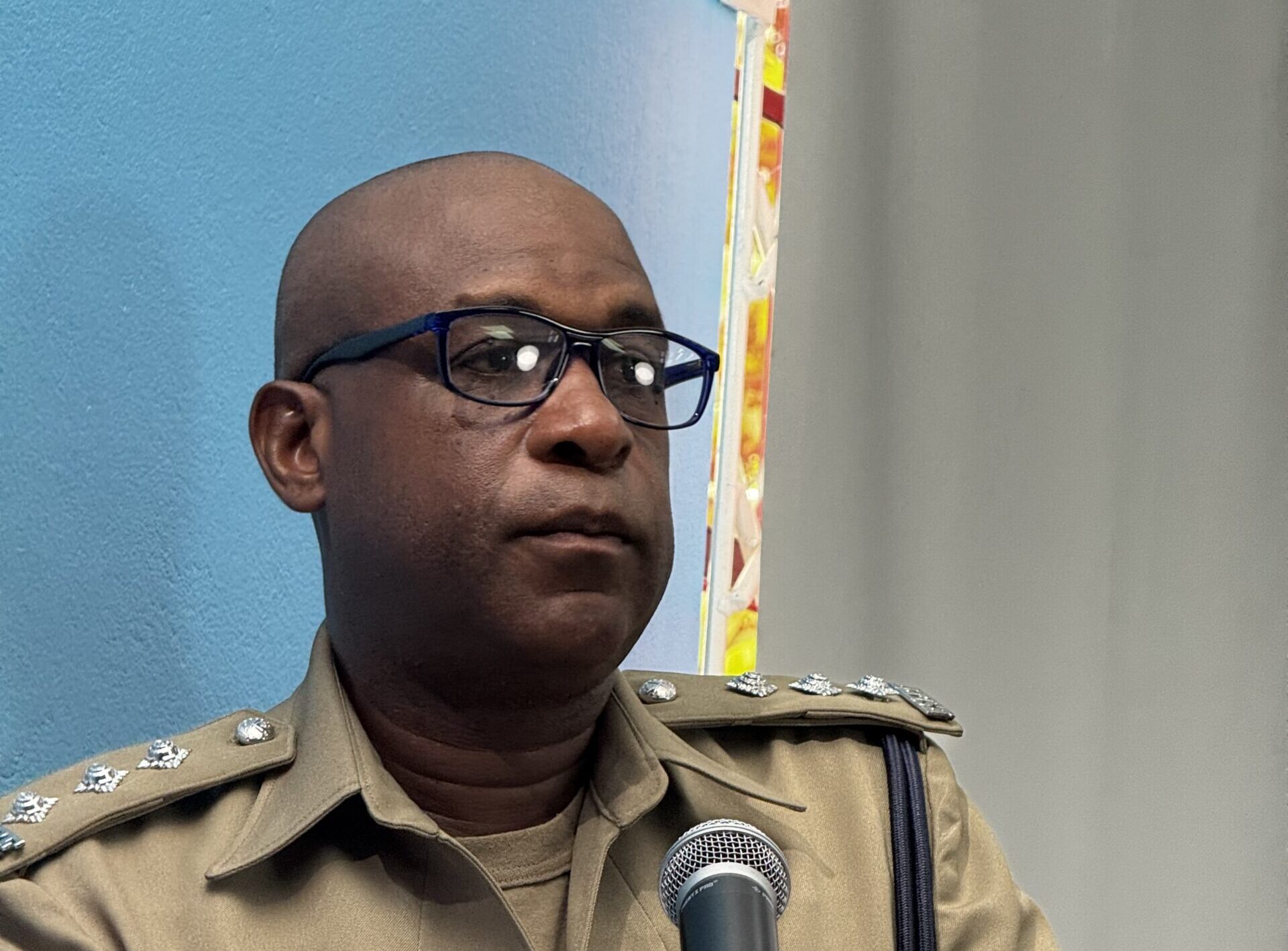
    Eldeen Henry, Superintendent in Charge of the RSLPF Northern Division, outlined the trend during a July 2 press conference: “We saw two clear peaks in incidents against tourists in 2025. The first was a sharp spike between January and March, and we saw another resurgence between October and December of last year.”

    Back in March 2025, RSLPF joined with local tourism and business stakeholders to clear overgrown brush across high-risk vacant lots in Rodney Bay, as a targeted crime prevention measure. “For a crime to occur, you need three elements: a suitable location, a potential victim, and a motivated offender. Clearing brush removes the cover offenders rely on, so this cuts down on opportunity,” then-Northern Superintendent Stephen Victorin explained to the St. Lucia Times at the time.

    This week, Henry reported that targeted interventions have driven down robbery reports since early 2025. “We implemented intelligence-led operations across the Gros Islet area, which includes Rodney Bay, and those efforts led to the arrest of multiple individuals, several of whom are now in remand or facing court proceedings,” he said. “This intervention has led to a significant drop in the number of these incidents.” In the June 30 hotel robbery case, Henry added, a multi-station police operation intercepted suspects traveling in a vehicle in Anse La Raye, and all stolen property was recovered. The suspects remain in custody as investigations continue.

    Responding to concerns around unregulated vending and potential illegal drug activity, Henry confirmed that police maintain consistent active patrols and surveillance across the Rodney Bay district, and credit the RSLPF Rangers Unit — which patrols area beaches — for helping drive a sharp drop in drug-related offenses across 2025.

    Even with increased policing driving down crime, however, questions remain about whether law enforcement action alone can restore the vibrant atmosphere that once made Rodney Bay a top tourist draw. The local businessman notes that the district’s physical landscape still requires major intervention: large vacant lots that once housed popular hotels are still overgrown and unused, serving as constant visual reminders of the area’s stagnation.

    Full revitalization through redevelopment is still on the horizon, however. Both the former Starfish Resort and Mystique by Royalton hotels were demolished years ago, and two new hospitality properties are planned for the sites. Tourism Minister Hilaire told the St. Lucia Times that developers are currently finalizing construction designs to submit to the Development Control Authority (DCA), with full construction expected to break ground before the end of 2026.

    Hilaire acknowledged that widespread public concern about Rodney Bay’s declining experience has prompted the government and private sector to prioritize the district’s revitalization. “We have received a lot of complaints from people saying that the visitor experience at Rodney Bay — our premier entertainment strip, home to most of the island’s top restaurants — just isn’t what it used to be,” he said. “We recognize that Rodney Bay deserves renewed focus. Developers have agreed to lead the redevelopment of the entire Rodney Bay Strip, and we have a clear master plan in place to elevate and revitalize the entire area for visitors and locals alike.”

  • Pierre urges renewed commitment to stronger Caribbean on CARICOM Day

    Pierre urges renewed commitment to stronger Caribbean on CARICOM Day

    As the Caribbean Community (CARICOM) prepares to mark its 2026 Day of celebration and reflection, bloc chair and St. Lucia Prime Minister Philip J. Pierre has delivered a stirring call to action, asking all Caribbean citizens to reaffirm their commitment to regional collaboration amid a growing landscape of global and local challenges.

    In his official annual address for CARICOM Day 2026, Pierre centered his remarks on the core foundational belief that has guided the 15-member integration bloc since its creation: small island nations gain far more from collective action than they can ever achieve through isolated, individual effort. For Pierre, CARICOM is far more than a bureaucratic intergovernmental body—it represents a shared promise to the people of the region. “CARICOM has always been more than an institution. It is a promise: a promise that our small states can achieve far more together than we ever could alone; a promise that our people, our cultures, our economies, and our aspirations are strengthened when we work in unity,” he told the regional audience.

    Pierre did not shy away from acknowledging the multiple, overlapping crises that continue to test Caribbean nations today. The region confronts unrelenting climate-related pressures, persistent global economic uncertainty, widespread instability in food and energy supply chains, growing transnational security concerns, and an urgent need to expand quality economic opportunities for the region’s large youth population. Even in the face of these headwinds, Pierre emphasized that Caribbean communities have repeatedly proven their extraordinary ability to withstand and overcome hardship. “Time and again, our people have shown that we can meet adversity with courage, adapt with determination, and move forward with confidence,” he noted.

    Against this backdrop, the CARICOM chair outlined that the bloc’s central priority in the current era must be intentional renewal—rebuilding and refocusing integration efforts to deliver a Caribbean that is stronger, more equitable, more secure, and more prosperous for all residents. “This is why our focus must now be on renewal,” Pierre said. “We must build a stronger, fairer, safer, and more prosperous Community; one that delivers real opportunities and meaningful progress for the people of our region.”

    To turn this vision of renewed integration into reality, Pierre laid out key actionable priorities for member states: deepen regional integration by expanding and improving cross-border transportation infrastructure and digital connectivity, shore up domestic and regional food and nutrition security, accelerate implementation of the long-planned CARICOM Single Market and Economy, fully embrace the digital transformation unfolding across the global economy, and invest in local innovation to drive sustainable growth.

    A core focus of Pierre’s 2026 message was elevating the role of young people in shaping the bloc’s future. He directly called on the region’s youth to step into leadership roles, framing them as the primary innovators and builders of the next chapter of Caribbean integration. “On this CARICOM Day, I especially call on our young people to see themselves as leaders, innovators, and builders of this Caribbean Community. Our future will be shaped by your ideas, your creativity, your energy, and your belief in what we can achieve together,” he said.

    Pierre closed his address by urging every Caribbean citizen to renew their personal and national commitment to the founding principles that birthed CARICOM decades ago. “Let us recommit ourselves to the founding ideals of CARICOM: cooperation, solidarity, shared development, and respect for the dignity of every Caribbean person,” he said, closing with wishes for a happy, hopeful, and purpose-driven CARICOM Day 2026 for all people across the region.