标签: Saint Lucia

圣卢西亚

  • Saint Lucian students return to class this week

    Saint Lucian students return to class this week

    Educational institutions across Saint Lucia have resumed operations this week, marking the commencement of the second academic term following the Christmas intermission. The initial term concluded uniformly on December 11th across most schools, setting the stage for the new semester which officially commenced on Tuesday, January 6th.

    In preparation for the term’s launch, administrative and teaching personnel including principals, educators, and support staff were required to report to their respective institutions on Monday, January 5th. This preliminary day facilitated essential preparatory measures to ensure a seamless transition back to academic routines for students.

    Concurrently, the Ministry of Health has disseminated comprehensive guidance aimed at assisting parents and guardians in navigating the post-holiday period while prioritizing children’s wellbeing. Among the key recommendations are the implementation of structured bedtime schedules and the maintenance of an equilibrium between recreational activities and academic responsibilities.

    Additional advisories include procuring essential health supplies such as alcohol-based hand sanitizers and disinfectant wipes. The Ministry further emphasizes the nutritional aspect of education, urging families to provide balanced, health-conscious meals and snacks in packed lunches.

    The health authority reiterates the critical importance of respiratory hygiene practices, specifically proper cough etiquette. Furthermore, parents are strongly advised to keep symptomatic children at home or seek appropriate medical consultation to prevent potential illness transmission within educational environments.

  • Nestor posts double-double in North Texas defeat

    Nestor posts double-double in North Texas defeat

    In a Saturday evening matchup on January 3rd, the University of North Texas women’s basketball team suffered a 77-61 defeat against South Florida at the Yuengling Center, despite another standout performance from international athlete Megan Nestor. The loss brings the Mean Green’s season record to an even 7-7.

    The game was defined by South Florida’s dominant start, as they established a commanding 22-10 lead in the opening quarter by shooting an impressive 54 percent from the field. This early deficit proved insurmountable for North Texas, though they mounted significant challenges throughout the contest. The Mean Green staged impressive runs in both the second and third quarters, narrowing the gap to just five points at one stage. Their resilience continued into the final period where they closed to within 65-61, but South Florida’s decisive 6-0 run ultimately secured their victory.

    Offensive highlights for North Texas included Aysia Proctor’s team-leading 18 points, with seven of those coming during the crucial first nine points of the fourth quarter. However, the night belonged to Saint Lucian native Megan Nestor, who delivered her sixth double-double performance of the season. The 6-foot-4 center from the coastal community of Canaries contributed 14 points, converting 5 of 13 field goal attempts and 4 of 6 free throws.

    Nestor’s impact extended beyond scoring as she dominated the boards with a game-high 10 rebounds while also recording a team-best two blocks and one steal. Her 33 minutes on court represented a career-high utilization, reflecting her growing importance to the team’s strategy. Nestor’s season averages now stand at 12.4 points and 11.4 rebounds per game, with the latter statistic leading the American Conference.

    The Mean Green now return home to prepare for their next conference matchup against East Carolina on Tuesday before embarking on their subsequent road schedule.

  • Saint Lucia lose Windwards Women’s T20 opener

    Saint Lucia lose Windwards Women’s T20 opener

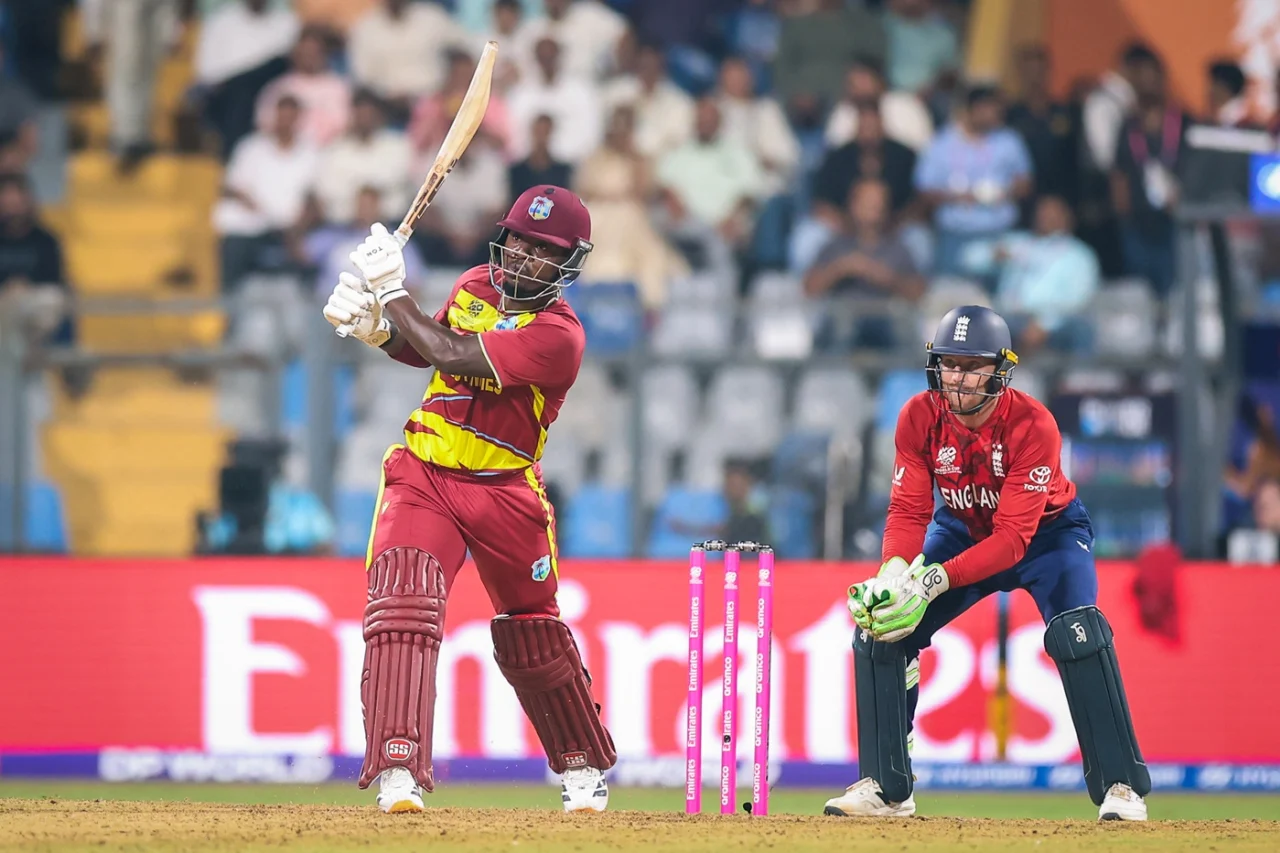
    The 2026 Windward Islands Cricket Board Women’s T20 Championship commenced with a commanding performance from the defending champions, as St Vincent & the Grenadines (SVG) secured a six-wicket victory over Saint Lucia at the Arnos Vale Cricket Ground on Sunday, January 4th.

    Electing to field first after winning the toss, SVG captain Japhina Joseph’s decision initially appeared questionable. Saint Lucia’s opening pair, Ashlene Edward and West Indies allrounder Zaida James, launched a formidable assault, propelling their team to a strong position of 60 without loss by the seventh over. Edward’s powerful 36 off 29 deliveries spearheaded the early charge.

    However, the innings underwent a dramatic collapse following James’s dismissal. A devastating middle-order batting failure saw Saint Lucia lose six wickets for a mere 25 runs. The team’s momentum was salvaged only by Namiah Marcellin’s resilient 22 from 26 balls, which guided them to a final total of 117-9 from their allotted 20 overs. Tracy Byron was the chief architect of the collapse, delivering an impressive bowling spell of 3-17 for the hosts.

    In response, SVG’s run chase faced an early setback with the departure of their captain. Despite losing partners at the other end, West Indies player Janillea Glasgow played a match-defining innings, masterfully anchoring the pursuit with a dominant 60 from just 49 balls, including nine fours and a six. Her dismissal in the 15th over with the score at 93-4 left little doubt about the outcome. Tracy Byron (11*) and Shannel Mackie (14*) calmly saw their team across the finish line with eight deliveries to spare, sealing a comprehensive win.

    In the tournament’s other opening fixture, Grenada announced themselves as serious contenders with a resounding victory over Dominica, powered by a magnificent century from Afy Fletcher that set a target of 182. Saint Lucia now looks to regroup quickly for their next match against a high-flying Grenada on Monday, January 5th.

  • Trump: ‘We are ‘going to run’ Venezuela after Maduro capture

    Trump: ‘We are ‘going to run’ Venezuela after Maduro capture

    In a bold declaration from his Mar-a-Lago resort, President Donald Trump characterized the military operation that resulted in the ousting of Venezuelan leader Nicolas Maduro as an unparalleled demonstration of American prowess. The operation, executed on Saturday, has thrust the United States into the central role of overseeing Venezuela’s political transition, though visible U.S. military presence in Caracas remains unconfirmed.

    Trump’s foreign policy, often defined by its assertive confidence, was on full display as he framed the intervention as a critical step toward installing ‘peace’ and ‘justice’ in a nation long governed by authoritarian rule. This move represents a significant pivot for a president who initially campaigned on disengaging from foreign entanglements, now committing the nation to a complex nation-building endeavor.

    However, the path forward is fraught with challenges. The administration must navigate the potential power vacuum following Maduro’s removal and address deep-seated issues of hyperinflation, crippling shortages of essential goods, and a massive brain drain that has plagued the country despite its vast oil reserves.

    The international reaction has been mixed and pointed. While allies in South Florida’s Venezuelan diaspora celebrated the operation, European leaders and U.S. adversaries expressed sharp criticism. The European Commission voiced ‘great concern,’ and France’s Foreign Minister decried the action as a violation of international law principles. Russia and China issued formal condemnations, labeling the operation an act of aggression and a breach of Venezuelan sovereignty.

    Domestically, criticism was immediate from Democratic lawmakers. Senator Ruben Gallego (D-AZ) condemned the action as an illegal act that transforms the U.S. from ‘world cop to world bully.’

    The operation culminated months of strategic pressure within the administration, led prominently by Secretary of State Marco Rubio. It followed the collapse of a proposed negotiated exit for Maduro, which the White House had rejected outright. Pentagon officials signaled that the operation should serve as a stark warning to other global adversaries about the reach of American military will under the Trump administration. The U.S. now faces the formidable task of stabilizing a fractured nation while determining its future leadership, with Trump vowing that American involvement will be professional and ultimately reimbursed by Venezuela’s substantial natural resources.

  • US indictment outlines Maduro’s alleged narcotics and corruption crimes

    US indictment outlines Maduro’s alleged narcotics and corruption crimes

    The United States District Court for the Southern District of New York has unsealed a sweeping superseding indictment leveling grave charges against Venezuelan leadership. The document presents a comprehensive case alleging that President Nicolás Maduro and his inner circle orchestrated a quarter-century conspiracy involving narcotics trafficking, corruption, and narco-terrorism.

    Prosecutors depict a systemic corruption network where Venezuelan officials allegedly weaponized state institutions to facilitate massive cocaine shipments to the United States. The indictment identifies Maduro as the central figure in this operation, accusing him and his co-defendants of exploiting diplomatic protections and governmental authority to shield illegal activities.

    The judicial filing details sophisticated collaboration between Venezuelan officials and internationally recognized terrorist organizations and cartels. According to the charges, Maduro’s regime partnered with Colombia’s FARC guerrillas, Mexico’s Zetas cartel, and the violent Tren de Aragua criminal syndicate to transport cocaine through Caribbean and Central American transit points.

    Beyond drug trafficking, the indictment describes a pattern of political corruption including the alleged sale of Venezuelan diplomatic passports to drug traffickers seeking to move illicit proceeds. The document further connects these activities to Maduro’s contested political legitimacy, referencing internationally condemned presidential elections in 2018 and 2024.

    Additional high-profile defendants include Interior Minister Diosdado Cabello Rondón, former Interior Minister Ramon Rodriguez Chacin, First Lady Cilia Adela Flores de Maduro, the president’s son Nicolas Ernesto Maduro, and Hector Rusthenford Guerrero Flores of Tren de Aragua.

    The unsealed indictment represents one of the most significant narcotics cases ever brought against a sitting head of state, alleging that Venezuela’s leadership transformed the nation into a narco-state that threatened regional security and American communities through drug-fueled corruption.

  • Caribbean, World leaders react to US attack in Venezuela

    Caribbean, World leaders react to US attack in Venezuela

    International condemnation has swept across multiple continents following United States military operations in Venezuelan territory and the capture of President Nicolás Maduro and First Lady Cilia Flores. The unprecedented intervention, which occurred on January 3, 2026, has triggered urgent diplomatic responses from nations worldwide warning of severe regional destabilization and violations of international law.\n\nCaribbean nations demonstrated immediate concern given their geographic proximity to Venezuela. Guyanese Prime Minister Dr. Irfaan Ali convened an emergency session with the Defence Board and national security apparatus, highlighting heightened alert status amid existing regional tensions. Trinidad and Tobago’s Prime Minister Kamla Persad-Bissessar explicitly distanced her nation from the military operations, emphasizing continued peaceful relations with Venezuela despite the unfolding crisis.\n\nOpposition Leader Pennelope Beckles of Trinidad and Tobago characterized developments as \”deeply troubling,\” reaffirming commitments to maintain the Caribbean as a \”Zone of Peace\” while expressing particular concern for civilian safety and Trinidadian nationals in Caracas.\n\nLatin American powers delivered forceful responses. Brazilian President Luiz Inácio Lula da Silva condemned the bombings as crossing \”an unacceptable line,\” warning they established \”an extremely dangerous precedent for the entire international community.\” Mexican authorities issued firm condemnation of unilateral military action, urging immediate United Nations intervention to de-escalate tensions.\n\nEuropean leaders emphasized legal and humanitarian dimensions. European Commission Vice-President Kaja Kallas stressed that \”principles of international law and the UN Charter must be respected under all circumstances.\” European Council President António Costa called for de-escalation and resolution through proper legal channels, while Spanish officials confirmed their diplomatic personnel’s safety and offered support for peaceful solutions.\n\nRussia’s Foreign Ministry described the operation as \”an act of armed aggression against Venezuela\” lacking factual justification, though confirming no injuries among Russian citizens in Caracas.\n\nThe United States justified its actions through legal frameworks. Attorney General Pamela Bondi announced indictments against Maduro and Flores in the Southern District of New York, charging the Venezuelan leader with Narco-Terrorism Conspiracy, Cocaine Importation Conspiracy, and weapons-related offenses. Bondi characterized the operation as a \”highly successful mission\” ensuring the defendants would \”face the full wrath of American justice.\”\n\nVenezuelan Executive Vice President Delcy Rodríguez denounced the intervention as \”extremely serious military aggression\” and a \”flagrant violation of the UN Charter,\\” accusing Washington of attempting to seize Venezuela’s strategic resources while vowing resistance.

  • Saint Lucia, Caribbean flights disrupted as US strikes close regional airspace

    Saint Lucia, Caribbean flights disrupted as US strikes close regional airspace

    A major aviation disruption swept across the Eastern Caribbean on January 3 as the US Federal Aviation Administration (FAA) implemented emergency airspace restrictions following military operations near Venezuela. The directive prompted immediate flight cancellations and significant schedule adjustments throughout the region.

    The FAA’s emergency Notices to Airmen (NOTAMs) effectively closed substantial portions of Eastern Caribbean airspace, creating a ripple effect across multiple island nations. Airports in Puerto Rico, Aruba, St Maarten, Barbados, Saint Lucia, Grenada, and the US Virgin Islands were among those experiencing substantial operational impacts.

    JetBlue Airways, maintaining extensive regional operations, cancelled approximately 215 flights systemwide. American Airlines confirmed schedule modifications, emphasizing passenger and crew safety as their primary concern. Delta Air Lines specifically listed affected destinations including San Juan, Aruba, Barbados, Saint Lucia, and Grenada. Both United Airlines and Southwest Airlines reported similar cancellation patterns due to the restrictions.

    The Saint Lucia Air and Sea Ports Authority (SLASPA) confirmed significant disruptions to flight operations between the United States and Caribbean destinations, noting numerous services experienced either delays or outright cancellations.

    Travel chaos ensued as passengers found themselves stranded at airports with uncertain resumption timelines. Regional tourism officials expressed particular concern about the timing during peak winter travel season, traditionally the region’s busiest tourism period.

    The FAA indicated restrictions were initially scheduled to expire late January 3 but maintained possibility of extension based on ongoing security assessments. Airlines advised affected passengers to consult official channels for rebooking options and refund procedures. While US carriers haven’t operated direct flights to Venezuela since 2019 due to political instability, the current restrictions notably extend beyond Venezuelan airspace, affecting broader Caribbean transit routes.

  • Maduro and wife charged after US announces capture following Venezuela strike

    Maduro and wife charged after US announces capture following Venezuela strike

    The United States has initiated unprecedented legal and military actions against Venezuelan leadership, with Attorney General Pamela Bondi formally announcing criminal indictments against President Nicolás Maduro and First Lady Cilia Flores. The charges, filed in the Southern District of New York, include serious allegations of Narco-Terrorism Conspiracy, Cocaine Importation Conspiracy, and weapons-related violations involving machine guns and destructive devices.

    The judicial developments coincided with military operations against Venezuelan territory. President Donald Trump confirmed the execution of ‘large-scale strikes’ targeting strategic locations in Venezuela, resulting in significant explosions across the capital city of Caracas. Initial assessments indicate several critical installations sustained damage, including La Carlota military airfield and the primary Fuerte Tiuna military base, with widespread power outages affecting surrounding communities.

    In her official statement delivered via social media platform X, Bondi commended President Trump for ‘demonstrating courage in demanding accountability on behalf of the American people’ and extended gratitude to U.S. military forces for what she characterized as a ‘highly successful mission.’

    The Venezuelan government has responded to these developments by declaring a nationwide state of emergency as the situation continues to evolve rapidly. These actions represent a significant escalation in the ongoing political confrontation between the United States and Venezuela, which has endured years of diplomatic tension and economic sanctions.

  • National emergency in Venezuela called as US strikes, captures Maduro

    National emergency in Venezuela called as US strikes, captures Maduro

    In a dramatic escalation of tensions, former U.S. President Donald Trump announced via Truth Social on January 3 that American forces had executed a “large-scale strike” against Venezuela, resulting in the capture and extraction of President Nicolás Maduro and his wife from the country. Trump characterized the mission as a “brilliant operation” conducted with U.S. law enforcement coordination, promising further details at a Mar-a-Lago news conference.

    Eyewitness accounts from Caracas described powerful explosions rocking the capital at dawn, with visible smoke plumes and unverified social media footage showing aerial military activity. The Venezuelan government confirmed strikes targeted key military installations including La Carlota airfield and Fuerte Tiuna base, with collateral damage causing power outages in surrounding communities.

    The Venezuelan administration issued a formal statement vehemently denouncing what it termed “military aggression” aimed at seizing national oil and mineral resources. Regional allies Cuba and Colombia joined in condemning the operations, while Trinidad and Tobago’s Prime Minister explicitly denied participation in the military actions.

    The Caribbean Community (CARICOM) convened an emergency meeting, expressing “grave concern” about regional implications. This development follows years of strained relations, with Washington consistently challenging Maduro’s legitimacy and accusing his administration of narcotics trafficking, while Caracas maintains these actions represent imperialist designs on Venezuela’s natural resources.

  • 5.6-magnitude earthquake rocks Saint Lucia

    5.6-magnitude earthquake rocks Saint Lucia

    The Eastern Caribbean region experienced significant seismic activity as a substantial earthquake measuring 5.6 in magnitude struck near Saint Lucia on Friday, January 2nd. The tremor occurred at precisely 5:38 p.m. local time, registering at a considerable depth of 30.4 kilometers beneath the Earth’s surface, according to preliminary data released by the University of the West Indies’ Seismic Research Centre.

    The seismic event’s epicenter was pinpointed approximately 65 kilometers northeast of Fort-de-France, Martinique, indicating a substantial tectonic disturbance in the region. The quake’s effects were widely reported across multiple population centers including Ciceron, Castries, and Gros Islet, where residents experienced noticeable shaking and vibration.

    This significant seismic event follows closely on the heels of a smaller 3.5-magnitude earthquake that occurred off the coast of Guadeloupe in the early hours of New Year’s Day, just after midnight. The consecutive seismic activities have raised attention to the heightened tectonic movements currently affecting the Caribbean region, known for its complex geological structure along multiple fault lines.

    Seismologists are continuing to monitor the situation for potential aftershocks and are analyzing data to better understand the implications of these back-to-back seismic events. The Caribbean region, situated along the boundary of the Caribbean and North American tectonic plates, frequently experiences such seismic activity, though earthquakes of this magnitude warrant particular attention from both scientists and emergency preparedness officials.