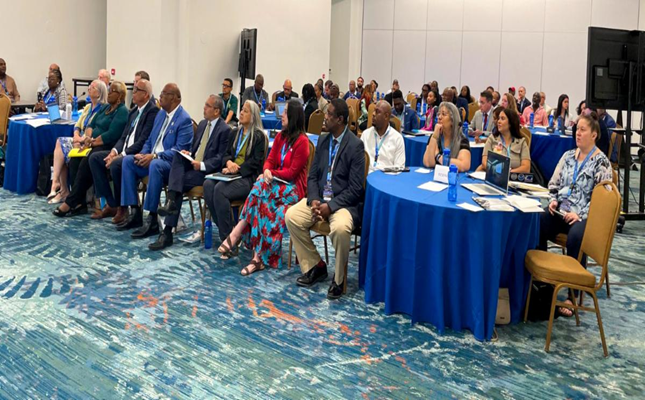
WILLEMSTAD, Curaçao – On April 20, 2026, more than 30 national and territorial governments kicked off the second global Tsunami Ready Recognition Program (TRRP) Summit in Curaçao’s capital, uniting government officials, regional policy leaders, disaster science experts and international stakeholders around a shared goal: strengthening tsunami preparedness, early warning infrastructure and community-level climate resilience across the Caribbean basin and adjacent coastal regions. The U.S. State Department has provided core funding to support the two-day gathering, which is set to conclude April 21.
Hosted by the government of Curaçao, the summit draws participants from a broad range of key institutions, including UNESCO’s Intergovernmental Oceanographic Commission (UNESCO-IOC), the International Tsunami Information Center Caribbean Office (ITIC-CAR), national disaster management agencies, national meteorological services, academic research bodies, and global development partners. Over the course of the event, attendees will conduct a comprehensive review of progress made across the region since the first summit, and advance actionable steps to expand implementation of the TRRP across at-risk coastal communities.
In his opening keynote address, Hon. Charles Cooper, Curaçao’s Minister of Traffic, Transport, and Urban Planning, emphasized that the gathering is far more than a procedural diplomatic meeting. “This summit is more than a meeting. It is a commitment to work together, to share knowledge, and to build stronger and safer communities for the future,” Cooper said. He noted that while tsunamis are rare events in the region, their potential for catastrophic destruction makes sustained investment in preparedness, public outreach and coordinated cross-border planning non-negotiable.
Matthieu Péroche, Chair of the ICG/CARIBE-EWS Task Team on Tsunami Ready, opened the official summit ceremony by highlighting that despite the Caribbean’s wide diversity of coastal geographies and governance structures, all nations and territories in the region share a common, persistent exposure to tsunami risk. “Tsunami Ready is first about saving lives — today and tomorrow. But it is also about strengthening regional solidarity. Better-prepared communities are better able to support others after a crisis, contributing to collective resilience,” Péroche said. He encouraged attendees to use the summit to exchange on-the-ground implementation experiences, address unmet barriers to progress, and draft concrete practical recommendations to guide future regional action.
Welcoming delegates on behalf of the Curaçao government, Dr. Albert Martis, Director of Curaçao’s Meteorological Department and the nation’s Tsunami National Contact, noted that the turnout of cross-sector specialists from dozens of countries reflects the depth of regional and international commitment to building safer Caribbean coastal communities. “This summit provides us with a vital platform to continue our discussions on how to best prepare our communities, reduce vulnerabilities, and ultimately minimize the loss of life and property,” Martis said. He also extended gratitude to supporting governments and partner institutions, whose combined financial, technical and logistical support made the summit possible.
Speaking from the perspective of the global TRP initiative, Dr. Laura Kong, Chair of the UNESCO-IOC Tsunami Ready Coalition, outlined the significant progress the program has made since the first regional summit in 2010, noting that the initiative has expanded steadily across every ocean basin at risk of tsunamis. “Today, we have nearly 110 recognized communities in about 30 countries around the world, and another 75 that are in progress,” Kong said. She reminded delegates that tsunami risk remains an ongoing threat for the Caribbean and adjacent regions, where multiple destructive, deadly tsunami events have been recorded throughout history, stressing that sustained cross-generational public awareness and preparedness is critical to avoiding future catastrophe.
The summit’s working agenda covers a wide range of priority topics, including a full review of regional TRP implementation progress, mapping of unrecognized at-risk communities, evaluation of program performance indicators, and discussions on inclusive resilience planning that centers the specific needs of marginalized groups including people with disabilities, youth, and migrant populations, as well as gender-responsive disaster preparedness. Delegates will also explore how to better align the TRP with broader regional and global early warning frameworks to create more cohesive disaster response systems.
Led globally by UNESCO-IOC, the Tsunami Ready Recognition Program supports at-risk coastal communities in meeting internationally agreed standards for core preparedness functions, including early warning dissemination, public tsunami education, formal evacuation planning, and emergency response capacity. For Small Island Developing States and low-lying coastal territories across the Caribbean, the program has emerged as an increasingly critical tool to turn general hazard awareness into measurable, actionable community-level preparedness.
The summit is scheduled to conclude with a set of formal recommendations for the Intergovernmental Coordination Group for the Tsunami and Other Coastal Hazards Warning System for the Caribbean and Adjacent Regions (ICG/CARIBE-EWS), which will guide the next phase of programming for the group’s member states.