标签: Saint Kitts and Nevis

圣基茨和尼维斯

  • Secretary of State Marco Rubio is the highest-ranking US official to visit the tiny Caribbean nation of Saint Kitts and Nevis

    Secretary of State Marco Rubio is the highest-ranking US official to visit the tiny Caribbean nation of Saint Kitts and Nevis

    In a significant diplomatic move, United States Secretary of State Marco Rubio embarked on an unprecedented official visit to the Federation of Saint Kitts and Nevis on February 25, 2026. This landmark engagement marks the highest-level diplomatic contact between the two nations, with Rubio becoming the most senior U.S. official to ever set foot on the dual-island Caribbean nation.

    The visit forms part of a broader regional strategy as Washington intensifies its diplomatic outreach across the Caribbean basin. Secretary Rubio’s itinerary includes critical meetings with Caribbean Community (CARICOM) leadership, where pressing regional concerns are expected to dominate discussions. Foremost among these is the evolving situation regarding Cuba, as the United States continues to ramp up pressure on the communist government in Havana.

    This diplomatic offensive comes fresh after the Biden administration’s successful removal of Venezuela’s president, demonstrating a renewed focus on Western Hemisphere affairs. The timing suggests a strategic recalibration of U.S. foreign policy toward its Caribbean neighbors, potentially signaling a shift in diplomatic priorities under the current administration.

    The miniature Commonwealth nation, with a population of approximately 53,000, represents an important partner in regional security and economic cooperation. Rubio’s presence underscores Washington’s recognition of the strategic importance of even the smallest Caribbean nations in maintaining hemispheric stability and addressing shared challenges including climate resilience, economic development, and security cooperation.

  • Crime, Venezuela, and Energy Take Center Stage at CARICOM–Rubio Meeting

    Crime, Venezuela, and Energy Take Center Stage at CARICOM–Rubio Meeting

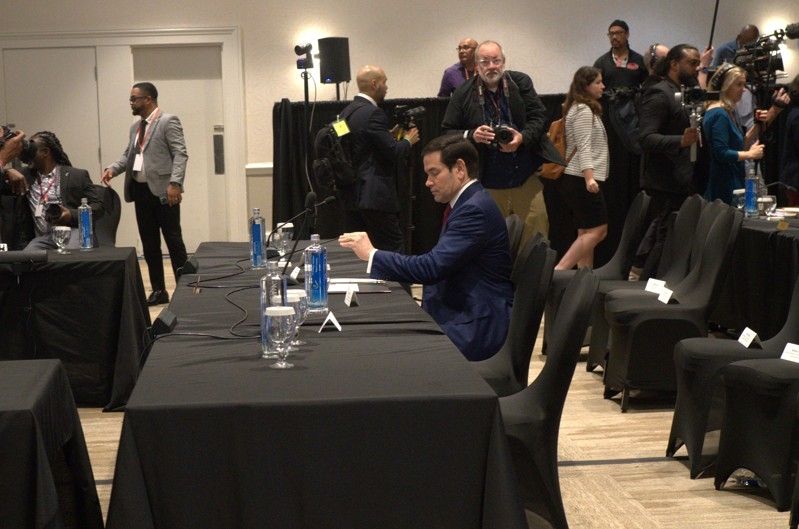
    In a significant diplomatic engagement, U.S. Secretary of State Marco Rubio convened with CARICOM leaders in Basseterre, St. Kitts, for comprehensive talks addressing pressing regional and international matters. The closed-door discussions, characterized by participants as fruitful and open, yielded expectations of tangible outcomes in the near future.

    Secretary Rubio positioned energy cooperation as a cornerstone of U.S.-Caribbean relations, emphasizing America’s commitment to partnership in responsible resource development. “Energy is critical for every economy to prosper,” Rubio asserted. “Many countries represented here have energy resources that can generate wealth and prosperity for your people, and we want to be your partner in that regard.”

    The Venezuela situation featured prominently in discussions, with Rubio acknowledging regional concerns while highlighting substantial progress under interim leadership. The Secretary detailed improvements including prisoner releases, closure of the notorious Helicoide prison, and redirected oil revenues toward public benefit. “Venezuela is better off today than it was eight weeks ago,” Rubio stated, noting the reopening of the U.S. embassy in Caracas and the transition from stability measures to recovery phase operations.

    Regional security emerged as another critical agenda item, with Rubio addressing the escalating threat of transnational criminal organizations. These entities, armed with sophisticated weaponry often sourced from the United States, now operate with financial and operational capabilities rivaling nation-states. The Secretary outlined coordinated efforts to combat narcotrafficking networks through targeted designations and law enforcement collaboration.

    Prime Minister Dr. Terrance Drew of St. Kitts and Nevis confirmed the constructive nature of the dialogue while maintaining discretion regarding specific negotiation details. The summit signals strengthened U.S.-CARICOM alignment on economic development, security cooperation, and democratic stability in the hemisphere, with further policy developments anticipated in coming weeks.

  • St Kitts and Nevis welcomes non-stop flight from Cairo ahead of CARICOM Summit – WIC News

    St Kitts and Nevis welcomes non-stop flight from Cairo ahead of CARICOM Summit – WIC News

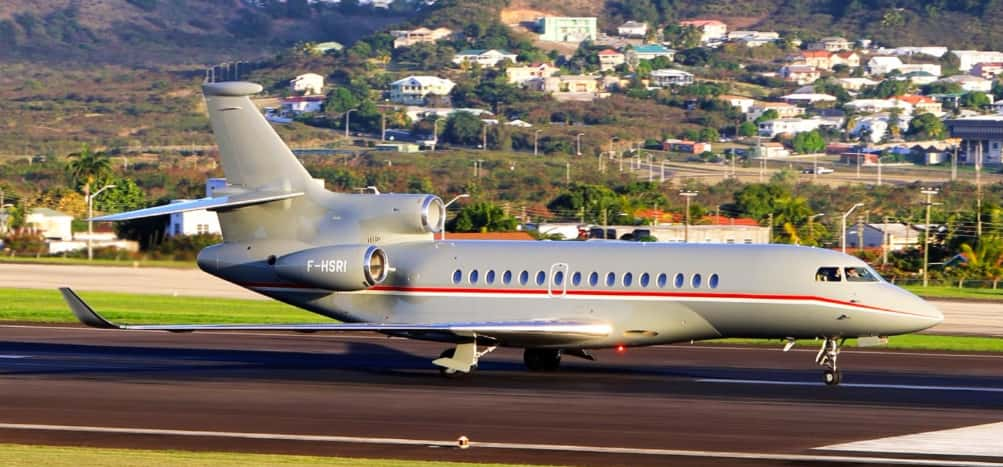
    In a significant aviation breakthrough, the Federation of St. Kitts and Nevis marked a new chapter in its connectivity history with the arrival of the first-ever non-stop flight from Cairo, Egypt. The landmark journey occurred on February 24, 2026, when a state-of-the-art Dassault Falcon 8X business jet touched down at Robert L. Bradshaw International Airport after completing an impressive 13-hour transcontinental flight.

    The aircraft’s direct routing from North Africa to the Caribbean archipelago underscores the nation’s expanding global profile and its emerging status as a premier destination for international travelers and dignitaries. This aviation milestone coincides with the Federation’s hosting of the 50th Regular Meeting of the Conference of Heads of Government of the Caribbean Community (CARICOM), suggesting the flight likely transported key delegates to the significant regional gathering.

    The Falcon 8X represents the pinnacle of modern aviation engineering, boasting an exceptional range of 6,450 nautical miles (11,945 kilometers) that enables such remarkable non-stop journeys. As an enhancement over the previously common Falcon 7X model, this aircraft features a cabin extended by 1.1 meters, advanced wing design, and Pratt & Whitney Canada PW300 engines that deliver up to 35% greater fuel efficiency compared to similar aircraft.

    Aviation enthusiasts and local observers expressed excitement about this development. SKBenergy, a prominent social media commentator, noted on Facebook: ‘WOW!! A nonstop flight from Cairo, the capital of Egypt. This flight was nearly 13 hours long, truly impressive for these small private jets… I know this flight has something to do with the CARICOM Summit and probably brought in delegates.’

    This aviation achievement not only demonstrates St. Kitts and Nevis’ growing international connections but also highlights the importance of the CARICOM meeting currently underway in the Federation, further solidifying the nation’s position as an emerging hub for diplomatic and international affairs in the Caribbean region.

  • West Indies Women Name Exciting Squad for T20 Showdown with Sri Lanka in Grenada

    West Indies Women Name Exciting Squad for T20 Showdown with Sri Lanka in Grenada

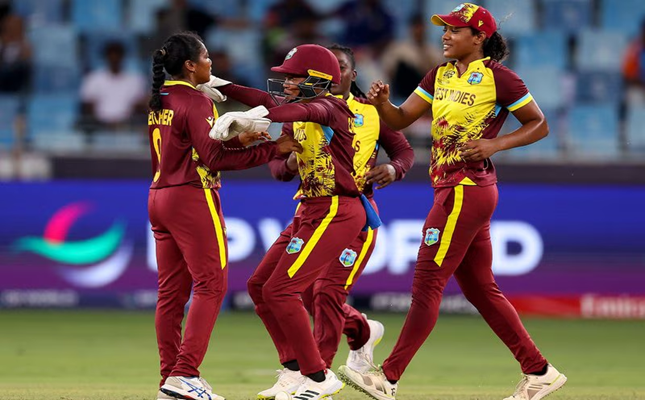
    Cricket West Indies has announced a strategically selected 15-player roster for the upcoming Women’s T20 International series against Sri Lanka, scheduled from February 28 to March 3 at Grenada’s National Cricket Stadium. This three-match confrontation serves as critical preparation ahead of the ICC Women’s T20 World Cup 2026 in the United Kingdom.

    Captain Hayley Matthews will lead a squad blending veteran experience with emerging talent. The most notable selection is 17-year-old Barbadian prodigy Eboni Brathwaite, who receives her first senior call-up following an explosive performance in the regional T20 Blaze tournament where she maintained a remarkable strike rate of 146.

    The selection panel has introduced fresh dynamics with Zaida James and Mandy Mangru joining the T20 lineup, replacing Ashmini Munisar and Shunelle Sawh from the recent ODI series against Sri Lanka. Brathwaite takes the spot of Realeanna Grimmond, signaling the team’s commitment to injecting new energy.

    Head Coach Shane Deitz emphasized the series’ significance within the broader World Cup context: “This T20 series provides invaluable preparation with the global tournament firmly in mind. Our players have maintained strong T20 performances since our last campaign, and the group is energized about the journey ahead.”

    The squad benefits from additional firepower with several players returning in excellent form from the Women’s Premier League. Deitz specifically highlighted Brathwaite’s power-hitting capabilities and the continued development of all-rounder Jahzara Claxton, whose skill set aligns perfectly with T20 demands.

    The series presents a compelling competitive dynamic with West Indies ranked sixth and Sri Lanka seventh in ICC Women’s T20 rankings. Cricket authorities have made admission free for all matches, encouraging Grenadian fans to create an electrifying home atmosphere.

    Regional supporters can follow the action live through Windies Cricket YouTube channel and Disney+ platforms, ensuring widespread accessibility for this important preparatory series.

  • DHL Operations Recognized for Outstanding Service Quality

    DHL Operations Recognized for Outstanding Service Quality

    In a significant achievement for its Caribbean network, DHL Operations across St. Kitts and Nevis has earned formal recognition for exceptional service quality standards. The accolade was confirmed through the company’s December 2025 Quarterly Service Quality Competition Report, highlighting the offices’ commitment to operational excellence and customer satisfaction.

    Ms. Rashidi Clarke, DHL Operations Manager (Agents), announced the results which positioned the Nevis office as first-place winner among sixteen regional competitors, with the St. Kitts office securing a strong second place finish. The rankings were determined through comprehensive evaluation of year-end performance targets across the logistics network.

    “Please join me in congratulating all teams for their hard work and commitment to excellence,” stated Clarke. “Let’s keep the momentum going as we aim for even greater success in 2026.”

    The achievement underscores both offices’ sustained focus on operational efficiency, timely delivery performance, and maintaining elevated service standards. This success has been driven by dedicated teams consistently exceeding customer and business partner expectations through continuous improvement initiatives and adherence to global best practices.

    DHL’s regional operations have demonstrated strong commitment to innovation and excellence, utilizing advanced logistics solutions while maintaining robust local presence. This approach ensures seamless connectivity to international markets while prioritizing safety protocols, sustainability measures, and enhanced customer experiences aligned with the DHL brand’s trusted standards.

    Looking forward, the company has reaffirmed its dedication to strengthening operational capabilities, investing in workforce development, and delivering world-class logistics services throughout the Caribbean region and beyond.

  • REMARKS: Dr Carla Barnett, CARICOM Secretary-General Opening Ceremony – 50th Regular Meeting of the Conference of CARICOM Heads of Government

    REMARKS: Dr Carla Barnett, CARICOM Secretary-General Opening Ceremony – 50th Regular Meeting of the Conference of CARICOM Heads of Government

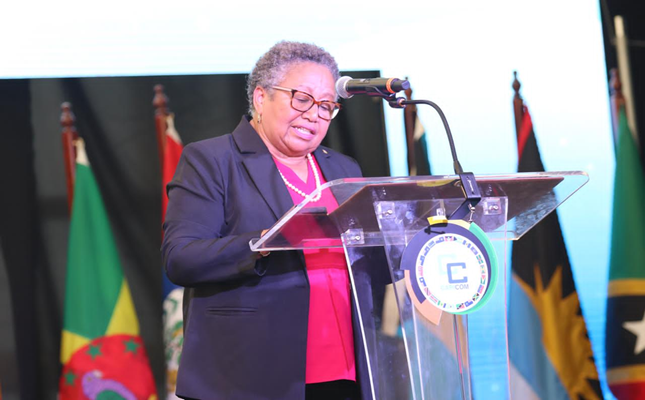
    The Caribbean Community (CARICOM) commenced its landmark 50th Regular Meeting of the Conference of Heads of Government in St. Kitts and Nevis, with Secretary-General Dr. Carla Barnett presiding over the opening ceremony. The gathering marks a significant milestone for regional integration amidst complex global challenges.

    Secretary-General Barnett extended formal acknowledgments to host nation leadership, including Governor-General Dame Marcella A. Liburd and Prime Minister Dr. Terrance Drew, who currently chairs the CARICOM leadership council. The Secretary-General praised St. Kitts and Nevis for demonstrating exceptional organizational capability despite being the smallest sovereign state within the community, having previously hosted two major CARICOM meetings in 2025.

    Prime Minister Drew’s tenure as chairman, which began January 1, has already established a pattern of proactive engagement, commencing with emergency regional meetings during the year’s first weekend and continuing with extensive diplomatic visits throughout member states.

    The address reflected on 2025 as one of the most challenging periods in CARICOM’s history, particularly highlighting Hurricane Melissa’s catastrophic impact across Haiti, The Bahamas, Bermuda, and Jamaica. The Category 5 system caused extensive devastation, with Jamaica experiencing particularly severe consequences. The community collectively acknowledged former Chairman Prime Minister Andrew Holness of Jamaica for his decisive leadership during the crisis response.

    CARICOM’s institutional response mechanisms, including the Caribbean Disaster Emergency Management Agency and the Caribbean Public Health Agency, demonstrated remarkable coordination in providing immediate humanitarian assistance, technical damage assessments, and recovery support. This collective action exemplified the community’s resilience and mutual support principles.

    The past year also witnessed significant democratic exercises across seven member states and four associate members, with several landmark electoral outcomes. Suriname inaugurated its first female president, Dr. Jennifer Geerlings-Simons, while multiple nations returned or elected new leadership through peaceful processes.

    The current summit’s agenda addresses pressing regional priorities, with substantial time allocated for candid deliberations. Full representation at the head-of-government level despite domestic pressures underscores member states’ commitment to collective action.

    Notable developments include four member states—Barbados, Belize, Dominica, and St. Vincent and the Grenadines—implementing full free movement provisions under the CARICOM Single Market and Economy framework since October 2025. This pioneering integration effort has already facilitated increased economic activity and people-to-people connections.

    The evolving global landscape presents both challenges and opportunities, particularly in energy transition, digital infrastructure, climate resilience, and technological advancement. CARICOM’s coordinated foreign policy approach continues to attract international engagement, evidenced by high-level participation from Saudi Arabia, the United Arab Emirates, and the Commonwealth Secretariat.

    The community is actively strengthening South-South partnerships, notably with the African Union through institutions like Afreximbank. The second CARICOM-Africa Summit in 2025 established frameworks for enhanced cooperation in finance, reparations advocacy, air connectivity, and cultural exchange.

    As CARICOM celebrates five decades of regional integration, the organization continues to advance human development, foreign policy coordination, security cooperation, and economic progress. The current summit aims to translate commitments into concrete actions that ensure a sustainable and prosperous future for all Caribbean citizens.

  • Youth Ambassadors Call for Bold Action at CARICOM’s 50th Heads of Government Meeting

    Youth Ambassadors Call for Bold Action at CARICOM’s 50th Heads of Government Meeting

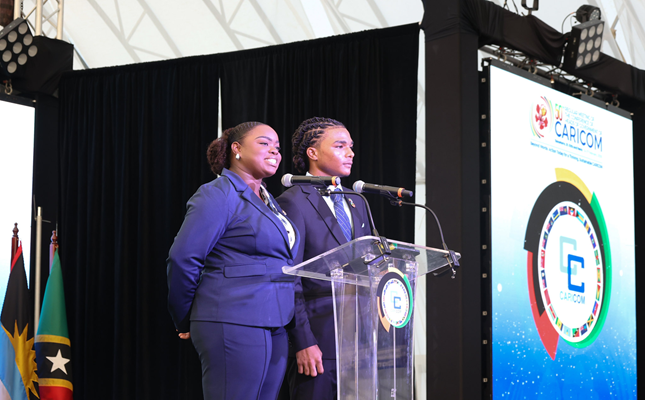
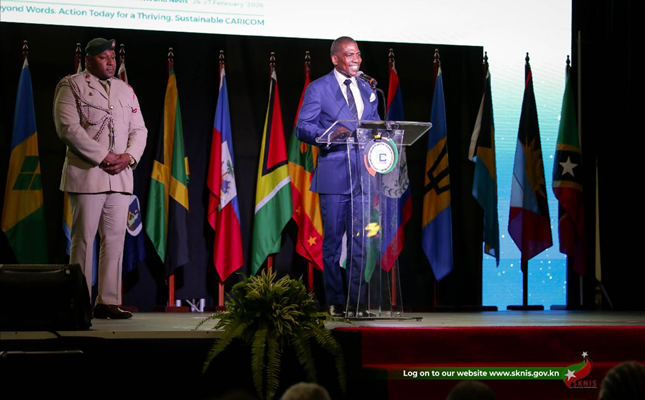
    At the landmark 50th Conference of CARICOM Heads of Government in St. Kitts and Nevis, Youth Ambassadors Aquanjé Robinson and Siobhan Phipps-Harding delivered a compelling call for transformative action that resonated through the opening ceremony. The young leaders articulated a clear vision for moving beyond symbolic unity toward tangible regional progress.

    Phipps-Harding established the tone by emphasizing the critical juncture at which the Caribbean Community finds itself. “Our Region’s people and youth are no longer looking for togetherness written in ink,” she declared, “but they are looking for progress etched into our landscapes.” Her remarks highlighted the growing impatience with diplomatic formalities without substantive implementation.

    The ambassadors identified pressing regional challenges including climate volatility, unsustainable debt burdens, and brain drain migration patterns that deprive Caribbean nations of their most talented citizens. They framed these issues not as insurmountable obstacles but as opportunities for coordinated regional response.

    Robinson powerfully reframed the Caribbean narrative around the concept of resilience as historical inheritance rather than contemporary buzzword. “It is woven into our shared history,” he noted, “from the resistance of our ancestors to the reconstruction of our islands after every storm.” This resilience, he argued, provides the foundation for bold, intentional action.

    The youth representatives outlined specific pillars for a thriving CARICOM: digital connectivity to dissolve educational and commercial borders, food security to break import dependence, and climate justice that transitions from rhetoric to tangible community protection. They emphasized that true regional integration requires governing “with the resolve of one Caribbean” despite geographical separation.

    Both ambassadors closed with a unified message urging leaders to ensure this historic meeting would be remembered for visionary implementation rather than elegant speeches. Their concluding statement—”our Region’s future is bright because we are building it together”—served as both encouragement and reminder of collective responsibility.

  • “A World Without CARICOM Would Be Culturally Poorer” Prime Minister Drew

    “A World Without CARICOM Would Be Culturally Poorer” Prime Minister Drew

    In a profound address marking a historic milestone, Saint Kitts and Nevis Prime Minister Dr. Terrance Drew delivered a compelling defense of Caribbean regional integration during the 50th Regular Meeting of CARICOM Heads of Government. Speaking as the current Chairman of the Caribbean Community, Dr. Drew articulated a vision of collective strength that has defined the region’s trajectory for half a century.

    Before an assembly of regional leaders and international partners, the Prime Minister reflected on the Caribbean’s extraordinary journey from colonial subjugation to sovereign independence. He positioned CARICOM not as a mere political arrangement but as a fundamental expression of Caribbean identity and resilience. ‘Our integration was neither accidental nor casual,’ Dr. Drew asserted, characterizing the Treaty of Chaguaramas as ‘a declaration of Caribbean confidence’ that transcended its legal framework.

    The address contained a striking declaration: ‘A world without CARICOM would be culturally poorer, intellectually diminished and spiritually less vibrant.’ This statement encapsulated the Prime Minister’s central thesis that the Caribbean has made disproportionate contributions to global culture, intellectual thought, and spiritual movements despite its relatively small population and geographical size.

    Dr. Drew provided concrete examples of regional institutions that demonstrate CARICOM’s practical value. He highlighted the Caribbean Public Health Agency (CARPHA), which has coordinated regional health responses; the Regional Security System (RSS) that maintains collective safety; the Caribbean Examinations Council (CXC) that standardizes educational excellence; and the Caribbean Development Bank (CDB) that fuels economic progress. ‘By ourselves, many of our states could not have achieved what togetherness has made possible,’ he emphasized.

    The Prime Minister connected CARICOM’s historical mission to contemporary global challenges, noting that supply chain disruptions, climate emergencies, energy instability, and geopolitical tensions make regional cooperation more essential than ever. He argued that fragmentation increases vulnerability while unity generates resilience in this new era of uncertainty.

    As CARICOM celebrates its 50th regular meeting, Dr. Drew’s address served as both a tribute to past achievements and a call to reinvigorate the founding principles of functional cooperation, economic coordination, and collective self-reliance that continue to define the Caribbean community’s unique approach to regional integration.

  • Historic Full Attendance Marks 50th CARICOM Heads Meeting in Saint Kitts and Nevis

    Historic Full Attendance Marks 50th CARICOM Heads Meeting in Saint Kitts and Nevis

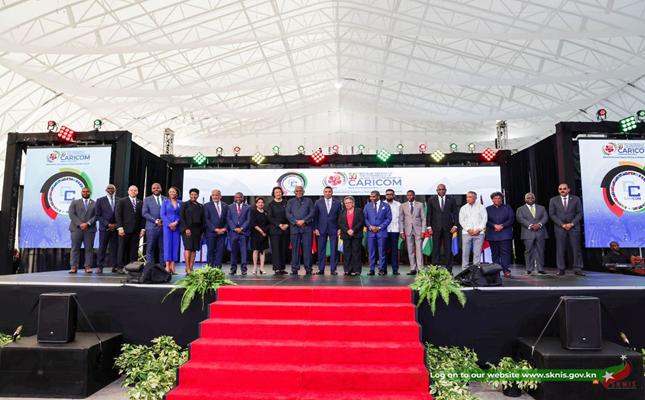
    In an unprecedented display of regional unity, Saint Kitts and Nevis hosted the 50th Regular Meeting of the Conference of Heads of Government of the Caribbean Community (CARICOM) with complete attendance from all member states—the first such gathering in over a decade. The historic event, which commenced on February 24, 2026, in Basseterre, marks a significant milestone for regional cooperation amid global challenges.

    Under the chairmanship of Prime Minister Dr. Terrance Drew of Saint Kitts and Nevis, the opening ceremony witnessed a powerful demonstration of collective commitment from Caribbean leaders. Prime Minister Drew characterized the assembly as both symbolically important and substantively crucial given current international pressures and regional vulnerabilities.

    This remarkable convergence follows Dr. Drew’s extensive diplomatic tour across Caribbean capitals, where he conducted face-to-face bilateral engagements with fellow heads of government. These preparatory meetings, described as unprecedented in recent CARICOM history, focused on strengthening relationships, fostering dialogue, and building consensus around pressing regional priorities.

    In his address, Chairman Drew emphasized the significance of the full attendance: “At a time when critics suggest CARICOM has lost its way, today in Saint Kitts and Nevis are all the leaders of the full members of CARICOM.” His remarks were met with sustained applause from attendees, reflecting the renewed spirit of collaboration.

    The Prime Minister framed current adversities—including global supply chain disruptions, energy volatility, climate vulnerabilities, and security concerns—as opportunities for deeper integration and disciplined execution. He affirmed that collective action remains the region’s greatest strength in navigating these complex challenges.

    The 50th Meeting agenda features high-level deliberations on critical issues including food and energy security, climate resilience mechanisms, regional security cooperation, digital transformation initiatives, trade facilitation, and stabilization measures for vulnerable member states. This comprehensive agenda reflects the community’s commitment to addressing both immediate and long-term regional needs.

    As host nation and current CARICOM Chair, Saint Kitts and Nevis views this historic gathering as a clear affirmation of regional solidarity and a recommitment to advancing economic coordination, collective self-reliance, and meaningful integration for the benefit of all Caribbean citizens.

  • Saint Kitts and Nevis: Rubio meets Caribbean leaders as US raises pressure on Cuba

    Saint Kitts and Nevis: Rubio meets Caribbean leaders as US raises pressure on Cuba

    In a historic diplomatic engagement, U.S. Secretary of State Marco Rubio convened with Caribbean Community (CARICOM) leaders in Saint Kitts and Nevis amid escalating regional tensions. The high-level summit marked the first visit by a U.S. Cabinet official to the dual-island nation, notable as the birthplace of American founding father Alexander Hamilton.

    The discussions centered on mounting apprehensions regarding Cuba’s deteriorating economic situation, exacerbated by recent disruptions in Venezuelan oil shipments following President Nicolás Maduro’s removal. Jamaican Prime Minister Andrew Holness articulated collective concerns, warning that “a prolonged crisis in Cuba will not remain confined to Cuba” and emphasizing potential regional destabilization and migration consequences.

    Despite historical tensions, Secretary Rubio adopted a measured diplomatic approach, seeking sustained cooperation on multiple fronts including Venezuela’s political transition and Haiti’s ongoing crisis. The Cuban-American diplomat, who has historically advocated for regime change in Havana, notably moderated his rhetoric while maintaining pressure through threatened sanctions against nations supplying oil to Cuba.

    The summit revealed divergent regional perspectives. Prime Minister Terrance Drew of host nation Saint Kitts and Nevis, himself a Cuba-educated physician, appealed for humanitarian assistance while acknowledging Cuba’s worsening conditions including food scarcity and power outages. Conversely, Trinidad and Tobago’s Prime Minister Kamla Persad-Bissessar criticized communist governance while praising U.S. intervention in Venezuela and its positive impact on reducing regional arms trafficking.

    The diplomatic gathering occurred against the backdrop of the Trump administration’s “Donroe Doctrine,” which emphasizes unilateral intervention to advance U.S. interests in the Western Hemisphere. Recent U.S. military actions against alleged drug trafficking operations in Caribbean waters have drawn international scrutiny regarding their legal and ethical foundations.