标签: Jamaica

牙买加

  • DBJ’s M5 framework drives recovery dialogue for agriculture at New York conference

    DBJ’s M5 framework drives recovery dialogue for agriculture at New York conference

    Against the backdrop of ongoing post-disaster reconstruction in the wake of Hurricane Melissa, Jamaica’s national development finance institution took center stage at a one-day New York recovery forum to showcase its work and rally global support for the island nation’s long-term resilience goals.

    Hosted by the Jamaican Consulate General in New York, the Recover Better Conference convened diaspora representatives, international investors, and key industry stakeholders to mobilize three core resources for Jamaica’s rebuilding: targeted capital, specialized expertise, and cross-sector collaborative partnerships. The event placed specific focus on the Development Bank of Jamaica (DBJ), spotlighting its existing work in post-disaster reconstruction and economic transformation while generating new interest in partnerships to advance national recovery.

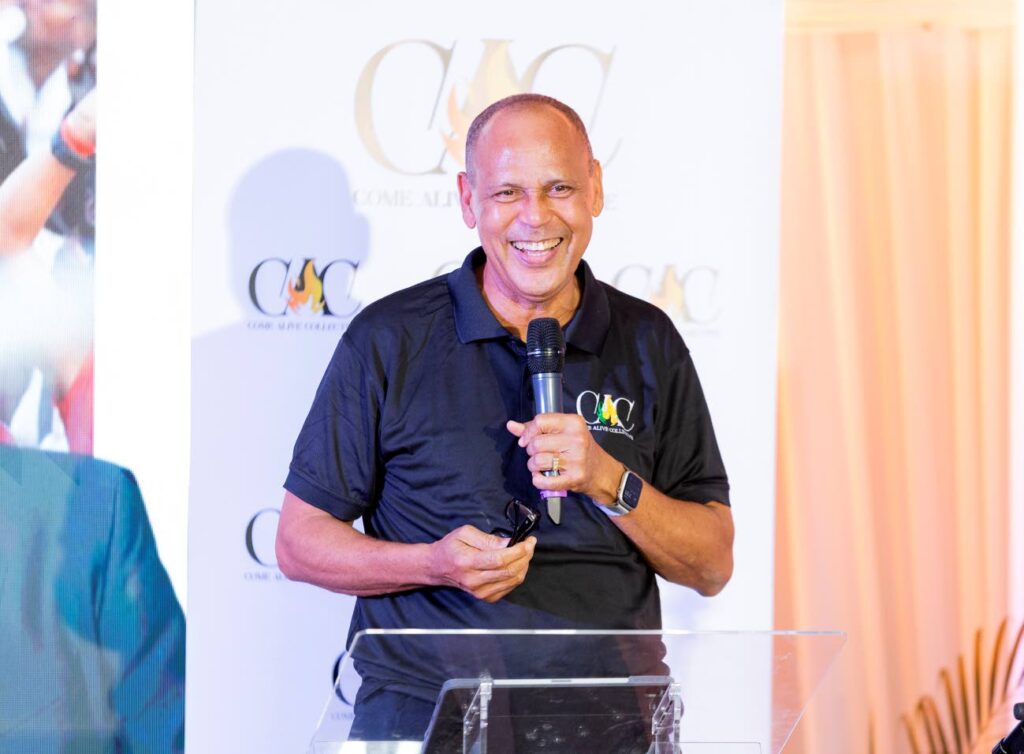
    In his opening remarks on DBJ’s role, Managing Director Dr. David Lowe stressed that collective partnership forms the backbone of effective post-crisis recovery, singling out the Jamaican diaspora as an underutilized catalyst for accelerated progress. “Partnership is non-negotiable for meaningful recovery,” Dr. Lowe stated in an official press release distributed Friday. “The Jamaican diaspora holds unique stakes and capabilities in this work, and DBJ stands ready to act as their dedicated partner to direct investment toward high-impact opportunities that restore livelihoods and secure Jamaica’s long-term economic prosperity. All stakeholders must step forward to build a robust ecosystem that supports solution-focused, resilient national development.”

    During its formal presentation at the conference, DBJ outlined its comprehensive, innovative framework for recovery financing that positions the institution as more than a traditional lender: it operates as a strategic catalyst for sustainable, inclusive growth. Unlike standard development banks that rely solely on debt instruments, DBJ combines a flexible mix of loans, equity stakes, grant funding, credit guarantees, and hands-on technical support to close persistent financing gaps, unlock private sector expansion, and build a solution-oriented development pathway that serves all stakeholders.

    A core pillar of DBJ’s current recovery intervention is targeted support for Jamaica’s agricultural sector, which suffered some of the most severe damage from recent climate-driven disasters. Over the past financial year, the bank has approved roughly $9.3 million in dedicated loans for agricultural operations and agribusinesses, supporting hundreds of small and medium-sized enterprises across the island. This financing has helped restore lost production capacity, reinforce national food security systems, and stabilize incomes for thousands of households dependent on the agricultural sector.

    DBJ also highlighted the early successes of its signature M5 Business Recovery Programme, a structured initiative designed to support struggling enterprises through a holistic package of credit access, direct grants, loan restructuring, and collateral assistance. With $63 million in total financing allocated to the program and robust demand across multiple sectors of the economy, M5 has emerged as a critical lifeline that helps businesses stabilize operations, rebuild damaged infrastructure, and scale for long-term growth while embedding innovative resilience strategies to weather future shocks.

    To deepen engagement with diaspora stakeholders, Nicola Russell, manager of DBJ’s public-private partnership and privatisation division, joined a conference panel focused on expanding diaspora participation through investment, volunteerism, skills sharing, and philanthropy. During the discussion, Russell outlined a pipeline of investable public-private partnership and privatisation (PPP&P) opportunities open to external stakeholders, emphasizing that diaspora members and the wider global investment community can deliver tangible impact for Jamaica’s reconstruction and long-term development. She also noted that leveraging diaspora networks and on-the-ground expertise is key to advancing productive dialogue and unlocking transformative capital for large-scale PPP projects.

    The conference featured a headline keynote address from Jamaican Prime Minister Dr. Andrew Holness, who presented the government’s official vision for the country’s recovery in a talk titled “Building Back Better: Jamaica’s Vision for National Recovery and Resilience.” Holness underscored the critical importance of coordinated national action, strategic targeted investment, and cross-stakeholder partnerships to advance ongoing reconstruction and build systemic national resilience.

    Beyond its immediate post-Hurricane Melissa recovery work, DBJ used the conference to outline its broader national mandate, which includes supporting micro, small, and medium-sized enterprises (MSMEs), mobilizing private domestic and international capital, and advancing large-scale infrastructure development through public-private partnerships. Through these integrated efforts, the bank reaffirmed its commitment to serving as a strategic partner for all stakeholders, working to build a resilient, inclusive, and solution-driven economic future for all Jamaicans.

  • World Athletics rejects transfer of Jamaican quartet to Turkey

    World Athletics rejects transfer of Jamaican quartet to Turkey

    In a landmark decision published Thursday, the World Athletics Nationality Review Panel has blocked 13 elite athletes, including four of Jamaica’s top track and field stars, from switching their international sporting allegiance to compete for Turkey. Among the Jamaican applicants was Roje Stona, the newly crowned 2024 Paris Olympic men’s discus gold medalist, alongside shot putter Rajindra Campbell, triple jumper Jaydon Hibbert and long jumper Wayne Pinnock – all core contributors to Jamaica’s rising field athletics program. The rejected applications also included six athletes from African nations – Nigeria’s Favour Ofili, four Kenyan runners including marathon legend Brigid Kosgei, Catherine Relin Amanang’ole, Brian Kibor, Ronald Kwemoi, Nelvin Jepkemboi – and one Russian athlete, Sophia Yakushina.

    The panel’s ruling centered on a key finding: the batch of applications was not made up of individual requests, but rather part of a coordinated, state-backed recruitment strategy led by Turkey through a state-funded sports club. According to the panel’s statement, the program offered extremely lucrative financial contracts to elite athletes to secure their citizenship and eligibility to compete for Turkey at major international competitions, including the 2028 Los Angeles Olympic Games.

    After reviewing all applications collectively due to their shared characteristics, the panel determined that this systematic recruitment approach directly conflicts with the foundational core principles of international track and field. These principles exist to protect the credibility of global competition, incentivize national member federations to invest in nurturing domestic young talent, and preserve athlete confidence that national teams are built through development, not large-scale poaching of established talent from other countries.

    “These applications, if approved, would fundamentally undermine the purpose of World Athletics’ eligibility and transfer of allegiance rules,” the panel said in its official announcement. The ruling means none of the 13 athletes will be permitted to represent Turkey in international competitions or national team events. The decision does not restrict the athletes from competing in lower-stakes competitions such as one-day track meets or road races as individual or club entrants, nor does it bar them from continuing to live and train in Turkey.

    World Athletics’ transfer regulations set clear criteria for athletes seeking to change the nation they represent at the international level. While holding legal citizenship of the new country is a basic requirement, additional rules are in place to verify a genuine, ongoing connection between the athlete and their new nation, and to protect the global integrity and long-term development of the sport. The independent Nationality Review Panel is tasked with evaluating all allegiance transfer applications in line with these binding regulations.

    Prior to the ruling, reports confirmed the Jamaican quartet had already completed Turkish citizenship documentation, drawn by the promise of substantial financial compensation ahead of 2025. The planned departure of the four stars was widely seen as a major setback for Jamaica’s athletics program, particularly for its fast-improving field event sector, which the athletes have helped raise to global prominence. Following news of the athletes’ planned switch, the Jamaica Athletics Administrative Association (JAAA) formally called on World Athletics to investigate and intervene, setting the stage for Thursday’s final decision.

  • Dubai says first flying taxi station completed

    Dubai says first flying taxi station completed

    In a landmark step forward for urban advanced air mobility, Dubai has officially completed construction of the world’s first purpose-built electric vertical take-off and landing (eVTOL) flying taxi station, with commercial passenger services on track to launch by the end of 2025, Gulf emirate officials announced Thursday.

    The completion of the project was marked by a visit from Sheikh Hamdan bin Mohammed, Dubai’s Crown Prince and Deputy Prime Minister of the United Arab Emirates, according to an official statement released by the emirate’s media office. Billed as a one-of-a-kind infrastructure facility globally, the new hub spans four floors across 3,100 square meters near Dubai International Airport. It comes equipped with a two-storey public parking facility, two dedicated takeoff and landing pads for air taxis, and purpose-built high-capacity charging infrastructure tailored for electric eVTOL craft.

    As the central operations hub for Dubai’s upcoming flying taxi network, the completed station is designed to handle up to 170,000 passenger trips annually. Officials added that three additional purpose-built air taxi stations are already in the planning pipeline to expand the network across the emirate in coming years.

    All commercial air taxi flights will be operated by Joby Aviation, a California-based electric aviation company that has secured exclusive six-year operating rights for the service in Dubai.

    Speaking on the occasion of the station’s completion, Sheikh Hamdan emphasized that the new infrastructure represents a critical milestone in Dubai’s push to adopt cutting-edge, sustainable transportation alternatives and future-proof the city’s mobility ecosystem for decades to come. For years, Dubai — the UAE’s most populous urban center — has positioned itself as the leading business and tourism hub of the Middle East, consistently investing in emerging technology to maintain that status.

    The announcement comes against a backdrop of recent regional geopolitical tension: in recent weeks, the Gulf region has seen tit-for-tat attacks launched by Iran against its neighboring Gulf states, carried out in retaliation for the US-Israeli military offensive in Gaza. A two-week ceasefire has now been implemented across the region, easing immediate security concerns.

  • US to blockade Iran ports ‘as long as it takes’—Pentagon chief

    US to blockade Iran ports ‘as long as it takes’—Pentagon chief

    In a blunt press briefing held at the Pentagon on Thursday, United States Defense Secretary Pete Hegseth issued a stark warning to Iran: Washington will maintain a full blockade of the country’s ports for however long is required to force a negotiated settlement, and will launch new military strikes if Tehran rejects a diplomatic outcome.

    Hegseth made clear the consequences of Iran walking away from talks, stating, “If Iran chooses poorly, then they will have a blockade and bombs dropping on infrastructure, power and energy.”

    The blockade officially went into effect at 14:00 GMT this Monday, launching just one day after a new round of peace negotiations in Pakistan concluded without any breakthrough agreement between the involved parties. Dan Caine, the highest-ranking active U.S. military officer, clarified that the restrictions are universal, applying to all commercial and military vessels sailing to or from Iranian territorial ports, no matter what flag they sail under.

    Standing alongside Hegseth during the briefing, Caine added that non-compliance will be met with immediate force, but noted that so far, 13 vessels bound for Iranian ports have chosen to alter course and avoid confrontation.

    Hegseth also used the briefing to accuse Iranian leadership of attempting to recover and reactivate military equipment that survived five weeks of joint U.S.-Israeli airstrikes across the country. Speaking directly to Iranian officials, he asserted that U.S. intelligence is fully tracking all movements of remaining military assets, arguing that Tehran’s efforts to rebuild its capabilities are futile while U.S. military position continues to strengthen.

    “You are digging out your remaining launchers and missiles with no ability to replace them — you have no defense industry, no ability to replenish your offensive or defensive capabilities,” Hegseth said.

    Admiral Brad Cooper, commander of U.S. Central Command which oversees all American military operations across the Middle East, confirmed that U.S. forces are using the current lull in active large-scale strikes to bolster their own position. He emphasized that the U.S. military is rearming, refitting, and refining its operational tactics to prepare for any future escalation, noting that no other global military can adapt to changing battlefield conditions as quickly as the United States.

  • Landscaper gunned down in Manchester

    Landscaper gunned down in Manchester

    On a quiet Thursday morning in rural Jamaica, a routine day of gardening work ended in brutal violence, leaving a community in shock and underscoring a troubling upward trend in violent crime across the parish of Manchester.

    According to official reports from Jamaica Constabulary Force, the incident unfolded shortly after 9:00 a.m. in the New Berry district, a small residential area located just outside Knockpatrick. Rory Curtain, a 57-year-old landscaper and lifelong resident of Manchester’s Green Street, was carrying out routine landscaping maintenance on a private property when an unidentified gunman walked onto the premises and opened fire directly at him. Curtain was struck by gunfire and died at the scene before emergency responders could arrive.

    In the wake of the killing, law enforcement has confirmed that Curtain’s murder marks the 11th homicide recorded in Manchester since the start of this year. That figure represents a staggering 120% increase compared to the same period in 2023, when only five murders were reported across the parish.

    The sharp rise in fatal violence is not an unforeseen development for local police leadership. Just one week prior to the shooting, Superintendent Carey Duncan, head of the Manchester police division, publicly addressed the growing homicide surge, identifying two core drivers behind the spike: escalating gang-related conflicts and unresolved domestic disputes that have escalated to fatal violence. Duncan’s warning has now been borne out by the latest killing, putting renewed pressure on local authorities to curb the wave of violent crime affecting the parish.

    Local community leaders have called for urgent action to address the root causes of the violence, as residents grapple with the latest loss of life in an already tense year.

  • Former Virginia Lt Gov Justin Fairfax and wife found dead in suspected murder-suicide

    Former Virginia Lt Gov Justin Fairfax and wife found dead in suspected murder-suicide

    A shocking tragedy has shaken the community of Annandale, Virginia, after former state Lieutenant Governor Justin Fairfax fatally shot his wife Cerina before taking his own life in their family home earlier this week, according to law enforcement and multiple media reports.

    The devastating incident unfolded while the couple’s two teenage children were inside the residence, authorities confirmed. It was their son who placed the emergency 911 call to alert first responders to the violence unfolding at the property. Fairfax County Police officers arrived at the scene in the hours after midnight on Thursday, where they discovered the bodies of both Justin and Cerina Fairfax inside the home.

    In comments to CNN, Fairfax County Police Chief Kevin Davis shared key details emerging from the initial investigation into the double death. Forensic evidence indicates that a single firearm was used in both the killing of Cerina Fairfax and Justin Fairfax’s subsequent suicide. Chief Davis added that the violence grew out of ongoing divorce proceedings between the couple, describing the marital split as “what seems to be a complicated or messy divorce.”

    Court records confirm that Justin Fairfax had recently been formally served with legal paperwork scheduling his next mandatory court appearance for the divorce case. Speaking to reporters, Chief Davis noted that divorce is an extremely common experience across the United States, with roughly half of all marriages ending in separation, but lethal violence stemming from these disputes is extraordinarily rare.

    “Half of America probably goes through divorce proceedings at some point in time and very, very rarely, thankfully, does it ever end up like this,” Davis told CNN. “So, very sad for this community…a lot of people who know the Fairfax family — everybody’s shocked. We’re shocked.”

    As of Friday morning, law enforcement has not released additional details about potential prior domestic incidents at the Fairfax home or the specific issues that were being contested in the divorce. Crime scene investigators remained at the property through the day on April 16, processing evidence and working to piece together the full sequence of events that led to the shooting, with photos from the scene showing a heavy police presence cordoning off the residential neighborhood.

  • Cuba ‘ready’ for possible US attack, says president

    Cuba ‘ready’ for possible US attack, says president

    On the 65th anniversary of the United States’ botched Bay of Pigs invasion, Cuban President Miguel Diaz-Canel delivered a resolute address to thousands of rally-goers in Havana Thursday, confirming the Caribbean island nation has completed defensive preparations for any potential new military attack by Washington amid months of rapidly escalating pressure from the Trump administration.

    “We have no desire for military confrontation, but it remains our fundamental responsibility to be ready. We prepare to deter conflict, and should aggression prove unavoidable, we prepare to emerge victorious,” Diaz-Canel stated to the assembled crowd. His remarks came as tensions have surged in recent months: after the Trump administration moved to oust Venezuelan leader Nicolas Maduro and escalated hostilities with Iran, repeated public hints from Trump that Cuba would be “next” have pushed the Cuban government to brace for possible offensive action.

    While high-level backchannel talks between the long-time ideological adversaries have been held to de-escalate tensions, US media reports indicate these discussions have failed to produce any meaningful breakthrough. Mariela Castro, daughter of former Cuban President Raul Castro, emphasized that the Cuban people remain open to constructive dialogue with Washington, but will never put their sovereign political system on the negotiating table. She also confirmed that 94-year-old Raul Castro, who oversaw the landmark 2015 detente between the two nations under former US President Barack Obama – a diplomatic shift Trump later reversed – maintains indirect involvement in the ongoing talks. Current reports also identify Raul Castro’s grandson, Colonel Raul Rodriguez Castro, as one of the Cuban negotiators participating in the discussions.

    Diaz-Canel acknowledged that the current geopolitical moment is “very grave” but reaffirmed Cuba’s unwavering commitment to the socialist path first proclaimed by Fidel Castro on April 16, 1961 – just days before the original Bay of Pigs invasion. That 1961 operation, launched two years after Fidel Castro’s revolutionary government took power and nationalized US-owned assets and enterprises on the island, saw 1,400 anti-Castro Cuban exiles based in Miami, trained and funded by the Central Intelligence Agency, land at the Bahía de Cochinos (Bay of Pigs) roughly 155 miles south of Havana. Over the course of five days of fighting from April 15 to 19, 1961, Cuban revolutionary forces defeated the invasion force, delivering a humiliating intelligence and military setback to the United States.

    Six and a half decades later, Cuba once again finds itself the target of US hostility. Following the arrest of Maduro in Caracas, the Trump administration imposed a full oil blockade on Cuba, exacerbating what is already the island’s most severe economic and energy crisis in 30 years. Havana has long pinned its economic struggles on the decades-long US trade embargo, implemented shortly after Castro took power and still in effect today, with the recent oil blockade worsening existing hardships. Diaz-Canel pushed back against US framing that labels Cuba a “failed state”, arguing instead that “Cuba is not a failed state, it’s a besieged state.”

    For attendees at the anniversary rally, the spirit of 1961 remains alive today. Eighty-two-year-old Maria Reguiero, who joined the gathering in Havana, emphasized that just as Cubans rallied to defend their revolution six decades ago, the nation stands united today: “We are ready to defend our sovereignty, whatever the cost.”

  • Sports lawyer questions World Athletics’ move to refuse Jamaican athletes transfer to Turkey

    Sports lawyer questions World Athletics’ move to refuse Jamaican athletes transfer to Turkey

    In a significant development out of Kingston, Jamaica, prominent sports attorney Dr. Emir Crowne has raised critical questions about the procedural integrity of a recent ruling from World Athletics, which rejected national allegiance transfer requests from 11 athletes—four of whom are Jamaican—looking to represent Turkey in future international competition.

    The Jamaican contingent at the center of the dispute includes three decorated Olympic medalists: Roje Stona, Wayne Pinnock, and Rajindra Campbell, alongside Jaydon Hibbert, the current world under-20 triple jump record holder. All four were part of the larger cohort that had applied to switch their athletic citizenship to the European nation.

    World Athletics announced its ruling Thursday, confirming that its independent Nationality Review Panel unanimously rejected all 11 applications. In a formal statement, the governing body explained the panel determined approving the transfers would undermine core principles laid out in its eligibility rules and allegiance transfer regulations. The panel further alleged the applications were part of a systematic, state-coordinated recruitment drive orchestrated by the Turkish government via a state-owned and fully state-funded club. According to the panel’s findings, the club offered substantial, high-value contracts to recruit foreign athletes specifically to complete allegiance transfers and qualify them to compete for Turkey at major upcoming events, most notably the 2028 Los Angeles Olympic Games.

    Speaking exclusively to Jamaica’s Observer Online, Crowne, one of the region’s most respected sports law experts, labeled the ruling a “very interesting development” and centered his critique on the panel’s process rather than the underlying policy itself. The core of Crowne’s concern centers on whether the panel evaluated each athlete’s application on its own individual merits, or whether the 11 cases were improperly grouped together for a single, collective decision.

    “It does raise a question as to whether the 11 athletes were unfairly grouped together, as opposed to it being an individualised assessment of the merits of each transfer,” Crowne explained.

    Beyond the grouping concern, Crowne also highlighted what he describes as a structural irregularity in the appeal process for athletes seeking to reverse the decision. He noted that any appeal to the Court of Arbitration for Sport (CAS) first requires athletes to file a formal request for reconsideration with the same original Nationality Review Panel that rejected their applications. Crowne characterized this mandatory pre-appeal step as effectively requiring athletes to plead for a reversal from the very body that already ruled against them before they can access an independent, external arbitration panel.

    “Seems to me that that in itself is slightly irregular,” he added.

    The ruling has already sparked broader debate within global track and field about the balance between governing body regulations designed to prevent opportunistic nationality switching and the individual career rights of elite athletes. For the four Jamaican athletes involved, the decision puts their plans to compete for Turkey in upcoming international competitions on indefinite hold as they weigh their legal options for appeal.

  • Stona ‘devastated’ by allegiance ruling, appeal being prepared – Agent

    Stona ‘devastated’ by allegiance ruling, appeal being prepared – Agent

    A major setback has hit Olympic gold medal-winning discus thrower Roje Stona, after World Athletics’ Nationality Review Panel rejected his application to change his sporting nationality from Jamaica to Turkiye. According to Stona’s agent Paul Doyle, the 2024 Paris Olympic champion is deeply devastated by the ruling, which has upended his plans to immediately begin competing under the Turkish flag.

    Doyle shared that the outcome came as an unanticipated shock, pointing to a recent history of similar nationality change requests being approved for other athletes. Speaking in an interview with the Jamaica Observer, Doyle emphasized that Stona has fully immersed himself in Turkish life and culture, making the rejection particularly puzzling. “Athletes in the past have been approved, and now all of a sudden, these ones aren’t,” Doyle said. “I can speak for Roje because he’s the only one that I represent they’ve really, truly embraced Turkish culture, so to me it doesn’t make sense.”

    The panel’s decision blocks the immediate eligibility Stona and his team had pushed for, throwing a wrench into the athlete’s carefully laid plans for a smooth transition to his new sporting affiliation. While Stona has worked to maintain his composure amid the disappointment, Doyle confirmed that the result has been a heavy blow. “He’s not happy, obviously, but he understands that it’s a process,” Doyle explained. “Hopefully, we can get through this and it’ll work out as favourably as possible for him. The hope was that he would be eligible right away. That’s obviously not going to be the case now, but he’s pretty devastated.”

    Stona is far from alone in facing this outcome: he is one of 11 athletes whose nationality switch applications were turned down by the review panel. Fellow Jamaican track and field athletes Jaydon Hibbert, Rajindra Campbell and Wayne Pinnock are also on the rejected list, alongside a cohort of Kenyan runners including marathon star Brigid Kosgei, Catherine Relin (Selin Can) Amanang’ole, Brian Kibor, Ronald Kwemoi and Nelvin (Can) Jepkemboi. Nigerian sprinter Favour Ofili and Russian athlete Sophia Yakushina round out the group of rejected applicants.

    Stona’s team has no intention of accepting the ruling without a fight. Doyle confirmed that a formal appeal is already being prepared, and the camp is willing to escalate the challenge to the highest governing levels to seek a reversal. “We’re going to appeal it and see where it can go,” Doyle said. “We’re prepared to take it to the highest level.”

    Even amid the frustration and disappointment, Doyle noted that Stona remains committed to continuing his training and preparation, as he waits for the appeal process to move forward.

  • Brace for gas blow

    Brace for gas blow

    Jamaica’s Energy Minister Daryl Vaz unveiled sweeping changes to state-owned refinery Petrojam Limited’s fuel pricing framework during a Wednesday post-Cabinet press briefing at Jamaica House in St. Andrew, announcing the end of the existing capped pricing system amid crippling financial losses driven by escalating geopolitical tensions in the Middle East. Starting next week, Jamaican consumers will face full, market-aligned fuel price increases, as the government can no longer sustain billions in subsidies that have shielded the public from skyrocketing global oil costs for the past month.

    Under the current policy, which capped weekly fuel price movements at $4.50 Jamaican dollars per litre in either direction, Petrojam absorbed more than 60 percent of global price increases between March 12 and April 8, 2026. Data shared by Vaz shows that global transport fuel prices rose an average of $49.20 per litre over that period, but only $18 per litre was passed to end consumers. The remaining cost, equal to approximately $1.3 to $1.4 billion Jamaican dollars (US$8.6 million), was covered by the state-owned refinery to protect household and business budgets.

    Vaz warned that continuing the current capped model through June 2026 would cost the Jamaican government a staggering $11.8 billion Jamaican dollars – nearly two-thirds of the current fiscal year’s total revenue – a burden he described as completely unaffordable and unsustainable given the government’s competing national priorities. “No Government in a situation like this can sustain that,” Vaz stated bluntly, adding that ongoing escalations in Middle East tensions have eliminated any near-term hope of a price drop, leaving policymakers with no other option than to restructure the pricing system.

    In place of the single $4.50 weekly cap, Vaz announced a new tiered pricing mechanism designed to align local fuel costs more closely with volatile global market movements. The system will introduce three separate price cap tiers that adjust based on international market conditions, giving Petrojam greater flexibility to respond rapidly to price swings. Vaz emphasized that the shift is unavoidable, and Jamaicans should prepare for sustained price increases as long as Middle East tensions remain elevated.

    To offset the impact of higher prices, Vaz called for immediate national fuel conservation, urging all Jamaicans to adjust personal and business habits to reduce consumption. He also floated potential policy interventions to cut unnecessary travel, including a possible return to hybrid work arrangements similar to those implemented during the COVID-19 pandemic, noting that persistent heavy road traffic suggests many Jamaicans have not yet grasped the severity of the global oil crisis. “It is 100 per cent the responsibility of every Jamaican to realise that we are in a major, major crisis as it relates to the price of oil internationally, and therefore you need to take responsibility for your household and your business to see what you can do,” Vaz said.

    The minister moved quickly to reassure the public that there is no risk of fuel shortages, stressing that Jamaica’s energy security remains fully intact thanks to long-term finished product supply contracts and Petrojam’s domestic refining capacity. He dismissed comparisons to panic buying and supply shortages seen recently in Guyana, noting “it’s not a matter of not being able to buy; it’s the price.” As a short-term reprieve, Vaz announced a 25-cent per litre price reduction at pumps effective Thursday, but warned the drop is temporary and significant increases are likely next week as Petrojam replenishes inventory at current elevated global market prices.

    Before the recent escalation of Middle East tensions, global oil prices traded relatively stable at an average of $70 per barrel with only moderate fluctuations. The breakdown in regional security has upended that stability, creating persistent upward pressure on both crude oil and refined petroleum product prices that has rippled through global energy markets. Without the government’s cap, Vaz confirmed, current prices would be far higher: gasoline would have risen by an additional $26.77 per litre, and diesel would jump between $65 and $75 per litre. As of April 9, ex-refinery prices stand at $176.88 per litre for E10-87 gasoline, $184.32 for E10-90 gasoline, $189.25 for automotive diesel, and $196.09 for ultra low sulphur diesel.

    Moving forward, Vaz said the government will continue closely monitoring global geopolitical and market developments, balancing consumer affordability with fiscal sustainability to make timely, measured decisions that prioritize the best interests of the Jamaican public. The Cabinet will hold additional deliberations in the coming days to finalize national fuel conservation plans to reduce overall demand.