标签: Jamaica

牙买加

  • DBJ’s M5 framework drives recovery dialogue for agriculture at New York conference

    DBJ’s M5 framework drives recovery dialogue for agriculture at New York conference

    Against the backdrop of ongoing post-disaster reconstruction in the wake of Hurricane Melissa, Jamaica’s national development finance institution took center stage at a one-day New York recovery forum to showcase its work and rally global support for the island nation’s long-term resilience goals.

    Hosted by the Jamaican Consulate General in New York, the Recover Better Conference convened diaspora representatives, international investors, and key industry stakeholders to mobilize three core resources for Jamaica’s rebuilding: targeted capital, specialized expertise, and cross-sector collaborative partnerships. The event placed specific focus on the Development Bank of Jamaica (DBJ), spotlighting its existing work in post-disaster reconstruction and economic transformation while generating new interest in partnerships to advance national recovery.

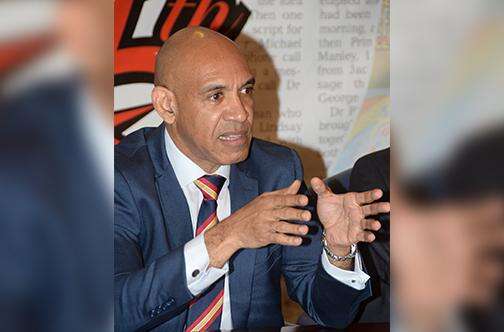
    In his opening remarks on DBJ’s role, Managing Director Dr. David Lowe stressed that collective partnership forms the backbone of effective post-crisis recovery, singling out the Jamaican diaspora as an underutilized catalyst for accelerated progress. “Partnership is non-negotiable for meaningful recovery,” Dr. Lowe stated in an official press release distributed Friday. “The Jamaican diaspora holds unique stakes and capabilities in this work, and DBJ stands ready to act as their dedicated partner to direct investment toward high-impact opportunities that restore livelihoods and secure Jamaica’s long-term economic prosperity. All stakeholders must step forward to build a robust ecosystem that supports solution-focused, resilient national development.”

    During its formal presentation at the conference, DBJ outlined its comprehensive, innovative framework for recovery financing that positions the institution as more than a traditional lender: it operates as a strategic catalyst for sustainable, inclusive growth. Unlike standard development banks that rely solely on debt instruments, DBJ combines a flexible mix of loans, equity stakes, grant funding, credit guarantees, and hands-on technical support to close persistent financing gaps, unlock private sector expansion, and build a solution-oriented development pathway that serves all stakeholders.

    A core pillar of DBJ’s current recovery intervention is targeted support for Jamaica’s agricultural sector, which suffered some of the most severe damage from recent climate-driven disasters. Over the past financial year, the bank has approved roughly $9.3 million in dedicated loans for agricultural operations and agribusinesses, supporting hundreds of small and medium-sized enterprises across the island. This financing has helped restore lost production capacity, reinforce national food security systems, and stabilize incomes for thousands of households dependent on the agricultural sector.

    DBJ also highlighted the early successes of its signature M5 Business Recovery Programme, a structured initiative designed to support struggling enterprises through a holistic package of credit access, direct grants, loan restructuring, and collateral assistance. With $63 million in total financing allocated to the program and robust demand across multiple sectors of the economy, M5 has emerged as a critical lifeline that helps businesses stabilize operations, rebuild damaged infrastructure, and scale for long-term growth while embedding innovative resilience strategies to weather future shocks.

    To deepen engagement with diaspora stakeholders, Nicola Russell, manager of DBJ’s public-private partnership and privatisation division, joined a conference panel focused on expanding diaspora participation through investment, volunteerism, skills sharing, and philanthropy. During the discussion, Russell outlined a pipeline of investable public-private partnership and privatisation (PPP&P) opportunities open to external stakeholders, emphasizing that diaspora members and the wider global investment community can deliver tangible impact for Jamaica’s reconstruction and long-term development. She also noted that leveraging diaspora networks and on-the-ground expertise is key to advancing productive dialogue and unlocking transformative capital for large-scale PPP projects.

    The conference featured a headline keynote address from Jamaican Prime Minister Dr. Andrew Holness, who presented the government’s official vision for the country’s recovery in a talk titled “Building Back Better: Jamaica’s Vision for National Recovery and Resilience.” Holness underscored the critical importance of coordinated national action, strategic targeted investment, and cross-stakeholder partnerships to advance ongoing reconstruction and build systemic national resilience.

    Beyond its immediate post-Hurricane Melissa recovery work, DBJ used the conference to outline its broader national mandate, which includes supporting micro, small, and medium-sized enterprises (MSMEs), mobilizing private domestic and international capital, and advancing large-scale infrastructure development through public-private partnerships. Through these integrated efforts, the bank reaffirmed its commitment to serving as a strategic partner for all stakeholders, working to build a resilient, inclusive, and solution-driven economic future for all Jamaicans.

  • Chronic law chills pain with I.C.E EP

    Chronic law chills pain with I.C.E EP

    Jamaican dancehall artist Chronic Law, born Ackeme Jermaine Campbell, is preparing for a major career comeback after enduring 73 days of detention in a United States immigration facility earlier this year, turning one of the darkest chapters of his life into raw, purpose-driven creative work.

    The artist was taken into custody by U.S. Immigration and Customs Enforcement (ICE) in Florida on January 12, 2026, a development that sent immediate shockwaves through both the Caribbean music community and the global dancehall industry. For weeks after his detainment, rampant speculation spread across fan groups and industry circles, with many questioning the undisclosed circumstances that led to his arrest. That uncertainty shifted dramatically on March 26, when Chronic Law was released from custody without any formal charges filed against him.

    Instead of being pulled into public controversy or feeding the swirling speculation around his detainment, the artist has channeled the emotional, psychological, and spiritual weight of his experience into a new eight-track extended play (EP) titled I.C.E (Inside Cold & Empty), shaped by core themes of survival, unshakable faith, and deep personal introspection. Emerging from the ordeal with a renewed sense of artistic purpose, Chronic Law has centered the project on documenting his firsthand experience rather than dwelling on what happened.

    The project is a collaborative production with Grammy-winning producer NotNice, the head of Notnice Records, who opened up about the unusual, high-stakes creation process that unfolded while Chronic Law was still in detention. According to NotNice, the foundational work for the EP was completed before the artist ever regained his freedom.

    “From a production standpoint, the EP was already done before Chronic Law got out. While he was being detained, he and Bashy would connect on the phone every single day. Bashy would play the rhythm tracks over the line, and Chronic Law would write his lyrics right there from the detention center. All the beats were selected, and every song was fully written before he was released,” NotNice explained. “I originally came on to the project just to refine the existing beats and add my signature touch. But I ended up reworking some entire tracks, rebuilding beats from scratch, adding additional production layers to every track, and handling the final mixing and mastering for the full project.”

    I.C.E (Inside Cold & Empty) is a joint venture between Notnice Records, Collect Di Bread Entertainment, and 1Law, a strategic alignment between the labels designed to amplify both the sonic quality of the record and the depth of the personal narrative at its core. The full EP is scheduled for global release on April 24, 2026, with the lead single *Like Samson* set to drop a week earlier on April 17 via independent music distribution platform ONErpm. The upcoming release marks a defining turning point in Chronic Law’s career, forcing the artist into a level of vulnerability that has reshaped his creative output.

    Known for his deeply thoughtful lyrics and grounded, street-rooted storytelling that has earned him a loyal global fanbase, Chronic Law says the new project is a natural evolution of his signature style, born from a traumatic experience that pushed him to new creative depths. In comments about the work, he opened up about how the 73-day detention tested his faith and changed his perspective permanently.

    “Going through that 73-day detention made me even more aware, and at times, more guarded. Everybody had their own opinions and drew their own conclusions about what happened, but for me — someone who truly believes in God and believes fully in myself — it became a real test of my character and my faith,” Chronic Law said. “Through it all, I know God was by my side. I had to lean on Him completely, because without that faith things could’ve gone a completely different direction. Since being released, my relationship with God has grown so much deeper; I find myself having real, personal conversations with Him, venting more, just connecting on a whole different level than I ever did before.”

    The artist added that the EP carries a clear, uplifting message for listeners facing their own struggles: “I.C.E (Inside Cold & Empty) was written to show people that no matter the situation, the obstacles, or the fight you’re facing, you have to stay solid. You can’t lose faith. Believe in Christ, stand firm, and fight for your rights.”

  • Cops get 6pm deadline to charge or release Jahvy Ambassador

    Cops get 6pm deadline to charge or release Jahvy Ambassador

    KINGSTON, Jamaica — A Kingston and St Andrew Parish Court ruling has imposed a strict 6:00 pm Friday deadline on local law enforcement, requiring officers to either formally charge prominent dancehall producer Jahvel “Jahvy Ambassador” Morrison or release him from custody in connection with a post-carnival shooting that left three people injured. The binding order followed a successful habeas corpus application filed by Morrison’s lead legal counsel, King’s Counsel Peter Champagnie, who was retained to represent the producer immediately after the incident.

    The shooting unfolded Sunday evening at the Big Wall after-party hosted at the Ranny Williams Entertainment Centre in St Andrew, a popular venue that hosted a slate of carnival-related events over the weekend. Three people were struck by gunfire during the attack, including well-known Jamaican podcaster Jhaedee “Jaii Frais” Richards, a visitor from the United States, and a member of dancehall recording artist 450’s touring entourage. The entourage member suffered critical life-threatening wounds in the attack, though medical teams confirmed he has survived his injuries and remains in care.

    Morrison was taken into police custody as a person of interest for questioning in connection with the shooting. Richards, who was wounded in the incident, was also taken into custody in relation to the case. Parallel to Morrison’s legal challenge, Richards’ attorney Isat Buchanan also secured an identical habeas corpus ruling, meaning law enforcement also face the same 6:00 pm Friday deadline to either charge Richards or release him from the case. Currently, Richards remains hospitalized in the parish to receive ongoing treatment for injuries sustained during the shooting.

  • Sleepless in Catherine Hall

    Sleepless in Catherine Hall

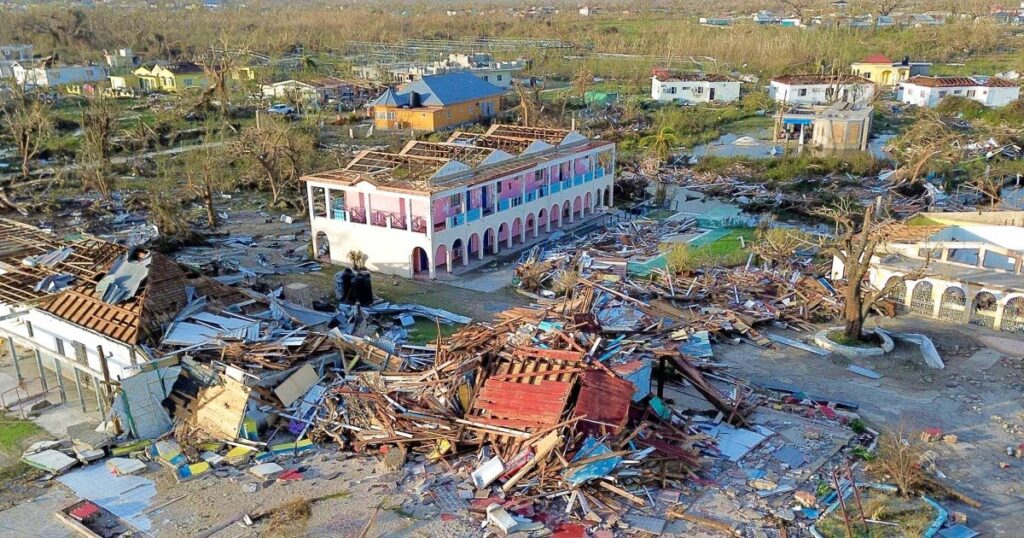
    In the coastal western Jamaican city of Montego Bay, residents of the Catherine Hall neighborhood are living in a constant state of anxiety, trapped between the lingering aftermath of last year’s Hurricane Melissa and the impending arrival of a new Atlantic hurricane season. For months, clogged storm drains choked with a mix of residual hurricane sludge and fresh silt from recent rainfall have turned every moderate downpour into a potential disaster, leaving locals afraid to rest when storms hit after dark.

    Local residents told reporters that no comprehensive drain cleaning work has been carried out in their community since the Category 5 storm swept through the island last October. Melsha Oates, one long-time resident, emphasized the critical role functional drainage plays in the flood-prone neighborhood. With debris and sediment completely blocking water flow, she noted, even minor rain events create immediate flood risks that threaten homes and personal safety.

    While residents have welcomed the limited progress made so far in removing large debris piles from private properties, this small win has done little to ease their core worry. For locals, the arrival of rain – especially overnight rain – immediately triggers panic. Seventy-seven-year-old resident Dawn’s daughter Stacy explained that her whole family stays awake through nightly storms, still reeling from how close they came to catastrophic flooding just months prior. She held her fingers just a fraction of an inch apart to illustrate how narrowly they escaped deadly floodwaters.

    Stacy blames the ongoing construction of the West Green segment of the Montego Bay Perimeter Road for exacerbating the drainage crisis. She noted that prior to the start of the project, persistent neighborhood flooding was completely unheard of, having lived in the area since 1995. Construction crews blocked the original drainage path to reroute it for the new road, she said, but have failed to prioritize completing the new system, leaving drains blocked indefinitely. She also criticized local authorities and drain maintenance teams, arguing that every responsible party has failed to deliver on repeated promises of cleaning and repairs, leaving residents to fend for themselves.

    For resident Jody, life has been unrelentingly stressful since Hurricane Melissa passed. “Every time it rains, we go through the same trauma,” she explained, recalling a heavy Tuesday night downpour that left her entire family sleepless, bracing for the possibility that their homes would be inundated. On her street, blocked drains leave residents with no good options when rain falls: they are either trapped inside their flooded homes or forced to stand outside in rising water.

    With a new hurricane season just around the corner, residents’ anxiety has reached a fever pitch. The sediment and mud left by Melissa is still sitting untreated in drainage systems, and locals have no clear information about when maintenance work will be carried out. Jody explained that while community meetings have produced assurances that help is forthcoming, no timeline or concrete plan has been shared. With many residents still repairing hurricane damage to their homes, they lack the resources to clear the drains themselves, leaving the community stuck in limbo.

    Dawn, Jody’s mother, described the daily reality of life in the flood-prone neighborhood. When it rains, she explained, backed-up floodwater from full drains flows straight back into residential areas, trapping people inside their homes and cutting off access to local streets. When the rain stops and floodwaters recede, the neighborhood does not get any respite: dry conditions turn leftover mud into choking clouds of dust that, combined with a surge in mosquito breeding in standing water trapped in clogged drains, force residents to stay locked inside their homes even on fair-weather days.

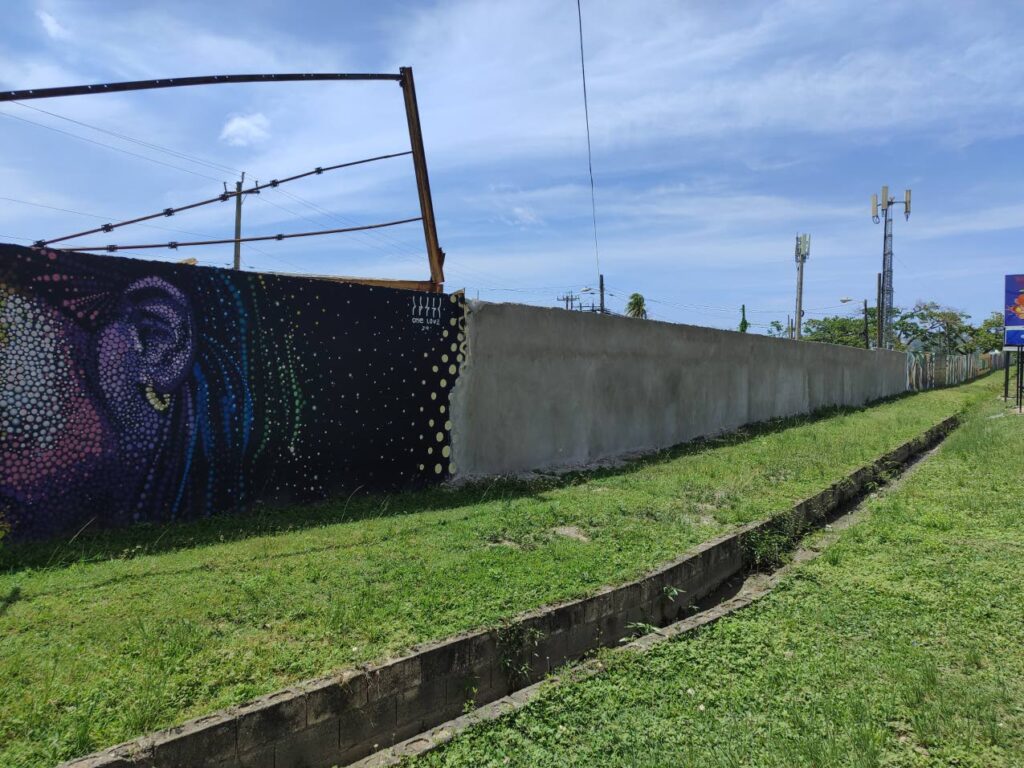
    Photos from the neighborhood confirm the severity of the issue: mud slides from an adjacent unfinished construction slope into already overloaded drains, stagnant floodwater pools around parked cars along residential streets, and drainage lines are visibly choked with months of accumulated sediment and debris. For residents of Catherine Hall, the wait for government action continues, as every new weather forecast brings a fresh wave of uncertainty and fear.

  • Grange says gov’t respects World Athletics ruling, urges compassion for athletes affected

    Grange says gov’t respects World Athletics ruling, urges compassion for athletes affected

    In a ruling delivered Thursday that has sent ripples through the global track and field community, World Athletics has rejected an application from 11 elite athletes – among them four of Jamaica’s most decorated current competitors – to change their national representation and compete for Turkey at the international level.

    The four Jamaican athletes affected by the decision include some of the nation’s brightest track and field talents: Roje Stona, the reigning Olympic champion in the discus throw; Rajindra Campbell, who claimed Olympic bronze in the shot put; Wayne Pinnock, silver medalist at both the Olympic Games and World Athletics Championships in the long jump; and Jaydon Hibbert, a rising standout in the triple jump who has emerged as one of the world’s top young contenders in the event.

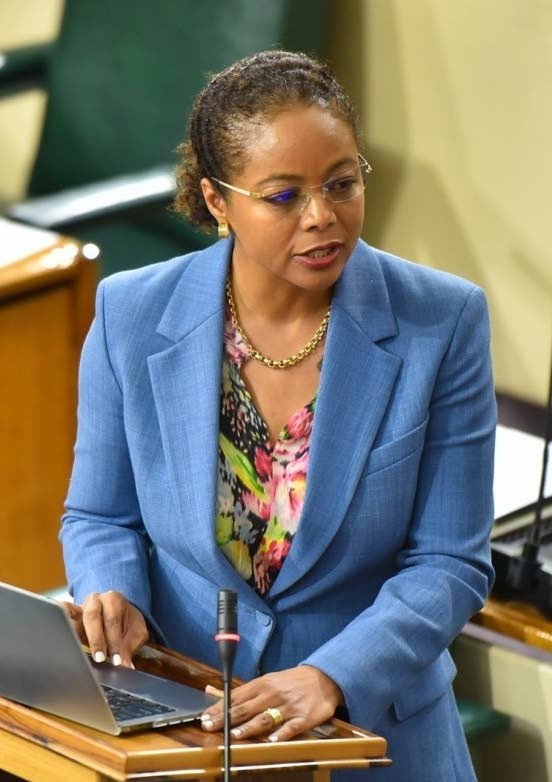
    Following the announcement of the governing body’s decision, Jamaica’s Minister of Sport Olivia Grange released an official statement Friday outlining the government’s official position. Grange emphasized that the Jamaican government has taken full note of World Athletics’ ruling and maintains unwavering respect for the authority of the global governing body of track and field. She noted that because the full adjudication process for the application has not yet reached its conclusion, the government will not be issuing extensive public commentary on the decision at this stage.

    While Grange affirmed respect for the international body’s process, she also made clear that the Jamaican government recognizes the difficult position the ruling has placed the affected athletes in. Calling on the Jamaican public and social media users in particular to approach the situation with empathy and compassion, Grange noted that World Athletics’ decision carries tangible real-world consequences for the athletes, as well as their families and loved ones. The minister stressed that the Jamaican government remains committed to supporting the athletes as much as possible through this process, and will continue lobbying for further action to address the athletes’ circumstances.

    Grange added that the situation surrounding the allegiance change request is both serious and highly sensitive, and should not be treated as an opening to publicly condemn any of the athletes involved. She expressed confidence that all stakeholders involved will work through the uncertain current circumstances constructively to reach a resolution that upholds the integrity of the sport while prioritizing the wellbeing of the competitors at the center of the case.

  • NSWMA boss urges Jamaicans to take responsibility for bulky waste disposal

    NSWMA boss urges Jamaicans to take responsibility for bulky waste disposal

    Jamaica is facing a growing waste management crisis that demands an immediate, fundamental shift in how residents dispose of large volume waste, according to the top official of the country’s National Solid Waste Management Authority (NSWMA). Speaking before Parliament’s Infrastructure and Physical Development Committee this Wednesday, Executive Director Audley Gordon issued a stark warning: current public disposal habits are not only draining the national budget but also pose severe long-term risks to the island’s environmental health. For decades, Gordon explained, Jamaican residents have operated under the assumption that the government is fully responsible for removing all bulky waste, a model that has become unworkable as waste volumes rise and public costs balloon. Unlike many other global jurisdictions that place disposal responsibility on the waste generator, Jamaica’s current system relies on property tax revenue to fund full curbside collection of large items — a framework Gordon described as fundamentally unsustainable. The core of the solution, he argues, lies in a targeted public education campaign designed to reshape public understanding of waste responsibility. The campaign will emphasize that individual households are accountable for the large waste they produce, including old household appliances, discarded furniture, and construction debris from renovations or demolitions. Gordon pointed to global best practices where waste generators pay for professional bulky waste disposal based on volume or weight, a model that aligns incentive for reduced waste generation and proper disposal across communities. The urgent call for reform comes as widespread improper disposal has become a pervasive public issue across Jamaican communities. Residents routinely leave large waste items on sidewalks, in gullies, and along public roadways, creating public safety hazards, clogging drainage systems, and damaging natural ecosystems. St Andrew North Western Member of Parliament Duane Smith highlighted that this problem extends beyond bulky waste to a broader cultural disregard for proper waste disposal, citing a firsthand example of a driver throwing food packaging directly onto a major Kingston roadway earlier the same day, an act he called a national disgrace. Committee chair Heroy Clarke added that the crisis is not rooted solely in public behavior, but also in lax enforcement of existing waste management laws. Clarke stressed that current legislation already provides the framework to crack down on improper disposal, but that the NSWMA has failed to consistently apply these rules, allowing bad disposal habits to become normalized. He specifically called out the common practice of residents leaving construction debris from home demolitions and renovations on public sidewalks, expecting the NSWMA to cover the full cost of removing truckloads of waste — a burden the authority cannot sustain. In response to these criticisms, Gordon outlined ongoing steps the NSWMA is taking to strengthen its enforcement capacity. Until recently, the agency only had a single formal enforcement director position, with all other enforcement staff working as non-established, unattached workers. The NSWMA has now secured 150 formal established enforcement positions from the government, and is currently in the process of recruiting higher-caliber staff to scale up enforcement operations, issuing more than 500 fines for improper disposal every month. Even with expanded staffing, Gordon acknowledged that enforcement alone cannot reverse the crisis, noting that current fines are too low to create an effective deterrent for repeat offenders. The appeal for public behavior change comes as the NSWMA continues its ongoing bulky waste cleanup initiatives across the country, including recent removal efforts targeting abandoned appliances and derelict waste in Portmore, St Catherine that have drawn attention to the scale of the problem facing Jamaican communities. (Photo description: NSWMA crews remove an abandoned refrigerator during the authority’s regional derelict vehicle and bulky waste cleanup program in Portmore, St Catherine.)

  • SRHA confirms all operating theatres at Mandeville Hospital functional

    SRHA confirms all operating theatres at Mandeville Hospital functional

    False rumors circulating on social media that only one out of six operating theatres at Jamaica’s Mandeville Regional Hospital remains functional have been strongly refuted by the Southern Regional Health Authority. In an official clarification released on Friday, the public health body confirmed that every single operating theatre at the Manchester-based facility is fully operational and ready to serve patients.

    The authority also revealed that a recent $13.4 million investment has gone toward comprehensive upgrades for four of the hospital’s six operating theatres, part of a proactive maintenance strategy designed to boost the quality and reliability of surgical services across the facility. The extensive renovation project covered a wide range of critical improvements, including resurfacing interior walls and flooring, upgrading storage infrastructure, replacing outdated doors, improving lighting systems, and overhauling old plumbing networks.

    Beyond structural updates, the upgrades have delivered tangible benefits for both clinical staff and people receiving care at the hospital: enhanced surgical safety standards, stricter infection control protocols, and overall improved working and treatment environments. In closing, the health authority issued a public appeal urging social media users to avoid spreading unsubstantiated misinformation, reminding the community to cross-check all claims against official, credible sources before sharing content online.

  • PM highlights bureaucratic pains at Cherry Gardens handover

    PM highlights bureaucratic pains at Cherry Gardens handover

    Nearly 21 years after it first broke ground in 2004, a National Housing Trust (NHT) residential development project in Jamaica marked a major milestone Wednesday, with 34 fully serviced lots formally handed over to beneficiaries at the Cherry Gardens Housing Development in Kitson Town, St Catherine. Speaking as the keynote speaker at the handover ceremony, Prime Minister Dr Andrew Holness framed the multi-decade delay not just as an infrastructure planning issue, but as a stark illustration of deep-rooted productivity challenges holding back national development.

    Holness explained that while missing sewage infrastructure and other unaddressed supporting utilities directly extended the project timeline, the delay exposed a broader systemic cultural problem: even with strong initial planning, public project implementation in Jamaica remains glacial. He noted that Jamaicans often hold a unique cultural perspective that conflates length of process with quality of work, a mindset that has embedded itself in how the country manages public affairs.

    “When we compare our actual achievements against our full national potential, we have to admit that while we have accomplished much, we could have achieved far more,” Holness told attendees. “There is a long-held view in our bureaucracy that if a project does not take years to complete, it cannot have been done properly.”

    The prime minister argued that Jamaica’s bureaucratic culture has for generations prioritized rigid adherence to process over delivery of tangible results, a legacy of the colonial era that continues to slow the rollout of critical public assets including housing. “We were left with a bureaucratic mindset that hides behind regulations and procedural checks, because we have been taught not to trust our own judgment,” he explained. “Currently, our system only frames a lack of process as corruption; the failure to deliver outcomes that citizens need is not held up as a failure at all. That has to change. We need to reframe success around what is actually delivered to the Jamaican people, not just how many boxes are checked.”

    Holness emphasized that boosting productivity across both the public and private sectors is non-negotiable if Jamaica wants to speed up development of all types, including much-needed residential projects. His critical remarks came alongside praise for the NHT and its private partner Preview Limited for finally delivering this phase of the Cherry Gardens development, which forms one segment of a larger 193-lot master project supported by the NHT’s interim financing programme. To date, the NHT has retained 80 lots for public beneficiaries, 47 of which were already handed over prior to Wednesday’s ceremony, with the 34 lots transferred this week marking the completion of that segment.

    Under the NHT’s financing model, the agency provides up to 100% concessionary-rate financing to private developers, on the condition that developers pass those savings on to low- and middle-income home buyers via reduced lot and home prices. Holness acknowledged that the NHT has made major strides in expanding access to housing finance, including offering mortgage rates between 0% and 2% for a large share of low-income borrowers. However, he warned that Jamaica’s housing crisis has shifted: the primary challenge is no longer lack of access to financing, but a chronic shortage of housing supply to meet growing consumer demand.

    Holness explained that ongoing government and NHT efforts to expand financing access without a matching increase in available housing units have inadvertently driven up residential prices across the market. “We keep increasing the amount borrowers can access to buy homes, and we create special preferences for public servants and young buyers to help them get a foot on the property ladder,” he noted. “But what we’ve found is that the more we expand access to financing, the more prices climb. That’s purely a matter of supply and demand: there simply are not enough homes being built to meet the demand we’ve created.”

    To address this systemic mismatch, Holness announced that the NHT and national government are rolling out a new comprehensive master planning framework designed to unlock unused developable land and speed up housing delivery across the country. The centerpiece of this new approach is the Greater Innswood strategic plan, led by the NHT, which will coordinate integrated development across existing and new communities in St Catherine by resolving long-standing infrastructure gaps that have stalled residential projects for decades.

    Holness said the plan will directly target the core constraints that have historically delayed or blocked development approvals: inadequate road networks, poor drainage systems, unreliable water access, and missing sewage infrastructure. Once fully implemented, the master plan is projected to unlock thousands of new housing units across the Greater Innswood area, with multiple pre-identified projects already lined up that will deliver more than 3,000 new residential units in the near term.

    Closing his address, Holness stressed that a national cultural shift to prioritize productivity and outcome-focused governance is essential for Jamaica to meet its development goals and deliver public projects far more efficiently. “Right now, our system only cares if every ‘i’ is dotted and every ‘t’ is crossed – we call that good governance, and we ignore if people never get the road or the home they were promised,” he said. “We need to tie the performance of administrators, executives and ministers directly to whether citizens get the tangible outcomes that improve their lives. Effort must equal outcome, and we must measure success by delivery. This shift is the only path that will let Jamaica deliver 34 lots in far less than 21 years going forward.”

  • US Catholics unsettled by Trump’s feud with pope

    US Catholics unsettled by Trump’s feud with pope

    A heated public exchange of criticism between former president and 2024 election winner Donald Trump and Pope Leo has stirred significant anger among segments of U.S. Catholics, a critical voting demographic that backed Trump in last year’s presidential race, with many arguing the American leader has crossed a line in his personal attacks on the pontiff.

    The conflict between the two leaders has spilled across multiple high-stakes policy areas, from immigration policy to tensions surrounding Iran and the ongoing Middle East war. Most recently, Trump delivered an unprecedented rebuke by labeling the Chicago-born pontiff “weak” — marking the first time a sitting U.S. president has launched such a direct personal attack on a sitting pope. Pope Leo has publicly stated he has a moral obligation to speak out against armed conflict, a stance that has put him directly at odds with Trump’s hawkish foreign policy positions.

    Among the most controversial incidents that sparked public outrage was a since-deleted AI-generated image posted by Trump that depicted the former reality TV star and real estate developer in a frame that framed him as a Jesus-like figure. Outside a New York City church Friday, 88-year-old retired classics professor Jim Supp told AFP that Trump’s attempt to question the theological perspective of an ordained priest was “totally ridiculous.” “There are certain things in life not to joke about,” Supp said, echoing broader frustration among Catholic voters who see the post as a disrespectful provocation. For 68-year-old retired advertising executive John O’Brian, the circulation of the image amounted to outright blasphemy for followers of Christianity.

    Pope Leo later addressed the risks of unregulated artificial intelligence misuse in the wake of the post, though he stopped short of directly naming Trump in his comments.

    For decades, sitting U.S. presidents have intentionally avoided openly criticizing popes out of respect for the large and politically influential U.S. Catholic electorate. Even as he won the 2024 presidential election with majority support from Catholic voters, Trump has abandoned this longstanding norm, launching blunt public attacks that have created new political vulnerabilities for the Republican Party ahead of November’s upcoming midterm elections — even among the party’s more conservative Catholic base.

    Anthony Clark, a 26-year-old policy fellow at an anti-abortion organization who describes Trump as a “very good president” with strong policy intentions, acknowledged that the commander-in-chief often acts imprudently when discussing sensitive, divisive topics. “But I think that intentions aren’t everything, and I think he can be imprudent at times in what he says or in the way that he approaches especially controversial topics,” Clark told AFP outside a Catholic basilica in Washington D.C.

    While popes have traditionally steered clear of overt involvement in U.S. domestic partisan politics, Pope Leo’s willingness to stand his ground against Trump has earned him admiration from some Catholic voters. “I’m really glad that Pope Leo stood his ground when he said he’s not afraid of the administration,” 22-year-old Carolina Herrera said in Washington. “You should not mess with the pope, no matter what, don’t mess with him.”

    Though Trump was raised Presbyterian, has been married three times, and rarely attends formal religious services, he has closely aligned himself with the Christian conservative movement since entering politics. Christian right leaders have openly praised Trump for delivering their top policy priority: rolling back the nationwide constitutional right to abortion, a change made possible by the three Supreme Court justices he appointed during his first term in office.

    Even in deep-red Texas, a Republican stronghold where Christian conservatism dominates state politics, reactions to the public feud remain divided. At a midday mass in Houston, some attendees criticized both leaders for their public confrontation. “I don’t think either of them are acting the way they should be acting,” said Ann, a 72-year-old white woman who declined to share her last name. She added that the pope has been “very harsh on America,” arguing that Jesus’s teachings did not bar national leaders from protecting their citizens and sovereign borders.

    For 67-year-old Latino Houston resident Manuel, the top priority remains ending the ongoing conflict in the Middle East, and he called for both leaders to set aside their differences. “Because right now, this is mainly about peace. We need peace in the Middle East,” he said.

  • Charles Jr claims trickery in some hurricane grant demands

    Charles Jr claims trickery in some hurricane grant demands

    Nearly two months after Category 5 Hurricane Melissa swept across Jamaica’s affected regions on October 28, 2025, Jamaica’s Minister of Labour and Social Security Pearnel Charles Jr has raised sharp allegations of political manipulation surrounding the island’s multi-billion dollar national hurricane shelter recovery initiative. Speaking at the weekly post-Cabinet press briefing held at Jamaica House in St Andrew on Wednesday, Charles Jr claimed that a large share of the 9,958 households classified as sustaining “no significant damage” during post-storm damage assessments are being weaponized as political pawns by bad actors to incite unwarranted calls for unqualified grant assistance.

    In his address to reporters, Charles Jr urged disaster-affected Jamaicans not to allow themselves to be co-opted for political gain, reaffirming a core eligibility rule for the government’s flagship Shelter Recovery Programme: households that have already received any form of recovery support do not qualify for additional benefits under the initiative, regardless of unsubstantiated claims to the contrary.

    Following the destructive passage of Hurricane Melissa, official assessment teams from the Ministry of Labour completed damage surveys across more than 113,000 affected households, a figure confirmed by the ministry’s new real-time digital tracking system. Final classification broke down damage into four tiers: 17,826 households recorded severe damage, 42,586 major damage, 41,079 minor damage, and 9,958 no significant damage.

    The national Shelter Recovery Programme, which is administered by the Ministry of Labour, was designed to streamline post-disaster recovery efforts, eliminate redundant support, and restore safe living conditions for all storm-impacted families across Jamaica. The initiative integrates multiple support pathways: targeted cash assistance, government and non-government partner-led home repairs, relocation support, and connections to long-term housing solutions. Its core grant-based component is the Restoration of Owner or Occupant Family Shelters (ROOFS) programme, which allocates verified grants based on official damage assessments: eligible households receive JMD $75,000 for minor damage, $200,000 for major damage, and $500,000 for severe damage. Backed by an initial $10 billion government allocation, ROOFS prioritizes recovery support for vulnerable groups including seniors, people with disabilities, and households that suffered the most extreme storm damage.

    Charles Jr told reporters that bad actors have deliberately mixed factual information with exaggeration and false claims to spread public confusion about eligibility requirements. He stressed that households categorized as either “no damage” or “no significant damage” do not meet the threshold for any grant under ROOFS or the broader Shelter Recovery Programme, and that duplicate benefits will not be approved under any circumstances. “The non-negotiable core principle of this programme is one benefit per household across the entire Shelter Recovery Programme, not just per component,” he explained. “If you have already received government-led repairs, for example from the Jamaica Defence Force (JDF) fixing your damaged roof, you cannot also access a cash grant through ROOFS, and vice versa.”

    Charles Jr specifically called out political actors who are spreading misinformation to already-supported households, telling them they are owed cash grants despite already receiving in-kind repair support. “Most of the public agitation we are seeing right now comes from people who know the rules, but they are deliberately misleading families whose roofs have already been fixed to stir up anti-government sentiment,” he added.

    While the minister acknowledged that the new digital assessment and tracking system, rolled out for the first time for this recovery effort, has encountered some early operational challenges, he pushed back against ongoing claims about unresolved cases that have already been addressed. He noted that community and political leaders should not continue to frame resolved issues as ongoing problems to incite public anger.

    Speaking directly to Members of Parliament and other public figures who have raised individual case concerns publicly, Charles Jr said that all named cases shared so far have already been reviewed by his ministry. “To protect the integrity of our recovery process, I can confirm that every person named has already had their case processed, and we have full records of who has received their benefit,” he stated, warning against attempts to defraud the recovery programme.

    He emphasized that the new digital system, which processes assessment data in real time, makes systemic manipulation far more difficult than past recovery efforts. “The digital innovation we have put in place gives us full, transparent access to all data, and our ongoing reconciliation process cross-checks every claim to eliminate duplication. If anyone has a legitimate concern, instead of raising it publicly to agitate — which you have a right to do — we ask that you share the details with our team directly so we can resolve the issue,” Charles Jr added.

    The ROOFS programme has already begun disbursing benefits to qualified beneficiaries, with a formal grant handover ceremony held on January 30 at the Ministry of Labour and Social Security’s Santa Cruz, St Elizabeth office. The event saw Prime Minister Dr Andrew Holness present a grant cheque to beneficiary Chevanese Myrie, in attendance with Agriculture Minister Floyd Green and Charles Jr.