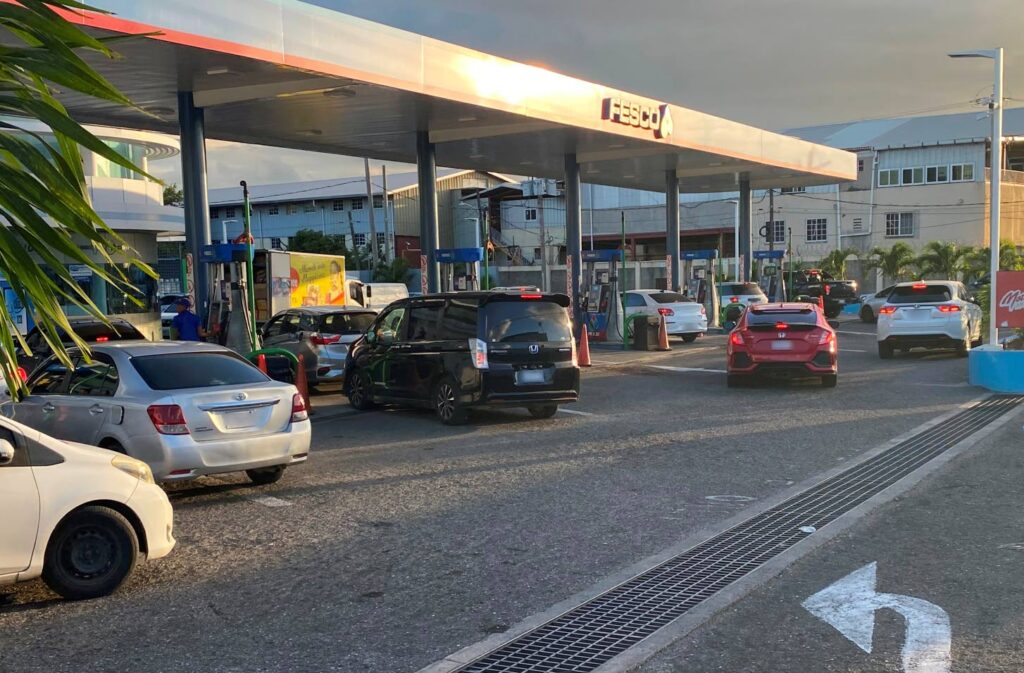
Jamaica’s Energy Minister Daryl Vaz unveiled sweeping changes to state-owned refinery Petrojam Limited’s fuel pricing framework during a Wednesday post-Cabinet press briefing at Jamaica House in St. Andrew, announcing the end of the existing capped pricing system amid crippling financial losses driven by escalating geopolitical tensions in the Middle East. Starting next week, Jamaican consumers will face full, market-aligned fuel price increases, as the government can no longer sustain billions in subsidies that have shielded the public from skyrocketing global oil costs for the past month.
Under the current policy, which capped weekly fuel price movements at $4.50 Jamaican dollars per litre in either direction, Petrojam absorbed more than 60 percent of global price increases between March 12 and April 8, 2026. Data shared by Vaz shows that global transport fuel prices rose an average of $49.20 per litre over that period, but only $18 per litre was passed to end consumers. The remaining cost, equal to approximately $1.3 to $1.4 billion Jamaican dollars (US$8.6 million), was covered by the state-owned refinery to protect household and business budgets.
Vaz warned that continuing the current capped model through June 2026 would cost the Jamaican government a staggering $11.8 billion Jamaican dollars – nearly two-thirds of the current fiscal year’s total revenue – a burden he described as completely unaffordable and unsustainable given the government’s competing national priorities. “No Government in a situation like this can sustain that,” Vaz stated bluntly, adding that ongoing escalations in Middle East tensions have eliminated any near-term hope of a price drop, leaving policymakers with no other option than to restructure the pricing system.
In place of the single $4.50 weekly cap, Vaz announced a new tiered pricing mechanism designed to align local fuel costs more closely with volatile global market movements. The system will introduce three separate price cap tiers that adjust based on international market conditions, giving Petrojam greater flexibility to respond rapidly to price swings. Vaz emphasized that the shift is unavoidable, and Jamaicans should prepare for sustained price increases as long as Middle East tensions remain elevated.
To offset the impact of higher prices, Vaz called for immediate national fuel conservation, urging all Jamaicans to adjust personal and business habits to reduce consumption. He also floated potential policy interventions to cut unnecessary travel, including a possible return to hybrid work arrangements similar to those implemented during the COVID-19 pandemic, noting that persistent heavy road traffic suggests many Jamaicans have not yet grasped the severity of the global oil crisis. “It is 100 per cent the responsibility of every Jamaican to realise that we are in a major, major crisis as it relates to the price of oil internationally, and therefore you need to take responsibility for your household and your business to see what you can do,” Vaz said.
The minister moved quickly to reassure the public that there is no risk of fuel shortages, stressing that Jamaica’s energy security remains fully intact thanks to long-term finished product supply contracts and Petrojam’s domestic refining capacity. He dismissed comparisons to panic buying and supply shortages seen recently in Guyana, noting “it’s not a matter of not being able to buy; it’s the price.” As a short-term reprieve, Vaz announced a 25-cent per litre price reduction at pumps effective Thursday, but warned the drop is temporary and significant increases are likely next week as Petrojam replenishes inventory at current elevated global market prices.
Before the recent escalation of Middle East tensions, global oil prices traded relatively stable at an average of $70 per barrel with only moderate fluctuations. The breakdown in regional security has upended that stability, creating persistent upward pressure on both crude oil and refined petroleum product prices that has rippled through global energy markets. Without the government’s cap, Vaz confirmed, current prices would be far higher: gasoline would have risen by an additional $26.77 per litre, and diesel would jump between $65 and $75 per litre. As of April 9, ex-refinery prices stand at $176.88 per litre for E10-87 gasoline, $184.32 for E10-90 gasoline, $189.25 for automotive diesel, and $196.09 for ultra low sulphur diesel.
Moving forward, Vaz said the government will continue closely monitoring global geopolitical and market developments, balancing consumer affordability with fiscal sustainability to make timely, measured decisions that prioritize the best interests of the Jamaican public. The Cabinet will hold additional deliberations in the coming days to finalize national fuel conservation plans to reduce overall demand.