标签: Jamaica

牙买加

  • US allocates extra US$80 million to tackle Ebola

    US allocates extra US$80 million to tackle Ebola

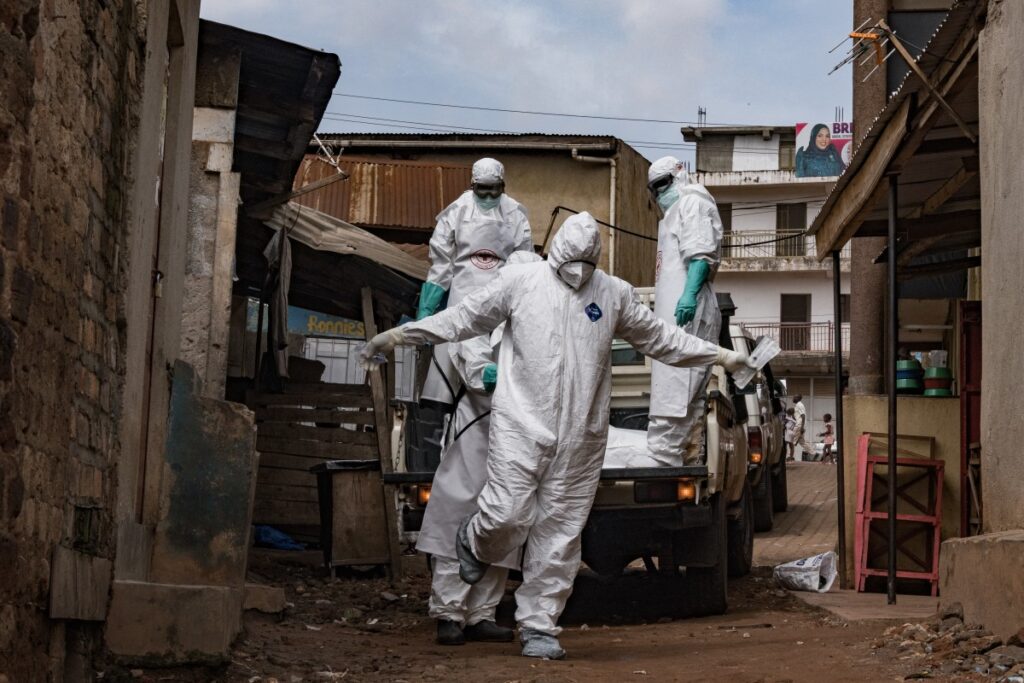
    In a press announcement from Washington D.C. this Thursday, the United States has committed an additional $80 million in emergency funding to ramp up the global response to the spiraling Ebola outbreak spreading across the Democratic Republic of the Congo (DRC) and neighboring Uganda.

    This new injection of resources brings the total American financial contribution to containment efforts to $112 million since the outbreak was first formally declared in mid-May, according to official statements from the US State Department. The allocated funding is earmarked for critical on-the-ground needs: it will cover the cost of personal protective equipment for frontline healthcare workers operating in high-risk zones, expanded border screening protocols across regional transit points, the distribution of rapid diagnostic test kits, and other urgent response requirements.

    “The United States Government continues to carry out a comprehensive, coordinated strategy to contain this Ebola outbreak at its source, both to protect American citizens at home and stop further cross-border spread across the globe,” the State Department’s release noted. This pledge follows a commitment from Secretary of State Marco Rubio a day prior, who stated that the administration’s top priority is blocking the importation of Ebola into US territory.

    The outbreak has already taken a severe toll on local communities: the World Health Organization (WHO) has documented 10 confirmed deaths and 223 suspected fatalities across the DRC, out of more than 1,000 combined confirmed and suspected cases recorded since May 15. Public health experts widely warn that the actual scope of the outbreak is far larger than official numbers reflect, due to limited surveillance and access to affected remote areas.

    The Trump administration’s handling of the crisis has drawn sharp pushback in recent weeks from congressional Democrats and global public health non-governmental organizations. Critics point to the administration’s earlier decision to withdraw the US from the WHO and restructure and downsize key programs within the US Agency for International Development (USAID) as actions that have weakened global capacity to respond rapidly to emerging infectious disease threats, leaving the current response under-resourced in its critical early stages.

  • ‘They take us for fools’

    ‘They take us for fools’

    At a recent policy roundtable hosted by Jamaicans for Justice at New Kingston’s Courtleigh Hotel, former Commissioner of Police and retired Rear Admiral Hardley Lewin delivered a sharp rebuke of repeated delays and excuses from Jamaica’s government and Jamaica Constabulary Force (JCF) leadership over the deployment of body-worn cameras for planned police operations.

    Lewin opened his remarks by acknowledging the Jamaican government’s substantial $2-billion investment in boosting the JCF’s crime-fighting capacity, including plans to acquire thousands of additional body-worn cameras by 2029, a timeline first announced by Deputy Commissioner of Police Warren Clarke at the same event. He commended the government for the large-scale national security spending that has modernized the force, but made clear that progress on high-impact transparency and crime prevention tools remains unacceptably slow.

    The former head of both the JCF and Jamaica Defence Force argued that closed-circuit television (CCTV) infrastructure, particularly the national JamaicaEye public surveillance program, represents the most transformative shift in Jamaican law enforcement since the adoption of police automobiles. He emphasized that the core mission of policing is not solving crime after the fact, but preventing crime from occurring in the first place. While official policing metrics often rely on case clearance rates to measure effectiveness, Lewin noted that deterrence and prevention are the true markers of success — and CCTV technology is irreplaceable for advancing that goal. He pushed for the government to prioritize expanding JamaicaEye with the same urgency it has applied to other policing priorities.

    Turning to body-worn cameras, Lewin pushed back against the range of justifications officials have cited for the slow rollout, from claims the devices cannot operate in stealth mode to assertions they cannot be properly affixed to some officers’ uniforms. He dismissed these excuses as nonsensical goalpost-shifting, saying “they take us for fools” with repeated delays.

    Lewin also publicly defended the Independent Commission of Investigations (Indecom), the national police oversight body that has repeatedly demanded immediate deployment of body-worn cameras across all operations, particularly those expected to involve confrontations with armed suspects. The call for expanded camera use has grown more urgent amid a sharp uptick in fatal police shootings across Jamaica.

    Without body-worn camera footage, Lewin explained, Indecom is left powerless to resolve conflicting accounts of officer-involved shootings. When multiple officers provide consistent but uncorroborated statements about a shooting, and witnesses are unavailable while the suspect is killed, the oversight body has no way to independently verify what occurred. This leaves innocent officers who used force legitimately unfairly tainted by suspicion, and makes it impossible to hold officers accountable when they act outside the rules. Lewin stressed that the number of fatal police shootings is not the core issue: what matters is transparency, accountability, and verifiable proof that any use of deadly force was justified.

    Lewin went a step further, claiming that ongoing resistance to rolling out body-worn cameras for planned operations betrays a “sinister purpose”. Drawing on a 2025 June 22 op-ed he published in the *Jamaica Observer* titled “Those police fatal shootings”, he argued that prolonged delays are a deliberate strategy to avoid scrutiny from international partners and advocacy groups. He acknowledged that a “ends justify the means” approach to fighting violent crime is popular among many Jamaicans who have suffered from years of rampant homicide and criminal activity, but challenged the public to consider what kind of nation it wants to be. “Is it a nation governed by laws, rules, and regulations that affect all equally, or is it acceptable to break our own laws to enforce laws and protect our people?” he asked.

    Addressing rank-and-file and leadership of the JCF directly, Lewin noted that the force currently has more officers, more resources, and more highly educated, well-trained personnel than at any point in its history, with more resources promised in coming years. He urged officers to reject popular but unlawful shortcuts to crime reduction: “Criminals do not play by the rules, and that is what makes them criminals. If you play outside the rules it makes you a criminal also.” He ended by warning officers that those who praise extrajudicial tactics today will be the first to abandon them when public and political pressure mounts.

  • El Niño, warm seas to shape quiet but erratic hurricane season

    El Niño, warm seas to shape quiet but erratic hurricane season

    When regional climate experts gathered in Nassau, The Bahamas for the 2026 Wet/Hurricane Season Caribbean Climate Outlook Forum (CariCOF), one leading climatologist delivered a stark message: a quieter hurricane season does not equal a low-risk year for Caribbean nations. Leading Caribbean climatologist Dr. Cedric Van Meerbeeck told attendees that current climate projections point to a below-average 2026 Atlantic hurricane season, but the underlying weather patterns driving this trend also create a suite of other dangerous climate hazards that communities must prepare for immediately.

    Dr. Van Meerbeeck’s forecast is rooted in the projected return of a strong El Niño climate pattern across the tropical Pacific, a well-documented phenomenon that alters global atmospheric circulation to suppress the formation of Atlantic hurricanes. Current projections call for approximately five hurricanes to form across the Atlantic basin in 2026, with just two reaching Category 3 or higher on the Saffir-Simpson Hurricane Wind Scale — numbers that fall below the long-term seasonal average for the region. But El Niño’s impacts stretch far beyond reducing hurricane numbers, and the climatologist emphasized that the pattern amplifies a range of other extreme weather threats that are often overlooked in seasonal outlooks.

    One of the most significant underdiscussed risks this year will be unstable, erratic weather patterns across the Caribbean, Dr. Van Meerbeeck explained. Even with fewer named storms overall, the region faces an elevated chance of intense, short-duration rainfall events that can trigger catastrophic flash flooding, paired with prolonged, record-breaking heat waves that strain public health systems and infrastructure.

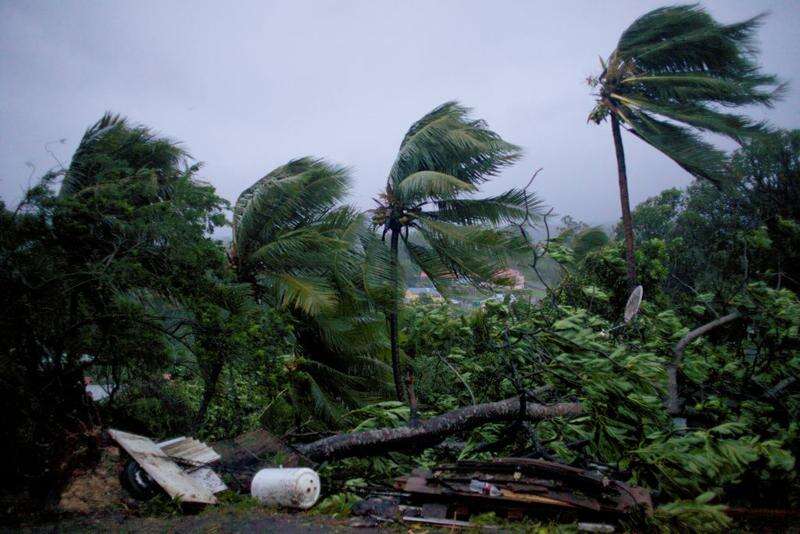
    Compounding these risks is the fact that sea surface temperatures across the northern Caribbean — encompassing island nations including The Bahamas, Cuba, and Jamaica — are already running well above long-term averages. These warm waters can act as a fuel source for any storm that does form, amplifying its intensity and rainfall output even if the overall number of storms is lower than usual.

    Water security is another critical concern for the coming year, the climatologist noted. While the upcoming wet season is expected to bring enough rainfall to ease long-standing drought conditions in some parts of the region, that temporary relief will likely not be enough to reverse chronic water deficits that could lead to shortages later in 2026. To address this gap, Dr. Van Meerbeeck issued a clear call to action for Caribbean governments: invest in expanding water storage infrastructure and update drought preparedness plans now, while rainy conditions are providing an opportunity to build up reserves.

    Public health risks linked to extreme heat will also be amplified by El Niño, particularly for the region’s most vulnerable populations. Prolonged high temperatures, paired with unseasonably warm overnight temperatures that prevent the body from cooling down after hot days, pose a severe threat to elderly residents, young children, and people with pre-existing health conditions.

    In closing, Dr. Van Meerbeeck stressed that communities across the region must abandon the misconception that a below-average hurricane season means widespread safety. Even one major hurricane hitting a Caribbean island or coastal community is enough to wipe out crops, destroy critical infrastructure including roads and water systems, disrupt livelihoods, and cause billions of dollars in damage that can set back national economies for years. As the season approaches, proactive preparation across all hazard types, not just hurricane preparedness, will be critical to reducing harm and protecting communities.

  • MegaMart Portmore closing

    MegaMart Portmore closing

    After nearly three decades serving shoppers across Jamaica, MegaMart’s original location in Portmore will permanently shut its doors on June 30, marking the end of an era for the retail chain and bringing uncertainty to roughly 200 local workers. The 75,000-square-foot store, which first opened its doors to customers in 1999 as MegaMart’s debut Jamaican outlet, has struggled with sustained losses for years, according to company chairman Gassan Azan.

    In an exclusive interview with Jamaica Observer published Wednesday, Azan described the shutdown as an emotionally charged, extraordinarily difficult choice, noting that the location had long stayed afloat thanks to financial support from the chain’s Montego Bay branch. That safety net vanished late last year, when Hurricane Melissa made landfall in Jamaica on October 28, destroying the Montego Bay location and leaving the struggling Portmore store without critical subsidies.

    The closure is part of a broader strategic restructuring plan launched by parent company Cost Club Limited, which is consolidating its operations across two remaining locations: one on Waterloo Road in St Andrew, and a second in Mandeville, Manchester. Company leaders say the consolidation is designed to shore up the health of the overall business and improve long-term financial sustainability. In an official statement shared with the Observer, Cost Club called the Portmore location a cornerstone of MegaMart’s history, and extended gratitude to both loyal customers and dedicated staff for their decades of support and contribution.

    Azan explained that overlapping financial and structural factors pushed the company to finalize the shutdown decision. The Portmore and former Montego Bay properties are bound together under a single lease agreement with multiple pension funds, a structure established years ago through a sale-and-leaseback transaction. With this 15-year agreement set to expire in the near future, the company faced major uncertainty around future capital investments. Upgrading and modernizing the Portmore store to meet current consumer standards would require an estimated $3 million or more in capital to replace outdated equipment and update the space – an investment Azan said makes no sense with the lease’s expiration imminent. In fact, the chain already enacted preliminary cost-cutting measures at the location, cutting closing time from 10:00 pm to 8:00 pm to reduce operating expenses.

    Of the 700 total people employed across the MegaMart network, 200 work at the Portmore location. While Azan confirmed the company plans to reassign some Portmore staff to other locations across the chain, the exact number of workers who will be offered new roles has not yet been finalized.

    Contrary to widespread speculation that the 2023 entry of membership retailer PriceSmart into the Portmore market drove the shutdown, Azan pushed back against that narrative. He noted that PriceSmart caters to a distinct consumer segment and has not had a meaningful impact on MegaMart Portmore’s sales numbers. Instead, he pointed to shifting local retail dynamics: over the past decade, dozens of new neighborhood shopping centers have opened across Portmore, eliminating the need for residents to travel to a single large-format outlet for most of their purchases.

    Azan added that broader national and global retail shifts have also put massive pressure on large-format stores like those in the MegaMart network. The rise of online shopping and the growth of direct consumer imports, particularly in non-food product categories, have eroded the core sales that large-format stores depend on to cover high operational costs. The chain’s large-store model relies heavily on non-food product margins to offset the cost of maintaining a 75,000-square-foot space, and falling non-food sales have left the business model unviable for the Portmore location.

    Azan noted that many other Jamaican retailers are facing identical pressures, even if most are hesitant to discuss their struggles publicly. “It’s primarily the non-food areas that are suffering,” he explained. “MegaMart’s operational costs are much higher than your average supermarket because of the amount of square footage that you’re operating and you’re expecting certain sales from your non-food area. And if those sales don’t materialise, you really don’t get the extra margin to cover the cost of running a store of that size.”

    Looking ahead, Azan said he still holds out hope to reopen a smaller-format MegaMart location in Montego Bay to replace the store lost to Hurricane Melissa, though no firm timeline for reopening has been set. Reflecting on the Portmore shutdown, Azan called the moment bittersweet: “It’s very bittersweet for me to have to deal with this. But I guess it’s part of what’s going on. The advent of online shopping has a lot to do with it — more so than PriceSmart.”

  • African Union’s health agency vows Ebola Bundibugyo vaccine by end of 2026

    African Union’s health agency vows Ebola Bundibugyo vaccine by end of 2026

    NAIROBI, Kenya – Amid an ongoing, deadly outbreak of the rare but lethal Bundibugyo strain of Ebola in the eastern Democratic Republic of Congo, Africa’s top public health agency has laid out a clear timeline to deliver the first targeted vaccine and treatment for the virus by the end of 2026. Jean Kaseya, director of the Africa Centres for Disease Control and Prevention (Africa CDC), confirmed the aggressive development timeline during a Thursday online press briefing with reporters, noting that multiple promising vaccine candidates are already in the pipeline for evaluation. The Bundibugyo Ebola strain, which triggered the current large-scale outbreak in the DRC starting this spring, currently has no globally approved preventative vaccines or specific antiviral treatments, leaving frontline healthcare workers with limited tools to slow transmission or reduce mortality. Kaseya emphasized that both political leadership and technical teams are fully committed to accelerating development, stating that investment is already flowing into both strategic and technical stages of the project to ensure the goal is met. “What we can tell you for sure, by the end of this year, 2026, Africa CDC will make sure that we have a vaccine and medicine against Bundibugyo,” Kaseya told reporters. “Our leaders are ready to invest. We are investing at technical level, at a strategic level, to make sure that (the vaccine) will happen.” The development update comes as Kaseya also confirmed he received recent correspondence from Russia’s Ministry of Health claiming that Russian researchers have already completed development of a vaccine targeting the Bundibugyo strain. A senior Africa CDC team member later clarified that the Russian vaccine candidate is currently designed to target the more common Zaire strain of Ebola, and upcoming technical discussions with Moscow’s Gamaleya National Research Centre will explore the underlying science supporting the candidate’s claimed cross-protection against the Bundibugyo variant. As of the latest briefing, Kaseya reported at least 1,077 suspected cases of Ebola tied to the outbreak, which was formally declared on May 15. That total includes 246 recorded deaths from the virus. Kaseya’s figures are slightly higher than the most recent official count released by the World Health Organization, which has reported 10 confirmed Ebola deaths and 223 suspected fatalities linked to the ongoing outbreak. Public health experts have warned that unregulated cross-border movement in the Great Lakes region and weak healthcare infrastructure in eastern DRC increase the risk of the outbreak spreading beyond national borders, making rapid development of targeted medical countermeasures a top regional priority.

  • 2026 Nominee For Best (New) Local Product: Camgar Gourmet Coffee Syrup

    2026 Nominee For Best (New) Local Product: Camgar Gourmet Coffee Syrup

    Against the backdrop of Jamaica’s vibrant agricultural sector, a homegrown agro-processing startup is redefining what the island’s world-famous coffee can be. Founded by chief executive Garfield Clarke, Camgar Farm Limited has carved out a unique niche by turning locally harvested Jamaican Blue Mountain Coffee into a range of inventive, value-added gourmet food products that blend traditional island flavors with modern culinary innovation.

    The company’s origins trace back to 2020, when Clarke launched his venture at the height of the COVID-19 pandemic, with an initial goal of revitalizing a small, underused coffee plantation in the iconic Wallenford coffee growing region. What began as a project to build a sustainable small-scale farming operation quickly evolved after early operational setbacks, including the dissolution of an early business partnership. Clarke pivoted the company’s strategy, shifting focus from raw coffee production to developing value-added consumer products built around Jamaica’s most celebrated agricultural export.

    This strategic shift laid the groundwork for Camgar Farm’s current flagship product line, which launched official commercial sales in July 2023 after three years of product development. Today, the company’s growing portfolio stretches far beyond traditional roasted coffee beans, featuring one-of-a-kind offerings that include Sweet & Spicy Coffee Jelly, smooth Gourmet Coffee Syrup, Coffee Breadfruit Punch, and Coffee Jackass Corn. Each product fuses the rich, bold flavor of Jamaican coffee with beloved local staple ingredients, creating entirely new ways for consumers to experience Jamaican coffee outside of a standard brewed cup.

    From its earliest days, Camgar Farm has centered local production in its business model. All core raw materials, including its coffee base, are sourced directly from small-scale Jamaican farmers and domestic suppliers, a choice designed to lift up the local agricultural community and ensure the authentic island flavor profile that sets its products apart.

    Within Jamaica, the brand has already built a widespread retail presence, with its stocked across a growing network of sales points that span major supermarket chains, specialty food stores, agro-marts, pharmacies, and independent distributors. Key retail partners include Hi-Lo Food Stores locations across Portmore, Pavilion, Liguanea, Barbican, and Manor Park, General Foods, Loshusan Supermarket, Fresh Approach Foods, Grand Depot Ltd, Lee’s Food Fair, Progressive Foods, RADA Agro-Marts, and Alchemist Pharmacy. To expand its nationwide reach, the company also entered a distribution partnership with Frozen Delight Distributor (FDD) to streamline delivery and grow market penetration across the island.

    The young company has already notched several key industry milestones that signal its growing traction in Jamaica’s food manufacturing sector. In February 2024, Camgar Farm earned a coveted spot as a selected participant in the Road Show and Pitch Competition hosted by Jamaica’s Ministry of Industry, Investment and Commerce (MIIC), a win that delivered widespread industry exposure and independent validation of its innovative product approach. Just four months later, in June 2024, the brand received a nomination in the “Best New Product” category at the prestigious Jamaica Observer Table Talk Food Awards, further boosting its credibility and visibility among consumers and industry peers. Most recently, its popular Gourmet Coffee Syrup launched wide public availability in July 2025.

    Camgar Farm’s target audience spans a diverse range of consumers, including gourmet and specialty food enthusiasts, international tourists visiting Jamaica, members of the large Jamaican diaspora seeking authentic local products, and any consumer searching for unique, premium Jamaican-made culinary experiences. So far, market reception has been overwhelmingly positive: consumers have praised the brand for its creativity, distinct flavor combinations, and one-of-a-kind product offerings, and the company has already attracted interest from potential international buyers alongside strong local demand.

    What sets Camgar Farm apart from competing food brands is its unique market positioning: it merges cutting-edge culinary innovation, uncompromising premium quality, and 100% authentic Jamaican flavors to deliver a gourmet coffee experience that cannot be found anywhere else. This differentiation has helped the brand stand out in both local and regional markets.

    Looking ahead, the company has set ambitious growth goals: it aims to become Jamaica’s leading value-added coffee brand, build out robust regional and international distribution networks, and continue expanding its portfolio of inventive agro-processed food products. However, like many growing small food manufacturers, Camgar Farm faces notable headwinds. Its primary challenges include scaling up production capacity while retaining strict product consistency, controlling rising operational costs, and securing the capital and resources needed to support expansion into export markets. The company also grapples with raw material inventory management challenges, driven by seasonal growing cycles, fluctuating harvest supplies, and the need to maintain stable, consistent production schedules to meet retail demand.

    Reflecting on the company’s journey from a small revitalized farm to a multi-product award-nominated brand, Clarke says he has learned key lessons for early-stage food entrepreneurs: investing earlier in formal branding, scalable production systems, and strategic partnerships would have accelerated the company’s growth and market penetration in its early years.

    Clarke and the Camgar Farm team are calling on Jamaican consumers to support the local brand, noting that it represents everything that the island’s agricultural and entrepreneurial community has to offer: homegrown innovation, value-added agriculture, and the transformation of local raw materials into world-class competitive products. Every purchase of Camgar Farm product supports local Jamaican farmers and strengthens the island’s domestic agricultural economy as a whole.

    In the wake of Hurricane Melissa, which devastated parts of Jamaica’s agricultural sector, Clarke emphasized that the company’s mission is more important than ever. The hurricane reinforced how critical it is to strengthen Jamaica’s domestic food security and invest in local agriculture. By supporting local farmers, homegrown agro-processing, and Jamaican-made products, the country can build a more resilient, sustainable, and economically inclusive food ecosystem that benefits future generations of Jamaicans.

  • Winners of Mr and Miss Supranational Jamaica titles to be announced on Sunday

    Winners of Mr and Miss Supranational Jamaica titles to be announced on Sunday

    This Sunday, Jamaica will crown its next representatives to the global Mister and Miss Supranational competition, with 10 handpicked finalists putting weeks of rigorous preparation on the line at the intimate, boutique-style final event hosted at Kingston’s iconic Louise Bennett Garden Theatre on Hope Road.

    In the lead-up to the coronation, contestants have undergone an extensive multi-week training program designed to build more than just stage presence, covering everything from personal grooming and physical fitness to communication skills, tourism advocacy, and holistic personal growth. Ahead of the final event, the group gathered for a preparatory retreat at Princess Hotel & Resorts in Hanover, where they put on an spontaneous impromptu fashion show for attendees and completed a branded photoshoot against the backdrop of the resort’s coastal landscape.

    Serene Lloyd, public relations manager for Princess Hotel & Resorts, expressed enthusiasm about the opportunity to welcome the pageant contestants. “Hosting the group here was an absolute pleasure,” Lloyd shared in an interview with Jamaica Observer Online. “This was a wonderful chance to showcase our destination and the signature luxury experience Princess Resorts is known for. The pageant has such a engaged, wide audience, and we’re eager for their followers to see the natural beauty of our property and come experience it for themselves.” She added that contestants had full access to the resort’s amenities during their stay, exploring the grounds, interacting with staff, enjoying the island’s signature beachfront access, sampling local cuisine, and making the most of their retreat ahead of the final competition.

    Barbie Mudahy, the national pageant’s coordinator, noted that this year’s cohort of finalists stands out for their range of strengths, far beyond conventional pageant standards of appearance. “This year’s group is incredibly strong,” Mudahy explained. “What really stands out is the diversity of their personalities, confidence, and stage presence. Every single contestant has grown noticeably throughout the preparation process, so this competition is about much more than looks. We’ve watched each person step into their own identity, becoming more polished, comfortable, and prepared with every passing week.”

    The training program has been intentionally structured to be comprehensive and transformative, Mudahy explained. Each week, contestants work with industry experts on a new area of personal and professional development, spanning topics from grooming and fitness to public communication, wellness, and long-term personal growth. “Both the contestant preparation and the production itself involve months of hard work, so attendees can expect nothing less than an exciting, unforgettable experience this Sunday,” she added.

    Several local industry partners have contributed to the contestants’ training this cycle. The Design Essentials hair care team has worked closely with both female and select male contestants, educating them on long-term hair health and handling styling throughout the competition, with industry professional Marcia Lindgaard Calendar donating her time and expertise to the initiative. Contestants also benefited from a detailed educational session with certified trichologist Karl Richmond, who deepened their understanding of evidence-based hair and scalp care practices.

    For the male competitors, Jamaica’s HEART College of Beauty Services provided professional barbering services, keeping contestants well-groomed and helping them refine their personal presentation for the stage. All contestants completed public speaking and communication training with coach Adrian Atkinson, a session Mudahy called “extremely valuable” for building confidence and strengthening interpersonal and on-stage communication skills.

    Fitness, a core focus of any pageant preparation process, was supported by Fit Farm Fitness Centre, which opened its facilities to all contestants. In addition to conventional fitness and health training, contestants also learned basic personal protection skills during their fitness programming, an addition that added practical value to their preparation. Tourism advocacy training was also a key component of the curriculum: Belinda Sutherland-Dowe from Jamaica’s Tourism Product Development Company Limited led sessions on the history of Jamaican tourism, the country’s cultural tourism brand, and how to effectively market Jamaica as a world-class travel destination as national representatives.

    The four 2026 Miss Supranational Jamaica finalists are Deborah Gordon (affiliated with Dacx Production), Melissa Oliver (of Fit Farm Fitness Club), Rasheda Green (representing Design Essentials), and Antonni James (of Glam by O’Neil). The six male competitors vying for the 2026 Mister Supranational Jamaica title are Jordain Chambers (Atelier Dermoth Williams Limited), Kasheem Green (The Dental Place), Leopold Smith (All Signs), Laurence Pinnock (Cooyah), Sean-Pierre Coke (Knutsford Express), and Andrew Brown (The Prom Shoppe).

  • Strictly 2K parties to 10

    Strictly 2K parties to 10

    Jamaica’s iconic throwback music gathering, the Strictly 2K Throwback Music Festival, wrapped up its 10th anniversary edition Saturday night with a nonstop explosion of nostalgia, energy, and celebration that drew hundreds of dedicated partygoers to the National Stadium car park. The venue was quickly transformed into a vibrant tapestry of team spirit, as attendees packed the space in an array of sports jerseys representing iconic local and international football and basketball squads. From the signature blue of Chelsea, red of Arsenal, and sky blue of Manchester City to the iconic black and red of Manchester United, the purple and gold of the Los Angeles Lakers, and red of the Chicago Bulls, plus Jamaica’s national football kit, the fashion-forward crowd set a lively tone that matched the festival’s celebratory mission from the first note.

    Organized by local promoter 433 Entertainment, the 10th anniversary event was built around a core concept: bringing fans back to the golden era of early 2000s and 2010s music, with a lineup packed full of the dancehall, hip hop, and reggae anthems that defined the period. Top selectors including ZJ Chrome, DJ Vinchi, Coppershot Sound, and ZJ Johnny Kool kept the energy peaked from sundown well into the early morning, spinning nonstop nostalgic hits that had the crowd reciting every lyric and dancing without pause. Longtime sponsor Wray & Nephew kept momentum high all night, with a steady flow of its signature rum mixes to keep the party going.

    The night’s highly anticipated headline performance came just after 2 a.m., when dancehall star Tommy Lee Sparta stepped onto the stage to deafening cheers from hundreds of waiting fans. He delivered a high-octane 30-minute set featuring many of his biggest career hits, including *Psycho*, *Some Bwoy*, *Mechanic*, and *Under Vibes*. His performance was elevated by choreographed backup dancers from Boom Energy Drink, whose dynamic stage presence added an extra layer of visual flair to the headline set.

    Beyond the music and celebration, the 10th anniversary event included a special honors segment to recognize longstanding contributions to Jamaica’s dancehall culture. Industry veterans Chimney Records co-founders Jordan and David, legendary dancer and choreographer John Hype, and selector ZJ Chrome were all awarded custom plaques in recognition of their decades of impact on dancehall music and Jamaican entertainment.

    In an interview with the Jamaica Observer, Strictly 2K Co-Director Ibrahim Konteh reflected on the brand’s 10-year milestone, noting that what began as a small creative concept has grown into a staple of Jamaica’s annual entertainment calendar. “What started as a concept has become a staple on Jamaica’s entertainment calendar and that doesn’t happen without consistency, vision, and an audience that believes in what you’re building,” Konteh said when asked about the festival’s biggest achievement over the past decade.

    Konteh expressed full satisfaction with the 10th anniversary staging, which debuted a reconfigured new venue layout that offered upgraded amenities for attendees. “Extremely pleased. We raised the bar across the board — new venue, seamless parking, elevated aesthetics, better merchandise, dedicated photo experiences. No complaints. This is the version of Strictly 2K we’ve been working toward,” he added.

    Explaining the decision to tap Tommy Lee Sparta as the anniversary headline act, Konteh noted the artist’s deep catalog of hits made him the obvious fit for a celebration of 2000s and 2010s party culture. “Tommy Lee is a hit machine. His catalogue defined a generation. If you were in a party in the 2010s his music was in the mix. For a 10th anniversary celebration of that era, he was the perfect fit,” he explained.

    Closing out his reflections on the milestone, Konteh credited the event’s decade-long success to the loyalty and feedback of its fanbase. “You can plan all you want, but that energy from the crowd tells you everything you need to know… Simply, thank you for your support, your loyalty, and your feedback, whether it was tough or kind. That feedback told us you cared, and we listened. Here we are at 10 years because of you, and we’re just getting started on the next 10,” he said.

  • Matthew Perry assistant imprisoned over fatal drug injections

    Matthew Perry assistant imprisoned over fatal drug injections

    LOS ANGELES – More than a year after the unexpected death of beloved *Friends* star Matthew Perry, another perpetrator has been held legally accountable for his fatal overdose. On Wednesday, 61-year-old Kenneth Iwamasa, the personal assistant who repeatedly administered ketamine injections to Perry in the days leading up to his death, received a federal prison sentence of three years and five months. He is the fifth person sentenced to date in connection with the actor’s passing, after pleading guilty to a charge of conspiracy to distribute ketamine resulting in death.

    Court documents lay out a grim timeline of reckless drug use in Perry’s final days. Prosecutors confirm that between late October 2023 and the day of his death, Iwamasa – who resided at Perry’s upscale Los Angeles residence – gave the actor more than 25 ketamine injections, including at least three separate doses on the day he died. On his last day alive, Perry himself asked Iwamasa for a large injection, according to official court filings.

    In a heartbreaking statement submitted to U.S. District Judge Sherilyn Peace Garnett, Perry’s mother Suzanne Morrison laid bare the family’s betrayal. The Morrison family had trusted Iwamasa implicitly, she explained, saying his core role was to act as a companion and guardian for her son as he fought a long, public battle with addiction. “We trusted a man without a conscience, and my son paid the price,” Morrison wrote.

    Defense attorneys for Iwamasa have attempted to frame their client as a powerless hired hand, arguing he was unable to push back against the demands of his wealthy, famous employer. In a pre-sentencing court filing, the defense claimed Iwamasa was uniquely vulnerable to the unequal power dynamic of his relationship with Perry, noting simply: “In short, he could not ‘simply say no.’ That inability had tragic consequences.”

    Iwamasa’s conviction closes another chapter in the investigation into Perry’s death, which has already seen four other people sentenced for their roles in facilitating the actor’s addiction. The first convictions handed down tied to the case include two medical professionals who profited heavily from Perry’s dependency. Salvador Plasencia, one of the two doctors, was sentenced to two and a half years in prison. Prosecutors found Plasencia was the person who taught the untrained Iwamasa how to administer ketamine injections, despite knowing Iwamasa held no medical license and had no training treating patients with controlled substances. Plasencia and his co-conspirator, doctor Mark Chavez, sourced the ketamine for Perry at massively inflated prices, with Plasencia once joking in a message, “I wonder how much this moron will pay.” Chavez received a sentence of house arrest rather than prison time.

    Earlier this month, Erik Fleming, a certified drug counselor who acted as a middleman to supply Perry with controlled substances, was ordered to serve two years behind bars. Last month, Jasveen Sangha, a British-American drug dealer nicknamed “The Ketamine Queen” who marketed herself as a supplier to A-list celebrities, received a 15-year prison sentence, the harshest penalty handed down in the case to date.

    Perry, 54, who became a global icon for his portrayal of sarcastic, beloved everyman Chandler Bing on the hit 1990s and 2000s sitcom *Friends*, had opened up about his decades-long struggle with substance addiction publicly. At the time of his 2023 death, he had appeared to many close colleagues to be gaining control over his disease. The actor had originally begun using ketamine as part of a supervised medical therapy program to treat his depression, but prosecutors say that by late 2023, he had developed a full addiction to the drug – an anesthetic with psychedelic properties that is also commonly misused as a club drug. Perry was found dead in his hot tub in October 2023 from an accidental overdose.

    His death triggered an outpouring of global grief from multiple generations of *Friends* fans, who still adore Perry for his iconic role on the sitcom, which followed six friends navigating adulthood, romance and work in New York City. The show turned its entire main cast, all relative unknowns before the show premiered, into global A-list celebrities and earned Perry enormous wealth – but behind the fame, he continued fighting a hidden battle with alcohol and painkiller addiction that spanned decades. In 2018, he suffered a life-threatening ruptured colon caused by drug use and required multiple emergency surgeries. In his 2022 memoir, *Friends, Lovers and the Big Terrible Thing*, Perry documented his decades-long battle, writing that he had completed detoxification more than 60 times, and noted: “I have mostly been sober since 2001, save for about sixty or seventy little mishaps.”

  • Europe heatwave ‘brutal reminder’ of climate change — UN

    Europe heatwave ‘brutal reminder’ of climate change — UN

    An unprecedented early-season heatwave, amplified by a stationary ‘heat dome’ pushing midsummer-level temperatures across Western Europe, has triggered fatalities and broken national temperature records this week, prompting urgent warnings from the United Nations’ top climate official about the accelerating harms of unaddressed climate change.

    By mid-week, both France and the United Kingdom had shattered all-time national temperature records for the month of May twice in as many days, with readings hitting highs not normally seen until the height of summer. Neighboring Ireland also set its own May temperature record, while Spain, Italy and Austria have all battled far hotter conditions than average for this point in the calendar.

    The extreme heat has already turned deadly: French public health officials confirmed at least seven heatwave-linked fatalities as of Tuesday, five of which were drownings as residents flocked to lakes, rivers and beaches to escape the sweltering conditions. Across the English Channel, British authorities reported that four teenagers had drowned in England since Sunday, amid a surge of people seeking cool water relief.

    The extreme weather event is not isolated to Europe. Thousands of miles away, South Asia is also grappling with a crippling heat event: as of midday Wednesday, international air quality monitoring network AQI recorded that all 45 of the world’s hottest cities were located in India, with every one registering temperatures above 43 degrees Celsius. Indian security forces are currently working to contain widespread forest fires stoked by the dry, blistering heat, and local officials have already confirmed multiple deaths from heatstroke.

    In an official statement released Wednesday, UN Climate Change Executive Secretary Simon Stiell called the record-breaking heatwave a “brutal reminder” of the rapidly worsening impacts of the global climate crisis. Stiell emphasized that the main driver of more frequent and extreme heat events is no secret: human activity, specifically the continued burning of coal, oil and natural gas that drives global warming.

    “The science is clear that human-induced climate change is making these heatwaves more frequent and extreme,” Stiell said. He added that protecting communities, businesses and national economies from extreme heat and the growing economic and human costs of climate change must be a top policy priority for every nation around the world – and that transformation begins with speeding up the transition away from fossil fuel dependence.

    Stiell also noted that the ongoing war in the Middle East has further underscored the economic and geopolitical risks of continued reliance on fossil fuels, reinforcing the urgent need for a faster global shift to affordable, renewable clean energy sources.

    Climate scientists have repeatedly warned in recent years that unmitigated greenhouse gas emissions will continue to increase the frequency and intensity of extreme weather events including heatwaves, droughts, flooding and wildfires, with disproportionate impacts on low-income and vulnerable communities that have contributed the least to global emissions.