标签: Jamaica

牙买加

  • Holly Bostock appointed Red Stripe managing director in leadership transition

    Holly Bostock appointed Red Stripe managing director in leadership transition

    KINGSTON, Jamaica — Iconic Jamaican brewery Red Stripe has unveiled a major leadership reshuffle that will make corporate sustainability and public affairs veteran Holly Bostock the first woman to lead the brand in its 100-year history. Effective July 1, 2026, Bostock will step into the role of managing director, while incumbent Daaf van Tilburg will take up a new regional leadership position with parent company Heineken’s Asia Pacific (APAC) division.

    The announcement, made public by the brewery Thursday, frames the leadership handover as the opening of a new growth-focused chapter for Red Stripe, which operates in one of the most competitive and fast-evolving beverage markets in the Caribbean. Industry observers note the appointment also marks a landmark shift for gender diversity in Jamaica’s manufacturing and brewing sectors, aligning with global corporate pushes for more inclusive leadership pipelines.

    Van Tilburg, who took the helm at Red Stripe in July 2023, earned his regional promotion after a tenure marked by strong operational results and strategic transformation. During his three years at the Jamaican brand, he led a refinement of the company’s commercial strategy, reinforced the value of Red Stripe’s core product portfolio, launched multiple market-facing innovations, and deepened long-standing partnerships with retail and hospitality partners across the island.

    One of his most notable achievements was steering the successful turnaround of Celebration Brands Limited (CBL), Red Stripe’s joint venture for sales and distribution. Under his leadership, CBL upgraded its on-the-ground sales execution, lifted customer service standards, and improved engagement with vendors across Jamaica.

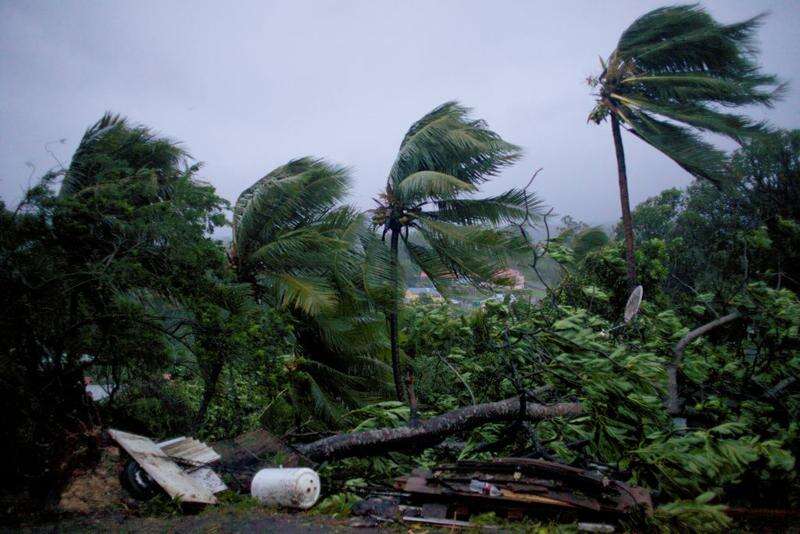
    Beyond commercial results, van Tilburg prioritized corporate resilience and local community engagement, most notably leading Red Stripe’s support for national recovery efforts after Hurricanes Beryl and Melissa hit the island. Reflecting on his time leading the brand, van Tilburg called the role an incredible privilege, noting that “the passion, resilience, and talent of the Jamaican team are truly inspiring. I am proud of what we have achieved together and confident the business will continue to thrive.”

    In his new role as APAC Managing Director, van Tilburg will oversee a diverse portfolio of Heineken operating companies across the region, guiding their progress on core strategic priorities: growth acceleration, productivity improvements, and long-term operational adaptation. Heineken cited van Tilburg’s proven strategic thinking and track record of driving transformation and performance across global markets as key factors in his appointment.

    For Bostock, the promotion to Red Stripe’s top role builds on a successful three-year tenure leading Heineken St Lucia. During her time in that position, the business delivered consecutive annual growth in revenue, gross profit, and operating profit, posted record cash flow results, and implemented a sustainable debt and dividend framework designed to future-proof operations and deliver long-term value to shareholders.

    Bostock launched her Heineken career in 2010 through the company’s competitive International Graduate Programme, and has since built a cross-functional, global career spanning multiple regional markets. She cut her teeth in senior roles in public affairs, communications, and sustainability at Heineken’s global headquarters, before moving into regional leadership as corporate affairs director for Heineken Myanmar and later Heineken Vietnam. This trajectory has equipped her with deep international experience and cross-market strategic insight that Red Stripe’s board says will be invaluable in her new role.

    Red Stripe emphasized that Bostock’s appointment is not an isolated change, but a direct reflection of the company’s ongoing commitment to cultivating diverse, inclusive leadership at all levels. The milestone also stands as a progressive step forward for gender representation across Jamaica’s brewing and manufacturing industries, which have historically been led by male executives.

    Reacting to her appointment, Bostock said: “It is an honour to join Red Stripe, a company deeply rooted in Jamaican heritage and globally respected for its iconic brands. I look forward to working with the talented team to build on its success, drive sustainable growth, and continue contributing to Jamaica’s economic and social development.”

  • SBAJ welcomes Anderson’s appointment to NaRRA

    SBAJ welcomes Anderson’s appointment to NaRRA

    KINGSTON, Jamaica — Jamaica’s top small business advocacy group is throwing its support behind the newly appointed leader of the country’s flagship infrastructure agency while calling for long-overdue changes to how major infrastructure contracts are awarded.

    The Small Business Association of Jamaica (SBAJ) has extended congratulations to retired Major General Antony Anderson, who was tapped to serve as the first chief executive officer of the National Road Reconstruction Agency (NaRRA), the newly formalized body tasked with guiding the country’s large-scale road network upgrades.

    Prime Minister Andrew Holness first revealed Anderson’s appointment during a dedicated post-Cabinet media briefing held Wednesday at the Jamaica House banquet hall. Alongside the announcement, Holness confirmed that the NaRRA Bill — the legislation that formally established the agency — had been successfully passed into law, with Anderson set to take up his new leadership role starting June 1.

    In an official statement released to the public Thursday, SBAJ President Garnett Reid framed Anderson’s appointment as a milestone coming at a critical juncture for Jamaica’s infrastructure development trajectory. Reid emphasized that Anderson’s decades of decorated public service have equipped him with extensive expertise, a well-documented history of delivering results, and deep institutional knowledge that makes him well-suited to lead the new agency.

    Reid also called on all public and private stakeholders to extend full collaboration and backing to Anderson, noting that robust coordinated support will be key to helping him execute NaRRA’s mandate effectively and efficiently.

    But beyond welcoming the new leadership, Reid outlined a core priority the SBAJ is pushing for under Anderson’s tenure: guaranteeing that local small and medium-sized contractors get a fair share of the billions in infrastructure investment set to roll out through NaRRA.

    “My only hope is that small and medium-sized contractors get some of the contracts from the NaRRA investments,” Reid stated plainly.

    He underscored that structured, transparent procurement processes will be non-negotiable to correct a long-standing gap in Jamaican infrastructure development. For decades, smaller local construction firms have been sidelined for major projects, with most large contracts going instead to bigger, often international companies.

    Reid further made the economic case for prioritizing local businesses, arguing that awarding contracts to Jamaican firms keeps investment capital circulating within Jamaica’s domestic economy, fuels growth of local small enterprises, and builds long-term resilience for the national economy. In contrast, he explained, when large multinational corporations win major infrastructure contracts, a large share of the financial benefits from those investments flow off the island, leaving minimal lasting impact on local communities.

    Looking ahead, the SBAJ says it is eager to build a collaborative, productive working relationship with both Anderson and the entire NaRRA team. The group’s end goal is to ensure that Jamaica’s ongoing national infrastructure expansion doesn’t just improve the country’s roads — it also drives inclusive, sustainable economic growth that benefits Jamaican businesses and workers at the grassroots level.

  • Messi to captain Argentina at the World Cup

    Messi to captain Argentina at the World Cup

    BUENOS AIRES, Argentina – In a highly anticipated announcement Thursday, Argentina national team head coach Lionel Scaloni officially confirmed that 38-year-old Lionel Messi will wear the captain’s armband and compete in the 2026 FIFA World Cup co-hosted by the United States, Canada, and Mexico, marking a record-breaking sixth appearance at the global tournament for the eight-time Ballon d’Or winner. Though Messi had not publicly confirmed his participation ahead of the squad reveal, fans and football analysts widely expected the 2022 World Cup-winning skipper to lead the defending champions this summer, four years after he lifted the iconic trophy in Qatar. The announcement brought with it several notable selections and surprising omissions that have already sparked discussion across the global football community.

    Recent concerns over Messi’s fitness had dominated headlines in the week leading up to the squad reveal, after the Inter Miami forward was forced off early in a 73rd-minute substitution during his club’s 6-4 win over Philadelphia Union on Sunday. Initial medical tests diagnosed the Argentine star with left hamstring muscle fatigue, and Inter Miami has not yet released a clear timeline for his return to club action. Scaloni, however, downplayed the severity of the injury earlier this week, reassuring supporters that Messi is fit enough to compete in the tournament this June.

    In a notable selection that defied injury concerns, Tottenham Hotspur captain and center-back Cristian Romero earned a spot in Scaloni’s 26-man squad, despite picking up a knee injury last month that ruled him out for the remainder of the 2025-26 Premier League season. Romero sustained the injury after a collision with Sunderland striker Brian Brobbey that forced him into his own goalkeeper, and he has not played competitive football since.
    Overall, the Argentine roster retains strong continuity from the 2022 Qatar-winning side, with 17 of the 26 players that claimed the world title four years ago retaining their places in the squad. Scaloni also opted to inject new youth into the lineup, handing call-ups to promising young talents including 21-year-olds Nicolas Paz and Valentin Barco, as well as Palmeiras forward Jose Manuel Lopez, who earned his first international cap only last year.

    One of the most talked-about omissions from the squad is 18-year-old Franco Mastantuono, a highly regarded young prospect from Real Madrid who was widely tipped to earn his first World Cup call-up. Other notable absentees include in-form Aston Villa attacking midfielder Emiliano Buendia and AS Roma star Paulo Dybala, both of whom missed out on a spot in the final 26.

    The 2026 World Cup, the largest iteration of the tournament in history with an expanded 48-team format, will kick off on June 11 across the three North American host nations. Argentina will play its first group stage match five days after the opening ceremony, facing Algeria on June 16 in Kansas City. Before the tournament begins, the defending champions will travel to the United States for two pre-tournament friendly matches, taking on Honduras on June 6 and Iceland three days later on June 9. Argentina’s group stage opponents also include Austria and Jordan.

    Messi will make history when he steps onto the pitch this summer, joining Portuguese superstar Cristiano Ronaldo and Mexican veteran goalkeeper Guillermo Ochoa as the only players in men’s football history to compete in six separate World Cup tournaments.

    Full 26-Man Argentina 2026 World Cup Squad:
    Goalkeepers: Emiliano Martinez (Aston Villa, England), Geronimo Rulli (Marseille, France), Juan Musso (Atletico Madrid, Spain)
    Defenders: Gonzalo Montiel (River Plate, Argentina), Nahuel Molina (Atletico Madrid, Spain), Lisandro Martinez (Manchester United, England), Nicolas Otamendi (Benfica, Portugal), Leonardo Balerdi (Olympique Marseille, France), Cristian Romero (Tottenham Hotspur, England), Facundo Medina (Marseille, France), Nicolas Tagliafico (Lyon, France)
    Midfielders: Leandro Paredes (Boca Juniors, Argentina), Rodrigo de Paul (Inter Miami, USA), Exequiel Palacios (Bayer Leverkusen, Germany), Enzo Fernandez (Chelsea, England), Alexis MacAllister (Liverpool, England), Giovani Lo Celso (Real Betis, Spain), Valentin Barco (Strasbourg, France)
    Attackers: Lionel Messi (Inter Miami, USA), Nicolas Paz (Como, Italy), Thiago Almada (Atletico Madrid, Spain), Nicolas Gonzalez (Atletico Madrid, Spain), Julian Alvarez (Atletico Madrid, Spain), Giuliano Simeone (Atletico Madrid, Spain), Lautaro Martinez (Inter Milan, Italy), Jose Manuel Lopez (Palmeiras, Brazil)

  • Italy declares red heatwave alert for Rome, four other cities

    Italy declares red heatwave alert for Rome, four other cities

    An unseasonal early heatwave pushing across Southern Europe has prompted Italian health authorities to activate the nation’s highest heat warning for five major Italian urban centers, marking the first red-level heat alert of 2025 for the Mediterranean country.

    On Thursday, Italy’s Ministry of Health rolled out the red heatwave alert for Rome, Florence, Bologna, Brescia and Turin. The country’s top-tier red warning is specifically designed to flag elevated risks of heat-related health impacts even for otherwise healthy people who regularly engage in outdoor activity, and public health officials are urging all residents and visitors to avoid prolonged exposure to direct sunlight during peak temperature hours.

    On the ground in Rome Thursday, crowds of international tourists gathered near the iconic Colosseum reported struggling with oppressive, muggy conditions, even as temperatures hit 32 degrees Celsius – a reading well above the seasonal average for this time of year. Many visitors shared their personal strategies to beat the early-season heat, prioritizing hydration and shade to avoid heat exhaustion.

    Spanish visitor Nana Martinez Garcia told reporters her group was drinking large volumes of cool water to regulate body temperature. Her friend, Maria Angeles Mellinas Tello, added that the pair makes a point of staying in shaded areas whenever possible while sightseeing. American tourist Josh Ren explained he had adjusted his entire travel itinerary to avoid the hottest midday window: “We get up early to knock out outdoor attractions before temperatures spike, take frequent rest breaks, and spend peak heat hours in air-conditioned spaces like restaurants and museums,” he said.

    So far, Italy has avoided the extreme record-breaking temperatures that have already hit Northern Europe in recent days. The United Kingdom logged its hottest May temperature on record earlier this week, when a reading of 35.1 degrees Celsius was recorded, breaking a decades-long national record for the month. France has also seen unseasonal high temperatures across much of the country, prompting early heat warnings there as well.

    Climate scientists have repeatedly emphasized that human-caused climate change is driving the increasing frequency and intensity of extreme weather events across the globe. Early-season unseasonal heatwaves, alongside prolonged droughts, catastrophic flooding, and severe storm systems, are becoming far more common as global average temperatures continue to rise, researchers note.

  • Attorney urges Jamaicans to plan their estates

    Attorney urges Jamaicans to plan their estates

    Against a backdrop of surging estate-related litigation across Jamaica, prominent local attorney Josemar Belnavis has issued a pressing call for Jamaicans to prioritize proactive estate planning, warning that widespread neglect of will preparation and asset organization has triggered devastating family conflicts, cripplingly expensive court battles and widespread property loss across the island.

    Belnavis, a partner at Kingston-based Lindsay Law Chambers, delivered his remarks during a recent educational presentation focused on estate planning for members of the JN Circle Morant Bay Chapter, where he framed the practice as a critical intersection of personal wellness and long-term financial strategy.

    Opening with a core definition, Belnavis explained that an individual’s estate encompasses every asset and legal entitlement they hold at the time of their passing: from real estate, bank holdings, investment portfolios and insurance policies to vehicles, fine jewelry, company shares, and even outstanding debts owed to the deceased. “One of life’s few unchanging certainties is that every person will eventually die,” he told attendees, emphasizing that accepting this reality makes intentional pre-planning through formal legal and financial arrangements non-negotiable.

    Per an official statement from JN Circle, Belnavis drew attention to the sharp growth of estate disputes in Jamaica, noting that the national court system was forced to launch a dedicated Family and Probate Division specifically to manage the high volume of litigation tied to unplanned estates. He stressed that the vast majority of these conflicts stem from intestacy – the term for when a person dies without leaving a valid, legally executed will – leaving surviving relatives with no clear guidance for how assets should be distributed.

    The consequences of this gap are often severe, Belnavis explained. Assets can sit frozen for years: properties are left abandoned, vehicles degrade beyond repair, and bank accounts remain locked while relatives battle through the court system. He also drew attention to the growing risk of adverse possession: when squatters or unauthorized occupants remain on a property after the owner’s death, they can legally claim full ownership after 12 years of continuous occupation.

    To illustrate the scope of the problem, Belnavis shared multiple real-world examples of intrafamily conflict that erupt after a loved one’s passing. These range from bitter sibling disputes over multi-generational family homes to messy conflicts between long-term unmarried partners and adult children from previous relationships. In the most extreme cases, he noted, these disagreements escalate to physical violence, and nearly all drag on for years, draining entire families of their financial resources.

    “When a family turns against each other over an estate, the simple truth is that no one walks away a winner,” Belnavis said.

    Outlining the core purpose of a will, Belnavis explained that the legal document serves three key functions: it names the beneficiaries who will receive the deceased’s assets, appoints a trusted party to manage the estate through the probate process, and designates guardians for minor or dependent family members. “It is your voice, even after you are gone, to make sure your wishes are followed,” he emphasized.

    Beyond the core importance of wills, Belnavis walked attendees through key legal concepts in estate planning, including testacy (having a valid will at death), intestacy, and the distinct roles of executors and administrators. He also issued a critical warning: even people who have taken the step to draft a will often leave their families vulnerable if the document is not properly executed or updated to reflect changing life circumstances, a mistake that can trigger just as much legal conflict as dying without a will at all.

    Belnavis urged Jamaicans to seek guidance from qualified legal and financial professionals rather than relying on informal, unregulated advice from friends or family members. While many people avoid professional planning to save money on legal fees, he argued that cutting corners in this area creates far larger financial burdens for surviving relatives. “You try to save a small amount of money up front, and end up creating a problem that costs your family millions down the line,” he said.

    The attorney also highlighted a key role for Jamaican financial institutions in expanding access to estate planning, noting that customer education programs, dedicated legacy and wealth planning services, and community outreach initiatives can help normalize proactive planning for all income groups. He added that organized, up-to-date financial records and clear asset documentation drastically simplifies the process for families to settle an estate after a loved one’s passing.

    In closing, Belnavis encouraged Jamaicans to take additional proactive steps, including planning for early asset transfers and creating a centralized, accessible system for storing important legal documents, online account passwords and full financial records. “Having a system in place where your trusted executor or a family member can easily access all your information if you become incapacitated or pass away makes all the difference,” he said. “This can be critical in an emergency, and it ensures your estate is accounted for properly.”

    He stressed that estate planning should not be misframed as a morbid exercise focused only on preparing for death, but rather as an essential component of lifelong financial wellness that protects the security of future generations.

  • Jevaughn Gordon named among Ignite Caribbean’s 30 Under 30 Changemakers

    Jevaughn Gordon named among Ignite Caribbean’s 30 Under 30 Changemakers

    Against a backdrop of systemic disadvantage and personal tragedy, a young Jamaican communications leader and youth advocate has emerged as one of the Caribbean’s most compelling voices for generational change, earning a spot on Ignite Caribbean’s prestigious 30 Under 30 Changemakers list. For Jevaughn Gordon, who grew up in the low-income neighborhood of Princess Field in Linstead, this honor is not just a career milestone—it is a powerful affirmation that young people from marginalized communities can drive lasting, meaningful transformation across the entire Caribbean region.

    Gordon’s path to recognition was shaped by steep challenges that many young people in his community face daily. Growing up in an area marked by pervasive gang violence, drug activity, and a stark lack of upward mobility, Gordon says success long felt like an abstract outcome reserved for others, not something he could achieve for himself. Compounding these structural barriers was the early loss of his mother, which left him navigating significant financial instability from a young age. Despite these obstacles, Gordon remained unwavering in his commitment to education, community leadership, and public service—core experiences that continue to define his professional mission and personal worldview today.

    Professionally, the 30 Under 30 recognition reinforces Gordon’s long-held commitment to leveraging media, narrative storytelling, and youth engagement as foundational tools for regional development. Over the course of his career, he has built a diverse professional portfolio spanning investigative journalism, content production, digital communications, educational programming, and grassroots community outreach, all anchored to a central focus on measurable social impact.

    “My work has always existed at the intersection of storytelling and tangible change,” Gordon explained in an interview following the announcement of the award. “Whether I’m working on a journalism piece, developing youth programming, or rolling out a community initiative, this recognition confirms that blending strategic communication with targeted social action is not just useful—it is necessary for progress across our region.”

    While Gordon acknowledges the sense of validation that comes with being honored for work built entirely from the ground up, he emphasizes the award is ultimately more of a motivator than a final endorsement. “Validation is a nice side effect, especially when you’ve had to build every opportunity yourself from nothing,” he said. “But I’ve never been driven by awards or recognition—my work has always been driven by purpose.”

    That clear sense of purpose has guided Gordon’s work across multiple major regional media platforms, where he has centered his reporting on amplifying underheard voices of young leaders across Jamaica and the broader Caribbean. His programming, including flagship shows *GENZED*, *All Angles*, and *Beyond the Headlines*, consistently highlights the achievements of young innovators and changemakers who are often overlooked by mainstream regional media.

    Gordon firmly believes that intentional storytelling is one of the most undervalued powerful tools for advancing equitable development across the Caribbean. Through a range of impact-driven projects—including *Youth Migration*, *Zoom University*, and *Broken Blue*, a documentary examining plastic pollution and coastal conservation—he has centered critical issues that disproportionately impact young Caribbean people and marginalized local communities. “These challenges do not stop at national borders,” he noted. “What affects a young person in Jamaica affects a young person across the Caribbean—we all share these struggles.”

    Beyond his media work, Gordon has a long track record of direct grassroots intervention to address systemic educational inequality and expand access to opportunity for low-income youth. At the height of the COVID-19 pandemic, when widespread school closures exposed deep gaps in digital access across the region, Gordon converted part of his own home into a free, safe learning space for local students who had no way to participate in remote classes. “It was not a large, multi-million dollar intervention,” he reflected. “But it made a real difference for the young people who needed it, and that is what matters.”

    Gordon’s commitment to youth development also extends through his long-standing work with local and national organizations, including the Princess Field Youth Club and the former Jamaica Millennium Vision for Youth. Through these groups, he has worked as a tutor and mentor for low-income students preparing for their Caribbean Secondary Education Certificate (CSEC) and Caribbean Advanced Proficiency Examination (CAPE), with a particular focus on supporting students in high-demand subjects like Mathematics and English.

    Closing access gaps remains the core issue Gordon is most passionate about addressing. He speaks from personal experience: “I know firsthand what it feels like to have the drive and potential to succeed, but not have the resources or pathways to turn that potential into reality. That is why so much of my work is focused on building those pathways for the next generation.”

    Gordon is also a leading voice calling for greater cross-regional collaboration between Caribbean nations. He argues that shared, transnational challenges—including persistent youth unemployment, increasing climate vulnerability, and widespread systemic education gaps—cannot be solved by individual small states acting alone. “The Caribbean is made up of small nations with limited individual resources,” he explained. “But when we work together collectively, we have incredible power to create change.”

    His participation in youth-focused dialogues hosted by the Caribbean Community (Caricom) and forums organized by the United Nations Educational, Scientific and Cultural Organization (UNESCO) has only reinforced his view that young Caribbean people share connected realities and common aspirations, regardless of which island they call home.

    Even as he celebrates his own recognition, Gordon points out that the region as a whole still fails to lift up the stories of young innovators and changemakers like himself. Mainstream regional narratives still focus disproportionately on negative framing—crime, underdevelopment, and limitation—he says, which erases the work of an entire generation of young leaders driving transformative change across the region. “There are so many young Caribbean people doing incredible, innovative work to improve our communities, and their stories are almost never told,” he noted.

    For the changemaker who grew up in Princess Field, the work continues with a single unifying goal: to create new pathways to opportunity, amplify underheard youth voices, and build stronger, more connected communities across the entire Caribbean region.

  • WATCH: Guardsman Group says company supporting burn victims

    WATCH: Guardsman Group says company supporting burn victims

    A deadly industrial explosion at a garage connected to the headquarters of Guardsman Group-Beryllium Limited in Kingston, Jamaica has left one person dead and three others with life-threatening third-degree burns, prompting an emergency medical evacuation to specialized overseas treatment facilities. The blast, which occurred on Wednesday at the South Camp Road location, sent shockwaves through the local workforce, triggering a rapid coordinated response from the company and Jamaican burn care organizations.

    On Thursday afternoon, as the three injured men awaited transfer at Norman Manley International Airport, Guardsman Group Chairman Kenny Benjamin reaffirmed the company’s commitment to prioritizing its employees amid the tragedy. “Our entire operation is rooted in people – that is the core of our business, that is how we succeed. Every member of our team matters deeply, so we came together immediately to do everything in our power to support them,” Benjamin said during his visit to the airport, where he led a corporate response team to check on the victims and coordinate immediate support.

    Deputy Chairman Nicholas Benjamin expanded on the company’s response, noting that organizational leadership has guaranteed full coverage for all necessary medical care, regardless of whether that care is accessed locally or abroad. “We suffered a terrible incident at one of our on-site facilities, and tragically multiple workers suffered severe burn injuries. Working alongside Stephen Josephs and his team at the Burn Foundation, we are arranging emergency airlift to the United States to get these men the world-class specialized care they urgently need,” he explained.

    Nicholas emphasized that rapid intervention is non-negotiable for severe burn patients, making the immediate evacuation the top priority for the response team. He also shared details on the four affected workers: the deceased victim and three surviving injured men worked in a range of roles at the facility, including garage manager, operations team member, welder, and air conditioning technician.

    For Vivene Barret, mother of injured worker Damian Walters, the severity of her son’s injuries is overwhelming – she rated his burns as a 10 out of 10 in an interview with Jamaica Observer, speaking through tears. Even amid her fear and grief, however, Barret expressed sincere gratitude for the rapid, comprehensive support the company has extended to all those affected by the blast. “I can’t put into words how thankful I am for what they are doing, for my son and for every other person impacted by this,” she said.

    Stephen Josephs, head of the Jamaica Burn Foundation, confirmed that the three airlifted patients will receive care at two leading U.S. burn treatment centers: one facility in California, and the specialized JMS Burn Centre in Atlanta, Georgia. As investigations into the cause of the blast continue, the company has reiterated that it will stand by all affected workers and their families through every step of recovery.

  • Mosquitoes can learn to love common repellent, scientists find

    Mosquitoes can learn to love common repellent, scientists find

    A groundbreaking new experimental study published Thursday in the *Journal of Experimental Biology* has upended long-held assumptions about how the world’s most widely used insect repellent, DEET, works against disease-carrying mosquitoes. The research, led by an international team of scientists, demonstrates that mosquitoes can be conditioned to associate the scent of DEET with the promise of a food source — even learning to prioritize biting human skin that has been treated with the repellent.

    Lead researcher Claudio Lazzari, an emeritus professor at the University of Tours’ Insect Biology Research Institute in France, was quick to clarify that these surprising lab results, collected under highly controlled experimental conditions, do not undermine DEET’s proven track record as the global gold standard for mosquito bite prevention. Developed in the 1940s in the United States, DEET has been credited with saving millions of lives by reducing transmission of life-threatening mosquito-borne illnesses, and it remains the go-to repellent recommended by the World Health Organization for disease control.

    Despite DEET’s success, Lazzari noted that the scientific community has long lacked a full understanding of why the compound deters mosquitoes in the first place. Researchers have debated for decades whether DEET is toxic to the blood-feeding insects, blocks their ability to track human scent, or simply produces an odor that mosquitoes find naturally unpleasant. To answer this question, the team turned to a classic conditioning experiment modeled after Ivan Pavlov’s famous dog studies, which first demonstrated how animals can learn to link unrelated stimuli to rewards.

    For their tests, the researchers focused on *Aedes aegypti* mosquitoes — the species responsible for spreading dangerous pathogens including dengue fever, Zika, yellow fever, and chikungunya. In initial trials, mosquitoes were placed in mesh enclosures and presented with warm sheep’s blood, which the insects immediately fed on, as expected. When DEET scent was introduced alone, mosquitoes predictably moved away from the food source, consistent with DEET’s repellent properties.

    The conditioning phase followed: over three repeated trials, scientists gave mosquitoes access to warm blood for 20 seconds, releasing DEET scent during the final 10 seconds of feeding. After this training, mosquitoes were re-exposed to DEET scent with no blood present. Astonishingly, more than 60% of the trained mosquitoes still attempted to bite the test fabric, conditioned to link the DEET scent with food. To confirm the result, a researcher offered the trained mosquitoes a choice between two bare hands: one untreated, and one covered in DEET. The insects overwhelmingly chose the DEET-coated hand. The team repeated the experiment using sugar instead of blood (to reflect mosquitoes’ natural diet of plant nectar in the wild) and observed the same outcome.

    Co-author Clement Vinauger, a researcher at Virginia Tech in the United States, explained that the study challenges the long-standing paradigm that DEET repels mosquitoes purely through its inherent chemical properties. “What we are showing is that the mosquito’s brain can rewrite that response based on experience,” Vinauger said. “What the insect has learned matters just as much as what the chemical does. That, I think, is a paradigm shift.” Lazzari added that the repellent effect does not stem from DEET being toxic to mosquitoes; instead, mosquitoes’ innate avoidance of the compound is a learned response to how their brains interpret the chemical scent, which can be reshaped by experience.

    Lazzari emphasized that this learned preference for DEET is extremely unlikely to occur in natural settings, as the specific controlled conditions of the lab experiment are not easily replicated in the wild. He reiterated that the public should continue to follow product instructions for DEET-based repellents, which remain a critical tool for preventing mosquito-borne disease. The findings, however, point to an urgent need for continued research into new repellents that are more effective, more eco-friendly, and less likely to trigger allergic reactions in human users, building on this new understanding of mosquito behavior.

  • Foreman, Johnson and Lindsay book tickets to NCAA Outdoor Nationals

    Foreman, Johnson and Lindsay book tickets to NCAA Outdoor Nationals

    On the second day of the NCAA Division I Outdoor Track and Field Regional Championships, a cohort of Jamaican collegiate competitors turned in standout performances to lock in their spots at the national finals, or advance to subsequent qualifying rounds, capping off a day of impressive personal and competitive milestones.

    At the West Regional tournament hosted by the University of Arkansas, Kansas State long jumper Aaliyah Lindsay delivered the performance of her collegiate career to punch her first-ever ticket to the National Outdoor Championships, set to kick off in June at the University of Oregon. Entering her third and final attempt of the competition sitting outside the qualifying cutline, Lindsay unleashed a 6.55m leap with a 1.1m/s tailwind — a massive 13-centimeter improvement on her previous personal best, set when she took second place at the Big 12 Championships. The result landed her fourth place overall at the regional event, and lifted her into a tie for the second-best long jump mark in Kansas State program history.

    Over at the University of Kentucky, host of the East Regional, Clemson long jumper Shantae Foreman needed just one valid attempt to secure her placement at the national finals. Her 6.47m jump, recorded into a -0.5m/s headwind, earned her second place overall in the event, enough to guarantee her spot in Oregon.

    Also competing at the East Regional, Purdue shot putter Britannie Johnson joined Foreman in qualifying for her first ever national championships, thanks to a new personal best throw. Johnson launched the shot 16.91m, beating her previous top mark of 16.62m to claim ninth place and the final qualifying spot. Fellow Jamaican competitor Kimeka Smith of Clemson narrowly missed out on the national cutline, finishing 13th overall with a 16.74m throw.

    Beyond the athletes who locked in national championship spots, a handful of other Jamaican sprinters and hurdlers advanced to the East Regional’s second qualifying rounds scheduled for Saturday. University of Florida standout Gabrielle Matthews turned heads with a dual qualification, booking her spot in the second round of both the women’s 100m and 200m. She clocked 11.08 seconds in the 100m (with a 0.3m/s wind reading), while Florida State’s Shenese Walker also advanced with a time of 11.15 seconds into a -0.3m/s headwind. Matthews followed that performance with a 22.68-second run in the 200m (0.9m/s wind) to lock in her second spot in the next round.

    Five Jamaican 100m hurdlers also advanced out of the first round at the East Regional, led by Clemson’s Oneka Wilson who posted the fastest qualifying time of 12.79 seconds with a 3.0m/s tailwind. She was followed by Ohio State’s Janela Spencer (12.83 seconds, 0.2m/s), Louisiana State’s Salieci Myles (13.04 seconds, 0.3m/s), Clemson’s Briana Campbell, who ran a new personal best of 13.10 seconds with a 1.0m/s wind, and Auburn’s Danae Nembhard (13.23 seconds, 0.0m/s).

    In the women’s 400m at the East Regional, the University of Georgia’s Dejanea Oakley secured her spot in the next round with a 50.60-second run, while Northwestern State’s Rushana Dwyer hit a new personal best of 51.03 seconds to qualify. Georgia’s Shaquena Foote failed to advance, managing only a 52.29-second run.

    At the West Regional, Texas sprinter Carleta Bernard, who missed the entire SEC Championships earlier this season, made a successful return to competition by clocking 11.23 seconds (0.0m/s) to advance in the 100m, joined by Longhorns teammate Abigail Wolfe who ran 11.33 seconds (0.3m/s) to qualify. Texas Tech’s Tonie Ann Forbes also advanced to the 100m hurdles second round with a 13.23-second run (1.2m/s), while the University of Texas-San Antonio’s Shadae Findley qualified for the 400m second round with a 52.55-second finish.

    Reporting by Paul A Reid, from Kingston, Jamaica.

  • Wisynco — Worthy Park Rum Mixes

    Wisynco — Worthy Park Rum Mixes

    Jamaica’s Wisynco Group has launched a new line of ready-to-drink (RTD) rum-based cocktails under the iconic Worthy Park brand, tapping into a rapidly expanding global RTD beverage trend while delivering a high-quality, locally rooted option for Jamaican consumers. The new product lineup includes four distinct flavor profiles: Worthy Park Tropical Fusion Rum Mix, Worthy Park Grapefruit Rum Mix, Worthy Park Mojito Rum Mix, and Worthy Park Ginger Beer Rum Mix. All products are centered around a core ingredient of Worthy Park White Rum, sourced directly from Lluidas Vale in St Catherine, Jamaica, keeping production and sourcing fully local. Today, the new Worthy Park Rum Mix line is distributed across the entire island of Jamaica, with availability through every major retail and hospitality channel including supermarkets, local bars, and wholesale distributors. The development of the product line came as a direct response to two key market observations: the explosive global growth of the RTD cocktail category, and an unmet local need for a product that balances convenience, affordability, and the high flavor standard that Jamaican consumers expect from homemade rum mixes. When the line made its official debut in February this year, it generated immediate buzz across social media platforms, with consumers sharing their experiences and praising the products for their flavor that closely matches handcrafted, freshly prepared cocktails. The brand has centered its target audience on adults aged 18 to 34, a demographic that actively seeks flavorful, convenient beverage options to enhance casual social gatherings and everyday moments. Early reception of the new RTD line has been overwhelmingly positive, with countless consumers taking to social media to share their approval of the product’s flavor and premium quality. The brand’s steady month-over-month growth can be attributed to a winning combination of strong consumer demand, wide market accessibility, and uncompromised quality that aligns perfectly with what modern consumers prioritize: great taste, on-the-go convenience, and solid value. Priced at just $270 Jamaican dollars per can, the product delivers a premium tasting experience that remains accessible to a wide range of consumers. Looking ahead, the Wisynco Group has set ambitious long-term goals for the Worthy Park Rum Mix line, aiming to establish it as the go-to RTD beverage option for consumers seeking a refreshing, high-quality drink to complement relaxed social moments. The brand’s growth strategy focuses on forging deeper, more meaningful connections with consumers by embedding itself in the moments that matter most to Jamaicans, from large public events and private social gatherings to everyday casual occasions. Parallel to this in-person engagement, the brand will prioritize expanding its visibility both online and in physical retail spaces, ensuring it remains top-of-mind for consumers whenever they shop for beverages. Ultimately, the company aims to position Worthy Park Rum Mix not just as a single product line, but as a staple part of how Jamaicans enjoy their most memorable moments. Despite the early success, the brand faces notable challenges in an increasingly crowded and competitive market. As the RTD cocktail category continues to expand globally and locally, more brands are entering the space to compete for the same consumer base, and the new line also faces competition from the broader established beverage market. For Worthy Park Rum Mix, the core challenge extends beyond just retail visibility: it requires building a long-lasting, loyal connection with consumers that keeps the brand relevant, differentiated, and the preferred choice for shoppers. Company representatives emphasize that Jamaican consumers should support the new line because it is a fully Jamaican-made, Jamaican-owned product. Wisynco is a publicly traded company majority owned by Jamaican shareholders, with deep roots in driving local economic growth, progress, and shared success. In the wake of Hurricane Melissa, the company has reaffirmed its commitment to core values of food security, sustainability, and support for Jamaica’s local producer ecosystem. Despite the disruptions and challenges brought by the storm, Wisynco remains dedicated to delivering on its promises, continuing to roll out new product innovations, and maintaining consistent supply of its most critical brands for consumers and retail partners. The launch of the Worthy Park Rum Mix line has also supported the local economy through the creation and retention of new jobs tied to the product line, a testament to the company’s ongoing commitment to local growth. Company leadership notes that this continued resilience through post-hurricane challenges reflects the strength of the company’s team, its operational systems, and its shared purpose of driving Jamaican progress.