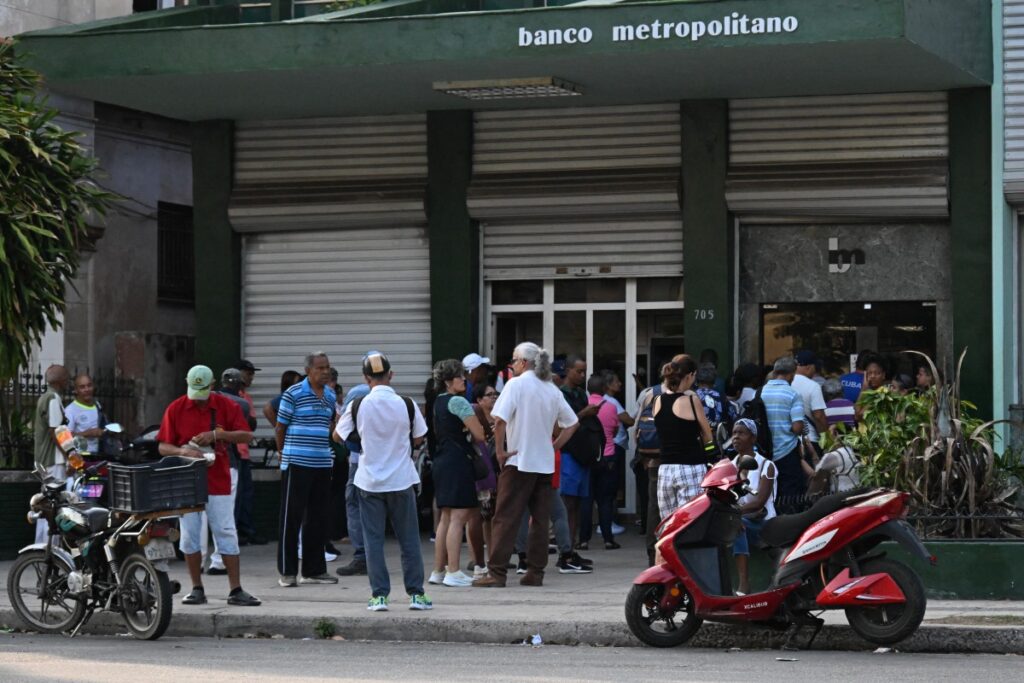
HAVANA, Cuba — Cuba’s central bank announced Wednesday that all Visa and Mastercard payment operations across the island will be halted this weekend, after sweeping United States economic sanctions pushed a key international processing bank to cut off its business relationship with a Cuban state-affiliated financial entity. In an official public statement, the central bank confirmed that it received formal notification of the exit on June 2. The processing bank, which has overseen all Visa and Mastercard card-based transactions within Cuba’s borders, said it would end its contractual agreement with Fincimex SA, the entity designated to manage these international card payments for the Cuban government. Fincimex operates as the financial subsidiary of GAESA, a large military-led conglomerate that has long been targeted by US economic sanctions imposed on Cuba. This development marks another significant disruption to Cuba’s access to global financial networks, exacerbating existing economic pressures that have limited the country’s ability to facilitate international commerce and serve foreign visitors who rely on global card payments during their stay. The suspension comes as US sanctions on Cuban entities remain in place, with little indication of near-term adjustments to the long-standing restrictive trade and financial policy. Cuban financial officials have not yet announced an alternative workaround for processing international card payments, leaving many in the tourism and commercial sectors bracing for new disruptions.
标签: Jamaica
牙买加
-

Man found dead near car mart was notorious car thief, say police
In the quiet community of Longwood, near Santa Cruz in Jamaica’s St Elizabeth parish, a grisly double homicide has uncovered links between the killings and a long-running, profitable criminal enterprise focused on vehicle theft. Police investigations have identified one of the two men found dead at a local auto mart on Sunday as Romele Johnson, 34, a documented repeat offender whom authorities describe as a key leader of a cross-parish car stealing ring that trafficked stolen vehicles and their parted-out components across the island.
The second victim is 64-year-old Melvin Blythe, a well-known local businessman who owned and operated the auto mart where the bodies were discovered. In the hours following the discovery of the bodies, detectives worked methodically to comb every inch of the business property, reconstructing the timeline of the violence that claimed both men’s lives.
Based on witness accounts from nearby residents who reported hearing loud blasts, consistent with gunfire, around 3:00 a.m. on Sunday, law enforcement has developed a working theory of the confrontation. Investigators say that in recent months, Blythe had adopted a routine of staying overnight at his auto mart after closing, a precaution he took to guard his business against rising theft activity in the area. A licensed firearm holder, Blythe left his home for the auto mart on Saturday night, ahead of the fatal encounter.
Authorities allege Johnson entered the auto mart’s compound with the intent to strip vehicles for valuable parts that the theft ring would later resell. When detectives processed the crime scene, they recovered a bag of tools intended for vehicle disassembly and found a headlight already removed from one car on the lot. Investigators also noted that the grille gate to an on-site building was left open, with no evidence of forced entry, suggesting Johnson may have had access to or prior knowledge of the property layout.
Per police theory, Blythe exited the building after becoming aware of the intruder, confronted Johnson, and a violent struggle erupted that left both men shot dead. Hours later, when Blythe’s wife grew concerned after repeated calls to his mobile phone went unanswered, she traveled to the auto mart to check on him, where she made the grim discovery of her husband’s body shortly after 5:00 p.m. Sunday.
After being contacted by Blythe’s wife, responding officers followed a trail of blood that led over a 10-foot perimeter wall, where they found Johnson’s body with Blythe’s licensed firearm still in his vicinity. Both remains have been moved to a public morgue, where autopsies and official ballistics testing are pending to confirm the sequence of gunfire and cause of death for both men.
A senior police source familiar with the investigation confirmed that Johnson had a lengthy criminal history tied to theft. Most recently, Johnson was free on bail after being arrested and charged in connection with a December 2024 incident in Westmoreland, where officers caught him and two associates in possession of a stolen motor vehicle. As recently as September 2025, Johnson was linked to the theft of a Toyota Voxy in Portsea, located near Junction in St Elizabeth. During that investigation, Johnson’s accomplice Mark Allen Snr—known locally as “German”—was killed in a gunfight with police during a high-speed chase between the St Elizabeth communities of Malvern and Southampton, while Johnson managed to escape capture. Johnson had previously served a six-month sentence of hard labor at the St Catherine Adult Correctional Centre after pleading guilty to charges of shop breaking and larceny in Clarendon, and was released from custody in 2019.
-

Turkey says Kanye West ‘I am a god’ weekend performance offended ‘spiritual sensitivities’
ISTANBUL, Turkey — A high-profile weekend performance by controversial American rapper Kanye West in Istanbul has ignited fierce backlash from senior Turkish officials, who are sounding the alarm over content they say deeply violates the country’s core spiritual and cultural values. Nearly 120,000 fans packed the venue for Saturday’s show, marking a rare stop for the artist who has already faced widespread performance bans across Europe over his well-documented hate speech targeting Jewish people and promotion of Nazi ideology.
Unlike European governments that have blocked West’s tour stops over his antisemitic and pro-Nazi rhetoric, Turkey’s objections center entirely on religious and cultural offense. In a public statement posted to the social platform X, Oktay Saral, chief advisor to Turkish President Recep Tayyip Erdogan, condemned the concert for featuring messaging and imagery that directly contradicts Turkey’s Islamic faith and shared civilizational principles.
Saral specifically called out one controversial moment from the set: the crowd of tens of thousands enthusiastically chanting lyrics from West’s 2013 track “I Am a God.” He described the incident as a grave issue requiring immediate and thorough official review. Beyond the lyrical content, Saral also raised alarms over the participation of 82-year-old French designer Michele Lamy, whose signature gothic aesthetic, heavy tattooing, and dramatic dark eye makeup have led officials to frame her as linked to occultism and harmful dark symbolism.
Most concerning to Saral was the quiet participation of what he called a “conservative segment of society” in what he framed as a deliberate “cultural siege” against Turkish values. He called on Turkey’s tourism ministry to implement far stricter screening protocols for future large-scale events that could threaten the nation’s shared spiritual and cultural sensitivities.
West has been a deeply polarizing figure in global entertainment for years, after a series of public outbursts including repeated antisemitic rants and public comments glorifying Nazi dictator Adolf Hitler that sparked widespread industry and consumer backlash. The rapper has repeatedly cited his diagnosis of bipolar disorder as an explanation for his harmful remarks, claiming past incidents were triggered by manic episodes. Last January, he took out a full-page ad in *The Wall Street Journal* to issue a public denial, writing “I am not a Nazi or an antisemite” and adding “I love Jewish people.”
Despite that public clarification, the backlash against West’s tour has continued to build across Europe. His 2023 release of a track titled “Heil Hitler,” paired with swastika-branded merchandise sold on his official website, reinforced calls to cancel his planned 2024 European tour. In April, UK authorities barred him from entering the country to headline a major music festival, forcing organizers to scrap the entire set. Just one week later, a planned concert in Marseille, France, was postponed after reports that the country’s interior minister intended to block the performance. A Polish venue followed suit by canceling a June 19 show, with the nation’s culture minister stating Poland would not host an artist who promotes Nazism. Most recently, Italy blocked a planned July 18 concert on public safety grounds.
Despite the string of cancellations, West still has several upcoming European tour dates on the calendar, including shows in the Netherlands scheduled for June 6 and 8, a July 11 performance in Tirana, Albania, and a July 25 stop in Prague, Czech Republic.
-

Manchester coach relishes ‘special’ T20 triumph after turning tables on STETHS
For decades, Barry Barnes has built a reputation as one of Jamaica’s most respected schoolboy cricket coaches, steering Manchester High to nearly every major title in the island’s youth cricket circuit. But one crown had long eluded the veteran mentor — until Saturday’s dramatic ISSA/GraceKennedy Twenty20 all-island Super 8 final at Clarendon’s Sir P Oval, where his side toppled long-time nemesis St Elizabeth Technical High School (STETHS) by five wickets to claim the historic win, a victory Barnes calls “extra special.”
The showdown lived up to its billing as one of the most anticipated youth cricket matches of the Jamaican season. STETHS, the undisputed powerhouse of Jamaican schoolboy cricket, entered the final riding a wave of momentum against Manchester High, having beaten Barnes’ side in two previous 2024 season finals — the three-day Headley Cup and the rural T20 championship. After opening the batting, STETHS delivered a formidable performance led by captain Tyriek Bryan, who smashed an impressive 93 runs to anchor the side’s innings to a final total of 182 for 8 off their allotted overs. On a compact ground tailored for high-scoring T20 clashes, that total put massive pressure on Manchester High’s chasing side.
But it was Manchester captain Pajay Nelson who rose to the occasion, delivering a match-winning all-round performance that secured his side’s place in schoolboy cricket history. Normally a wicket-keeper, Nelson contributed in both innings: he claimed two key wickets for just 27 runs, supporting pace bowler Jahdae Moore who finished with figures of 3 for 29 to restrict STETHS’ late-innings scoring. Then, with the bat, Nelson produced a stunning knock of 92 runs, guiding Manchester to reach the target of 183 with one full over remaining, finishing on 186 for 5.
In an interview with the Jamaica Observer following the win, Barnes — who also serves as a Jamaican national cricket selector — said the victory carried unique personal weight, as it completed his collection of every major schoolboy cricket title in Jamaica. “It was very satisfying to turn the tables on STETHS in this final. This was the only title I hadn’t won at the schoolboy level — I had won all other titles. So this one is a very special one that was promised to me by the team and they delivered,” he explained.
Barnes also praised the quality of cricket displayed by both sides, noting that the competitive match highlighted the strength of youth talent across Jamaica. “The conditions were good for T20 cricket and it’s a very small field, but I think cricket won at the end of the day. There were some outstanding performances from Tyriek Bryan of STETHS and Pajay Nelson of Manchester. I think Nelson was the deciding factor in the game. The way the boys chased the target, it was done extremely well. Whether the field is small or not, 180-odd runs is still a big total for schoolboys,” Barnes added.
For STETHS coach Carl Wright, the final result was a disappointing end to what he still calls a standout season for his program. Wright acknowledged that his side failed to capitalize on strong early batting momentum, leaving them just short of the mark needed to defend on the small ground. “We had a good start but in the latter part of the innings we didn’t capitalise. In the end, the score we got wasn’t good enough on a small field. It just wasn’t our day,” he said.
Even with the final loss, Wright highlighted that STETHS still turned in a dominant season performance, winning two out of three final meetings against Manchester High this year, including a victory over urban Grace Shield title-holders St Jago High in the all-island Spalding Cup play-off. “It was a good season — we contested three finals against Manchester and won two. We prevailed in most of the encounters but Manchester is a good team and congrats to them,” Wright added.
In the third-place match held ahead of the main final, Excelsior High claimed a 35-run victory over St Jago High. Rain reduced the match to 18 overs per side, with Excelsior posting 178 for 8 before restricting St Jago to 143 for 4 in their reply. The other four schools that reached the 2024 Super 8 stage of the tournament were Vere Technical, Tacky High, Campion College, and Jamaica College.
-

Foreign companies take flight from US-sanctioned Cuba
As a critical May 24 deadline from the United States forcing foreign firms to cut all business ties with Cuba’s powerful military-owned conglomerate GAESA approaches, international companies have dramatically drawn down their operations on the island by Tuesday, delivering another crippling blow to Cuba’s already collapsing economy. This latest round of sanctions is part of the Trump administration’s sweeping escalation of pressure on Havana, which has included a full energy blockade imposed earlier this year and growing rhetoric about potential US control over the island.
Back in early May, President Donald Trump issued an executive order freezing all of GAESA’s assets held within US jurisdiction and imposing harsh secondary sanctions on any foreign entity that continues doing business with the group. The US Office of Foreign Assets Control (OFAC) has given all affected international companies until this Friday to restructure their operations to comply with the new rules, or face harsh penalties including asset freezes and exclusion from the global financial system. By all indicators, the US pressure campaign has had its intended effect, with a wave of withdrawals and suspended operations unfolding across multiple key sectors of Cuba’s economy in recent weeks.
Cuban economist and independent consultant Daniel Torralbas told AFP that the immediate economic fallout from this exodus is catastrophic, noting that 2026 has already shaped up to be the worst year for Cuba’s economy in seven decades. The damage is being felt acutely across the island’s critical tourism sector, which has long been one of its largest sources of foreign currency. Canada’s Blue Diamond Resorts, one of the biggest international hospitality operators working in Cuba, announced Monday that it was ceasing all operations on the island. While the firm framed the decision as a response to broader challenging tourism conditions, it comes directly in line with the new US sanctions mandate.
Multiple industry sources confirmed to AFP on Tuesday that Spain’s Iberostar Group, another major hotel operator in Cuba, is withdrawing from 12 properties it managed in partnership with entities linked to GAESA. Specifically, the firm is exiting all co-management agreements with Gaviota Tourism Group, which is a core subsidiary of GAESA. The withdrawal went into effect on June 1, according to two separate sources familiar with the decision. The Mallorca-based company declined to publicly comment on the changes when contacted by AFP, but sources added that Iberostar will maintain its co-management agreements for hotels owned directly by Cuba’s Ministry of Tourism, which are not covered by the new sanctions. Two other major international hotel groups — Spain’s Melia and Indonesia’s Archipelago International — are currently evaluating full or partial withdrawals from their Cuban operations, according to industry insiders.
The impact extends far beyond tourism, hitting the island’s logistics and natural resource sectors as well. Two of Europe’s largest shipping companies, France’s CMA CGM and Germany’s Hapag-Lloyd, have already temporarily suspended all new freight bookings to Cuba, explicitly citing Trump’s executive order as the reason for the move. In early May, Canadian mining giant Sherritt International announced it was ending its decades-long presence in Cuba, where it had operated a joint nickel and cobalt mining venture with state-owned General Nickel Company S.A. since the 1990s.
The Trump administration has framed its crackdown on GAESA as a push against Cuban government corruption. US Secretary of State Marco Rubio, a Cuban-American politician and one of the most vocal critics of the Havana government, has repeatedly accused GAESA of operating as a shadow state that accumulates wealth for a small circle of ruling elites at the expense of ordinary Cuban citizens. “It is a ‘state within a state’ that is accountable to no one, hoarding the profits from its businesses for the benefit of a tiny elite,” Rubio said of the conglomerate.
Havana issued a sharp rebuke of these allegations on Tuesday, pushing back against the US claims and defending GAESA’s role in the Cuban economy. Cuban officials explained that the conglomerate was established specifically to counteract the impact of the decades-long US trade embargo that has been in place since 1962. The government called the new US sanctions “the most intense, disproportionate, and dangerous escalation in the recent history of relations between Cuba and the United States.” It also highlighted the public benefits GAESA has delivered to the Cuban people, noting that the group played a central role in keeping the Cuban economy stable during the Covid-19 pandemic and has led construction of more than 10,000 new affordable homes for Cuban citizens. “Its work speaks for itself, and it does so above the state slander concocted in Washington,” the Cuban government’s statement concluded.
-

UN warns world to prepare for El Nino extreme weather
GENEVA, Switzerland – The United Nations’ World Meteorological Organization (WMO) has issued an updated forecast confirming a steeply elevated probability that the climate-altering El Niño phenomenon will emerge by the third quarter of 2024, bringing with it a sharply increased threat of catastrophic extreme weather events across the globe. In its quarterly update on El Niño-Southern Oscillation (ENSO) conditions released Tuesday, the agency confirmed that model data from its global collaborative forecasting network shows an 80% likelihood that El Niño will fully develop between June and August, with the probability climbing to 90% or higher by the end of November 2024.
El Niño is a naturally occurring climate pattern defined by above-average sea surface temperatures across the central and eastern equatorial Pacific Ocean, which triggers cascading shifts in global atmospheric pressure, wind patterns, and rainfall distribution. The phenomenon follows a cyclical pattern, recurring every two to seven years and typically persisting for 9 to 12 months, oscillating between its cool counterpart La Niña and neutral ENSO conditions in between cycles. Most current forecasting models indicate that the upcoming 2024 El Niño will be at least moderate in strength, with a significant possibility that it will develop into a strong event.
As of late April through mid-May 2024, WMO monitoring shows that sea surface temperatures in the central-eastern equatorial Pacific – the key reference region for tracking ENSO conditions – are already approaching the established threshold for El Niño. Below-surface ocean temperatures in the region are even more anomalous, measuring more than 6 degrees Celsius above long-term averages. The atmospheric indicator for ENSO, the Southern Oscillation Index, also aligns with the ongoing development of El Niño conditions.
WMO Secretary-General Celeste Saulo emphasized that global communities must prioritize immediate preparedness to mitigate the harmful impacts of the approaching event. Saulo noted that El Niño is likely to exacerbate existing climate stressors, amplifying the severity of droughts, intense rainfall events, and heatwaves across both terrestrial and marine ecosystems. Even a moderate El Niño, she added, is enough to substantially raise the probability of record-breaking weather and climate extremes.
The most recent El Niño event played a key role in pushing global temperatures to new historic highs: 2023 became the second-warmest year ever recorded, while 2024 surpassed all previous records to reach an average global temperature 1.55 degrees Celsius above the pre-industrial baseline of 1850-1900.
While the WMO confirms there is currently no conclusive evidence that human-caused climate change increases the frequency or intrinsic intensity of El Niño events, researchers have established that anthropogenic warming amplifies the damaging impacts of El Niño. A pre-warmed global ocean and atmosphere hold greater amounts of energy and moisture, creating conditions that supercharge extreme weather events such as heatwaves and intense downpours.
United Nations Secretary-General António Guterres framed the impending El Niño as an urgent call to action for global climate action. “El Niño is arriving on our doorstep,” Guterres said in a prepared video message. “The world must treat it as the urgent climate warning it is. El Niño conditions will pour fuel on the fire of a warming world. The only effective response is climate action equal to the crisis — ending the addiction to fossil fuels, accelerating the shift to renewables, protecting the most vulnerable, and delivering early warning systems for all.”
To date, 128 countries have established fully functional multi-hazard early warning systems, part of a UN-led initiative to achieve universal coverage for all nations by the end of 2027. Early advance warning of El Niño’s onset and intensity is designed to enable targeted preparedness across climate-sensitive sectors including agriculture, water resource management, energy, and public health, reducing harm to communities and economic disruption.
Saulo added that El Niño’s impacts extend far beyond immediate weather disruptions, creating cascading risks that touch global trade, economic stability, and human security. “These go from variability of the climate, into the economy and security of the people. That’s why this information is so relevant and so important,” she told reporters in Geneva.
Forecasts for the June to August 2024 period project nearly global above-average surface temperatures, increasing the risk of overlapping climate hazards and accelerating drought development in regions that see reduced rainfall during El Niño. While El Niño typically reaches its peak intensity between November and February, the full temperature spike associated with the event often emerges later in the cycle, and more refined forecasts for onset and strength are expected next month.
Regional climate projections paint a clear picture of targeted risk across vulnerable regions: the northern Greater Horn of Africa is expected to see below-normal rainfall during its critical June-September rainy season; South Asia is projected to experience below-average monsoon rainfall; and Central America is likely to face warmer, drier than average summer conditions. For the Atlantic and Pacific hurricane seasons, El Niño’s warm ocean waters tend to fuel more intense hurricane activity in the central and eastern Pacific, while suppressing storm development in the Atlantic during the Northern Hemisphere summer.
-

France lawmakers say state shares blame for West Indies pesticide scandal
On a historic Tuesday sitting, France’s National Assembly voted unanimously to pass a landmark bill that formally acknowledges the French state’s partial responsibility for decades of harm caused by the unregulated use of a toxic pesticide across its Caribbean overseas territories of Guadeloupe and Martinique. The long-overdue recognition paves the way for full decontamination of affected ecosystems and reparations for thousands of harmed residents, closing a painful chapter of environmental injustice rooted in decades of state inaction.
The toxic compound at the center of the scandal, chlordecone (marketed under the brand name Kepone), was deployed extensively across banana plantations in the two island territories to eradicate crop-damaging weevils for 21 years, from 1972 to 1993. Notably, France had already outlawed the pesticide for use on its European mainland in 1990, but granted a three-year extension that allowed its continued application in the Caribbean islands, a decision that has been widely criticized as a double standard prioritizing agricultural industry interests over public health.
The unanimous vote in the lower house of parliament followed earlier approval from the French Senate, meaning the bill will now enter into force. Its text explicitly states the state recognizes its role in the widespread health, ethical, environmental, and economic damage that the territories and their populations have endured as a result of the prolonged chlordecone use.
Public health data underscores the staggering scale of the contamination. Research cited by France’s national health and safety agency ANSES shows that nearly 90 percent of the populations of both Guadeloupe and Martinique carry traces of chlordecone in their bodies. The toxic chemical has been definitively linked to multiple life-threatening cancers: prostate cancer rates in the two territories rank among the highest in the world, and the compound is also associated with elevated risks of stomach and pancreatic cancer. Beyond cancer, ANSES confirms chlordecone exposure causes lasting harm to the nervous system, reproductive function, hormonal regulation, and critical organ function including cardiac health.
Warnings about the pesticide’s dangers date back decades: as early as 1979, the World Health Organization released a report identifying chlordecone as a confirmed carcinogen in lab rodents, and noted it should be treated as a carcinogenic risk for humans. The compound was ultimately added to the global list of banned persistent organic pollutants under the Stockholm Convention in 2009.
Beyond formal recognition of responsibility, the new law establishes two core binding goals for the French state: completing comprehensive decontamination of all polluted soil and water reserves across Guadeloupe and Martinique, and delivering full financial compensation to every person harmed by the chlordecone contamination. While lawmakers from the affected territories welcomed the bill as a critical step toward accountability, many also acknowledged that the vote is only the beginning of a long process of repair.
Elie Califer, a Socialist deputy from Guadeloupe who sponsored the legislation, called the compromise bill an important step toward rebuilding public trust that has been deeply eroded by decades of state denial. But he added that substantial additional work remains to ensure the promises of decontamination and compensation are fully realized. Olivier Serva, another Guadeloupe-based deputy, noted that while he was not entirely satisfied with the final scope of the bill, the vote marked a major shift from the state’s earlier outright refusal to accept any responsibility.
The Tuesday vote came just one week after the same lower house passed another landmark measure repealing archaic, still-active French slavery laws that had remained on the books more than 170 after the formal abolition of slavery in 1848. Historians estimate that between the 17th and 19th centuries, more than one million enslaved African people were forcibly transported by French ships to Caribbean colonies, where they were forced to work on sugar and banana plantations. Activists have long drawn a connection between the legacy of chlordecone contamination and the enduring structural inequalities between mainland France and its former colonial territories that are now overseas departments, arguing that environmental harm is just one extension of a long history of prioritizing mainland and commercial interests over the well-being of island populations.
Serge Letchimy, an official from Martinique, praised the vote as a watershed moment that breaks down a long-standing system that suppressed the truth, shielded responsible parties from accountability, and ignored the suffering of victims. Looking ahead, the French Court of Appeal in Paris is set to rule later this month on whether to reopen a criminal investigation into the chlordecone scandal. Three years ago, lower court magistrates dismissed the case, arguing that too much time had passed to secure convictions, a decision that sparked widespread outcry from victim advocacy groups.
-
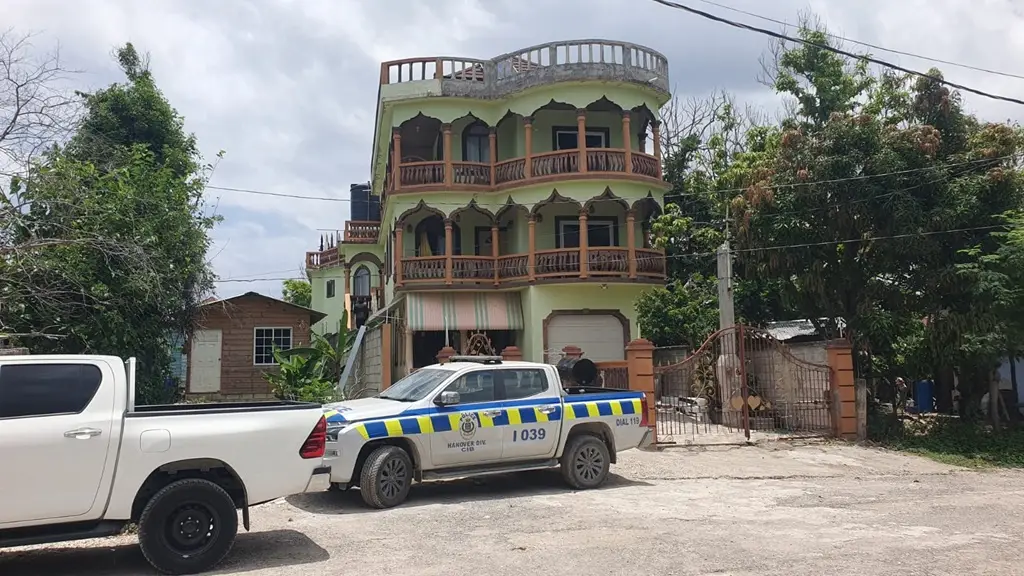
Murder charge laid against partner of US citizen found dead in Hanover Airbnb
In Hanover Parish, Jamaica, local law enforcement has filed criminal charges against a US citizen in connection with the violent death of another American national found on the island early this week. The accused, 36-year-old Aldean Jermaine Blake, a native of Jamaica’s Clarendon Parish who holds United States citizenship, faces two separate counts: murder and violations of Jamaica’s Immigration Act.
Court documents and police records show Blake entered Jamaica on October 5 of last year, with his authorized stay set to expire on April 3 of this year. The victim, 33-year-old Kadian Bradshaw, who was commonly known by her nickname “Kadi”, maintained residences in both Tampa, Florida, and Bulls Bay, a coastal community within Hanover Parish.
At the time of the fatal incident, Bradshaw, Blake, and an infant reported to be their shared child were residing at a short-term rental property in the Bulls Bay area. Law enforcement accounts outline that a violent confrontation erupted between the pair at approximately 2:00 a.m. Monday, an altercation that left Bradshaw with fatal injuries.
Authorities were first alerted to suspicious activity by local residents, who grew concerned when they spotted Blake walking along the main highway leading to Lucea, the capital of Hanover Parish, in the pre-dawn hours while carrying the young infant. Police units were dispatched quickly and intercepted Blake and the child shortly after the report was made.
During initial questioning, investigators say Blake claimed he had no information about Bradshaw’s whereabouts, stating that she had left the rental to travel to Clarendon Parish. When repeated attempts to reach Bradshaw via phone and other contacts failed, police ordered Blake to guide them back to the rental property where the couple had been staying.
Blake reportedly resisted this request, but a search of his belongings turned up a key labeled for the Bulls Bay rental unit. Officers proceeded to the address, where they located Bradshaw’s body, which showed clear evidence of multiple stab wounds. Following additional questioning and evidence processing, Blake was officially charged with the criminal offenses.
Beyond the details of this specific incident, the case highlights a growing homicide trend in Hanover Parish this year. Data from local police shows the parish has recorded nine murders since January 1, compared to just six homicides during the same time frame in 2023.
-

Jamaicans set for Paavo Nurmi meet in Finland on Wednesday
KINGSTON, Jamaica — One of the Caribbean’s biggest track and powerhouses is set to send a six-member contingent of elite athletes to the 2026 Paavo Nurmi Games, a top-tier World Athletics Continental Tour Gold event hosted in Turku, Finland, with competition kicking off Wednesday.
The Jamaican lineup boasts some of the nation’s biggest names in throws and jumps, headlined by Roje Stona, the current Olympic men’s discus record holder, and Danniel Thomas-Dodd, the former Commonwealth Games women’s shot put gold medalist. Rounding out the team are in-form 400m hurdler Assine Wilson, long jump competitors Ackelia Smith and Nia Robinson, and two-time Diamond League competitor high jumper Lamara Distin.
Stona, who currently sits 7th in the global men’s discus rankings with a 2026 season best throw of 70.66 meters, will face the toughest test of his season so far, squaring off against the world’s top three ranked discus athletes: Australia’s Matt Denny, Germany’s Steven Richter, and Slovenia’s Kristjan Ceh. He will also compete against Olympic medalist Daniel Stahl of Sweden, adding another layer of intensity to the event.
For Thomas-Dodd, who has posted a season best of 19.34 meters in women’s shot put this year, the competition will also feature a stacked field of elite global throwers. The leading competitor waiting for her is current world top-ranked thrower Jessica Schilder of the Netherlands, alongside two other top contenders: Chase Jackson of the United States and Sarah Mitton of Canada.
Assine Wilson, who recently ran a personal best of 48.29 seconds in the 400m hurdles back in March, enters the race as a clear favorite to take gold. That time ties him for 10th place on the all-time list of Jamaican 400m hurdlers, and he comes fresh off a first-place finish at the Josef Odlozil Memorial held in Czechia this week. His main challengers in Turku will be Slovenia’s Matic Gucek, Botswana’s Kamorena Tisang, and Great Britain’s Alastair Chalmers.
Long jumper Ackelia Smith has already had a busy start to her 2026 outdoor season, competing in four different events over the past month. Her standout performance came at the Goldenes Oval meet in Dresden, Germany, where she took second place with a 6.54-meter jump. She will share the starting line with compatriot Nia Robinson, who advanced to the final of the 2025 World Athletics Indoor Championship back in March. The two Jamaicans will compete against a field that includes Americans Monae Nichols and Claire Bryant, as well as Burkina Faso’s Marthe Koala.
Closing out the Jamaican contingent, high jumper Lamara Distin, who has already competed in the last two Diamond League events this season, will line up in the women’s high jump competition. She will face off against Ukraine’s Yulia Levchenko and Sweden’s Louise Ekman, who enters the Paavo Nurmi Games with the leading jump performance across all competitions this season.
-

Broadcasting Commission raps Flow and Digicel for ‘substandard customer service’ arising from channel changes
KINGSTON, Jamaica — Jamaica’s top broadcast regulator has formally ruled that two of the island’s leading subscription television providers, Flow and Digicel, violated the terms of their operating licences through the unprofessional and inadequate way they handled customer notifications for channel and programming adjustments rolled out in late 2025.
In an official statement published Tuesday, the Broadcasting Commission announced it had wrapped up its full investigation into the controversial programming changes, confirming that both telecommunication giants failed to meet mandatory customer service standards when rolling out updates that directly impacted paying subscribers.
The regulator’s investigation uncovered critical gaps in Flow’s notification strategy: the company relied almost entirely on email alerts to inform customers of upcoming changes, despite internal engagement data that proved most subscribers never opened these communications. Data presented during the review shows 68.5% of distribution emails went unopened in November 2025, followed by 64.1% unopened in December. A portion of emails also failed to reach inboxes entirely, sent to outdated, incorrect, or inactive email addresses on file. Further, Flow posted supplementary change notices on its website, but the commission noted this passive method proved particularly unreliable in the aftermath of a hurricane that disrupted digital access for many Jamaican households. Flow also failed to provide any analytics to confirm that subscribers actually accessed and viewed the online postings.
For its part, Digicel went a step further, offering no advance warning at all to subscribers before removing certain channels from its line-up. The company later admitted to this oversight and issued a public apology to customers after the regulator launched its formal probe.
While both providers added new and reconfigured existing channels to replace the removed content, the commission found that the explanatory materials shared with subscribers lacked enough detail and clear, objective metrics for customers to verify whether replacement channels offered comparable value and maintained the service quality customers paid for.
As a corrective measure, the two operators have been ordered to implement comprehensive, multi-channel communication protocols to guarantee customers receive clear, accessible notice of all future service changes. The commission stressed that all customer notifications must be purposefully designed to actually reach most subscribers, rather than serving as a meaningless box-ticking exercise. This requirement explicitly extends to reaching older customers and Jamaicans with limited or inconsistent digital connectivity, who are often overlooked in all-digital communication strategies.
The regulator also highlighted the long-term implications of this ruling: findings of customer service non-compliance are added to each operator’s permanent compliance record, and will be a core factor considered when the companies apply for licence renewal in the future, including when negotiating the terms and conditions of new operating agreements.
In closing, the commission clarified that it does not challenge the right of television operators to make commercial decisions about their channel line-ups and service packages. “The issue is not the changes themselves, but the manner in which subscribers are treated,” the statement read. “Customers are entitled to clear, timely and effective communication whenever their services are altered. Subscription television operators are accountable for meeting this standard.”