标签: Jamaica

牙买加

  • NASA ends mission after loss of Mars probe

    NASA ends mission after loss of Mars probe

    After six months of unexplained silence from its pioneering Martian orbiter, NASA announced this Wednesday that it is formally bringing the Mars Atmosphere and Volatile Evolution (MAVEN) mission to a close. Over its 11 years of unplanned extended operations, the probe rewrote scientific understanding of the Red Planet, leaving a legacy that will shape planetary research for decades to come.

    Launched with an initial projected lifespan of just one to two years, MAVEN slipped into orbit around Mars in September 2014, tasked with answering a longstanding cosmic question: how and why Mars lost most of its thick early atmosphere, transforming from a warm, wet world capable of hosting liquid water on its surface into the cold, arid desert we see today. It continued to beam back invaluable data and support surface operations far longer than mission planners ever dared to hope, until contact was abruptly lost with the spacecraft in December 2024.

    Though NASA confirms MAVEN is believed to still remain in a stable orbit around Mars, repeated attempts to reestablish contact over the past six months have gone unanswered. The agency has officially acknowledged the loss of the craft, though it will launch a full formal review to pinpoint the root cause of the communications failure, according to statements released Wednesday.

    For scientists who spent years working on the mission, MAVEN’s contributions extend far beyond its original mandate. Shannon Curry, an astrophysics professor and key MAVEN mission researcher, called it “the best Mars mission ever” in comments to reporters Wednesday. The probe’s measurements gave planetary scientists an unprecedented look at atmospheric escape—the process through which gases in a planet’s atmosphere leak out into interplanetary space. Currey noted that “We now have a better understanding of atmospheric escape at Mars than at any other planet, including Earth.” This body of data has turned Mars into an unparalleled natural laboratory for studying atmospheric evolution on rocky planets throughout the solar system and beyond, she added.

    Tiffany Morgan, head of NASA’s exploration programs, echoed that praise, emphasizing that MAVEN “profoundly advanced our understanding of Mars’s atmosphere, climate history, and habitability.” Beyond its core scientific work, MAVEN filled a critical secondary role: it served as a reliable communications relay, relaying data and commands between Earth and NASA’s fleet of rovers and landers operating on the Martian surface. With MAVEN now offline, that responsibility will be transitioned to other operational orbiters currently circling the Red Planet to maintain uninterrupted contact with surface missions.

  • Respected British musicologist Steve Barrow dies at 80

    Respected British musicologist Steve Barrow dies at 80

    Steve Barrow, the highly regarded British musicologist whose decades-long work cemented his reputation as one of the leading authorities on Jamaican music, passed away in the United Kingdom on May 30 at the age of 80.

    Barrow’s death has drawn widespread coverage across British media, with journalists and peers uniformly honoring the extraordinary breadth and depth of his written work documenting the development and cultural impact of Jamaican music from its early roots to global prominence. Beyond his academic and journalistic contributions, Barrow built a long career in music promotion, holding roles with iconic record labels including Trojan Records, Island Records, and Blood And Fire Records.

    In 1993, Barrow co-founded Blood And Fire Records alongside Mick Hucknall, the frontman of the globally successful pop group Simply Red. That same year, Island Records released the landmark box set *Tougher Than Tough: The Story Of Jamaican Music*, the project that would become one of Barrow’s most celebrated works. Barrow’s sprawling, meticulously researched liner notes for the collection earned widespread acclaim from reggae enthusiasts and scholars around the world. Spanning four compact discs, the box set is still widely recognized as one of the definitive compilations tracing the evolutionary arc of Jamaican music.

    For many years, Barrow also contributed regular coverage of the United Kingdom’s domestic reggae scene to Black Echoes, a leading British music publication focused on Black music genres. In 2012, Barrow teamed up with Stuart Baker to publish *Reggae Soundsystem: Original Reggae Album Cover Art*, a massive 500-page volume that features more than 1,000 full-color reproductions of 45 rpm single label designs and full album jackets from classic reggae releases.

    The Independent, one of the United Kingdom’s major national newspapers, published an in-depth feature on the book upon its release, praising it as “a compelling history of a young nation and its people” that captured the visual and cultural identity of Jamaica’s music scene. Barrow’s other published works include influential titles such as *The Rough Guide to Reggae*, *The Rough Guide Reggae: 100 Essential CDs*, and *King Jammy’s*, which he co-wrote with Beth Lesser. His decades of work have left an enduring legacy, shaping how audiences and scholars understand the global impact of Jamaican and reggae music.

    Reporting by Howard Campbell

  • Bunting flags Jamaica’s productivity crisis

    Bunting flags Jamaica’s productivity crisis

    KINGSTON, Jamaica — During Wednesday’s Sectoral Debate in Jamaica’s House of Representatives, Opposition spokesperson for Productivity, Efficiency and Competitiveness Peter Bunting delivered a stark assessment of the country’s long-term economic trajectory, warning that decades of slow growth have left Jamaica trapped in stagnation even after achieving macroeconomic stability.

    As the Member of Parliament for Manchester Southern laid out, Jamaica’s average annual real GDP growth has hovered around just 1% for multiple decades, placing it among the lowest-performing developing economies in the world. Bunting outlined a cascade of persistent economic weaknesses: labour productivity has actually contracted over the past quarter century, inflows of foreign direct investment have plummeted from previous peak levels, gross fixed capital formation has weakened, and real wages have remained under consistent downward pressure. Compounding these challenges, he added, a persistent brain drain continues to drain the country of its most skilled workers, who leave in droves to seek better professional opportunities abroad.

    “In short, we have stabilised the economy without transforming it,” Bunting told the legislative body. He noted that leading global economic bodies including the International Monetary Fund, the World Bank, and the Organisation for Economic Co-operation and Development all share a consistent consensus on the core requirements for long-term sustained growth: nations that prosper over generations do so by continuously boosting productivity, strengthening institutional governance, investing in human capital, fostering a culture of innovation, and building a policy environment that allows domestic and foreign businesses to compete and scale. Nations that fail to prioritize productivity improvements, he argued, eventually hit an insurmountable growth ceiling marked by stagnant wages and shrinking economic opportunity — a position Jamaica finds itself in today, per his assessment.

    A key target of Bunting’s critique was the recent sectoral progress report from Audrey Marks, Minister of Efficiency, Innovation, and Digital Transformation, who pointed to rising volumes of online transactions, expanded electronic payment infrastructure, and increased digital government services as evidence of meaningful progress. Bunting pushed back on this framing, arguing that increased digital activity does not equate to improved productivity.

    He pointed out that Jamaican businesses still grapple with widespread systemic inefficiencies, including redundant reporting requirements, fragmented government administrative systems, and unreasonably lengthy approval processes for critical business activities. Even with digital expansion efforts, more than 70% of all transactions in Jamaica remain cash-based, and adoption of the Bank of Jamaica’s central bank digital currency JAM-DEX has remained negligible despite the central bank’s extensive outreach and investment. Inter-bank payment systems still operate under constraints rooted in outdated institutional structures that do not align with the demands of a 24/7 modern digital economy: the Bank of Jamaica’s Real Time Gross Settlement (RTGS) system only operates between 8:30 a.m. and 2:30 p.m., while commercial banks’ Automated Clearing House (ACH) still processes payments on a next-day basis.

    “Technology is an enabler, not a substitute for reform,” Bunting stated. “If inefficient processes are simply transferred from paper to computer screens, what emerges is not efficiency but digital bureaucracy. Productivity gains arise when processes are fundamentally redesigned, responsibilities are clarified, duplication is eliminated and institutions become more responsive. Technology can facilitate that transformation, but it cannot replace it.”

    Bunting emphasized that the trend of Jamaica’s labour productivity over the past 25 years should be a wake-up call for every member of the legislature. Today, he confirmed, Jamaica’s overall labour productivity — measured as real GDP per worker — remains lower than it was a quarter century ago. For context, he compared this performance to peer economies: over the same 25-year period, U.S. labour productivity grew roughly 50%, while China’s saw an expansion of more than 400%. Even among direct regional competitors in Latin America and the Caribbean, which Jamaica competes with for foreign investment and export market share, productivity gains have been far stronger than Jamaica’s results.


  • Kenya health minister says US Ebola quarantine centre will proceed

    Kenya health minister says US Ebola quarantine centre will proceed

    Nearly a week after violent demonstrations over a planned American-funded Ebola quarantine installation in central Kenya left two people dead, the country’s top health official has reaffirmed that the controversial project will move forward, addressing widespread public backlash over its purpose and origins.

    The 50-bed isolation facility, constructed on Laikipia Air Base roughly 200 kilometers outside Nairobi, was originally scheduled to welcome its first patients last week. U.S. officials initially framed the site as a dedicated quarantine space for U.S. citizens entering Kenya from the Democratic Republic of Congo, where a severe Ebola outbreak is currently unfolding. The project operates under a 2015 bilateral agreement between Kenya and the U.S. as part of Washington’s global Biological Threat Reduction Program, which targets high-risk biological hazards across the continent.

    Shortly before its planned opening, however, the facility was hit with a temporary court injunction that halted its launch, and public frustration boiled over into large-scale protests on Monday. According to local human rights organizations, the clashes that broke out during the demonstrations left two protesters dead, intensifying the already tense debate over the project.

    Many Kenyan members of the public have raised two core objections to the facility. First, critics argue that allowing a foreign power to construct and staff a medical installation on Kenyan soil carries troubling undertones of colonial-era foreign overreach. Second, widespread public anxiety has centered on fears that housing individuals potentially exposed to Ebola at the site could increase the risk of the virus spreading into the general Kenyan population, a concern that has taken hold even though Kenya has not recorded any confirmed Ebola cases to date despite rigorous testing of incoming travelers. Neighboring Uganda has already confirmed 15 Ebola cases, including one fatality, amplifying regional worry about the outbreak’s spread.

    Addressing questions from members of Kenya’s Parliament on Wednesday, Health Minister Aden Duale pushed back against public criticism, seeking to correct widespread misinformation about who will be eligible to use the facility. Duale emphasized that the site will not be an exclusive facility restricted only to U.S. citizens, noting it is part of the Kenyan government’s broader network of 23 new quarantine and isolation centers under construction across the country. “Quarantine is not only for Americans. Even Kenyans will be isolated at the facility,” Duale told lawmakers. “Laikipia airbase is one of the 23 quarantine isolation centres we are building. And we will not stop it.”

    The minister also defended the government’s decision not to hold public consultations on the project, arguing that the urgent public health threat of Ebola leaves no time for extended community engagement. “This epidemic does not require any consultation… We are dealing with a very abnormal situation,” Duale said, reaffirming that the facility will open as planned once the temporary court order is resolved.

  • Johnson, Lewis take top honours at Hubert Lawrence Memorial TT Classic

    Johnson, Lewis take top honours at Hubert Lawrence Memorial TT Classic

    On a busy Sunday of competitive play at the UWI Gymnasium Mona Bowl in Kingston, Jamaica, two underdog storylines converged to cap off the second edition of the Hubert Lawrence Memorial TT Classic, with Azizi Johnson of Wolmer’s Boys’ School and Gianna Lewis securing the men’s and women’s Open Singles crowns respectively. Both champions walked away with hard-earned victories made all the sweeter by past disappointments that had kept them from the top spot in major tournaments.

    For Johnson, Sunday’s win represented long-awaited redemption. At the tournament’s inaugural 2025 staging, he was on track for a deep run before cramps and fatigue derailed his campaign against New York-based competitor Odingo Mitchell, leaving him empty-handed in the Open division. That result followed his 2024 victory in the “B” Singles bracket, a solid performance that nonetheless left him hungry for the top title.

    Johnson faced a similarly tough test in this year’s Open Singles final against Logan Royes, dropping the opening set 9-11 before finding his rhythm. He clawed back to take the next two sets 11-9 and 11-5, then held off a late comeback from Royes to clinch the fourth set 12-10 and secure the championship.

    On the women’s side, Lewis pulled off a stunning upset that broke a long-standing pattern against the person she knows best: her younger sister Tsenaye Lewis, the 2023 Jamaican national women’s singles champion. Gianna has turned in consistent strong results across local Jamaican tournaments in recent years, but had repeatedly fallen short in major finals, most often against her sister. To reach the championship match, she also defeated another top Jamaican talent, Keeara Whyte, who holds both the national women’s singles and Under-19 titles.

    After closing out the win, an elated Gianna celebrated the milestone, telling reporters: “This is only the second time I’ve beaten her in a final!” while holding up two fingers to mark the rare victory.

    In the “B” Open Singles division, Rudolph Sinclair of the Pembroke Hall Table Tennis Club claimed the AnyBet Hubert Lawrence Memorial crystal trophy after a hard-fought four-set win over UWI Games champion and national representative Chris Lyn, with final scores of 11-4, 7-11, 11-6, 12-10. Sinclair’s path to the final required a dramatic comeback, after he fell behind teammate Sean Wallace two sets to zero before rallying to win 9-11, 6-11, 11-7, 11-7, 11-7. For his part, Lyn also endured a grueling five-set semi-final against Conroy Henry, securing a 7-11, 12-10, 14-12, 19-17, 11-7 victory to advance to the title match.

    The Hubert Lawrence Memorial TT Classic, first launched in 2025 with corporate support from gaming brand AnyBet, was created to honor the late Hubert Lawrence, a beloved Jamaican athletics broadcaster, analyst, and author who was also an accomplished competitive table tennis player. Today, it ranks among the largest single-day table tennis tournaments in the English-speaking Caribbean, and Sunday’s event drew a capacity crowd of spectators eager to cheer on the island’s rising and established table tennis talent.

    Danielle Douglas, General Manager of Post to Post Betting Ltd, which operates AnyBet, highlighted the company’s ongoing commitment to the event and its core mission. “We are proud to support a tournament that honors Lawrence’s legacy, while promoting sports development and youth empowerment,” Douglas said. She added: “Table tennis is a sport that continues to showcase Jamaica’s competitive spirit and talent, and we hope to fuel its continued growth while reinforcing the values of discipline, teamwork, and healthy competition. This sponsorship also reflects our broader commitment to nurturing sporting excellence across disciplines while celebrating the talent, passion, and sportsmanship at the heart of this tournament, and the enduring legacy that inspires it.”

  • Sabalenka crumbles to French Open quarter-final defeat by Shnaider

    Sabalenka crumbles to French Open quarter-final defeat by Shnaider

    On a windy Wednesday at the Roland Garros complex in Paris, the 2026 French Open delivered one of the most shocking upsets in recent Grand Slam history, as top-ranked Aryna Sabalenka’s chase for her first Parisian title ended in a dramatic, collapse-fueled defeat to Russian 25th seed Diana Shnaider.

    Sabalenka, who entered the quarter-final clash as the overwhelming favorite and the only remaining Grand Slam singles champion in either the men’s or women’s draw, looked on course to cruise into the semi-finals early on. She claimed the opening set 6-3 after racing to a 5-1 lead, and extended her dominance by grabbing a double-break to go 4-1 up in the second set. But what followed was an unravelling no pundit saw coming, mirroring the collapse that cost her the 2025 French Open final against Coco Gauff a year prior.

    Blustery conditions on Court Philippe Chatrier proved a fatal test of Sabalenka’s consistency, as the 28-year-old Belarusian began spraying unforced errors across the clay at an alarming rate. After gifting Shnaider break points to level the second set at 4-4, she struggled to regain her composure despite a brief mid-set reset. A string of misjudged shots allowed Shnaider to level the set at 5-5, and two consecutive wayward forehands from Sabalenka handed the 22-year-old Russian the second set, forcing a decisive third set.

    The collapse only accelerated in the decider. Sabalenka committed eight unforced errors in just two opening games, dropping her serve to fall 2-0 behind. From there, Shnaider grew in confidence, wrapping up a dominant 6-0 third set to seal a 3-6, 7-5, 6-0 victory. Sabalenka ended the match with a staggering 57 unforced errors, and won only 14 total points in the deciding set, with a routine backhand into the net on Shnaider’s third match point confirming her early exit.

    For Shnaider, this run marks a career-defining breakthrough. Wednesday’s win was just the second time she has defeated a top-10 opponent in her professional career, and this is her first appearance in a Grand Slam quarter-final – now, she has advanced straight to the final four. She will face Polish left-handed qualifier Maja Chwalinska, ranked 114th in the world, in the semi-finals on Thursday. The winner of that match will go on to compete for the French Open title in Sunday’s final against either Marta Kostyuk or Mirra Andreeva.

    In a post-match interview, the stunned Russian said she was left speechless by her own victory. “First time playing Aryna so definitely a lot of nerves and I feel the first set was trying to adjust to her game,” she explained, noting that the blustery wind made for challenging playing conditions. “Definitely super happy I managed to finish on a good note rather than start on a good note. Definitely a special tournament for me here. It’s going be a lefty battle so I’m looking forward (to the semi-final).”

    For Sabalenka, the defeat carries extra disappointment. She was already aiming to become the first woman to reach seven consecutive Grand Slam semi-finals since Serena Williams, extending her ongoing 14th straight run of major quarter-final appearances. But her collapse leaves her still chasing her first French Open crown, after falling at the final hurdle 12 months prior.

  • Dovey Magnum Says “Be Patient

    Dovey Magnum Says “Be Patient

    International dancehall recording artist Dovey Magnum is preparing for an action-packed summer season, kicking off a multi-month slate of new creative projects with the upcoming release of her fresh single “Be Patient”.

    Produced by Nigel Angus at Kingston-based Palm Tree Flow Records, the upcoming track puts the Jamaican artist’s one-of-a-kind melodic style and sharp songwriting craftsmanship on full display. For Magnum, this single marks just the opening of a flood of new material she has spent months crafting for her global fanbase.

    Unlike many artists who simply fit their vocals around pre-made instrumentals, Magnum says she takes command of every beat she touches, driven by an authentic, lifelong passion for music. “I don’t just sing on a beat I dominate it because I genuinely love music. I have so many new songs to drop but I am just pacing myself. Like the title of my new song says, Be Patient,” the artist explained.

    Born Simsky Harrison and raised in Spanish Town, Jamaica, Magnum first rose to mainstream prominence in 2017, when her breakout hit “Bawl Out” became a viral smash that pushed her into the spotlight both on the island and across international dancehall circles. In the years following that breakthrough, she built on her momentum with a string of fan-favorite tracks, including “Prayer Me A Use And Win”, “Sex Slave”, and “Female Shella”.

    Now looking ahead to 2026, Magnum says her motivation and drive to create remain just as strong as they were when she first entered the industry. While she acknowledges the dancehall space has shifted dramatically over the past decade, she remains confident in her established place in the genre, anchored by her unchanging love for creating music.

    “Di game change up in many ways but one thing still remains. Bad a artiste a bad artiste and Dovey Magnum a bad artiste suh I care zero about what is happening or who is happening because me sure my space secured. My love for music is just as strong as it was when I just started,” she shared.

    Right now, the artist is deep in collaboration with producer Nigel Angus and publicist Karl Durrant to finalize “Be Patient” ahead of its release, and map out the rollout for her upcoming slate of new music planned for the rest of the year.

  • No proof

    No proof

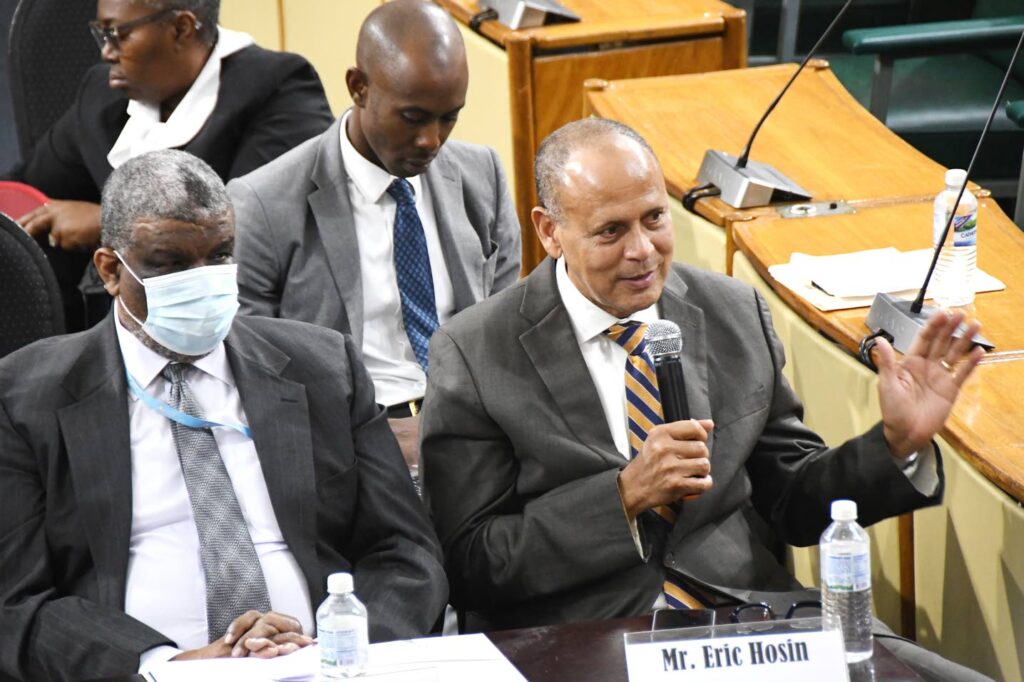
    Three weeks after former University Hospital of the West Indies (UHWI) board chair Wayne Chai Chong doubled down on his allegation that Jamaica’s Health and Wellness Minister Dr Christopher Tufton interfered in the hospital’s chief executive officer hiring process, current hospital management has confirmed to the island nation’s Public Accounts Committee (PAC) that no official board minutes, resolutions, or committee documents back up the claim.

    This disclosure marks the latest turning point in a growing controversy tied to the PAC’s ongoing review of a critical Auditor General report that uncovered major flaws in governance and procurement at Jamaica’s largest teaching hospital.

    Appearing before the parliamentary oversight committee this Tuesday, Acting UHWI CEO Eric Hosin explained that a full review of all relevant institutional records turned up just one passing reference to the CEO recruitment process, with no paperwork showing the board ever approved a candidate, rejected an applicant, or reversed a finalized appointment.

    “Neither the full board meeting minutes nor the minutes of the senior directors board meeting reference any decision to overturn the appointment of a candidate selected for the CEO post. There is no documentation of such an action in any of the records we have accessed,” Hosin told committee members.

    Hosin’s testimony immediately renewed scrutiny of claims Chai Chong gave to the PAC back in May. Chai Chong, who led the UHWI board during the recruitment period in question, was called to testify as part of the committee’s expanding probe into the Auditor General’s findings, and stood firm in his assertion that ministerial intervention altered the final outcome of the hiring process. Tuesday’s hearing was convened specifically to test whether official hospital records aligned with that narrative.

    After reviewing roughly 12 months of board documents, Hosin confirmed that only a single brief mention of the recruitment process appears, in minutes dated July 19, 2023.

    The revelation caught PAC chairman Julian Robinson off guard, who questioned how a hiring process for one of the most high-stakes roles in Jamaica’s public health system could leave so little official paper trail.

    “I find it unusual that this is the only reference to the full recruitment process, with no additional documentation noting that a candidate was approved or any other formal outcome,” Robinson said.

    This gap in official records quickly became a core point of concern for committee members. Government MP Zavia Mayne, who represents St Ann South Western, noted that the lack of documentation directly conflicts with the narrative Chai Chong presented to Parliament earlier this year, a discrepancy he called deeply troubling.

    “This is far more than concerning. We heard a very clear narrative from the former chairman during our last session, and now UHWI leadership has confirmed that board minutes contain no record of the events described. That is deeply worrying to me,” Mayne said. He added that any decision of such major public importance would certainly be documented in official records if it had actually occurred: “These are critical institutional decisions. If such a fundamental shift in the hiring outcome had been made, the minutes would reflect it — and no such record exists.”

    Robinson stopped short of declaring that the missing records directly contradict Chai Chong’s testimony, but acknowledged that the documentary gap is substantial. “What we have here is a clear omission. A decision of this magnitude is consequential, and any board would document it at some point during the process. I’m not saying there is a total contradiction, but I would have expected far more detail in these minutes or subsequent meeting records about the final outcome of the CEO recruitment,” Robinson explained.

    The committee’s discussion then turned to whether the absence of documentation undermines the entire claim of political interference. Government MP Delano Seiveright, representing St Andrew North Central, directly pressed Hosin on whether the records point to an alternate explanation for the controversy.

    “Mr Hosin, would it be fair to conclude that based on the records before this committee, there was no ministerial interference at all — that instead, the actual position of the board was misunderstood, or possibly misrepresented, given that no board resolution supports the narrative put forward by the former chair?” Seiveright asked.

    Hosin declined to draw that conclusion, emphasizing that hospital management can only confirm what records have been located, not speculate on unrecorded events. “We have provided every document we were able to find. I cannot speak to what may have happened off the record in any meeting, only that the official documents we hold do not reflect the details that have been alleged,” he responded. When pressed again on whether any evidence exists of the board formally approving or reversing a CEO appointment, Hosin’s answer remained the same.

    Opposition MP Peter Bunting, representing Manchester Southern, urged committee members to avoid jumping to conclusions based solely on the absence of written records. He pointed out that not every communication between ministers and hospital boards ends up in official meeting minutes, and noted that both Chai Chong and former Deputy Chairman Dr Andre Foote resigned from their posts shortly after the recruitment process concluded — a sequence of events that he argues supports Chai Chong’s account. “Members Mayne and Seiveright know very well that not all communication gets recorded in board minutes. A board chair can get a very clear sense of the minister’s preferences without that interaction ever being put to paper. And the fact that both top leaders resigned shortly after these events does support the former chairman’s oral testimony to this committee,” Bunting said.

    Committee members also asked whether the board’s Human Resource and Customer Service Committee might have generated reports or records that could clarify the recruitment process, but Hosin confirmed management has not been able to locate any such documents.

  • Butch Stewart’s family differences resolved

    Butch Stewart’s family differences resolved

    More than two years after the passing of iconic Jamaican tourism and business titan Gordon “Butch” Stewart, his family has announced a resolution to the internal disagreements that emerged following his death in January 2021. The settlement was made public in an official joint statement distributed through Bahamas-based law firm LennoxPaton. Stewart, a decorated industry leader who held the Order of Jamaica distinction, built the globally recognized Sandals & Beaches Group from the ground up, turning the Caribbean resort brand into a cornerstone of the region’s tourism economy and a household name for luxury leisure travelers worldwide. In the statement, the Stewart family confirmed that all outstanding rifts between parties have been amicably resolved. The family expressed that they are now eager to shift focus toward upholding Stewart’s decades-long work and advancing the ongoing growth of the Sandals & Beaches Group, the core enterprise that forms the foundation of his enduring business legacy. This resolution clears a period of uncertainty surrounding the future of the resort conglomerate, reassuring stakeholders, employees, and travelers that the brand will continue its expansion trajectory as its founder originally envisioned.

  • DEAD MAN BOUGHT AMMO

    DEAD MAN BOUGHT AMMO

    A years-in-the-making investigation into misconduct at Jamaica’s Firearm Licensing Authority (FLA) has delivered explosive findings, confirming deliberate manipulation of the agency’s core licensing database — including a fraudulent record of a deceased man buying ammunition nearly three weeks after his death. The Integrity Commission’s full report was formally laid before Parliament this week, wrapping up a probe that sparked heated political tension in recent weeks after opposition lawmakers accused parliamentary leaders of intentionally delaying the document’s release.

    The investigation centers on four suspicious transactions logged in the Licence Management System (LMS) account of licensed firearms dealer Kent Brown. The entries list three separate individuals as buyers of a combined 6,000 rounds of 12-gauge bird-hunting ammunition. But when investigators cross-checked the records, every detail of the transactions fell apart under scrutiny.

    Per the commission’s final analysis, former FLA database administrator Shevon Robinson entered all four entries into Brown’s account without the dealer’s knowledge or approval. Interviews with the three supposed buyers only deepened the red flags: one told investigators he had never bought bird-hunting ammunition or even hunted birds in his life. A second admitted to hunting decades ago but said he had not participated in the activity since 2015. Most alarmingly, the third buyer had passed away nearly three weeks before the transaction date listed in the system.

    These irregularities are not dismissed as simple clerical error, investigators confirmed. The commission’s Director of Investigation concluded the findings prove intentional tampering with the FLA’s database. The report notes that the insertion of fabricated data into the LMS meets the standard for a prima facie breach of Jamaica’s Cybercrimes Act Section 5, which criminalizes unauthorized manipulation of digital computer data.

    Notably, however, the commission opted not to make any criminal referrals in the case. A critical server failure at the FLA created insurmountable gaps in available evidence, leaving investigators unable to definitively trace who bears ultimate responsibility for the fraudulent entries.

    The database manipulation scandal is just one of a cascade of accountability and management failures uncovered during the broader probe. During an inspection of the FLA’s secured vault operations, investigators found 191 rounds of .22 caliber ammunition belonging to a licensed holder could not be located through existing inventory logs. The commission also documented widespread structural issues: deteriorating protective storage bags for firearms and ammunition, faded identification labels, and deeply flawed inventory controls that make accurate tracking of weapons and rounds nearly impossible.

    Even with only a sample of vault records examined, the findings were severe enough for the commission to urge Jamaica’s Ministry of National Security to launch a full independent audit of all FLA vault and storage facilities nationwide.

    Not all of the corruption and mismanagement allegations brought against the agency were substantiated, however. The commission found no credible evidence to support claims that firearms scheduled for destruction had been diverted or gone missing from FLA custody. Investigators fully audited more than 1,200 firearms and firearm parts marked for destruction and concluded the allegation was unsupported by the available evidence.

    Similarly, the commission was unable to confirm two high-profile bribery claims: an allegation that a former FLA senior officer demanded a $2 million payout from Brown, and a separate claim that a $500,000 bribe was paid in an unrelated licensing matter. In both instances, insufficient evidence prevented investigators from reaching a definitive conclusion.

    FLA leadership has pushed back against the commission’s core finding of deliberate system manipulation. FLA Chief Executive Officer Shane Dalling told investigators the disputed entries are not the product of foul play, but rather a reflection of long-standing informal administrative practices at the agency. Dalling explained that IT staff have historically assisted dealers who faced technical issues accessing the LMS by entering transactions on their behalf. He rejected any suggestion that the system was intentionally manipulated to falsify records.

    Even so, Dalling acknowledged that formal protocol was not followed in the case of the four entries. He told investigators that former administrator Robinson “ought to not have taken any directive on the phone or otherwise, but should have gotten it in writing” before making changes to Brown’s account. Former administrator Robinson echoed that explanation in his own testimony, confirming that FLA’s Information Systems and Technology Division regularly updated dealer records using staff login credentials when dealers could not access the system themselves.

    The Integrity Commission rejected this administrative practice defense outright, standing firm in its conclusion that the entries are the result of intentional manipulation and that the data added to Brown’s account is fabricated.

    To address the full scope of gaps and failures uncovered during the probe, the commission has put forward a sweeping package of reform recommendations designed to strengthen accountability, upgrade record-keeping protocols, and protect the integrity of the FLA’s information systems, inventory controls, and storage operations. Key proposals include the mandated full independent audit of all vault facilities, enhanced protocols for tracking and logging firearms and ammunition, upgraded data backup and recovery infrastructure to prevent future evidentiary gaps, and stricter access controls to prevent unauthorized alterations to LMS records. The commission also called for strengthened independent oversight of the agency to enforce greater accountability for information and inventory management going forward.