标签: Jamaica

牙买加

  • Nigerian twins Taiwo and Kehinde marry identical pair with same names

    Nigerian twins Taiwo and Kehinde marry identical pair with same names

    In a celebration that has captured public imagination across Nigeria, two sets of identical and fraternal twins exchanged vows in a perfectly symmetrical joint wedding in Ibadan, the capital of Oyo State in southwestern Nigeria, leaving attendees and onlookers stunned by its one-of-a-kind charm.

    The event, held over two days, blended deep Yoruba cultural tradition with modern celebration, and every detail was designed to highlight the unique bond between the four participants. Twin sisters Taiwo and Kehinde Adediran, identical twins, walked down the church aisle arm-in-arm with their father to marry twin brothers Taiwo and Kehinde Oguntoye, fraternal twins. Both brides wore matching white gowns, while both grooms sported identical tailored suits paired with matching bow ties. A cohort of twin children served as page boys and flower girls, large promotional posters displayed the two couples sharing identical first names, and the official wedding hashtag #TwinningInLove2026 left no question about the event’s singular theme.

    When the processional began, guests stood from their seats en masse, holding aloft smartphones to capture the once-in-a-lifetime moment, a scene that drew curious crowds of passersby outside the church venue. “Twins marrying twins, really? This is my first time seeing this!” one onlooker shouted, as crowds clustered around the newlyweds for post-ceremony photos.

    For everyone in attendance, the perfectly matched union — with Taiwo Adediran marrying Taiwo Oguntoye and Kehinde Adediran marrying Kehinde Oguntoye — felt almost too serendipitous to be true. Following the ceremony, Taiwo Oguntoye spoke with reporters, his face glowing with joy. “We have always wanted to marry together and to marry twins,” he said. “And by the special grace of God, it happened. I am so happy to marry the love of my life!”

    Both sets of twins are native to Ibadan, a region that has gained widespread recognition for its unusually high twin birth rate, a demographic quirk that has shaped local cultural attitudes around multiple births. The Oguntoye brothers have built their public careers around elevating and celebrating twin culture: active in regional tourism and cultural outreach, they founded Twins World Creations and launched the Twin Tourism initiative to showcase the region’s unique twin heritage to the world.

    The couples’ love story stretches back years, beginning when a professor at the University of Ibadan introduced the brothers to the Adediran sisters. The four quickly built a close friendship, but when the Oguntoyes proposed moving the relationship beyond friendship to romantic courtship, the sisters turned them down. “We said no, we don’t want to date twins!” bride Kehinde Adediran shared with a laugh. The pair of twin pairs drifted apart, until the brothers reached out to reconnect years later. This time, the sisters agreed to give the relationship a chance.

    The event was rooted firmly in Yoruba cultural tradition, where twins have long held a unique, honored place in community life. Following longstanding naming customs, the first-born twin of any gender pair is traditionally named Taiwo, while the second-born receives the name Kehinde — a convention that created the unusual shared names for the marrying couples. It is also common in Yoruba culture for twins to wear matching outfits from childhood, often coordinating everything from shoes to jewelry to small accessories, a custom that shaped every part of the wedding weekend.

    The celebrations kicked off on Friday with a traditional Yoruba engagement ceremony, where both couples wore coordinated red formal outfits as relatives danced around stacks of ceremonial gifts presented by the grooms’ family to the brides’ family. The gifts included everything from staple food items like yams and bottled drinks to textiles and new luggage. Wedding portraits were carefully staged to highlight the similarities between the sibling pairs, all of whom are in their early 40s, and guests paused repeatedly throughout the day to compare the matching features and mannerisms of the twins.

    On Saturday, the celebration moved from the church ceremony to a sprawling, lively Yoruba owambe reception, a large, festive community gathering. When the newlywed couples made their grand entrance, smoke machines filled the venue entryway and flashing lights cut through the haze as guests cheered and lifted their phones to capture the moment. Dozens of other twins were in attendance among the hundreds of guests, adding to the unique atmosphere of the day.

    “I’ve always wished to marry a twin as well,” shared Kehinde Akanji, a 26-year-old friend of the grooms who attended the event alongside his own twin brother. “It’s our first time seeing something like this.” For Dupe Aduroja Giwa, the Alaga (traditional master of ceremonies for Yoruba weddings) who led the engagement ceremony, decades of officiating weddings had never prepared her for an event like this. “Twins from the same family marrying twins from the same family?” she said. “I have never seen this in my life. It is a privilege to be part of it.”

    As attendees and social media observers have noted, it is not every day that one Taiwo marries another Taiwo, and one Kehinde marries another Kehinde — a historic union that honors twin heritage and Yoruba culture all at once.


  • Cape Verde fight back for second World Cup draw against Uruguay

    Cape Verde fight back for second World Cup draw against Uruguay

    MIAMI GARDENS, U.S. – In a stunning Group E World Cup clash that shook up the tournament standings on Sunday, World Cup first-timers Cape Verde fought back from a second-half deficit to snatch a 2-2 draw against two-time world champions Uruguay, extending their unlikely fairy tale run in the competition after a shock opening draw with Spain.

    The underdog African side got off to a dream start that caught Uruguay completely off guard. In the 21st minute, Kevin Pina etched his name into Cape Verde’s history books, scoring the nation’s first ever World Cup goal with a blistering long-range free kick. The effort slipped through a disorganized Uruguay defensive wall and beat goalkeeper Fernando Muslera, sending the underdog fans into wild celebrations.

    Uruguay, who had already been held to a 1-1 draw by Saudi Arabia in their opening fixture, looked set to fall to another upset until they turned the game around in the final minutes of the first half. First, in stoppage time before the break, a cross into the box led to Cape Verde defender Sidney Lopes Cabral heading the ball against his own post under heavy pressure from Rodrigo Bentancur. Maximiliano Araujo was first to react, nodding the loose ball into the net past stranded Cape Verde keeper Vozinha to level the score.

    Just two minutes later, in the sixth minute of first-half added time, Uruguay completed their quick turnaround. Araujo nodded a cross across the face of goal, and Agustin Canobbio connected cleanly with a volley to slot the ball home, giving the South American side a 2-1 lead going into halftime.

    Uruguay dominated the opening stages of the second half and looked poised to hold onto their lead, until a costly mistake from 40-year-old veteran keeper Muslera handed Cape Verde a lifeline. In the 61st minute, Muslera inexplicably rushed far off his goal line to intercept a through ball, only to be beaten to the touch by Cape Verde substitute Helio Varela. Varela controlled the ball beautifully with one touch and rolled it into the empty net to draw the underdog side level again.

    Late in the match, Cape Verde’s Vozinha – the hero of their opening draw with Spain – fumbled a shot that would have let Araujo tap into an open net, but the effort was ruled out for offside, sparing the keeper’s mistake. Real Madrid star Federico Valverde had a late chance to win the match for Uruguay, but he blazed a dangerous free kick from just outside the box over the crossbar.

    The result leaves both teams heading into their final group matches with very different outlooks. Cape Verde now sit with two points from two games, keeping their knockout stage hopes very much alive. Next Saturday, they will face off against a Saudi Arabia side that suffered a 4-0 thrashing at the hands of Spain earlier on Sunday. A win for Cape Verde would secure their spot in the round of 16, a remarkable achievement for a debutant nation ranked far lower than both Uruguay and Spain.

    For two-time champion Uruguay, however, the outcome puts their progression hopes in serious jeopardy. The draw marks the second consecutive match where they have dropped points against a lower-ranked opponent, leaving them with just two points going into their final group game against European champions Spain. Uruguay now likely need a full three points against Spain to avoid being knocked out in the group stage for the second consecutive World Cup, a hugely disappointing result for a side with such a decorated tournament history.

    Before kickoff, Uruguay head coach Marcelo Bielsa made two adjustments to the side that drew with Saudi Arabia, opting to leave star striker Darwin Nunez on the bench. Cape Verde manager Bubista made three changes to his starting lineup, all in attacking positions, as he looked to generate more offensive pressure than his side managed against Spain. Despite that attacking change, Uruguay carved out the first clear chance of the match, with Valverde drilling a left-footed effort just wide of the goal early on.

  • Card not surprised by national junior record

    Card not surprised by national junior record

    At the Jamaica Athletics Administrative Association (JAAA)/Puma National Junior & Senior Championships held at Kingston’s National Stadium on Friday, 19-year-old sprinter Gary Card delivered a career-defining performance that cemented his place among the world’s most exciting young track talents. Card clocked a blistering 9.93 seconds in the senior men’s 100m final to take second place, breaking the long-standing Jamaican junior men’s national record in the process. The breakout run also reshaped the global under-20 sprint rankings, pushing Card into the exclusive ranks of history’s fastest junior sprinters.

    Finishing just behind race winner Oblique Seville, who ran a world-leading 9.82 seconds this season, Card’s new time sliced 0.10 seconds off his own personal best of 10.03 seconds, set at the prestigious Penn Relays back in April. The previous Jamaican junior record of 9.99 seconds, set by Bouwahjgie Nkrumie in 2023, now falls to Card, who also sits atop 2024’s World Under-20 100m rankings. He outpaces Australia’s Gout Gout and Nigeria’s John Caleb, both of whom have clocked 10.00 seconds this season, to claim the number one spot.

    In the all-time global under-20 100m rankings, Card now shares third place with American sprinter Christian Miller, running just fractions behind the top two: Botswana’s Letsile Tebogo, who set the current world junior record of 9.91 seconds in 2022, and American Maurice Gleaton, who ran 9.92 seconds earlier this year. The teen sprinter credits his consistent preparation and elite training environment for the breakthrough, saying his daily work had long signaled that a fast time was on the horizon.

    “Based on training times and how I felt overall, I knew that I could go where I’ve never gone before — and I was excited to do so,” Card explained after the race.

    This season, Card made the deliberate choice to skip the high-profile ISSA/GraceKennedy Boys’ and Girls’ Athletics Championships to enroll at the University of Technology, Jamaica, and join the elite MVP Track and Field Club, a decision that has already paid dividends. Lining up against far more experienced senior competitors in the final did not phase the young sprinter, a reality he attributes to training alongside some of the fastest athletes on the planet. He is a regular training partner of Kishane Thompson, an Olympic and World Championships medalist widely regarded as one of the top sprinters in the world today.

    “It’s not unusual to me because I train with the fastest man in the world. Every day I get beat up at training, so it just shows that it’s worth something,” Card added.

    With the 2024 international athletics season now hitting its stride, Card says he is ready and willing to compete at any championship he is selected for, regardless of scheduling conflicts. Two major events on the horizon are the Commonwealth Games in Scotland and the World Athletics Championships in Eugene, Oregon, though the Commonwealth Games concludes just days before the start of the World Under-20 Championships. For Card, the selection does not matter — he is focused only on putting forward his best performance wherever he gets the chance.

    “I don’t have a preference. As long as I do the best I can anywhere, it’s really anything for me so I just have to run, to be honest,” Card said.

  • Stokes to return as England captain for 3rd New Zealand Test – McCullum

    Stokes to return as England captain for 3rd New Zealand Test – McCullum

    LONDON — Just one week out from cricket’s most high-stakes encounter of the England-New Zealand Test series, head coach Brendon McCullum has confirmed that star all-rounder Ben Stokes will reclaim his position as captain for the series-deciding third Test at Trent Bridge, Nottingham.

    Stokes was forced to sit out England’s lopsided 253-run second Test defeat at the Oval earlier this week, after he violated the team’s agreed curfew in the wake of England’s opening series victory at Lord’s earlier this month. Though benched for the international clash, the 35-year-old was cleared to represent his domestic side Durham, and turned in an eye-catching 95-run innings against Northamptonshire in the County Championship on Saturday.

    Early Sunday, before the start of domestic play, both Stokes and fast bowler Gus Atkinson — the Surrey seaman also dropped from the England squad for his role in the curfew violation — were withdrawn from their respective domestic matches. The move immediately sparked speculation of an impending international recall, which McCullum confirmed to reporters at the Oval on Sunday afternoon.

    “Ben will be back. He’ll be back and he’ll be captain,” said McCullum, a former New Zealand national captain himself. “I think everyone is excited about that, especially after seeing him hit some form for Durham. I’ve been speaking to Ben every single day since we had the incident and my assessment was that I was worried about him. To see him go out there and play some cricket and look like he was enjoying himself is really positive.”

    Hours after McCullum’s announcement, the England and Wales Cricket Board (ECB) officially confirmed both Stokes and Atkinson had been named in the 15-man squad for the third Test. However, the governing body also made clear that the pair had breached contractual rules requiring all England players to uphold strict standards of conduct at all times, acting in the best interests of English cricket. Both players received formal written warnings for their violation of team rules.

    The ECB also released the findings of its full disciplinary investigation into the curfew breach, which ultimately led to a violent altercation at a London nightclub involving Saracens rugby player Totoa Auvaa. According to the ECB’s official statement, Auvaa was the aggressor who attacked Atkinson, and an England team security officer sustained injuries during the clash.

    Crucially, the investigation cleared both Stokes and Atkinson of any wrongdoing connected to the confrontation. The ECB confirmed that “no blame should be attached to the players for violent conduct at the nightclub. Stokes was not involved in the altercation and did not witness either incident. The evidence the ECB has seen demonstrates that Atkinson was the victim of unprovoked attacks and did not retaliate on either occasion.” A separate review by England’s independent Cricket Regulator reached the same conclusion, finding the pair did nothing to provoke the incident.

    The announcement also addressed ongoing speculation surrounding a reported rift between McCullum and Stokes in the wake of England’s underwhelming 4-1 Ashes series defeat in Australia back in January, when questions emerged about whether the successful leadership partnership could continue. The pair have worked together as captain and head coach since 2022, delivering a number of historic upset victories for the national side alongside underperforming runs in major tournaments.

    When asked if the pair could still continue their leadership partnership effectively, McCullum pushed back on claims of tension. “We’ve worked together intimately for four years, we’ve achieved some cool things and we’ve let ourselves down in other things. We have robust conversations all the way through and that’s to be expected when you’re in positions of leadership. There’s mutual respect there. I’ve been very clear and very supportive of Ben throughout and particularly this week as well. I anticipate we’ll be able to work together really well with the week coming and I’m sure both of us still have that same vision for this cricket team.”

  • Roswell clocks PB 12.40 seconds to win 100m hurdles national title

    Roswell clocks PB 12.40 seconds to win 100m hurdles national title

    KINGSTON, Jamaica – On the closing Sunday of the JAAA National Senior and Junior Championships held at Kingston’s iconic National Stadium, 26-year-old hurdler Demisha Roswell turned years of consistent training and quiet perseverance into a career-defining victory, clocking a blistering new personal best of 12.40 seconds in a 0.7m/s tailwind to take home the women’s 100m hurdles national title.

    Roswell’s winning performance shaved 0.04 seconds off her previous personal best set earlier in the season, catapulting her to fourth place in the 2024 global world rankings for the event. The mark also ties her with fellow Jamaican hurdler Janeek Brown for fifth on the country’s all-time women’s 100m hurdles list, cementing her status as one of Jamaica’s top sprint hurdle contenders ahead of upcoming international competitions.

    Going into the championships, pre-race favorite Megan Tapper Simmonds was widely tipped to claim the top spot, but Roswell maintained flawless technique and explosive power from the first hurdle to the finish line, holding off Simmonds who crossed the line second in 12.47 seconds. Rising teenage star Kerrica Hill rounded out the top three with a solid time of 12.67 seconds, showcasing the depth of talent in Jamaican sprint hurdling.

    The men’s 110m hurdles final delivered another surprise first-time title win, as Demario Prince surged past a stacked field to claim gold with a season-best time of 13.13 seconds in a 0.2m/s wind. This marks Prince’s first ever national senior title, finishing well ahead of Jerome Campbell who took silver in 13.35 seconds, with Sharvis Simmonds claiming the bronze medal in 13.39 seconds.

    In the age-group competition, St Jago High’s Marquies Page delivered a thrilling late-stage burst to overtake competitors down the final stretch, winning the Under-20 boys’ 110m hurdles title in 13.34 seconds with a 1.8m/s tailwind. Kingston College’s Tajoneil Gordon finished just 0.03 seconds behind to take silver, while Noel Wright claimed third place in 13.55 seconds.

    The Under-20 girls’ 100m hurdles final ended in a one-two sweep for Wolmer’s Girls’ School, with Tiana Marshall taking gold in 13.10 seconds (1.7m/s) and teammate Akeelah Bell following close behind for silver in 13.33 seconds. Edwin Allen High’s Tashana Godfrey rounded out the podium with a third-place time of 13.40 seconds.

  • Father’s Day without dad

    Father’s Day without dad

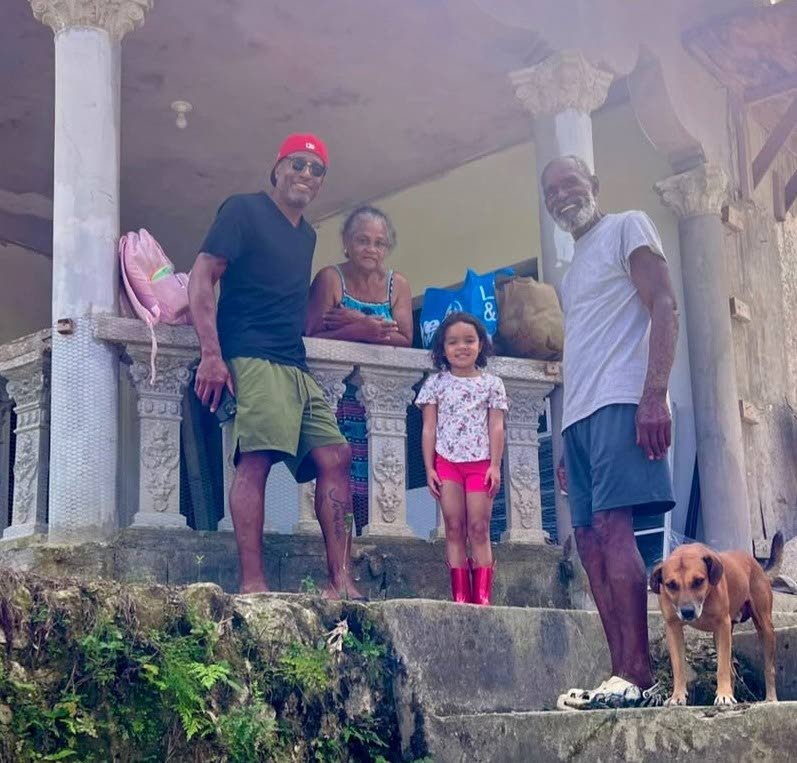
    For nearly four decades, Winston Watson Jr. has marked Father’s Day alongside his father, Winston Watson Sr. This year, that long-held tradition will be broken — not by death, but by a mysterious, month-long disappearance that has left his family grieving, frustrated, and still clinging to hope.

    The 78-year-old Watson Sr., who received a formal dementia diagnosis back in 2018, was last seen at his home in Jamaica’s Hanover Parish Lethe District around 5 p.m. on May 19, according to official reports from Ramble Police. Witnesses describe him as a slim, dark-complexioned man standing 6’2”, who was wearing a black muscle tee, black athletic shorts, and white Crocs when he vanished.

    As Watson Jr. told local outlet the Jamaica Observer, his father had developed a consistent daily routine even after his dementia diagnosis: tending to the small family farm just steps from his home. On the day he went missing, Watson Sr. left for the fields as usual, but never returned at his expected time. It was his stepmother, Vernica Watson, who first raised the alarm.

    “Normally, she would call and say she couldn’t find him because he would often wander, but it was the first time she had called me so late,” Watson Jr. recalled. “He’s always farmed, reared animals and grown crops, and he would just walk the property and be back home before nightfall. When she called at 7 o’clock, I knew something was wrong.”

    At the time of the call, Watson Jr. — a serving police officer — had just arrived at his post in St James. He immediately explained the urgent situation to his supervisor, left for Hanover, and began searching for his father right away. When that first search turned up nothing, he and Vernica filed an official missing person report with local law enforcement.

    In the weeks that followed, the search effort swelled far beyond the immediate family. Friends, neighbors, and local residents of Lethe District joined the ground search, and even relatives who lived overseas flew back to Jamaica to help with the effort. All of those collective efforts have so far come up empty.

    Watson Jr. shared that after the first day of fruitless searching, the family got a tip that an elderly man matching his father’s description had been spotted in Paradise, a small community between Savanna-la-Mar and Ferris Cross in neighboring Westmorland Parish. He and his brother rushed to the area, canvassed streets, put up missing person posters, and interviewed locals, but again found no trace of Watson Sr. The next day, they returned to Westmorland alongside uniformed police officers, expanding the search corridor from Beirut District all the way to Little London. Multiple witnesses reported seeing a man matching the description just a day prior, so the search team spent a full week combing the area between Little London and Negril with no breakthrough.

    The weeks of uncertainty have been an emotional roller coaster for the entire family, Watson Jr. said, with frustration growing with each passing day that yields no new information. To incentivize tips from the public, the family put forward a JMD $500,000 reward for any information that leads to locating Watson Sr., but no credible leads have been submitted to date.

    As Father’s Day approaches, the pain of the uncertainty has grown sharper. This will be the first time in 37 years that Watson Jr. cannot personally wish his father a happy Father’s Day.

    “I just wish I could reunite with my dad. My days start with that wish, and they end with that wish,” he said. “I honestly thought we would find him within the first week, given how many people were working on the search. But as Father’s Day gets closer, it just gets harder.”

    The weight of the moment hit him unexpectedly recently, when his three-year-old grandson asked him, “Dad, have you found grandpa?” The question drove home how deeply the disappearance has shifted the entire family’s dynamic. Even as he navigates his own grief and worry, Watson Jr. said he feels obligated to maintain a sense of normalcy for his own two sons.

    Last Friday, both of his boys had school events planned ahead of Father’s Day, requiring his attendance at two different campuses. When his younger son’s teacher asked if he would like to give a short Father’s Day address to the group, he had to turn her down.

    “I don’t think I have the mentality or the strength to go up in front of other fathers and say anything positive at this point,” he explained. “I’m just trying to be there for my boys, but the general excitement of it all just isn’t there. I put on a brave face for them, because they look forward to Father’s Day every year, and I don’t want to let them down. I’m just doing what I can to get through it.”

    What makes the disappearance all the more baffling for the family is that Watson Sr. is a well-known figure across western Jamaica. For years he worked in the tourism industry running his own tour operation, and before that he worked as a truck driver, meaning people across multiple parishes would recognize him on sight. He lives in a tiny, tight-knit community where every local knows he has dementia and is prone to wandering, making his vanishing all the more puzzling.

    “The community is so small where we live that if he leaves the house, somebody has to see him,” Watson Jr. said. “Even the night he went missing, people were still out gathered around the town square talking. When we put up posters in Westmorland, most people said they knew him — he was always in those areas when I was growing up. It’s a complete mystery how he can be missing for a month and nobody has seen him. How is that possible?”

    As the weeks stretch on without answers, Watson Jr. admitted he has begun to question the unthinkable, wondering if his father is still alive. Even so, he said he is holding out hope that his father is simply lost, wandering somewhere across Jamaica, and will be found soon.

    Anyone with any information about the whereabouts of Winston Watson Sr. is asked to contact Ramble Police at 876-822-5211, the national police emergency line at 119, or the nearest local police station.

  • Dads celebrated at JCF Cadet Academy pre-Father’s Day event

    Dads celebrated at JCF Cadet Academy pre-Father’s Day event

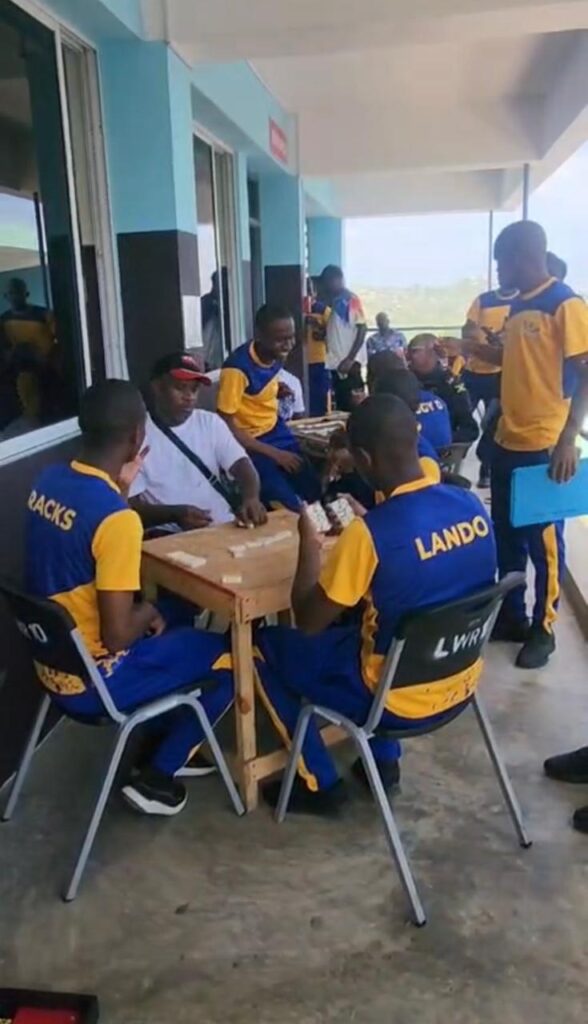
    KINGSTON, Jamaica — On a recent afternoon at the Jamaica Constabulary Force (JCF) Cadet Academy, a single sharp, purposeful salute carried far more weight than its symbolic form suggests. The gesture became the centerpiece of a heartfelt pre-Father’s Day gathering, crafted to honor the fathers, uncles, mentors, and all positive male figures who have stood by the academy’s young cadets through every step of their development. The event created a rare, vulnerable space where rising young men could publicly acknowledge the lasting impact these guiding figures have had on their lives.\n\nOrganizers set a clear mandate for the occasion: to honor, appreciate, and celebrate the men who embody the kind of responsible, values-driven leaders the cadets hope to become. Unlike many formal ceremonies, the celebration centered on open, genuine emotion, as father figures watched their cadets share firsthand how their consistent support has shaped their goals and characters.\n\nIn a striking display of community care, more than 70 male guests turned out for the event, and every single cadet at the academy was represented. For cadets who could not bring their biological father, a trusted uncle, older brother, cousin, teacher, or other positive mentor stepped in to fill the role. No young man was left without a guiding presence by his side. The gathered men formed a supportive circle around the cadets, offering quiet reassurance and demonstrating that the next generation has a network of reliable leaders to turn to as they grow into responsible adulthood. That collective, caring presence spoke louder than any prepared speech.\n\nCorporal Rome Miller, an officer assigned to the St Catherine North Policing Division, knows the impact of this support firsthand — he has two sons, Dante Miller and Tamari McKay, currently enrolled at the academy. Sharing his vision for the cadets, Miller said, “My hope is that they become successful, responsible, and happy men who make positive contributions to society. I want them to pursue their dreams while remaining grounded in their values.”\n\nFor Miller’s sons, having their father attend the celebration quickly became one of the most meaningful moments of their time at the academy. Dante noted that the casual, fun activities woven into the day made the experience even more special, saying, “Playing games while celebrating our father made the moment even more enjoyable.”\n\nOne of the most anticipated highlights of the day was a friendly father-and-son domino tournament. Teams of cadets and their male guests competed in a lively, good-spirited contest for the top prize. Beyond the excitement of competition, the event offered a natural opportunity to deepen connections and strengthen the bond between each mentor and cadet pair.\n\nIn a tangible expression of gratitude, every cadet presented their guest of honor with a custom gift basket. The gesture recognized the small, consistent acts of support that often go uncelebrated: attending Parent-Teacher Association meetings, showing up to offer advice during hard times, and providing steady support that helps young people thrive.\n\nDetective Inspector Rohan Knight, the event’s guest speaker, used his address to encourage attending fathers and mentors to keep up their critical work. “Fathers, I’m encouraging you to continue being prime examples to your children and even to other children who sometimes need mentors,” he told the crowd. He also stressed that open, consistent communication between male role models and young people is key, and reminded the gathered men that it is not a sign of weakness to seek guidance when facing difficult challenges with the young people in their care.\n\nDeputy Superintendent Tanecia Johnson, Principal of the JCF Cadet Academy, expressed overwhelming pride in how the day unfolded, noting that the event far exceeded her expectations. “The reason for having this event is because we wanted to create a safe space where our young men could truly recognise and celebrate the men who have consistently shown up for them without question and without fail,” she explained.\n\nJohnson added that the gathering served a broader public purpose as well: highlighting the critical value of positive male role models in modern society, and reinforcing just how much influence caring fathers and father figures have in shaping the next generation of responsible men.

  • Romaine Beckford wins third high jump title

    Romaine Beckford wins third high jump title

    On the concluding day of the Jamaica Athletics Administrative Association (JAAA) National Senior Championships held at Kingston’s iconic National Stadium, track and field star Romaine Beckford delivered a standout performance to secure his third consecutive national men’s high jump crown. Entering the competition as one of the world’s top-ranked high jumpers—currently tied for fourth globally with a personal best clearance of 2.30 meters—Beckford navigated early pressure to claim the top spot with a winning jump of 2.25 meters. After successfully clearing the winning height, Beckford pushed for a new personal best, first testing 2.28 meters where he fell short on two attempts, before raising the bar to 2.31 meters in a bold final attempt that he ultimately could not convert. Finishing behind Beckford in the podium standings were Lushane Wilson, who took silver with a 2.20-meter clearance, and two-time world indoor medalist Raymond Richards, who rounded out the top three with a jump of 2.15 meters. Beyond the high jump, the final day of the national championships delivered several other exciting title finishes across field events. In the men’s shot put competition, Florida State University athlete Despiro Wray claimed his first ever Jamaican national senior title, throwing a winning mark of 16.98 meters to edge out the competition. Silver medalist Moses Parkinson posted a solid throw of 16.62 meters, while Tio-Josh Mowatt took third place with a 16.35-meter effort. The men’s javelin throw title went to Elvis Graham, who came just one centimeter short of the 70-meter benchmark with a winning throw of 69.99 meters. Graham held off challenger Zaavan Richards, who recorded a 67.54-meter throw for silver, while Santino Anglin claimed bronze with a 62.10-meter effort. On the women’s side of the javelin competition, Laquay Harrison took home the national title with a winning throw of 39.45 meters. She outperformed silver medalist Angel Robinson of Edwin Allen High School, who threw 38.19 meters, and bronze medalist Princess Dunn, who recorded a 37.43-meter throw to round out the top three.

  • Betting on American streamer IShowSpeed

    Betting on American streamer IShowSpeed

    When global streaming star IShowSpeed unveiled his 15-stop Caribbean tour in late April, Jamaica’s official tourism body jumped at an opportunity far beyond hosting a single entertainment stop: a chance to leverage the creator’s massive global audience and diehard fanbase to put the island nation front and center for young travelers worldwide.

    Jamaica Vacations Limited (JamVac), a government agency under Jamaica’s Ministry of Tourism, built its strategy around a key industry insight: digital creators now hold far more sway over travel decisions and destination awareness among younger demographics than many traditional marketing channels. For JamVac Executive Director Joy Roberts, the partnership was a natural fit beyond just reach — IShowSpeed’s unfiltered, authentic public persona aligns perfectly with the vibrant, unpretentious culture of Jamaica, making him the ideal messenger to showcase the island to the world.

    “As soon as we confirmed Jamaica would be a featured stop on his tour, we knew we had to lean into this opportunity to authentically highlight our island’s culture, people, and one-of-a-kind experiences to a massive global audience,” Roberts told local outlet Jamaica Observer.

    Unlike JamVac’s core mandate of managing airlift capacity and driving travel demand through partnerships with traditional tour operators, this initiative required a rapid cross-government and cross-sector collaboration. Teaming up with the Ministry of Culture and the Jamaica Tourist Board (JTB), JamVac coordinated logistics on a tight timeline to deliver a seamless visit for the 55-million-subscribe YouTube creator while maximizing Jamaica’s global exposure. The accelerated operation pulled together everything from local transportation to authentic Jamaican culinary experiences and culturally rooted activities in mere weeks.

    Roberts emphasized that stakeholders from every corner of Jamaica stepped up to make the visit a success, from public sector agencies to private business owners, entertainers, chefs, local tour operators, and transportation providers, all eager to showcase their country in a positive light. She specifically highlighted Miss T’s Kitchen, which provided local meals throughout IShowSpeed’s stay, and Jamark Transportation, which handled the creator’s ground logistics.

    Prominent Jamaican entertainment entrepreneur Romeich Major was one of the first private sector leaders to join the effort, a decision he calls an obvious no-brainer. “Any opportunity to support entertainment and national uplift, regardless of who it’s for, I will always show up,” Major said. He contributed sponsorship and organized the tour’s dancehall-focused finale event; while clips of the party were not part of IShowSpeed’s official livestream, they spread rapidly across social media and gained millions of organic views. “There was no way we’d let one of the world’s biggest creators come to Jamaica and not let him experience a real Jamaican dancehall event,” Major explained.

    The payoff for the coordinated effort was substantial: the Jamaican leg of the tour generated millions of dollars in earned media value, putting the island in front of tens of millions of global viewers. IShowSpeed’s livestream from Kingston racked up more than seven million total views, with a peak of nearly 195,000 concurrent live viewers tuning in to see his explorations.

    Major summed up the opportunity simply: “He has a huge platform that reaches all over the world, so now millions more people get to see what Jamaica has to offer. It was an incredible initiative — the only downside is he didn’t have more time to see everything; he needs two or three full days to really experience the island,” he added with a laugh.

    Roberts echoed that sentiment, noting that the unscripted, spontaneous nature of IShowSpeed’s content gave audiences an unfiltered look at Jamaica’s culture that traditional advertising cannot match. That visibility was particularly critical this year, as parts of Jamaica’s tourism sector continue to recover from damage caused by Hurricane Melissa. “When you’re still rebuilding after a major storm, staying top of mind for global travelers is non-negotiable. Initiatives like this keep Jamaica on the list for people planning their next trip,” Roberts said.

    The partnership also highlights a rapidly growing new frontier for tourism marketing: influencer-driven destination promotion. Roberts noted that while traditional marketing campaigns still hold value, influencer content — especially live streaming — allows audiences to experience a destination in a far more immersive and authentic way than pre-produced ads. JamVac has not yet released final cost figures for the initiative, as it is still compiling total expenses.

    The JTB, which facilitated IShowSpeed’s VIP welcome at the airport but took a less central role in coordination, also praised the project’s impact. Director of Tourism Donovan White confirmed that the only costs the JTB incurred were for the welcome event, which included stilt walkers, traditional drummers, and Jonkonnu dancers. “Since IShowSpeed arrived in Jamaica, his content has already earned millions of global views, and clips keep circulating across social media,” White said. “That kind of authentic exposure to young audiences is extremely valuable, and you can’t put a price on that.”

    White added that it is still too early to measure the full long-term impact on visitor numbers, but the potential benefits are enormous. “His content showcased our culture, music, food, energy, and people in real time — that kind of organic visibility is impossible to replicate through traditional advertising,” he explained. White also noted that Jamaica’s ongoing popularity with top influencers is no accident: the island’s natural scenery, vibrant culture, and global soft power resonate deeply with young digital audiences, and content from visits like this remains searchable and shareable online for months or even years, extending its promotional value long after the livestream ends.

    Coordination of local artists and production for the tour stop was handled by IShowSpeed’s personal team in partnership with local private sector production partners. Major summed up the effort: “More than a hundred people from across the island came together to make this work — from security to drivers to every person behind the scenes. It was a total team effort.”

  • UWI mourns death of Emeritus Professor John Agard

    UWI mourns death of Emeritus Professor John Agard

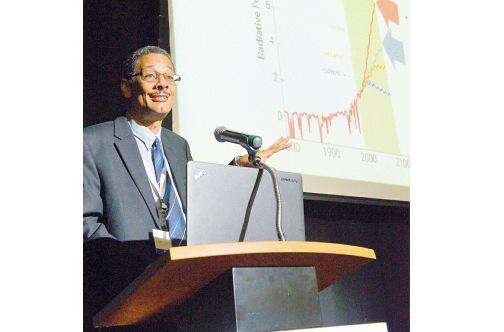
    PORT OF SPAIN, TRINIDAD – The global environmental science community is mourning the loss of one of its most influential voices, Emeritus Professor John Agard, who passed away on Friday at the age of 71. The University of the West Indies (UWI), where Agard built a decades-long legendary career, has joined international colleagues and admirers in honoring the pioneering scientist’s extraordinary contributions to climate action, ecological conservation, and policy reform.

    Described as a towering figure in tropical environmental science by UWI St Augustine Campus Pro Vice-Chancellor and Principal Professor Rose-Marie Belle Antoine, Agard was far more than an academic. He was a brilliant innovator, a tireless community advocate, and a dedicated mentor who poured his energy into lifting up the next generation of environmental leaders. “A giant in the intellectual world, especially in relation to the environment and climate change sciences, he was committed to sharing his knowledge and worked just as tirelessly as a mentor,” Antoine said of the late professor.

    As a leading scholar of Tropical Island Ecology, Agard’s work concentrated on two of the most pressing global challenges of our time: sustainable development and climate change, earning him widespread international acclaim. His impact extended far beyond the walls of academia, as he played a pivotal role in shaping foundational environmental legislation for the twin-island nation of Trinidad and Tobago. Among his key legislative achievements are the 2001 Certificate of Environmental Clearance Rules, the 2001 Noise Pollution Rules, and the 2001 Water Pollution Rules. He also helped drive the formal designation of critical protected areas across the country, including Matura Natural Park as an Environmentally Sensitive Area in 2004, Nariva Swamp as a Managed Resource Protected Area in 2006, and Aripo Savannahs as a Strict Scientific Reserve in 2007.

    Agard’s influence reached a global scale through his contributions to landmark international environmental assessments. He served as a lead author for the Small Islands Chapter of the Intergovernmental Panel on Climate Change (IPCC) Fourth Assessment Report, published by Cambridge University Press. That report contributed to the IPCC sharing the 2007 Nobel Peace Prize with former U.S. Vice President Al Gore for advancing global understanding of anthropogenic climate change. He also took on lead author roles for two other award-winning global assessments: the Small Island Systems and Scenarios chapters for the 2005 Millennium Ecosystem Assessment (MA), which won the Zayed Prize for the Environment, and the Scenarios Chapter of the 2007 United Nations Environment Programme Global Environmental Outlook (GEO-4), where he served as coordinating lead author.

    Closer to home, Agard co-led the groundbreaking Caribbean Sea Assessment (CARSEA) published in 2007 alongside the Cropper Foundation, a landmark study that shed light on ecological threats to the Caribbean marine environment. During his tenure as Chairman of Trinidad and Tobago’s Environmental Management Authority, he drove the development of innovative policy frameworks and governance systems, including the country’s first National Environmental Policy, laying the groundwork for decades of conservation work in the nation.

    Agard, who was conferred the title of Emeritus Professor by UWI in 2023, was famously dedicated to his conservation mission. In a past interview, he described himself as someone who “doesn’t sleep in pursuit of his crusade,” a testament to his relentless commitment to protecting global ecosystems. In his own words, he summed up his life’s work simply: “My passion is to make the world a better place. To make my country a better place. To make my region a better place.”