标签: Jamaica

牙买加

  • ‘We are in jeopardy’

    ‘We are in jeopardy’

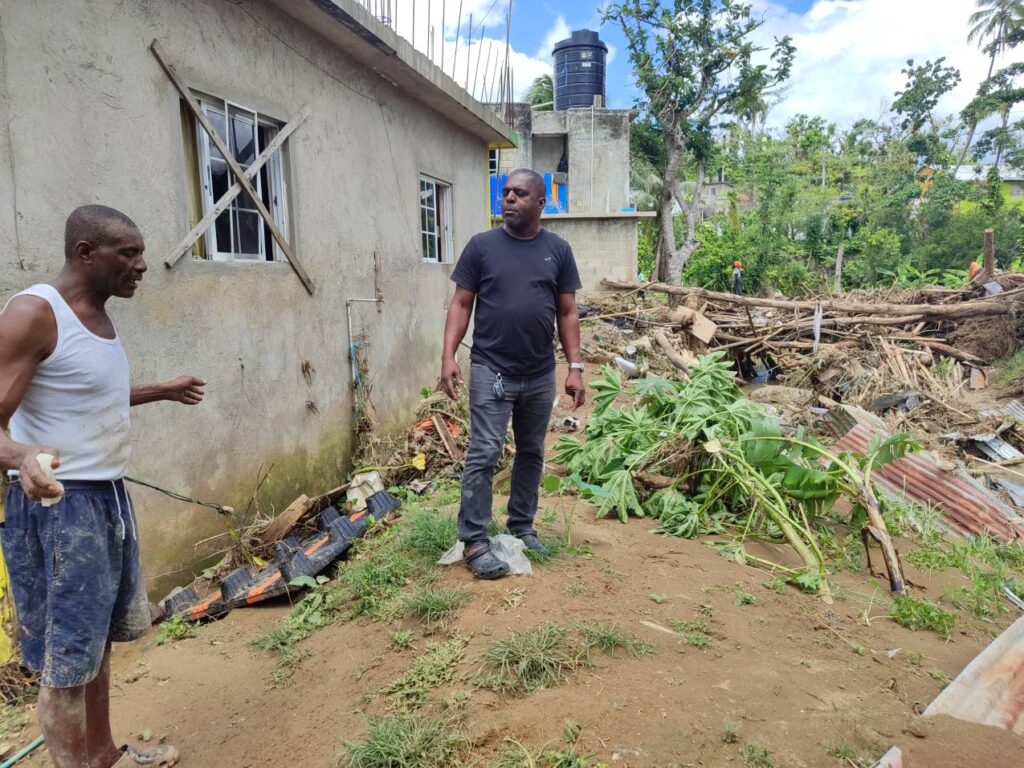
    On a grey, rain-threatened Easter Monday, residents of Amity Hall’s Gazer Road neighborhood in St James, Jamaica, surveyed the muddy wreckage of their properties and braced for more disaster. Just 24 hours after heavy downpours swept through parts of the parish, the community remained on edge: with the Montego River still choked with unremoved debris, another storm could bring a repeat of Sunday’s destructive flooding, leaving families displaced for a second consecutive day.

    Sunday’s flood, which sent river water pouring over the banks and into residential properties, stirred up harrowing memories from last October’s Category 5 Hurricane Melissa. When the waters receded, they left behind thick layers of mud, tangled debris, and new losses that have set back slow, already fragile recovery efforts for local families.

    Janet Dawkins, one of the hardest-hit residents, spoke with the Jamaica Observer amid the clean-up, her voice frazzled with worry. ‘People’s lives are in jeopardy, we are in jeopardy. The water flows right around our homes; we need help,’ she said, repeating her fear as dark storm clouds gathered overhead.

    Dawkins explained that the small bridge connecting Gazer Road to the rest of Amity Hall suffered major damage in Sunday’s flood. If residents had not worked through the day to clear broken debris, the crossing would have been completely cut off, leaving the community isolated. ‘We cut up the debris with saws so we could get across. We packed it ourselves yesterday just to be able to leave the area,’ she added.

    Local residents have pinned the blame for the repeat flooding on the buildup of trees and debris left uncleared in the Montego River since Hurricane Melissa struck last fall. That debris has piled up against the bridge, acting as a makeshift dam that forces rising flood waters to divert into the surrounding neighborhood instead of flowing downstream. For Dawkins, the damage went far beyond the flood that soaked her home: she lost all the building materials she had stockpiled to rebuild her small on-site shop, which was first destroyed in the hurricane.

    ‘I had stone and sand, everything washed away. Half my building blocks got carried off by the river; the impact is devastating,’ she said dejectedly. ‘I put up a new stall just three weeks after the storm, and yesterday the river came down and knocked it right down.’ Dawkins has joined her neighbors in an urgent appeal for authorities to clear the river, clearing the debris that puts the community at constant risk of repeated flooding. ‘We want help, we need help. I need help to rebuild my shop, and we need help to get the river flowing again. It can’t stay like this,’ she said.

    For Mark Samuels, another Gazer Road resident, Sunday’s flood put his partner and young granddaughter in danger. Samuels was not home when waters rose to nearly two feet inside his house, and neighbors had to step in to evacuate his family before he returned after 8 p.m. When he arrived, he found his entire home — including the small shop he runs from the property — coated in mud and filled with debris. Samuels and his family spent most of Easter Monday shoveling muck out of their property, and the constant threat of future flooding has left him under crippling mental stress. The blocked section of the bridge sits just meters from his back door. ‘I know that when it rains, I can’t sleep. I’m always watching, always ready to run. I worry all the time about my family, and we are human beings too,’ he said.

    Tameika Brown, another resident who spent all of Sunday and Monday cleaning up her flood-damaged home, said the disaster has reawakened the trauma of Hurricane Melissa. She was at church when Sunday’s rains began, and returned home late to find the same destruction she had worked for months to recover from. ‘It’s not a good feeling. It brings back all the trauma from Melissa, and it puts you right back in that place of being traumatized all over again. It’s not good, but this is our life now,’ she said resignedly.

    Michael Allen, councillor for the Somerton Division, told the Observer he has been pressing authorities to clear the river channel since Hurricane Melissa passed last year. ‘Right after the hurricane, the whole river was blocked and families were already flooded out,’ he explained. Allen confirmed that clearing the Montego River falls under the responsibility of Jamaica’s National Works Agency (NWA), and he has repeatedly reached out to the agency to request cleanup crews. He also contacted Edmund Bartlett, Member of Parliament for St James East Central, who dispatched a tractor to the site — but heavy machinery was not suited to the work and could not clear the blocked channel.

    Allen followed up three weeks ago to alert Bartlett that the tractor had failed, warning that any future rain would trigger flooding if the river was not cleared. Now, he says, his warning has come true. Beyond the damage to homes, Sunday’s flood also destroyed a section of Gazer Road that Allen had recently lobbied to repair at a cost of J$3.5 million. Work on the road was just completed last week. ‘Last week they finished the front section,’ he said wistfully.

    Allen confirmed that 10 homes were directly impacted by Sunday’s flooding, and he has joined residents in calling for urgent cleanup of the river bed before more severe damage occurs. ‘If they had come when I called first, this would never have happened. The flood waters pushed the accumulated debris down to the bridge, and that’s when it flooded the whole neighborhood. Now residents are left to pick up the pieces,’ he said.

  • Australia PM welcomes Iran ceasefire, says Trump threats not ‘appropriate’

    Australia PM welcomes Iran ceasefire, says Trump threats not ‘appropriate’

    In a development that reverberated across global diplomatic circles this week, top Australian officials have offered a mixed response to the sudden US-Iran two-week ceasefire, welcoming the de-escalation of conflict while sharply criticizing inflammatory rhetoric from former US President Donald Trump that threatened the complete annihilation of Iranian civilian infrastructure.

    The ceasefire agreement came into effect barely 60 minutes before Trump’s self-imposed deadline for Iran to reach a negotiated deal was set to expire, ending a month of open hostilities between the US-Israeli bloc and Iranian forces that had upended global energy markets. Ahead of the deadline, Trump issued a chilling warning that if Iran did not comply with his demands, “a whole civilization will die tonight, never to be brought back again” — a comment that has drawn widespread international rebuke for its extreme tone.

    Speaking to Sky News Australia on Wednesday, Australian Prime Minister Anthony Albanese broke ranks with the previous pro-strike position of his government to push back against the US leader’s language. “I don’t think it’s appropriate to use language such as that from the president of the United States, and I think it will cause some concern,” Albanese said, adding that threats targeting entire civilian populations have no place in modern diplomatic discourse.

    Despite his criticism of Trump’s comments, the prime minister welcomed the ceasefire as a step in the right direction, aligning with his government’s weeks-long calls to dial back regional tensions. “What we have called for is a de-escalation, and that is what has occurred, and that’s a good thing,” Albanese noted. “This is positive news. We’ve been calling for a de-escalation for some time. We want to see a resolution of the conflict.”

    For its part, Iran has framed the ceasefire as a strategic victory. In the wake of more than a month of coordinated US and Israeli attacks, Tehran announced it would temporarily reopen the Strait of Hormuz — the world’s most critical chokepoint for global oil and gas shipments, which Iran had effectively closed after US-Israeli strikes on February 28 reignited full-scale regional conflict. The closure sent global energy prices soaring to multi-year highs, inflicting economic pain on energy-importing nations around the world, Australia included.

    Australia’s Foreign Minister Penny Wong echoed Albanese’s condemnation of Trump’s remarks during an interview with the national public broadcaster ABC, doubling down on the government’s call for the ceasefire to be extended across the entire Middle East region. “I don’t think anyone should be threatening the destruction of a civilisation,” Wong said. The foreign minister added that Australia, which is heavily reliant on imported fuel and currently holds only around 39 days of national petrol supply, has already felt the severe economic fallout of the conflict. “The damage that is happening to the global economy, to global energy markets, means that the world does need this ceasefire to hold,” she emphasized.

    Wong also pushed back against Israeli claims that the ceasefire does not extend to Lebanon, where weeks of Israeli bombardment have killed more than 1,500 people and displaced over a million residents according to Lebanese official statistics. “The world expects the ceasefire to apply to the region,” Wong stated.

    The shift in the Australian government’s public position comes after it initially voiced support for the US-Israeli strikes on Iran. Last week, Albanese already signaled a change in tone, saying the original military objectives of the campaign had been achieved and it remained unclear what further gains could be made through continued conflict. To offset the domestic impact of skyrocketing fuel prices driven by the regional crisis, the Canberra government has already moved to cut petrol taxes, easing cost-of-living pressures for Australian households.

  • Express Fitness named official fitness partner for Xodus Carnival’s “OlympiX” 2026

    Express Fitness named official fitness partner for Xodus Carnival’s “OlympiX” 2026

    KINGSTON, Jamaica — Jamaica’s leading fitness network Express Fitness has locked in an official partnership with Xodus Carnival to support the 2026 edition of the beloved cultural celebration, which will carry the theme “OlympiX”.

    In an official public statement, Express Fitness outlined that as the event’s exclusive official gym partner, the brand has already rolled out a full suite of support for participating masqueraders gearing up for Carnival’s iconic road parade. These resources include custom-designed specialized fitness classes, carefully curated wellness programming, and a range of interactive community engagement activities.

    All offerings are tailored to help Carnival revellers build the strength, boost self-confidence, and develop the physical stamina required to keep up with the high-energy demands of Jamaica’s annual soca season.

    Kandice Moncrieffe, Group Marketing Manager at Norbrook Equity Partners — Express Fitness’s parent company — framed the collaboration as a natural alignment of shared values. “Carnival stands as one of Jamaica’s most vibrant, dynamic, and physically taxing cultural events,” Moncrieffe explained. “With this year’s ‘OlympiX’ theme, we could not be more excited to help revellers unlock their inner strength, boost their endurance, and step onto the parade route feeling their most confident selves.”

    Through this new partnership, participants gain access to a more intentional, holistic approach to Carnival preparation that integrates physical training, community connection, and high-energy fun. From thematically aligned workout sessions to exclusive pop-up social events and ongoing “road to Carnival” fitness challenges, Express Fitness has become a core part of transforming how masqueraders train, connect with fellow participants, and build excitement in the weeks leading up to the big event.

    Xodus Carnival has also expressed clear enthusiasm for the collaboration, emphasizing the strong synergy between the two Jamaican brands and the elevated experience the partnership will deliver to attendees. Kamal Bankay, Executive Chairman of Dream Entertainment Ltd, Xodus Carnival’s parent company, noted that the partnership advances the brand’s longstanding mission. “Xodus has always prioritized delivering a premium, immersive Carnival experience for all participants, and this collaboration with Express Fitness pushes that commitment even further,” Bankay shared. “Our ‘OlympiX’ theme encourages masqueraders to embrace strength, discipline, and peak performance — core values that align perfectly with Express Fitness’s mission. Together, we are reimagining what it truly means to be fully road ready for Carnival.”

    The two organizations are jointly calling on Jamaicans across the country to approach their 2026 Carnival preparation with intentional purpose, and step onto the parade route equipped with the strength, confidence, and unrivaled energy to make this year’s celebration unforgettable.

  • Rebuilding learning

    Rebuilding learning

    In late October 2025, Category 5 Hurricane Melissa made landfall across Jamaica, leaving widespread destruction in its wake. Roofs were torn from buildings, road networks were submerged and blocked by floodwaters, and hundreds of families were forced to flee their homes. For communities across the island, the storm brought unparalleled disruption to daily life — and nowhere was this disruption felt more acutely than in the education sector, particularly in low-income, vulnerable regions where families were already grappling with persistent economic hardship.

    When the storm passed, education leaders across the island faced an urgent, human-centered question: how do we locate every displaced student and safely bring them back to structured learning? For two Jamaican primary and infant schools — Barrett Town in St James parish and Bromley in St Mary parish — the answer came from an unexpected source: a brand-new digital tool that had only been rolled out weeks before the hurricane made landfall.

    Weeks before Hurricane Melissa struck, both institutions had gone live with the Education Management Information System (EMIS), a digital platform developed through a joint three-year initiative between Jamaica’s Ministry of Education and the United Nations. Titled “Empowering Jamaica’s future: SDG joint programme on digital transformation for education”, the initiative was designed to modernize Jamaica’s entire public education system, with the core goal of improving learning outcomes for more than 450,000 students across the country. Before the storm, the project’s main focus was institutionalizing cross-sector digitalization: upgrading data governance frameworks, digitizing routine administrative tasks, and integrating nutrition program tracking through the new EMIS platform. For school staff, the tool was initially viewed as just a modern administrative upgrade to replace outdated paper record-keeping. No one anticipated how critical it would become just weeks after launch.

    When the hurricane hit, most physical paper records were destroyed by floodwater and wind damage, and traditional communication networks were severely disrupted. The digital student data stored on EMIS quickly became the backbone of post-storm recovery efforts. At Barrett Town Primary and Infant School, Principal Anthony Murray described the first days of reopening as a period of intense, community-led coordination rooted in compassion. The entire school community mobilized to deliver critical support to displaced families, providing everything from psychosocial counseling, new uniforms, textbooks and school supplies, to clothing, bedding, and daily hot meals, all designed to ease the burden on storm-impacted families and create a safe, welcoming space for students to return to learning.

    But every step of this coordinated response was guided by the data in EMIS. “Through EMIS we tracked attendance in real time and followed up on absences,” Murray explained. “This made it possible to reach families directly.” Daily attendance monitoring through the platform revealed that 90% of Barrett Town’s students had returned to school within the first week of reopening, and the remaining unaccounted-for students were immediately flagged for targeted follow-up by the school guidance department. Administrators quickly learned that many of the missing students had transferred to new schools after displacement, while others needed tailored support to be able to return. The digital system ensured that no child was overlooked amid the chaos of post-storm recovery.

    Murray now refers to EMIS as the school’s “early-warning and action system”, which pulls real-time data on student enrolment, attendance patterns, and unmet resource needs, allowing leaders to allocate support before small problems escalate into larger crises. The platform helps administrators quickly identify which students need access to emergency transportation, temporary shelter, or post-storm health follow-up. “That turns a crisis scramble into a coordinated response,” Murray said.

    Over at Bromley Primary and Infant School, Principal Calef Williams reported a similar experience, despite unique challenges the school faced during recovery. Bromley adopted EMIS in September 2025, starting with core attendance tracking functionality. When Hurricane Melissa hit, internet connectivity became severely intermittent across the region, but teachers collaborated continuously to keep the platform updated. “During the hurricane and early recovery, it was a bit tedious with intermittent connectivity,” Williams said. “However, we collaborated and used it to ensure we were consistent.” By November 17, just over three weeks after the storm, Bromley had fully resumed normal in-person operations, a milestone Williams credits directly to the stability and structure EMIS provided during the transition.

    Across both schools, EMIS proved to be far more than a digital replacement for paper attendance registers. It became a core tool for rebuilding learning communities after a devastating disaster. When communication networks were unreliable and families were scattered across the island in emergency shelters, centralized, accessible digital student records allowed recovery efforts to proceed faster and more equitably than would have been possible with destroyed paper records. Teachers were able to spend far less time reconstructing lost student files and far more time supporting students’ academic and emotional recovery after the storm. Temporary classroom tents donated by UNICEF provided the physical space for learning to resume, while EMIS provided the data backbone to reconnect students with their schools.

    The experience of these two schools reflects the broader mission of the SDG Joint Programme on Digital Transformation for Education, which works to integrate data tools like EMIS to strengthen education systems across Jamaica. While the initiative was originally designed to improve long-term planning and data-driven decision making in education, it has unexpectedly demonstrated enormous value in crisis response, enabling schools to act faster and more equitably when large-scale disruption hits.

    As Jamaica continues its long-term recovery from Hurricane Melissa, school leaders at both institutions are already looking ahead, planning to fully integrate EMIS into all daily school operations. Moving forward, they plan to use the platform’s data to monitor long-term attendance trends, identify unaddressed learning gaps, and build more robust preparedness plans for future climate shocks. Reflecting on the crisis, Murray noted that the hurricane laid bare how vulnerable coastal communities are to extreme weather events. But it also showed what can be achieved with the right digital tools. “The hurricane showed us how fragile things can be,” he said. “But it also showed us that with the right tools we can recover faster and build back stronger for our children.”

  • Gunmen kill 60 in northwest Nigeria—humanitarian groups

    Gunmen kill 60 in northwest Nigeria—humanitarian groups

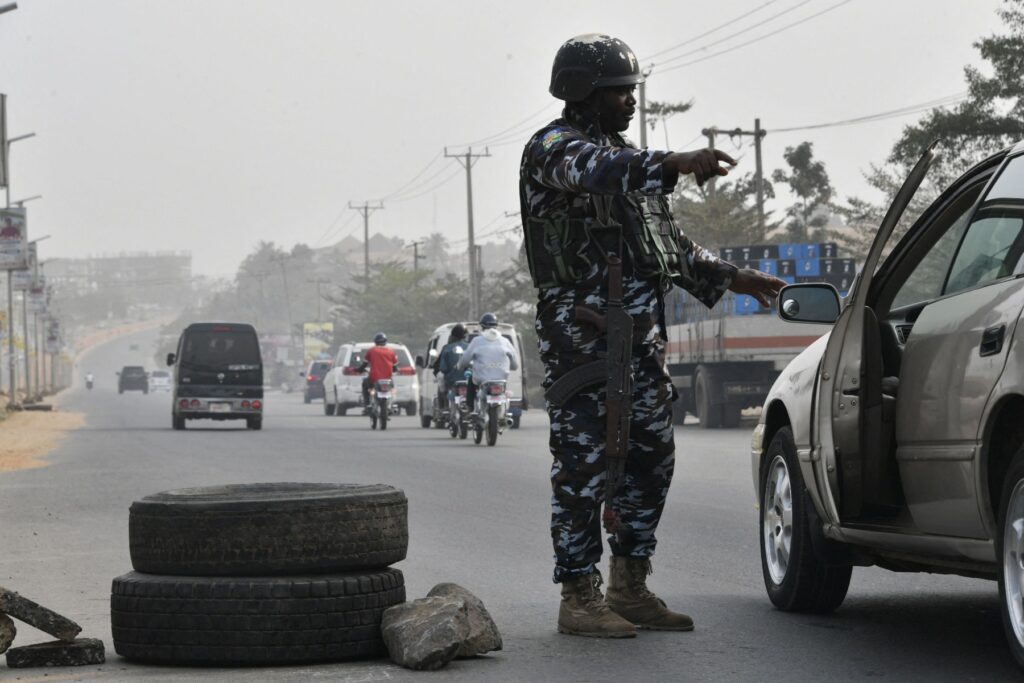
    In a devastating wave of violence that has underscored Nigeria’s deepening insecurity crisis in its predominantly Muslim northern region, armed gunmen have killed no fewer than 60 civilians across a series of remote rural villages in two neighboring northwestern states this week, local religious leaders and humanitarian organizations confirmed Wednesday in statements to Agence France-Presse.

    The coordinated assaults targeted at least 10 settlements spread across Kebbi and Niger states, according to regional clergymen and a detailed humanitarian situation report reviewed by AFP. The document, which draws on testimony from three on-the-ground humanitarian sources including a local medical facility and a community advocacy group, records 20 fatalities from a Tuesday strike on Erena, a community located in Niger state’s Shiroro local government area.

    A separate classified military security assessment identifies the perpetrators of the Erena attack as well-armed bandits who launched a direct incursion on a local military outpost. Regional police have verified the assault, adding that three additional members of the local security ecosystem — two volunteer vigilante fighters and a driver assigned to the joint security task force — were also killed in the clash.

    Shiroro district has long been a hotspot for persistent violence, terrorized repeatedly by both local criminal gangs known locally as bandits and transnational jihadist insurgent networks. In recent years, security analysts have documented a growing trend of collaboration between these two groups, whose joint raiding campaigns have displaced tens of thousands of residents across northwest Nigeria.

    In neighboring Kebbi state, one anonymous clergy member — who requested anonymity out of concern for his personal safety — confirmed an initial death toll of 24, but added that updated witness reports put the actual number of fatalities above 40. A second senior Christian leader in the region corroborated this estimate, placing the Kebbi death toll at approximately 40.

    Speaking to AFP, the first clergy member described a campaign of indiscriminate violence that spared no group: “They killed everybody in sight, they killed Christians, Muslims and traditional worshippers. They killed indiscriminately.” The attackers burned down religious sites of both Christian and Muslim communities, slaughtered livestock including sheep and cattle, and destroyed stored food reserves, he added. The incursion unfolded over three straight days of rampage, with gunmen systematically combing the surrounding brush where residents typically flee to hide during attacks.

    “They comb the surrounding bushes where villagers would ordinarily hide during attacks and hunt around for those who were hiding in the bush and shoot them down,” he said. “They were not leaving anything, they were not taking anything. They were there to kill and destroy.”

    More than 500 displaced residents have fled the affected villages to take shelter in churches and public schools in Kebbi’s Yauri town, and the security situation remains so precarious that families cannot return to their homes to recover and bury their dead, the clergy member added.

    No insurgent group has yet claimed responsibility for the coordinated attacks, but Kebbi state police have pinned the blame on a local jihadist cell known as the Mahmuda group, which operates across the northwest region. The cell is affiliated with Mahmud al-Nigeri, a senior commander in the Ansaru jihadist network. Ansaru split from the notorious Boko Haram insurgent group more than a decade ago and has since aligned itself with Al-Qaeda in the Islamic Maghreb (AQMI), a regional branch of al-Qaeda.

    Kebbi state, which shares international borders with Benin and Niger, has seen a sharp uptick in jihadist attacks since 2025, according to regional security data. Armed Conflict Location & Event Data Project (ACLED), a leading independent conflict monitoring organization, has recorded a major recent surge in violence across northwest Nigeria carried out by insurgent groups aligned with both al-Qaeda and the Islamic State. Like other northern Nigerian states, Kebbi faces a dual security threat: both transnational jihadist insurgency and banditry, criminal gangs that raid villages, seize residents and hold them for ransom.

  • DR Congo players set to receive new cars following FIFA qualification

    DR Congo players set to receive new cars following FIFA qualification

    KINGSTON, Jamaica — A milestone achievement for the Democratic Republic of the Congo’s national football team has triggered a wave of celebration and substantial rewards for the squad that secured its spot at the upcoming FIFA World Cup. In an official public statement, Congolese President Félix Tshisekedi confirmed that every player who contributed to the national side’s successful qualification campaign will walk away with a trio of valuable incentives to honor their historic accomplishment. Beyond the prestige of representing their nation on the world’s biggest football stage, each team member will receive a brand-new automobile, allocated plots of land, and monetary cash bonuses. The unprecedented reward package marks the government’s recognition of the team’s hard work, unity, and achievement that has brought national pride to the Democratic Republic of the Congo, with fans across the country already gearing up to support their side in the global tournament. The announcement comes as nations across the world are finalizing their preparations for the most-watched sporting event on the planet, with DR Congo’s qualification marking a new chapter for the country’s football program.

  • Spur Tree tragedy

    Spur Tree tragedy

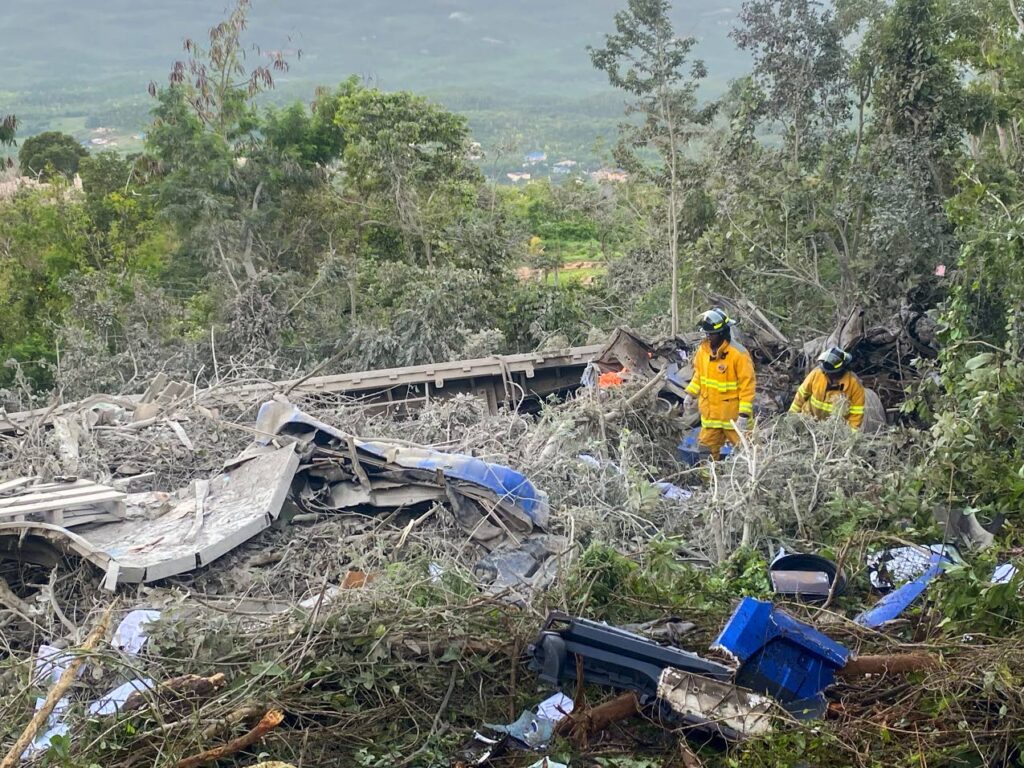
    Early Tuesday morning, a devastating rollover crash on Spur Tree Hill main road, a notoriously dangerous stretch of highway west of Mandeville, Jamaica, has left two people dead, shining a renewed spotlight on longstanding safety concerns that have plagued the steep route for decades.

    Local law enforcement has released the identities of the two victims: 25-year-old Jordan Sterling, a truck driver from Kingston 20’s Patrick Drive, who was operating the cement-loaded tractor trailer at the time of the incident, and 21-year-old Yanice McLeggon, a welder residing in St Catherine’s Central Village, who was riding as a passenger in the vehicle.

    According to initial police accounts, Sterling lost control of the heavily loaded vehicle as it traversed the hill, causing the truck to overturn multiple times. Both occupants were thrown from the cab during the sequence of crashes, and the trailer ultimately came to a rest just meters from residential homes in the Eglinton community. The force of the impact was powerful enough to jolt nearby residents awake at approximately 5:00 a.m.

    One local resident, who spoke to reporters on condition of anonymity, described the chaos and terror of the immediate aftermath. “I was sleeping and I heard a hard hit and something like a scrape and like it slammed into something. Then I saw the light dimming and then I got up and heard everybody saying ‘Truck turn over!’ When I came outside it was just dust; like when you see fog. Everything down there was fogged up, I couldn’t see anything [clearly],” he recalled. When he reached the crash site, he encountered a horrific scene: Sterling was still partially conscious, moaning in pain with only his hand moving, but residents lacked the equipment and training to safely move him, while McLeggon lay motionless on the hillside.

    Emergency response teams from the Mandeville Fire Station received the emergency alert just minutes after the crash, according to District Officer Trevor Robinson. “On arrival [we] saw a trailer overturned over the precipice. After carrying out a search of the area, one person was found alive and another person found with no sign of movement,” Robinson said. He praised his team for their swift and skilled work to extract the two victims from the wreckage. “Our men really need to be commended. We arrived at a good time… When the situation was assessed we realised that we needed a team of persons to carry out the rescue, so [they] were deployed and they were excellent in what they did,” he added.

    The Spur Tree Hill main road serves as a critical transportation link connecting Mandeville and its surrounding areas to St Elizabeth and other western destinations in Jamaica. For years, road safety advocates and local drivers have warned that the route’s steep gradient and sharp curves make it exceptionally dangerous for heavy goods vehicles, which often travel slowly up and down the hill, creating persistent traffic hazards and a long track record of fatal crashes.

    Back in February 2022, Dr Lucien Jones, vice-chairman of Jamaica’s Road Safety Council, alongside senior law enforcement officials, outlined the core causes of repeated crashes on the hill in an interview with the *Jamaica Observer*. At the time, Jones noted that many drivers operating heavy vehicles on Spur Tree Hill lack proper training for navigating its challenging terrain. A key recurring mistake, he explained, is that drivers fail to shift into a low gear early enough to control their speed when descending, relying instead on brake pads that can overheat and fail when carrying heavy loads, especially around sharp curves. “Training is a central part of it, in terms of getting your general licence or your trailer licence,” Jones said. “[They] depend rather on brakes which can fail you, especially with very heavy vehicles and turning around those curves often leads to the kind of news reports that we get about crashes, both non-fatal and fatal,” he added. Jones also urged all drivers, both ascending and descending the hill, to exercise extreme caution, as unexpected hazards can appear around any blind curve.

    On Tuesday, Adave Dockery, a fellow truck driver who spoke to reporters at the crash site, echoed Jones’ warnings, emphasizing the steep descent of Spur Tree Hill demands strict adherence to safety rules. “This hill is very famous and what people need to do, especially truck drivers, is just obey the sign that is at the top of the road. I am a truck driver, but not the big unit. I drive a seven-tonne unit and it always tell us to use the lower gear. Because the thing about it, if the bigger unit starts to pick up speed it is very hard to engage the lower gear and the truck will get away from you and this hill has no mercy and it will take your life,” Dockery said. He stressed that careless driving endangers not only the driver but everyone else on the road, noting that all workers deserve to return home safely to their families at the end of the day. “You just have to exercise caution and obey the rules of the road code. Obey the speed limit, use your low gear and come down the hill. [If not it] can take your life and also endanger the lives of others. People want to see their relatives return home after a long day of work and if you don’t do what you have to do, your family is going to miss you and you are also going to allow people to miss their family members. So just exercise caution,” he said.

    Beyond calling for better driver compliance, Dockery has joined a growing chorus of local residents and transportation workers calling on the Jamaican government to speed up long-planned construction of the Spur Tree Hill Bypass, a project that would divert heavy through traffic away from the dangerous hill route. “It is very urgent, because this hill has no mercy, especially when it is wet or damp… The hill naturally is a threat for bigger units, so we just have to exercise caution as much as possible,” he said.

    Multiple photos from the scene, taken by photojournalist Kasey Williams, show the mangled wreckage of the tractor trailer resting off the side of the road, spilled cement covering the nearby hillside, and a broken utility pole damaged in the crash.

  • Terrelonge leads Jamaica’s delegation to OACPS summit

    Terrelonge leads Jamaica’s delegation to OACPS summit

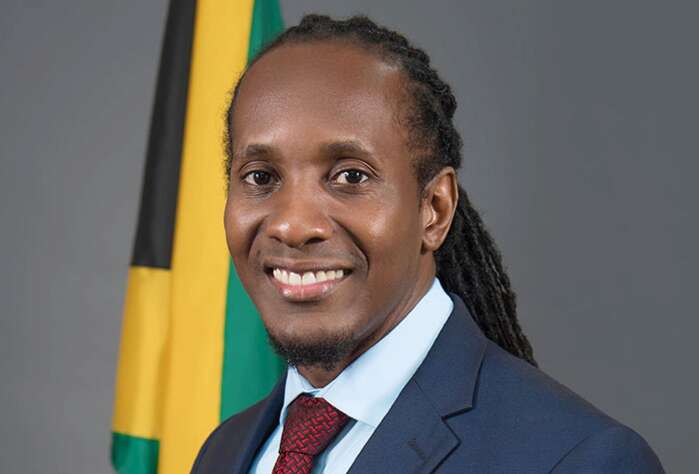
    From March 27 to 29, the capital of Equatorial Guinea, Malabo, played host to the 11th high-level summit of the Organization of African, Caribbean and Pacific States (OACPS), a gathering that brought together delegations from 79 member nations to confront shared global challenges under the unifying theme “A Transformed and Renewed OACPS in a Changing World”. Leading Jamaica’s delegation to the event was Alando Terrelonge, Minister of State in the Ministry of Foreign Affairs and Foreign Trade, who stood in for Prime Minister Andrew Holness during the three days of talks.

    Against a backdrop of shifting global geopolitics and mounting economic volatility, the summit centered its agenda on accelerating progress in South-South cooperation, advancing collective sustainable development goals, scaling up ambitious climate action, and forging more effective cross-regional partnerships. For Jamaica, one of the world’s most climate-vulnerable Small Island Developing States (SIDS), the summit offered a critical international platform to amplify the urgent, existential risks that climate change poses to small island nations.

    Speaking at the summit, Terrelonge opened with a stark example of the immediate harm of climate inaction, referencing the devastating impact of Hurricane Melissa, which is projected to strike Jamaica in October 2025. Early estimates place total damage from the storm at more than US$12 billion – a sum that equals roughly 56.7% of Jamaica’s entire annual gross domestic product. The minister emphasized that for SIDS, climate change is far from an abstract academic debate or a distant future threat.

    “For Small Island Developing States, climate change is not a scientific or academic discussion; it is an existential threat that disrupts livelihoods, damages critical infrastructure, affects food and water security, and undermines economic growth – particularly in climate-sensitive sectors on which our economy is heavily reliant, such as tourism, agriculture and fisheries. In extreme cases, it also costs lives. It is therefore imperative that global action matches the scale and urgency of the crisis,” Terrelonge stated during the summit.

    As a panelist at the official SIDS forum held alongside the summit, Terrelonge doubled down on Jamaica’s longstanding calls for systemic change in global climate governance. He reaffirmed the nation’s demand for equitable, universally accessible climate financing that meets the unique needs of vulnerable small island states, more robust and accountable implementation of existing global climate commitments, and formal legal and institutional recognition of SIDS’ special circumstances in all international climate and development frameworks.

    Beyond climate action, Terrelonge also added his voice to growing calls for internal reform of the 50-year-old OACPS organization. He reiterated Jamaica’s position that targeted reforms to strengthen OACPS’ governance structures, boost its operational efficiency, and enhance its financial accountability are necessary to create a more responsive organization that can deliver tangible outcomes for all member states. He also emphasized the critical role OACPS continues to play in advancing inclusive multilateral cooperation, deepening economic and social engagement across member states, and driving sustainable development progress across the Global South.

    Founded in 1975 via the Georgetown Treaty, OACPS has long centered its core mission on advancing sustainable development and reducing poverty across its member states, while supporting greater, more equitable integration of member nations into the global economy. This latest summit reinforced the shared commitment of OACPS members to coordinate collective action on climate finance and sustainable development – two top policy priorities for Jamaica in ongoing multilateral negotiations.

    Closing his remarks, Terrelonge made clear that Jamaica will continue to leverage every available international platform to advocate for decisive, equitable, and urgent global action that meets the unique needs of Small Island Developing States on the frontlines of the climate crisis.

  • JN and partners support JCF to reduce motorcycle deaths

    JN and partners support JCF to reduce motorcycle deaths

    KINGSTON, Jamaica — As motorcycle-related road deaths continue to climb as one of the fastest-growing categories of traffic fatalities worldwide, a new targeted capacity-building program has kicked off in Jamaica to equip frontline law enforcement with the tools to reverse this dangerous trend. The three-day training focused on proper helmet regulation and evidence-based road safety practices, hosted for 27 officers from the Jamaica Constabulary Force’s (JCF) Public Safety and Traffic Enforcement Branch (PSTEB), grew out of a multi-party partnership framework signed just months earlier in June 2025.

    The program is led by the National Helmet Wearing Coalition (NHWC), an initiative run by the JN Foundation in coordination with Jamaica’s National Road Safety Council. It forms a core part of a formal Memorandum of Understanding between the JCF, the Global Road Safety Partnership (GRSP), the NHWC, and the FIA Foundation, all aligned to strengthen enforcement of national motorcycle helmet laws. Speaking at the program’s opening, JN Foundation General Manager Claudine Allen emphasized that police officers occupy a unique position of trust and respect across Jamaican communities, giving them unmatched power to drive lasting cultural change around road safety.

    Allen urged officers to leverage that community influence to cut preventable motorcycle deaths, arguing that progress in this work will not be measured by citation volumes, but by the number of lives spared from tragedy. “Every time you put on your uniform, you carry an authority that can influence behaviour,” she told attendees. “Success will not be measured by the number of tickets issued but by the number of lives saved.” Allen encouraged participants to model safe behavior themselves, engage with motorists respectfully, and maintain consistent professionalism in all enforcement interactions.

    GRSP Chief Executive Officer Dave Cliff echoed Allen’s remarks, praising Jamaica for taking bold, targeted action to address a public health crisis that impacts nations across the globe. He called the collaborative partnership with the JCF a direct, high-impact investment in saving Jamaican lives, noting that upskilling frontline officers in enforcement, communication, and technical road safety knowledge is one of the most effective interventions any country can make to reduce road fatalities. Cliff also highlighted that Jamaica’s intentional investment in training and capacity building positions the island as a regional leader among developing nations grappling with similar road safety challenges.

    PSTEB head Senior Superintendent Lloyd Darby laid out the urgent scale of the crisis motivating the new initiative, sharing stark data on decades of road deaths in Jamaica: between 2015 and 2025, more than 4,480 people lost their lives in road collisions across the country. Of those fatalities, 1,356 were motorcyclists and an additional 159 were motorcycle passengers. In 2025 alone, 111 motorcyclists died in preventable crashes.

    Darby outlined the JCF’s ambitious public safety targets: the force aims to cut total annual road deaths to fewer than 300 by 2026, a milestone that has only been hit seven times in the last 50 years. The JCF’s broader strategy includes a 50% reduction in motorcycle fatalities and a 10% drop in deaths across other road user categories, achieved through a combination of zero-tolerance enforcement of existing traffic laws, expanded public outreach, and ongoing upskilling training for officers. Darby also noted that enforcement efforts have already ramped up significantly: in the first months of 2026 alone, JCF officers have seized 786 non-compliant motorcycles, compared to 336 seizures in all of 2025.

    For officers on the ground, the training has already delivered tangible, actionable skills. Sergeant Shereen Chambers, a sub-officer leading the Metro Quick Response Team, called the program both timely and practical. “I have learnt a lot; some things I knew and some things were new,” she said. “I can now identify certified helmet elements, and I will pass this knowledge on to my juniors and to motorists I engage with daily.”

    The 27 officers who completed the initial training will go on to train fellow JCF members across the country, expanding the program’s reach exponentially. Partners involved in the initiative emphasize that the gap between formal road safety legislation and consistent on-the-ground enforcement is a key barrier to progress, and this training program is designed to close that gap. Meaningful, long-term change, they note, will depend on consistent, sustained application of the skills officers gained during the workshop.

    Closing the opening session, Allen urged trainees to carry a renewed sense of purpose forward in their work. “Your interventions may prevent tragedies you will never see. But your impact will be lasting,” she stressed.

  • ‘Deeply troubling’

    ‘Deeply troubling’

    Six months after Category 5 Hurricane Melissa tore through large swathes of western Jamaica, a mounting controversy has erupted over the ongoing use of school buildings as emergency shelters for displaced storm victims, with the Jamaica Teachers’ Association (JTA) president Dr. Mark Malabver flagging deeply alarming incidents of inappropriate adult activity witnessed directly by students on campus.

    Dr. Malabver outlined the gravity of the situation during the opening ceremony of the 2026 JTA Education Conference, a three-day professional gathering hosted at the Princess Grand Jamaica Hotel in Green Island, Hanover. In his opening address, he emphasized that reports of shelter residents engaging in sexual acts within clear sight of attending students should spark universal outrage across the island.

    “The conditions are deeply troubling. Reports of shelterees engaging in sexual activity within the clear view of students is something that everyone should be outraged about,” Dr. Malabver said.

    Speaking on the sidelines of the conference with Jamaica Observer, Dr. Malabver confirmed that the first reports of these incidents reached his office from an unnamed western Jamaican parish over a two-week period last month. According to accounts gathered by JTA leadership, students who witnessed the inappropriate activity first filed formal reports with their classroom teachers, who then escalated the concerns up the association’s chain of communication. To date, Dr. Malabver noted that he cannot confirm whether these incidents are ongoing, nor have any formal police reports been filed over the alleged encounters.

    Beyond the high-profile incident of student exposure, the JTA has long held that the prolonged use of educational facilities as emergency shelters is entirely unsustainable. Dr. Malabver highlighted a litany of other ongoing disruptions facing schools and staff: teaching resources have gone missing from locked storage, and once-respectful learning spaces have devolved into overcrowded conditions more comparable to informal tenement yards than accredited educational institutions.

    The JTA president directly pushed back on recent public comments from Local Government Minister Desmond McKenzie, who claimed that the vast majority of displaced shelter residents had already relocated from school grounds, and that any remaining disruptions to academic operations have been kept to a minimum. Dr. Malabver refuted that claim point-by-point, noting that widespread disruptions remain a daily reality for students and staff across affected parishes.

    “When we hear, for example, the claim by the minister of local government that there is no displacement, we must ask, ‘What do we call it when students are removed from classrooms and placed in tents? What do we call it when schools operate on rotation systems because classrooms are occupied by shelterees?’ If that is not displacement, it must be replaced,” Dr. Malabver quipped during his address.

    Dr. Malabver clarified that the JTA’s campaign is not an attempt to interfere with the Local Government Ministry’s core portfolio responsibilities, which include waste management, public park maintenance, market operations and parish road upkeep. Instead, he framed the push for relocation of remaining shelter residents as a core obligation of the association to advocate for its members and protect the welfare of Jamaica’s students.

    “Our… students are exposed to the elements, along with their teachers, while classrooms are being occupied by shelterees under fans. That is not just unacceptable, it is outrageous — something that no modern society or Government should condone, let alone seek to defend,” he added.

    In closing, Dr. Malabver emphasized that the prolonged status quo is far more than an inconvenience for education communities — it constitutes a direct violation of fundamental rights for both children and teaching staff. He cited multiple binding international and domestic legal frameworks that Jamaica has already adopted, including the International Labour Organisation (ILO) Occupational Safety and Health Convention, which Jamaica ratified more than 25 years ago, the United Nations Convention on the Rights of the Child, and the island’s own domestic Child Care and Protection Act. The current conditions, he argued, run counter to both the letter and spirit of all of these binding agreements.