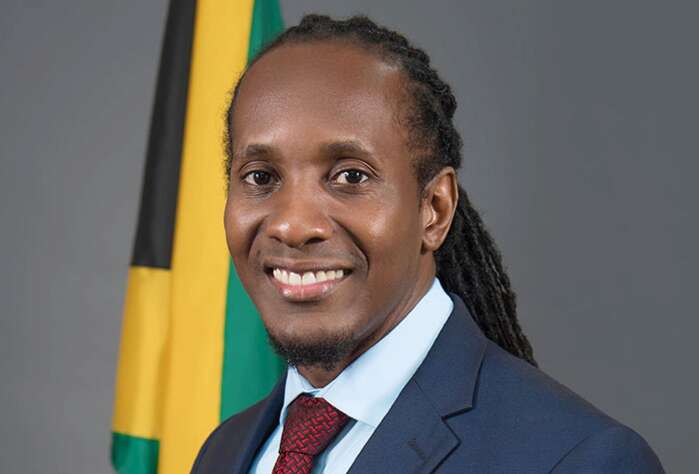
From March 27 to 29, the capital of Equatorial Guinea, Malabo, played host to the 11th high-level summit of the Organization of African, Caribbean and Pacific States (OACPS), a gathering that brought together delegations from 79 member nations to confront shared global challenges under the unifying theme “A Transformed and Renewed OACPS in a Changing World”. Leading Jamaica’s delegation to the event was Alando Terrelonge, Minister of State in the Ministry of Foreign Affairs and Foreign Trade, who stood in for Prime Minister Andrew Holness during the three days of talks.
Against a backdrop of shifting global geopolitics and mounting economic volatility, the summit centered its agenda on accelerating progress in South-South cooperation, advancing collective sustainable development goals, scaling up ambitious climate action, and forging more effective cross-regional partnerships. For Jamaica, one of the world’s most climate-vulnerable Small Island Developing States (SIDS), the summit offered a critical international platform to amplify the urgent, existential risks that climate change poses to small island nations.
Speaking at the summit, Terrelonge opened with a stark example of the immediate harm of climate inaction, referencing the devastating impact of Hurricane Melissa, which is projected to strike Jamaica in October 2025. Early estimates place total damage from the storm at more than US$12 billion – a sum that equals roughly 56.7% of Jamaica’s entire annual gross domestic product. The minister emphasized that for SIDS, climate change is far from an abstract academic debate or a distant future threat.
“For Small Island Developing States, climate change is not a scientific or academic discussion; it is an existential threat that disrupts livelihoods, damages critical infrastructure, affects food and water security, and undermines economic growth – particularly in climate-sensitive sectors on which our economy is heavily reliant, such as tourism, agriculture and fisheries. In extreme cases, it also costs lives. It is therefore imperative that global action matches the scale and urgency of the crisis,” Terrelonge stated during the summit.
As a panelist at the official SIDS forum held alongside the summit, Terrelonge doubled down on Jamaica’s longstanding calls for systemic change in global climate governance. He reaffirmed the nation’s demand for equitable, universally accessible climate financing that meets the unique needs of vulnerable small island states, more robust and accountable implementation of existing global climate commitments, and formal legal and institutional recognition of SIDS’ special circumstances in all international climate and development frameworks.
Beyond climate action, Terrelonge also added his voice to growing calls for internal reform of the 50-year-old OACPS organization. He reiterated Jamaica’s position that targeted reforms to strengthen OACPS’ governance structures, boost its operational efficiency, and enhance its financial accountability are necessary to create a more responsive organization that can deliver tangible outcomes for all member states. He also emphasized the critical role OACPS continues to play in advancing inclusive multilateral cooperation, deepening economic and social engagement across member states, and driving sustainable development progress across the Global South.
Founded in 1975 via the Georgetown Treaty, OACPS has long centered its core mission on advancing sustainable development and reducing poverty across its member states, while supporting greater, more equitable integration of member nations into the global economy. This latest summit reinforced the shared commitment of OACPS members to coordinate collective action on climate finance and sustainable development – two top policy priorities for Jamaica in ongoing multilateral negotiations.
Closing his remarks, Terrelonge made clear that Jamaica will continue to leverage every available international platform to advocate for decisive, equitable, and urgent global action that meets the unique needs of Small Island Developing States on the frontlines of the climate crisis.