
Jamaica’s iconic Hope Gardens’ Wonderlands transformed into a vibrant carnival hub over the weekend, welcoming hundreds of eager party-goers to the much-anticipated annual Sunrise Breakfast Party. Organized by local event collective Sunnation Jamaica, the morning gathering has cemented its reputation as one of the can’t-miss staple events on the regional Caribbean Carnival calendar, drawing both local revelers and traveling carnival fans from across the globe this year. Attendees turned out in full force to sample local cuisine, enjoy interactive entertainment, and soak in the high-energy festive atmosphere that has become synonymous with the event. Headlining the morning lineup was soca legend Machel Montano, whose dynamic, crowd-leading performance turned the Saturday morning showdown into an unforgettable experience. The beloved soca maestro commanded the stage from the first note, drawing the entire audience into a collective, high-energy celebration that left the venue buzzing with unmatched positive energy. Photography by Garfield Robinson captured the electric vibe of the day’s festivities.
标签: Jamaica
牙买加
-

Xodus Fete Gala dresses, impresses
On a Wednesday night at the sprawling East Lawns of Devon House in St Andrew, Jamaica, the third edition of the Campari Xodus Fete Gala brought a vibrant explosion of cross-regional Caribbean cultural fusion, powered by an all-star lineup of international and regional disc jockeys that kept hundreds of guests dancing from start to finish.
Curated to blend the formal creativity of high-profile galas with the unfiltered energy of Caribbean street fêtes, the event drew inspiration from New York’s iconic Met Gala, inviting attendees to lean into personalized, imaginative interpretations of the night’s black, white, and gold dress code. While most male guests stuck to classic formalwear — tuxedos, tailored button-downs, and polished dress shoes — and female attendees showcased elegant gowns of varying lengths paired with statement makeup and heeled footwear, the atmosphere never felt stuffy or restrained. From the first track dropped, the crowd leaned into the high-energy, communal joy that defines Caribbean carnival culture.
A major departure from the event’s first two editions, this year’s gala skipped live performances entirely, relying solely on the skill of the assembled DJs to carry the night. The lineup represented a who’s who of regional Caribbean talent, including Barbadian DJ Jus Jay, and a roster of Trinidadian selectors: Major Penny, Papi Jae, Selectah Kerry, Tony X, Tegarooks, and Lurbz. They were joined by North American-based acts Florida’s DJ Sinistar and Canadian DJ Brandan Duke, creating a truly pan-Caribbean and diasporic curatorial team.
The DJs delivered seamless, gapless sets that spanned multiple genres and generations, blending old-school and contemporary cuts across pop, R&B, reggae, dancehall, and of course, the quintessential Caribbean carnival sound of soca. For many attendees, especially those traveling from the Caribbean diaspora in North America and Europe, the breadth of the DJs’ musical knowledge came as a delightful surprise. The lineup’s ability to read a Jamaican crowd and blend familiar local hits with regional and international favorites kept the energy high from the event’s 9:30 p.m. kickoff until its 2:00 a.m. closing time.
A Canadian male patron, visiting Jamaica for his second carnival season, shared his enthusiasm for the night in an interview with Jamaica Observer. “I am so impressed at how a lot of these DJs and MCs from different countries know not just traditional soca genres, but all the Jamaican ones, and even some R&B, a bit of house music or EDM, and pop that’s more popular where I’m from,” he said. “Tonight was amazing, and I’m so glad I got to experience this. The inclusive cocktails and the infamous Jamaican KFC that were complimentary definitely contributed to an amazing time. I will be returning, and I hope this becomes a staple for Xodus each Carnival season.”
His praise echoed the widespread satisfaction with the event’s hospitality: title sponsor Campari and partner Appleton kept complimentary drinks flowing all night, while returning partner KFC provided free food to guests until its entire supply was exhausted.
A first-time visitor to Jamaica, a religious traveler who calls the event a “Caribbean Carnival chaser” after working her way through a bucket list of Caribbean carnivals across the region, also shared her positive impression. She noted that she specifically chose Xodus, Jamaica’s most established carnival band, for her first Jamaican carnival experience, drawn by its reputation for organized, high-quality events.
“I took time off from work just to be here, and I researched that Xodus is the more established band, so I wanted my first Jamaican Carnival to be with the more structured band. It’s a pretty good experience, so far. I’m here with two of my friends and the costume pickup experience was very smooth. I loved that and they should keep it up,” she said. “The gala has been interesting because it’s like a fete but a Caribbean/dancehall party at the same time and I’ve never seen that before. I like it.”
Across social media and on-site interviews, attendees left the event praising the unique blend of formal pageantry and laid-back Caribbean fun, marking the third Campari Xodus Fete Gala as a standout addition to Jamaica’s annual carnival calendar.
-

Mastering Difficult Conversations: Carolyn Rose Miller leads initiative to strengthen professional and personal relationships
Unresolved conflict is quietly eroding relationships across both workplaces and personal lives in Jamaica, leaving behind fractured teams, broken partnerships, and even dangerous societal outcomes. Now, a seasoned Jamaican communication and conflict resolution expert is stepping in to equip people with the actionable tools they need to reverse this harmful trend.
Carolyn Rose Miller, a 15-year veteran marketing and communication specialist, certified mediator, Justice of the Peace, and experienced trainer who has worked with public, private, and micro, small and medium enterprise (MSME) sectors across the country, has announced the upcoming “Mastering Difficult Conversations” workshop scheduled for May 2. The interactive training session aims to address a gap Miller has observed throughout her decades of practice: widespread avoidance of tense conversations that leaves small conflicts to fester into irreversible damage.
In an interview with Observer Online, Miller explained that avoiding tense discussions or handling them poorly always comes at a cost, derailing desired outcomes and damaging connections that might otherwise thrive. She has personally seen countless relationships collapse entirely because parties refused to confront underlying issues, with consequences ranging from crippling workplace inefficiency to a rise in intimate partner violence—a trend she calls deeply troubling.
Against this backdrop, the workshop is designed to intervene early, teaching participants practical, evidence-based strategies to de-escalate tension, rebuild damaged trust, and cultivate more constructive dialogue between colleagues, team members, romantic partners and community members. Unlike generic public speaking or communication training, the program is rooted in formal mediation and conflict resolution frameworks, a tool Miller says is underutilized in Jamaican culture outside of court-appointed cases, despite its proven effectiveness.
“Mediation and conflict resolution are key to creating a harmonious, cohesive relationship,” Miller noted. “I see an urgent need to share tips in employing proven and effective strategies to address conflicts… this should be at the forefront of everyone’s mind.”
The training is open to any person navigating challenging conversations in either their personal or professional lives, with a focus on six key groups that regularly face high-stakes difficult dialogue: leaders and managers tasked with addressing performance gaps and guiding teams through conflict; human resources professionals responsible for disciplinary action and workplace dispute resolution; frontline staff who interact with upset clients and colleagues in high-pressure settings; community and church groups that depend on open communication to maintain unity; professionals and individuals who want to build confidence to address issues rather than avoid them; and anyone required to deliver bad or uncomfortable news with clarity, empathy and professionalism.
Co-hosted by Adrian Atkinson, a veteran voice and speech coach and media practitioner, the workshop blends theoretical instruction with hands-on practical practice. Attendees will work through real-world case studies and simulate realistic difficult conversations in a low-risk, guided environment, integrating lessons on emotional intelligence into every module. Unlike passive training programs, all strategies shared are designed for immediate implementation back in participants’ daily lives.
To incentivize early sign-ups, the first three people to register will receive a complimentary bonus one-on-one coaching session on the spot. The exact venue will be shared directly with registrants after sign-up is complete.
Miller emphasized that what sets this workshop apart from generic communication courses is its focus on transformation, not just theory. “Participants are not just learning theory—they are being equipped with proven strategies to address issues, manage emotions, and resolve conflict effectively,” she explained. “This is not just about communication, it is about transformation: giving people the confidence, structure, and tools to handle difficult moments with confidence, empathy, and results.”
-

Rytz soaked in pure Soca bliss
What started as a gloomy, rain-threatened day for scores of soca enthusiasts gathered at Rytz for a highly anticipated fete on Thursday ended as one of the most memorable nights of Caribbean musical celebration in recent memory. A punishing early downpour had left attendees questioning whether the beloved event would be able to deliver on its promise of nonstop joy — but by the time the sun dipped below the horizon, the entire space had been transformed, doused not in rainwater, but in pulsating rhythm, bold flavor, and unbridled collective happiness that no storm could dampen.
Billed as an all-inclusive upscale escape, the event lived up to its name from the first moment guests arrived. Premium spirits circulated easily between mingling attendees, and a carefully curated spread of culinary offerings delighted taste buds with every new sampling. Even amid this laid-back indulgence, however, a tangible buzz of anticipation hummed through the crowd: everyone knew the headline performance that would elevate the entire experience was still to come.
That long-awaited moment finally arrived when Kes the Band stepped into the spotlight. With 21 years of industry experience under their belt, the iconic soca ensemble did not merely walk onto the stage — they owned it, exuding the quiet confidence of a legendary act that remains at the very peak of its creative power. Right from their opening introduction, the group made their core mission clear: to bridge Caribbean cultural divides by bringing the signature sound of soca to Jamaica, the global home of reggae and dancehall. The message resonated deeply with the crowd, especially as frontman Kees Dieffenthaller opened up about his personal connection to the island.
“Jamaica helped shape us too,” he told the audience. “Every time I have to leave here, I leave with a heavy heart.”
Long before Kes took the stage, a lineup of talented opening acts had already worked the crowd into a fever pitch. Richie Ras, Cardo, Bloodline Franco, and Brush1 the Road Marshal delivered a relentless, hit-packed warm-up set that had guests dancing and winding across the still-damp event lawn. Fan-favorite tracks including *Greatest Bend Ova*, *Good Spirits*, *Ring Finger*, *Splinters*, and *Big Dansa* turned the open space into one massive, impromptu dance floor, with attendees losing themselves to the infectious beat without hesitation.
Yet when Kes and his band launched into their set, the entire energy of the night shifted to a new level. As the first familiar notes of *Rum and Coca-Cola* rang out, hundreds of phone lights shot up into the dark sky, capturing the once-in-a-lifetime moment. What followed unfolded like a loving tribute to soca music itself, a celebration of the genre’s ability to bring people together across backgrounds.
“Soca music is healing,” Kees told the crowd, his voice cutting clean through the driving rhythm before urging the audience to embrace the moment fully: “When soca calling, we feteing straight to the road.”
The connection between the band and the audience felt almost spiritual, rooted in a shared love for Caribbean sound and community. “This is what I live for — to see all these smiling faces,” Kees said as he scanned the sea of grinning attendees, whose joy in turn fuelled the rest of his performance. At one point, he challenged the crowd to let go of their inhibitions: “If you looking for love, show me your wild side,” and the response was immediate, electric, and overwhelming.
Every minute of the performance was crafted with intentional purpose, moving far beyond surface-level spectacle. “When I come to spread the music, I want you to feel the instruments. This is Kes the Band, not Kees the man,” he declared, grounding the night in a deeper message of unity, full immersion, and shared feeling rather than individual fame.
The band’s setlist glided seamlessly between different eras of soca and shifting emotional tones. Nostalgic classic hits blended with fresh, modern bops as *Hello* melted into *Are You Ready*, before softening into the timeless, reassuring refrains of *I’ll Be There For You* and *Carnival Friends*. In a heartfelt gesture that highlighted the deep musical kinship across the Caribbean, Kees paused to acknowledge the rapid growth of soca’s popularity in Jamaica, emphasizing his love for both genres native to the region.
“I’m so happy to see how soca has grown in Jamaica. We need to bring the energy we have in Trinidad to a bigger stage here, because I love soca, but I love my dancehall too,” he said, before launching into a high-energy medley of vintage hits from iconic Jamaican artists Buju Banton and Super Cat — a surprise that sent the crowd into a frenzy of cross-cultural pride.
Just when attendees thought the energy could not possibly get any higher, Kees upped the ante once again, welcoming a fellow musician for a special guest appearance that added an entirely new layer of excitement to the already electric atmosphere. “Let’s take a jam till a mawning,” he urged, and the crowd obliged without a single moment of hesitation.
As chants of “Oh Lord, oh!” drifted out into the warm Jamaican night, one truth was undeniable: Rytz had far exceeded every expectation. The early rain that once threatened to ruin the entire event had long been reduced to an afterthought, replaced by a full-body saturation of sound, collective spirit, and sensory delight that would stay with attendees long after the final note faded.
-

Dancing for two on Road March
Dawn broke over Kingston on an extraordinary Sunday, the air already thrumming with unspoken excitement for the climax of Jamaica’s 2026 carnival season: the iconic Road March. By 8 a.m., anticipation hung thick over the capital, and when the first waves of costumed revellers streamed out of the National Arena, the entire city softened into the irresistible, syncopated pulse of soca music.
Giant sound trucks roared to life, their DJs steering the flow of the procession through city streets, while elaborately dressed masqueraders stepped out in feathers, hand-sewn gems, and glittering sequins, all united by one goal: to fully embrace the tradition of ‘playing mas’ in the annual street celebration. What unfolded that day was far more than a parade— it was a moving reminder of the unbreakable bonds that outdistance even oceans and unforeseen circumstance.
Kingston quickly morphed into a rolling, vibrant canvas, awash in glowing neon hues, shimmering costume beads, and a sea of bodies moving as one to the rhythm. Local Yardmas organizers set an unapologetically high-energy tone from the first step, turning every block into an open-air party attended by hundreds of celebrants. But tucked into that joyful crowd was one quiet story that stopped passersby in their tracks.
Kia-Simone Bell matched every beat, every blast of the horn, every call-and-response chant as she steadily made her way along the 10-mile procession route. What set her apart from the crowd wasn’t her costume, however—it was the small cardboard cutout she held close: a photo of her best friend, Melissa. The pair had planned every detail of their Road March for months: coordinating outfits, pre-planned meeting spots, and even a list of favorite tracks they planned to dance to as the sound trucks rolled past. But global events upended those plans entirely. Melissa, who now lives and works in Dubai, was stranded by travel disruptions tied to rising tensions linked to the Iran conflict, and couldn’t secure a flight home for carnival.
For many, dashed plans would have ended the story there. But for Kia, the absence of her best friend didn’t mean she couldn’t be part of the day. If Melissa couldn’t come to Road March, Kia decided, she would bring Melissa to Road March—turning empty space into shared presence. She carried the cutout along every step of the route, dancing every move for both of them. She lifted the image high above the crowd at multiple points, chanting “She’s still here” to the beat, and the gesture drew warm smiles from fellow strangers-turned-revellers all along the way.
In the middle of all the revelry and release that defines carnival, this small, intentional gesture cut through the noise to reveal the heart of the centuries-old celebration. Carnival has never been just about sequined costumes and infectious music—it has always been rooted in human connection. As the trucks blared and the crowd surged toward the finish line, Kia and Melissa—one present in body, one in spirit—became a living reminder of why millions of people around the world return to carnival year after year. We don’t just hit the road to escape the weight of daily life; we come to feel connection, to celebrate life in all its messy, beautiful fullness, even when that life brings distance, longing, and unforeseen sacrifice.
-

18 finalists compete for Miss Universe Jamaica Westmoreland title
Months of careful preparation are coming to a head for Jamaica’s Miss Universe Jamaica Westmoreland 2026 pageant, after organizers publicly introduced the 18 women who will compete for the parish title later this spring. Pageant director Hannah Sheree expressed full confidence in the selected finalists, highlighting the steady progress of pre-coronation planning in an exclusive interview with Observer Online last week.
Against the unexpected backdrop of recovery from Hurricane Melissa, which struck the region late last year, Sheree says recruitment efforts exceeded all expectations. More than 30 young women from diverse communities across Westmoreland stepped forward to attend initial casting calls, a turnout that organizers called far more encouraging than projected after the storm disrupted local life. From that large initial pool of hopefuls, 18 candidates earned a spot as finalists, who made their first public appearance at a formal sashing ceremony held at Savannah-La-Mar’s Hotel Commingle.
The sashing event drew a packed, energetic crowd of supporters who turned out to cheer on the contestants, who already impressed attendees with their poise and presence ahead of the formal coronation. Distinguished guests joined the celebration, including Dwayne Vaz, Member of Parliament for Central Westmoreland, Gabrielle Whyte, 2025 Miss Universe Jamaica West second runner-up, and Maria Marshall, deputy vice president for Miss Jamaica UK.
Sheree emphasized that even this introductory event required months of behind-the-scenes work from the contestants, who are already in active training leading up to the May 23 coronation. “I am so incredibly proud of my girls,” she said, noting that the commitment and enthusiasm the finalists have brought to every rehearsal and preparation session has exceeded the team’s expectations. “Though this was just the sashing show, a lot of effort and passion was put into the preparation and it paid off beautifully.”
The pageant director also extended public gratitude to the full network of local sponsors and partners that have made the 2026 competition possible, starting with Hotel Commingle, the official host venue sponsor for both the sashing ceremony and the upcoming coronation. Additional supporters include Ro Ro Designs, which created promotional materials for the competition, Jamark Luxury Transportation, gift sponsor The Pill Box Pharmacy, Tan Tan Bakery, and official water sponsor Aqua Palace. Sheree also highlighted the critical work of individual contestant sponsors and the core production team—Tiena Brown, Crystal Johnson, and Andre Walker—whose tireless work has kept the pageant on track.
The 2026 Miss Universe Jamaica Westmoreland coronation will take place on May 23 at Hotel Commingle, with a high-stakes reward waiting for the winner: the champion will earn an automatic berth in the national Miss Universe Jamaica pageant, where they will go on to compete for the chance to represent Jamaica on the global Miss Universe stage.
The 18 official finalists for the 2026 Miss Universe Jamaica Westmoreland title are: Annalicia Russell, Shamara Hurst, Cameron Willis, Tiffany Maragh, Ashley Gardner, Thrisianna Coke, Nicolette Gayle, Gabriele Davidson, Kelly Ann Barrett, Roushanda Levy, Nia Paige Matthews, Gayon Gayle, Brittany Solomon, Christine Mulai, Alexsia Brady, Mykhal Anglin, Regina McLean, and Shauna Lee Ervin.
-

Keith & Tex reimagine ‘Perhaps, Perhaps, Perhaps’ in signature style
Five decades after they first rose to prominence on Jamaica’s iconic rocksteady scene, the enduring veteran musical duo Keith and Tex continues to create new work, putting their distinctive reggae spin on timeless tracks with the release of their latest cover: the beloved standard *Perhaps, Perhaps, Perhaps*. The long-running pair first hatched the idea for a project reimagining underrated, widely loved classic songs last year, when the pair began brainstorming selections for their new cover series, and *Perhaps, Perhaps, Perhaps* quickly emerged as one of their top choices. Their reimagined version of the track hit streaming and digital platforms this past March, with production credits shared across Carl Fletcher, Basil “Benbow” Creary, and Keith Rowe. This new release marks the follow-up to their well-received 2024 take on Bobby Caldwell’s blue-eyed soul staple *What You Won’t Do For Love*, which transformed the smooth R&B original into a vibrant reggae cut. First penned by Cuban composer Osvaldo Farres, the track has an 77-year recorded history, with previous versions cut by legendary artists ranging from Desi Arnaz and Doris Day to Bing Crosby and Jamaican reggae great Dennis Brown. For the duo, reinterpreting these classic tracks is all about leaving their own creative mark on material that already resonates with audiences around the world. “Our approach to covering songs is to make it our own and in our style,” Keith explained in an interview with Jamaica Observer Online. “The decision to cover ‘Perhaps’ was taken after a conversation with my friends about doing covers of obscure, and well-loved songs. Perhaps it was the first song we recorded.” What makes Keith and Tex stand out among the acts that emerged during rocksteady’s peak 1966–1968 heyday is their ongoing commitment to recording and performing. Though the pair now lives on opposite sides of North America—Keith resides in Tampa, Florida, while Tex has been based in Toronto, Canada for decades—that geographic distance has not slowed their output. The duo got their start over 50 years ago under the guidance of legendary Jamaican producer Derrick Harriott, scoring multiple top hits on the Jamaican music charts with fan favorites including *Don’t Look Back*, *Tonight*, and *Stop That Train*. In the decades since, they have maintained a consistent work schedule: they tour regularly across Europe and Australia, and drop a full new album every two years. Their most recent full-length project, *Gun Life*, was released in 2025 through Spanish label Liquidator Records, setting the stage for this latest string of single releases that see them continuing to celebrate the music that shaped their careers. The release of their new *Perhaps, Perhaps, Perhaps* cover underscores not just the duo’s enduring relevance in the global reggae scene, but also the timeless appeal of well-crafted classic songs that continue to draw new interpretations from generations of artists.
-

Time for the stick, not just carrot?
As Jamaica pushes forward with plans to build a truly sustainable construction and real estate sector, industry leaders are calling for a balanced policy framework that combines voluntary incentives with clear, enforceable regulations to overcome cost barriers holding back widespread green building adoption.
Speaking at a recent Green Sustainability Panel Discussion hosted by the Realtors Association of Jamaica (RAJ), Richard Mullings, president of the Incorporated Masterbuilders Association of Jamaica (IMAJ), argued that current incentive-based policies are insufficient to drive change. Because sustainable construction often requires higher upfront costs that developers struggle to pass on to homebuyers in a competitive market, most firms avoid adopting green requirements voluntarily.
Mullings pointed to existing mandatory water harvesting rules as a clear example of unenforced sustainability standards. He noted that most municipal building approvals already require every new residential development to include a water collection tank, yet nearly all developers ignore the requirement with no consequences. Without uniform, enforced rules, any developer that voluntarily adds the extra upfront cost will immediately price themselves out of the market, especially for affordable, lower-cost housing developments.
“We operate in a profit-driven free market, and developers have no choice but to prioritize their bottom line,” Mullings said, addressing his comments directly to Gregory Bennett, deputy CEO of the Spatial Planning Division at Jamaica’s National Environment and Planning Agency (NEPA). “Since most sustainability measures deliver widespread public and societal benefits, shouldn’t we pair the current carrot of incentives with a regulatory stick to push the entire industry toward sustainable practices? Could we use public systems, tax policy, and strict enforcement to shift market demand toward green building?” he asked.
In response to Mullings’ proposals, Bennett confirmed that Jamaican policymakers are already advancing new frameworks to encourage more businesses to adopt sustainable construction best practices at the ministerial level. He agreed with Mullings that effective change ultimately depends on robust monitoring, enforcement, and compliance, all while balancing the upfront cost challenges facing developers and homebuyers.
Bennett added that a growing segment of the private sector is already embracing green building voluntarily, with many developers integrating sustainable features into their projects without waiting for regulatory mandates. Still, he acknowledged that large-scale systemic behavior change will take time. The Jamaican government is currently mainstreaming sustainability across the sector, working to embed the value of green building into the long-term thinking of both developers and homeowners, and policy work to advance a national green business strategy is already at an advanced stage, he said.
Latoya Williams, assistant vice-president of lending solutions and business services at Victoria Mutual Building Society (VMBS), echoed Mullings’ concerns about upfront cost barriers, noting that the global built environment accounts for 37% of all energy-related carbon emissions, making the transition to green building a critical priority for Jamaica’s climate goals.
“Our end goal is not just meeting sustainability targets — it’s building better, more resilient, future-ready homes for all Jamaicans,” Williams said. “Through incremental changes across every project and every industry decision, we can collectively build a far more sustainable Jamaican built environment. Most importantly, we have a chance to make this transition inclusive, practical, and accessible to Jamaicans across all income levels.”
She emphasized that the transition cannot succeed if different parts of the industry work in isolation. Key challenges still to address include higher upfront costs for sustainable solutions, gaps in public and industry awareness, limited access to effective incentives, and uneven technical capacity across the sector. “This requires collaboration across the entire ecosystem — developers, realtors, financial institutions, and policymakers all have a critical role to play to move the industry forward,” Williams added.
To build industry capacity for the transition, RAJ will launch a new two-day Green Designation training course for Jamaican realtors starting in June, equipping them with the skills they need to promote sustainable properties to clients.
Heather Pinnock, a moderating associate for the panel and co-founder of the upcoming Jamaica Green Building Council, described realtors as the critical “sustainability link in every transaction” between developers and homebuyers.
“Green infrastructure cuts long-term utility costs for homeowners, improves living comfort, and increasingly commands premium prices for both sales and rentals,” Pinnock said. “We don’t need to convince clients of the ethical principle of sustainability — we just need to show them the numbers. A well-designed sustainable property is simply a better long-term investment, and our job is to make that case confidently with solid data.”
While environmental compliance is already a formal part of the development approval process in Jamaica, it has not yet been systematically embedded into property sales transactions, Pinnock explained. That gap is a major opportunity for realtors to drive change: when realtors consistently ask the right questions about a property’s environmental status, energy systems, flood risk, and planning compliance, they raise sustainability standards across the entire market. Every property listing, every offer, every negotiation is a chance to advance the industry’s sustainability agenda, she added.
-

Catherine Hall Health Centre to reopen in two weeks
Following extensive damage from Hurricane Melissa last October, the Catherine Hall Health Centre in St James, Jamaica is on track to welcome patients again in just two weeks, marking a key milestone in the parish’s post-disaster healthcare recovery. This timeline was confirmed by Minister of Health and Wellness Dr. Christopher Tufton, who shared the update during an on-site inspection tour Friday to assess repair progress across multiple local facilities.
During the visit, Dr. Tufton outlined that teams are currently finalizing furniture installation and wrapping up remaining restoration work to meet the two-week reopening target. Alongside his stop at Catherine Hall, the minister also toured the Green Pond and Glendevon health centres, where ongoing remediation work is steadily progressing. At Green Pond, he confirmed that critical maternal and child health services have already resumed, representing a major step toward returning full normal operations across the parish’s primary care network.
To date, 19 of St James’ 22 total community health centres are now fully functional, according to Dr. Tufton’s update. Patient foot traffic, which dropped sharply in the immediate aftermath of the hurricane, has rebounded significantly, climbing back to more than 90% of pre-storm levels as access to local care is restored.
Dr. Tufton used the opportunity to urge local residents to rely on primary healthcare facilities for ongoing care, particularly for managing chronic conditions including diabetes and hypertension. Shifting routine care to community centres, he explained, will ease unnecessary strain on local hospital emergency departments, ensuring emergency services remain available for patients with acute, urgent needs.
With the first phase of post-hurricane restoration — focused on returning services to functional existing facilities — nearly complete, the ministry will now shift its focus to a second phase of work. This next stage will involve more extensive structural overhauls for the facilities that suffered the most severe damage during the storm.
On the topic of healthcare staffing, Dr. Tufton addressed the upcoming replacement of a Cuban nurse previously assigned to one of St James’ primary care facilities. He noted that Cuban healthcare workers were never deployed as broadly across St James’ primary care sector as they are in other Jamaican parishes, with only one Cuban nurse serving in the parish’s primary care network. As such, the transition will have minimal impact on service delivery, and care will continue uninterrupted for local residents, he assured the community.
-
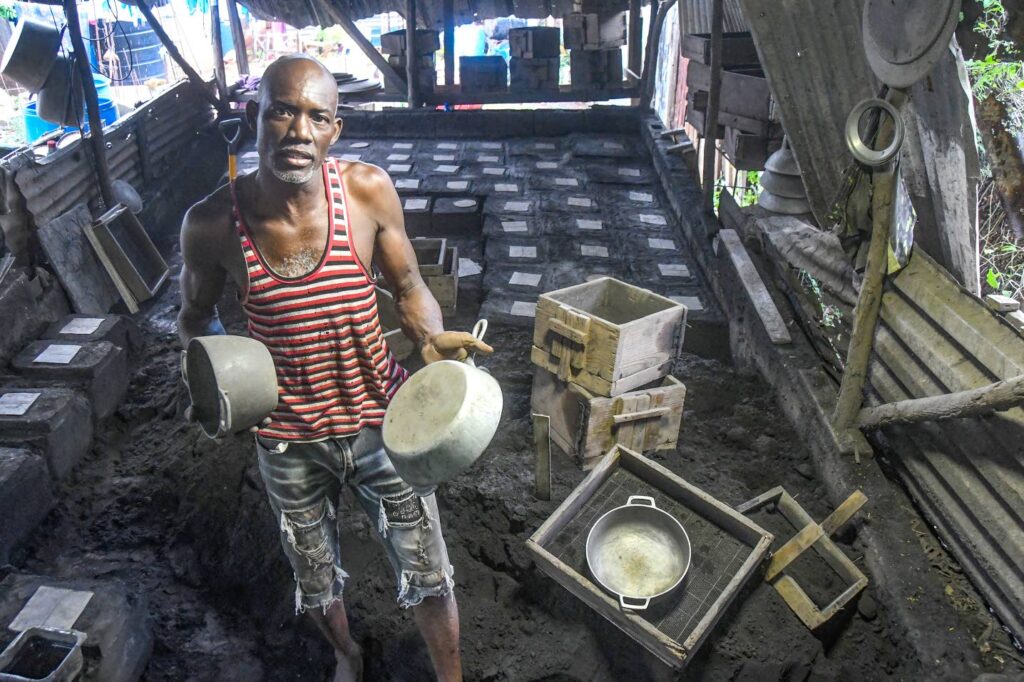
From child apprentice to master craftsman
More than four decades ago, a seven-year-old Kevin Campbell sat quietly among veteran craftsmen in the Frazer’s Content neighbourhood of Spanish Town, St Catherine, Jamaica, watching intently as they shaped handcrafted Dutch pots and coal stoves by hand. Now 52, Campbell has turned this childhood fascination into a thriving small business, producing more than 100 handcrafted aluminium pots per week — and he is on a mission to recruit a new generation to save the fading Jamaican tradition before it disappears entirely.
Campbell recalls that metal pot and cookware crafting was once a booming trade that supported dozens of households across his community. But as the elder artisans who held the knowledge passed away or migrated abroad, the craft declined sharply. Today, only four people in the entire community still practice the traditional skill, and dwindling young interest has left Campbell deeply concerned about its future.
“From the start, Campbell learned the craft from local artisans Kenroy Hylton and a craftsman known only as Culture, who brought the trade — a branch of a tradition originating in Waterhouse, St Andrew. The early exposure stuck with Campbell through decades of work. While many artisans abandoned the trade over the years due to its demanding nature, Campbell’s lifelong passion has kept him committed to the craft. Two years ago, he branched out to launch his own independent business, producing custom-made pieces ranging from small teapots to large soup pots, frying pans and traditional coal stoves in a full range of sizes.
His durable handcrafted products are sold both wholesale and retail to local restaurants and households across St Catherine’s Linstead, as well as Mandeville and Christiana in Manchester, with prices ranging from JMD $1,700 to $20,000 depending on size, type and purchase volume.
The craft is intensely labour-intensive, with each piece taking two to three full days to complete. Campbell crafts all his pots exclusively from aluminium for a smooth, polished finish. The traditional process starts with shaping moulds for both the pot and its lid from topsoil, followed by pouring molten aluminium into the dried mould. Once the metal sets, the raw pot is removed and carefully polished by hand.
Campbell points to his first ever completed pot — a four-pound rice pot he made when he was 10 years old — as proof of his products’ longevity. His family still uses the pot regularly to this day. “It came out wonderful — nice, clean, and pretty. I felt so much joy when I saw that I had made something that turned out perfectly. There’s no feeling like that,” he told reporters, smiling as he held the well-worn piece.
While demand for his traditional cookware has fluctuated over the decades, the craft has been a reliable livelihood that allowed Campbell to support his family and put all four of his children through high school. Though his children have pursued their own independent career paths, they all pitch in to help with the business side of the operation, handling marketing, transportation and sales. His daughter Lamoya has taken on day-to-day operational management, coordinating orders and transactions across the region.
For Campbell, no other line of work can compare to the satisfaction of pot-making. He jokes he would live a million years if it meant he could keep crafting his wares. But he also knows he cannot carry the tradition on his own forever, which is why he is actively inviting young Jamaicans — even college students just curious about the process — to learn the craft from him for free. His contact information is posted on social media (876-435-4960 and 876-797-8623), and he says he is ready and willing to teach anyone who wants to learn.
Campbell follows the example set by the artisans who taught him, who never closed the door to him when he was a curious child. “They could have hidden the knowledge from me, but they didn’t. They gave me the willingness to pass it on by showing me kindness when I wanted to learn,” he explained. “Even if someone just wants to learn the process and doesn’t want to build a whole business out of it, I’m still happy to teach them. Sharing this craft brings me joy.”