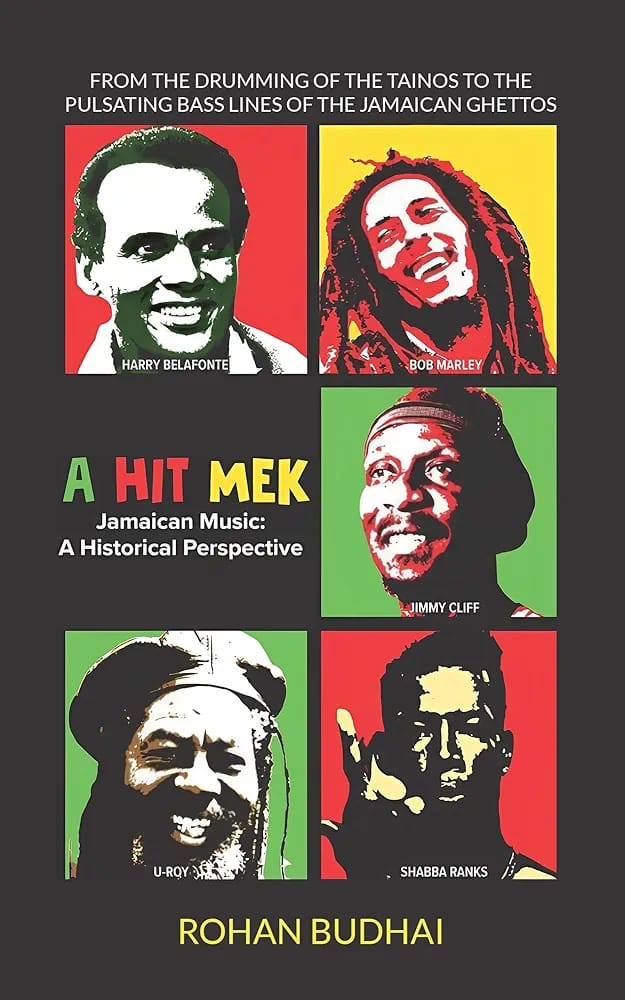
Jamaica’s globally beloved musical tradition has long been celebrated around the world, but a groundbreaking new work by author Rohan Budhai argues that many critical chapters of this cultural legacy have remained hidden from mainstream documentation. Titled *A Hit Mek* — a clever reference to Desmond Dekker’s iconic 1967 track *007 (Shanty Town)* that unpacks the deeper cultural roots of the classic phrase “A it mek” — this 560-page volume offers the most sweeping examination of the island’s sonic and cultural evolution ever published, challenging long-held assumptions that Jamaican music history has already been fully mapped.
In his foreword to the book, respected music consultant Clyde McKenzie praises Budhai’s unique approach, which ties pivotal moments in Jamaican social and political history directly to the emergence and transformation of the nation’s core musical genres. Unlike many earlier works that focus only on the global boom of reggae in the 20th century, *A Hit Mek* stretches its narrative back more than 500 years, opening with Christopher Columbus’s 15th-century arrival on the island and the Indigenous Taíno community whose rhythmic drumming, call-and-response vocal traditions, and handmade instruments carried the earliest echoes of African cultural influence that would shape all future Jamaican sound.
Budhai weaves together a complex narrative that accounts for the layered impacts of Spanish and British colonial rule, the brutality of the transatlantic slave trade, and the irreplaceable cultural contributions of every community that shaped the island: Taínos, Maroons, enslaved Africans, and indentured laborers from across Asia and the Middle East. The book traces the step-by-step evolution of Jamaica’s most defining genres, from sacred traditional styles like Kumina to the first commercially recorded local sound Mento, through the mid-20th century explosion of Ska and Rocksteady, and on to the global dominance of Reggae and the contemporary energy of Dancehall. It also centers the underrecognized role of Jamaican sound system culture, a grassroots innovation that redefined live music and went on to reshape popular sound across the globe.
A key strength of the work is its commitment to highlighting the contributions of diverse communities that have long been sidelined in official music histories, including Afro-Jamaican, Lebanese, Syrian, Chinese, and Indian Jamaican creators, alongside the bands, radio outlets, and entertainment organizations that nurtured local talent and expanded the reach of Jamaican sound. The book even addresses longstanding scholarly debates: for example, it notes that while Mento holds the title of Jamaica’s first widely recognized and electronically recorded local genre, cultural icons like Rex Nettleford long argued that it drew significant formative influence from Cuban musical traditions.
The volume devotes special attention to reggae, Jamaica’s most globally impactful export, framing it as a dynamic fusion of West African ancestral traditions, American rhythm and blues, jazz, and soul. It maps reggae’s far-reaching legacy, from spawning iconic subgenres including dub and lovers rock to shaping everything from modern hip-hop to global electronic dance music, cementing Jamaica’s outsize influence on contemporary popular music worldwide.
Budhai, who launched his career in music production before founding Howlers International Music, began the ambitious project in 2021, during the global COVID-19 pandemic, and brought it to completion in 2025. His years of research uncovered major gaps in existing historical accounts, with many key influences — including church music introduced during colonial rule, and cultural traditions dating back to pre-Columbian and enslaved African communities — having been largely overlooked in earlier works.
Today, *A Hit Mek* is available for purchase globally through Amazon, with translated editions already published in Spanish, French, and Portuguese to make this comprehensive history accessible to audiences around the world. While Budhai describes the book as one of the most exhaustive works on Jamaican music history ever compiled, he emphasizes that the story of the island’s sound is far from finished. For him, Jamaican music has always been, and remains, a living narrative that reflects the struggles, extraordinary resilience, and unmistakeable cultural identity of the Jamaican people, with new chapters still being written every day.