标签: Jamaica

牙买加

  • Peter Champagnie retained by Jahvy Ambassador after Big Wall shooting incident

    Peter Champagnie retained by Jahvy Ambassador after Big Wall shooting incident

    A high-profile Jamaican legal figure has stepped forward to represent one of the country’s most well-known entertainment industry figures, who remains in police custody following a mass shooting at a popular carnival event over the weekend.

    King’s Counsel Peter Champagnie confirmed Tuesday in an interview with *Observer Online* that he has been formally retained to serve as legal counsel for Jahvel “Jahvy Ambassador” Morrison, a prominent music producer and talent manager. Morrison was taken into police custody after gunfire broke out Sunday at the Big Wall carnival party, a widely attended event on Jamaica’s annual carnival calendar.

    The shooting left three people hospitalized with gunshot wounds, including well-known local podcaster and blogger Jhaedee “Jaii Frais” Richards, a member of dancehall recording artist 450’s entourage who sustained critical but non-fatal injuries, and a United States citizen. No fatalities have been reported from the incident, which sparked immediate widespread speculation across Jamaican social media channels about Morrison’s potential involvement.

    Addressing the flood of unconfirmed public claims online, Champagnie pushed back against the rampant conjecture surrounding the case. He emphasized that the public and commentary platforms must allow law enforcement to complete their investigation without outside interference or premature judgment. “Note is taken of various commentaries being made on a number of social media platforms which are rooted in conjecture or fanciful assertions. The relevant concern and consideration must be for the police investigation to go unimpeded without any undue influence,” Champagnie stated.

    Despite the intense public scrutiny and unsubstantiated accusations circulating in public discourse, both the attorney and his client expressed full confidence that the investigative process will clear Morrison of any wrongdoing. “Mr Morrison is confident that at the end of such an investigative process he will be vindicated,” Champagnie added.

  • War in the Middle East: Latest developments

    War in the Middle East: Latest developments

    In a series of interconnected developments shaking the Middle East on Monday, multiple key actors have laid out stark new positions that deepen ongoing conflict and complicate diplomatic efforts to de-escalate the crisis.

    First, in Beirut, Hezbollah leader Naim Qassem delivered a televised address urging Lebanese officials to scrap a scheduled Tuesday meeting between Lebanese and Israeli ambassadors to the U.S. set to take place in Washington. The Iran-backed militant group, which has been engaged in open conflict with Israel since March 2, has long rejected direct negotiations with the Israeli state. Qassem called on Lebanon to take a “historic and heroic stance” by canceling the planned talks entirely.

    Meanwhile, global energy markets are bracing for growing strain as the conflict disrupts critical supply chains, International Energy Agency chief Fatih Birol warned Monday. Speaking to reporters on the sidelines of an International Monetary Fund gathering in Washington, Birol noted that March energy shipments were largely filled with cargo loaded before the current Middle Eastern crisis erupted. But April will bring a far tighter market, he stressed, explaining that “during the month of April, nothing has been loaded.” Birol added that the severity of the global energy shortage will grow in lockstep with how long the current supply disruption persists.

    U.S. President Donald Trump has issued a series of conflicting and uncorroborated claims along with sharp new threats against Iran amid the escalating standoff. On Truth Social, Trump claimed that 34 commercial vessels have successfully traversed the Strait of Hormuz, one of the world’s most critical energy chokepoints, calling this the highest number recorded since what he labeled a “foolish closure” of the strait began. The figure could not be independently verified by outlets as of Monday.

    Trump also doubled down on criticism of Pope Leo XIV, who recently called for an immediate end to Middle East hostilities, saying he had “nothing to apologise for” for his earlier remarks. The president argued the Pope had gotten his position wrong, claiming the pontiff opposed Trump’s hardline policy on preventing Iran from acquiring nuclear weapons, and lambasted the U.S-born Pope as “very weak on crime and other things.” The criticism drew a swift rebuke from Italian Prime Minister Giorgia Meloni, who called Trump’s remarks about the head of the Catholic Church “unacceptable.”

    Despite the heightened tensions, Trump claimed Monday that Iranian officials have reached out to the U.S. seeking to negotiate a peace agreement, just days after weekend talks hosted by Pakistan ended without a breakthrough. Speaking to reporters outside the Oval Office, Trump said “I can tell you that we’ve been called by the other side. They’d like to make a deal. Very badly, very badly,” though he declined to name which Iranian officials had initiated contact.

    Alongside announcing a new U.S. naval blockade of Iranian ports that took effect Monday, Trump issued a blunt warning that American forces would destroy any Iranian fast attack craft that approached the blockade line. “Warning: If any of these ships come anywhere close to our BLOCKADE, they will be immediately ELIMINATED,” he wrote on Truth Social, claiming that the rest of Iran’s navy had already been “completely obliterated.” Trump added that U.S. forces would use the same airstrike tactics employed against suspected drug trafficking vessels off the Venezuelan coast to target the Iranian craft.

    Even after the failed Pakistan-hosted talks over the weekend, Pakistani Prime Minister Shehbaz Sharif confirmed in brief televised remarks to his cabinet that the U.S.-Iran ceasefire remains in place. “The ceasefire is still holding and, as I speak, full efforts are underway to resolve the outstanding issues,” Sharif said, confirming that diplomatic negotiations are still ongoing to reach a lasting peace deal.

  • ‘The Legend of Aang: The Last Airbender’ leaks online months before premiere

    ‘The Legend of Aang: The Last Airbender’ leaks online months before premiere

    Months before its scheduled October 9 premiere on Paramount+, one of the most anticipated animated projects in recent fan culture has suffered a major industry leak: a complete, unwatermarked copy of *The Legend of Aang: The Last Airbender* has spread widely across social media platforms. As first reported by Yahoo, unauthorized full-length versions of the animated sequel began circulating on Twitter as early as April 13, a breach that industry observers have called one of the most impactful Hollywood content leaks of the past several years.

    Directed by Lauren Montgomery, the film has already gone through a well-documented distribution shift that sparked discussion among fans. Originally intended for a wide theatrical release, the project was reclassified late last year as an exclusive streaming title for Paramount+. Montgomery addressed the pivot publicly on Instagram, pushing back against assumptions that the change reflected poor quality of the finished film. She stressed that the creative team built the story and visual scope of the sequel for the big screen, arguing that it is best experienced in a theatrical setting.

    Details about how the leak occurred remain murky as of the latest updates. According to the initial report, a Twitter user claimed to have obtained the film “accidentally” via an email delivery long before the official release date. Investigations are still ongoing to determine whether parent companies Nickelodeon and Paramount suffered a malicious hack or internal data breach that led to the content being exposed.

    In an urgent effort to contain the spread of the pirated copies, Paramount has already issued a flurry of Digital Millennium Copyright Act (DMCA) takedown notices targeting posts sharing the unlicensed film across social media and file-sharing platforms. However, the speed of the leak has already allowed the full film to spread widely among online communities, making a full recall of the content nearly impossible.

    As a continuation of the beloved *Avatar: The Last Airbender* animated franchise, the upcoming sequel is set several years after the conclusion of the original series. It follows protagonist Aang and his longtime friends as they cross paths with a powerful ancient airbender, introducing an all-new storyline to the franchise’s expansive lore. The film features an all-new star-studded voice cast, including Eric Nam as the titular Aang, Dionne Quan as fan-favorite Toph Beifong, Steven Yeun as former Fire Lord Zuko, and Dave Bautista as the new original character Tagah.

  • Boyz’s World Cup exit no surprise

    Boyz’s World Cup exit no surprise

    Jamaica’s men’s national football team, widely known as the Reggae Boyz, fell short of securing a spot in this summer’s FIFA World Cup following a narrow 0-1 defeat to the Democratic Republic of Congo in the final inter-confederation play-off match on March 31. For former Jamaican international footballer Michael “Zun” Clarke, this outcome was far from unexpected — he had flagged deep-rooted structural issues within the squad more than two weeks before the decisive defeat, in an exclusive interview with the Jamaica Observer.

    Clarke, who built his local career with Cavalier FC and claimed a Manning Cup title during his time at Tivoli Gardens High School, centered his criticism on the squad’s heavy reliance on overseas players of Jamaican heritage, most of whom ply their trade in England. He argued that this recruitment strategy has resulted in a loose collection of individual talents, what he calls a “side” rather than a cohesive, unified team.

    In his assessment, the current crop of Reggae Boyz consistently struggles with ball retention and fundamental control, deficiencies that make consistent winning nearly impossible. “You cannot win games playing that way,” Clarke noted. “With all these foreign-based players, I believe we would stand a far better chance leaning into domestic talent. When overseas players come together, they are just a side, not a team — everyone is focused on their own individual goals.”

    He drew a clear distinction between a makeshift side and a cohesive unit: a true team builds chemistry over time, learning each other’s on-pitch tendencies, preferred positions and playing styles to create fluid, connected play. To foster that cohesion, Clarke says Jamaica needs to fundamentally reframe its player development strategy starting at the grassroots level.

    His recommendation mirrors the long-term development models used by elite football nations like Brazil: identify a core group of young local players, keep that group together through consistent training and competition, and mould them into a cohesive unit over years of nurturing and development. “That’s what successful programs do,” he explained. “They run camps, they invest in developing a set of players from a young age, and refine them into a competitive unit. That’s exactly what Jamaica needs to implement going forward.”

    While Clarke emphasized he is pleased whenever overseas-based players get the opportunity to represent Jamaica, he raised persistent questions about the depth of their commitment to the national side. “I don’t think country comes first for a lot of them — their club comes first,” he argued. “They won’t throw themselves into a 50-50 challenge if there’s a risk of injury, because their priority is protecting their place at their professional club.”

    He also echoed a common critique shared by many fans and local football analysts: that most English-born players accept Jamaica’s call-up only after they fail to crack the senior England national team. “If they could make England’s squad, they would choose England every time,” Clarke said. “For a lot of them, getting called up by Jamaica is just a second chance to compete on the World Cup stage, so they take the opportunity.”

    To back up his argument for prioritizing domestic talent, Clarke pointed to Jamaica’s historic 1998 World Cup qualification — the only time the Reggae Boyz have ever reached the tournament — when the qualifying squad was made up almost entirely of locally based players. Only three England-based players were part of that qualifying group: Paul Hall, Fitzroy Simpson, and Deon Burton. Additional England-born players including Robbie Earle, Marcus Gayle, Frank Sinclair, and Darryl Powell joined the squad after qualification was secured. Though Jamaica exited in the group stage after a 2-1 win over Japan and losses to Croatia and Argentina, the run remains a source of immense national pride for Clarke and Jamaicans across the globe.

    Looking ahead to the 2026 World Cup, which will be co-hosted by Canada, the United States and Mexico, Clarke predicts five-time champions Brazil will lift the trophy, and says the South American side has always been his second-favorite team after Jamaica. “Jamaicans grew up playing a Brazilian style of football — exciting, attacking football, so Brazil has always been my first pick outside of the Reggae Boyz,” he explained.

    When asked to name the greatest player Jamaica has ever produced, Clarke answered without hesitation: Herbert “Dago” Gordon, a dynamic attacking midfielder who played for Boys’ Town and represented Jamaica at the international level before his death in 2013. “Dago was my idol — he was a magician on the pitch,” Clarke said.

    Beyond Jamaican football, Clarke counts Pele, Dunga, Neymar, 1978 World Cup winner Mario Kempes, and Argentine legend Lionel Messi among his favorite all-time players. He nicknamed Messi “One Lef” as a playful reference to the star’s reliance on his dominant left foot — joking that “if you cut off his left foot, all he can do is dribble across the field, he won’t threaten the goal.” Still, Clarke was quick to praise the eight-time Ballon d’Or winner, adding “Messi is good, I have to give him his props. If I left him off the list, I’d be biased.”

    Clarke, who notes he was a two-footed player during his own career, says he has always had a soft spot for players who can attack and pass equally well with both feet. “When people asked me which foot was stronger when I played, I’d tell them they had to figure it out for themselves — I could hit a hard shot from anywhere with either foot,” he recalled. That versatility, he says, is the mark of a truly elite attacking player.

  • Caricom reiterates call for reparatory justice for slave trade

    Caricom reiterates call for reparatory justice for slave trade

    GENEVA, Switzerland — Representing the 15-nation Caribbean Community (Caricom) at the Fifth Session of the Permanent Forum of People of African Descent, Guyana’s Minister within the Ministry of Culture, Youth and Sports Steven Jacobs stood before the global assembly Tuesday to reinforce the regional bloc’s longstanding demand for reparatory justice for the harms of the transatlantic slave trade.

    In his address to the forum, which centered its discussions on the interconnected themes of reparations, equitable sustainable development and economic justice, Jacobs voiced unwavering Caricom backing for the forum’s work. He framed the moment as a critical turning point: while the well-documented history of systemic injustice against people of African descent cannot be erased, the future of this community remains open to collective action. For centuries, he noted, the narrative of people of African descent has been defined by state-enforced dispossession, systemic exclusion, and structural inequality — harms whose intergenerational impacts continue to limit outcomes for marginalized communities across the globe today.

    Jacobs recalled that the United Nations General Assembly has formally recognized the transatlantic trade in enslaved African people and the institution of chattel slavery as among the worst crimes against humanity in recorded history. This international acknowledgment, he emphasized, enshrines a critical truth in global collective memory — but formal recognition alone is not enough to undo centuries of harm. Without concrete action to address the lingering legacies of slavery, Jacobs argued, these inequities will continue to shape access to opportunity, public resources, and developmental progress for generations to come, a reality that Caricom member states experience directly every day.

    “Our call for reparatory justice is therefore grounded in responsibility and equity,” Jacobs told delegates. Through the bloc’s landmark 10-Point Plan for Reparatory Justice, Caricom has steadily advanced a flexible, actionable framework centered on accountability for historical harms, targeted developmental investment, and cross-regional partnership to advance redress.

    He also highlighted the growing global momentum behind the reparations movement, pointing to the widely endorsed Accra Proclamation as well as deepening collaborative work between African and Caribbean nations. These coordinated efforts, Jacobs noted, reflect a growing global consensus that the legacy of the transatlantic slave trade is a shared historical responsibility — and meaningful progress will only come through collective, coordinated action.

    The structural legacies of enslavement and colonialism, Jacobs added, are not confined to individual national contexts; they remain embedded in core global systems, driving persistent economic imbalances and blocking inclusive developmental pathways for formerly colonized nations. For Small Island Developing States (SIDS) like many members of Caricom, these longstanding structural challenges have been further exacerbated by the accelerating climate crisis, which disproportionately threatens small, low-lying coastal nations that contributed almost nothing to historical greenhouse gas emissions.

    Tackling these overlapping crises, Jacobs argued, requires integrated, coordinated policy action that connects the push for reparatory justice to broader efforts to reform the unfair global financial architecture and deliver urgent, equitable climate action that centers the needs of the most vulnerable nations. He emphasized that the Second International Decade for People of African Descent must be a period of tangible delivery, turning non-binding global commitments into measurable, life-changing progress for communities of African descent around the world.

    Closing his address, Jacobs reaffirmed Caricom’s commitment to constructive collaboration with the Permanent Forum and the broader international community. The bloc’s goal, he said, is to ensure that the next chapter of the global story of people of African descent is not written for the community by outside powers — but written by the community itself, in partnership with global allies, and rooted in justice for their past, present, and future.

  • Winning OlympiX ways at Campari Xodus Carnival

    Winning OlympiX ways at Campari Xodus Carnival

    A lively community parade has rolled through urban streets, bringing crowds of onlookers out to cheer on a colorful procession of participants. Among the standout groups taking part were performers from the Xodus troupe, whose elaborately costumed members drew cheers and applause from spectators lining the route. Organizers had spent weeks preparing for the event, ensuring all participants and floats were fully ready to hit the road and deliver a memorable experience for attendees. The procession moved slowly and steadily through the city, winding its way past popular landmarks and residential neighborhoods in a long, snaking line that stretched for blocks. Spectators were encouraged to follow along behind the truck leading the parade route, joining in the festive atmosphere as the event made its way through the city. The parade has become a beloved annual tradition for the local community, drawing participants and visitors from across the region each year to celebrate local culture and bring neighbors together.

  • Harvey Weinstein’s rape retrial begins in New York

    Harvey Weinstein’s rape retrial begins in New York

    MANHATTAN, N.Y. – A fresh chapter in the long-running legal saga of disgraced Hollywood power broker Harvey Weinstein opened this Tuesday, as jury selection got underway for his retrial on a lone rape charge that left a previous jury deadlocked last year. Regardless of how this new trial concludes, the 74-year-old former film producer will remain behind bars to serve sentences for other sexual violence convictions already on the books.

    The charge at the center of this proceeding is third-degree rape, brought forward by Jessica Mann, an actress who appeared in the 2015 romantic feature *This Isn’t Funny*. Back in June 2024, a judge was forced to declare a mistrial on this count after a bitter conflict within the jury room led the jury foreperson to refuse to continue deliberations. This split outcome left the charge unresolved, prompting prosecutors to move forward with a second trial.

    Presiding over the case is Judge Curtis Farber, who issued a series of preliminary rulings clearing the way for jury selection to launch this week. Farber also rejected the defense’s attempts to delay the start of the retrial, noting that repeated requests for postponement would unnecessarily prolong the process. Selecting 12 impartial jurors is expected to take multiple days, given the high-profile nature of the case and widespread public awareness of the surrounding allegations.

    Ahead of Tuesday’s initial hearing, Weinstein’s spokesperson Juda Engelmayer shared the former mogul’s position with Agence France-Presse, saying, “He is hopeful and expects a fair process where the facts will vindicate him.”

    Weinstein, who uses a wheelchair due to chronic ill health, already remains incarcerated for a 16-year sentence handed down in a California conviction for raping a European actress more than 15 years ago. That conviction is currently under appeal, with a scheduled hearing set for April 23. When he was wheeled into the Manhattan courtroom on Tuesday, observers noted he appeared gaunt. Clad in a dark suit and a textured grey tie, he was unshackled by court officers before potential jurors entered the room, and he responded slowly in a deep voice to confirm his agreement to a procedural legal step.

    The Oscar-winning producer’s fall from grace began in 2017, when hundreds of women came forward with sexual assault and harassment allegations against him. The wave of allegations became a core catalyst for the global “MeToo” movement, which sparked a widespread reckoning with sexual misconduct in workplaces across industries. In the original 2020 New York trial, Weinstein was convicted of sexual assault against producer Miriam Haley and another criminal charge, resulting in a 23-year prison sentence. That entire conviction was thrown out by an appeals court in 2024, after judges found significant irregularities in how prosecution witnesses were presented to the jury. He is also appealing the separate sexual assault conviction against Haley that stood from the 2024 partial retrial, and was acquitted on a third charge involving actress Kaja Sokola in that proceeding.

    For this retrial, Judge Farber has ruled that prosecutors cannot cross-examine Weinstein on the convictions that are currently under appeal, a key win for the defense. Weinstein has assembled an entirely new legal team for this proceeding, including high-profile defense attorney Marc Agnifilo – who currently represents rapper Sean “Diddy” Combs in his own ongoing legal matters – as well as attorney Jacob Kaplan.

    In addition to his court battles, Weinstein has raised public claims about dangerous conditions in his current place of detainment at New York’s notorious Rikers Island jail complex. He says ongoing threats from other incarcerated people have left authorities with no option but to keep him in nearly constant solitary confinement. In an interview with *The Hollywood Reporter* earlier this year, Weinstein described the risks he says he faces behind bars: “I’m constantly threatened and derided. I wouldn’t last long out there.” He also claimed that he was attacked and severely injured by another inmate while waiting to use a prison telephone, saying, “He punched me hard in the face. I fell on the floor, bleeding everywhere. I was hurt really badly.”

  • JaBBEM slams proposal for hotel beach pass fees

    JaBBEM slams proposal for hotel beach pass fees

    A prominent Jamaican environmental and beach advocacy organization is pushing back against the Andrew Holness administration’s new beach access framework, arguing that the proposed policy falls short of guaranteeing unfettered public access to the island’s public foreshore lands.

    Last month, Prime Minister Andrew Holness tabled the long-awaited Beach Access and Management Policy in Jamaica’s Parliament, a piece of policy that aims to update outdated legal definitions of coastal land types including beaches, foreshores, backshores and water shelves. The proposal also maps out the government’s plan to formalize beach access rules, outlines necessary legislative changes, and revises approval requirements for new coastal development projects. A key provision of the draft policy encourages hotels that control sections of public beach to implement a tiered beach pass system, where non-hotel guests pay a government-consulted reasonable fee to access the stretch of beach within the hotel’s property.

    But Dr. Devon Taylor, president of the Jamaica Beach Birthright Environmental Movement (JaBBEM), says the proposed system violates the fundamental public right to Jamaica’s coastal lands, which are legally vested in the public trust. Taylor argues that under Jamaican law, all foreshores and seabeds are held in perpetuity by the Crown as a public trust for the Jamaican people, not for government or private commercial interests to monetize. “Foreshores are the heritage of the Jamaican people, enshrined in our constitution,” Taylor explained in an interview. “It is unacceptable for a private hotel to charge Jamaicans to access a natural resource they already collectively own.”

    Taylor notes that his group does not oppose hotels charging for the private amenities they provide, such as restroom access, bar service, or lounge facilities. Instead, he calls for a clear separation between access to public beach land and access to private on-site services. “If a visitor wants to use a hotel’s private bathroom or restaurant, that is fair for the hotel to charge for,” Taylor said. “But charging people just to step onto the public foreshore is effectively selling the Jamaican people back their own heritage.”

    To back his argument, Taylor points to existing successful models across the Caribbean, where nations including Barbados, St. Kitts and Nevis, The Bahamas, and the Cayman Islands guarantee free public access to all beach lands while still allowing hotels to charge for private amenities. “Critics claim free access would destroy the hotel industry, but there is no evidence to support that claim,” Taylor said. “None of these peer nations see chaos on their beaches, and hotels still turn a healthy profit. The argument that exclusion is necessary is nothing more than a baseless farce.”

    Beyond the beach pass provision, Taylor highlights two additional critical flaws in the draft policy. First, the policy frames public beach access as a regulated privilege granted by the state rather than an inherent, inalienable right of the Jamaican people. Taylor calls this framing a reintroduction of colonial-era resource exclusion, wrapped in modern policy language, and demands that public access to the foreshore be codified as absolute, unconditional, and independent of any state licensing regime. Second, the policy endorses the construction of private artificial beaches, a practice Taylor says prioritizes commercial profit over ecological health. Artificial beaches require the removal of natural limestone and volcanic rock formations that naturally absorb wave energy, reduce storm surge damage, and support native fisheries. This practice also converts publicly owned submerged land into a private amenity, effectively dispossessing the Jamaican people under the guise of leisure development.

    JaBBEM is calling for an immediate moratorium on all new artificial beach construction and an independent ecological audit of all existing artificial beach installations across the island. The organization is also demanding that the entire draft policy be withdrawn from Parliament and revised to enshrine full public right of access to all Jamaican foreshores. “The sea belongs to Jamaica. The beach belongs to Jamaica. The foreshore belongs to Jamaica,” Taylor stressed. “No government licensing framework can ever change that fundamental fact.”

  • ‘Deeply traumatic!’: Injured bystander in carnival shooting speaks out

    ‘Deeply traumatic!’: Injured bystander in carnival shooting speaks out

    KINGSTON, Jamaica — A shooting at a high-profile pre-Carnival event in the Jamaican capital has left three people injured, including an American tourist who is now speaking out about the “deeply traumatic” experience and demanding sweeping changes to public event safety protocols across the country.

    Jeremy Watson had traveled to Jamaica to join in the island’s iconic annual Carnival celebrations, and the Big Wall Revolution gathering at the Ranny Williams Entertainment Centre was supposed to be the final stop of his vacation on Sunday. What he expected to be a joyful, memorable night quickly devolved into chaos when a violent altercation broke out between a group of entertainers at the venue. Just minutes after Watson entered the space, a stray bullet hit him, cutting his trip short and upending his life.

    “What should have been a celebratory and memorable evening instead became a deeply traumatic experience,” Watson said in a public statement released this week. Watson, who suffered severe nerve damage from the gunshot wound, says his injury could leave him with permanent long-term disability. He is scheduled to be airlifted back to the United States to undergo urgent, specialized surgery, and the incident has already left him grappling with overwhelming physical pain, emotional trauma, and mounting unexpected financial strain.

    Beyond the shooting itself, Watson harshly criticized the inadequate emergency response on site during the incident. Though an ambulance was already stationed at the paid, organized event, he said the vehicle lacked basic life-saving medical supplies, and on-site emergency personnel were unable to properly control his severe bleeding. “This incident represents a serious failure in ensuring that safe and secure environment that patrons at organised, paid events expect,” he said, calling the entire situation “unacceptable.”

    Watson is one of three people wounded in the violence, which investigators have tied to a public dispute between high-profile entertainment figures. Popular podcaster Jhaedee Richards, who goes by the professional name Jaii Frais, was also shot and remains hospitalized under police guard. The third victim, a member of one of the involved entertainer’s entourages, is currently in critical condition and still undergoing emergency surgery.

    Local law enforcement has confirmed that Jahvel “Jahvy Ambassador” Morrison, a well-known Jamaican music producer and artist manager, is currently in police custody as the investigation progresses. Initial police reports show the shooting erupted following a confrontation between Morrison and Richards near a venue restroom, where multiple people pulled firearms during the fight. No formal charges have been filed against any suspect as of yet, and detectives continue to piece together the full sequence of events that led to the violence.

    For Watson, the incident is far more than a personal tragedy — it is a critical wake-up call for Jamaican authorities and event organizers. He is calling on local officials to implement far stricter safety screening protocols, invest in improved emergency response training and resources for public events, and hold event organizers legally accountable for failures that put attendees at risk. “I can only hope that Jamaica takes this incident as a serious wake-up call and holds event organisers accountable for implementing the necessary safeguards to prevent any future patrons from enduring a situation like mine,” Watson said. “No individual attending an event for enjoyment should have their life threatened or leave with life-altering injuries due to preventable failures in safety and preparedness. There must be accountability, and there must be change to ensure that the well-being and security of all patrons are treated as a priority, not an afterthought.”

  • Husband-and-wife duo switch to GenXs and loved it

    Husband-and-wife duo switch to GenXs and loved it

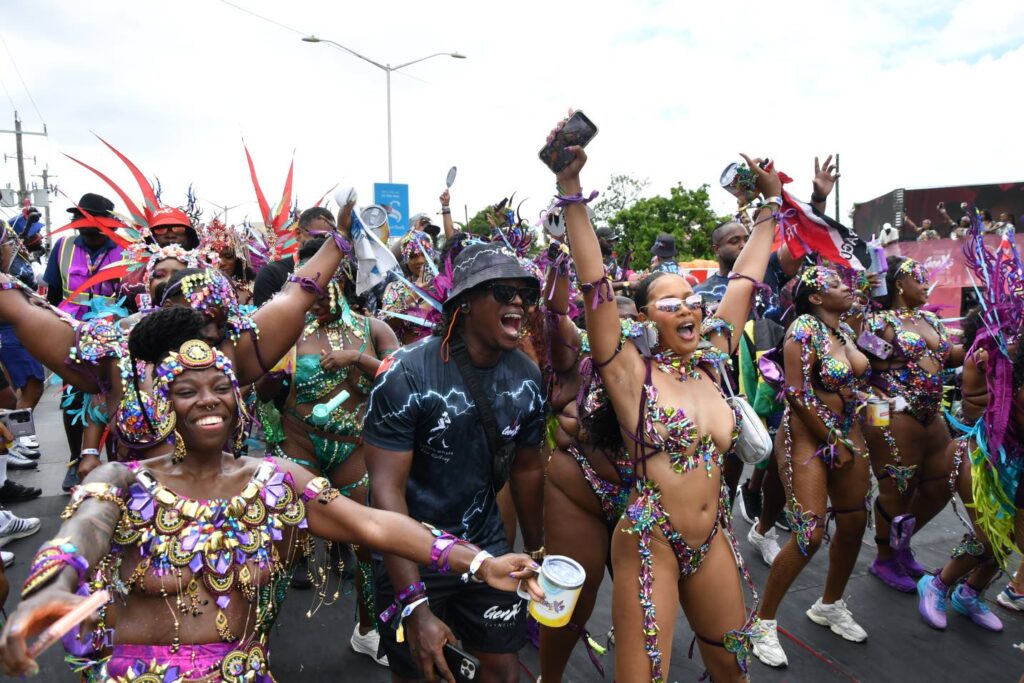
    Under the warm Jamaican sun, thousands of costumed revellers took to the streets for the annual GenXs Carnival parade on Sunday, drawing first-time participants, long-time Carnival fans and international visitors united by a shared love of soca music, celebration and community. For many attendees, this year’s event carried far more meaning than just a day of dancing and revelry, serving as a powerful symbol of the island’s resilience following a devastating natural disaster one year prior.

    For married couple Latara and Nicholi Stevens, Sunday marked a meaningful new chapter in their years-long Carnival tradition. The pair had attended the annual celebration since they were dating, and for years before their wedding they had chosen to parade with a different competing band. This year, however, they made the deliberate decision to switch and join the GenXs procession – and neither had any regrets about their choice.

    “I am so excited to be here – this is my first time jumping with GenXs, and I could not be happier,” Latara Stevens told the Jamaica Observer in an on-site interview. “I have always loved Carnival and soca music. We have been coming to this festival every year since before we got married, and it is such a special joy to be able to share this experience with my husband right here, right now.”

    Nicholi Stevens echoed his wife’s enthusiasm, noting that the couple’s love for soca runs so deep that they walked down the aisle to a piano arrangement of *Hello*, a popular soca track from artist collective Kestheband. He added that the event fell just days after the couple’s third wedding anniversary, making their first GenXs experience an even more memorable celebration of their marriage and shared hobby. “We usually stick with another band, but this year we decided to shake things up, and the energy GenXs brings is incredible,” he explained. “It’s just such a wonderful feeling getting to enjoy Carnival with my wife. This is a tradition we’ve kept up every year for longer than we’ve been married, and I wouldn’t trade it for anything.”

    For Nickesha Roach, a professional chef and seasoned Carnival attendee, simply having the event go ahead this year was a victory in itself. Last October, Category 5 Hurricane Melissa tore across Jamaica, leaving widespread destruction across large swathes of the island and casting deep uncertainty over whether 2024’s Carnival could proceed as planned. For Roach, the packed streets and smiling faces on Sunday were a powerful testament to Jamaica’s resilience.

    Standing out in her vivid, handcrafted Carnival costume, Roach said she could not have been happier to see the festival move forward after a challenging year. “This is not my first Carnival, but this year feels different,” she shared. “After Hurricane Melissa hit, we weren’t even sure if anything like this could happen this year. Having Carnival go ahead gives us all hope – it shows the whole country is bouncing back strong. This event brings so many visitors to our island, it boosts our local economy, and that matters so much to all of us right now. The energy on the road is amazing, I love the music and all the beautiful costumes – it just doesn’t get better than this.”

    The draw of Jamaica’s unique Carnival vibe brought attendees from across the globe this year, including Rosa Salinas, an Australian national who currently resides in Manchester, England. Salinas had previously participated in Carnival celebrations in Trinidad and Tobago, but said she had dreamed of experiencing Jamaica’s take on the festival for years – and it exceeded every one of her expectations.

    “I’ve always wanted to do Carnival in Jamaica, and so far it’s the best Carnival I’ve ever been to,” Salinas said. “I love everything about it – the Jamaican food, the warm hospitality of the people here, the infectious soca music, even this gorgeous weather. I made a new friend here from Puerto Rico on this trip, and she’s loving every minute of it too.”

    For Lori Brown, a Jamaican-born participant who now lives in Connecticut in the United States, Sunday marked her very first Carnival experience at any event, and she jumped at the chance to check it off her bucket list when her friends invited her to join GenXs. “Costumes and all the associated fees do add up to quite a bit of money, but it’s totally worth it,” she explained. “I love trying new experiences, my friends really wanted to come, so here I am – and I’m loving every second.”

    Even for repeat GenXs participants like Dr. Rebecca Waugh, this year’s event delivered the same electrifying energy that keeps her coming back. Waugh, a mental health professional with a doctorate in healthcare administration who now lives abroad, returns to Jamaica every Easter specifically for Carnival, combining the festival with a visit to her father, who still lives in her hometown of St Mary. This year marked her third time parading with GenXs, and she said the band has never let her down.

    “Carnival is actually what brings me back to Jamaica every year,” Waugh explained. “GenXs is number one – they always bring incredible energy, and this year was no exception. I work in the mental health sector, so I know better than anyone how important it is to prioritize mental well-being. Your mental health impacts every part of your overall health, and taking time to do things that bring you joy is a critical form of self-care. Being here at Carnival with everyone? This is my self-care, and it doesn’t get better than this.”

    Across the parade route, stories of new adventures, long-held traditions and shared resilience echoed the overarching mood of this year’s GenXs Carnival: a celebration of joy, connection and the unbreakable spirit of Jamaica.