
A woman has reached out to a senior legal expert seeking guidance on her five-year marriage, where her husband’s repeated infidelity has resulted in ongoing sexually transmitted infections that have left her facing infertility. Now that she has achieved financial independence, she is ready to end the marriage and pursue legal action for the severe physical and emotional harm he has caused, and she wants to know if her claim has strong legal standing.
标签: Jamaica
牙买加
-
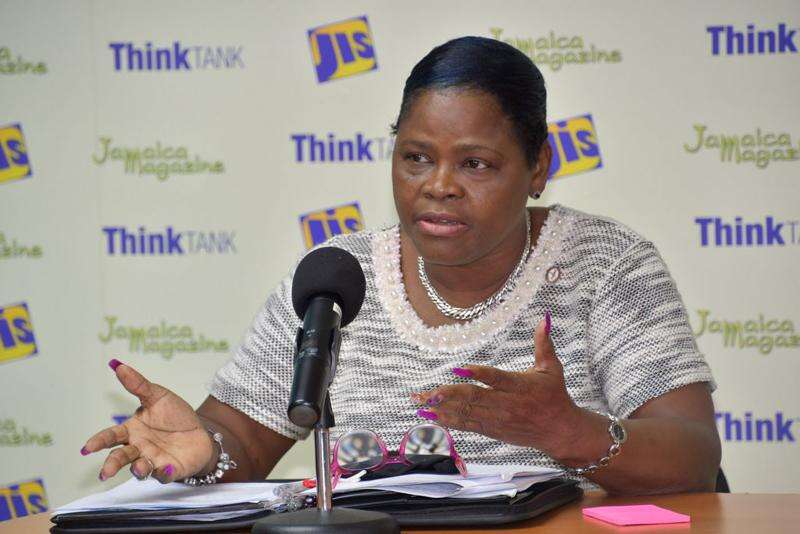
Lay magistrates mark 41 years of justice and service during church service in Hanover
On a recent Sunday in Lucea, Hanover, Jamaica, members of the Lay Magistrates’ Association of Jamaica (LMAJ) gathered at Lucea United Church for a national service of celebration, marking 41 years of voluntary, dedicated contribution to the country’s legal and community frameworks. The event, held under the official theme “LMAJ at 41, Strengthening Justice through Service”, brought together sitting Justices of the Peace (JPs), local clergy, community stakeholders, and faith leaders to reflect on decades of work and renew the organisation’s founding mission.
In her keynote address to the assembled congregation, LMAJ President Paulette Kirkland, JP, framed the association’s work not as a mere civic obligation, but as a calling rooted in both legal principle and spiritual values. Noting the anniversary fell just one week after the Easter season, a period defined by reflection, sacrifice and renewal in Christian tradition, Kirkland drew a deliberate parallel between lay magistrates’ legal duties and the model of servant leadership central to Christian faith.
“Lent is a season of reflection, sacrifice, humility, and renewal. It reminds us of Christ’s call to servant leadership — a leadership grounded not in power, but in love; not in status, but in sacrifice,” Kirkland told attendees. She argued that the pursuit of justice extends far beyond a technical legal function, positioning it as a divine mandate shaped by righteousness, wisdom, and compassion. “In a world where injustice can weaken communities and erode trust, our service strengthens the very foundation of our society,” she added.
Looking back on 41 years of the LMAJ’s operation across Jamaica, Kirkland paid tribute to the thousands of unpaid voluntary hours JPs have contributed to parish courts and local communities across the island. She anchored the core requirements of the JP role in the biblical verse Micah 6:8, which calls for people “to do justly, to love mercy and to walk humbly with our God”, breaking down each phrase as a guide to the work of lay magistracy. “To do justly: ensuring fairness without prejudice or partiality. To love mercy: recognising the humanity behind every case. To walk humbly: understanding that true authority comes from God,” she explained.
As the association enters its 42nd year of service, Kirkland used the anniversary occasion to issue a call for collective recommitment to the non-negotiable core values of integrity and impartiality, particularly at a moment when rising concerns over injustice have eroded public trust in social and legal institutions across the globe. “Anniversaries are not only moments of celebration; they are moments of recommitment,” she emphasized.
Lennox Anderson-Jackson, Custos of Hanover, echoed Kirkland’s remarks, praising JPs for their four-decade legacy as quiet but transformative pillars of Jamaican local communities. Describing JPs as “mediators, mentors, advocates and guardians of good order”, Anderson-Jackson noted that the impact of their work in resolving community conflicts, maintaining social peace and upholding the rule of law cannot be overstated. He added that in an era of growing public skepticism around trust and equity, the work of lay magistrates has grown more, not less, critical to societal stability, echoing the long-held legal principle that “Justice must not only be done, but must be seen to be done”.
The anniversary celebration unfolded against a backdrop of unaddressed internal challenges for the LMAJ, which has recently navigated questions surrounding member ethical standards and professional conduct. While Reverend Glenroy Clarke, pastor of the host Lucea United Church and a past president of the LMAJ’s Hanover chapter, did not explicitly name these ongoing challenges during his sermon, he centered his remarks on the urgent need for unity within the association. Clarke stressed that while internal disagreement may occur, fragmentation is not an acceptable outcome for the organisation. “Uncertainty may remain ahead of us but we are no longer divided as an association. We are stronger together to stand up to the test of times,” Clarke asserted.
-

‘Never seen cocaine before’
MONTEGO BAY, St James — A 68-year-old British domestic assistant has walked free from a Jamaican parish court after a judge dismissed all cocaine smuggling charges against him, ruling that prosecutors failed to prove he knowingly hid nearly four pounds of the illicit drug in packaged food for export to the United Kingdom.
Lloyd Swimmer, a resident of London, was found not guilty last Tuesday on four separate charges: possession of cocaine, trafficking of cocaine, attempted export of cocaine, and conspiracy to commit drug offenses. The verdict, delivered by St James Parish Court presiding judge Natiesha Fairclough-Hylton, centered on two critical gaps in the prosecution’s case: unreliable witness testimony and a lack of evidence that Swimmer was aware of the cocaine hidden in his carry-on luggage.
The legal proceedings trace back to an incident at Sangster International Airport’s departure lounge on February 23, 2025. Acting on an anonymous tip, narcotics investigators approached Swimmer as he waited in the check-in line for a flight bound for London’s Heathrow Airport. Swimmer was in the company of a woman when officers stopped him, and when questioned, the woman clarified she was not traveling with him. Swimmer voluntarily provided his travel documents, confirmed he was traveling with two bags, and consented to a full search of his luggage. At that time, he told investigators no one had given him any items to carry back to the UK, a statement that prosecutors later challenged.
A search of Swimmer’s large checked suitcase turned up no illegal contraband. Shortly after the search concluded, the woman who had been with Swimmer hugged him briefly and left the airport terminal. Investigators then turned their attention to his carry-on bag, where they discovered a brown shopping bag holding four pre-packaged food items: three packets labeled as a popular brand of coffee, and one labeled almond porridge mix. When one of the coffee packets was cut open, officers found a white powdery substance that tested positive for cocaine. A subsequent examination at the Firearms and Narcotics Investigation Division (FNID) confirmed the seizure totalled 3 pounds and 11 ounces of cocaine.
When confronted with the find, Swimmer told officers he had no knowledge of the drug, and claimed he had never even seen cocaine before. He explained that the packaged food items had been given to him by a woman named Kay, and added that his vision was severely impaired by glaucoma, making it impossible for him to closely inspect the sealed packages.
In her ruling, Judge Fairclough-Hylton emphasized that the prosecution’s key civilian witness — the woman who had given Swimmer the packages and was with him at the airport — had given inconsistent testimony that fell apart under cross-examination, leaving her evidence inadmissible for lack of credibility. The judge also accepted the defense’s argument that Swimmer did not act with willful blindness to the contents of the packages. The court noted that Swimmer, who has severe vision impairment, took what reasonable steps he could to confirm the items were legal before packing them, conduct that contradicts claims he knowingly agreed to transport illicit drugs.
Under Jamaican criminal law, the prosecution is required to prove a defendant’s guilt beyond a reasonable doubt. Finding that this standard had not been met, the judge acquitted Swimmer on all counts.
Following the verdict, defense attorney Martyn Thomas spoke to reporters about the outcome. “It is a matter of considerable relief that Swimmer has been fully exonerated. His ordeal has now come to an end, and he is in a position to move forward and resume his life,” Thomas said.
-
Trump deletes Jesus post of himself after outcry
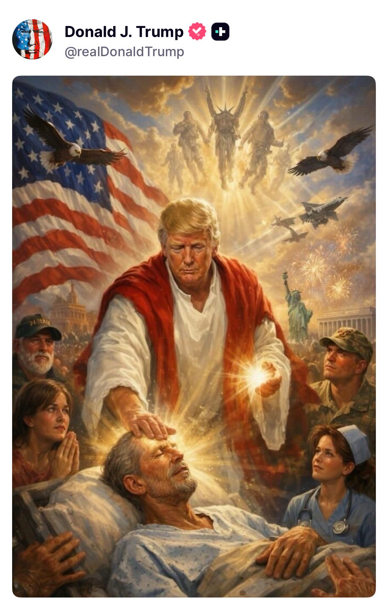
A controversial AI-generated image that depicted former U.S. President Donald Trump in a Jesus-like healing pose has been pulled from his Truth Social platform, after fierce pushback from prominent conservative Christian leaders — some of the politician’s most loyal core supporters. The digital artwork, which was uploaded to the platform late Sunday, showed Trump draped in flowing red and white robes, placing his hand on the forehead of a figure presented as unwell. Glowing light radiated from both Trump’s hand and head in the image, with an American flag displayed in the background and a crowd of onlookers staring up at him with expressions of reverence. The image quickly sparked widespread outrage across religious and political circles, prompting the former president to take it down on Monday. When questioned by reporters about the inflammatory post, Trump pushed back against claims he intended to frame himself as Jesus Christ. “I did post it, and I thought it was me as a doctor and had to do Red Cross,” he told reporters. “It’s supposed to be me as a doctor, making people better. And I do make people better. I make people a lot better.” Despite the former president’s explanation, the post drew sharp condemnation from high-profile conservative Christian commentators. Megan Basham, a widely recognized conservative journalist and political commentator, publicly denounced the image in a post on X, calling it “outrageous blasphemy.” “I don’t know if the president thought he was being funny or if he is under the influence of some substance or what possible explanation he could have for this OUTRAGEOUS blasphemy,” Basham wrote. “He needs to take this down immediately and ask for forgiveness from the American people and then from God.” This incident is far from an isolated case: Trump has a well-documented history of leaning into religious imagery to frame his political persona, particularly ahead of the 2024 presidential election. During his 2023 New York civil bank fraud trial, the former president shared a supporter-drawn sketch that depicted him sitting alongside Jesus inside the courtroom. Beyond shared imagery, Trump’s closest political and spiritual advisors have repeatedly drawn deliberate comparisons between Trump and Jesus to frame his political struggles as a kind of divine mission. Earlier this April, during an Easter lunch held at the White House during his first term, prominent televangelist and long-time Trump spiritual advisor Paula White-Cain directly compared the former president to Jesus Christ, framing his legal challenges as a modern-day parallel to Jesus’ own betrayal and false accusation. “You were betrayed and arrested and falsely accused. It’s a familiar pattern that our Lord and Saviour showed us,” White-Cain stated at the event.
-
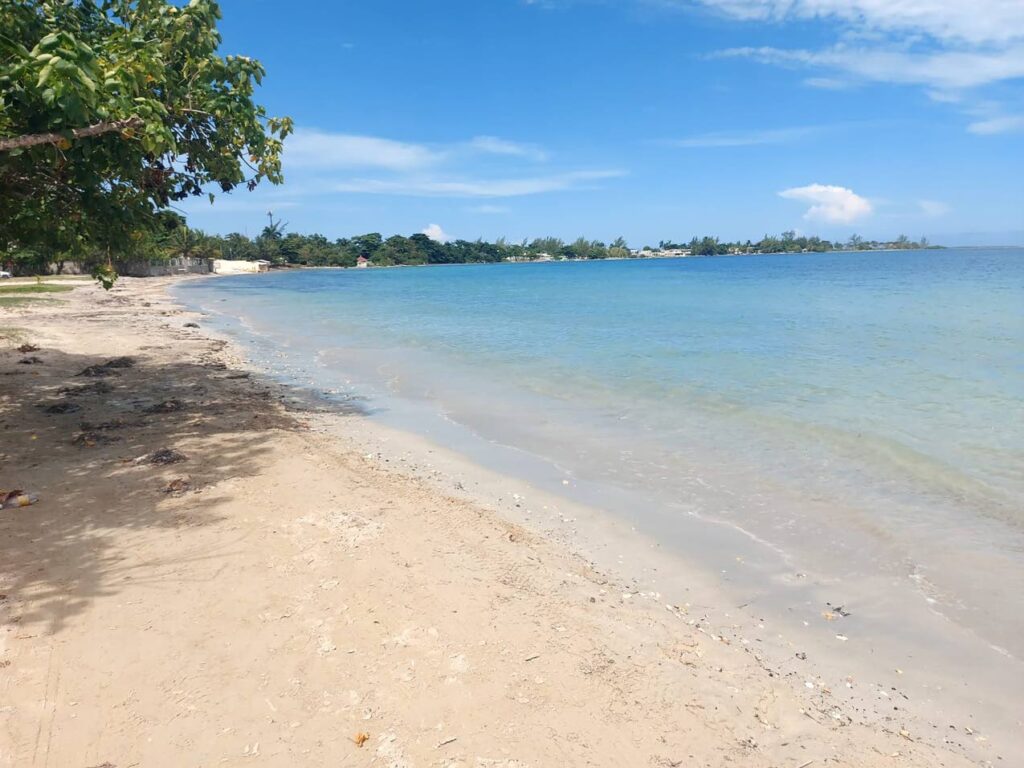
JaBBEM slams proposal for hotel beach pass fees
A prominent Jamaican environmental and beach advocacy organization is pushing back against the Andrew Holness administration’s new beach access framework, arguing that the proposed policy falls short of guaranteeing unfettered public access to the island’s public foreshore lands.
Last month, Prime Minister Andrew Holness tabled the long-awaited Beach Access and Management Policy in Jamaica’s Parliament, a piece of policy that aims to update outdated legal definitions of coastal land types including beaches, foreshores, backshores and water shelves. The proposal also maps out the government’s plan to formalize beach access rules, outlines necessary legislative changes, and revises approval requirements for new coastal development projects. A key provision of the draft policy encourages hotels that control sections of public beach to implement a tiered beach pass system, where non-hotel guests pay a government-consulted reasonable fee to access the stretch of beach within the hotel’s property.
But Dr. Devon Taylor, president of the Jamaica Beach Birthright Environmental Movement (JaBBEM), says the proposed system violates the fundamental public right to Jamaica’s coastal lands, which are legally vested in the public trust. Taylor argues that under Jamaican law, all foreshores and seabeds are held in perpetuity by the Crown as a public trust for the Jamaican people, not for government or private commercial interests to monetize. “Foreshores are the heritage of the Jamaican people, enshrined in our constitution,” Taylor explained in an interview. “It is unacceptable for a private hotel to charge Jamaicans to access a natural resource they already collectively own.”
Taylor notes that his group does not oppose hotels charging for the private amenities they provide, such as restroom access, bar service, or lounge facilities. Instead, he calls for a clear separation between access to public beach land and access to private on-site services. “If a visitor wants to use a hotel’s private bathroom or restaurant, that is fair for the hotel to charge for,” Taylor said. “But charging people just to step onto the public foreshore is effectively selling the Jamaican people back their own heritage.”
To back his argument, Taylor points to existing successful models across the Caribbean, where nations including Barbados, St. Kitts and Nevis, The Bahamas, and the Cayman Islands guarantee free public access to all beach lands while still allowing hotels to charge for private amenities. “Critics claim free access would destroy the hotel industry, but there is no evidence to support that claim,” Taylor said. “None of these peer nations see chaos on their beaches, and hotels still turn a healthy profit. The argument that exclusion is necessary is nothing more than a baseless farce.”
Beyond the beach pass provision, Taylor highlights two additional critical flaws in the draft policy. First, the policy frames public beach access as a regulated privilege granted by the state rather than an inherent, inalienable right of the Jamaican people. Taylor calls this framing a reintroduction of colonial-era resource exclusion, wrapped in modern policy language, and demands that public access to the foreshore be codified as absolute, unconditional, and independent of any state licensing regime. Second, the policy endorses the construction of private artificial beaches, a practice Taylor says prioritizes commercial profit over ecological health. Artificial beaches require the removal of natural limestone and volcanic rock formations that naturally absorb wave energy, reduce storm surge damage, and support native fisheries. This practice also converts publicly owned submerged land into a private amenity, effectively dispossessing the Jamaican people under the guise of leisure development.
JaBBEM is calling for an immediate moratorium on all new artificial beach construction and an independent ecological audit of all existing artificial beach installations across the island. The organization is also demanding that the entire draft policy be withdrawn from Parliament and revised to enshrine full public right of access to all Jamaican foreshores. “The sea belongs to Jamaica. The beach belongs to Jamaica. The foreshore belongs to Jamaica,” Taylor stressed. “No government licensing framework can ever change that fundamental fact.”
-
‘Deeply traumatic!’: Injured bystander in carnival shooting speaks out
KINGSTON, Jamaica — A shooting at a high-profile pre-Carnival event in the Jamaican capital has left three people injured, including an American tourist who is now speaking out about the “deeply traumatic” experience and demanding sweeping changes to public event safety protocols across the country.
Jeremy Watson had traveled to Jamaica to join in the island’s iconic annual Carnival celebrations, and the Big Wall Revolution gathering at the Ranny Williams Entertainment Centre was supposed to be the final stop of his vacation on Sunday. What he expected to be a joyful, memorable night quickly devolved into chaos when a violent altercation broke out between a group of entertainers at the venue. Just minutes after Watson entered the space, a stray bullet hit him, cutting his trip short and upending his life.
“What should have been a celebratory and memorable evening instead became a deeply traumatic experience,” Watson said in a public statement released this week. Watson, who suffered severe nerve damage from the gunshot wound, says his injury could leave him with permanent long-term disability. He is scheduled to be airlifted back to the United States to undergo urgent, specialized surgery, and the incident has already left him grappling with overwhelming physical pain, emotional trauma, and mounting unexpected financial strain.
Beyond the shooting itself, Watson harshly criticized the inadequate emergency response on site during the incident. Though an ambulance was already stationed at the paid, organized event, he said the vehicle lacked basic life-saving medical supplies, and on-site emergency personnel were unable to properly control his severe bleeding. “This incident represents a serious failure in ensuring that safe and secure environment that patrons at organised, paid events expect,” he said, calling the entire situation “unacceptable.”
Watson is one of three people wounded in the violence, which investigators have tied to a public dispute between high-profile entertainment figures. Popular podcaster Jhaedee Richards, who goes by the professional name Jaii Frais, was also shot and remains hospitalized under police guard. The third victim, a member of one of the involved entertainer’s entourages, is currently in critical condition and still undergoing emergency surgery.
Local law enforcement has confirmed that Jahvel “Jahvy Ambassador” Morrison, a well-known Jamaican music producer and artist manager, is currently in police custody as the investigation progresses. Initial police reports show the shooting erupted following a confrontation between Morrison and Richards near a venue restroom, where multiple people pulled firearms during the fight. No formal charges have been filed against any suspect as of yet, and detectives continue to piece together the full sequence of events that led to the violence.
For Watson, the incident is far more than a personal tragedy — it is a critical wake-up call for Jamaican authorities and event organizers. He is calling on local officials to implement far stricter safety screening protocols, invest in improved emergency response training and resources for public events, and hold event organizers legally accountable for failures that put attendees at risk. “I can only hope that Jamaica takes this incident as a serious wake-up call and holds event organisers accountable for implementing the necessary safeguards to prevent any future patrons from enduring a situation like mine,” Watson said. “No individual attending an event for enjoyment should have their life threatened or leave with life-altering injuries due to preventable failures in safety and preparedness. There must be accountability, and there must be change to ensure that the well-being and security of all patrons are treated as a priority, not an afterthought.”
-
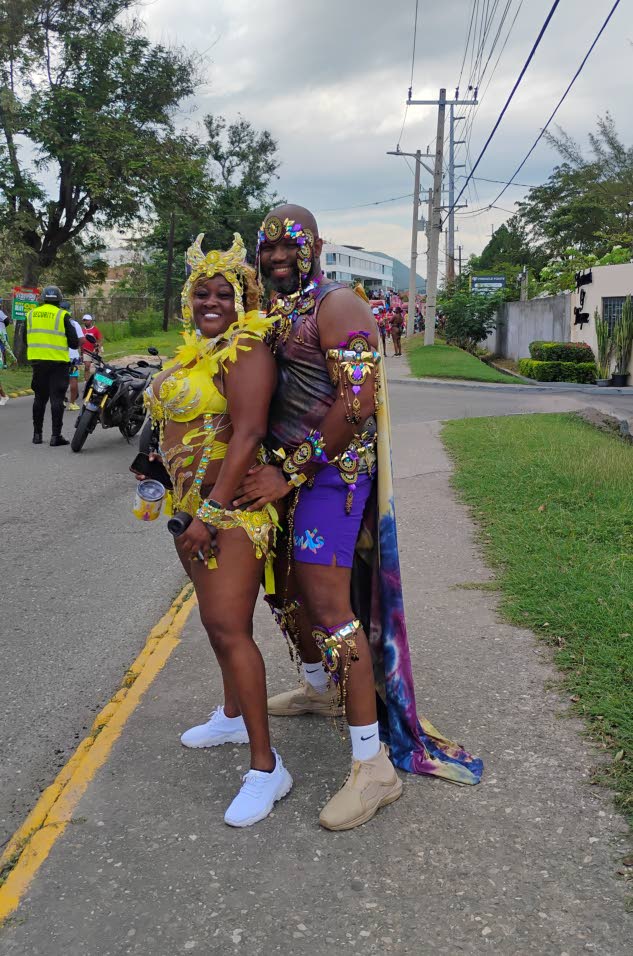
Husband-and-wife duo switch to GenXs and loved it
Under the warm Jamaican sun, thousands of costumed revellers took to the streets for the annual GenXs Carnival parade on Sunday, drawing first-time participants, long-time Carnival fans and international visitors united by a shared love of soca music, celebration and community. For many attendees, this year’s event carried far more meaning than just a day of dancing and revelry, serving as a powerful symbol of the island’s resilience following a devastating natural disaster one year prior.
For married couple Latara and Nicholi Stevens, Sunday marked a meaningful new chapter in their years-long Carnival tradition. The pair had attended the annual celebration since they were dating, and for years before their wedding they had chosen to parade with a different competing band. This year, however, they made the deliberate decision to switch and join the GenXs procession – and neither had any regrets about their choice.
“I am so excited to be here – this is my first time jumping with GenXs, and I could not be happier,” Latara Stevens told the Jamaica Observer in an on-site interview. “I have always loved Carnival and soca music. We have been coming to this festival every year since before we got married, and it is such a special joy to be able to share this experience with my husband right here, right now.”
Nicholi Stevens echoed his wife’s enthusiasm, noting that the couple’s love for soca runs so deep that they walked down the aisle to a piano arrangement of *Hello*, a popular soca track from artist collective Kestheband. He added that the event fell just days after the couple’s third wedding anniversary, making their first GenXs experience an even more memorable celebration of their marriage and shared hobby. “We usually stick with another band, but this year we decided to shake things up, and the energy GenXs brings is incredible,” he explained. “It’s just such a wonderful feeling getting to enjoy Carnival with my wife. This is a tradition we’ve kept up every year for longer than we’ve been married, and I wouldn’t trade it for anything.”
For Nickesha Roach, a professional chef and seasoned Carnival attendee, simply having the event go ahead this year was a victory in itself. Last October, Category 5 Hurricane Melissa tore across Jamaica, leaving widespread destruction across large swathes of the island and casting deep uncertainty over whether 2024’s Carnival could proceed as planned. For Roach, the packed streets and smiling faces on Sunday were a powerful testament to Jamaica’s resilience.
Standing out in her vivid, handcrafted Carnival costume, Roach said she could not have been happier to see the festival move forward after a challenging year. “This is not my first Carnival, but this year feels different,” she shared. “After Hurricane Melissa hit, we weren’t even sure if anything like this could happen this year. Having Carnival go ahead gives us all hope – it shows the whole country is bouncing back strong. This event brings so many visitors to our island, it boosts our local economy, and that matters so much to all of us right now. The energy on the road is amazing, I love the music and all the beautiful costumes – it just doesn’t get better than this.”
The draw of Jamaica’s unique Carnival vibe brought attendees from across the globe this year, including Rosa Salinas, an Australian national who currently resides in Manchester, England. Salinas had previously participated in Carnival celebrations in Trinidad and Tobago, but said she had dreamed of experiencing Jamaica’s take on the festival for years – and it exceeded every one of her expectations.
“I’ve always wanted to do Carnival in Jamaica, and so far it’s the best Carnival I’ve ever been to,” Salinas said. “I love everything about it – the Jamaican food, the warm hospitality of the people here, the infectious soca music, even this gorgeous weather. I made a new friend here from Puerto Rico on this trip, and she’s loving every minute of it too.”
For Lori Brown, a Jamaican-born participant who now lives in Connecticut in the United States, Sunday marked her very first Carnival experience at any event, and she jumped at the chance to check it off her bucket list when her friends invited her to join GenXs. “Costumes and all the associated fees do add up to quite a bit of money, but it’s totally worth it,” she explained. “I love trying new experiences, my friends really wanted to come, so here I am – and I’m loving every second.”
Even for repeat GenXs participants like Dr. Rebecca Waugh, this year’s event delivered the same electrifying energy that keeps her coming back. Waugh, a mental health professional with a doctorate in healthcare administration who now lives abroad, returns to Jamaica every Easter specifically for Carnival, combining the festival with a visit to her father, who still lives in her hometown of St Mary. This year marked her third time parading with GenXs, and she said the band has never let her down.
“Carnival is actually what brings me back to Jamaica every year,” Waugh explained. “GenXs is number one – they always bring incredible energy, and this year was no exception. I work in the mental health sector, so I know better than anyone how important it is to prioritize mental well-being. Your mental health impacts every part of your overall health, and taking time to do things that bring you joy is a critical form of self-care. Being here at Carnival with everyone? This is my self-care, and it doesn’t get better than this.”
Across the parade route, stories of new adventures, long-held traditions and shared resilience echoed the overarching mood of this year’s GenXs Carnival: a celebration of joy, connection and the unbreakable spirit of Jamaica.
-
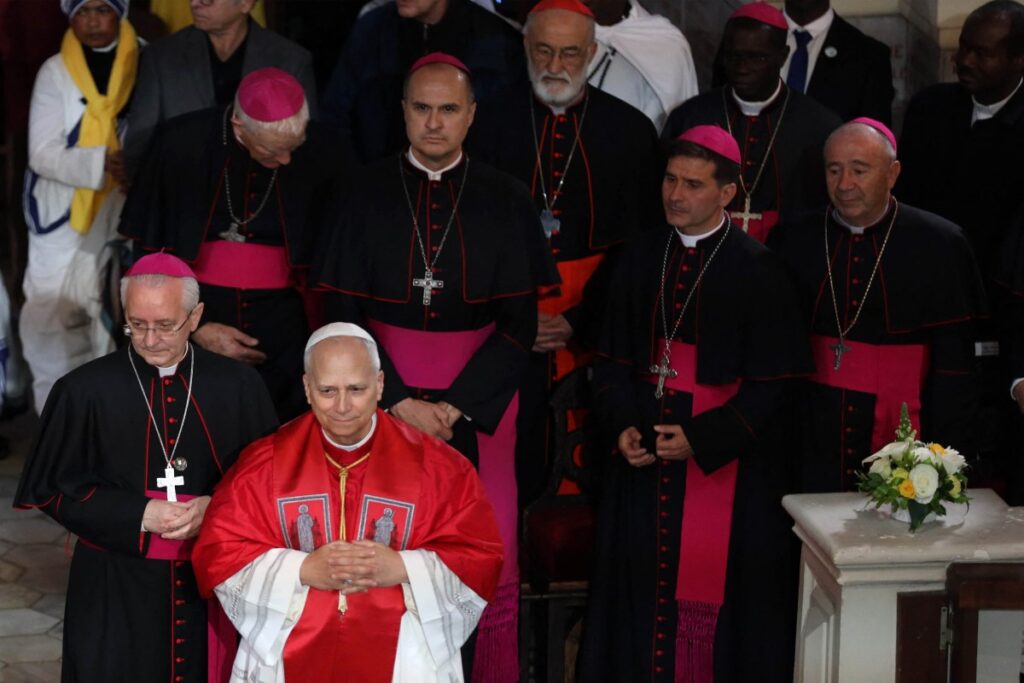
Pope says he doesn’t fear Trump, has ‘moral duty to speak out’ against war
On Monday, as Pope Leo XIV traveled to Algiers for the first stop of a multi-nation African apostolic tour, a public dispute erupted between the pontiff and former U.S. President Donald Trump over the ongoing Middle East conflict, overshadowing the spiritual and diplomatic aims of the trip.
Before the papal plane departed Rome, Trump launched a series of sharp criticisms against Pope Leo, who had publicly called for an immediate end to the war ignited by the joint Israel-U.S. military strike on Iran in late February. The U.S. leader doubled down on his attacks hours later, insisting he had nothing to apologize for, and claimed the pontiff’s stance on Iran was factually wrong. “He was very much against what I’m doing with regard to Iran, and you cannot have a nuclear Iran,” Trump stated, adding that he is “not a big fan of Pope Leo” and accusing the pontiff of recklessly engaging with the Iranian government.
Speaking to reporters aboard his aircraft en route to Algiers, Pope Leo pushed back against the criticism, rejecting any desire for political confrontation with the Trump administration. “I have no intention to debate with Trump, I am not a politician,” the pontiff clarified. He emphasized that his calls for peace flow directly from the core mission of the Catholic Church: “The Gospel says… blessed are the peacemakers. I believe that the Church has a moral duty to speak out very clearly against war and in favour of peace and reconciliation.” Pope Leo added pointedly that he does not fear condemnation from the Trump administration, and will not shy away from proclaiming the Gospel’s message of peace.
Italian Prime Minister Giorgia Meloni quickly stepped in to condemn Trump’s attacks, describing them as “unacceptable.” “It is right and normal for [Leo] to call for peace and to condemn all forms of war,” she stated.
Beyond the transatlantic dispute, Pope Leo’s two-day visit to Algeria carries deep personal spiritual meaning for the pontiff. Algeria is the birthplace of Saint Augustine of Hippo, the 4th and 5th-century Christian theologian whose writings have shaped Catholic thought for millennia, and whose spiritual order the pope himself belongs to. In his very first address after being elected pope in May 2025, Leo identified himself as a “son” of Augustine, and frequently references the theologian’s work in his teachings.
In his opening address at the Algerian Martyrs Memorial in Algiers on Monday, the pontiff paid tribute to the thousands of Algerians killed during the country’s 1954-1962 war of independence from France, and used the occasion to call for cross-national forgiveness and reconciliation. The remarks come at a time of rising diplomatic tensions between Algiers and Paris, and follow a recent private meeting between Pope Leo and French President Emmanuel Macron at the Vatican. “In this place, let us remember that God desires peace for every nation,” the pontiff said.
The ongoing dispute with the Trump administration is not new: Pope Leo has previously criticized Trump’s threats against Iranian civilians as unacceptable, and decried the U.S. administration’s “inhuman” treatment of migrants crossing the southern U.S. border. Trump has responded in kind, calling Pope Leo “WEAK on Crime, and terrible for Foreign Policy”, and has claimed that cardinals elected Leo solely because of his American citizenship. In a recent controversial social media post, Trump shared an AI-generated image that depicted him as Jesus Christ, before deleting the post amid widespread backlash. Iranian President Masoud Pezeshkian condemned the post as an “insult” and “desecration of Jesus” on the social media platform X.
During his flight to Algiers, Pope Leo reiterated that his work is fundamentally different from secular political statecraft. “We’re not politicians, we’re not looking to make foreign policy as he calls it with the same perspective that he might understand it,” the pontiff said.
On Monday, the pontiff also toured two of Algiers’ most iconic religious sites: the Great Mosque of Algiers, which boasts the world’s tallest minaret, and the Basilica of Our Lady of Africa, which overlooks the Bay of Algiers, a landmark that reflects the country’s long history of coexistence between Muslim and Christian communities. On Tuesday, Pope Leo will travel to Annaba, the modern city built on the site of the ancient Roman city of Hippo where Saint Augustine lived and worked for most of his career. He plans to hold a private prayer service at a chapel honoring 19 priests and nuns murdered during Algeria’s brutal 1992-2002 civil conflict, but will not visit the Tibhirine monastery where seven monks were kidnapped and killed in 1996, a killing that remains unresolved decades later.
Pope Leo’s 10-day African tour will also include stops in Cameroon, Angola and Equatorial Guinea, covering more than 18,000 kilometers between April 13 and 23. While in Algeria, three international human rights organizations have publicly called on the pontiff to address the ongoing repression of religious minority communities in the country. While Algeria’s constitution formally guarantees freedom of worship for all faiths under regulated conditions, human rights groups have documented consistent patterns of harassment and discrimination against minority religious groups in recent years.
-
After unsuccessful US-Iran talks, what next for Trump?
After days of high-stakes closed-door negotiations in Islamabad, hopes for a breakthrough deal to de-escalate months of escalating conflict between the United States and Iran have completely collapsed, leaving U.S. President Donald Trump trapped between a set of unappealing policy choices that carry major domestic and international risks ahead of upcoming midterm elections. U.S. Vice President JD Vance, who led the American negotiating team in marathon talks with senior Iranian officials, left Pakistan without any framework for an agreement, shattering earlier expectations that a deal could ease the tensions that have rippled across the entire Middle East since conflict erupted in late February.
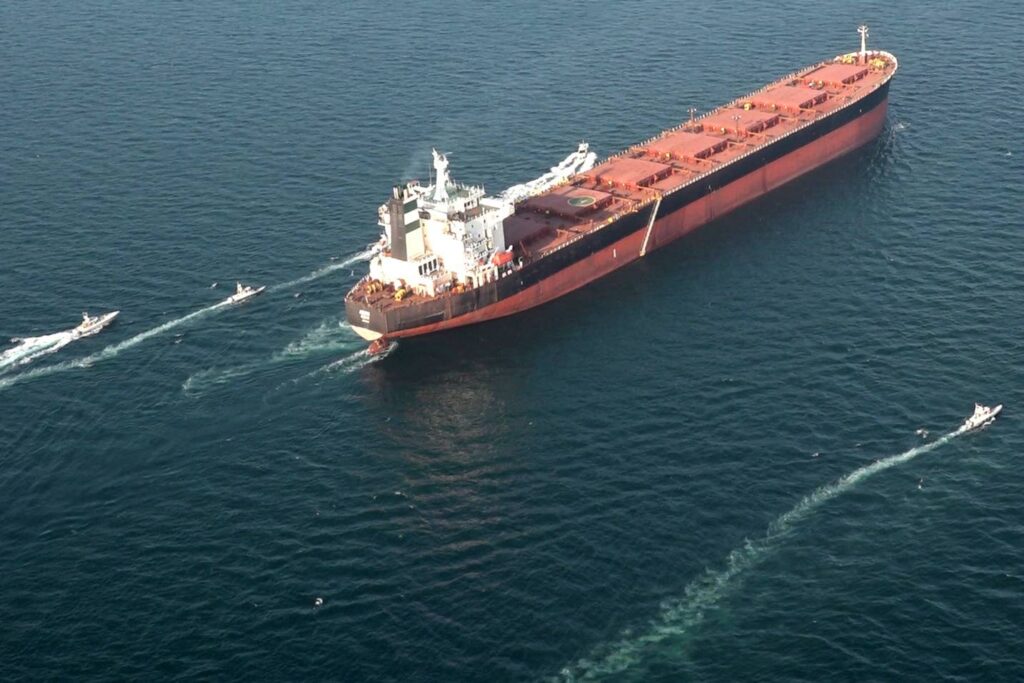
The core challenge now centers on Trump’s earlier order to implement a full naval blockade of the Strait of Hormuz, the strategic chokepoint that carries roughly one-fifth of the world’s daily oil shipments, set to take effect this Monday. Independent regional and security analysts across the globe have warned that moving forward with the blockade would only complicate an already intractable crisis, while walking back the threat would undermine the Trump administration’s repeated public claims that Iran had been cornered and had “no cards” left to play.
Domestically, ramping up military action carries significant political risk for Trump’s party ahead of the midterms. American voters are already grappling with surging gasoline prices driven by market uncertainty over Middle Eastern oil supplies, and a new round of escalation could further alienate an already skeptical electorate. The broader global economic impact also looms large: the proposed blockade would do little to ease the market volatility that has pushed energy prices higher in recent months, deepening the economic jitters already facing major economies worldwide.
Many foreign policy experts have criticized the Trump administration’s approach to the crisis as unplanned and reactive. Brian Katulis, a senior fellow at the Washington-based Middle East Institute, argued that Trump’s off-the-cuff rhetorical style and frequent aggressive threats—what he describes as the president’s “carnival barker” approach—have left senior White House and Pentagon officials constantly scrambling to adjust policy with no clear long-term strategy. “He may be simply buying more time to move in more military assets or because he doesn’t know what else to do. I wouldn’t call it a strategy; it is a military-centric approach without strategy,” Katulis told AFP in an interview.
Shibley Telhami, a leading scholar of Middle Eastern affairs at the University of Maryland and a nonresident fellow at the Brookings Institution, called the threat of a Hormuz blockade “bewildering and seems self-defeating.” He noted that Iran already has deep-seated distrust of Trump, and the unilateral threat has done lasting damage to America’s global diplomatic credibility. “Hard to understate what this makes of what’s left of America’s global credibility,” Telhami said.
Tehran has already issued a sharp warning in response to the blockade threat. Iran’s powerful Revolutionary Guards, the country’s elite military force, pledged over the weekend that any hostile move against the strait would trap Tehran’s enemies in a “deadly vortex” of prolonged conflict.
Israeli security analyst Danny Citrinowicz, a fellow at the Institute for National Security Studies in Tel Aviv, echoed the widespread skepticism that a blockade would force Iran to back down. “There is little reason to believe that a blockade would force Iranian capitulation. If anything, Iran’s demonstrated resilience thus far suggests the opposite,” Citrinowicz posted on the social platform X. He added that Iran’s size and mature military capabilities mean any sustained blockade would require massive, long-term commitments of American military and financial resources, a burden that the U.S. is poorly positioned to take on at this moment.
Public opinion polling suggests that a prolonged military engagement would face significant pushback from the American public. A CBS News poll released Sunday found that negative emotions—worry, stress, and anger—far outweigh feelings of safety and confidence among U.S. adults when asked about the ongoing conflict. More than 80 percent of respondents said the U.S. should prioritize reopening the Strait of Hormuz to improve global oil access, lower domestic gas prices, and support greater freedom for the Iranian people, but fewer than 10 percent believe the Trump administration has made progress on any of those goals.
“ I don’t see how, 40 plus days into this war, that we are safer, that our allies are safer. I’m not even sure Israel is safer,” Democratic Senator Mark Warner said Sunday on CNN’s *State of the Union*. “I don’t understand how blockading the strait is going to somehow push the Iranians into opening it. I don’t get the connection there.”
Returning to sustained, meaningful negotiations also faces major hurdles, after Trump pulled the U.S. out of the 2015 multinational nuclear accord with Iran, which had restricted Tehran’s nuclear program in exchange for relief from crippling international sanctions. Democratic Senator Tim Kaine noted that the U.S. withdrawal from that previous agreement destroyed any remaining trust Iranian leaders might have had in Washington’s commitments. “This is not going to be an easy negotiation because the last negotiation that led to a control of Iran’s nuclear programme, the US made the decision to tear it up and walk away from the deal,” Kaine told CNN.
Katulis echoed that assessment, arguing that mutual distrust runs deep on both sides. “Iranian officials are also untrustworthy and duplicitous, but the Trump Administration is providing the mirror image of that,” he said. “If I were an Iranian official leaving Islamabad, I would wonder if I am back on the Israeli kill list.”
-

Law enforcement authorities in Belize seize plane, drugs in major operation
In a major coordinated anti-narcotics operation carried out over the weekend of April 10, Belizean security and law enforcement agencies have seized nearly 551 kilograms of unprocessed suspected cocaine and a private Cessna aircraft, taking four people into custody as investigations into a transnational drug trafficking network continue.
The operation, which unfolded in the remote Neuland region of northern Belize’s Corozal District, was built on real-time intelligence sharing and cross-border partnership, Belize’s Ministry of Home Affairs and Enterprise confirmed in an official statement. According to ministry details, security personnel began tracking the small aircraft long before it touched down on a clandestine landing strip, monitoring its journey north from South America with live surveillance feeds provided by international partner nations.
The multi-phase operation was structured to maximize the element of surprise and avoid tipping off members of the trafficking ring. First, elite intelligence units carried out prolonged stealth surveillance of known and suspected secret landing sites across northern Belize, mapping potential routes and target locations. Once the aircraft entered Belizean airspace, specialized tactical units from multiple government agencies were deployed to pre-assigned positions surrounding the Neuland landing zone, lying in wait for the aircraft to touch down.
At 6:14 pm local time on April 10, the Cessna landed in the Neuland area, and law enforcement teams moved in immediately to secure the site. In addition to seizing the aircraft and the 551.39 kilograms of cocaine stowed aboard, officers detained two Mexican nationals identified as the aircraft’s pilots, along with two Belizean men who were waiting at the landing site. The total estimated street value of the seized cocaine has not been publicly released by authorities as of the latest update.
Ministry officials announced that they are withholding key details of the operation at this stage of the investigation, noting that a parallel probe is already underway to uncover the full network of senior organizers and major players behind the foiled shipment. The drug was intended for transshipment through Belize to consumer markets in North America, authorities confirmed, adding that the bust disrupts an active trafficking route that criminal networks have attempted to use repeatedly.
The successful operation was led by Belize’s Joint Intelligence Operations Centre (JIOC), with tactical support from specialized units across four key agencies: the Belize Police Department, Belize Defence Force, Belize Coast Guard, and Customs Department. The ministry emphasized that the result of this operation is a clear demonstration of the Belizean government’s consistent, unwavering commitment to dismantling transnational drug trafficking networks and rooting out organized criminal activity within the country’s borders.
“Through strengthened law enforcement protocols, deeper cross-agency coordination, enhanced local and regional cooperation, and comprehensive prevention strategies, we will continue to confront these threats head-on,” the statement read. Officials added that they expect more breakthroughs in the ongoing investigation as they work to trace the origins of the shipment and arrest additional members of the smuggling ring.