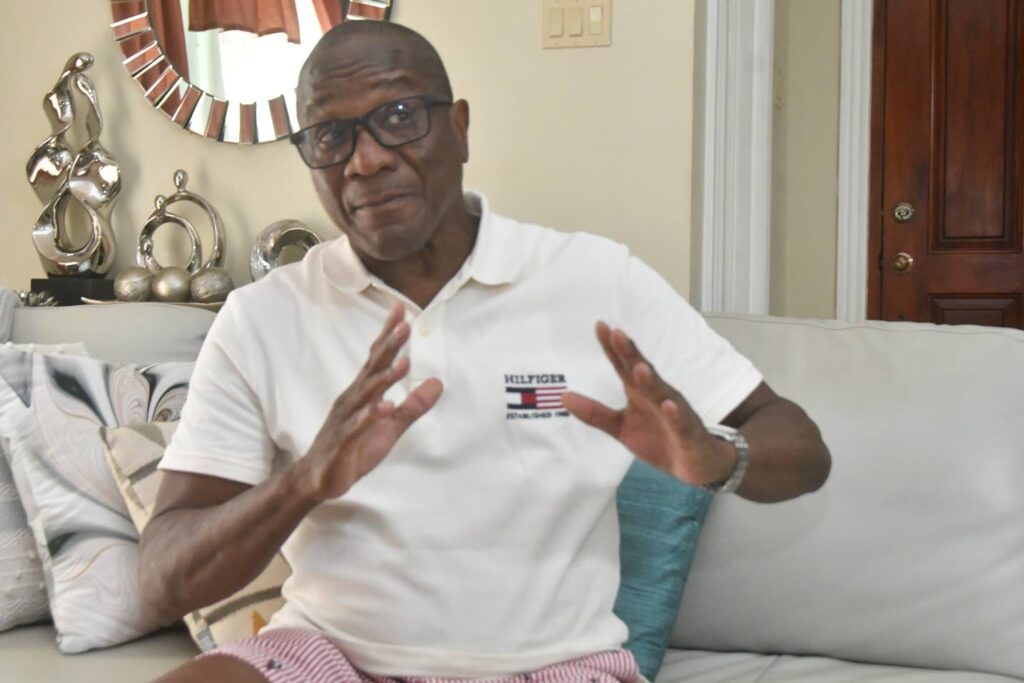
Jamaica’s men’s national football team, widely known as the Reggae Boyz, fell short of securing a spot in this summer’s FIFA World Cup following a narrow 0-1 defeat to the Democratic Republic of Congo in the final inter-confederation play-off match on March 31. For former Jamaican international footballer Michael “Zun” Clarke, this outcome was far from unexpected — he had flagged deep-rooted structural issues within the squad more than two weeks before the decisive defeat, in an exclusive interview with the Jamaica Observer.
Clarke, who built his local career with Cavalier FC and claimed a Manning Cup title during his time at Tivoli Gardens High School, centered his criticism on the squad’s heavy reliance on overseas players of Jamaican heritage, most of whom ply their trade in England. He argued that this recruitment strategy has resulted in a loose collection of individual talents, what he calls a “side” rather than a cohesive, unified team.
In his assessment, the current crop of Reggae Boyz consistently struggles with ball retention and fundamental control, deficiencies that make consistent winning nearly impossible. “You cannot win games playing that way,” Clarke noted. “With all these foreign-based players, I believe we would stand a far better chance leaning into domestic talent. When overseas players come together, they are just a side, not a team — everyone is focused on their own individual goals.”
He drew a clear distinction between a makeshift side and a cohesive unit: a true team builds chemistry over time, learning each other’s on-pitch tendencies, preferred positions and playing styles to create fluid, connected play. To foster that cohesion, Clarke says Jamaica needs to fundamentally reframe its player development strategy starting at the grassroots level.
His recommendation mirrors the long-term development models used by elite football nations like Brazil: identify a core group of young local players, keep that group together through consistent training and competition, and mould them into a cohesive unit over years of nurturing and development. “That’s what successful programs do,” he explained. “They run camps, they invest in developing a set of players from a young age, and refine them into a competitive unit. That’s exactly what Jamaica needs to implement going forward.”
While Clarke emphasized he is pleased whenever overseas-based players get the opportunity to represent Jamaica, he raised persistent questions about the depth of their commitment to the national side. “I don’t think country comes first for a lot of them — their club comes first,” he argued. “They won’t throw themselves into a 50-50 challenge if there’s a risk of injury, because their priority is protecting their place at their professional club.”
He also echoed a common critique shared by many fans and local football analysts: that most English-born players accept Jamaica’s call-up only after they fail to crack the senior England national team. “If they could make England’s squad, they would choose England every time,” Clarke said. “For a lot of them, getting called up by Jamaica is just a second chance to compete on the World Cup stage, so they take the opportunity.”
To back up his argument for prioritizing domestic talent, Clarke pointed to Jamaica’s historic 1998 World Cup qualification — the only time the Reggae Boyz have ever reached the tournament — when the qualifying squad was made up almost entirely of locally based players. Only three England-based players were part of that qualifying group: Paul Hall, Fitzroy Simpson, and Deon Burton. Additional England-born players including Robbie Earle, Marcus Gayle, Frank Sinclair, and Darryl Powell joined the squad after qualification was secured. Though Jamaica exited in the group stage after a 2-1 win over Japan and losses to Croatia and Argentina, the run remains a source of immense national pride for Clarke and Jamaicans across the globe.
Looking ahead to the 2026 World Cup, which will be co-hosted by Canada, the United States and Mexico, Clarke predicts five-time champions Brazil will lift the trophy, and says the South American side has always been his second-favorite team after Jamaica. “Jamaicans grew up playing a Brazilian style of football — exciting, attacking football, so Brazil has always been my first pick outside of the Reggae Boyz,” he explained.
When asked to name the greatest player Jamaica has ever produced, Clarke answered without hesitation: Herbert “Dago” Gordon, a dynamic attacking midfielder who played for Boys’ Town and represented Jamaica at the international level before his death in 2013. “Dago was my idol — he was a magician on the pitch,” Clarke said.
Beyond Jamaican football, Clarke counts Pele, Dunga, Neymar, 1978 World Cup winner Mario Kempes, and Argentine legend Lionel Messi among his favorite all-time players. He nicknamed Messi “One Lef” as a playful reference to the star’s reliance on his dominant left foot — joking that “if you cut off his left foot, all he can do is dribble across the field, he won’t threaten the goal.” Still, Clarke was quick to praise the eight-time Ballon d’Or winner, adding “Messi is good, I have to give him his props. If I left him off the list, I’d be biased.”
Clarke, who notes he was a two-footed player during his own career, says he has always had a soft spot for players who can attack and pass equally well with both feet. “When people asked me which foot was stronger when I played, I’d tell them they had to figure it out for themselves — I could hit a hard shot from anywhere with either foot,” he recalled. That versatility, he says, is the mark of a truly elite attacking player.