标签: Jamaica

牙买加

  • Brace for gas blow

    Brace for gas blow

    Jamaica’s Energy Minister Daryl Vaz unveiled sweeping changes to state-owned refinery Petrojam Limited’s fuel pricing framework during a Wednesday post-Cabinet press briefing at Jamaica House in St. Andrew, announcing the end of the existing capped pricing system amid crippling financial losses driven by escalating geopolitical tensions in the Middle East. Starting next week, Jamaican consumers will face full, market-aligned fuel price increases, as the government can no longer sustain billions in subsidies that have shielded the public from skyrocketing global oil costs for the past month.

    Under the current policy, which capped weekly fuel price movements at $4.50 Jamaican dollars per litre in either direction, Petrojam absorbed more than 60 percent of global price increases between March 12 and April 8, 2026. Data shared by Vaz shows that global transport fuel prices rose an average of $49.20 per litre over that period, but only $18 per litre was passed to end consumers. The remaining cost, equal to approximately $1.3 to $1.4 billion Jamaican dollars (US$8.6 million), was covered by the state-owned refinery to protect household and business budgets.

    Vaz warned that continuing the current capped model through June 2026 would cost the Jamaican government a staggering $11.8 billion Jamaican dollars – nearly two-thirds of the current fiscal year’s total revenue – a burden he described as completely unaffordable and unsustainable given the government’s competing national priorities. “No Government in a situation like this can sustain that,” Vaz stated bluntly, adding that ongoing escalations in Middle East tensions have eliminated any near-term hope of a price drop, leaving policymakers with no other option than to restructure the pricing system.

    In place of the single $4.50 weekly cap, Vaz announced a new tiered pricing mechanism designed to align local fuel costs more closely with volatile global market movements. The system will introduce three separate price cap tiers that adjust based on international market conditions, giving Petrojam greater flexibility to respond rapidly to price swings. Vaz emphasized that the shift is unavoidable, and Jamaicans should prepare for sustained price increases as long as Middle East tensions remain elevated.

    To offset the impact of higher prices, Vaz called for immediate national fuel conservation, urging all Jamaicans to adjust personal and business habits to reduce consumption. He also floated potential policy interventions to cut unnecessary travel, including a possible return to hybrid work arrangements similar to those implemented during the COVID-19 pandemic, noting that persistent heavy road traffic suggests many Jamaicans have not yet grasped the severity of the global oil crisis. “It is 100 per cent the responsibility of every Jamaican to realise that we are in a major, major crisis as it relates to the price of oil internationally, and therefore you need to take responsibility for your household and your business to see what you can do,” Vaz said.

    The minister moved quickly to reassure the public that there is no risk of fuel shortages, stressing that Jamaica’s energy security remains fully intact thanks to long-term finished product supply contracts and Petrojam’s domestic refining capacity. He dismissed comparisons to panic buying and supply shortages seen recently in Guyana, noting “it’s not a matter of not being able to buy; it’s the price.” As a short-term reprieve, Vaz announced a 25-cent per litre price reduction at pumps effective Thursday, but warned the drop is temporary and significant increases are likely next week as Petrojam replenishes inventory at current elevated global market prices.

    Before the recent escalation of Middle East tensions, global oil prices traded relatively stable at an average of $70 per barrel with only moderate fluctuations. The breakdown in regional security has upended that stability, creating persistent upward pressure on both crude oil and refined petroleum product prices that has rippled through global energy markets. Without the government’s cap, Vaz confirmed, current prices would be far higher: gasoline would have risen by an additional $26.77 per litre, and diesel would jump between $65 and $75 per litre. As of April 9, ex-refinery prices stand at $176.88 per litre for E10-87 gasoline, $184.32 for E10-90 gasoline, $189.25 for automotive diesel, and $196.09 for ultra low sulphur diesel.

    Moving forward, Vaz said the government will continue closely monitoring global geopolitical and market developments, balancing consumer affordability with fiscal sustainability to make timely, measured decisions that prioritize the best interests of the Jamaican public. The Cabinet will hold additional deliberations in the coming days to finalize national fuel conservation plans to reduce overall demand.

  • Black River police issue high alert for UK child allegedly abducted and brought to Jamaica

    Black River police issue high alert for UK child allegedly abducted and brought to Jamaica

    Authorities in Jamaica’s St Elizabeth parish have ramped up a public safety alert for a young British child, Tau Kleio Rodriguez-Fairplay, who was allegedly abducted by her non-custodial parent and smuggled to the Caribbean island in violation of a formal UK court order. The six-year-old, a resident of Walthamstow in East London, was officially entered into missing person databases by local police in Black River on Thursday, April 9, 2026, more than two months after she was first taken from her primary residence in the UK.

    According to official accounts and statements from the child’s mother, Samar Rodriguez, a lecturer at the London School of Economics, the girl was taken by her ex-partner Athena Belle-Fairplay — also known by the alias Natalie Bartlett-Foster. The pair held a shared custody arrangement for Tau Kleio, and a UK court had explicitly barred the child from being removed from the country without prior written judicial approval. The alleged abduction unfolded in February 2026, when Belle-Fairplay failed to show up to a prearranged handover at a London train station, where she was supposed to return the child to Rodriguez following a scheduled visit.

    UK border officials have since confirmed that Belle-Fairplay flew to Jamaica with Tau Kleio just days after the missed handover, directly contradicting the standing court order. For months, Rodriguez has waged a public and private campaign to recover her daughter, speaking to both local and international media outlets to draw attention to her case, including an in-depth interview with UK national newspaper The Guardian. She even traveled to Jamaica personally and hired a private investigator to track down the pair, but so far all searches have turned up empty.

    Rodriguez has publicly voiced deep frustration with the Jamaican Central Authority (JCA), the government body tasked with upholding Jamaica’s international treaty obligations, including the Hague Convention on the Civil Aspects of International Child Abduction. Local legal representatives who spoke to The Guardian confirmed that the case has been bogged down by repeated administrative delays, with the JCA insisting that it is Rodriguez’s personal responsibility to locate her ex-partner and daughter. In a formal response to the reporting, the JCA countered that the investigation has been slowed by the lack of a confirmed fixed address where the child might be staying.

    Complicating the case further, reporting indicates that official bodies have faced bureaucratic challenges formally classifying Tau Kleio as a missing person, due to the fact that she is in the care of one of her legal parents, despite the violation of custody and court orders.

    Black River police have released a detailed public description of the missing child to aid in community tips: Tau Kleio has a brown complexion, a medium build, stands approximately 104 centimeters (3 feet 6 inches) tall, and was last seen wearing a pink coat decorated with butterfly patterns. Law enforcement is urging any member of the public with information about Tau Kleio Rodriguez-Fairplay’s current location to contact the Black River police station at 876-965-2232, the national emergency police line at 119, or any nearby local police outpost immediately.

  • Bad Dawg vendor model drives micro-business growth across Jamaica

    Bad Dawg vendor model drives micro-business growth across Jamaica

    KINGSTON, Jamaica — A homegrown Jamaican food brand is redefining market expansion by prioritizing local empowerment alongside business growth, building a sustainable distribution model that lifts small business owners across the island. Bad Dawg, a brand under regional food producer CB Foods, has moved beyond traditional retail shelf placements to build a vendor-led micro-enterprise network that turns aspiring entrepreneurs into small business owners under the brand’s umbrella.

    What started as a small pilot project in 2012 with just one branded food cart has now blossomed into a network of 18 independent vendors operating across multiple Jamaican parishes. The model was originally conceived purely as a local job creation effort, but it has steadily evolved into a structured entrepreneurship platform that balances brand support with operational autonomy. Under the framework, vendors own and manage their day-to-day business operations, while Bad Dawg provides critical foundational support including branded assets, comprehensive business training, and streamlined logistics coordination.

    Nicole Hall, senior manager for commercial marketing at CB Foods, emphasized that this community-focused model remains a core strategic pillar for Bad Dawg decades after its launch. “Bad Dawg was born out of a job creation initiative, designed to give individuals the opportunity to be their own boss,” Hall explained. “Through entrepreneurship, our vendors are able to grow and build something meaningful that lasts for themselves and their families.”

    For many participants in the program, the low-risk model has opened doors to scalable growth that would have been out of reach for independent small operators. Take Shauna Lee McCalla, who joined the network eight years ago: she now runs two branded carts and has created five full-time local jobs in her community. Another long-time vendor, Demario Brown, who operates out of a location at NCB in Morant Bay, St Thomas, has expanded to two sales points and manages a team of eight workers that includes temporary seasonal staff.

    The widespread appeal of the Bad Dawg model stems from two key advantages that address common barriers to small business entry: a relatively low barrier to get started, and the instant credibility that comes from partnering with an established local brand. Vendors gain immediate access to existing customer recognition and proven product demand, while still retaining full control over their daily operations and profit streams. “People trust the brand, and that trust carries over into my business,” Brown shared. “It’s pushed me to be more focused about sustainable, long-term growth that I couldn’t have built on my own.”

    Beyond the individual success stories, Bad Dawg’s program aligns with a broader global shift in the food industry toward supporting informal and micro-enterprise activity. More food brands are turning to structured branded vendor systems as a win-win strategy: they allow companies to scale their direct-to-consumer distribution reach without the heavy capital outlay required for opening corporate-owned locations, while creating income-generating opportunities for local community members.

    While Bad Dawg expanded into mainstream supermarket retail across Jamaica in 2014, the original vendor network remains a central component of the brand’s distribution strategy, particularly for connecting directly with consumers in local communities. CB Foods says it will continue investing in vendor development, offering ongoing operational guidance and enforcing consistent brand standards across all network locations to support long-term success.

    “Our vendors are at the heart of the brand, and we remain committed to supporting them as they continue to grow,” Hall added. Though the network remains relatively small in overall scale, the Bad Dawg model offers a replicable example of how structured, supportive vendor systems can create accessible pathways to income generation and small business ownership, especially in economic environments where accessing startup capital and market access remains a major challenge for aspiring entrepreneurs.

  • Craig Town Easter League

    Craig Town Easter League

    The annual Craig Town/MP Mark Golding Easter League football competition has concluded its latest edition, capping off weeks of competitive play with a dramatic final round and celebratory awards ceremony that honored the tournament’s top standout performers and teams.

    Three official photographs captured by local photojournalist Joseph Wellington document key moments from the closing events of the popular regional community tournament. The first image captures a ceremonial presentation moment: Peter Douglas, a representative from Woodcats International, one of the tournament’s supporting partners, formally addresses Raequan Stoney, a member of the Gaza team which secured a second-place overall finish in the tournament’s final standings. Looking on during the presentation is local Councillor Patrick Roberts, who attended the closing ceremony to show municipal support for the community sports initiative.

    A second photograph highlights the celebration of the tournament’s most valuable individual player. Oshane Samuels, who dominated the competition throughout the tournament, walked away with two of the event’s top individual honors: he was named the league’s Most Valuable Player (MVP) and also finished as the competition’s leading goalscorer. In the image, Samuels accepts his awards from Omar Marsh, the primary organizer of the Craig Town/MP Mark Golding Easter League, and Sharene McKenzie, who also assisted in coordinating the event’s closing activities.

    The third image released from the event captures on-pitch action from one of the tournament’s competitive matches, showcasing the fast-paced, physical play that defined this year’s iteration of the popular Easter holiday football competition. The community-focused tournament has become a staple seasonal sporting event in the region, drawing local amateur teams and drawing crowds of local sports fans each year during the Easter holiday period, while also providing opportunities for local athletes to showcase their skills and compete for regional recognition.

  • 450, Popcaan set to perform in stacked line-up at Barbados Reggae Weekend 2026

    450, Popcaan set to perform in stacked line-up at Barbados Reggae Weekend 2026

    BRIDGETOWN, BARBADOS – One of the Caribbean’s most anticipated annual music gatherings, Barbados Reggae Weekend, is set to return next week with a stacked lineup of legendary and chart-topping reggae and dancehall artists from across the region and around the world. Scheduled to run April 24 through 26 at the iconic Kensington Oval, the 2026 iteration of the festival will feature more than 20 acts, with Jamaica’s biggest stars stepping into the spotlight alongside beloved Barbadian and international performers, and the Jamaica Observer will deliver on-the-ground coverage of all three days of the event.

    The weekend-long celebration kicks off Friday, April 24 with the Mount Gay Legends of Reggae Show & Dance, powered by local radio station Q100.7 FM. Opening day’s lineup pays homage to reggae’s trailblazers, with iconic Jamaican artists including Barrington Levy, Norris Man, Sister Nancy, Super Cat, and JC Lodge gracing the stage, joined by fan-favorite Barbadian act Biggie Irie.

    On Saturday, the energy shifts to the hard-hitting rhythms of dancehall for the Guinness Showdown, powered by 98.1 The One. Headlined by some of the genre’s biggest current hitmakers – including Capleton, General Degree, Popcaan, and 450 – the night also spotlights homegrown Barbadian talent, with sets from Doejay, Weather 40, Brutal Crankstar, and Idea the Artist.

    The festival wraps up its 2026 run on Sunday, April 26 with Hennessy Reggae in the Gardens, powered by Hott 95.3 FM. This closing day features a diverse roster including Jamaican dancehall and reggae standouts Dexta Daps, D’Yani, Kranium, and Admiral Tibet, plus multi-award-winning international R&B superstar Fantasia, and popular local acts Spice and Company, DJ Puffy, and Rite Side of Red featuring Buggy Nhakente and Rhesa Garnes.

    In just three years since its debut, Barbados Reggae Weekend has cemented its place as a cornerstone of Barbados’ entertainment calendar, according to event sponsorship manager Michelle Straughn. “From our first staging in 2024, the goal was to produce a high-quality, three-day event that goes beyond just performances. We wanted to deliver a top-tier experience unlike anything being offered and, based on the feedback from our patrons, we have done just that,” Straughn explained.

    Organizers have steadily expanded the festival’s scope and lineup each year to keep the experience fresh for attendees. “Last year we introduced Ghanaian-American artiste Moliy to add something different to the traditional reggae line-up and for 2026 we stepped it up another notch with international superstar Fantasia,” Straughn added.

    Public interest in the 2026 festival has surged, with strong early interest from both local audiences and international travelers. “We have scores of locals who are anxiously looking forward to the 2026 Barbados Reggae Weekend, as well many visitors travelling to Barbados from as far as Europe and Africa for the shows,” Straughn noted, confirming that audience feedback from past events has been uniformly positive.

    For attendees planning to purchase tickets, a range of pricing options is available for individual days and full weekend access. Tier 2 general admission for Friday’s opening showcase costs 120 Barbados dollars (BDS). Saturday’s dancehall showcase carries a BDS$150 price tag for general tier 2 entry, while the premium Live The Luxe food-inclusive tier 2 experience is priced at BDS$450. Sunday’s closing event costs BDS$150 for general tier 2 entry, with the Live The Luxe food-inclusive experience priced at BDS$550. Full weekend season passes for tier 2 general entry are available for BDS$400, while tier 2 luxe full passes cost BDS$1000. All tickets can be purchased online through the ticketing platform Ticketlinkz.com.

  • MC Systems pushes cash automation tech to banks, businesses

    MC Systems pushes cash automation tech to banks, businesses

    KINGSTON, Jamaica — As cash-handling operations remain a manual, cost-heavy burden for financial institutions and high-volume cash businesses across Jamaica, regional fintech provider MC Systems is pushing for widespread adoption of a cutting-edge cash automation solution designed to overhaul outdated cash processing workflows.

    The firm, a subsidiary of the Jamaica National Group that serves Caribbean markets with digital and financial technology services, recently rolled out in-person demonstrations of the DN Series 600V Teller Cash Recycler at Kingston’s Courtleigh Hotel. The roadshow targeted a core audience of local banks, remittance service providers, large retail chains and other cash-intensive enterprises that process thousands of physical cash transactions daily.

    Manufactured by global fintech leader Diebold Nixdorf and distributed exclusively in the region by MC Systems, the automated system streamlines end-to-end teller-level deposit and withdrawal processes. It eliminates the need for manual cash counting, manual transaction reconciliation and manual data entry — three of the most time-consuming tasks for frontline cash-handling staff.

    In an interview during the demonstration series, MC Systems Managing Director Dwayne Russell emphasized that the efficiency gains delivered by the technology are accessible far faster than many other business transformation projects. “This is a lever you can pull this quarter,” Russell noted, highlighting the immediate potential to reallocate employee hours away from repetitive administrative work, cut exposure to common cash-handling hazards, and lift overall organizational productivity.

    Unlike many new enterprise systems that require full overhauls of existing infrastructure, the DN Series 600V integrates seamlessly with businesses’ current operational platforms. All transaction data is automatically logged and synced after a single command input, eliminating the risk of human error from duplicate data entry and reducing end-of-shift balancing discrepancies that often cost businesses hours of extra work.

    Beyond cutting down on wasted time, MC Systems positions the recycler as a critical upgrade for cash security. All funds are stored in reinforced, locked vaulted compartments within the device, which drastically reduces how often employees need to physically handle cash. This in turn lowers the risk of internal theft, accidental cash loss, and external robbery. It also reduces businesses’ reliance on third-party cash transportation couriers, cutting additional security risks and associated courier fees.

    The technology leverages Diebold Nixdorf’s existing cash recycling platform, the same infrastructure that powers the company’s global ATM networks. This shared platform allows financial institutions to standardize their equipment, maintenance protocols and staff training across both branch teller operations and ATM channels, eliminating the complexity of managing disconnected systems.

    For long-term strategic cash management, the system supports a shift toward a unified cash model where branches and ATMs operate on the same integrated platform. This reduces redundant cash handling across channels and drives down long-term servicing and inventory costs. It also comes with built-in remote monitoring and predictive maintenance tools that maximize system uptime and minimize unplanned operational disruptions for multi-location businesses.

    To help local businesses test the technology before full deployment, MC Systems has launched an early adopter program that offers customized return-on-investment analysis and tailored pilot deployment plans aligned with each organization’s unique operational needs. The company says the program is designed to help businesses speed up implementation while tracking tangible performance improvements in real time, addressing common barriers to adopting new enterprise technology.

  • Pooran will come good for us: Moody

    Pooran will come good for us: Moody

    Amid a rocky start to the 2026 Indian Premier League, Lucknow Super Giants’ Director of Cricket Tom Moody has publicly reaffirmed his unwavering faith in star West Indian batsman Nicholas Pooran, predicting the explosive hitter will quickly shake off his current form slump and return to match-winning ways.

    The 30-year-old Trinidadian powerhouse, who turned heads across the T20 world with a career-best campaign in last year’s IPL, has struggled to find his rhythm through the first four matches of the 2026 season. To date, Pooran has notched just 41 runs across four innings, posting a strike rate of just 85 – the lowest mark of any IPL batsman who has faced at least 30 deliveries this term. This underperformance stands in stark contrast to his 2025 output, where he piled up 527 runs at a blistering strike rate of nearly 197, cementing his reputation as one of the most dangerous finishers in the league.

    Most recently, Pooran’s slump continued on Wednesday during LSG’s five-wicket loss to Royal Challengers Bengaluru at the iconic Chinnaswamy Stadium in Bengaluru. In a surprising turn, the power-hitter managed only a single run from seven deliveries on a ground where he has historically dominated – boasting a career average of 74 and a strike rate of 218 at this venue.

    Speaking after the defeat, Moody emphasized that Pooran is acutely aware of his slow start to the campaign, but that the entire LSG franchise remains fully confident in his ability to turn things around. The former Australian coach noted that the batting-friendly conditions at Chinnaswamy Stadium, from its generous outfield to its true batting surface, could be exactly the spark Pooran needs to regain his touch.

    Moody doubled down on his support, pointing out that even world-class players go through brief lean patches, and that a return to form is only a matter of time. Citing the old adage that “class is permanent”, Moody warned opposing sides to prepare for an immediate counterpunch from Pooran, who is expected to bounce back to his destructive best in the coming fixtures.

  • Messi buys Spanish soccer club Cornella

    Messi buys Spanish soccer club Cornella

    In a move that cements his enduring connection to the Catalonia region where he launched his legendary football career, eight-time Ballon d’Or winner Lionel Messi has completed the acquisition of UE Cornella, a fifth-tier Spanish club based in Barcelona’s suburban area. The club officially confirmed the deal in a public statement released Thursday, naming the Inter Miami forward its new majority owner.

    Messi, 38, currently plies his trade for Major League Soccer’s Inter Miami in the United States, and is gearing up to lead Argentina’s defense of its World Cup title at the 2026 tournament co-hosted by the U.S., Mexico and Canada. This acquisition marks a new milestone in Messi’s long-standing bond with Catalonia, where he rose to global stardom after coming through FC Barcelona’s famed La Masia youth academy. Over 17 seasons with Barca’s first team, he cemented his legacy as the club’s all-time top goalscorer, netting 672 competitive goals before departing in 2021. The football icon has previously publicly stated his intention to return to Catalonia to reside permanently once he retires from professional play.

    Founded in the Barcelona suburbs, UE Cornella has a proven track record of developing elite football talent, with notable alumni including Arsenal’s first-choice goalkeeper David Raya and Jordi Alba, who won multiple trophies alongside Messi during their time together at FC Barcelona. In recent seasons, however, the club has faced on-field struggles, suffering consecutive relegations over the past two years that pushed it down to the fifth tier of Spanish football.

    In its statement confirming the takeover, the club framed Messi’s arrival as the start of a transformative new era. “Leo Messi’s arrival marks the beginning of a new chapter in the club’s history, aimed at driving both sporting and institutional growth, strengthening its foundations, and continuing to invest in talent,” the statement read. The club added that the new project under Messi’s leadership is built on a long-term strategic vision that balances competitive ambition, financial sustainability, and an unwavering commitment to the club’s local community roots. This aligns with the core mission of nurturing emerging homegrown talent, a mission that has defined Cornella’s identity for decades.

    The acquisition comes just two months after another of football’s all-time greats, Messi’s long-time rival Cristiano Ronaldo, purchased a 25% stake in UD Almeria, a Spanish second-tier club based in the country’s southern Andalusia region, marking a recent trend of legendary active players investing in lower-tier Spanish sides ahead of their retirement from playing. For Messi, the move is more than a business investment: it is a public reaffirmation of his commitment to Catalonia and the development of grassroots football that gave him his start in the sport.

  • Vaz reaffirms commitment to provide 100 new school buses

    Vaz reaffirms commitment to provide 100 new school buses

    During the official opening ceremony of the new Rural School Bus Operation Centre at the Jamaican Urban Transit Company (JUTC) Lyndhurst Road Depot on Wednesday, Jamaica’s Transport Minister Daryl Vaz delivered a firm reassurance to residents of remote inland communities: his administration’s pledge to add 100 brand-new school buses to the National Rural School Bus Programme (NRSBP) remains fully in effect.

  • 2,764 JPS customers still without electricity

    2,764 JPS customers still without electricity

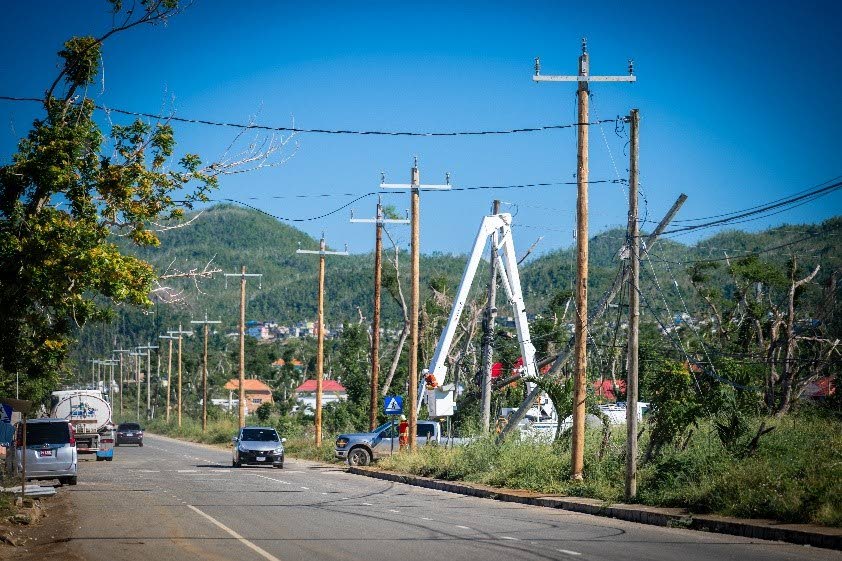
    Almost half a year has passed since Hurricane Melissa roared ashore on Jamaica’s western coast, packing maximum sustained winds of 185 miles per hour that left widespread destruction in its wake. Even after months of coordinated recovery work, more than 2,700 households and businesses across the hardest-hit regions remain cut off from the island’s electrical grid, according to official updates shared by Jamaican government leaders.

    Minister of Energy, Transport and Telecommunications Daryl Vaz revealed the latest figures during Wednesday’s weekly post-cabinet press briefing held at Jamaica House. Of the remaining customers without power, 2,561 are located in Westmoreland parish, while another 203 reside in neighboring St Elizabeth. These outages persist despite intensive restoration efforts carried out by Jamaica’s primary power provider, Jamaica Public Service (JPS) Limited.

    Vaz outlined the cascading set of challenges that have slowed progress for crews working to rebuild the damaged power network. Persistent torrential rainfall and widespread flooding across the two parishes have already forced 13 total days of work stoppages, putting the entire restoration timeline behind schedule. Even in areas where main power lines have been fully repaired, dozens of individual properties remain too damaged by the hurricane to safely connect to service, leaving their owners waiting in limbo.

    Difficult geography and damaged infrastructure have compounded weather-related delays, Vaz explained. Most of the remaining outages are concentrated in hilly, remote regions where narrow, winding roads have been partially destroyed by the storm, and frequent landslides block access for heavy, specialized service vehicles. A large share of the unfinished work requires digging through hard, rocky terrain to install new power poles, a labor-intensive process that moves far slower in sparsely populated areas with limited access routes.

    Despite these persistent setbacks, Vaz emphasized that overall recovery from the October 28 storm remains far along. Across Jamaica’s total customer base of nearly 700,000, 99.6 percent have now successfully regained electrical service, a milestone that reflects the scale of progress made in the past six months.

    Between April 1 and April 13 alone, restoration teams made measurable gains: 258 additional customers were reconnected, and power infrastructure work has been substantially completed across 26 separate communities split between Westmoreland and St Elizabeth. Of these communities, 11 are located in Westmoreland and 15 in St Elizabeth, including high-impact, hard-to-reach settlements that have been offline since the storm hit.

    This recent progress would not have been possible without rapid, targeted government action, Vaz stressed. Back in December, Jamaican lawmakers approved a $150 million U.S. loan specifically to fund hurricane power restoration, a move that came after early projections warned full recovery could drag on into late 2026 or even early 2027 – an outcome Vaz said the government deemed completely unacceptable. “This underscores that real commitment requires strong deliberate measures, not words alone,” he added.

    Looking ahead, the government’s official target is to substantially complete all feasible power restoration work by April 30. The only exceptions will be customers facing extreme, unresolved barriers such as ongoing lack of safe access to their properties. To date, more than 1 billion Jamaican dollars have already been spent on reconnecting affected households.

    Multiple government agencies are collaborating to speed up the final phase of work. The Jamaica Social Investment Fund is supporting local recovery efforts, while the Ministry of Labour and Social Security is advancing the Restoration of Owner or Occupant Family Shelters programme, which helps homeowners repair damaged properties to meet safety standards for power connection. Once these repairs are finished, JPS crews will be able to connect the remaining eligible customers as quickly as possible.

    Vaz also released the full list of communities that have substantially completed restoration work between April 1 and April 13. In St Elizabeth, the communities are: Beersheba, Brighton, Brompton, Cedar Valley, Cheviot Hill, Claremont, Cotterwood, Cottage Lane, Sandy Ground, Crawford, Dalintober, Hopewell, Flint River, Lower Works, Mulgrave and Retirement. In Westmoreland, the completed communities are: Asthon, Amity, Bethel Town, Barneyside, Burnt Ground, Ferris, Haddo, Hertford, Mearnsville, Ramble, Seaford Town, and St Leonards.