标签: Jamaica

牙买加

  • Fabolous makes triumphant return to Jamaica at Vacae Weekend 2026

    Fabolous makes triumphant return to Jamaica at Vacae Weekend 2026

    OCHO RIOS, JAMAICA — After 14 years away from Jamaican performance stages, Brooklyn-bred international hip-hop icon Fabolous captivated a packed crowd Sunday night at Plantation Cove, headlining the highly anticipated Risqué late-night showcase, a flagship attraction of 2026’s Vacae Weekend.

    For attendees and event organizers alike, the rapper’s long-awaited homecoming to the island carried special weight: his last show in Jamaica took place all the way back in 2012, and months of growing hype preceded his eagerly anticipated entrance to the stage.

    Fabolous exceeded every expectation, bringing nonstop high energy to a set that pulled the biggest chart-topping hits from across his decades-long career. Fans sang out every word to beloved fan favorites including *Into You*, *Make Me Better*, *You Be Killin Em*, and *Shawty is a 10*, never letting their momentum fade from the opening note to the final encore.

    The electric chemistry between the headliner and the audience was visible from the second he stepped into the spotlight. Continuous crowd engagement and collective sing-alongs turned his set into one of the most memorable standout moments of the entire Vacae Weekend lineup.

    “Pulling off Fabolous’ return to Jamaica after more than a decade is a huge milestone for our team,” shared David Mattie, a representative for the event. “The overwhelming crowd response made it clear that his music still strikes a deep chord with Jamaican audiences, and it brought an unmatched, special energy to this year’s Risqué event.”

    Famed for its upscale atmosphere and premium late-night entertainment, the Risqué showcase lived up to its reputation once again in 2026. The event blended A-list international talent, dynamic sets from top DJs, and a style-forward audience to craft an unforgettable experience for everyone in attendance.

  • Junelle Bromfield and Noah Lyles tie the knot

    Junelle Bromfield and Noah Lyles tie the knot

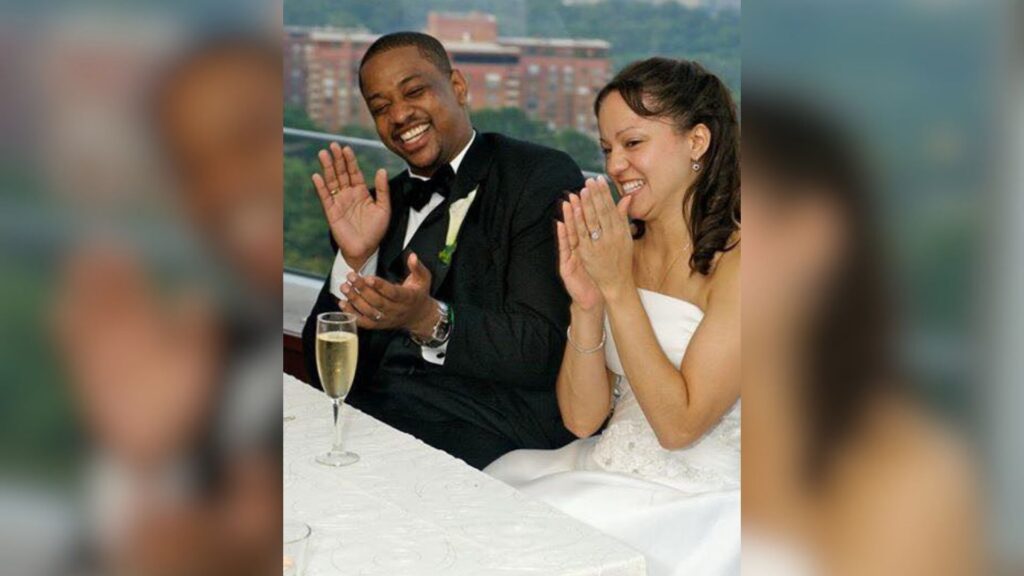
    Two of track and field’s biggest names have stepped into a new chapter of life together: Jamaican Olympic sprinter Junelle Bromfield and American sprint star Noah Lyles exchanged wedding vows on Saturday, April 4, 2026, in a heartfelt ceremony held at The Conservatory at Blackberry Ridge, located in Trenton, Georgia. The couple designed their big day around the theme “All Shades Melanin”, a celebration of Black identity that wove together their distinct cultural backgrounds into a single, joyful experience.

    In an exclusive interview with Vogue, Lyles opened up about the most emotional moments of the afternoon, recalling that he had braced himself for tears ahead of the service but could not pinpoint when the wave of emotion would hit. “I already knew I was gonna cry, I just didn’t know when,” Lyles shared. “But when Junelle read the title of her vows, I was like, ‘Oh, yep, this is the part. This is when I cry’. Her hands shook so much that she couldn’t hold the vow book, so I ended up holding it for her. But I was also crying, so I couldn’t wipe away my own tears. It was a super magical moment.”

    For Bromfield, the day lived up to every expectation she had held, bringing together family, friends and loved ones from both Jamaica and the United States. The Olympian joked that guests left with an unexpected story: instead of walking slowly down the aisle as tradition dictates, she ran toward her future husband. “I heard I didn’t walk down the aisle. I heard that I ran,” Bromfield said. “It was definitely a ceremony of unity. It was just amazing to see the different cultures mesh into one. Everybody was having fun, interacting and filled with love.”

    Following the formal ceremony, guests gathered for a lively reception that included a special surprise performance from celebrated gospel singer Tasha Cobbs Leonard, capping off a day filled with laughter, tears and abundant joy for the newlyweds.

  • Jamaica add three medals at Carifta Games

    Jamaica add three medals at Carifta Games

    ST GEORGE’S, GRENADA — The 53rd edition of the Carifta Games, hosted at Grenada’s Kirani James Athletic Stadium, saw Jamaica solidify its dominant position in the tournament on Monday, adding three more medals — two gold and one silver — to its growing tally during the penultimate competition session of the event.

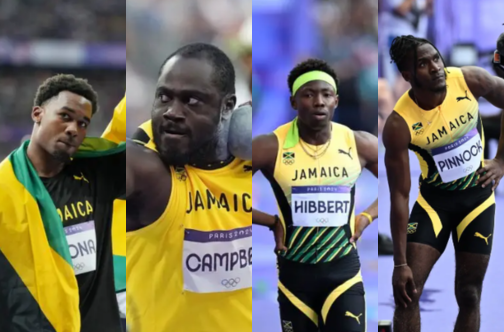
    For the second consecutive day, wet weather forced delays to the competition schedule, but poor conditions did not slow Jamaica’s top young athletes. Two standout performances delivered gold for the delegation: Zavien Bernard claimed top honors in the girls’ Under-20 high jump, and Shamanda Wilmot secured first place in the girls’ Under-17 javelin throw. Talshawn Edwards added a silver to the country’s day total with a strong performance in the boys’ Under-17 long jump.

    With only one final competition session remaining, Jamaica is on track to secure another overall tournament victory, holding a substantial lead in the overall medal table. The Caribbean nation has already collected 47 total medals, split evenly between 17 gold and 17 silver, with an additional 13 bronze medals.

    Trinidad and Tobago holds the second position in the overall rankings with 26 total medals: seven gold, nine silver, and 10 bronze. The Bahamas follows in third with 19 total medals, including six gold, eight silver, and five bronze. Guyana sits in fourth place, having earned five medals (three gold, one silver, one bronze), while Barbados rounds out the top five with nine total medals: two gold, two silver, and five bronze.

    For Bernard, Monday’s gold medal marked a personal redemption after underwhelming results in the long jump and triple jump events earlier in the competition. The young athlete, who won the Under-17 high jump gold at the Carifta Games two years ago, matched her 2024 season best clearance of 1.78 meters to take the top spot on the podium. Jah’kyla Morton of the British Virgin Islands took home silver, breaking her country’s national record with a 1.76-meter clearance, while Alexandria Komolafe of Curaçao claimed bronze with a 1.70-meter jump.

    Wilmot’s gold medal win was one of the most dramatic moments of the day. Trailing defending champion Zonique Charles of Antigua and Barbuda heading into the final round of the competition, Wilmot threw a new personal best of 46.39 meters, surpassing Charles’ previous leading throw of 46.27 meters to claim first place. Niaviv Matrona earned Curaçao its second bronze medal of the session with a throw of 41.52 meters.

    Edwards continued his strong run of individual results at the tournament, adding a silver in the long jump to the silver he earned in the triple jump on Sunday. The Jamaican athlete posted a best jump of 6.71 meters, finishing second behind leader Michal Paul of Trinidad and Tobago, who secured gold with a 6.93-meter jump in the opening round. Randal Monroe of St Lucia took bronze with a 6.60-meter jump.

    Beyond the medal events completed on Monday morning, Jamaica also advanced two athletes to the final of each of the three sprint hurdles preliminary competitions held during the session. Macaela Gordon (13.45 seconds) and Tashana Godfrey (13.51 seconds) led qualifying for the girls’ Under-17 sprint hurdles. In the girls’ Under-20 100m hurdles, Tiana Marshall (13.40 seconds) and Akeelah Bell (13.62 seconds) posted the fastest qualifying times to advance. For the boys’ Under-20 110m hurdles, Romario Jibbison (13.76 seconds) and Robert Miller (13.70 seconds) both earned spots in the afternoon final.

  • No crime, no resign

    No crime, no resign

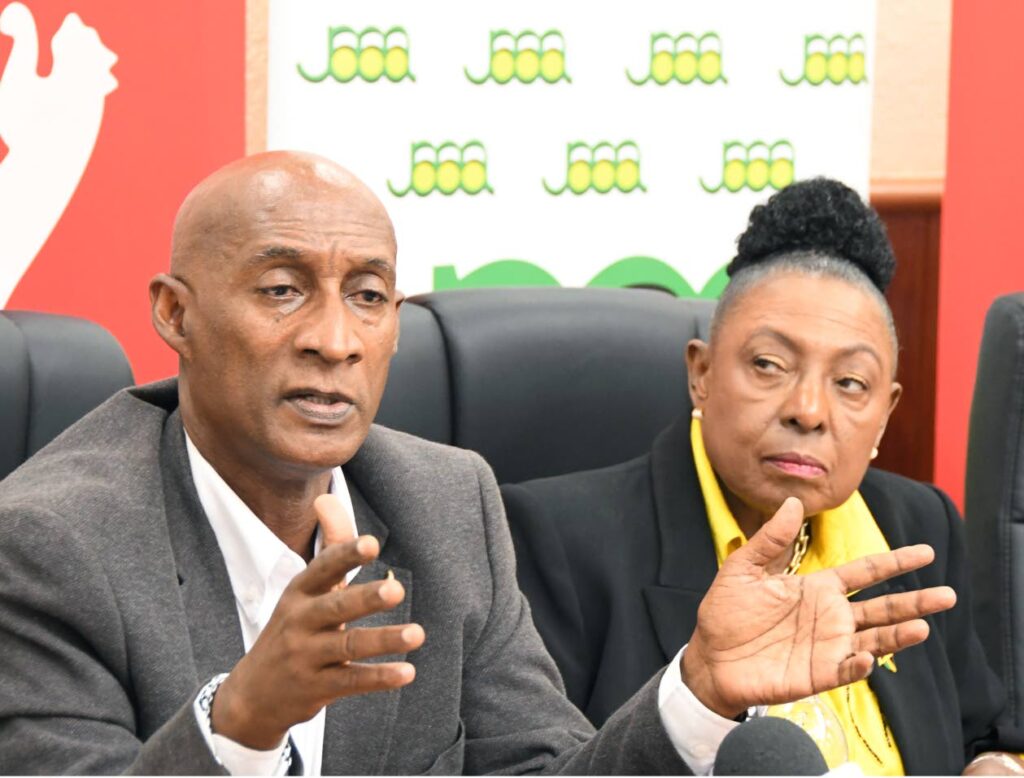
    A sitting Jamaican Member of Parliament is pushing back hard against widespread demands for his resignation, pushing back hard against claims that he leveraged his company’s connection to a public hospital’s tax-exempt status to defraud the state out of millions in unpaid customs duties. Dennis Gordon, who represents the St Andrew East Central constituency and owns private medical firm JACDEN Limited, has broken his silence on the controversy first outlined in a January Auditor General’s Department (AGD) report, giving his first full public interview to the Jamaica Observer where he framed the calls for his ouster as a politically driven smear campaign.

    In the AGD report tabled earlier this year in Jamaica’s Parliament, auditors revealed that the University Hospital of the West Indies (UHWI) had improperly used its legally granted tax-exempt import status to bring goods into the country on behalf of four private companies. The scheme resulted in an estimated $23.1 million in total lost state revenue, with more than $20 million in unpaid import duties that violate the nation’s Customs Act. False customs declarations, the AGD noted, carry legal penalties including fines and potential criminal prosecution. After the report’s release, UHWI publicly named the four private entities as Supreme Laundry Services, Willman Sales, Scientific Medical Services, and JACDEN Limited, putting Gordon directly in the spotlight.

    Gordon confirmed that UHWI did facilitate the import clearance of a shipment of dialysis machines for his company, but he adamantly denies any intentional effort to evade customs obligations. He explained that when the shipment arrived on the island, JACDEN discovered it needed an import permit from the Ministry of Health that could not be processed in time to meet a tight deadline: the biomedical technicians who traveled with the equipment only had 10-day visas to complete installation. Gordon, who says he does not handle JACDEN’s day-to-day operations, noted that his company’s management reached out to UHWI for assistance, a long-standing convention that has been used by multiple entities partnering with the hospital for more than two decades.

    Once the irregularity was identified, Gordon says he immediately took voluntary action to correct the mistake. “They reached out to me and said I should pay approximately $10.1 million, which I paid. So, what is the crime?” he asked. The MP also pointed out that he has already provided UHWI with official proof of full payment to customs authorities, closing the gap in what critics claimed was lost taxpayer money. Gordon argues that the entire controversy is a targeted character assassination, what he calls “modern-day lynching” by political opponents with an ulterior agenda. He emphasized that the AGD has not issued any finding of corruption or criminal wrongdoing against him or his company, and that those calling for his resignation lack any moral authority to do so.

    “If the auditor general had fined me, had indicted me for anything, I would have been the first to resign, because I did not go to politics for a pay cheque, I entered politics for service,” Gordon stated. He added that the disproportionate focus on his company, while the other three firms named in the report have drawn little public scrutiny, further proves the campaign is politically motivated: “My only crime is my success and that I am a PNP [People’s National Party] Member of Parliament.”

    Gordon also pushed back against the narrative that he personally profited from the arrangement, pointing to a long record of donations and accessible care for low-income Jamaicans. He noted that JACDEN has previously donated critical, hard-to-access medical equipment to UHWI, including patient monitors, foetal monitors, and diabetic ulcer monitors, donations that have gone unreported by critics pushing the negative narrative. He added that the dialysis machines at the center of the controversy are used to offer treatment at just $10,000 per session, around half the market rate charged by other private providers, and the clinic has never turned away a patient for inability to pay.

    The clinic, he explained, was founded on his commitment to bring affordable medical care to the most vulnerable Jamaicans, a mission he developed after traveling to Cuba to study accessible healthcare models. JACDEN also regularly treats patients referred from the public health system, which currently faces a critical shortage of dialysis machines. Gordon further noted that his company has previously imported two fully paid-for ambulances to serve homebound patients who cannot travel to care facilities, but the vehicles have sat idle in his office parking lot for three months waiting for a required government inspection that has not been scheduled, a barrier to public service that has drawn no media attention.

    Beyond the professional and political damage, Gordon says the most painful part of the controversy is the impact it has had on his 96-year-old mother, who has been caught up in the negative public attention. “Listen, you can do Dennis Gordon anything, but just don’t kill my mother. She is 96, allow her to live her life comfortably rather than putting her in this stressful position and situation; that is what bothers me most,” he said.

    As of this report, the *Sunday Observer* has not been able to reach the principals of the other three private companies named in the AGD report for comment, leaving their responses to the allegations unpublicized.

  • Sumptuous sacred music feast

    Sumptuous sacred music feast

    On Palm Sunday evening, centuries of sacred choral tradition came alive inside St. Augustine’s Chapel on the North Street campus of Kingston College, as the Diocesan Festival Choir presented its critically acclaimed concert ‘Hosanna to Hallelujah’ under the skilled direction of conductor Audley Davidson. Joined by a small chamber orchestra, the nearly 20-member ensemble delivered a moving, meticulously curated program that kicked off Holy Week for local music and faith communities alike, earning resounding applause from a packed house.

    The evening opened on a striking note with Arthur Hastings’ *Hosanna to the Son of David*, performed entirely a cappella. The rich, layered four-part harmony filled every corner of the historic chapel, its grand tonal texture announcing the start of the liturgical season with fresh, reverent energy. After the opening number, the choir repositioned at the front of the chapel, where attendees noticed a long-awaited update: the ensemble debuted brand-new royal blue uniforms for the performance.

    Next up was J.S. Bach’s beloved *All glory, laud and honour*, a piece that highlighted Davidson’s precise, commanding leadership. His tight direction kept every chorister locked in, and the balanced dynamic shading the group achieved earned high praise from listeners. Following Bach’s classic was a less frequently performed selection from George Frideric Handel’s *Judas Maccabaeus*, *See the conquering hero comes*, which showcased warm, elevated tonal work particularly from the choir’s female sections.

    A modern arrangement of Fred Bock’s *How majestic is your name* brought a welcome shift in tone, accented by a lyrical obbligato from guest soprano Lori Burnett that drew warm, appreciative applause from the audience. The only solo performance of the afternoon came from baritone Jourdain Masters, who delivered a haunting, narrative-driven interpretation of Geoffrey O’Hara’s *I walked today where Jesus walked*, retelling the story of Jesus’ journey to Calvary through thoughtful vocal expression.

    While the familiar hymn *Jesu, grant me this I pray* was broadly well delivered, the performance faced a small misstep: one brief stanza lost melodic clarity amid the vocal blend, with a few tentative entrances from the ensemble. The choir quickly rebounded, however, delivering masterful performances of Paul Bliss’ arranged *Calvary* and Felix Mendelssohn’s *See what love* from *St Paul*. The seamless handoff of melody lines between voice parts and the cohesive blend on display served as a masterclass in sacred choral performance.

    The first half closed with David Clydesdale’s arrangement of *Lift up the lamb*, built around the iconic *Ode to Joy* melody. The ensemble shifted smoothly between staccato and legato phrasing, with the chamber orchestra providing robust, supportive accompaniment that left audience members eager to cheer as the interval began.

    The second half opened with an audience participation performance of Michael Burkhardt’s *Lift high the cross*, featuring a rousing trumpet solo that set the tone for the remainder of the program. Returning to the stage, the choir offered another a cappella selection: William H. Smith’s arrangement of the spiritual *Walk together children*. Marking the first time the group has integrated gentle choreography into one of its performances, the choristers stayed perfectly on pitch and maintained their tight, polished form throughout the number.

    Accompaniment returned for Bob Chilcott’s *God so loved the world*, with a talented ensemble of local instrumentalists supporting the choir: Alex Gray and Stephen Shaw-Naar shared organ and piano duties, Okiel McIntyre and Shanneil Christian played trumpet, Avory Crooks and Travis Wedderburn took trombone, and Delroy Franklin played timpani.

    For many in attendance, including the show’s reviewer, the standout performance of the entire evening was *When thou comest (Inflammatus et accensus)* from Gioachino Rossini’s *Stabat Mater*. The selection showcased the choir’s exceptional ability to tackle complex, serious sacred repertoire, with Burnett returning as a featured soloist alongside an ensemble that fully understood the emotional weight of the work.

    The concert closed with two final moving selections: Gilbert Martin’s arrangement of *When I survey the wondrous cross* and Ludwig van Beethoven’s *Hallelujah* from *Christ on the Mount of Olives*, leaving a peaceful, reverent afterglow that lingered long after the final note faded.

    In his opening remarks and prayer, Bishop of Kingston Garth Minott shared a key piece of the ensemble’s history: founded in 1924, the Diocesan Festival Choir carries a century-long legacy of musical excellence. This Palm Sunday performance, Minott noted, reflected exactly why that tradition has endured for 100 years. Sacred choral music demands rigorous attention to detail, tonal precision, and emotional depth, and the 2024 *Hosanna to Hallelujah* concert delivered all three, giving attendees a rich, moving start to Holy Week.

  • Alliance over isolation

    Alliance over isolation

    In a landmark address at The University of the West Indies’ Mona campus last Wednesday, former Jamaican Prime Minister and revered Caribbean statesman PJ Patterson delivered the annual Norman Manley Distinguished Lecture, using the platform to sound a clarion call for renewed regional cohesion and expanded strategic partnerships across the Global South. With a decades-long record of advancing Caribbean integration and deepening ties between the Caribbean and continental Africa, Patterson warned regional leaders that the global gap between the enforcement of domestic law and widespread disregard for international law is growing at an alarming rate, making collective action non-negotiable for small island developing states.

    Patterson opened his argument by calling for a urgent reevaluation of diplomatic and economic ties between the Caribbean archipelago and Latin America, arguing that the Community of Latin American and Caribbean States (CELAC) must be transformed from a procedural body into a powerful collective force capable of defending regional sovereign space from external interference. He specifically urged immediate, targeted action to deepen economic integration and technical collaboration with Latin American heavyweights Mexico and Brazil as a first step toward strengthening CELAC’s influence.

    His current work advancing cooperation between the Caribbean and a unified global Africa has reinforced his conviction that the two regions share irreversibly aligned interests on the most pressing global issues of the 21st century: climate justice, multilateral institutional reform, and urgent global debt restructuring. Patterson framed the deepening of economic, social, and cultural bonds between the Caribbean and Africa as a pivotal strategic priority, rather than a symbolic gesture.

    Turning to the Caribbean Community (Caricom), Patterson highlighted the regional bloc’s long-proven capacity for collective action, noting that Caricom must leverage diplomatic skill backed by specialized technical expertise to lead on the global stage, rather than simply conforming to external demands in the name of survival. He argued that a coordinated united front across key Global South blocs—including the African Union, Caricom, the Organisation of African, Caribbean and Pacific States (ACP), and the Group of 77 and China—gives the Global South the collective weight to reshape the outdated, exclusionary global order.

    “The Global South can no longer be content to react to agendas set by others,” Patterson emphasized. “We must set our own priorities. Our unity amplifies our moral authority. It is about reshaping an archaic global order to make it inclusive, fair, and sustainable for all our people.”

    To illustrate the tangible power of regional collective action, Patterson pointed to two landmark historical negotiations that delivered wins for both the Caribbean and its external partners. The first was the 1975 Lomé Agreement, a trade and aid pact between the European Economic Community and ACP nations, negotiated as a single regional bloc rather than a collection of individual states. That historic negotiation, led by Jamaica through a dedicated regional negotiating mechanism, laid the groundwork for all future external economic talks and established the European Union as the Caribbean’s largest donor partner to this day.

    The second example was the 1990s Shiprider Agreement negotiations with the United States, focused on counter-narcotics cooperation in Caribbean waters. When the U.S. presented its initial draft, Caribbean leaders refused to either reject the deal outright or surrender their sovereign interests to accept unmodified terms. Instead, they gathered in Barbados, selected Jamaica to draft a revised model agreement aligned with all regional nations’ sovereignty, and negotiated a final pact that delivered mutual benefits for both the Caribbean and the U.S. A 2004 amending protocol between Jamaica and the U.S. formalized expanded cooperation: the agreement allows coordinated ship boarding, overflight operations, and information sharing to disrupt the flow of illicit drugs from South America through Jamaican territorial waters to the U.S., while explicitly protecting the sovereignty of Caribbean nations and banning the use of force against civilian aircraft in flight.

    Patterson also referenced Article 18 of the Treaty of Chaguaramas, which established a dedicated council of Caricom foreign ministers tasked with coordinating the bloc’s foreign policy. While he acknowledged that member states have held divergent positions on issues ranging from diplomatic recognition of China and Taiwan to global debates over Japanese whaling, he emphasized that Caricom’s greatest global power comes from speaking with one unified voice in international forums, setting aside internal divisions to vote as a cohesive bloc.

    Reiterating his core thesis, Patterson stated, “We do best when together we exercise the tremendous power and intellectual mastery of the entire community to confront the common obstacles and challenges which we face in the post-colonial world. There can only be one verdict: A culture of regionalism is always superior to insular diplomacy.”

    Within the 56-member Commonwealth, Patterson noted that the Caribbean bloc holds enough collective sway to push major powers including Canada, Australia, India, and the United Kingdom to expand inclusive global governance beyond their own narrow interests, extending benefits to smaller member states across Africa, the Caribbean, and the Pacific. He warned that rising “narcissistic hegemonism” poses a growing threat to smaller sovereign states across the Global South, and that the Caribbean has already proven its ability to lead collective action through the Lomé negotiations.

    “ We cannot afford recklessness or confrontation. We must provide the leadership as we did for the ACP, in steering a course which enhances our full sovereign interests. We are no longer pawns of European conflicts nor tenants at will in anyone’s backyard,” Patterson concluded.

  • Filtered Feelings: The cost of comparing our lives

    Filtered Feelings: The cost of comparing our lives

    How has the concept of happiness shifted over generations? This question has grown increasingly pressing to examine as modern life reshapes what we prioritize and how we measure well-being. For generations of Jamaicans who grew up in rural areas between the 1960s and 1990s, happiness was rooted in simplicity. While daily life presented significant economic challenges, it was rich in shared experience: children gathered to play outdoors after dark, walked to school in groups, swam in local rivers, and split whatever small resources they had with neighbors. Whole communities looked out for one another, fostering an unspoken, deep sense of belonging that permeated daily life. Even people with very few material possessions rarely felt poor; their wealth lay in social connection, collective community, and grounded perspective on what matters most.

    Recently, I spoke with dozens of elderly Jamaicans, several of whom have lived more than a century, and found striking consistency in how they describe lasting happiness. Nearly all framed well-being around three core pillars: showing care for others, letting go of grudges easily, and nurturing a gentle, generous heart. Most remain active in local churches and community groups, contributing in quiet but meaningful ways that bind their neighborhoods together. Their lives make one truth clear: happiness has never been a purely material pursuit.

    Today, our collective definitions of happiness have grown broader, but also far more complicated. Many people now tie well-being to visible markers of success: the neighborhood we live in, the car we drive, the prestige of our career. Others frame it around family, personal freedom, or hitting individual career and life goals, with financial stability, access to healthcare, and the ability to travel all shaping how we experience contentment. But one new, powerful force has reshaped modern understandings of happiness: social media.

    The 2026 World Happiness Report highlights a worrying global trend: falling well-being among young people, especially in high-income developed countries. One key contributing factor is the amount of time young people spend online, constantly consuming others’ curated content and comparing their own lives to unrealistic highlights. This shift has pushed us to measure happiness by external metrics—likes, shares, picture-perfect moments—rather than how we actually feel internally. In many communities, deep connectedness has been quietly replaced by constant comparison; the shift is subtle, but its impact on collective mental health is impossible to ignore.

    Even amid this global shift, Jamaica offers a critical lesson on what lasting happiness actually looks like. In the 2026 World Happiness Report, Jamaica ranks 49th overall in global well-being—but ranks first in the world for the frequency with which its people help strangers. That single statistic says volumes about the national character that sustains well-being across generations. Despite widespread economic and social challenges, Jamaican culture is defined by deep resilience: the ethos of “one love,” enduring community ties, and shared faith shape how people experience daily life. While many Jamaicans do not have abundant material resources, they consistently find joy in connection and purpose.

    Perhaps the core of happiness has not changed as much as we think—what has changed is how we pursue it. Too many of us now look outward for validation, when the things that actually sustain contentment have been close to us all along: strong relationships, a clear sense of purpose, good health, and service to the people around us. Every person faces hardship in life; that is an unavoidable part of the human experience. But holding onto resentment, chronic stress, and regret does not serve us—it erodes both our mental peace and our physical health. Letting go of these burdens is never easy, but it is essential to long-term well-being.

    In my role as Jamaica’s Minister of Health and Wellness, I see every day how deeply interconnected our mental and physical health truly are. The ways we think, relate to others, and structure our daily lives all shape our overall well-being. Happiness is not some abstract, distant goal we have to earn—it is something we actively build through the small choices we make every single day.

    The fundamental pillars of happiness have not changed: treat others with kindness, practice compassion for yourself and those around you, give back to your community whenever you can, prioritize your physical and mental health, and strive for balance in all areas of life. Happiness does not require great wealth, and it can never be measured by outward appearances alone. It requires awareness of what matters, intentional choices to prioritize connection over comparison, and a willingness to focus on the things that bring lasting meaning.

    In a world that constantly pulls our attention outward, to other people’s highlight reels and external markers of success, the most important step we can take is to turn inward. Because in the end, happiness is not something we scroll past on a screen—it is something we live, every single day. This article was written by Dr. Chris Tufton, CD, MP, Jamaica’s Minister of Health and Wellness.

  • Fear hangs over Easter mass after Nigeria shooting

    Fear hangs over Easter mass after Nigeria shooting

    JOS, Nigeria – Just seven days after a mass shooting claimed roughly 30 lives in central Nigeria’s Plateau state, Christian worshippers gathered for Easter Sunday Mass in the capital city of Jos under a heavy cloud of insecurity.

    The region’s most important Christian festival, a moment traditionally marked by joyful, packed congregations, looked drastically different this year. One of the city’s largest churches, standing just meters from the site of the deadly Palm Sunday attack at an open-air bar, saw attendance fall to less than half of its normal capacity. The state-imposed curfew, which restricts movement between 3 a.m. and 7 p.m. local time, has left most city streets eerily deserted, with only a handful of civilians venturing out for essential activities.

    Along the road leading to the church in Jos’ Anguwan Rukuba district, just one single police checkpoint was visible, a sparse security presence that has done little to reassure residents. In response to last week’s attack, Nigerian military authorities announced they had deployed an extra 850 troops to the restive state to bolster security. But for many worshippers, the reinforcement has come too late, and official promises of protection ring hollow.

    Standing outside the beige facade of the Evangelical Church Winning All (ECWA), 57-year-old congregant John Abo Galadima told reporters he sees no real improvement in local safety. “I don’t feel safe in the community, because the government is not doing enough…in terms of security,” Galadima said. “There is no sufficient security presence here.” To compensate for gaps in state security, church leadership has arranged for its own private security team to screen all attendees before allowing entry to worship services.

    Fellow worshipper Marian Mark Andy echoed Galadima’s concerns, explaining that widespread anxiety kept many adherents from joining the Easter celebrations. “I don’t feel safe. People are afraid, they could not come to church,” Andy said.

    During his sermon, Reverend Luka Musa Madaki led the congregation in prayers for an end to violence while urging attendees to remain constantly alert to potential threats. “As people of God, you need to stand up, spiritually and physically. The attacks are coming to us too much. You should always remain vigilant and reach out to each other,” Madaki told the assembled crowd.

    While Plateau state has a long history of repeated rural violence, much of it tied to long-running resource conflicts between farming and herding communities, last week’s attack in Jos marks a rare and particularly alarming episode of urban violence. Jos itself is home to a mixed population of Christians and Muslims, most of whom have coexisted peacefully for generations. But the region has a decades-long history of deadly ethnic and sectarian tension that has sparked large-scale outbreaks of violence in the past.

    This most recent attack is part of a grim pattern of bloodshed in the landlocked state. In one of the deadliest recent incidents, nearly 200 people were killed in December 2023 during raids targeting majority Christian communities across the state. The worst sectarian violence in Jos’ modern history dates back to September 2001, when five days of rioting left nearly 1,000 people dead.

    The ripple effects of the attack extended to the city’s Muslim community as well. During weekly Juma’a prayers held the Friday after the shooting, worshippers gathered at Jos’ central mosque under significantly heightened security, with both soldiers and police deployed to guard the site. In his post-prayer sermon, the chief Imam of Jos, Sheikh Ghazali Ismail Adam, called on all believers to prioritize mutual respect. “Dignify humanity, uphold fear of Allah and…promote peaceful coexistence,” Adam urged his congregation.

  • ‘Choose peace’: Pope marks first Easter under cloud of Mideast war

    ‘Choose peace’: Pope marks first Easter under cloud of Mideast war

    In his inaugural Easter address from the heart of Vatican City, Pope Leo XIV delivered a urgent, heartfelt plea on Sunday to global leaders holding the power to ignite and escalate armed conflict, urging them to set aside confrontation and choose the path of peace. The pontiff’s call comes as a broad regional war raging across the Middle East, triggered by joint US-Israeli strikes on Iran on February 28, has sent shockwaves across the entire region and disrupted economic stability worldwide, casting a dark shadow over Easter celebrations for more than 1 billion Catholics marking the holiday globally.

  • Armanii delivers for the ladies at Pic-Nic Beach Club

    Armanii delivers for the ladies at Pic-Nic Beach Club

    OCHO RIOS, JAMAICA – As Vacae Weekend 2026 builds toward its highly anticipated grand finale, the iconic beachside event Pic-Nic Beach Club delivered an unforgettable day of music, culture, and celebration Saturday at St. Ann’s breathtaking Plantation Cove. Drawing a stylish, energy-charged crowd from across the island and beyond, this year’s iteration of the signature lifestyle event cemented its reputation as one of the most beloved stops on the Vacae Weekend lineup, wrapping up with a standout performance from fast-rising dancehall star Armanii that left attendees buzzing.

    True to the event’s long-standing aesthetic, Pic-Nic transformed the sweeping cove into a glowing ocean of pink, with immersive, carefully curated decor turning the tropical coastline into one of the weekend’s most visually stunning installations. Hours before the headliner took the stage, thousands of partygoers began filing into the venue, their excitement palpable in the warm Caribbean air. Attendees enjoyed premium beverage offerings from Appleton Estate, a diverse spread of local and international cuisines from dozens of curated food vendors, and nonstop high-energy sets from some of Jamaica’s most in-demand DJs, including Fyahman, Chromatic, and Kryptic, who kept the crowd moving from the first opening note.

    The energy hit its peak when Armanii stepped into the spotlight, immediately locking in a connection with the audience that held through his entire set. The dancehall standout ran through a stacked setlist of his most popular hits, with many of his tracks striking a particular chord with the large contingent of female attendees who turned out to see him perform. By the end of his performance, the entire venue was singing along to every lyric, cementing the set as the highlight of the day.

    In a post-performance interview, Armanii praised the unwavering energy of the crowd, noting that the turnout from his female fans elevated the entire experience. “The vibes from the crowd were amazing,” he said. “From the moment I stepped on stage, the energy was there. The ladies showed up and showed out, and that made the performance even better.”

    Organisers say the overwhelmingly positive response to this year’s Pic-Nic confirms the event’s critical role in the broader Vacae Weekend lineup, which has turned Ocho Rios into the epicentre of Jamaican Easter entertainment. Pic-Nic organiser Franz Kentish highlighted that the event has always prioritized holistic experience over just music, and this year’s iteration delivered on that promise more than ever before. “Pic-Nic is all about the experience — the visuals, the energy, the crowd — and this year we really saw that come together,” Kentish said.

    With Pic-Nic wrapped, Vacae Weekend 2026 is set to continue with three more highly anticipated signature events: the exclusive Estate All White Soiree, the bold nightlife experience Risqué, and the weekend’s grand closing act, the Sandz Caribbean Music Festival. Festival organizers have hinted that upcoming events will bring even more surprise guests and iconic performances to Ocho Rios, as the week-long celebration of Caribbean music and culture continues.