标签: Jamaica

牙买加

  • Fabolous makes triumphant return to Jamaica at Vacae Weekend 2026

    Fabolous makes triumphant return to Jamaica at Vacae Weekend 2026

    OCHO RIOS, JAMAICA — After 14 years away from Jamaican performance stages, Brooklyn-bred international hip-hop icon Fabolous captivated a packed crowd Sunday night at Plantation Cove, headlining the highly anticipated Risqué late-night showcase, a flagship attraction of 2026’s Vacae Weekend.

    For attendees and event organizers alike, the rapper’s long-awaited homecoming to the island carried special weight: his last show in Jamaica took place all the way back in 2012, and months of growing hype preceded his eagerly anticipated entrance to the stage.

    Fabolous exceeded every expectation, bringing nonstop high energy to a set that pulled the biggest chart-topping hits from across his decades-long career. Fans sang out every word to beloved fan favorites including *Into You*, *Make Me Better*, *You Be Killin Em*, and *Shawty is a 10*, never letting their momentum fade from the opening note to the final encore.

    The electric chemistry between the headliner and the audience was visible from the second he stepped into the spotlight. Continuous crowd engagement and collective sing-alongs turned his set into one of the most memorable standout moments of the entire Vacae Weekend lineup.

    “Pulling off Fabolous’ return to Jamaica after more than a decade is a huge milestone for our team,” shared David Mattie, a representative for the event. “The overwhelming crowd response made it clear that his music still strikes a deep chord with Jamaican audiences, and it brought an unmatched, special energy to this year’s Risqué event.”

    Famed for its upscale atmosphere and premium late-night entertainment, the Risqué showcase lived up to its reputation once again in 2026. The event blended A-list international talent, dynamic sets from top DJs, and a style-forward audience to craft an unforgettable experience for everyone in attendance.

  • Junelle Bromfield and Noah Lyles tie the knot

    Junelle Bromfield and Noah Lyles tie the knot

    Two of track and field’s biggest names have stepped into a new chapter of life together: Jamaican Olympic sprinter Junelle Bromfield and American sprint star Noah Lyles exchanged wedding vows on Saturday, April 4, 2026, in a heartfelt ceremony held at The Conservatory at Blackberry Ridge, located in Trenton, Georgia. The couple designed their big day around the theme “All Shades Melanin”, a celebration of Black identity that wove together their distinct cultural backgrounds into a single, joyful experience.

    In an exclusive interview with Vogue, Lyles opened up about the most emotional moments of the afternoon, recalling that he had braced himself for tears ahead of the service but could not pinpoint when the wave of emotion would hit. “I already knew I was gonna cry, I just didn’t know when,” Lyles shared. “But when Junelle read the title of her vows, I was like, ‘Oh, yep, this is the part. This is when I cry’. Her hands shook so much that she couldn’t hold the vow book, so I ended up holding it for her. But I was also crying, so I couldn’t wipe away my own tears. It was a super magical moment.”

    For Bromfield, the day lived up to every expectation she had held, bringing together family, friends and loved ones from both Jamaica and the United States. The Olympian joked that guests left with an unexpected story: instead of walking slowly down the aisle as tradition dictates, she ran toward her future husband. “I heard I didn’t walk down the aisle. I heard that I ran,” Bromfield said. “It was definitely a ceremony of unity. It was just amazing to see the different cultures mesh into one. Everybody was having fun, interacting and filled with love.”

    Following the formal ceremony, guests gathered for a lively reception that included a special surprise performance from celebrated gospel singer Tasha Cobbs Leonard, capping off a day filled with laughter, tears and abundant joy for the newlyweds.

  • Jamaica add three medals at Carifta Games

    Jamaica add three medals at Carifta Games

    ST GEORGE’S, GRENADA — The 53rd edition of the Carifta Games, hosted at Grenada’s Kirani James Athletic Stadium, saw Jamaica solidify its dominant position in the tournament on Monday, adding three more medals — two gold and one silver — to its growing tally during the penultimate competition session of the event.

    For the second consecutive day, wet weather forced delays to the competition schedule, but poor conditions did not slow Jamaica’s top young athletes. Two standout performances delivered gold for the delegation: Zavien Bernard claimed top honors in the girls’ Under-20 high jump, and Shamanda Wilmot secured first place in the girls’ Under-17 javelin throw. Talshawn Edwards added a silver to the country’s day total with a strong performance in the boys’ Under-17 long jump.

    With only one final competition session remaining, Jamaica is on track to secure another overall tournament victory, holding a substantial lead in the overall medal table. The Caribbean nation has already collected 47 total medals, split evenly between 17 gold and 17 silver, with an additional 13 bronze medals.

    Trinidad and Tobago holds the second position in the overall rankings with 26 total medals: seven gold, nine silver, and 10 bronze. The Bahamas follows in third with 19 total medals, including six gold, eight silver, and five bronze. Guyana sits in fourth place, having earned five medals (three gold, one silver, one bronze), while Barbados rounds out the top five with nine total medals: two gold, two silver, and five bronze.

    For Bernard, Monday’s gold medal marked a personal redemption after underwhelming results in the long jump and triple jump events earlier in the competition. The young athlete, who won the Under-17 high jump gold at the Carifta Games two years ago, matched her 2024 season best clearance of 1.78 meters to take the top spot on the podium. Jah’kyla Morton of the British Virgin Islands took home silver, breaking her country’s national record with a 1.76-meter clearance, while Alexandria Komolafe of Curaçao claimed bronze with a 1.70-meter jump.

    Wilmot’s gold medal win was one of the most dramatic moments of the day. Trailing defending champion Zonique Charles of Antigua and Barbuda heading into the final round of the competition, Wilmot threw a new personal best of 46.39 meters, surpassing Charles’ previous leading throw of 46.27 meters to claim first place. Niaviv Matrona earned Curaçao its second bronze medal of the session with a throw of 41.52 meters.

    Edwards continued his strong run of individual results at the tournament, adding a silver in the long jump to the silver he earned in the triple jump on Sunday. The Jamaican athlete posted a best jump of 6.71 meters, finishing second behind leader Michal Paul of Trinidad and Tobago, who secured gold with a 6.93-meter jump in the opening round. Randal Monroe of St Lucia took bronze with a 6.60-meter jump.

    Beyond the medal events completed on Monday morning, Jamaica also advanced two athletes to the final of each of the three sprint hurdles preliminary competitions held during the session. Macaela Gordon (13.45 seconds) and Tashana Godfrey (13.51 seconds) led qualifying for the girls’ Under-17 sprint hurdles. In the girls’ Under-20 100m hurdles, Tiana Marshall (13.40 seconds) and Akeelah Bell (13.62 seconds) posted the fastest qualifying times to advance. For the boys’ Under-20 110m hurdles, Romario Jibbison (13.76 seconds) and Robert Miller (13.70 seconds) both earned spots in the afternoon final.

  • LEGACY OF CARE

    LEGACY OF CARE

    On March 29, the recipients of the newly launched 2026 Legacy of Care Awards were officially announced, with the recognition program held in partnership with the High Commission of Canada — a long-term strategic partner and supporter of the HerFlow Foundation’s mission-driven work across Jamaica.

    The Legacy of Care Award is a central addition to the HerFlow Foundation’s annual Celebrate Her 2026 awards initiative, which was created to shine a long-overdue spotlight on women whose extraordinary community service often flies under the public radar. The event brought together a cross-section of civil society leaders, gender equity advocates, and local community members to celebrate the awardees, whose cumulative efforts have been instrumental in building more connected, stronger and resilient communities across the island nation.

    Unlike many awards that highlight recent achievements, the Legacy of Care Award fills a critical gap in community recognition by specifically honoring decades of sustained service and long-term, transformative impact that has changed local trajectories for the better.

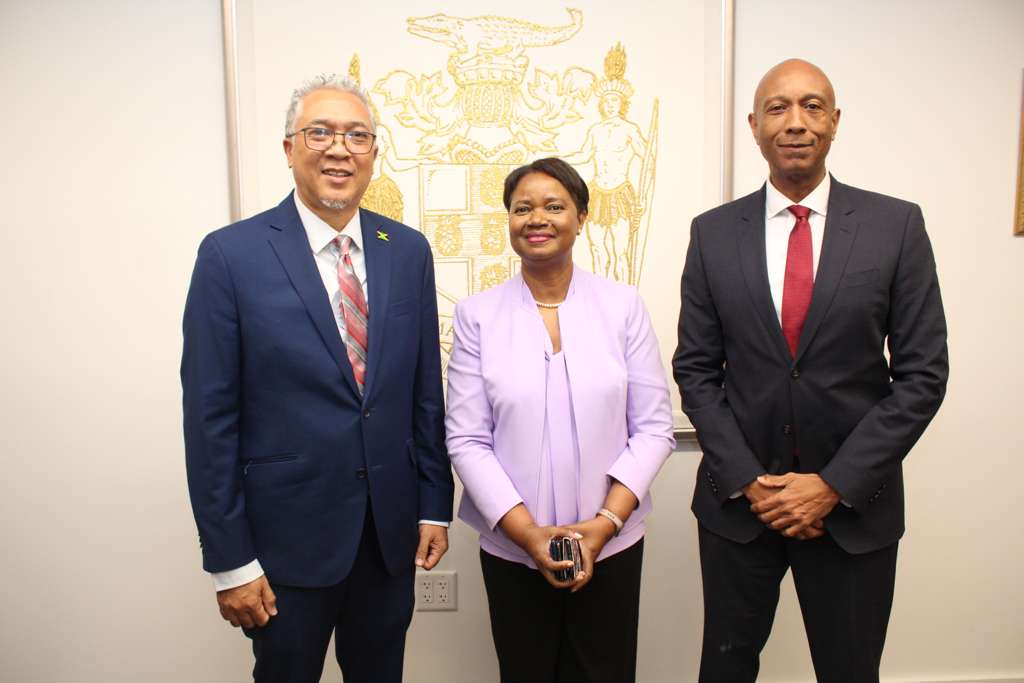
    At the award ceremony, Senator Allan Bernard accepted the honor on behalf of Dr. Janice Johnson-Dias, president of the GrassROOTS Community Foundation, who was selected as one of this year’s recipients. Joining Johnson-Dias as awardees were Michelle “D’Angel” Downer of the Angels Foundation and Joy Crawford from Eve for Life. Also in attendance marking the occasion were Shelly-Ann Weeks, founder of the HerFlow Foundation, and Tanesha Dixon-Gayle, senior political and economic officer at the Canadian High Commission.

  • Flood waters affect residents in Amity Hall

    Flood waters affect residents in Amity Hall

    On Sunday, intense heavy rainfall swept across the parish of St James, Jamaica, unleashing destructive flash floods that left multiple low-lying and river-adjacent communities completely submerged. Among the hardest-hit neighborhoods was Amity Hall in the wider Lottery district, where surging floodwaters forced their way into dozens of residential properties, leaving behind trails of thick mud and scattered debris that have ruined personal belongings and damaged home infrastructure. For local residents, this sudden disaster is far more than an unexpected inconvenience – it is a terrifying replay of the trauma they endured just 10 months ago, when Hurricane Melissa battered the region in October last year. Many families are still in the slow process of rebuilding their lives and homes after that powerful storm, and this new flood has wiped out months of hard-won recovery progress. Local residents have pointed to a blocked section of the Montego River as the root cause of the worst overflow. Fallen tree trunks washed down by the rain and accumulated waste debris have clogged a key stretch of the waterway, preventing normal water flow and forcing the river to burst past its banks and spill into surrounding residential areas. Now, community leaders and local residents are issuing urgent appeals to municipal authorities and disaster management agencies to step in immediately, both to clean up the current damage and clear the blocked river to prevent similar catastrophic flooding from happening again in future rain events.

  • Ganja? Or hemp?

    Ganja? Or hemp?

    A landmark ruling in Jamaica has opened a critical conversation about systemic flaws in the country’s cannabis enforcement regime, after a police officer and her partner were acquitted of cannabis charges this week, revealing a nine-year gap in the government’s ability to scientifically distinguish between hemp and high-THC marijuana.

    The case, which concluded Monday at Morant Bay Parish Court, ended in the full acquittal of Detective Sergeant Tamika Taylor and her fiancé Royan Harris, who had faced four years of legal proceedings on charges of cannabis possession, trafficking, and cultivation. The pair were connected to a farm operated by a Rastafarian organization, which holds legal rights to grow cannabis for sacramental use under Jamaica’s existing regulations, with Harris serving as the farm’s on-site supervisor.

    During the trial, defense attorney Marcus Goffe presented a damning revelation: between 2015, when Jamaica amended its Dangerous Drugs Act to establish a legal distinction between hemp (defined as cannabis with less than 1% THC, the psychoactive compound in cannabis) and marijuana, and 2024, the government-run forensic laboratory lacked the functional equipment and capacity to test seized cannabis samples to verify their THC content. Without this critical testing capability, Goffe argued, the state could not meet its evidential burden to prove that the cannabis seized from the farm was actually illegal marijuana rather than legally permitted hemp or sacramental cannabis.

    The ruling has been hailed as a landmark victory by cannabis rights advocates and Rastafarian community representatives, who have long raised concerns about unfair enforcement of Jamaica’s drug laws. Janai Kamau, a two-term former director of Jamaica’s Cannabis Licensing Authority, justice of the peace, and official liaison for the Ministry of Justice to the Rastafarian community, called the outcome a win for all Jamaicans in an interview with the Jamaica Observer Tuesday.

    “I am happy that justice has been exercised and that it has shown that there are discrepancies in the system,” Kamau told the Observer. “Apparently they have got a new machine now that determines whether the vegetable matter is at a THC level to be considered ganja or hemp. If it is under one per cent, it is considered hemp and not ganja.”

    Kamau emphasized that the victory extends far beyond the two acquitted defendants, noting that it confirms the integrity of Jamaica’s justice system while highlighting long-unaddressed gaps in enforcement infrastructure. “It is a great victory, not just for Rastafari but for all users of ganja, and a victory to show that the justice system actually works. It is a good look for the Rasta community and for the ordinary users of ganja that if the police stops you, there ought to be some determination and if it goes down to the lab, we are glad there is equipment in place now to determine whether the thing is ganja or not. From a scientific perspective, from a logical perspective and from a humanitarian perspective, it is a good victory.”

    The revelation of the nine-year testing gap has also sparked urgent calls for a full review of all cannabis-related convictions secured between 2015 and 2024, with both the acquitted defendants and their legal team warning that hundreds of people may have been wrongfully convicted. Goffe argued that without the ability to test THC content, every prosecution for cannabis possession during that period failed to meet the state’s legal obligation to prove an offence was actually committed.

    “There likely has been a large number of cases which have been unjustly prosecuted,” Goffe said, pointing to “unjust convictions of persons for ganja offences” when the State could not prove the cannabis in question met the legal threshold for illegal marijuana.

    Taylor, the acquitted detective sergeant, who first raised the issue of the missing testing capacity during her own case, echoed the call for a mass review. “For that nine-year gap, between the amendment of the Dangerous Drugs Act and the lab being able to determine the percentage that can differentiate between ganja and hemp, it means that all convictions between that nine-year period would have to go under question at this point,” she said. “One of the main reasons why this case was dismissed is because the evidence that was brought by the expert witness from the forensic lab, it was borne out that they were not in a position to test the per cent of the substance to say whether it was ganja or hemp. I must blow my own horn in this regard, because I was the person who brought up this to indicate that this is something that they cannot differentiate.”

    Kamau added that the Rastafarian community has long faced systemic barriers in defending their legal right to sacramental cannabis use, in part due to inconsistent understanding of the Dangerous Drugs Act among law enforcement and judicial actors. “I went to court last year about seven times and I have been there three times this year regarding Rastafari and their rights to use ganja under the Dangerous Drugs Act, and once Rastafarians have ganja in their possession for sacramental use, they are not to be charged. In cases we have had the ganja returned to us,” he said.

  • Former WADA chief Craig Reedie dies at age 84

    Former WADA chief Craig Reedie dies at age 84

    LONDON, United Kingdom – The global sports community is mourning the loss of Craig Reedie, the pioneering British sports administrator who led the World Anti-Doping Agency (WADA) and was instrumental in securing London’s hosting rights for the 2012 Olympic Games, who has passed away at the age of 84. The confirmation of his death was made public on Monday by sports leaders who paid tribute to his decades-long legacy in international sport.

    Current WADA President Witold Banka honored Reedie’s contributions in an official statement, remembering him as a paragon of integrity and a lifelong advocate for clean, fair competition. “With Sir Craig’s passing, we have lost a true gentleman and clean sport champion,” Banka said. “He was a man of great integrity and, as a sportsman at heart, he believed that sport shows us it is always possible to do better – a belief he applied to his leadership of WADA.”

    Before stepping into global anti-doping leadership, Reedie built his career as both an athlete and an administrator. A competitive international badminton player who represented Great Britain during his playing career, he was elected president of the International Badminton Federation in 1981. During his tenure, he achieved a defining career milestone: successfully campaigning to secure badminton’s permanent inclusion as an Olympic medal sport starting at the 1992 Barcelona Games.

    From 1992 to 2005, Reedie chaired the British Olympic Association (BOA), a role that put him at the center of Britain’s push to host the Summer Olympics. At the time, Paris was widely considered the clear favorite to win hosting rights for the 2012 Games, but Reedie’s strategic guidance and behind-the-scenes work laid the groundwork for London’s stunning upset victory in the bidding process. Sebastian Coe, who led London’s bid committee and now serves as president of World Athletics, called Reedie a critical influence on his career and the success of the 2012 Games. In a post on X, Coe remembered Reedie as “my mentor, wise counsel, passionate advisor, and great friend,” adding, “Without Craig and his leadership of the British Olympic Association, we may never have won the right to host London 2012.”

    Reedie went on to hold a series of top global sports roles, including vice-president of the International Olympic Committee, before serving as WADA president from 2014 to 2019. His tenure at the anti-doping body was not without controversy: in 2018, WADA voted to lift a three-year suspension on Russian athletes that had been imposed over evidence of state-sponsored doping at the 2014 Sochi Winter Olympics. The decision drew widespread criticism from athlete advocacy groups and national sports organizations around the world, marking a contentious final chapter of his leadership.

    Despite the controversy of his later career, tributes from across the global sports landscape have emphasized Reedie’s lasting impact on expanding the Olympic movement and advancing the cause of anti-doping, cementing his status as one of British sport’s most influential figures of the past 50 years.

  • TAX CHEATS WARNED

    TAX CHEATS WARNED

    In a recent address to final-year business students at the University of Technology Jamaica’s (UTech) 2025/2026 Western Campus Seminar, hosted at Sea Gardens Beach Resort in Montego Bay, Jason Russell, president of the Montego Bay Chamber of Commerce and Industry (MBCCI) and a third-generation Jamaican business leader, has issued a stark warning to entrepreneurs engaging in tax dodging and unethical accounting practices: short-term gains from cutting corners will inevitably lead to long-term damage that cripples business growth.

    Russell, who oversees popular local hospitality ventures including Pier One Restaurant and Deja Hotel, drew on decades of hands-on business experience to challenge the common perception that off-the-books operations and under-the-table earnings deliver greater profits than legitimate, transparent practice.

    “I’ve seen countless entrepreneurs buy into the idea that operating in the black market or cutting corners on tax compliance brings bigger rewards,” Russell told the gathered students. “But the reality is far from that. When you intentionally fudge your books to hide income, you end up creating a mess you can’t untangle. I’ve mentored businesses that keep three separate sets of accounting records, all designed to mislead regulators. When you dig into those books, you can’t reconcile missing funds, basic entries are wrong, and no one can track where the money actually went — that’s by design, but it’s a design that sinks growth.”

    He went on to note that Jamaica’s modern tax regulatory system has closed gaps that once allowed under-declaration to go undetected. “The government has built a robust, interconnected system that requires full disclosure to produce consistent, reconcilable financial records. Any attempt to hide income will leave obvious gaps that can’t be explained away when auditors or third parties review your books,” he explained.

    Russell emphasized that his own family-owned hospitality businesses have maintained 100% tax compliance from their founding, a choice that has created long-term value that unethical operators can never access. “At Pier One and our hotel, we take pride in being fully transparent with all our tax obligations. Too many tax dodgers miss the big picture: they hide income for years, then when they need financing from a bank to expand, they have no verifiable financial history to back up their claims of success. You can tell a bank you make a million dollars a month, but if your bank statements only show $10,000, and you have no record of a decade of operations, lenders aren’t going to take you seriously. Even if you drive a luxury car and own a big home, that doesn’t make up for missing, inconsistent financial records,” he said.

    He stressed that these short-term cuts to compliance create permanent barriers to long-term expansion. “I don’t judge other operators for their choices, but the facts are clear: a business built on under-the-table dealings can never reach its full potential. You can’t get approved for public contracts through the National Contracts Commission, you can’t secure a tax compliance certificate that’s required for most major business deals, you can’t expand into global markets, and you can’t access affordable financing from mainstream banks. You end up stuck in a dead-end, limited operation, with no room to scale. The only sustainable path to long-term business growth is to build your company on straight, transparent practices,” Russell advised.

    Beyond tax compliance, Russell shared practical advice for aspiring new business owners, urging students to build emergency cash reserves to weather unexpected disasters. He explained that insurance claim processes are often slow and inadequate, so having cash on hand is critical to keeping operations running after a crisis. “As business owners, we need to set aside a cash buffer for rainy days. You can’t afford to wait weeks or months for an insurance payout to reopen after a storm or other disaster. Insurance won’t get your business back up and running the next day. When my hotel suffered damage recently, I received no payout from insurance at all. But because we had built up a reserve, we were able to start repairs immediately and keep the business open,” he shared.

    The seminar, which brought together academic insight and industry experience to support emerging business leaders, ran under the theme “Bridging minds, building futures: Igniting innovation through collaboration.”

  • Families in western Jamaica set to get 200 new homes after Hurricane Melissa

    Families in western Jamaica set to get 200 new homes after Hurricane Melissa

    In the coastal parish of St James, Jamaica, hundreds of families displaced by Hurricane Melissa are finally getting a second chance at stable living, thanks to a collaborative humanitarian initiative that is building 200 permanent two-bedroom homes in Montego Bay.

    Laura Butler, founder and director of strategic partnerships at the BridgePoint Foundation, publicly confirmed the landmark progress of the long-term relief and reconstruction effort this week. The ambitious housing commitment came together through coordinated collaboration between three leading organizations: BridgePoint Foundation, Operation Blessings led by Director Diego Traverso, and WhyNot International, headed by president Felipe Gonzales.

    “This milestone proves just how much we can accomplish when mission-aligned organizations put shared goals above individual interests,” Butler shared in an interview. “From the start, our approach has centered on sustainable recovery. We aren’t just building four walls and a roof—we are helping families rebuild their sense of stability, reclaim their dignity, and renew hope for the future.”

    Each unit carries an estimated price tag of between $6,000 and $8,000 U.S. dollars, a cost structure that organizers say makes the project both highly impactful for recipients and fiscally responsible for donor funding. To date, 20 homes have been fully completed and turned over to families who lost all of their possessions and shelter when Hurricane Melissa made landfall.

    Currently, BridgePoint Foundation maintains close working partnerships with local non-governmental organizations and the Jamaica Defence Force to speed up construction timelines, secure additional material and funding resources, and ensure that the remaining 180 homes are delivered to recipients efficiently and in line with strict quality standards.

    As the project moves through its construction phase, foundation leadership stressed that ongoing support from individual donors, institutional partners and community volunteers remains critical to meeting the 200-home target and building long-term climate resilience for the vulnerable storm-affected communities across St James.

  • NO TB OUTBREAK

    NO TB OUTBREAK

    A recent investigation by Jamaica’s Police Civilian Oversight Authority (PCOA) has debunked widespread reports of a major tuberculosis (TB) outbreak at three Corporate Area police detention facilities, contradicting earlier claims that multiple defendants in the high-profile Klansman gang trial linked to the Tesha Miller faction had contracted the disease.

    The initial TB exposure fears created significant disruption to the ongoing trial, leading to early adjournment of proceedings shortly after concerns were first raised during the case’s second court sitting on February 5. Presiding Justice Dale Palmer took the allegations seriously, ordering mandatory medical evaluations for all 25 co-defendants in the matter and approving the transfer of all inmates held at the three facilities flagged for potential exposure to alternative detention sites for the duration of the trial.

    Following the emergence of media reports of a TB “flare-up” on February 6, 2026, PCOA inspection teams carried out two rounds of on-site assessments at the targeted lock-ups: Half-Way-Tree in the St Andrew Central Division, Hunt’s Bay in the St Andrew North Division, and Greater Portmore in the St Catherine South Division, on February 10 and 27 respectively. In an official public statement released Thursday, the authority confirmed its final findings show just one confirmed active TB case across all three facilities, located exclusively at the Hunt’s Bay lock-up.

    PCOA’s investigation cross-checked facility medical logs, which documented that a licensed physician had already initiated treatment for the confirmed case and collected diagnostic samples from five additional inmates for TB testing. Local lock-up staff also reported to investigators that 10 more inmates were being monitored for possible infection, per the statement.

    No evidence of TB transmission or confirmed cases was identified at the Half-Way-Tree facility, the authority confirmed. A full review of the site’s medical records turned up no documentation of TB-related patient consultations, nor any transfers of inmates to external medical providers for respiratory symptom evaluation. At the Greater Portmore lock-up, inspections also found no confirmed TB diagnoses, though medical records note one inmate received care for TB-compatible symptoms, with final test results still pending.

    In a surprising secondary finding, inspectors did document that five inmates across the facilities were being treated for scabies, a contagious parasitic skin condition marked by severe itching and bumpy rashes. The PCOA also noted that Hunt’s Bay correctional staff already had access to sufficient personal protective equipment, including procedural masks, disposable gloves, and hand sanitizer, to mitigate infection risk for frontline personnel.

    Beyond the TB investigation, the inspection once again shone a light on longstanding systemic issues plaguing Jamaican police lock-ups. Two of the three facilities assessed – Hunt’s Bay and Greater Portmore – were found to be operating well above their official designated capacity, with the overcapacity population made up mostly of remand prisoners awaiting trial. The PCOA has instructed local station commanders to implement immediate mitigation measures for overcrowding, and to coordinate with area commanders and court authorities to relocate excess inmates to appropriate facilities.

    This is not the first time the oversight body has raised the alarm about unsafe conditions in Jamaican detention facilities. Last year, a special PCOA audit of five large lock-ups in the Area Four policing region revealed widespread overcapacity alongside major deficiencies including crumbling infrastructure, unresolved safety hazards, and ongoing public health risks. Those findings were published in the authority’s quarterly newsletter. A chicken pox outbreak was also reported at the Hunt’s Bay facility in December of the previous year, highlighting the repeated risk of infectious disease spread in overcrowded settings.

    Established under the Police Civilian Oversight Authority Act of 2005, the organization holds statutory responsibility for regular inspections of police stations, lock-ups and all operational sites run by the Jamaica Constabulary Force. Routine inspections of police custody facilities are built into the authority’s annual work plan, conducted on a recurring basis to monitor conditions for inmates and staff.