标签: Jamaica

牙买加

  • Vernal Sage believes in ‘Good over evil’

    Vernal Sage believes in ‘Good over evil’

    After stepping away from the music industry for more than a decade to pursue a corporate tech career, veteran Jamaican reggae performer Vernal Sage—pronounced Sajay—has returned to the spotlight with a purpose-driven new single aimed at sparking meaningful cultural shift. Titled *Good Over Evil*, the track grows out of Sage’s deep concern over eroding moral standards and fading empathy across global society, and he says he is confident the work can lift collective spirits and reframe public mindsets both in his native Jamaica and across the world.

    In explaining the core message behind his latest release, Sage pointed to growing social disconnectedness that has paved the way for a surge in destructive societal problems, from widespread scamming operations to rising violent criminality in Jamaica. Beyond local community issues, he extended his critique to global politics, noting that many world governments now operate without empathy or regard for the welfare of citizens in other nations, pointing to the ongoing crisis unfolding across the Middle East as a stark example.

    Sage emphasized that failing adult leadership has disproportionately harmed young people, who grow up without receiving the consistent care and loving example they need to thrive. “It’s turning into a harsher, more unkind world, and that has to be fixed,” he explained. “Good has to hold the balance to keep the world right. That’s why I sing of good triumphing over evil, and that’s what I pray for every day.”

    Since its release, *Good Over Evil* has earned broad, enthusiastic backing from Jamaican radio personalities. Top DJs including DJ Amber, Big A, Collision and DJ Bryan from the popular local station IRIE FM have added the track to regular rotation, alongside other prominent DJs Roderick Howell, Dalton Leith, and Richie B. Programming teams at Connection Radio and Captain Kirk of Island Gold Radio have also thrown their support behind the single. The track made its public debut at the iconic Kingston weekly street event Weddy Weddy, hosted by Dwayne Pow, and DJ Shawn 13 has been spinning the track consistently at local street events ever since. “The feedback and support we’ve gotten has been absolutely incredible,” Sage said of the early response.

    A native of Westmoreland, Jamaica, Sage grew up as the oldest of eight siblings, cutting his first musical teeth as a member of his high school choir at Glenmuir High School before relocating to Rocky Point, Clarendon, and completing his secondary education at Clarendon College. He cut his first three recorded tracks in the early 1990s under the stage name Green T, after graduating from the University of Technology. For years, he balanced a full-time career as an information technology specialist with his passion for music, even releasing multiple tracks through the legendary reggae label Greensleeves Records. Eventually, the heavy demands of his corporate role led him to step back from music, taking an extended sabbatical that lasted until 2010.

    Sage’s return to full-time music began through a personal and professional connection with iconic Jamaican performer Boris Gardiner. In 2020, he officially relaunched his recording career, teaming up with Gardiner and Donovan Downer, a core member of the beloved reggae group Fab Fifty. Since resuming his craft, he has poured consistent energy into refining his work, earning early commercial success with the 2020s single *One Night Stand*, which climbed the ethnic regional music charts across the United States.

  • A ‘wow’ moment for our country

    A ‘wow’ moment for our country

    Across the globe, few nations can claim more than a handful of truly transformative, jaw-dropping ‘wow moments’ – achievements so unexpected, so extraordinary, that they redefine what a country believes it can accomplish. For Jamaica, these rare landmarks have long been tied to the dominance of its world-class athletes, from Usain Bolt’s record-breaking feats at the 2008 Beijing Olympics to the legacy of Shelly-Ann Fraser-Pryce, and an early upset win by the national combined martial arts team against top-ranked Japan. But for a nation that spent decades grappling with endemic gang violence and sky-high homicide rates, the most staggering ‘wow moment’ has arrived not on a track or mat, but in the crime statistics that are reshaping Jamaica’s global reputation.

    The first drop in homicides that shook veteran crime fighters last year was unprecedented enough to earn the ‘wow’ label. But no one, not even those who had spent a lifetime advocating for safer communities, predicted the follow-up: as of the end of the first quarter of this year, homicides have plummeted a further 30% from 2025’s already record low. Longtime crime researcher and former law enforcement insider describes the shift as nothing short of revolutionary – a outcome he never expected to witness in his lifetime.

    What makes this drop even more remarkable is the shift in policing strategy that has driven it. Where decades of crime-fighting focused on containing mass carnage and minimizing monthly murder counts, today’s force is deploying more than 100 officers to proactive operations in volatile communities to stop a single potential homicide before it occurs. This new level of preventative policing is bearing fruit across every division in Jamaica’s high-crime Area 5, which once included some of the country’s most dangerous killing zones – Spanish Town, Central Village, Grant’s Pen, Common, and 100 Lane.

    In St Catherine South, the division where the author works, just five homicides have been recorded in the first quarter, down from a high of 40 in a comparable quarter decades ago. Neighboring St Catherine North, long notorious for violence in Spanish Town, has recorded seven homicides, a 46% improvement over last year, and once recorded nearly 50 murders in a single first quarter. Most strikingly, Area 5 now holds the lowest homicide count of any police division in Jamaica – a first in recorded history, a milestone that once seemed impossible for a region synonymous with gang killings. The murder clear-up rate in St Catherine North already outpaces that of Queens, New York, and the St Andrew North division, also part of Area 5, reports zero homicides for the first quarter of 2026 – a rate matching the safest divisions in Sweden, one of the world’s safest countries.

    Criminologists will spend years unpacking the multiple factors that have driven this seismic shift, but the authors points to two core changes under current Police Commissioner Dr. Kevin Blake’s leadership. First, a new focus on micromanagement of crime prevention by commanding officers, paired with a push to promote young, frontline officers to leadership roles early in their careers, rather than waiting for their energy and drive to fade with age. Many of the current senior leaders cutting homicide rates cut their teeth on high-risk entry operations alongside the author, bringing on-the-ground experience to command positions and proving to young officers that there is no glass ceiling for frontline officers willing to take risks. Second, the force has seen a growing, critical role for female officers, with operational leadership regularly joining officers on the ground in harsh, high-risk conditions.

    The shift is not just structural: modern resourcing has also transformed policing, bringing the Jamaican force on par with North American departments in equipment. Officers now wear level-four protective vests, drive new vehicles, and work in a culture that recognizes individual effort and provides basic support like meals during long operations – a far cry from decades past when officers carried rifles older than themselves and wore outdated colonial-style uniforms. Most importantly, this progress has been achieved while upholding democratic values and human rights, with no indefinite detention and officers who break the law prosecuted internally by the force.

    If Jamaica can maintain the first quarter’s homicide rate for the rest of the year, the national annual rate will drop to 17 per 100,000 people – lower than the Pan-American average of 19 per 100,000. For St Catherine, which has a population of 500,000, the annual rate would drop to 9.6 per 100,000, nearly matching the rate of Miami-Dade County in the United States.

    The pressure to maintain this historic progress is high, falling heaviest on Commissioner Blake, who has earned global acclaim as one of the most successful criminal justice leaders of the modern era, equally praised for cutting homicides and upholding human rights. The author stresses that sustaining this progress requires collective national effort: political collaboration between the government and opposition to marginalize gangs, clear recognition from human rights organizations that gangs are the primary enemy of public safety, and protection of Jamaican sovereignty against unnecessary international interference in policing. Most critically, the author argues, the government must provide Blake with full resources and ensure he remains in post to cement this new, safer normal for Jamaica – a future that once seemed unthinkable, but is now within reach.

  • ‘A Hit Mek’ charts journey of Jamaica’s music heritage

    ‘A Hit Mek’ charts journey of Jamaica’s music heritage

    Jamaica’s globally beloved musical tradition has long been celebrated around the world, but a groundbreaking new work by author Rohan Budhai argues that many critical chapters of this cultural legacy have remained hidden from mainstream documentation. Titled *A Hit Mek* — a clever reference to Desmond Dekker’s iconic 1967 track *007 (Shanty Town)* that unpacks the deeper cultural roots of the classic phrase “A it mek” — this 560-page volume offers the most sweeping examination of the island’s sonic and cultural evolution ever published, challenging long-held assumptions that Jamaican music history has already been fully mapped.

    In his foreword to the book, respected music consultant Clyde McKenzie praises Budhai’s unique approach, which ties pivotal moments in Jamaican social and political history directly to the emergence and transformation of the nation’s core musical genres. Unlike many earlier works that focus only on the global boom of reggae in the 20th century, *A Hit Mek* stretches its narrative back more than 500 years, opening with Christopher Columbus’s 15th-century arrival on the island and the Indigenous Taíno community whose rhythmic drumming, call-and-response vocal traditions, and handmade instruments carried the earliest echoes of African cultural influence that would shape all future Jamaican sound.

    Budhai weaves together a complex narrative that accounts for the layered impacts of Spanish and British colonial rule, the brutality of the transatlantic slave trade, and the irreplaceable cultural contributions of every community that shaped the island: Taínos, Maroons, enslaved Africans, and indentured laborers from across Asia and the Middle East. The book traces the step-by-step evolution of Jamaica’s most defining genres, from sacred traditional styles like Kumina to the first commercially recorded local sound Mento, through the mid-20th century explosion of Ska and Rocksteady, and on to the global dominance of Reggae and the contemporary energy of Dancehall. It also centers the underrecognized role of Jamaican sound system culture, a grassroots innovation that redefined live music and went on to reshape popular sound across the globe.

    A key strength of the work is its commitment to highlighting the contributions of diverse communities that have long been sidelined in official music histories, including Afro-Jamaican, Lebanese, Syrian, Chinese, and Indian Jamaican creators, alongside the bands, radio outlets, and entertainment organizations that nurtured local talent and expanded the reach of Jamaican sound. The book even addresses longstanding scholarly debates: for example, it notes that while Mento holds the title of Jamaica’s first widely recognized and electronically recorded local genre, cultural icons like Rex Nettleford long argued that it drew significant formative influence from Cuban musical traditions.

    The volume devotes special attention to reggae, Jamaica’s most globally impactful export, framing it as a dynamic fusion of West African ancestral traditions, American rhythm and blues, jazz, and soul. It maps reggae’s far-reaching legacy, from spawning iconic subgenres including dub and lovers rock to shaping everything from modern hip-hop to global electronic dance music, cementing Jamaica’s outsize influence on contemporary popular music worldwide.

    Budhai, who launched his career in music production before founding Howlers International Music, began the ambitious project in 2021, during the global COVID-19 pandemic, and brought it to completion in 2025. His years of research uncovered major gaps in existing historical accounts, with many key influences — including church music introduced during colonial rule, and cultural traditions dating back to pre-Columbian and enslaved African communities — having been largely overlooked in earlier works.

    Today, *A Hit Mek* is available for purchase globally through Amazon, with translated editions already published in Spanish, French, and Portuguese to make this comprehensive history accessible to audiences around the world. While Budhai describes the book as one of the most exhaustive works on Jamaican music history ever compiled, he emphasizes that the story of the island’s sound is far from finished. For him, Jamaican music has always been, and remains, a living narrative that reflects the struggles, extraordinary resilience, and unmistakeable cultural identity of the Jamaican people, with new chapters still being written every day.

  • Cultivate a clean desk culture

    Cultivate a clean desk culture

    For organizations and teams just beginning to build out their data protection compliance frameworks, one question arises more frequently than any other: where do we even start? According to Brandy Evans, a seasoned data protection officer and practicing attorney, the answer is far simpler than many compliance teams expect: begin by embedding a robust clean desk culture across every level of the organization.

    Contrary to common assumption, this practice is not just a superficial office tidiness policy. When implemented correctly, it stands out as one of the fastest, most accessible, and budget-friendly strategies to cut down organizational privacy risks, regardless of a company’s size or industry. A comprehensive clean desk culture stretches far beyond clearing physical clutter from work surfaces—it covers digital workstations, company-issued mobile devices, and every routine interaction that involves personal or sensitive data.

    At its core, this cultural shift prioritizes intentional, responsible data handling by eliminating one of the most common avoidable privacy gaps: leaving sensitive documents exposed in public or semi-public workplace areas. Evans outlines that organizations should train staff to regularly audit the documents kept at their workstations, categorizing materials based on how long they need to be retained, whether for temporary access, medium-term use, or long-term archiving. Any file containing personal identifiable information must always be locked in secure cabinets or drawers when it is not actively being used.

    Printed confidential materials represent an often-overlooked privacy vulnerability, so rigorous protocols for physical documents are non-negotiable. Staff must be instructed to collect sensitive print jobs immediately from shared printers and photocopiers to prevent unauthorized access. Outdated drafts, handwritten notes, and obsolete documents containing personal data should never be tossed in general waste or open recycling bins—they require secure shredding to eliminate risk of data exposure.

    The digital component of a clean desk culture is just as critical as physical safeguards. Evans emphasizes that employees must lock their computer screens any time they step away from their desks, and organizations should enforce automatic screen lock activation after short periods of inactivity to block unsupervised access. When not in use, laptops should be secured with heavy-duty cable locks or stored in locked storage spaces. External storage devices, including USB flash drives and external hard drives, must be kept in secure locations, and company policy should explicitly ban saving sensitive personal data on unapproved personal devices.

    Work-issued mobile devices represent another growing privacy risk for modern organizations, requiring clear, consistent protocols. All work phones and tablets must be protected with multi-factor authentication, including PIN codes, strong passwords, or biometric login such as fingerprint or facial recognition. Employees should be trained to position device screens out of sight of unauthorized personnel, and never leave work emails or sensitive files open and accessible on unattended devices.

    Even basic credential management is tied to a strong clean desk culture. Evans notes that login passwords and access codes should never be written down on sticky notes or left visible in open areas of the workplace. Employee ID badges and restricted access key cards should be removed and secured when not in use, and organizations must enforce a strict no-sharing policy for all login credentials to prevent unauthorized access to sensitive systems.

    Beyond these tangible physical and digital safeguards, building a sustainable clean desk culture requires ongoing staff awareness and consistent discipline. Organizations should mandate that all employees clear their workspaces completely at the end of each business day. Any conversations that involve discussion of personal or sensitive data should be held in private meeting rooms rather than open office areas, and all visitors must be continuously supervised when moving through workspaces. Access to departments that handle high-volume sensitive data, such as human resources or finance, should be restricted exclusively to pre-authorized personnel.

    Ultimately, a clean desk culture is about far more than organizational neatness—it is about building a foundation of data accountability across every team member. It sends a clear signal that an organization takes its privacy obligations seriously, and reinforces that protecting personal data is a shared responsibility for every employee, from entry-level staff to C-suite leadership.

    For organizations that are just starting their data protection compliance journey, this simple, low-cost intervention can deliver immediate reductions in privacy risk, while creating a strong base for more complex, organization-wide compliance initiatives down the line. As Evans reminds us, the most effective organizational changes often start with the simplest actions—for data protection, that action might just be clearing your desk at the end of the workday.

    This commentary comes from Brandy Evans, a qualified data protection officer and attorney-at-law. Readers can send comments to the Jamaica Observer or reach Evans directly at evansbrandy649@gmail.com.

  • Man shot at Big Wall carnival party

    Man shot at Big Wall carnival party

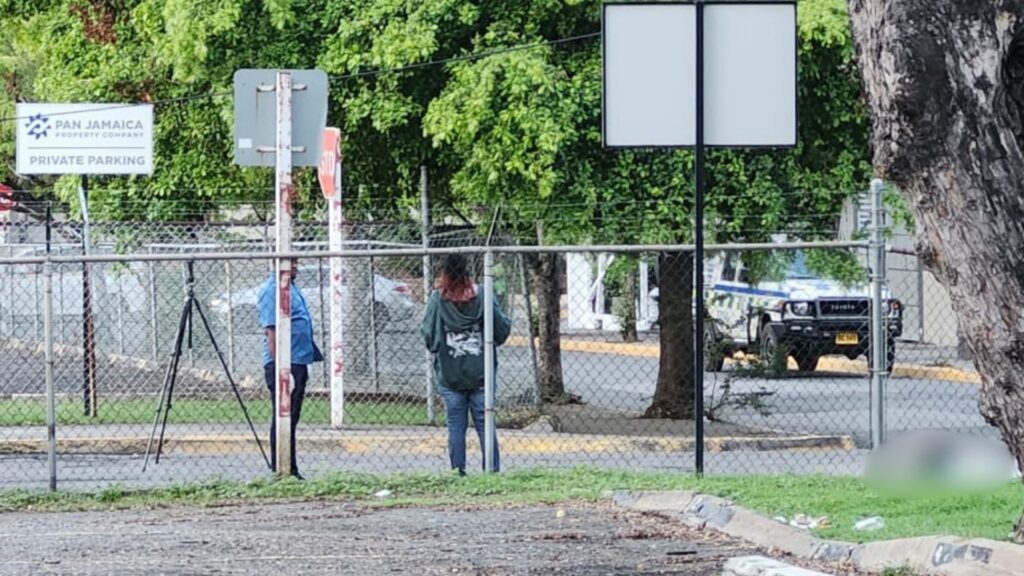
    A violent shooting disrupted carnival celebrations at the Ranny Williams Entertainment Centre in St. Andrew on Sunday, leaving one man wounded after the gunfire broke out during the widely attended Big Wall party. Local news outlet Observer Online has confirmed that a well-known social media influencer is connected to the shooting incident, and the individual has since voluntarily turned themselves in to law enforcement officials for questioning. As investigations into the circumstances of the attack remain ongoing, the publication has announced it will release additional details on this developing story as new information becomes available to reporters. No further details about the victim’s condition, the motive for the shooting, or potential charges against the suspect have been released to the public as of the latest update.

  • RUNNING RIOT!

    RUNNING RIOT!

    On Friday night at Kingston’s National Stadium, Jamaica’s senior women’s national football team, the Reggae Girlz, delivered a dominant 4-0 victory over Antigua and Barbuda in their Group B Concacaf W Qualifiers fixture, leaving head coach Hubert Busby pleased but hungry for more from his squad. The win stretched Jamaica’s perfect start to the qualifying campaign to three matches, putting them top of Group B with nine maximum points, as they close in on a spot in the next round of the tournament. The entire performance was anchored by captain Khadija Shaw, who turned in a world-class display to bag a three-goal hat-trick, with a late penalty from Deneisha Blackwood wrapping up the dominant scoreline. From the opening kickoff, Jamaica controlled every phase of the game, firing a staggering 36 shots total, 14 of which landed on target. The hosts came close to breaking the deadlock repeatedly in the first 25 minutes, hitting the opposition crossbar six times – two of those efforts from Kalyssa Van Zanten – and saw a close-range attempt from Shaw turned away by Antigua and Barbuda goalkeeper Anik Jarvis in the 18th minute. The game’s first goal finally arrived in first-half stoppage time, after Atlanta Primus was fouled in the penalty box by Kai Jacobs. Shaw stepped up to calmly convert the spot kick, handing Jamaica a 1-0 lead going into the halftime break. Shaw doubled her side’s advantage just four minutes into the second half, turning her marker before slotting home from close range, then completed her hat-trick six minutes later with a powerful diving header. Both of the second-half strikes were set up by assists from Van Zanten. The treble pushed Shaw’s career international goal tally to an impressive 65 goals in just 47 appearances for Jamaica. Blackwood put the finishing touches on the result in the first minute of second-half stoppage time, converting another late penalty to seal the 4-0 win, bringing her own international goal total to 11 for the Reggae Girlz. Speaking after the final whistle, Busby highlighted the exceptional leadership and quality of his star captain, praising the frontwoman for not just her clinical finishing but her ability to lead the team from the front. “The best striker in the world plays for us, and she was able to take us over the line — not just that, but how she led from the front,” Busby told reporters. He also reserved special praise for the work of Atlanta Primus in the middle of the park, calling her performance “unbelievable.” Busby explained that the team’s game plan was designed to take the game to the opposition on home turf, a strategy that allowed his side to stay on the front foot and create a flood of scoring chances. While he acknowledged that some chances were wasted, he praised the squad for their overall game management and resilience. He highlighted the impact of second-half substitutions, noting that bringing on experienced midfielder Drew Spence to partner Primus added more control and guile to unlock the Antigua and Barbuda defense. He also credited the introduction of Amelia “Mimi” Van Zanten for strengthening the side’s performance. Busby pointed out that the team showed considerable mental and physical grit in the closing stages, when they were forced to play with 10 players for the final 15 minutes. Even with a numerical disadvantage, the Reggae Girlz managed the game well, created further chances and earned the late penalty that Blackwood converted. “I mean, hitting the crossbar six times and of course not hitting the back of the net [was unfortunate] but I keep on saying, that’s football. The last 15 minutes we were playing with 10 men and we managed the game, created opportunities, got a penalty kick, and so again it shows the resiliency of the group,” he said. The head coach added that leadership is spread throughout the entire squad, pointing to experienced players like Primus – a captain at Southampton – Drew Spence, who has hundreds of club appearances to her name, defender Allyson Swaby and goalkeeper Rebecca Spencer as key examples of that depth. He emphasized that Friday’s result was a full collective effort, from the starting XI to the substitute players who impacted the game after coming on. Busby stressed that this kind of full-squad contribution will be critical if Jamaica is to qualify for the upcoming Women’s World Cup and compete successfully at the tournament. “It is a total team performance. We talked about our starters, our finishers, and obviously those who came on obviously impacted the game but also took the game over the line. That’s what it’s going to take, it’s going to take an entire team effort of 23 to 26 players for us to get to this World Cup and be successful,” he said. In the Group B standings, Jamaica sit comfortably on top with nine points from three matches, ahead of Nicaragua and Guyana, who both hold six points. Antigua and Barbuda and Dominica are yet to pick up a single point, with Dominica having played two fewer matches than Jamaica. The Reggae Girlz will return to the National Stadium tomorrow for their next qualifying fixture, where they will face Guyana in a 7:00 pm kickoff. Only the group winner will advance to the next stage of qualifying, the Concacaf W Championship, making the upcoming clash a critical fixture for Jamaica’s World Cup aspirations.

  • Morning Maestro Machel

    Morning Maestro Machel

    Jamaica’s iconic Hope Gardens’ Wonderlands transformed into a vibrant carnival hub over the weekend, welcoming hundreds of eager party-goers to the much-anticipated annual Sunrise Breakfast Party. Organized by local event collective Sunnation Jamaica, the morning gathering has cemented its reputation as one of the can’t-miss staple events on the regional Caribbean Carnival calendar, drawing both local revelers and traveling carnival fans from across the globe this year. Attendees turned out in full force to sample local cuisine, enjoy interactive entertainment, and soak in the high-energy festive atmosphere that has become synonymous with the event. Headlining the morning lineup was soca legend Machel Montano, whose dynamic, crowd-leading performance turned the Saturday morning showdown into an unforgettable experience. The beloved soca maestro commanded the stage from the first note, drawing the entire audience into a collective, high-energy celebration that left the venue buzzing with unmatched positive energy. Photography by Garfield Robinson captured the electric vibe of the day’s festivities.

  • Mother loses daughter, son critically injured in Spanish Town house fire

    Mother loses daughter, son critically injured in Spanish Town house fire

    On a devastating Friday night in Spanish Town, St Catherine, Jamaica, an out-of-control residential fire has shattered a local family, leaving one teenager dead and her older brother fighting for his life with severe burns – while their grieving mother issues an urgent public appeal for life-saving support. Suzette Campbell, a resident of 12 St John’s Garden and the mother of both victims, opened up about the harrowing moments that unfolded as she returned to her neighborhood that evening.

    It was around 5:00 pm when Campbell first spotted thick black smoke billowing through the area. “I saw a lot of smoke and I thought, ‘Where is that smoke coming from?’ People told me it was from the house next door, so I knew I had to go check what was happening,” Campbell recalled. “By the time I got there, I watched my son run straight out through the flames.”

    In the chaos that followed, Campbell learned the awful truth: her 14-year-old daughter Gabriella Wright had been trapped inside the burning structure, and could not escape. The young girl died in the fire, which destroyed every single possession the family owned. “Everything burned down, nothing was left, and my daughter was burned too,” Campbell said, her grief palpable.

    Gabriella’s 25-year-old brother, Courtney Dailey, who managed to flee the blaze wearing only his underwear, suffered full-thickness burns across large portions of his body. He was rushed to a local hospital immediately after the fire, but remains in critical condition. Campbell says local medical facilities do not have the specialized equipment and resources required to treat Dailey’s life-threatening injuries, leaving the family with no other option than to seek care outside of Jamaica. “He has no chance here, the hospital can’t help him. The hospital can’t help my son at all,” she explained, making a direct public appeal for intervention from Jamaica’s Prime Minister to help secure urgent overseas treatment.

    This is not the first tragedy Campbell has had to endure: family reports confirm she lost another son to a shooting roughly two to three years ago, adding another layer of pain to the latest devastating loss.

    A family member who arrived at the scene shortly after the fire broke out described the aftermath as overwhelmingly distressing. “The situation is really intense. I was on the scene when it took place; it’s really terrible just to look at,” the witness said, noting the entire family is in dire need of financial and emotional support right now.

    Officials from the Burn Foundation of Jamaica have stepped in to support the family, confirming they are already working to arrange the specialized overseas medical care Dailey needs. Stephen Josephs, a representative from the foundation, stressed that even with the severity of Dailey’s injuries, survival is possible if he can access the right treatment quickly.

    “We have received information from a hospital overseas, and we are hopeful that this young man can pull through,” Josephs said. “But based on the extent of his burns, it’s going to take specialized treatment to save his life, so I am calling on all Jamaicans to rally around this grieving family.”

    Members of the public who want to support the Campbell family can donate through the Wings of Hope Fund at the official crisis support charity website, or contribute directly to the public GoFundMe campaign set up in Courtney Dailey’s name.

  • Natasha combines with Beenie Man for ‘Sexology’

    Natasha combines with Beenie Man for ‘Sexology’

    Rising dancehall talent Natesha, who currently resides in New Jersey, is celebrating overwhelming global acclaim for her latest high-energy club single, *Sexology*, a collaborative track that features iconic international dancehall star Beenie Man.

    The genre-blending artist, who has built a loyal following by fusing pop, R&B and reggae influences into a one-of-a-kind musical style, says she is particularly thrilled by the robust traction the track has earned across major U.S. urban radio markets — a milestone that solidifies her status as one of the most promising emerging powerhouses in the global dancehall scene.

    In an enthusiastic interview, Natesha shared that *Sexology* is already getting regular rotation on top-rated radio outlets including IRIE FM, and can be heard blaring through street markets, nightlife venues and clubs in both Montego Bay, Jamaica, and New York City. Beyond North America and the Caribbean, the single has also landed spots on major curated playlists and national music charts across six countries, including Canada, the United Kingdom, Saudi Arabia, Dubai, and Japan.

    Fueled by the track’s unexpected early success, fan demand for a visual accompaniment has surged. “People love the song so much that they keep asking for the video,” Natesha explained. Currently, the artist is in active discussions with Beenie Man’s management team and renowned producer Kemar “Flava” McGregor to lock in production for a music video, scheduled to begin filming this summer.

    To capitalize on the single’s growing momentum ahead of the peak summer entertainment season, Natesha and her team have laid out an aggressive digital marketing strategy: the track will be added to TikTok’s music library, and the team will leverage user-generated content campaigns to encourage broader audience participation and drive the song toward viral status. “The response on the streaming platforms has been so phenomenal that we must get the video done ASAP for the big Summer push,” Natesha noted.

    The artist has already ramped up in-person promotional efforts across Jamaica to boost the single’s reach: she performed live at two popular Montego Bay venues, the Brewery and Pier One, and headlined a stage show at Negril’s Ritz Cafe over the 2024 Easter holiday weekend. Known as an unapologetically bold lyricist, Natesha prioritizes open self-expression in her work, and has notched previous independent success with earlier singles including *Reasons*, the fan-favorite *Louis V*, and *Body*.

  • Guyana and T&T move to boost trade, energy cooperation

    Guyana and T&T move to boost trade, energy cooperation

    On Friday, top political leaders from Trinidad and Tobago and Guyana convened high-level bilateral talks in Port of Spain, Trinidad, reaching a landmark agreement to expand cross-nation cooperation across a wide range of key sectors. The core goal of the new framework is to deepen longstanding bilateral ties and strengthen regional integration between the two Caribbean Community (Caricom) member states.

    During the negotiations, Prime Minister Kamla Persad-Bissessar of Trinidad and Tobago and President Irfaan Ali of Guyana mapped out clear priority areas for joint action, ranging from food security and cross-border investment to energy integration, technology sharing, human capital development and public security collaboration.

    To turn the agreement into tangible progress, the two leaders announced several concrete next steps. Persad-Bissessar will conduct an official state visit to Guyana in the coming months to continue high-level dialogue. Additionally, a new joint working group with representation from both nations’ private sectors will be established to identify and address shared development hurdles, while unlocking untapped economic opportunities for businesses and workers on both sides.

    A central focus of the new cooperation agenda is breaking down existing trade barriers and boosting overall economic competitiveness between the two countries, a move that signals a deliberate push to streamline cross-border business operations and create a more seamless trade environment for the region.

    President Ali was the featured speaker at the Trinidad and Tobago Chamber of Industry and Commerce’s Annual Business Meeting Outlook for 2026/2027, an event hosted at the Hilton Trinidad & Conference Centre. The gathering centered on the theme “Strengthening Trinidad and Tobago-Guyana Energy Collaboration in a New Regional Energy Era”, bringing together top decision-makers from both the public and private sectors to discuss energy sector opportunities. During his address, Ali emphasized that closer energy partnership between the two nations is particularly critical amid the shifting regional energy landscape.

    Ali also used the occasion to publicly thank Persad-Bissessar and her administration for Trinidad and Tobago’s consistent support for Guyana’s territorial integrity and national sovereignty, extending the gratitude of the entire Guyanese people for the ongoing backing.