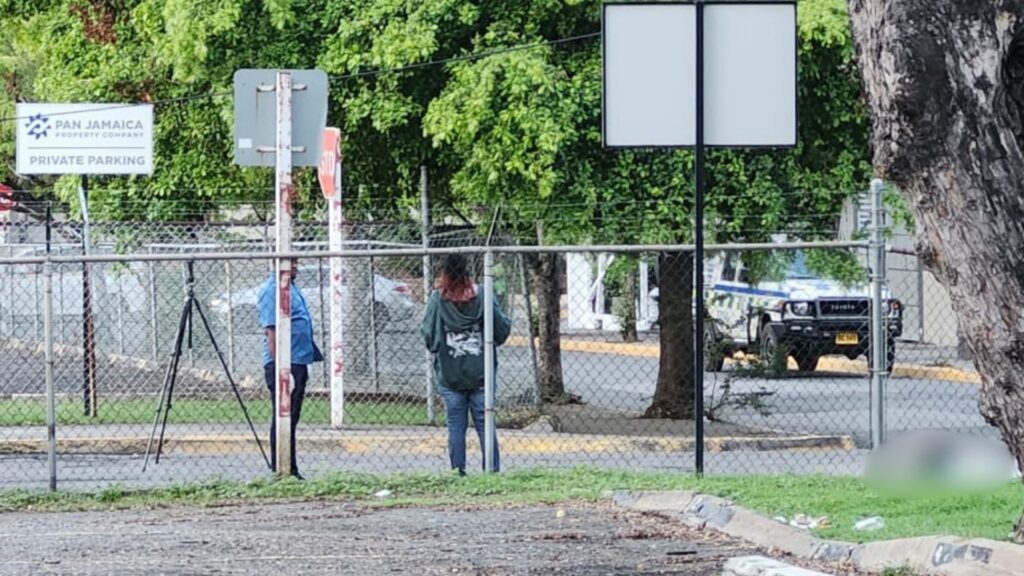
In the pre-dawn hours of Thursday, a fatal shooting took the life of an unidentified man in the busy district of New Kingston, Kingston, local law enforcement has officially confirmed. According to initial law enforcement dispatches, the violent incident unfolded at approximately 3:30 a.m. at the busy intersection connecting Grenada Crescent and Trinidad Terrace, a central area within Jamaica’s capital. As of the latest update from the Jamaica Constabulary Force, investigators have not yet released the identity of the deceased, as officers continue working to notify next of kin and confirm personal details. At this early stage of the probe, critical context surrounding the shooting — including potential motives, whether the killing was targeted, if any suspects have been taken into custody, and what led to the altercation — remains unconfirmed, with law enforcement yet to piece together a full timeline of events. Local authorities have not announced any additional updates related to the investigation as of press time, and further details are expected to be released to the public as the inquiry progresses. Community members in the New Kingston area have been notified of the incident, and patrols have been increased in the neighborhood while the investigation continues.
标签: Jamaica
牙买加
-

Defending champions Edwin Allen lead four Jamaican schools to 4x100m final
At the 130th running of the iconic Penn Relays Carnival held at Philadelphia’s Franklin Field, Jamaica’s high school track programs continued their decades-long display of dominance on Thursday, when four Jamaican squads punched their tickets to Friday’s much-anticipated High School Girls’ 4x100m Championships of the Americas final.
Leading the charge is Edwin Allen High School, the defending tournament champion, which clocked the fastest qualifying time of the preliminary rounds with a blistering 45.63 seconds. The team’s qualifying run, captured in photos by event correspondent Paul Reid, saw runner Alexxe Henry successfully take the baton from teammate Shanique Cassanova mid-race, solidifying their spot at the top of the qualifying rankings.
Joining Edwin Allen in Friday’s final are three other standout Jamaican squads: former event champions St Jago High, which finished just 0.1 seconds behind Edwin Allen with a 45.73-second run; another former titlist Excelsior High, which posted a qualifying time of 46.03 seconds; and Mt Alvernia High, a first-time finalist that crossed the line in 46.35 seconds to secure its historic spot in the championship round.
For Jamaican high school girls’ relay programs, this year’s strong qualifying performance extends an unprecedented run of dominance at the Penn Relays. Jamaican squads have claimed the top prize at the High School Girls’ 4x100m Championships of the Americas for 11 consecutive years, with Edwin Allen alone taking home eight of those 11 titles. Heading into Friday’s final, the program is well-positioned to extend both its own winning streak and Jamaica’s overall multi-year reign at the event.
Beyond the four teams that qualified for the main championship final, eight additional Jamaican squads earned spots in the event’s secondary competition, the High School Girls International final. This race serves as a consolation round for the nine fastest non-American squads that did not advance to the main championship. The Jamaican teams moving on to this race are Alpha Academy, Holmwood Technical, St Mary High, William Knibb Memorial, Penwood High, Vere Technical, Manchester High and Meadowbrook High.
All eyes will turn to Franklin Field on Friday when the 4x100m finals kick off, as Jamaican programs look to cement their status as the global gold standard for high school girls’ sprint relay competition.
-

NCB returns with $2-billion SME fund
KINGSTON, Jamaica — Strong unmet demand for accessible small and medium enterprise (SME) financing has pushed National Commercial Bank Jamaica Limited (NCBJ) to expand its dedicated SME Growth Fund from the original $1 billion to $2 billion, after the initial allocation was completely exhausted by eager borrowers in 2024. The newly launched second iteration of the fund, dubbed SME Growth Fund II, will extend individual loans of up to $35 million per borrower at starting interest rates as low as 9.75 percent. Funding from the program can be used to cover core working capital needs, purchase new equipment and machinery, acquire heavy-duty business vehicles, and finance a wide range of business expansion projects.
Speaking at the official launch event held Thursday at Kingston’s AC Hotel, NCB’s SME Portfolio Manager Khason Morgan noted that the original $1 billion fund was drawn down far faster than bank leadership projected. “The depletion in funds last year happened so quickly that we broke that record, and my team would have had to make the decision around doubling the funding or extending the promotion,” Morgan explained. Bank officials confirmed that the expanded capital pool is designed to widen access to affordable financing for Jamaican SMEs, though they acknowledge that strong market demand could lead to the full $2 billion being subscribed much faster than the official timeline allows.
Unlike the first Growth Fund, which operated without a fixed closing date and remained open to applications until all capital was disbursed, the new facility will run for a fixed application window between April 2024 and June 2026. The fixed timeline was directly shaped by the unexpected speed at which the first fund was exhausted. The initial program, originally scheduled to run from March to July 2023, closed fully disbursed in June, with 30 percent of its original allotted timeline still remaining unused. That first fund supported roughly 100 small and medium business owners across Jamaica. For the second iteration, the bank has set a baseline target of supporting at least 57 businesses, though officials note that smaller average loan sizes could open the door for many more micro-enterprises to access support than the initial target suggests.
Garfield Holness, NCB’s Manager of Product Delivery & Portfolio Management, told local outlet Observer Online that post-disaster recovery needs reinforced the already strong demand for SME financing in the region. “We saw there was a distinct need in the market for financing for our SME clients, particularly after Hurricane Melissa, where we saw several businesses would have been impacted. We saw there was a need for capital,” Holness said. While interest rates for the new facility are variable by borrower risk profile, the bank has guaranteed that all approved borrowers will lock in the rate they agree to at the time of approval, in compliance with standard notification requirements set by Bank of Jamaica. Morgan emphasized that this rate lock guarantee, paired with the fixed application window, makes timely submissions critical for interested business owners. “The rate you apply for is the rate for the facility; that’s why it’s very important to put in, in this definitive time period, your application to be a part of it,” Morgan said.
-

Squash’s protoje Cartadon pushes on after multiple gunshots in drive-by
KINGSTON, Jamaica — For most people, cheating death is an unthinkable, once-in-a-lifetime event. For rising Jamaican dancehall artist Cartadon, the harrowing experience was not only a brush with mortality — it was a scenario he had foreshadowed in music just 24 hours before gunfire rang out. In a shocking turn of events, the emerging deejay was pronounced clinically dead on arrival at a Kingston hospital after a drive-by attack, only to be successfully resuscitated by medical teams who refused to let him slip away.
Cartadon, a protégé of renowned dancehall star Squash, told reporters he was an unintended victim of the violence that unfolded in Mountain View, one of Kingston’s inner-city neighborhoods. He was among five people standing at the scene when attackers opened fire; two people at the location did not survive their wounds. Cartadon himself suffered three gunshot wounds, and medical staff initially believed he had succumbed to his injuries before a last-ditch effort to revive him succeeded.
What makes the incident all the more chilling is the eerie timing of his latest track ahead of the attack. The day before the shooting, Cartadon dropped a single titled *Protected*, whose lyrics explicitly predicted he would be shot but survive thanks to divine protection.
“It was like living through an action movie mixed with a horror flick,” Cartadon recounted. “I released *Protected* on Friday, and by Saturday I was shot up. In the song I sang that I would be attacked but the Most High would keep me safe. I never imagined it would actually come true — it feels like I spoke this into existence. I’m here now, thanks to God and the doctors who never gave up on me, but it leaves you paranoid, you know?”
Raised in Kingston’s tough, violence-plagued inner streets, Cartadon has long turned to music as an escape from the chaos surrounding him. He says his unwavering focus on building his career has kept him from being pulled into the cycle of negativity that shapes life for many young people in his community.
“Music has been my whole life from day one, it’s my life now, and it will be my life until I take my last breath,” he said. “I’m really excited about where my career is headed right now — I’ve got a solid team behind me and a stack of incredible new tracks ready to drop.”
Now, just weeks after surviving the attack, Cartadon is back in the studio hard at work on new material, collaborating closely with the international production collective Boston Boys Records. He is currently focused on promoting his latest solo single, *Kode*, as he works to build on the buzz that was growing around his name before the shocking shooting.
-
Lebanon leaders accuse Israel of war crime after journalist killed
BEIRUT, LEBANON – In the aftermath of an Israeli airstrike that claimed the life of a Lebanese journalist in southern Lebanon this week, Lebanese national leaders have formally leveled war crime allegations against Israel, while Israeli military officials confirm the incident remains under internal review.
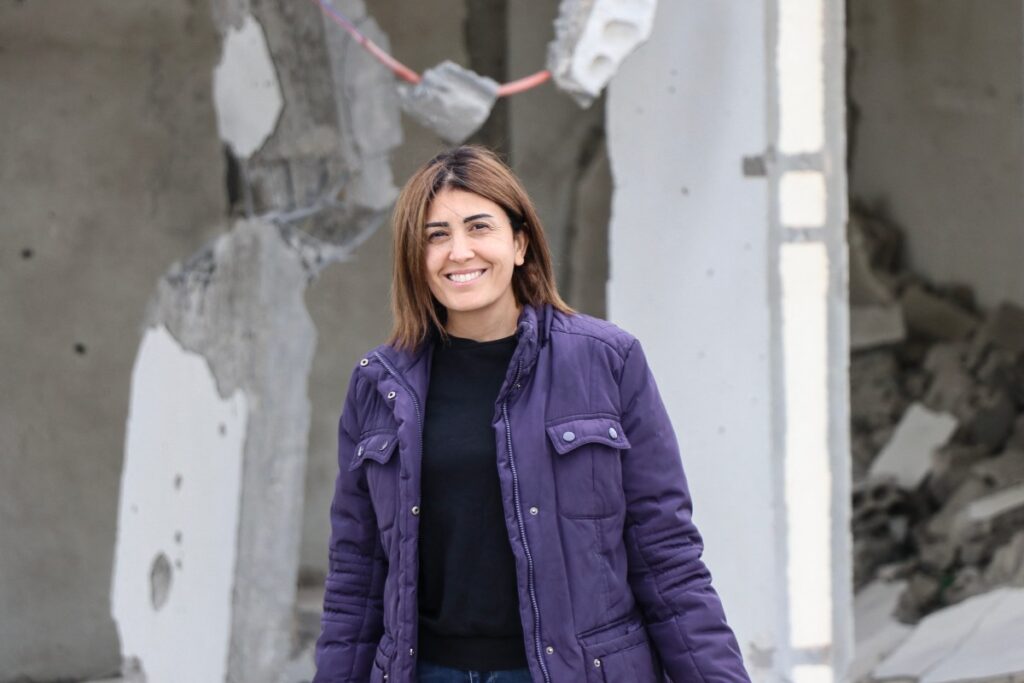
Amal Khalil, a 42-year-old correspondent for prominent Lebanese daily newspaper Al-Akhbar, had her death confirmed Wednesday by rescue services and her employer. According to Lebanon’s civil defense agency, Khalil died when an airstrike hit a residential building in the southern border village of Al-Tiri.
In an official statement condemning what he called deliberate war crimes, Lebanese President Joseph Aoun argued that Israel systematically targets journalists to cover up evidence of its violations against Lebanese communities. “Israel deliberately targets journalists in order to conceal the truth about its crimes against Lebanon,” Aoun stated. Prime Minister Nawaf Salam echoed the accusation in a post on the social platform X, noting that targeting media workers and blocking access for first response teams amounts to a war crime, and confirming the Lebanese government plans to bring the case before international regulatory and judicial bodies.
When contacted for comment by Agence France-Presse (AFP) Thursday, an Israel Defense Forces (IDF) spokesperson said only that “the incident is still under review.”
The killing comes 10 days into a fragile ceasefire between Israeli forces and the Iran-backed Hezbollah movement, which paused open conflict that has killed more than 2,400 people in Lebanon since fighting resumed last year.
Lebanon’s official National News Agency (NNA) provided a detailed timeline of the incident: Khalil and a second journalist, Zeinab Faraj, fled to the Al-Tiri house for shelter after an initial Israeli airstrike targeted a car traveling directly ahead of them. The two people in that targeted vehicle – the mayor of Bint Jbeil, a nearby town currently under Israeli occupation, and his companion – were killed in the first strike. Moments later, a second Israeli airstrike hit the house where the two journalists had taken refuge.
Lebanon’s health ministry reported that Faraj was wounded and evacuated to a local hospital, while Khalil was left trapped under rubble. A senior Lebanese Red Cross official told AFP that teams successfully pulled Faraj from the site but were forced to withdraw without recovering Khalil after receiving an advance warning of another impending strike. Lebanese authorities were required to coordinate with United Nations peacekeeping forces deployed across southern Lebanon to secure the area, resulting in a multi-hour delay before rescue crews could re-enter to retrieve Khalil’s body from the destroyed building.
On Thursday, Lebanon’s health ministry added a second accusation against Israel, claiming the military deliberately obstructed rescue operations and targeted an ambulance clearly marked with the official Red Cross emblem. The IDF pushed back on the account in a Wednesday statement, saying its forces had identified two vehicles in southern Lebanon that had left a military facility used by Hezbollah. The airstrike targeted a vehicle carrying “terrorists,” the military said, that had crossed what Israel refers to as its “forward defense line” in southern Lebanon and moved close to deployed Israeli troops. Israel has also denied blocking rescue teams from accessing the strike site, after establishing a heavily restricted “yellow line” deep inside southern Lebanon, where its troops are currently stationed and civilian residents are barred from returning to their homes.
Human rights and press freedom organizations have widely condemned the killing, adding to longstanding criticism of repeated Israeli strikes that have killed media workers over the course of the ongoing conflict. Dozens of journalists gathered for a public protest in downtown Beirut ahead of Khalil’s funeral, scheduled to take place in her hometown of Baysariyeh in southern Lebanon.
Jonathan Dagher, Middle East bureau head for Reporters Without Borders (RSF), said the documented sequence of strikes Wednesday “would indicate targeting and obstruction of aid constituting war crimes.” Ramzi Kaiss, Lebanon-based researcher for Human Rights Watch, called for a full, independent investigation into the killing. “Israel’s killing of journalist Amal Khalil should be credibly investigated with a view towards justice and accountability,” Kaiss said, adding that “intentionally targeting civilians is a war crime.”
Khalil is the latest Lebanese journalist to be killed by Israeli forces since cross-border conflict reignited in 2023. In late March, three other journalists were killed in an Israeli airstrike in southern Lebanon, prompting a group of United Nations independent experts to call for a formal international investigation into that incident. Speaking from the Beirut protest, local journalist Inas Sherri told AFP that holding responsible parties to account is the only way to stop the pattern of killings. “Accountability is the most important thing,” Sherri said. “If we were holding people accountable, Israel would not have continued killing journalists one after another.”
-

Child porn found on D4vd’s phone says prosecutors in teen murder case
LOS ANGELES – A shocking new development has emerged in the high-profile murder case against rising R&B artist D4vd, born David Burke: US prosecutors confirmed Thursday that law enforcement recovered a large cache of child pornography on the 21-year-old singer’s mobile phone. Burke is already facing capital murder charges for the brutal killing and dismemberment of 14-year-old Celeste Rivas Hernandez, whose decomposing remains were discovered stashed in the front trunk of his Tesla parked in the Hollywood Hills.
-
US eases access to marijuana for medical use
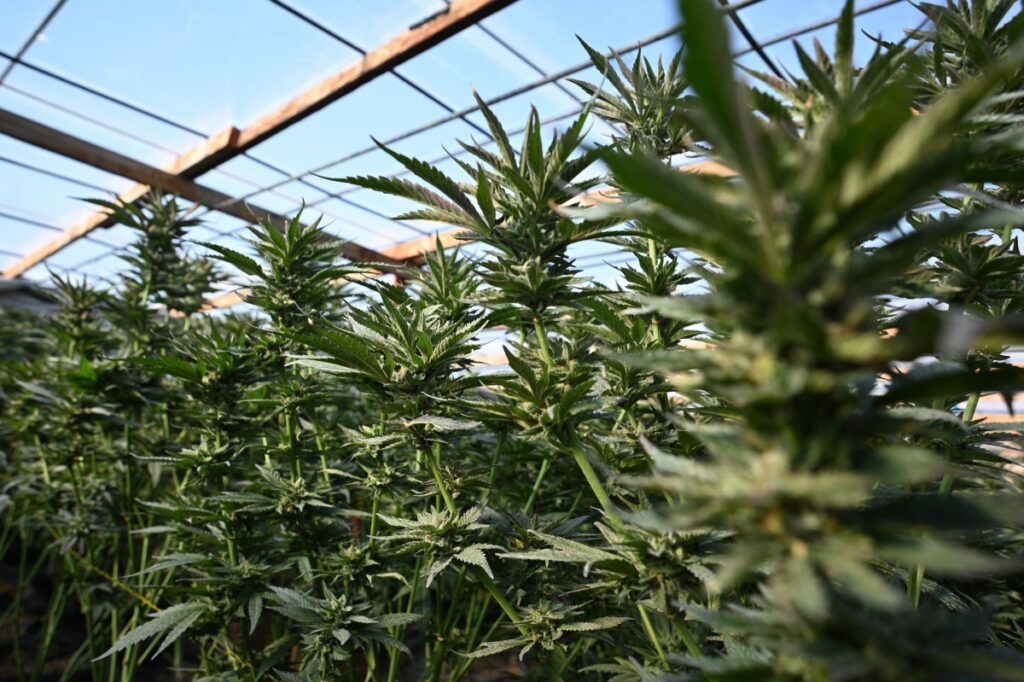
In a landmark policy shift announced Thursday in Washington D.C., the United States federal government has overhauled the regulatory status of cannabis to widen access for medical users and clear barriers for scientific investigation into the drug’s therapeutic properties.
Under the new rule, cannabis will be reclassified from Schedule I to Schedule III of the federal government’s five-tier drug scheduling system. For decades, cannabis had been grouped alongside dangerous substances like heroin and methamphetamine as a Schedule I drug, a classification defined by the U.S. Drug Enforcement Administration as reserved for substances with no recognized medical applications and a very high risk of dependence and abuse.
Acting Attorney General Todd Blanche emphasized that the reclassification, which frames cannabis as having only moderate to low potential for addictive dependence, will remove longstanding regulatory hurdles that limited patient access to cannabis-based treatments and give clinicians greater flexibility to prescribe evidence-based care to their patients. “This change expands patients’ access to life-changing treatments and empowers doctors to make better-informed healthcare decisions,” Blanche stated in an official release.
Thursday’s policy change is not an independent action: it implements a directive first laid out in a December executive order from President Donald Trump, which ordered federal agencies to take steps to remove barriers to legitimate medical research into cannabis’s safety and effectiveness as a therapeutic agent. Prior to the reclassification, the Schedule I status created extensive bureaucratic and legal barriers for researchers seeking to study cannabis, slowing progress in understanding both its benefits and potential risks. The shift to Schedule III is expected to open the door to more rigorous, large-scale clinical trials that can provide clearer data for regulators and healthcare providers moving forward.
-

Farmers urged to prepare for mixed weather up to September
KINGSTON, Jamaica — As the Caribbean region transitions from a La Niña to an El Niño climate pattern, agricultural authorities across Jamaica are sounding the alarm for local food producers, calling for urgent proactive planning to adapt to unpredictable, drier and hotter conditions forecast over the coming five months. The Rural Agricultural Development Authority (RADA), the body tasked with supporting Jamaica’s rural agricultural sector, has launched an advisory campaign urging all island farmers to adjust their operations ahead of the projected unusual weather trends.
Francine Webb, senior officer for plant health and food safety at RADA, outlined that updated projections from Jamaica’s national Meteorological Service confirm the upcoming wet season will bring far less precipitation than historical averages, making water conservation a non-negotiable priority for agricultural producers.
“Data we have received shows that for the April to June window, leading into the second wet season, conditions will be drier than the historical norm, but we can also expect intermittent heavy rain events,” Webb explained in an interview with JIS News. “This mixed pattern means water conservation has to be at the top of every farmer’s to-do list. We have to be ready for any scenario that unfolds.”
Webb broke down the regional rainfall probabilities by parish, comparing projected totals to 30 years of historical climate data. Across western and northern parishes including St Elizabeth, Westmoreland, Hanover, St James, Trelawny, St Ann, and St Mary, there is a 40 to 45 percent chance of rainfall falling below the long-term average. In southern parishes of Manchester, Clarendon, and St Catherine, that probability rises to between 45 and 50 percent. The parishes of Kingston and St Andrew, St Thomas, and Portland face similar odds, with a 45 to 50 percent likelihood of below-average precipitation for the April-June period.
Webb emphasized that the long-term drought watch issued across parts of the island should not be confused with the short-term seasonal rainfall forecast, urging farmers to prepare for all possible conditions regardless of the short-term projections.
Looking ahead to the July to September period, Webb noted that the Meteorological Service projects above-average rainfall for a handful of parishes, most notably central St Thomas. But this expected increase in rain does not eliminate drought risk, she stressed: the same area is also under a long-term drought watch.
“Just because we expect higher rainfall in that period doesn’t mean farmers will have excess water to spare,” Webb added. “With temperatures climbing higher than average across the region, any rainfall we get will be offset by rapid evaporation. That makes water conservation critical even in areas projected to see more rain.”
Naming central St Thomas as one of the most vulnerable areas on the island, Webb repeated that efficient, intentional water use is imperative for all Jamaican farmers as they head into the mixed weather period. By taking proactive steps to store and conserve water now, producers can protect their crops and operations from the worst impacts of shifting climate patterns, RADA says.
-

WATCH: Pagee flooded after heavy morning rainfall
Heavy, sustained downpours that lasted for hours overnight have left large swathes of the coastal fishing community of Pagee in St. Mary parish, Jamaica, submerged under floodwaters, with local transportation networks thrown into chaos and residents bracing for potential further worsening of conditions early Thursday.
Local resident Sherlon Boota recounted waking to a startling scene: her entire residential yard was fully inundated by rising floodwater. While she has not faced critical disruptions to her own safety so far, Boota explained that many of her neighbors are trapped in their homes, unable to venture outside due to the high water levels. If the rainy conditions persist into the coming days, she warned, dozens of local households will be forced to abandon their properties and find emergency shelter in safer areas.
The flood damage is not limited to residential neighborhoods. Overflow from the Quebec River has left the main roadway connecting Islington and Port Maria nearly impossible to traverse, cutting off a key local travel artery. Albert Johnson, a local taxi operator who works the route, told reporters that drivers have been forced to reroute all trips onto the main highway, and will remain on the alternate path until water levels recede enough to declare the original road safe for use.
In the parish capital of Port Maria, the situation has brought regional travel to a near-standstill. With commuters scrambling to find shelter and all available public and private transportation halted, movement through the town has frozen. As of Thursday morning, emergency officials have not yet received reports of any injuries or casualties related to the flooding event.
Jamaica’s national Meteorological Service has issued an advisory urging all residents living in low-lying, flood-prone zones across the region to remain on high alert. Forecasters project that scattered showers and intermittent heavy rain will continue across the area through at least Friday, keeping flood risks elevated through the end of the workweek.
-

JPS Foundation covers industrial technology CSEC exam fee for over 300 students
KINGSTON, Jamaica — As the Caribbean Secondary Education Certificate (CSEC) exams approach their May launch date, the JPS Foundation has stepped forward to reinforce its longstanding dedication to accessible education, announcing it will fully cover exam registration costs for hundreds of students enrolled in industrial technology programs, most widely known as electrical studies, across the island. In an official public statement, the philanthropic arm of Jamaica’s leading energy provider detailed that for the 2026 academic cycle, more than 300 learners from 20 secondary institutions spanning all regions of Jamaica will receive the grant support, with the total value of the initiative topping JMD 1.5 million. The foundation frames this program as a targeted, strategic investment in STEM (science, technology, engineering, and mathematics) education that serves two core goals: first, to bolster the technical competencies of Jamaican youth, and second, to eliminate the financial barriers that often force low-income and marginalized students to abandon this high-demand, career-focused subject during their secondary schooling. At a recent symbolic handover event marking the launch of this year’s program, Sophia Lewis, head of the JPS Foundation, underscored the critical role that skilled technical workers play in driving the nation’s long-term economic and social growth. “The future of our country depends on a skilled and innovative workforce,” Lewis noted during her remarks. “By supporting students in technical disciplines, we are helping to build capacity and create opportunities for the next generation that would not otherwise exist.” Since the program’s launch, this sustained investment has already reached more than 3,700 Jamaican high school students, with cumulative spending on the initiative surpassing JMD 15.3 million. Through ongoing, consistent support for technical education, the foundation continues to carve out a meaningful role in preparing young Jamaicans for stable, high-growth careers in a range of technical fields, most notably the rapidly evolving local energy sector.