标签: Jamaica

牙买加

  • Mother loses daughter, son critically injured in Spanish Town house fire

    Mother loses daughter, son critically injured in Spanish Town house fire

    On a devastating Friday night in Spanish Town, St Catherine, Jamaica, an out-of-control residential fire has shattered a local family, leaving one teenager dead and her older brother fighting for his life with severe burns – while their grieving mother issues an urgent public appeal for life-saving support. Suzette Campbell, a resident of 12 St John’s Garden and the mother of both victims, opened up about the harrowing moments that unfolded as she returned to her neighborhood that evening.

    It was around 5:00 pm when Campbell first spotted thick black smoke billowing through the area. “I saw a lot of smoke and I thought, ‘Where is that smoke coming from?’ People told me it was from the house next door, so I knew I had to go check what was happening,” Campbell recalled. “By the time I got there, I watched my son run straight out through the flames.”

    In the chaos that followed, Campbell learned the awful truth: her 14-year-old daughter Gabriella Wright had been trapped inside the burning structure, and could not escape. The young girl died in the fire, which destroyed every single possession the family owned. “Everything burned down, nothing was left, and my daughter was burned too,” Campbell said, her grief palpable.

    Gabriella’s 25-year-old brother, Courtney Dailey, who managed to flee the blaze wearing only his underwear, suffered full-thickness burns across large portions of his body. He was rushed to a local hospital immediately after the fire, but remains in critical condition. Campbell says local medical facilities do not have the specialized equipment and resources required to treat Dailey’s life-threatening injuries, leaving the family with no other option than to seek care outside of Jamaica. “He has no chance here, the hospital can’t help him. The hospital can’t help my son at all,” she explained, making a direct public appeal for intervention from Jamaica’s Prime Minister to help secure urgent overseas treatment.

    This is not the first tragedy Campbell has had to endure: family reports confirm she lost another son to a shooting roughly two to three years ago, adding another layer of pain to the latest devastating loss.

    A family member who arrived at the scene shortly after the fire broke out described the aftermath as overwhelmingly distressing. “The situation is really intense. I was on the scene when it took place; it’s really terrible just to look at,” the witness said, noting the entire family is in dire need of financial and emotional support right now.

    Officials from the Burn Foundation of Jamaica have stepped in to support the family, confirming they are already working to arrange the specialized overseas medical care Dailey needs. Stephen Josephs, a representative from the foundation, stressed that even with the severity of Dailey’s injuries, survival is possible if he can access the right treatment quickly.

    “We have received information from a hospital overseas, and we are hopeful that this young man can pull through,” Josephs said. “But based on the extent of his burns, it’s going to take specialized treatment to save his life, so I am calling on all Jamaicans to rally around this grieving family.”

    Members of the public who want to support the Campbell family can donate through the Wings of Hope Fund at the official crisis support charity website, or contribute directly to the public GoFundMe campaign set up in Courtney Dailey’s name.

  • Natasha combines with Beenie Man for ‘Sexology’

    Natasha combines with Beenie Man for ‘Sexology’

    Rising dancehall talent Natesha, who currently resides in New Jersey, is celebrating overwhelming global acclaim for her latest high-energy club single, *Sexology*, a collaborative track that features iconic international dancehall star Beenie Man.

    The genre-blending artist, who has built a loyal following by fusing pop, R&B and reggae influences into a one-of-a-kind musical style, says she is particularly thrilled by the robust traction the track has earned across major U.S. urban radio markets — a milestone that solidifies her status as one of the most promising emerging powerhouses in the global dancehall scene.

    In an enthusiastic interview, Natesha shared that *Sexology* is already getting regular rotation on top-rated radio outlets including IRIE FM, and can be heard blaring through street markets, nightlife venues and clubs in both Montego Bay, Jamaica, and New York City. Beyond North America and the Caribbean, the single has also landed spots on major curated playlists and national music charts across six countries, including Canada, the United Kingdom, Saudi Arabia, Dubai, and Japan.

    Fueled by the track’s unexpected early success, fan demand for a visual accompaniment has surged. “People love the song so much that they keep asking for the video,” Natesha explained. Currently, the artist is in active discussions with Beenie Man’s management team and renowned producer Kemar “Flava” McGregor to lock in production for a music video, scheduled to begin filming this summer.

    To capitalize on the single’s growing momentum ahead of the peak summer entertainment season, Natesha and her team have laid out an aggressive digital marketing strategy: the track will be added to TikTok’s music library, and the team will leverage user-generated content campaigns to encourage broader audience participation and drive the song toward viral status. “The response on the streaming platforms has been so phenomenal that we must get the video done ASAP for the big Summer push,” Natesha noted.

    The artist has already ramped up in-person promotional efforts across Jamaica to boost the single’s reach: she performed live at two popular Montego Bay venues, the Brewery and Pier One, and headlined a stage show at Negril’s Ritz Cafe over the 2024 Easter holiday weekend. Known as an unapologetically bold lyricist, Natesha prioritizes open self-expression in her work, and has notched previous independent success with earlier singles including *Reasons*, the fan-favorite *Louis V*, and *Body*.

  • Guyana and T&T move to boost trade, energy cooperation

    Guyana and T&T move to boost trade, energy cooperation

    On Friday, top political leaders from Trinidad and Tobago and Guyana convened high-level bilateral talks in Port of Spain, Trinidad, reaching a landmark agreement to expand cross-nation cooperation across a wide range of key sectors. The core goal of the new framework is to deepen longstanding bilateral ties and strengthen regional integration between the two Caribbean Community (Caricom) member states.

    During the negotiations, Prime Minister Kamla Persad-Bissessar of Trinidad and Tobago and President Irfaan Ali of Guyana mapped out clear priority areas for joint action, ranging from food security and cross-border investment to energy integration, technology sharing, human capital development and public security collaboration.

    To turn the agreement into tangible progress, the two leaders announced several concrete next steps. Persad-Bissessar will conduct an official state visit to Guyana in the coming months to continue high-level dialogue. Additionally, a new joint working group with representation from both nations’ private sectors will be established to identify and address shared development hurdles, while unlocking untapped economic opportunities for businesses and workers on both sides.

    A central focus of the new cooperation agenda is breaking down existing trade barriers and boosting overall economic competitiveness between the two countries, a move that signals a deliberate push to streamline cross-border business operations and create a more seamless trade environment for the region.

    President Ali was the featured speaker at the Trinidad and Tobago Chamber of Industry and Commerce’s Annual Business Meeting Outlook for 2026/2027, an event hosted at the Hilton Trinidad & Conference Centre. The gathering centered on the theme “Strengthening Trinidad and Tobago-Guyana Energy Collaboration in a New Regional Energy Era”, bringing together top decision-makers from both the public and private sectors to discuss energy sector opportunities. During his address, Ali emphasized that closer energy partnership between the two nations is particularly critical amid the shifting regional energy landscape.

    Ali also used the occasion to publicly thank Persad-Bissessar and her administration for Trinidad and Tobago’s consistent support for Guyana’s territorial integrity and national sovereignty, extending the gratitude of the entire Guyanese people for the ongoing backing.

  • Misplaced diversion

    Misplaced diversion

    During a Thursday parliamentary sitting of the joint select committee tasked with reviewing Jamaica’s landmark Child Diversion Act, the island’s top children’s rights watchdog has issued a stark warning: the nation’s flagship juvenile justice intervention is being pushed far beyond its original mandate, crippled by long-standing gaps in the country’s child care support infrastructure.

    Children’s Advocate Diahann Gordon Harrison told committee members that a growing misalignment has distorted the core purpose of the child diversion programme, which was specifically designed to steer children who have committed minor criminal offenses away from the formal justice system. Through targeted counseling, skill-building and rehabilitation services, the initiative is intended to give young offenders a second chance, preventing the lifelong harm that can come from entering the adult correctional system and keeping youth on positive developmental paths.

    But Gordon Harrison said that in practice, the programme is now being flooded with referrals for children who have not broken any laws, instead presenting with complex behavioral challenges that require entirely different forms of support. Referrals for issues like chronic school absenteeism and running away from home are increasingly being routed through the diversion system, she explained, a practice that runs counter to both the Child Diversion Act’s formal objectives and globally accepted standards for child diversion practice.

    To back up her assessment, Gordon Harrison presented parish-level data showing that a substantial share of all current referrals to the programme involve children categorized as having behavioral difficulties, not youth facing criminal accusations. This misallocation of resources, she argued, does not just weaken the programme for its intended population—it represents a fundamental distortion of the initiative’s original mission.

    “Resources that should be reserved for children in conflict with the law, who are legally eligible for diversion and need these services to avoid formal justice processing, are being diverted to children who never should have entered the system in the first place,” Gordon Harrison told the committee. “This stretches the programme far beyond its capacity and undermines outcomes for every child involved.”

    Gordon Harrison traced the root of the problem to the continued absence of fully operational therapeutic care centres, which were mandated under Jamaica’s separate Child Care and Protection Act to serve as the dedicated support system for children with unmet behavioral and mental health needs. Despite the passage of that legislation years ago, these specialized facilities have yet to become functional, leaving families, courts and social services with nowhere else to turn for children struggling with persistent behavioral challenges.

    The failure to launch these critical facilities, she warned, opens Jamaica up to intensified negative international scrutiny over its juvenile justice and child welfare practices. It also forces the court system into impossible positions when ruling on cases involving children with behavioral needs: without access to residential therapeutic care, judges often have no choice but to place vulnerable children in correctional facilities even when diversion would be the more appropriate outcome for their specific situation. This practice not only violates core principles of equitable juvenile justice, she said, but also exposes at-risk children to harmful environments that can worsen their existing challenges rather than supporting healing.

    Committee chairman and Minister of Justice Delroy Chuck opened further discussion on the gap by questioning how children with no criminal offenses ever end up before the courts in the first place. Gordon Harrison explained that the crisis is largely driven by overwhelmed parents who have nowhere else to turn for support with children whose behavioral needs they cannot manage at home. With no specialized therapeutic services available, these families turn to the court system for intervention, leaving judges with no viable alternatives to routing cases through the diversion system.

    State Minister of Justice Marisa Dalrymple-Philibert echoed Gordon Harrison’s concerns, confirming that the gap in specialized therapeutic care for children with behavioral needs is a decades-long failure in Jamaica’s child care infrastructure. She noted that without these facilities, children are routinely sent back to home environments that lack the resources and expertise to address their needs, creating a repeating cycle of ineffective intervention that never delivers meaningful long-term improvement.

    Dalrymple-Philibert emphasized that the problem is not new, drawing on personal experience working with child welfare systems across the country to confirm that specialized therapeutic centers have never been fully operational in Jamaica. For generations, she added, children with behavioral needs have been placed in general children’s homes that lack the training and resources to provide the specialized care they require. “This is a critical gap that has been left unaddressed for far too long, and it is past time that we prioritize building out these facilities to serve our most vulnerable children,” she told the committee.

    The parliamentary review of the Child Diversion Act comes as Jamaica continues to work toward aligning its juvenile justice system with international human rights standards, and the emerging revelations about systemic misalignment and infrastructure gaps are expected to shape upcoming amendments to the legislation and future budget allocations for child welfare services.

  • Farmers to benefit from Isratech Resilience Farm Tour

    Farmers to benefit from Isratech Resilience Farm Tour

    Five months after Hurricane Melissa swept across Jamaica, leaving widespread destruction in its wake, hundreds of agricultural producers across the island are set to receive targeted, long-term support through the newly launched Isratech Resilience Farm Tour, a private-sector led initiative focused on rebuilding livelihoods and strengthening climate preparedness.

    Organized by local firm Isratech Jamaica Limited, the program delivers hands-on support to farmers in targeted parishes, with no-cost access to critical resources ranging from technical farm assessments and irrigation infrastructure to seedling trays, enriched soil, and other core production inputs. Beyond immediate disaster relief, the initiative is rooted in advancing climate-smart agricultural practices that build long-term adaptive capacity for producers navigating increasingly frequent extreme weather events.

    Speaking at the program’s official launch held at Isratech’s Kendal offices in Manchester on April 8, company Chief Executive Officer Benjamin Hodara explained that the effort was developed in direct response to unmet needs of producers who have continued to struggle long after the hurricane’s immediate aftermath passed. Agricultural recovery is not a quick process, Hodara emphasized: the damage inflicted by major storms extends far beyond destroyed standing crops, unraveling entire production cycles and shattering household livelihoods that depend on consistent harvest income.

    “Farmers across the country took a serious hit, and while the hurricane happened over five months ago, recovery takes time,” Hodara said. “When disaster strikes, income stops, cycles are broken, and the road back is harder than many realise. What farmers need is not just relief, but confidence that they will be supported when they reinvest.”

    The Resilience Farm Tour builds that confidence by bringing support directly to farming communities across the island, Hodara noted. Each participating farm will also operate as a local demonstration site, allowing neighboring producers to observe modern, climate-adapted agricultural solutions perform under real Jamaican growing conditions, creating a ripple effect of knowledge sharing across the sector. A key priority of the initiative is lifting up women in agriculture, aligned with the national observation of 2026 as the Year of the Female Farmer.

    Georgette Henry-Morgan, a young farmer based in Manchester, where much of the hurricane’s damage was concentrated, praised the program, noting that local producers still grapple with severe long-term impacts including destroyed greenhouses and damaged critical infrastructure that has cut production capacity for many operations. The comprehensive package of resources and guidance provided through the tour, she said, will meaningfully boost producers’ ability to rebuild and boost output.

    “We don’t just want to recover; we want to recover stronger. With the right support, we can build a more resilient agricultural community better equipped to face future challenges,” Henry-Morgan said.

    Garnet Edmondson, Chief Executive Officer of the public sector Rural Agricultural Development Authority (RADA), has formally endorsed the initiative, highlighting the critical role of public-private partnerships in advancing a more sustainable, climate-resilient agricultural sector across Jamaica. He noted that the Isratech-led program aligns perfectly with RADA’s long-term strategic goals to improve on-farm water management, empower underrepresented groups including young and women producers, and advance the country’s broader targets for agricultural innovation and national food security.

  • Where’s the CMO?

    Where’s the CMO?

    OCHO RIOS, St Ann — At a regular sitting of the St Ann Municipal Corporation held Thursday, People’s National Party Councillor Ian Bell, who represents the Beecher Town Division, delivered a pointed rebuke of St Ann’s top health official, calling out Chief Medical Officer Dr. Tamika Henry’s prolonged absence from the body’s monthly general council sessions.

    Bell stressed that local municipal representatives have been denied critical access to the region’s top public health leader for a full 24 months, noting that Henry has only sent formal apologies for her non-attendance month after month without resuming in-person or virtual participation. “We deserve direct answers from the chief medical officer about the ongoing state of public health in St Ann, and we have a right to know why she has refused to join these meetings for two full years,” Bell told fellow council members. “This broken pattern of non-attendance is simply unacceptable and cannot continue.”

    The criticism comes at an odd moment: just recently, Dr. Henry and her twin sister Dr. Tamara Henry-Gilpin, who serves as Chief Medical Officer for neighboring St Mary, were profiled by local St Ann publication *North Coast Times* for their decades of combined service in the medical sector and their reputed commitment to advancing local health care across both parishes.

    This public celebration of Henry’s work only deepened Bell’s skepticism around her commitment to municipal transparency, he said. “If she is truly as dedicated to her role as the profile claims, she should honor the requirement to attend these local board of health meetings and engage directly with elected representatives,” Bell argued. He added that the current workaround of having Chief Public Health Officer Delroy Scott stand in to deliver presentations on Henry’s behalf is functionally ineffective.

    “Multiple times, council members have posed pressing public health questions to Mr. Scott, but he does not hold the authority or the inside information to answer them — and we cannot fault him for that gap,” Bell explained. “I’ve watched council meetings from other parishes across Jamaica, and every single other region has their chief medical officer present to report directly to representatives. St Ann is the only outlier here.”

    Scott, who was in attendance at Thursday’s meeting, acknowledged the criticism and addressed Bell’s concerns directly. He confirmed that scheduling conflicts are the primary barrier that has kept Henry from attending sessions, and committed to relaying the council’s frustrations to the CMO after the meeting.

  • Negril to receive repaired ambulance following tourist death

    Negril to receive repaired ambulance following tourist death

    NEGRIL, WESTMORELAND, JAMAICA — For months, one of Jamaica’s most popular resort destinations has operated without a fully operational emergency ambulance, leaving both visiting tourists and local residents at severe medical risk. Now, after a string of dangerous gaps in emergency care that culminated in a recent tragic tourist death, official confirmation has come that a restored ambulance is expected to be back in service by the end of this week. The promise was made by Dr. Carey Wallace, Executive Director of the Tourism Enhancement Fund (TEF), the public body that stepped in to fund repairs after local business leaders sounded the alarm over the public safety crisis.

  • Witch-hunt?

    Witch-hunt?

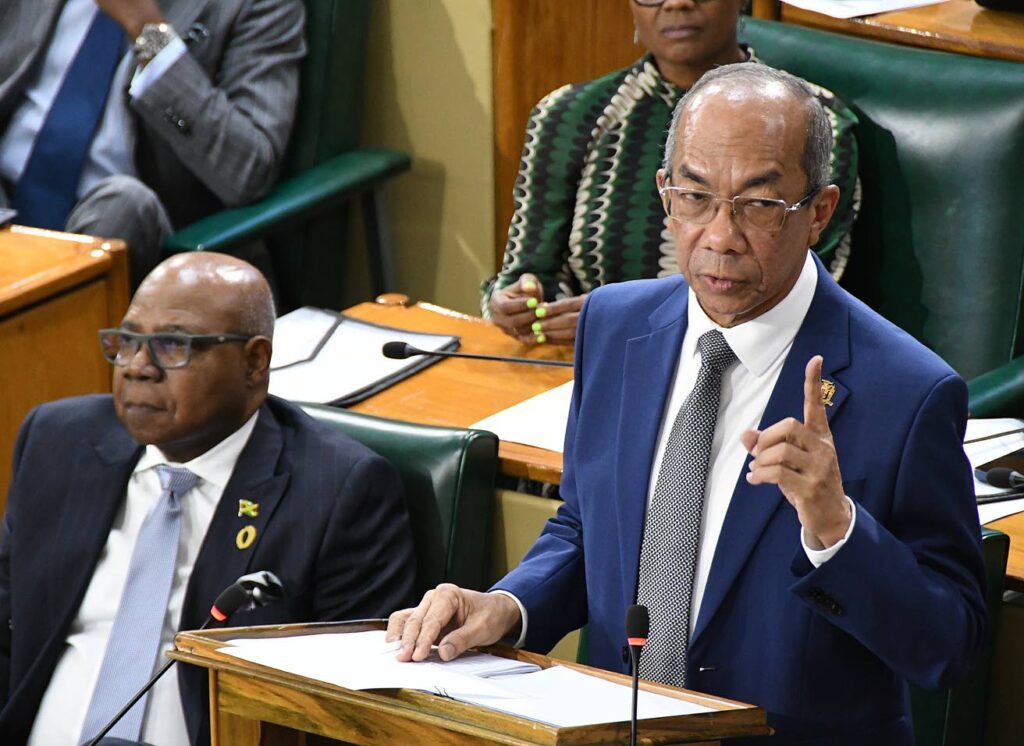
    A growing procedural and political dispute has erupted in Jamaica’s parliament over a decision by the parliamentary Ethics Committee to summon sitting MP Dennis Gordon for a second round of questioning, a move that the opposition’s senior leadership argues lacks legal and procedural foundation.

    Phillip Paulwell, Leader of Opposition Business in the Lower House, outlined his objections in an interview with the Jamaica Observer on Friday, stressing that the committee has no inherent authority to reopen a matter that was already formally reviewed, approved and signed off by the full House of Representatives. Under existing parliamentary rules, Paulwell argued, the Ethics Committee can only revisit a closed case if the full Parliament issues a formal referral back to the panel for further review. Without this required step, he said, the committee’s current action is legally invalid.

    The controversy traces back to Gordon’s earlier application for a standard exemption that allows MPs to conduct business with government entities. The Ethics Committee reviewed Gordon’s request during a closed-door sitting, approved the application, and submitted a formal recommendation to the full House of Representatives, which subsequently gave final approval to the exemption. The matter was considered settled until recently, when fellow MP Juliet Cuthbert-Flynn raised concerns that information Gordon provided during the original closed-door review conflicts with details that have since become public. This prompted the Ethics Committee to vote to summon Gordon back for additional questioning.

    Beyond challenging the committee’s jurisdiction in this case, Paulwell warned that the unprompted move carries the clear appearance of unfair political targeting, a problem that risks eroding public confidence in parliamentary institutions. “It does give that appearance, and that’s why I have cautioned against it because as parliamentarians we have to make sure that the processes are evenly and impartially dealt with, and not due to witch-hunt or any other such motivation,” Paulwell told the outlet.

    Paulwell also highlighted that the current handling of the case breaks with decades of established parliamentary practice. For his 30 years in the legislature, he explained, all exemption applications have been handled entirely in camera to protect the privacy of MPs’ personal business dealings. The public airing of details from Gordon’s case, he said, represents an inappropriate departure from long-standing norms that ensures fairness for all members.

    The opposition leader added that this precedent-setting move could have lasting negative consequences for parliamentary governance. Inconsistent application of core procedural rules, he argued, weakens public trust in the legislature as an impartial institution. To resolve the impasse, Paulwell confirmed he will demand formal clarification from the government when the House of Representatives holds its next sitting next Tuesday. He said he expects Leader of Government Business Floyd Green to provide a clear explanation for the committee’s actions to move the process forward. As of Friday, Gordon has not issued any public response to the Ethics Committee’s summons.

  • Easter truce between Russia and Ukraine falters

    Easter truce between Russia and Ukraine falters

    KHARKIV, Ukraine — What was meant to be a temporary pause in fighting for Orthodox Easter has quickly devolved into a familiar cycle of cross-border accusations of violence, marking yet another setback to diplomatic efforts to end Europe’s deadliest conflict since World War II. Just hours after a 32-hour bilateral ceasefire went into effect on Saturday afternoon, Ukraine’s military command published a detailed account of nearly 470 breaches of the truce carried out by Russian forces.

    The ceasefire agreement itself emerged after a weeks-long back-and-forth: Ukrainian President Volodymyr Zelensky first proposed the holiday truce more than a week before it was scheduled to take effect, with Russian President Vladimir Putin ultimately ordering his forces to hold fire on Thursday. The Kremlin outlined that the truce would run from 1:00 pm GMT Saturday through the end of Sunday, a 32-hour window that both sides had formally agreed to observe.

    By late Saturday, however, Ukraine’s military documented hundreds of hostile actions in a public post on Facebook. In total, officials recorded 469 ceasefire violations, including 22 enemy infantry assaults, 153 artillery barrages, 19 attacks from attack drones, and 275 strikes from first-person-view (FPV) loitering drones. Across the entire day Saturday, the military added, Russian forces launched 57 air raids, dropped 182 guided aerial bombs, deployed more than 3,900 drones of all types, and carried out 2,454 separate shelling attacks targeting both Ukrainian civilian population centers and frontline military positions.

    Russia has pushed back with its own accusations of Ukrainian truce violations. In Russia’s border Kursk region, Governor Alexander Khinshtein claimed that a Ukrainian drone strike targeted a local gas station in the town of Lgov, leaving three people injured — including an infant.

    In his Saturday evening public address, Zelensky used the widespread violations to call for an extended holiday ceasefire, framing the outcome as a clear test of Russian intentions to the global community, including the United States. “We have put this proposal to Russia, and if Russia again chooses war instead of peace, this will once again demonstrate to the world, and to the United States, who really wants what,” he said.

    For residents of Kharkiv, the northeastern Ukrainian city that sits just kilometers from the Russian border and faces near-daily Russian attacks, the widespread violence matched the deep skepticism many held ahead of the truce. Sixty-five-year-old Oleg Polyskin said he held faint hope the short 36-hour truce might hold, but added that he put no faith in Russian promises. “But even if you’re going to church, there is no 100-percent guarantee that everything will be peaceful… you shouldn’t trust Putin and his government,” he said. Sixteen-year-old Sofiia Liapina echoed that wariness: “It would be nice if nothing happened tonight and it was quiet, without air-raid alerts. But we can’t know — because our neighbours can’t be trusted.”

    The violence began even before the truce was scheduled to begin. Ukrainian authorities reported that in the hours leading up to the 1:00 pm GMT start time, Russia launched a massive wave of at least 160 drones across Ukraine, killing four civilians in the country’s eastern and southern regions and wounding dozens more. For its part, Russia reported that a reciprocal wave of Ukrainian drone strikes sparked a large fire at an oil depot and damaged multiple residential apartment buildings in its southern Krasnodar region.

    This year’s Easter ceasefire follows an identical arrangement in 2024, which also collapsed after both sides traded accusations of hundreds of truce violations. Amid the tensions over the truce, however, the two warring parties managed to complete a significant prisoner of war exchange on Saturday. Each side released 175 captured military personnel, plus seven civilians, for a total of 350 service members and 14 civilians returned home. “I still haven’t really realised that I’m finally here — that now I can make my dreams reality, that I am finally free,” said Maksym, a Ukrainian soldier who regained his freedom after four years in Russian captivity.

    Beyond the temporary holiday truce, long-running diplomatic efforts to end the full-scale conflict, now in its fourth year, remain deadlocked. US-led peace talks have stalled in recent weeks, in large part due to competing global priorities sparked by the ongoing war in the Middle East. Even before the escalation of tensions between Iran and Israel, progress on a Ukrainian peace deal had moved at a glacial pace, held up by intractable disagreements over territorial claims.

    Ukraine has proposed freezing active hostilities along current front lines, a framework that Russia has flatly rejected. Moscow demands that Kyiv cede full control of all remaining Donetsk region territory held by Ukrainian forces — a non-negotiable demand for the Ukrainian government. Kremlin spokesman Dmitry Peskov further confirmed last week that Russia had not held pre-truce discussions with either Ukraine or the United States, and that the Easter ceasefire was not tied to ongoing end-of-war negotiations.

    Since the full-scale invasion began, the conflict has claimed hundreds of thousands of lives on both sides and forced more than 14 million Ukrainians to flee their homes, according to United Nations figures, making it the deadliest European conflict since World War II. Russia has captured small additional swathes of Ukrainian territory over the past year, but at the cost of massive personnel and equipment losses, according to the US-based Institute for the Study of War (ISW). Kyiv has managed to push back against Russian advances in the southeast in recent months, and Russian territorial gains have slowed sharply since late 2025, the ISW reported. Today, Russian forces occupy just over 19 percent of Ukraine’s internationally recognized territory, most of which was seized in the first weeks of the 2022 full-scale invasion.

  • Eight judges to act in higher offices come Monday

    Eight judges to act in higher offices come Monday

    A historic swearing-in ceremony held at King’s House in St Andrew on Thursday brought eight members of Jamaica’s judiciary into new, higher-ranking positions, with Governor General Sir Patrick Allen officiating the formal event.

    The batch of appointments includes two acting Judges of Appeal: Justices Lorna Shelly-Williams and Carolyn Tie-Powell will hold their new posts from April 20, 2025 through to July 31, 2026. Two additional full appointments went to Tracey-Ann Johnson and Andrea Martin Swaby, who took office as permanent puisne judges starting April 13.

    Completing the lineup of elevated roles, Master Kamar Henry-Anderson and Chester Crooks have been appointed acting puisne judges, while Christine McNeil and Yvette Wentworth-Miller will step into acting positions as Masters in Chambers. All four of these acting appointments will run from April 13 to July 31, 2026. During the ceremony, each of the eight appointees formally completed the required Oath of Allegiance and Judicial Oath to officially take up their new duties.

    In his keynote remarks to the newly appointed judicial officers, Governor General Sir Patrick Allen emphasized that the appointments are a direct recognition of the group’s decades of accumulated legal expertise, as well as a clear signal of the Jamaican public and government’s deep trust in their personal integrity and commitment to public service.

    He further noted that this round of judicial appointments strengthens Jamaica’s long-standing commitment to upholding the rule of law and ensuring the fair, unbiased administration of justice across all levels of the court system. “These principles form the bedrock upon which we encourage public confidence in our courts,” Sir Patrick told attendees.

    “As you assume your duties, we depend on you to carry your share of the responsibilities in our society. Similarly, we depend on you to uphold this delicate equilibrium, resolute in your independence and unwavering in your commitment to justice, thereby preserving the dignity and integrity of Jamaica’s judiciary,” he added in his closing charge to the new appointees.