标签: Jamaica

牙买加

  • Trial for ‘Beachy Stout’ in murder of first wife adjourned to January

    Trial for ‘Beachy Stout’ in murder of first wife adjourned to January

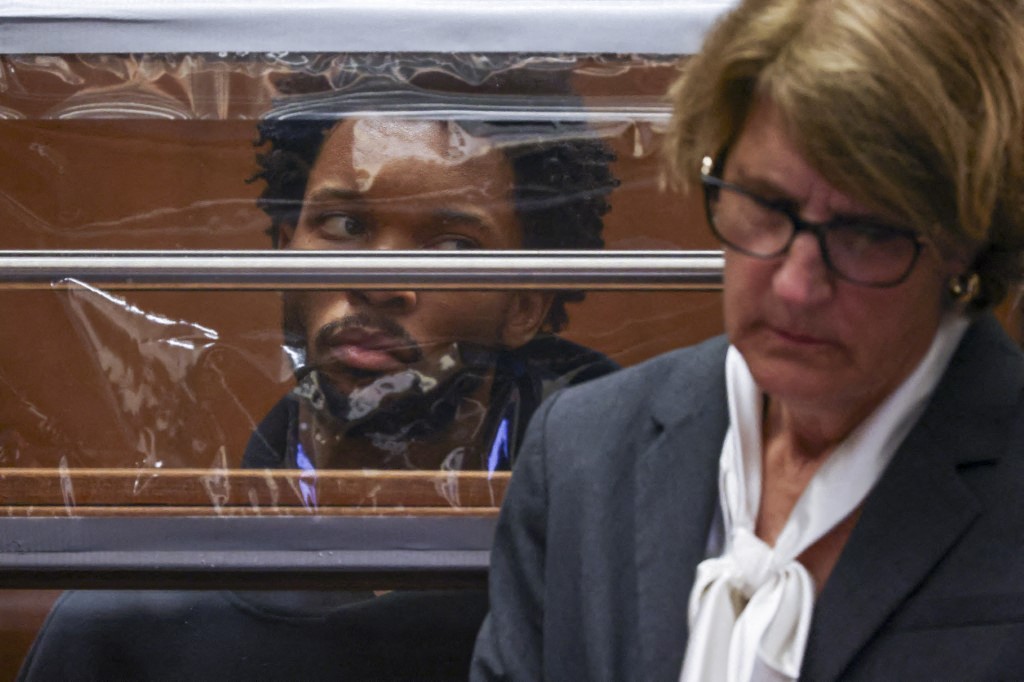
    KINGSTON, Jamaica — What was meant to be the start of a high-profile murder trial this week in Jamaica’s capital has been pushed back years, after prosecutors requested a delay to complete critical procedural steps in the case against prominent Portland businessman Everton “Beachy Stout” McDonald. McDonald stands accused of orchestrating the 2009 shooting death of his first wife, Marlene McDonald.

    The proceeding was scheduled to open Monday before Justice Leighton Pusey at downtown Kingston’s Home Circuit Court. However, prosecuting representatives immediately filed a motion for adjournment, asking for additional time to formally serve legal documents tied to a Section 31D(a) court application. The Crown also confirmed it is considering revising the list of witnesses named on the original indictment.

    The proposed changes to the witness roster have drawn fierce pushback from McDonald’s defense team, which is led by attorneys Monique Scott, Anna Kaye Scott-James, and John Jacobs. The court will issue a formal ruling on the adjournment request and the witness modification dispute when the matter next comes up for review on May 15, 2025. Following the ruling, the full trial will not get underway until January 27, 2027, marking the second delay to the proceeding after it was originally scheduled for April 2026.

    The 2009 killing of Marlene McDonald, who was gunned down outside her Boundbrook, Portland residence, sat as an unsolved cold case for more than a decade. It was only reopened and McDonald was charged after his connection to the violent 2020 murder of his second wife, Tonia, was uncovered.

    In September 2024, McDonald and his co-defendant Oscar Barnes were convicted and sentenced to life in prison for Tonia’s brutal killing. On July 20, 2020, Tonia was found murdered on a main road in Portland’s Sherwood Forest community: she had been stabbed multiple times, her throat cut, and her body was left burned inside her Toyota Axio, which the attackers also set on fire.

  • ‘WE ARE IN FRONT’

    ‘WE ARE IN FRONT’

    The opening day of the latest West Indies Championship four-day clash between Jamaica Scorpions and Barbados Pride at St Catherine’s Chedwin Park delivered a dramatic twist of fortunes, with Jamaica’s head coach Robert Haynes insisting his side still holds the advantage after a testing day in the field.

    Electing to bat first after winning the toss, the visiting Pride got off to a disastrous start, collapsing to 23 for three inside the opening seven overs. Fast bowler Marquino Mindley tore through the top of the order, dismissing Pride captain Kraigg Brathwaite and opening batsman Jonathan Drakes, while new ball partner Ojay Shields claimed the wicket of Shane Moseley to put the Scorpions firmly in control early on.

    That early advantage was all but erased by a resilient counterattack, however, as Kevin Wickham and Kyle Mayers stitched together a match-turning 117-run partnership to steady the Pride innings. Mayers fell for a well-compiled 64, but Wickham continued his aggressive strokeplay to notch a spectacular personal century, finishing the day unbeaten in spectacular fashion with an innings of 153 that included six fours and a staggering 12 sixes. Useful lower-order contributions from Shamar Springer (40) and Joshua Bishop (37) pushed the Pride total past the 300 mark before the Scorpions bowling attack fought back to limit the damage.

    Mindley and off-spinner Peat Salmon led the Jamaica bowling effort, each claiming four wickets, while Brad Barnes took the remaining one to restrict Barbados to 348 all out from 81.4 overs. The result means the Scorpions need another 332 runs to claim valuable first-innings points, and they closed the day’s play having already survived six overs, reaching 17 for no loss before stumps. Left-handed batsmen Kirk McKenzie (8 not out) and captain John Campbell (3 not out) will resume the innings for the hosts at 10:00 am on Monday, with no wickets lost.

    Haynes acknowledged that his side’s bowling was not at its most consistent on a flat Chedwin Park pitch, which produced occasional unpredictable low bounce, but underlined that the points table puts Jamaica ahead entering the second day. “It’s funny, because they would have gotten two batting points and we got 10 wickets — we would have gotten three points — so overall right now we are in front,” he explained.

    Haynes reserved special praise for match-winner Mindley, calling his performance exceptional. “He really bowled well, he bowled straight — wicket to wicket — and he got the reward. Peat bowled a good spell and he could have done better, but overall it wasn’t the best bowling performance. But at the end of the day, we still have to go here and bat. At 17 without losing a wicket after six overs, it’s a good start.”

    The Jamaica coaching staff faced minor controversy ahead of the match after selecting a side that omitted home-grown left-arm spinner Jeavor Royal, who would have been playing on his home ground. Haynes defended the selection choice, noting that the team’s long-standing success against Barbados with off-spinners, paired with Brad Barnes’ six-wicket haul against the Pride in Barbados last season, justified the call. “Peat has gotten wickets before against them and, at the end of the day, we just felt that on this surface, the off-spinners would have done a lot better. It’s just for us to come back, get these runs, and go back out there and try and bowl out Barbados.”

  • Over 6,000 regain power in March as gov’t intervention helps JPS exceed targets

    Over 6,000 regain power in March as gov’t intervention helps JPS exceed targets

    KINGSTON, Jamaica — In the wake of Hurricane Melissa’s destructive sweep across the island, Jamaica has marked a major milestone in its post-storm recovery: the national utility Jamaica Public Service (JPS) has outperformed its agreed power restoration target for March, bringing the country significantly closer to full grid recovery after the devastating weather event.

    Data released by the Ministry of Energy, Transport and Telecommunications confirms that more than 6,000 customers were reconnected to the JPS grid throughout March, beating the initial goal of 5,000 set by the government and utility. As of April 1, 2026, only 3,022 customers across the island remain without power.

    This rapid progress builds on gains made in February, when the government had already restored service to 98 percent of the total JPS network, cutting the number of outages from tens of thousands to fewer than 10,000. By the end of that month, 9,135 of the utility’s roughly 690,000 total customers were still waiting for power to be restored.

    Ramping up operations through March, crews successfully reconnected 6,113 customers by the start of April – representing 67 percent of all customers who remained without power at the beginning of March. That reduction has left just over 3,000 customers still waiting for service.

    The vast majority of remaining outages are now concentrated in the hardest-hit, geographically challenging communities across the island. Roughly 84 percent of all customers still without power are located in the parish of Westmoreland, where extensive damage to critical infrastructure and complicated logistics have slowed recovery work. According to the ministry, current restoration efforts center on highly complex operations: traversing steep, hard-to-access terrain, repairing large-scale damaged infrastructure, and resolving individual barriers to customer connection, such as damaged in-home wiring that prevents safe reconnection.

    Portfolio Minister Daryl Vaz emphasized that the steady, accelerated progress is the direct result of intentional government policy and strict accountability measures put in place after the storm. Back in December 2025, the Jamaican government approved a $150 million US loan to speed up restoration work. This move came in response to initial projections from JPS that full grid restoration could stretch all the way into late 2026, or even the first quarter of 2027 – a timeline the administration rejected as unacceptable for Jamaican households.

    “That was not acceptable to us,” Vaz stated in an official release Monday. “When we approved the loan in December, it was on the basis that we would achieve full restoration by the end of February. While we reached 98 per cent restoration by that deadline, the Government made it clear that aggressive restoration efforts would continue into March and April to close the remaining gap.”

    After meeting the 98 percent benchmark in February, the government and JPS agreed to a specific target of reconnecting 5,000 customers in March – a goal the utility not only met but surpassed by more than 1,000 connections. “That is a strong performance, and JPS deserves commendation. Every target agreed with the Government has been met. That is an extraordinary achievement in a recovery effort of this scale,” Vaz added.

    Vaz went on to highlight that without the government’s early intervention and dedicated financing, restoration timelines would have been far longer, leaving thousands of Jamaicans without power for additional months. “The alternative would have resulted in many communities waiting months longer for electricity,” he said, noting that the administration took decisive action to avoid that outcome and speed up relief for all affected residents.

    The current phase of work, widely referred to as the “last mile” of restoration, relies on close coordination between local JPS crews, domestic contractors, international line crews brought in to supplement local capacity, and multiple state agencies focused on clearing access routes and removing storm debris.

    The Jamaican government has reaffirmed its unwavering commitment to reaching near-total restoration as quickly as possible, noting that ongoing work is prioritizing the most technically complex connections. The administration’s goal is to reconnect every customer who can safely receive power as rapidly as possible, even as full infrastructure rebuilding continues across all affected parishes. With steady progress month over month, Jamaica continues to advance toward full recovery from Hurricane Melissa’s impact.

  • UPDATE: Podcaster Jaii Frais among 3 shot at carnival party, producer Jahvy in custody

    UPDATE: Podcaster Jaii Frais among 3 shot at carnival party, producer Jahvy in custody

    A violent shooting incident unfolded in the early hours after carnival celebrations at the Ranny Williams Entertainment Centre in St. Andrew on Sunday night, leaving three people injured and drawing sharp attention to public safety at major Jamaican entertainment events. Among the casualties is Jhaedee “Jaii Frais” Richards, a well-known podcast host, who is currently receiving medical care under constant police guard at a local hospital.

    Authorities have confirmed that the three injured victims have varying backgrounds and conditions. One casualty is an innocent bystander who was caught in the crossfire, while the third victim, a member of a local entertainer’s entourage, remains in critical condition and is currently undergoing emergency surgery to treat gunshot wounds.

    In the wake of the attack, police have taken prominent music producer and talent manager Jahvel “Jahvy Ambassador” Morrison into custody as part of their ongoing investigation. Initial witness accounts and police reports detail the sequence of events: Richards had stepped away from the main carnival crowd to use the venue’s restroom, and was ambushed by a group of men immediately after exiting the facility.

    Two firearms were recovered by law enforcement following the confrontation. The first is a 9mm Glock pistol registered to Morrison, who holds a valid license to carry the weapon. The second gun was seized by Richards himself, who reportedly managed to disarm one of his attackers during the assault before turning the weapon over to responding officers.

    As of the latest update, no formal charges have been filed against any person connected to the incident. Investigators are still reviewing evidence, interviewing witnesses, and working to confirm a motive for the unprovoked attack.

  • JTA welcomes announcement of relocation of Hurricane Melissa shelterees

    JTA welcomes announcement of relocation of Hurricane Melissa shelterees

    KINGSTON, Jamaica — After weeks of public pressure over unsafe learning conditions caused by hurricane evacuees staying in school facilities, Jamaica’s top teachers’ body has praised the government’s commitment to relocate all remaining displaced people from Hurricane Melissa out of school shelters by May 8. The planned move comes after Jamaica Teachers’ Association (JTA) President Dr. Mark Malabver raised alarming concerns that students were being exposed to inappropriate sexual activity by shelter residents staying on school campuses.

    In an official media statement released Monday, the JTA emphasized that the government’s announcement signals that key issues of student safety, child protection, and widespread disruption to academic activities have been taken seriously by national authorities. While the teachers’ group welcomed the timeline as a step in the right direction, it also pointed out that the proposed deadline is longer than ideal, given the ongoing negative effects the shelter arrangements have on school communities, teaching staff, and students across the island.

    “The association therefore encourages all relevant authorities to expedite the process where possible,” the JTA statement read. The organization also extended recognition to two major education stakeholder groups — the National Parent-Teacher Association of Jamaica (NPTAJ) and the National Secondary Students’ Council (NSSC) — for their role in amplifying the concerns and bringing the issue to the forefront of national public discourse. The JTA added that it will maintain close oversight of the relocation process and expects authorities to strictly adhere to the published May 8 deadline.

    Beyond pushing for faster action, the JTA also offered public appreciation to teachers and school administrators in the parishes hit hardest by Hurricane Melissa, commending them for their resilience, professional conduct, and steady commitment to their students amid extraordinarily difficult circumstances.

    “We look forward to the day when schools in these communities are fully restored — where students and teachers are able to interact in safe, supportive learning spaces, and where education recovery can truly take root within these institutions,” the statement said. “The announcement marks important progress; the priority now is timely delivery.”

    The issue first sparked national outcry after the JTA labeled the situation of shelterees staying in schools “deeply troubling”, pushing the national government to set a formal target for resolving the disruptive situation.

  • Irate residents block Trelawny roadway in protest over lack of piped water

    Irate residents block Trelawny roadway in protest over lack of piped water

    TRELAWNY, Jamaica — A persistent light rain fell across Trelawny on Monday morning, but it did nothing to dampen the anger of dozens of residents from Salt Marsh, who gathered before dawn to shut down a key regional roadway. Their protest targets a complete outage of piped water from the National Water Commission (NWC) that has persisted since Hurricane Melissa swept through the area.

    Protesters dragged large boulders onto the route and parked an abandoned car across the pavement, completely blocking access for all vehicles. The action has disrupted daily travel for hundreds of commuters, including schoolchildren and daily wage workers, who live in surrounding communities. The blocked road connects several settlements in both Trelawny — including Davis Pen and Johnson Hill — and neighboring St James, where the communities of Goodwill, Chatham, and Adelphi are located. All of these groups depend on the blocked thoroughfare to reach major population and employment centers in Falmouth and Montego Bay.

    According to protesting residents, the water outage extends across a wide swathe of the region, covering households from the vicinity of Salt Marsh Primary School through large portions of the adjacent Davis Pen community. Beyond the inconvenience of having no running water, frustrated community members have added another layer of grievance: even though they have been forced to pay for expensive private water truck deliveries to meet their basic household needs, the NWC continues to send full monthly bills for its unused piped water service.

    Personnel from the Jamaica Constabulary Force have been deployed to the protest site to monitor the situation as of Monday morning, with no immediate reports of a resolution to the dispute between residents and the water utility.

  • Family seeks answers after US influencer dies during ‘dream’ vacation with fiancé

    Family seeks answers after US influencer dies during ‘dream’ vacation with fiancé

    The family of 31-year-old American lifestyle content creator Ashly Robinson, known professionally as Ashlee Jenae, is demanding full clarity after her unexpected death during a celebratory vacation in Zanzibar with her fiancé.

    In an official statement shared to Instagram Sunday, Robinson’s relatives described the jarring speed of the tragedy: just days after the creator marked her birthday and accepted a marriage proposal from long-time partner Joe McCann, she was gone suddenly. “One moment she was celebrating love and life in truly Ashly fashion, and the next, she was gone,” the family wrote.

    The trip had been billed as a dream getaway for the couple, who had documented every step of their journey for Robinson’s 88,000+ social media followers. The milestone occasion included two huge life moments: Robinson’s 31st birthday, and McCann’s marriage proposal, both of which she shared with her online community before the unthinkable happened.

    What was supposed to be a joyous celebration quickly devolved into the family’s worst nightmare. Per the statement, Robinson was found unresponsive in her private villa at the resort. Resort staff rushed her to a nearby local medical facility, where medical personnel confirmed her death a number of hours later.

    Local police have publicly stated they are working under the initial assumption that Robinson died by suicide. Additional unconfirmed media reports have claimed that the couple experienced a verbal altercation earlier in the trip, prompting hotel management to reassign them to separate rooms for the remainder of their stay.

    Robinson’s family has rejected the tentative narrative, calling her death suspicious and saying they are collaborating closely with Zanzibari law enforcement to uncover the full facts of what led to her passing. In their statement, the family noted that the distance from their home in the United States, combined with the sudden loss and lack of clear answers, has compounded their grief beyond measure.

    “The suddenness, the unanswered questions, and the distance from home have made this tragedy even more overwhelming for our family,” the statement read. “At this time there is an active investigation into the circumstances surrounding Ashly’s suspicious passing. Although we have many questions, we are placing our trust in the officials in Zanzibar and are working closely with them as we seek clarity and answers.”

    Before her death, Robinson had built a dedicated online following as a lifestyle creator, regularly sharing candid insights into her travels, personal life, and relationship with McCann for her tens of thousands of engaged followers.

  • First Order Brands acquires Domino’s Pizza business in Jamaica

    First Order Brands acquires Domino’s Pizza business in Jamaica

    In a landmark deal reshaping Jamaica’s quick service restaurant sector, Kingston-based First Order Brands Limited has completed the acquisition of all assets belonging to Convenient Brands Ltd. The transaction positions First Order Brands as the new official master franchisee for Domino’s Pizza across Jamaica, taking ownership of the country’s largest pizza restaurant network.

    Domino’s has built a decades-long presence in the Jamaican market, with over 30 years of operation serving local consumers. Today, the chain boasts 18 store locations across the island and employs more than 200 local team members, making it a major player in the country’s fast food landscape.

    First Order Brands is helmed by Chief Executive Officer Sean Scott, a seasoned industry leader with deep roots in Jamaica’s quick service restaurant space. Scott previously led operations for both Domino’s and Wendy’s Jamaican franchises between 2011 and 2018, bringing hands-on operational expertise and intimate knowledge of local consumer preferences to the new role. Nicholas Scott will serve as chairman of the newly positioned franchise operator.

    Speaking on the acquisition, Scott shared his enthusiasm for the brand’s future in Jamaica: “We are privileged to be the steward of this iconic brand and excited to build on Domino’s long track record as the number one pizza brand in Jamaica.” Industry observers note the deal brings a familiar, experienced leadership team back to the Domino’s Jamaica operation, setting the stage for potential growth and expansion of the chain’s footprint in the coming years.

  • St James Municipal Corporation looking at making Charles Gordon Market more manageable

    St James Municipal Corporation looking at making Charles Gordon Market more manageable

    ST JAMES, Jamaica — Local municipal leaders are moving forward with a sweeping reorganization and infrastructure upgrade of Montego Bay’s iconic Charles Gordon Market, aimed at resolving longstanding frictions between vendors, eliminating unregulated street vending, and creating a cleaner, more welcoming space for both sellers and shoppers.

    During an on-site walkthrough of the facility Monday, Richard Vernon, Chairman of the St. James Municipal Corporation and Mayor of Montego Bay, outlined the multi-pronged transformation strategy in an interview with Observer Online. At the core of the plan is a strategic rezoning of underused or vacant market space to resolve the core conflict that has left many small retail vendors at a competitive disadvantage.

    Vernon explained that for years, the market has allowed wholesale suppliers, who already bulk-sell goods to small retail vendors, to also sell directly to walk-in customers at lower price points within the same retail zones. This unfair undercutting has sparked dozens of complaints from local small vendors, who cannot match the bulk pricing wholesalers offer. To fix this imbalance, the corporation will repurpose a block of currently underused and vacant shop spaces—some of which are held by non-compliant occupants—to create a dedicated, centralized wholesale zone. The new area will also accommodate mobile wholesalers who currently sell from their vehicles, providing designated parking and selling space to keep them organized.

    Under the new layout, retail vendors will operate exclusively from the market’s main building and the existing Gun Court area, eliminating direct price competition between wholesalers and small retailers. Vernon emphasized that the reorganization will not displace compliant vendors, noting that most of the spaces being converted are already empty or held by rule-breaking occupants, leaving no legitimate seller disadvantaged by the changes.

    Beyond zoning, the overhaul will crack down on unregulated street vending, a practice that Vernon called “undesirable” and damaging to the local area. Vendors who set up unpermitted stalls along adjacent streets leave behind piles of food waste and debris, create persistent traffic congestion, block access to legally operating storefronts, and create a chaotic, uninviting environment for visitors. Going forward, all vendors will be required to operate within the official market boundaries, with new rules and enforcement to eliminate street vending entirely.

    The upgrade will also include long-overdue infrastructure repairs and amenity improvements, funded in part by insurance payouts for damage to the market’s main building caused by Hurricane Melissa. According to Vernon, the insurance funds will cover replacement of the main building’s damaged roof, upgrades to interior lighting, and general structural repairs to create a safe, comfortable space for regular vending activity.

    Additional improvements include expanding public restroom facilities to boost sanitation for both vendors and shoppers, a one-time deep clean of the entire market complex, and the hiring of a private professional cleaning company to carry out daily and weekly routine cleaning to maintain high hygiene standards long-term. The municipal corporation will also boost security presence across the market, and implement controlled access management at entry and exit points to keep vendors in designated zones and deter unregulated activity.

    Vernon emphasized that the end goal of the overhaul is to build a well-organized, safe, and comfortable market that encourages customers to return to shop for local fresh produce, while supporting small retail vendors by removing the systemic challenges that have held back business for years.

  • Coalition firm in rejection of close-in-age sex pass

    Coalition firm in rejection of close-in-age sex pass

    Debate over Jamaican legal policy regarding sexual relations between minors has intensified, as a prominent faith-based advocacy organization has drawn a line in the sand against any adjustments to existing law, urging policymakers to target the root causes of risky adolescent behavior instead.

    The Jamaica Coalition for a Healthy Society (JCHS), a pro-Christian advocacy group, laid out its firm position during last Thursday’s deliberations of parliament’s joint select committee, which is currently conducting a review of the nation’s Child Diversion Act. The ongoing review centers on identifying effective strategies to cut the number of young people entering the country’s formal justice system, with stakeholders across the political and civil society spectrum weighing in on competing priorities.

    JCHS Advocacy Officer Philippa Davies told the committee that while legislative overhauls often draw the most attention during policy reform processes, the core challenge goes far beyond changing statutory language. Instead, she argued, policymakers must first unpack why minors engage in conduct that puts them at odds with the law, pointing to early sexual activity as one of the most critical contributing factors. Davies warned that efforts to normalize underage sexual relationships, or to carve out new legal exceptions for close-in-age encounters, would create cascading long-term harms for Jamaican youth.

    “We strongly object to this suggestion [of close-in-age sex legislation] and to the notion that minors can consent to sex, whether with each other or with adults,” Davies told the committee. “We also disagree with the suggestion that adolescent sex is to be deemed as normal, mere exploration, and unharmful. This is so far from the truth. Sex is more than a physical act. It carries long-term psychological consequences.”

    Davies grounded her organization’s position in existing research on adolescent brain development, noting that young people lack the fully developed neurological capacity to make high-stakes decisions that carry lifelong impacts. The prefrontal cortex, the region of the brain responsible for impulse control, long-term planning, priority-setting, and complex decision-making, does not finish maturing until a person reaches between 25 and 30 years of age. “Even if adolescents understand that something is dangerous, they may still engage in risky behaviour,” she explained. Her argument was further bolstered by Jamaican national data showing that a large share of young people’s first sexual encounters do not involve full, freely given consent, directly undermining the widespread assumption that all underage sexual relationships are harmless consensual encounters.

    The JCHS’s formal submission to the committee comes as a growing number of advocacy and policy groups have pushed for the introduction of “close-in-age” exemptions to Jamaica’s current law, which criminalizes sexual relations between minors.

    JCHS President Dr. Wayne West clarified that the group does not advocate for unnecessarily criminalizing young people who engage in underage sexual activity. Instead, he stressed, the existing law serves a critical normative purpose as a guide for acceptable social behavior that must remain intact. “We are not saying that if persons are caught in sexual activity at their age, that they should be criminalised. We say we keep the law as is, because the law is a teacher, and we don’t want the law to be used to teach something else,” West explained. “We are not denying that things do happen. But what we are saying is that the law is a teacher, and there is a consequence to activity. So we don’t want the law to teach people that there is no consequence to activity.”

    Alongside its call to keep the current law unchanged, the coalition is pushing for a broader preventative public health and education approach that includes expanded comprehensive education, greater parental involvement in youth development, and targeted outreach to encourage healthier behavioral choices among Jamaican adolescents.

    Committee chairman and Justice Minister Delroy Chuck acknowledged the deeply complex nature of the issue, noting that rigid, one-size-fits-all application of the current law can leave lifelong, damaging marks on young people who engage in consensual underage sexual activity. Chuck pointed to ongoing requests for criminal record expungement from former farm workers who pleaded guilty to consensual underage sex as teenagers, noting that the conviction continues to block opportunities decades later. “Because, if a person is actually convicted when they are a teenager for consensual sex, it follows them for the rest of their lives, to be frank with you,” he said.

    Chuck raised questions about whether greater discretionary power within the justice system could create a workable middle ground, particularly for cases involving minors close in age, and suggested many of these cases could be diverted out of the formal court system through existing alternative mechanisms. The JCHS has signaled it supports diversion for these cases, but has reiterated that this support does not extend to changing the underlying text of the law itself.

    State Minister for Justice Marisa Dalrymple-Philibert also shared her perspective on the debate, acknowledging that robust moral guidance for young people is a critical public priority, but warning that an overly rigid legal framework can permanently derail the future prospects of youth who make early mistakes. She noted that many productive, upstanding adult Jamaican citizens and community leaders engaged in underage sexual activity during their adolescence, and argued that these early mistakes should not define their entire lives.

    Pointing to the widespread employment barriers faced by people with juvenile criminal convictions, Dalrymple-Philibert argued the justice system must strike a careful balance between accountability and rehabilitation, especially for young people who acted without the full cognitive maturity to understand the consequences of their choices. “You’re correct, we need to teach children all the good values,” she said. “But I hold strongly to the fact that it happened to people who are excellent adults and leaders in society now that made mistakes as young people, sex with women underage, between minors. We are saying at this point, when it happens, there must be a way not to criminalise them, help them through the Child Diversion Programme.”

    First introduced to give justice system officials alternatives to prosecution for children who come into contact with the law, the Child Diversion Act under review centers on rehabilitation rather than punishment, connecting young people to counseling, mentorship, and targeted support services instead of formal court processing and criminal conviction.