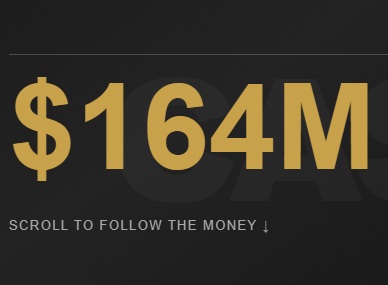
In a high-stakes forensic investigation that has captured Jamaica’s political attention, the country’s Integrity Commission has concluded that former legislator Dr. Andrew Wheatley holds roughly $164 million in assets and expenditures that cannot be traced to verifiable lawful sources of income, setting the stage for four criminal charges and a bitter public dispute over conflicting financial records. This is no simple he-said-she-said allegation: it is a granular, method-driven forensic accounting fight that turns on which income streams were counted, which were excluded, and what evidence remains out of public view five years after the probe first launched.
The core of the conflict hinges on a source-and-application-of-funds analysis, a standard forensic tool that compares all confirmed lawful income against documented spending, asset purchases, and other uses of money across a multi-year period. Investigators began by compiling all verifiable income streams available to Wheatley, including parliamentary and employment salaries, confirmed rental earnings, investment returns, proceeds from verified property sales, documented business income, and approved loans. They then mapped all of Wheatley’s confirmed outlays: real estate acquisitions, new investments, loan repayments, estimated day-to-day living costs, and the net growth of his asset portfolio. After adjusting the calculation to credit all explanations investigators deemed satisfactory, all independently verified bank deposits, and consistent transaction patterns, the commission still found a $164 million gap between confirmed lawful income and recorded uses of funds. Crucially, investigators stress this is not an allegation that $164 million was stolen from the Jamaican government, but rather that the origin of $164 million in spending and assets cannot be linked to confirmed legal sources.
Wheatley has forcefully rejected the commission’s final calculation, arguing that the investigation wrongfully excluded roughly $168 million in documented, fully lawful rental income, plus additional legitimate proceeds used to repay approximately $50 million in business loans. He insists every dollar of his assets and spending can be traced to legal sources, and that the commission’s analysis is fundamentally inaccurate, incomplete, and unfair. The commission pushes back on this claim, emphasizing that all verified rental income and credible explanations were already included in its final calculation before arriving at the $164 million gap.
A key point of confusion for outside observers is the overlapping $168 million figures cited by both sides: one is the commission’s estimate of total bank deposits that remain unexplained after adjustments, while the other is the total rental income Wheatley says was wrongfully excluded from the analysis. The central unresolved question here is how much of Wheatley’s claimed rental income was already counted by investigators, how much was left out, and whether the two $168 million figures actually overlap.
Digging into the granular disputes between the two parties reveals multiple unresolved points that will ultimately be settled in court. On the topic of rental income, Wheatley says he provided leases and bank records proving $168 million in lawful rental earnings that the commission failed to recognize. The commission counters that Wheatley only reported $143.3 million in rental income initially, and investigators only received supporting documentation for a subset of his properties, so they only credited income that could be independently verified. It remains unclear exactly which deposits were accepted, rejected, or already counted, and why the two sides report vastly different total rental figures.
Next, Wheatley argues the commission failed to properly account for lawful, verifiable sources he used to repay $50 million in business loans. The commission notes that many of these loans should have been disclosed as liabilities in Wheatley’s mandatory statutory declarations, a requirement he allegedly failed to meet. It is still unresolved whether all loan proceeds and repayments were correctly traced, and whether all liabilities were properly disclosed as required by law.
Disputes also surround a 20-lot real estate development held jointly by Wheatley and business partner Patrick Phipps. Six of the 20 subdivided apartments were transferred to Wheatley’s sole ownership, which he describes as his 30 percent commercial share of the joint venture, not an unreported gift as initially described by his legal team. The commission says it already considered this explanation, but remains concerned about the failure to disclose ownership interests in all 20 lots, and the subsequent disposal of 14 remaining lots while Wheatley was a joint owner. To date, Wheatley has not publicly detailed how the 14 lots were sold or transferred, where the proceeds went, and how these interests were disclosed in his mandatory filings.
Other unresolved points include a down payment for land tied to Prosperity Realtor, which the commission says should have been reported as an investment in the landowning company that has not been disclosed; the sale of Wheatley’s former ownership stake in Western Medical Centre, which he says is a lawful business transaction, but the commission says the proceeds of the sale could not be verified from the records provided or obtained independently; and the commission’s claim that Wheatley failed to fully provide requested information despite repeated formal requests, which Wheatley denies, arguing he cooperated fully and investigators could have requested additional evidence if needed.
The investigation stretched across five years, beginning with a formal referral in 2021, followed by multiple rounds of record requests, interviews, and updated analysis. The commission obtained additional third-party records earlier this year, before submitting its final investigation report and indicative prosecutorial ruling to Jamaica’s Parliament in June 2026. The Director of Corruption Prosecution has recommended four charges against Wheatley: knowingly making false statements in statutory declarations between 2013 and 2017 under the former parliamentary integrity law; knowingly making false statements in statutory declarations between 2018 and 2022 under the current Integrity Commission Act; failing without reasonable cause to provide information requested by the Director of Information and Complaints; and illicit enrichment under the Corruption (Prevention) Act.
To date, these charges are only a prosecutorial recommendation, not a conviction, and Wheatley has repeatedly denied all wrongdoing, asserting he is entitled to the legal presumption of innocence and plans to vigorously contest the charges in court. Both sides have published summary accounts of their positions, but the core of the dispute will only be resolved through a full court examination of line-by-line financial records, including a full reconciliation of claimed rental income, loan documentation, full records for the 20-lot development, sale paperwork for the medical centre, ownership records for Prosperity Realtor, and the full forensic model used by the commission to calculate the $164 million gap. The outcome of this case will turn on tangible evidence, not persuasive rhetoric: the critical missing document is a full line-by-line reconciliation that shows what was claimed, what was proven, what was accepted, what was rejected, and why each decision was made.
This reporting is based on the Integrity Commission’s public investigation report, the indicative prosecutorial ruling, and Dr. Andrew Wheatley’s official media statement released on June 17, 2026.