标签: Jamaica

牙买加

  • Friend to the ‘Coore’

    Friend to the ‘Coore’

    The University Chapel on the Mona campus of The University of the West Indies became a sanctuary of gratitude and musical reverence on Thursday as Jamaica’s cultural community gathered to honor Stephen ‘Cat’ Coore. Rather than a somber farewell, the service transformed into a vibrant celebration of the legendary cellist and guitarist whose artistry propelled Jamaican music onto the global stage.

    Government officials, music industry pioneers, and cultural custodians joined family members in painting a portrait of Coore as both a national treasure and a humble ambassador whose influence transcended generations. The atmosphere balanced poignant reflection with joyful remembrance, where tears were gracefully interwoven with laughter and stories of his enduring impact.

    As a founding member and longtime musical director of the iconic band Third World, Coore’s genius lay in his ability to bridge musical genres, transforming reggae into a universal language that resonated across continents for over five decades. His legacy was celebrated not merely for technical mastery but for the profound substance and consciousness he embedded within every composition.

    Personal tributes illuminated the man behind the music. Pianist Rita ‘Werki’ Widener delivered a powerful wordless homage, blending Third World’s ‘Try Jah Love’ with Jamaica’s national anthem—a fitting testament to Coore’s deep patriotism. His children—Shiah, Kanna, Stephen, and Ashley—shared intimate memories of a father who encouraged global curiosity, listened without judgment, and nurtured their love for music and travel.

    Colin Leslie, a friend of sixty years, recalled Coore’s signature phrase—’You know I love you, right?’—as emblematic of his approach to life and relationships. The sentiment was echoed by music royalty in attendance, including Damian and Stephen Marley, Protoje, Sean Paul, and Maxi Priest, who described Coore as both mentor and ‘bona fide friend’ who guided countless careers.

    Reverend Captain Astor Carlyle framed Coore’s journey as one of stewardship rather than stardom, introducing the concept of ‘Selah’ moments—musical pauses that invite deep reflection. He noted how Coore’s compositions consistently created space for consciousness elevation and behavioral transformation.

    The service attracted cross-sector leadership including Opposition Leader Mark Golding, Finance Minister Fayval Williams, and Science Minister Daryl Vaz, demonstrating Coore’s significance beyond the cultural sphere. His passing on January 18 at age 69 leaves a profound void, but his legacy continues through his four children, grandchildren, and the timeless music that remains a source of unity, consciousness, and joy for generations to come.
  • US trade partners cautiously welcome tariff ruling

    US trade partners cautiously welcome tariff ruling

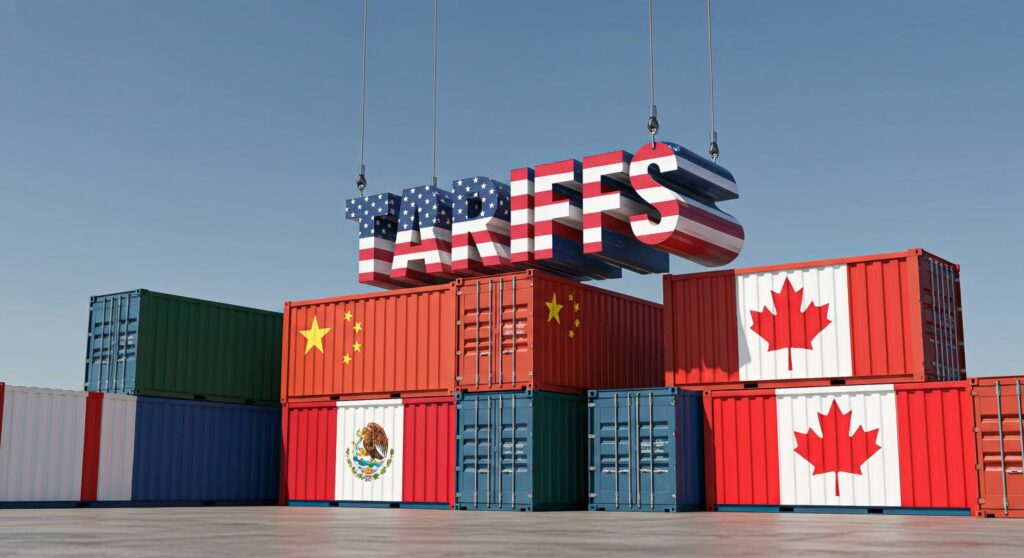
    WASHINGTON (AFP) — International trading partners offered measured responses Friday to a landmark US Supreme Court decision that invalidated President Donald Trump’s sweeping global tariff authority, while simultaneously bracing for his immediate pledge to impose alternative import taxes.

    The conservative-majority court determined Trump overstepped presidential authority by invoking the International Emergency Economic Powers Act (IEEPA) to justify broad tariffs. However, the ruling preserves sector-specific duties affecting steel, aluminum, and various other goods that remain central to ongoing trade disputes.

    Within hours of the decision, Trump announced intentions to implement a comprehensive 10% tariff on all US imports under separate executive authority, ensuring continued uncertainty for America’s trading partners.

    Canada’s International Trade Minister Dominic LeBlanc characterized the court’s decision as validation that the original tariffs were “unjustified,” though noted that the most economically damaging sector-specific measures remain intact. The Canadian Chamber of Commerce warned against interpreting the ruling as a fundamental policy shift, predicting “new, blunter mechanisms” might emerge from the White House.

    European Union trade spokesman Olof Gill indicated the 27-nation bloc was conducting thorough analysis of the legal development while emphasizing the critical need for “stability and predictability” in transatlantic commerce. France’s Economy Minister Roland Lescure observed that the ruling demonstrated tariff policies were “at the very least, open to debate,” while German officials reported being in “close contact” with American counterparts regarding implementation changes.

    Britain expressed confidence that its “privileged trading position” with the United States would continue despite the legal upheaval, referencing recent bilateral agreements that reduced steel and aluminum tariffs significantly.

    Mexico, which directs approximately 80% of its exports to the US market, adopted a cautious stance regarding Trump’s newly announced 10% blanket tariff. Economic Minister Marcelo Ebrard stated officials would carefully evaluate potential impacts before determining appropriate response measures.

    The developments underscore how Trump’s aggressive use of executive power has fundamentally transformed America’s trade relationships, leaving international partners navigating an increasingly unpredictable economic landscape.

  • Criminals losing territorial control, says Holness

    Criminals losing territorial control, says Holness

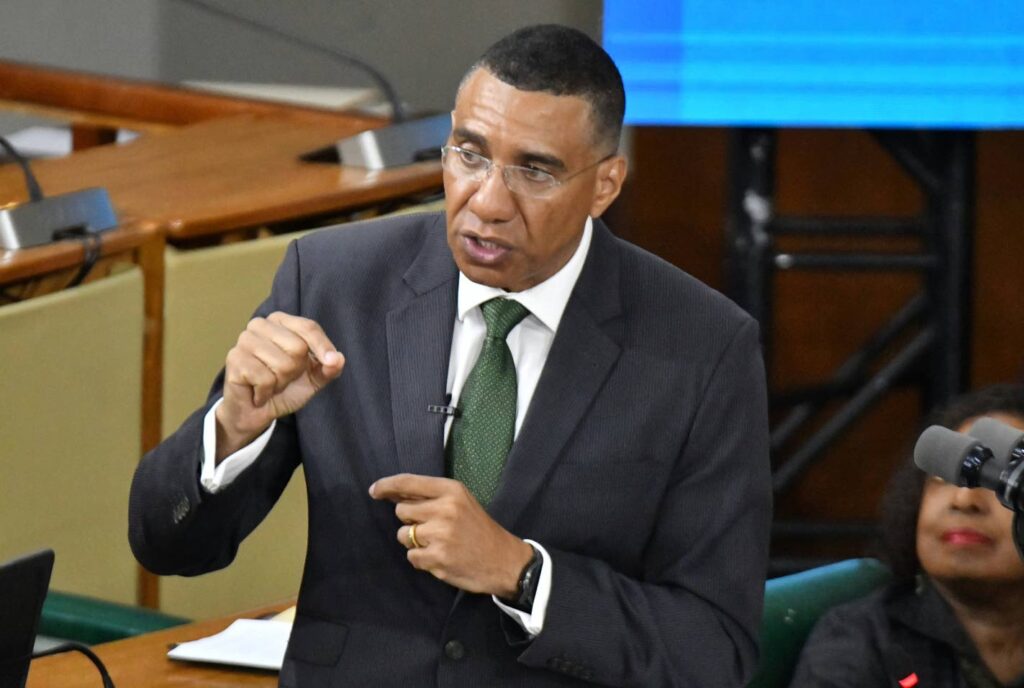
    Prime Minister Andrew Holness has articulated a comprehensive national security doctrine positioning Jamaica’s declining homicide statistics as evidence of systematic success against organized criminal networks. Addressing the 4th Annual Security Seminar in New Kingston, Holness detailed how strategic interventions have disrupted gang leadership architectures, constrained illicit financing channels, and diminished criminal territorial dominance.

    The Prime Minister framed national security resilience as the central organizing principle of Jamaica’s strategy, emphasizing that temporary gains require permanent consolidation. “Communities formerly governed through fear must become structurally and permanently inhospitable to criminal return,” Holness asserted, outlining prerequisites including secure public spaces, reliable infrastructure, ordered development, lawful economic opportunities, and consistent state presence.

    Holness presented Hurricane Melissa’s Category 5 impact in October as a paradigm-shifting national security event that claimed 45 lives and affected 760,000 citizens. While praising the Jamaica Defence Force’s response demonstrating enhanced joint planning and civil-military coordination, he revealed critical vulnerabilities: stretched logistical chains, strained maintenance capacity, and border security assets diverted to humanitarian relief.

    The crisis illuminated Jamaica’s persistent capability gaps despite tripled security budgets. “There are threats we could face for which we don’t have assets to respond,” Holness acknowledged, declaring climate shocks permanent features of Jamaica’s security landscape rather than episodic emergencies.

    Holness articulated disasters as strategic shocks that redirect resources, stress institutions, disrupt logistics, and create opportunities for illicit trafficking and irregular migration. Following Melissa’s destruction of police stations and government buildings, he noted with pride the uninterrupted policing services through human resource resilience.

    The Prime Minister integrated border security into this framework, highlighting Jamaica’s position in one of the hemisphere’s most trafficked maritime corridors. He detailed adaptive trafficking methodologies utilizing containerized cargo, clandestine airstrips, UAVs, and semi-submersibles, with narcotic routes increasingly converging with irregular migration networks.

    Citing 2025 interdictions of 33,000 kg of marijuana and 1,360 kg of cocaine, plus 990 pounds of cocaine valued at $3.7 billion intercepted by Coast Guard units, Holness connected border security directly to national stability. The documentation of 124 irregular migrant entries primarily from Haiti and Cuba demonstrated additional humanitarian, legal, and resource challenges for the island nation.

    Holness concluded that national security institutions must develop capacities to “anticipate, absorb, adapt, and recover from shocks” across criminal, environmental, and geopolitical domains, with disaster risk management fully integrated into security planning, budgeting, and capability development.

  • Tastee Cheese brings ‘Taste Eh Beat of Jamaica’ pop-up in Santa Cruz

    Tastee Cheese brings ‘Taste Eh Beat of Jamaica’ pop-up in Santa Cruz

    In a strategic move blending corporate social responsibility with brand engagement, Jamaican food manufacturer Tastee Cheese is deploying its ‘Taste Eh Beat of Jamaica’ pop-up experience to Santa Cruz, St. Elizabeth this Saturday from 10:00 AM to 4:00 PM. The event arrives as a deliberate effort to uplift communities recently devastated by Hurricane Melissa, combining entertainment with substantive relief efforts.

    Brand Manager Dionne Henry expressed both solemnity and optimism about the initiative. ‘While mindful of the recent hardships faced by these communities, we’re genuinely excited to reconnect with the people of St. Elizabeth,’ Henry stated. ‘This event represents more than entertainment—it’s about restoring normalcy, sharing survival narratives, and creating space for human connection beyond the chaos.’

    The pop-up will transform into a multifaceted community hub featuring continuous giveaways, a dedicated children’s area, live DJ performances, and a special appearance by an unannounced musical artist. Critically, the company has integrated direct hurricane relief into its commercial activity: a portion of proceeds from every Tastee Cheese product sold will be channeled into the Hurricane Melissa recovery fund.

    Henry attributed the brand’s sixty-year market presence to deliberate quality maintenance and cultural embeddedness. ‘Tastee Cheese has earned its standing through consistent quality, unique flavor profiles, and authentic Jamaican character,’ she explained. ‘Our longevity derives from being woven into the very fabric of Jamaican daily life and meaningful moments.’

    Marketing Manager Barrington Groves framed the event as both humanitarian response and seasonal strategy. ‘Recognizing St. Elizabeth among the hardest-hit parishes, we deemed it essential to bring joy as we enter the Easter period,’ Groves noted. ‘This presents the ideal opportunity to reciprocate the steadfast support of our consumers.’

    Anticipating strong turnout, Groves encouraged community participation: ‘Join us for music, special offers, and firsthand experience with our new easy-open packaging—featuring the same classic Tastee Cheese in enhanced convenience. Together we’ll celebrate resilience through dance, music, and shared smiles.’

  • COOLING INFLATION INTENSIFIES RATE DEBATE AHEAD OF BOJ DECISION

    COOLING INFLATION INTENSIFIES RATE DEBATE AHEAD OF BOJ DECISION

    Jamaican monetary authorities face a pivotal policy decision as inflation unexpectedly plunges below the central bank’s target range, creating a new economic landscape just days before the Bank of Jamaica’s rate announcement.

    Recent data reveals annual inflation dropped to 3.9% in January, dipping under the Bank of Jamaica’s four to six percent target band. This development marks a dramatic reversal from previous projections that anticipated inflation would exceed the upper threshold through early 2026, primarily due to hurricane-related supply chain disruptions.

    The surprising downturn has prompted influential financial leaders to advocate for policy reconsideration. Keith Duncan, CEO of JMMB Group, characterized the situation as “a real opportunity” for policymakers to reassess their stance. “Inflation has not breached the upper target; in fact, it has fallen below the lower bound,” Duncan noted in an interview with the Jamaica Observer. “The greater risk at this stage may be sustained inflation below the target range rather than an overshoot.”

    This inflationary shift contrasts sharply with the Monetary Policy Committee’s November warning that prices would “rise sharply” following Hurricane Melissa. By December, the committee had projected above-target inflation persisting through 2026, with risks “skewed to the upside.”

    January’s consumer prices actually declined 0.8% month-over-month, largely driven by a substantial 2.6% decrease in Food and Non-Alcoholic Beverages. Improved agricultural output precipitated a notable 9.9% price reduction for vegetables, tubers, and related produce, partially reversing the late-2025 surge.

    The unexpected development forces policymakers to balance competing risks: potential resurgent inflation versus prolonged below-target price growth amid weakening domestic demand. This dilemma is particularly acute given the central bank’s repeated warnings about potential second-round effects where initial supply shocks could trigger broader price and wage increases.

    Duncan contends these secondary risks have failed to materialize. “I have not seen where those second-order effects are playing out,” he told BusinessWeek, noting that domestic demand is already softening. “Growth in private sector credit has been falling year over year due to prior monetary policy actions.”

    The MPC has maintained the policy rate at 5.75% since September, citing concerns about secondary price effects and expansionary fiscal spending connected to reconstruction initiatives. As recently as December, the committee anticipated core inflation—excluding volatile food and fuel prices—would accelerate in the near term, reflecting rebuilding demand and elevated inflation expectations.

    Despite the overall decline, housing and utility costs continued their upward trajectory in January, signaling persistent underlying pressures even as headline inflation falls below target. Most economists anticipate the central bank will maintain its current policy rate, consistent with its historically cautious approach and ongoing concerns about fiscal expansion.

    Monday’s impending decision will reveal whether officials view this inflationary retreat as temporary or the beginning of a new policy cycle phase that might warrant accommodative measures.

  • Bill Express and Elhydro power rural student travel with islandwide top-up access

    Bill Express and Elhydro power rural student travel with islandwide top-up access

    KINGSTON, Jamaica – A significant enhancement to Jamaica’s National Rural School Bus Programme (NRSBP) now enables students and parents to reload transportation cards through an expanded network of physical locations across the island. GraceKennedy Payment Services (GKPS) has formally partnered with Elhydro Limited to introduce in-store top-up services available at all Bill Express outlets, according to a recent company announcement.

    This collaborative initiative addresses critical accessibility challenges by establishing dependable, tangible locations for managing student travel finances throughout rural parishes. The service operates exclusively on a cash basis, with deposited funds becoming active on bus cards within 30 minutes of transaction completion. Notably, the program imposes no restrictions on transaction frequency or maximum top-up amounts.

    To utilize the service, customers must present the alphanumeric identifier displayed on the student card. Initial registrants need to supply additional details including full name, contact number, residential address, and optional email information. All collected data will be utilized solely for transactional, informational, and promotional purposes according to the company’s privacy guidelines.

    Eligibility guidelines permit independent top-ups by students aged 15 and above presenting valid identification, while younger students require adult accompaniment during transactions.

    Margaret Campbell, Chief Executive Officer of GraceKennedy Money Services, emphasized the corporation’s dedication to national social development during the partnership signing ceremony at GraceKennedy’s Kingston headquarters. “This integration transcends mere financial transactions by actively supporting the educational continuum of Jamaica’s youth while delivering practical convenience and reassurance to families,” Campbell stated.

    Terence Slater, Regional Manager at GKPS, highlighted the program’s extensive reach through over 300 retail facilities. “Our strategic objective focuses on serving customers across all geographical constraints, particularly benefiting residents in remote regions experiencing connectivity limitations,” Slater explained.

    Elhydro Limited Vice President Major Paul Brown noted the partnership’s critical timing, observing how the physical top-up solution assists families still grappling with internet infrastructure damage caused by Hurricane Melissa.

    To facilitate adoption, GraceKennedy will implement a subsidized transaction fee of $25 JMD until June 30, 2026, after which the standard $65 JMD charge will apply. Launched in September 2025, the NRSBP provides affordable transportation solutions for students across thirteen rural parishes including St. Andrew, St. Catherine, Clarendon, and Portland.

  • Grenada launches new housing initiative

    Grenada launches new housing initiative

    ST. GEORGE’S, Grenada — In a significant move to address housing needs amid climate challenges, the Grenadian government has unveiled a groundbreaking housing program focused on resilience and sustainability. The “Scaling-Up Resilient, Green and Affordable Housing in Grenada” initiative, developed in partnership with the Global Green Growth Institute (GGGI), seeks to integrate climate adaptation measures with affordable housing solutions.

    This program forms part of a broader Eastern Caribbean effort funded by the Government of Ireland and the Agence française de développement (AFD). While technical assistance extends to St. Lucia and St. Vincent and the Grenadines, Grenada’s project aligns with its domestic “Project 500″—a flagship housing intervention aimed at providing secure and economical homes for its citizens.

    Gloria Thomas, Minister of Social and Community Development, Housing and Gender Affairs, emphasized the urgency of constructing dwellings capable of withstanding extreme weather events. “As a small island developing state on the frontlines of climate change, we must build homes that can withstand increasingly severe weather events while remaining accessible to vulnerable families,” she stated.

    The collaboration will focus on enhancing planning frameworks, developing innovative financing models, and accelerating the delivery of quality housing. Key objectives include improving access to resilient infrastructure, strengthening institutional frameworks, and mobilizing resources for construction—all while keeping homes affordable for low-income households.

    Rachel Fitzpatrick, representing Ireland’s Department of Foreign Affairs and Trade, highlighted the initiative’s alignment with Ireland’s strategy for partnering with small island developing states, particularly in climate-vulnerable regions like the Eastern Caribbean.

    A recent panel discussion convened experts from government, finance, construction, and civil society to explore pathways and address barriers in scaling up green housing. Discussions centered on policy reform, financial mechanisms, and technical assistance needed to foster public-private collaboration.

    Daniel Muñoz-Smith, GGGI’s Caribbean representative, noted that investing in sustainable housing not only protects livelihoods but also promotes inclusive economic growth, helping translate national ambitions into tangible community outcomes.

  • ROOFS programme brings tangible relief to Westmoreland communities

    ROOFS programme brings tangible relief to Westmoreland communities

    WESTMORELAND, Jamaica — The Jamaican Ministry of Labour and Social Security has achieved a significant milestone in its post-hurricane reconstruction efforts, distributing Restoration of Owner-Occupant Family Shelters (ROOFS) grants to beneficiaries in Westmoreland on Thursday. This distribution represents a crucial phase in the national Shelter Recovery Programme (SRP) designed to address housing devastation caused by Hurricane Melissa’s October 28, 2025 landfall.

    Minister Pearnel Charles Jr, speaking at the handover ceremony at Sean Lavery Faith Hall, emphasized the profound human dimension of the initiative. He characterized the program as fundamentally restoring “safety, stability, and dignity” to affected families, moving beyond mere financial transactions. “Today is not just about grants,” Charles Jr stated. “It is about restoration and dignity. The families gathered here are not statistics; they are Jamaicans who deserve secure homes and the opportunity to rebuild with confidence.”

    The SRP emerged as the government’s strategic response to transition from immediate emergency aid to a meticulously organized, transparent, and long-term recovery framework. This nationally coordinated, data-driven system has now completed over 95,000 detailed household assessments across Jamaica. This extensive verification process ensures that all distributed aid is allocated fairly and is strictly prioritized according to objectively evaluated need.

    The recent grant distribution in Westmoreland constitutes merely one segment of the ongoing national rollout. Numerous additional beneficiaries throughout Westmoreland and other severely impacted parishes are scheduled to receive their financial support in the imminent days and weeks.

    Operating within the broader SRP, the ROOFS initiative provides direct financial assistance based on a clear, categorized damage assessment system. Adhering to the principle of “one household, one coordinated recovery pathway,” it aims to eliminate duplication of aid and prioritize the most vulnerable households. The grants are tiered according to three verified damage categories: Severe Damage (homes requiring complete demolition and rebuilding, with grants up to $500,000), Major Damage (homes with compromised critical structural elements, receiving $200,000), and Minor Damage (structurally sound homes requiring repairs to roofs, windows, doors, or fixtures, eligible for $75,000).

  • Guyana welcomes commitment from US oil and gas companies

    Guyana welcomes commitment from US oil and gas companies

    GEORGETOWN, Guyana – The Guyanese government has formally welcomed strengthened energy partnerships with U.S. oil giants ExxonMobil and Chevron, following firm commitments announced during the recent Guyana Energy Conference and Supply Chain Expo. Both corporations pledged to support the responsible development of Guyana’s hydrocarbon resources while ensuring generational benefits for the nation.

    ExxonMobil Guyana President Alistair Routledge emphasized the company’s substantial investment in local content development, revealing that US$3.6 billion has already been allocated to Guyanese employment and local business procurement. Meanwhile, Chevron CEO Mike Wirth affirmed his company’s dedication to supporting Guyana’s ongoing development initiatives, particularly through its 30 percent stake in the prolific Stabroek Block.

    Natural Resources Minister Vickram Bharrat disclosed remarkable production growth metrics, with oil output surging from 120,000 barrels per day (bpd) in 2020 to exceeding 900,000 bpd by 2025. This transformation establishes Guyana as a premier global producer of low-cost, low-emission resources while maintaining international respect for its well-regulated energy sector.

    The Ministry of Natural Resources concluded the conference by reaffirming its commitment to collaborative stakeholder engagement, ensuring that natural resource management delivers inclusive and sustainable benefits for Guyanese citizens and the broader regional community.

  • PSG decide not to appeal 60 million euros Mbappe payment

    PSG decide not to appeal 60 million euros Mbappe payment

    PARIS — French football powerhouse Paris Saint-Germain has opted against appealing a labor court ruling mandating payment of approximately €61 million ($71.8 million) in outstanding wages and bonuses to former star forward Kylian Mbappé. The club confirmed its decision to AFP on Friday, effectively closing a protracted legal dispute that had lingered since December.

    The court had initially granted PSG a one-month window to file an appeal, which expired without action from the club. In an official statement, PSG explained its position: ‘In the interest of responsibility and to definitively conclude an overly prolonged procedure, the club has chosen not to extend this dispute.’

    This settlement concludes a significant chapter in the club’s history, with PSG emphasizing its forward-looking focus: ‘Paris Saint-Germain is now resolutely turned towards the future, focused on its sporting project and collective success.’

    The breakdown of the payment, as detailed by the labor court, consists of €55 million in unpaid salary and an additional €6 million in holiday pay entitlements. Mbappé, who now plays for Real Madrid with an estimated annual salary of €30 million, spent seven seasons with PSG, scoring 256 goals in 308 appearances. Notably, PSG secured their first Champions League title in the season following his departure.