标签: Jamaica

牙买加

  • Cop shooting rage

    Cop shooting rage

    MONTEGO BAY, Jamaica — A thick cloud of anger, sorrow and trepidation settled over the tight-knit community of Granville in St James parish on Monday, as residents took to the streets to demonstrate against the fatal shooting of 47-year-old Latoya “Buju” Bulgin, who was killed by a single police bullet the day prior.

    Fear of retaliation has silenced many in the neighborhood, even as outrage grows over the killing. One resident, speaking to reporters only on the condition of anonymity after being guaranteed their identity would remain hidden, shared a firsthand account of the Sunday incident that has divided public opinion across the island nation. According to the witness, who was standing near Bulgin when the shot was fired, the encounter began when an officer pulled Bulgin over and requested her driver’s license. When Bulgin produced a license issued by another country, the officer continued to question her and press for additional documentation.

    The witness recounted that Bulgin exited her black Toyota Voxy minivan after the officer told her he would impound the vehicle and call a wrecker. As Bulgin moved to turn off the van’s engine, the vehicle shifted slightly — and the officer opened fire immediately. “It’s not like Buju was going to drive off or anything; the officer knew her personally,” the witness said, demonstrating how Bulgin clutched her chest and collapsed backward after being struck by the bullet. This account directly contradicts the official police narrative, which claims Bulgin threatened to run the officer over before she was shot.

    A local peace broker affiliated with the community-based Peace Management Initiative (PMI), who also requested anonymity, pushed back against widespread characterizations of Bulgin as a dangerous person. “Everybody knows Buju. We know she had a rough, ghetto-style demeanor, she was out of order sometimes, but she was not a criminal,” the broker insisted. “She never deserved to die this way.”

    The killing comes on the heels of a string of fatal security force shootings in Granville since the start of 2026, which have already eroded public trust in police. So far this year, five people in the community have been killed by law enforcement. On New Year’s Day, a 4-year-old child named Romaine Bowman was among three people killed during a joint operation by the Jamaica Constabulary Force and Jamaica Defence Force. Just two weeks before Bulgin’s death, on Mother’s Day, 17-year-old Tjey Edwards was shot and killed by police as they wrapped up an operation in the area. Bulgin was shot Sunday while helping transport protesters who had gathered to demand justice for Edwards’ killing.

    The Independent Commission of Investigations (Indecom), Jamaica’s independent police oversight body, has issued a public call for witnesses to come forward with information about the shooting. Local leaders have echoed that appeal, though they acknowledge widespread fear of retaliation keeps many silent. Granville Division Councillor Michael Troupe, of the People’s National Party, said a meeting with Indecom and senior police leadership is planned to address safety guarantees for witnesses. “They have to assure the people that it is safe for them to give statements. Let them share what they saw — that’s the only way we can get justice for this latest incident,” Troupe said from his party office, just steps from Granville Square where the shooting took place. Some residents have already given statements to Indecom, but the PMI peace broker said far more action is needed to repair broken community trust, including expanded community policing initiatives.

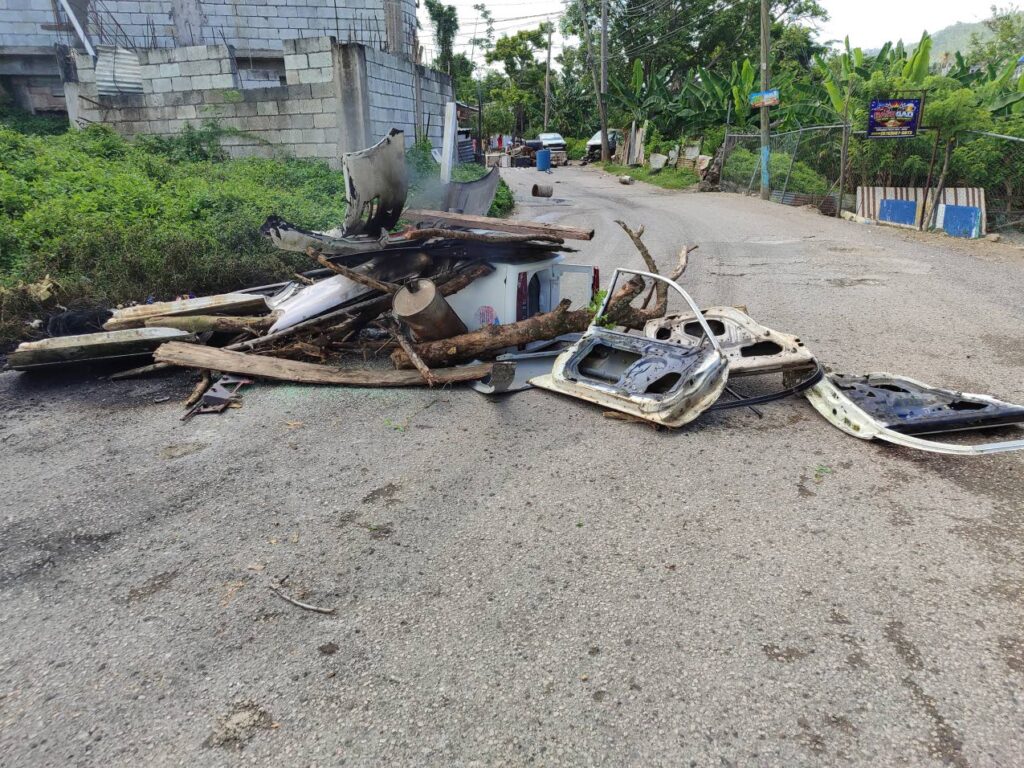
    On Monday, demonstrators erected burning roadblocks across key thoroughfares in Granville, including a heavily traveled route connecting multiple inland communities to Montego Bay. Firefighters were called in to extinguish the blazes, and police assisted with clearing the roadway to restore traffic flow.

    Security camera footage of the encounter has amplified long-simmering national concerns about the rising toll of fatal police shootings across Jamaica. In an official press release, Indecom confirmed that Bulgin’s death marks the 15th fatal shooting of a civilian by security forces in May 2026 alone. The most recent prior fatal shooting occurred on May 16 in Hague, Trelawny, where two men were killed by police. Year-to-date, 130 civilians have been fatally shot by Jamaican security forces, compared to 129 during the same period in 2025 — a slight increase that has alarmed civil society groups.

    A key detail that has drawn renewed criticism from advocacy groups is that none of the three officers assigned to crowd control duties at the protest the day Bulgin was killed were wearing or issued body-worn cameras. The absence of body cameras has been a persistent point of contention between civil society and Jamaican law enforcement for years, with activists arguing mandatory body cam use increases transparency and accountability.

  • Google wants its search bar to act on your behalf with AI

    Google wants its search bar to act on your behalf with AI

    MOUNTAIN VIEW, Calif. – At its annual I/O developer conference held near its Silicon Valley headquarters on Tuesday, Google laid out an ambitious new vision to transform its iconic search bar into a proactive artificial intelligence assistant capable of handling end-to-end user tasks, from restaurant reservations to personalized news alerts and direct outreach to businesses, all triggered by a simple natural language request.

    The announcement marks a major milestone in Google’s three-year sprint to catch up to OpenAI’s ChatGPT, the generative AI breakthrough that upended the company’s decades-long dominance in online search and forced a rapid company-wide pivot to AI integration. Early growth metrics signal significant traction for Google’s existing AI offerings: the flagship Gemini AI app now boasts 900 million monthly active users, double its user base from just 12 months ago, while the company’s AI-powered search overhaul, AI Mode, has already hit one billion monthly users globally.

    Opening the event, Google CEO Sundar Pichai introduced the company’s newest flagship AI product: Gemini Spark, a dedicated personal AI agent that will roll out to premium Google One subscribers in the U.S. starting next week. “Search is evolving beyond isolated, one-off queries into a continuous, contextual conversation that unlocks deeper insights and connects users to the full breadth of information on the web,” Pichai told reporters on the sidelines of the conference. “That’s the future we’re building with this new generation of tools.”

    A broader upgrade to Google’s core search engine will follow this summer for U.S. users, introducing always-on AI agents that can proactively notify users of breaking news, complete booking transactions, and communicate with third-party businesses on a user’s behalf. These new features tap into the fast-growing “agentic AI” trend that has swept Silicon Valley since late 2025, when Austrian developer Peter Steinberger launched OpenClaw, a pioneering platform that enabled AI to complete complex multi-step tasks ranging from booking flights to sorting email inboxes and building custom applications from simple chat prompts. OpenAI poached Steinberger earlier this year, setting off a fierce race among the world’s largest tech companies to bring agentic AI capabilities to mainstream consumers – even as experts raise persistent concerns about security risks and the exorbitant computing costs required to run these sophisticated tools.

    To maintain an edge over rivals OpenAI and Anthropic, Google also launched Gemini 3.5 Flash, its newest lightweight large language model, on Tuesday. The company claims the model runs four times faster than top competing models including Anthropic’s Claude Opus and OpenAI’s ChatGPT 5.5, while matching their performance on core AI tasks. Gemini 3.5 Flash is now the default model powering the Gemini app, AI Mode search, and all other Google AI services, with a more powerful premium iteration, Gemini 3.5 Pro, scheduled to launch next month.

    In a rare display of collaboration between two cutthroat competitors, Google also announced that OpenAI will adopt its SynthID invisible watermarking tool for AI-generated images, a joint effort to curb the spread of deepfakes and manipulated AI content across platforms.

    For all of Google’s AI advances, the company faces growing pushback from publishers and ongoing legal challenges that threaten its core search business. The expansion of Google’s AI features, which keep users within Google’s own ecosystem rather than directing them to external sites, has raised alarms among news and online publishers who warn the shift will erode their traffic and critical advertising revenue. A 2024 lawsuit filed by media giant Penske Media Corporation – owner of outlets including *Rolling Stone* and *The Hollywood Reporter* – found that 58% of Google searches now end without a user clicking through to any external website.

    In Europe, a coalition of major publishing groups has filed a formal complaint with the European Commission, accusing Google of repurposing copyrighted news content to train its AI models and generate AI summaries without compensating publishers for their work. AI Mode remains unavailable in France, the epicenter of a years-long contentious battle between the company and French media outlets over fair compensation for news content.

    Legal threats extend beyond the Atlantic as well. A U.S. federal court ruled in 2024 that Google had illegally maintained a monopoly over online search, and the company faces the possibility of being forced to break up core parts of its business. In February, the U.S. Department of Justice appealed a previous ruling that stopped short of ordering Google to divest its popular Chrome browser. Legal experts expect the next hearing in the case to be held no earlier than the end of 2025, with some projections pushing the timeline to 2027.

  • JTA workers protest for long-overdue pay

    JTA workers protest for long-overdue pay

    A new layer of labor tension has emerged in Jamaica, as the Jamaica Teachers’ Association (JTA) — already locked in a public pay disagreement with the national government — now confronts an internal protest from its own non-teaching staff over nearly a decade of unpaid and improperly calculated wages.

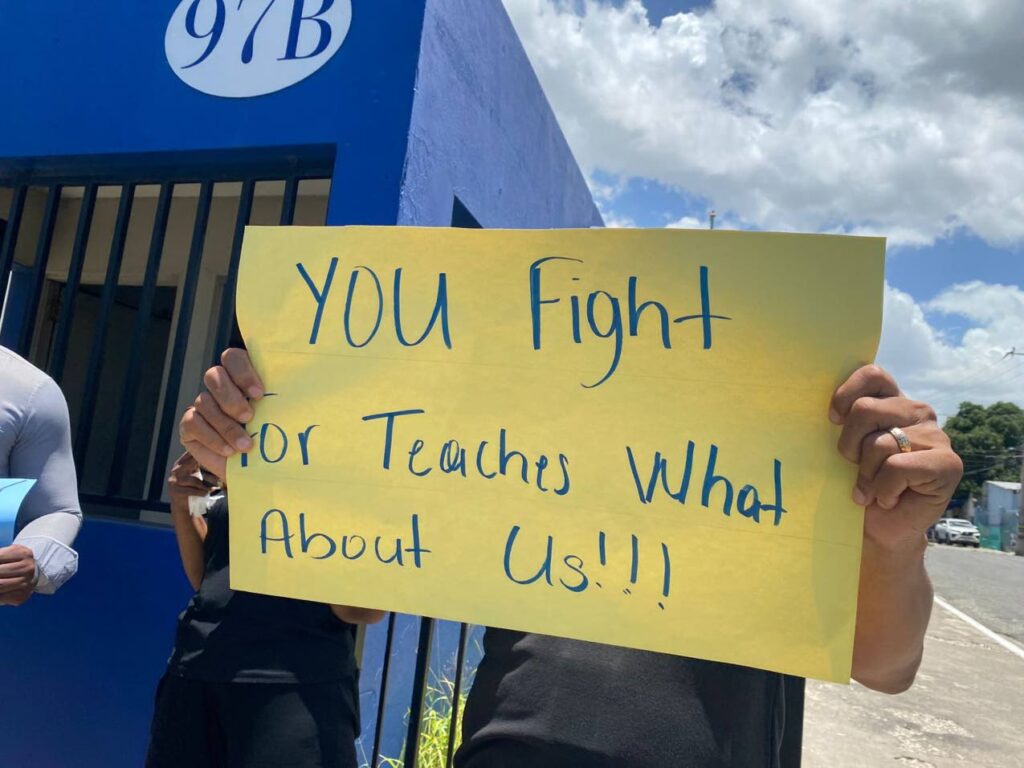
    On Monday, dozens of disgruntled JTA employees took to the streets outside the union’s downtown Kingston headquarters on Church Street. Dressed all in black and holding hand-painted placards, the workers demonstrated their mounting frustration over pay issues that have remained unaddressed since 2015.

    The employees are represented by the Bustamante Industrial Trade Union (BITU), one of Jamaica’s most prominent labor organizations. BITU Vice-President Rudolph Thomas laid out the full scope of the grievances in an official statement shared with media outlets. According to Thomas, the core of the conflict dates back to 2017, when the JTA first failed to provide transparent breakdowns for incremental and seniority-based salary adjustments that staff were contractually owed. Union representatives have repeatedly flagged calculation discrepancies and requested formal clarification, but no resolution has been forthcoming.

    Thomas added that the situation has deteriorated sharply in recent months. The JTA has not completed negotiations for wage and fringe benefit packages covering the 2024 to 2026 period, even though the prior agreement has already expired. Compounding this, the union says the JTA has unreasonably delayed the launch of a market-aligned salary restructuring that was scheduled to take effect at the start of 2024.

    The BITU represents a range of non-teaching staff at the JTA headquarters, including security officers, support and maintenance workers, accounting personnel and clerical employees. Thomas emphasized that the prolonged inaction from JTA leadership violates existing collective bargaining agreements between the two groups. “This is effectively a refusal to pay our members the fair wages they have earned through their work,” Thomas said in the release. “Workers have run out of patience after years of broken promises and empty delays.”

    Thomas warned that the protest will escalate if JTA management does not immediately agree to meet with union representatives and set binding, clear timelines to resolve all outstanding issues. He added that previous commitments to resolve the dispute, reached during mediation at Jamaica’s Ministry of Labour, have already been broken, leaving workers with no other option than to take public action.

  • Elite Cup helping to shape future of Jamaican football, says coach

    Elite Cup helping to shape future of Jamaican football, says coach

    When the final whistle blew on the 2026 KFC U18 Elite Cup final, Eric Rademakers’ Kingston Football Academy (KFA) side had fallen to Portmore United, leaving the team without the top prize. But for Rademakers, who wears two hats as KFA head coach and lead organizer of the tournament, the result never told the full story. This annual competition was never built just to award silverware – it was designed to rewrite the future of youth football development across Jamaica.

    Though disappointed by the final loss, Rademakers says his focus remains fixed on the bigger picture: the growth of the young players who took the pitch over the five-month competition. “We lost the final and we’re not happy with that, but I think that overall in the season and the football that the boys have shown is something that we are very happy about going forward,” he noted. “It’s all about the development of the boys.”

    Now in its second iteration, the KFC U18 Elite Cup was created to fill a gaping hole in Jamaica’s local youth football ecosystem. For years, young domestic players have lacked access to consistent, elite-level competitive structure that matches the rigorous seasonal frameworks common in youth football programs overseas. The Elite Cup addresses this gap by stretching across five months, requiring players to compete every weekend – a rhythm that demands long-term commitment and consistent performance, far different from the compressed schedules that dominate Jamaica’s traditional schoolboy football circuit.

    “They don’t get much of these experiences,” Rademakers explained. “A five-month competition where every Saturday you have to perform. It is a little more of a push and long-term commitment as opposed to just schoolboy football.”

    From its inaugural year to the 2026 edition, the tournament has already seen steady growth, expanding the field of competitors from six teams to seven. This year’s participants include some of Jamaica’s top youth football programs: Harbour View FC, Waterhouse, Portmore United, Mount Pleasant Academy, Montego Bay, Ballaz Academy, and Rademakers’ own Kingston Football Academy.

    For KFA, the tournament is far more than a standalone event. It is the centerpiece of a broader initiative to build structured, sustainable development pathways for young Jamaican players and fix systemic gaps in the country’s current youth football framework. Rademakers pointed to longstanding flaws in the existing schoolboy football system, arguing that its condensed format prioritizes short-term results over gradual, sustained player growth.

    “It’s only the second round of football that gets interesting, so you have one month of match, two-day rest, match, two-day rest and that’s really not developing. That’s seeing who the best team is right now,” he said.

    The tournament’s mission to uplift youth and strengthen communities has drawn support from key corporate partners, including Malta, a primary sponsor of KFA. For Malta, the investment in the KFC U18 Elite Cup extends far beyond sports sponsorship – it aligns with the brand’s core commitment to supporting Jamaican families and communities.

    “The KFC U18 Elite Cup stands as a powerful platform for developing the next generation of football talent,” said Laurice Griffiths, Malta’s junior brand manager. “It challenges young footballers to sharpen their skills, strengthen their sportsmanship, and compete in a high-performance environment surrounded by coaches, organisers, and peers committed to building future champions.”

    Griffiths added that the competition delivers unique value to young players by providing them with high-level exposure and formative competitive experiences that they cannot get through traditional local programming. “Malta is a family brand, and our aim has always been to support families and communities at different levels,” she explained. “Initiatives like the KFC U18 Elite Cup align perfectly with those values because sports play such an important role in bringing people together, creating opportunities for young people, and strengthening communities.”

    After defeating KFA in the May 16, 2026 final, Portmore United lifted the Elite Cup trophy to claim the 2026 title. But as organizers and participants agree, every player who took part in the five-month tournament walked away a winner – with new experience, improved skills, and a clearer path to a future in football.

  • Portmore United call for VAR after controversial loss to Mount Pleasant

    Portmore United call for VAR after controversial loss to Mount Pleasant

    A contentious goal reversal in the opening leg of the Wray & Nephew Jamaica Premier League semi-finals has reignited calls for the introduction of Video Assistant Referee (VAR) technology for the competition’s playoff stage, after Portmore United fell 1-0 to Mount Pleasant Football Academy at Kingston’s National Stadium on Sunday.

    The match remained deadlocked until the 82nd minute, when veteran striker Warner Brown slotted home the game’s only goal, handing Mount Pleasant a crucial advantage as the side chases a fourth consecutive appearance in the league final. But the defining moment of the contest came 12 minutes earlier, when Portmore thought they had broken the deadlock through national team striker Cory Burke.

    Burke’s powerful effort bounced off the crossbar’s underside, off Mount Pleasant goalkeeper Shaquan Davis, and was eventually cleared away by defender Kimoni Bailey. Initial referee Okeito Nicholson ruled the goal good, judging the entire ball had crossed the goal line, triggering wild celebrations from the Portmore squad. But Mount Pleasant’s players immediately surrounded officials to protest the call, prompting Nicholson to confer with his assistant referee, who had positioned along the goal line for the play.

    After several minutes of deliberation, Nicholson overturned his original decision and disallowed the goal, a call that left Portmore’s players, coaching staff and fans furious. Supporters gathered in the grandstand’s west section erupted in protest, with many exiting the venue early before the final whistle blew.

    While Portmore assistant coach Ricardo Smith admitted he could not confirm from the dugout whether the ball had fully crossed the line, he stressed that the referee’s decision to reverse his original call was incorrect. “I was just hoping he would have stuck to the first call he made, pointing to the spot. But obviously, the linesman told him that the ball didn’t cross the line. I was just there waiting to see if we got the goal and everything, but we just didn’t,” Smith told reporters post-match.

    Smith argued that VAR, which has already been deployed at the same National Stadium venue for major regional and international competitions, should have been in place for the high-stakes semi-final to resolve the controversy. “We could have won the game tonight, we didn’t but I’m saying, in a big game like this, I’ve seen where VAR has been used here before. Why couldn’t the Federation or whoever set that up for these big games and so forth. That’s what I was questioning. Why isn’t VAR system set up for these games?”

    To date, VAR has been used for multiple top-tier Concacaf competitions hosted in Kingston, including FIFA World Cup qualifiers, the Concacaf Nations League and the Caribbean Cup. Back in November 2024, the Jamaica Observer reported that Professional Football Jamaica Limited (PFJL), the league’s governing body, was in active negotiations to bring the system to the 2025 playoffs, but those plans never came to fruition. The process was further complicated after the exit of previous broadcast partner Sportsmax.

    Though his side ultimately benefited from the decision, Mount Pleasant head coach Theodore Whitmore declined to take a firm stance on the call, while noting he believed officials failed to follow established protocol. “I’m not a referee. I’m not a VAR,” Whitmore said. “There’s a procedure you have to follow and I don’t think the referee followed the procedure. I’m dealing with coaching — I’m not a referee or assessor or nothing — that’s their part to deal with.”

    Despite the disappointment of the opening leg loss, Smith said his side remains focused on turning the tie around in the decisive second leg, scheduled for this Wednesday at the National Stadium with a 6:00 pm kickoff. “We have to move forward, we don’t have enough time — two days in-between the next game,” Smith said. “We have to just keep the mentality that we came in the game with that we can win. We know we can win the game and we just have to come and turn it around.”

    In the day’s other semi-final second-leg fixture, kicking off at 9:00 pm on the same night, defending league champions Cavalier FC will also aim to reverse a one-goal deficit against Montego Bay United.

  • US, Cuba held talks on aid offer —  US official

    US, Cuba held talks on aid offer — US official

    Diplomatic discussions between the United States and Cuba have resumed this week, centered on a controversial $100 million US aid offer aimed at easing the severe economic crisis gripping the Caribbean island nation, a senior US State Department official confirmed Tuesday on condition of anonymity.

    The latest round of negotiations saw US Ambassador to Havana Mike Hammer meet face-to-face with senior Cuban foreign ministry officials on Monday, marking continued progress in advancing Washington’s proposal. The anonymous official emphasized that US diplomatic teams have maintained close, consistent coordination with their Cuban counterparts throughout the process, stating that “we had a meeting yesterday [Monday] and continue to pursue that proposal aggressively.”

    Under the terms of the current US plan, the $100 million in assistance will not be transferred directly to the Cuban communist government. Instead, all aid will be channeled through independent Christian charitable organizations, a structure designed to ensure resources reach ordinary Cuban citizens directly. “We care a tremendous amount about the Cuban people, and want to be able to provide that assistance directly to them,” the official added.

    The proposal itself was first put forward publicly by US Secretary of State Marco Rubio, a longstanding outspoken opponent of Havana’s communist administration. Rubio has attached key conditions to the aid, requiring the Cuban government to implement concrete political and economic opening measures before any assistance is disbursed.

    Cuba’s position on the offer has shifted in recent weeks. Initially, Cuban officials accused Rubio of fabricating the aid proposal, but last week Cuban Foreign Minister Bruno Rodriguez announced that Havana is now willing to review the US offer in good faith.

    The current economic turmoil in Cuba stems largely from a dramatic shift in regional energy dynamics. For years, Venezuela provided the island with heavily subsidized, near-free oil in exchange for Cuban medical personnel and other professional services. However, after US-led actions resulted in the ousting of Venezuela’s leftist leader Nicolas Maduro, this critical oil supply was abruptly cut off, leaving Cuba mired in persistent energy shortages and widespread daily blackouts that have deepened its ongoing economic collapse.

  • WHO worried about ‘scale and speed’ of deadly Ebola outbreak

    WHO worried about ‘scale and speed’ of deadly Ebola outbreak

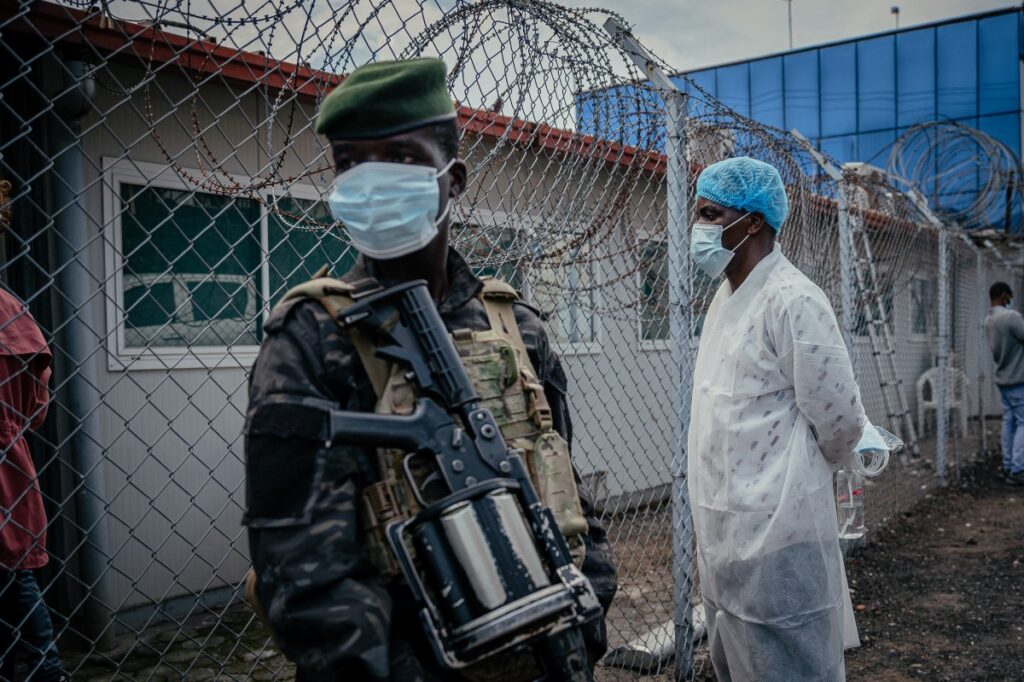
    KINSHASA, DR Congo – A fast-expanding Ebola outbreak in eastern Democratic Republic of Congo has triggered global alarm, with the World Health Organization (WHO) upgrading the crisis to an international public health emergency amid rising fatalities, limited treatment options, and persistent conflict blocking response efforts. As of Tuesday, Congolese health officials report approximately 131 deaths and 513 total suspected cases, marking a sharp jump from last week’s count of 91 deaths and 350 suspected cases.

    The outbreak, centered in the conflict-battered gold-mining region of northeastern Ituri province bordering Uganda and South Sudan, is driven by the Bundibugyo strain of Ebola – a variant for which no approved vaccines or targeted therapies currently exist. Unlike the more common Zaire strain, which has been responsible for the DRC’s deadliest past outbreaks and has authorized vaccines, the Bundibugyo strain previously caused smaller outbreaks in Uganda (2007) and the DRC (2012), with a recorded mortality rate between 30% and 50%.

    Compound the crisis is the fact that the epicenter of the outbreak is a remote region roiled by decades of inter-militia clashes, making it extremely difficult for responders to reach affected communities. Only 30 cases have so far been confirmed through laboratory testing, with the vast majority of counts based on suspected symptomatic cases. The virus has already spread beyond Ituri, with suspected cases detected in North Kivu province’s commercial hub of Butembo – more than 120 miles from the outbreak’s origin – and one confirmed case in Goma, the province’s capital, which is currently controlled by Rwanda-backed M23 rebel forces. Cross-border spread has also been confirmed: Uganda has reported two confirmed cases in its capital Kampala linked to travel from the DRC, including one fatality.

    Local misinformation has also delayed response efforts. Congolese Health Minister Samuel Roger Kamba told national television that many residents initially mistook Ebola symptoms for a mystical illness, delaying care-seeking and allowing the virus to spread unchecked. “The deaths we are reporting are all the deaths we have identified in the community, without necessarily saying that they are all linked to Ebola,” Kamba clarified.

    WHO Director-General Tedros Adhanom Ghebreyesus told the agency’s annual governing body meeting in Geneva on Tuesday that the decision to declare a Public Health Emergency of International Concern (PHEIC) – the second-highest global alert level under international health regulations – was not made casually. “I’m deeply concerned about the scale and speed of the epidemic,” he said. The WHO is currently evaluating all candidate vaccines and treatments to identify options that could be deployed to curb the surge of the new strain.

    The Africa Centres for Disease Control and Prevention has already designated the outbreak a continental public health emergency, reflecting fears of wider spread across the African continent. Humanitarian groups warn that ongoing conflict between Congolese government forces and armed groups in the region remains one of the biggest barriers to an effective response. “Humanitarian access and coordination between the various stakeholders, particularly the parties to the conflict, could be one of the challenges for the response,” said Francois Moreillon, DR Congo representative for the International Committee of the Red Cross, earlier this week. Moreillon called on all warring parties to guarantee safe, unimpeded access for response teams and aid workers.

    Congolese President Felix Tshisekedi has urged the public to remain calm while adhering to precautionary measures, and has ordered the national government to scale up its response to the crisis. This is the 17th Ebola outbreak the DRC has faced since the virus was first identified in the country in 1976. The Central African nation of more than 100 million people has a long history of Ebola outbreaks, with the deadliest between 2018 and 2020 claiming nearly 2,300 lives from 3,500 confirmed cases.

    The outbreak has already prompted precautionary measures around the globe. Germany announced Tuesday it is preparing to receive and treat a U.S. citizen who contracted the virus while working in the region. The American patient is a doctor with Christian aid organization Serge, which confirmed he was exposed through his work treating infected patients; two other doctors who assisted with care remain asymptomatic. The United States has already implemented entry screenings for air travelers arriving from Ebola-affected regions and temporarily suspended routine visa services in the DRC.

    Ebola, a highly contagious viral hemorrhagic fever first discovered in 1976 and thought to originate in bat populations, spreads through direct contact with infected bodily fluids. The disease can progress rapidly to severe internal bleeding, organ failure, and death in a large share of cases.

  • Jamaicans register wins at NJCAA Champs

    Jamaicans register wins at NJCAA Champs

    The National Junior College Athletics Association (NJCAA) Outdoor Track and Field Championships wrapped up an action-packed three-day competition last weekend at New Mexico Junior College in Hobbs, New Mexico, and emerging as the standout performers of the tournament were a cohort of talented Jamaican athletes, who claimed top honors across a wide range of events.

    One of the most impressive displays of Jamaican dominance came in the men’s 400m hurdles, where athletes from the island nation claimed all three podium spots. Shadane Smith of Hinds Community College led the historic sweep, crossing the finish line in a new personal best time of 50.19 seconds. He outpaced Central Arizona’s defending champion Richard Hall, who finished second with a time of 50.42 seconds, while Barrain Smith of Odessa College secured third place in 51.23 seconds.

    In the men’s 110m hurdles, Shaquane Gordon, a former gold medalist at both the ISSA Champs and Carifta Games, lived up to his pre-tournament reputation. He clocked a wind-aided 13.04 seconds, with a tailwind of 4.1m/s exceeding the allowable threshold for record purposes, to take home the gold medal. Shevon Depass of Western Texas added another Jamaican top-three finish in the event, claiming bronze in 13.56 seconds.

    Hinds Community College’s Jayval Wright turned in a stellar all-around performance in the short sprints. He won the men’s 200m with a wind-aided time of 19.91 seconds, boosted by a 4.8m/s tailwind, and followed that up with a silver medal in the 100m, finishing in 9.96 seconds. Two other Jamaican athletes placed in the top 10 of the 100m: Hector Benjamin of Indian Hills took sixth in 10.09 seconds, and Raheem Pinnock of Hinds crossed the line seventh in 10.16 seconds.

    On the host campus, New Mexico Junior College’s Aaron McKenzie claimed the men’s high jump title, clearing 2.12m to beat out Barton County’s Chavez Penn, who recorded a best jump of 2.07m to finish second. Raheim Scott, also of New Mexico Junior College, added a bronze medal for Jamaican athletes in the men’s 400m, finishing in 46.47 seconds.

    In women’s competition, Alexia Walker of Barton County College claimed gold in the heptathlon, amassing a total of 5,200 points across the seven events. Asharria Ulett, also of Barton County, won the women’s 100m hurdles in a wind-aided 12.89 seconds with a 6.8m/s tailwind, beating compatriot Daynea Colstock of Western Texas, who took silver in 13.10 seconds. Colstock later added a fourth-place finish in the women’s 400m hurdles with a time of 1:00.80.

    Deijanae Bruce of Odessa College won the women’s triple jump with a wind-aided mark of 13.13m, while Celine Riddle of Barton County took third in the same event with 12.92m. Riddle, the 2023 long jump champion, finished second in this year’s long jump competition with a new personal best of 6.29m, just behind compatriot Ishna James of Odessa, who won gold with a jump of 6.32m.

    Multiple other Jamaican athletes secured top-six finishes across the tournament. Cindy Rose of Indian Hills took silver in the women’s 800m in 2:13.93, just ahead of Terrica Clarke of Butler CC who finished fourth in 2:15.43. Kahdijah Bailey of Iowa Western claimed silver in the women’s high jump with a clearance of 1.64m, the same height as Bruce, who finished third, while Rasheda Samuels of Iowa Western took fourth and Jahmeka Brown of Barton County placed sixth. Twin sisters Shamoyea and Shamoye Morris of Barton County took second and fourth respectively in the women’s discus throw, with marks of 49.82m and 45.46m, while Carla Kay Brown of Coffeyville finished fifth and Natassia Burrell of Cloud County placed sixth. Burrell also claimed a bronze medal in the women’s javelin throw with a mark of 45.78m. In the women’s 100m, Caneilia Hope of Hinds CC finished fourth in a wind-aided 11.27 seconds, with Mickayla Gardner of Central Arizona fifth and Alliah Baker of Western Texas sixth. Rounding out the Jamaican results, Osmond Holt of Iowa Central finished fourth in the men’s decathlon with 6,263 points.

  • WHO evaluates vaccines, treatments for Ebola outbreak

    WHO evaluates vaccines, treatments for Ebola outbreak

    GENEVA, Switzerland – The World Health Organization (WHO) announced Tuesday it is actively evaluating all available experimental vaccines and treatment candidates to counter a rapidly spreading Ebola outbreak in the Democratic Republic of the Congo, which officials warn could stretch on for months or longer. The UN health agency has already formally designated the surge of the highly contagious viral haemorrhagic fever as a Public Health Emergency of International Concern, after the virus was linked to 131 suspected deaths and more than 500 confirmed and suspected infections across the affected region.

    Anne Ancia, WHO’s representative to the DRC, told reporters in a briefing connecting from Bunia, the capital of Ituri province, that the global body is working urgently to map out all available candidate medical countermeasures and determine their suitability for deployment in the ongoing response. “At the international level, we are looking at what candidate vaccines or treatment are available and if any could be of use in this outbreak,” Ancia stated.

    WHO Director-General Tedros Adhanom Ghebreyesus reinforced the severity of the situation Tuesday, saying he was “deeply concerned about the scale and speed of the epidemic” and confirming that he would convene a high-level emergency meeting of the agency’s independent crisis committee later the same day to coordinate the global response.

    A key complication facing response teams is that the current outbreak is driven by the Bundibugyo strain of Ebola, a viral variant for which no pre-approved, widely deployable vaccine or targeted therapeutic treatment currently exists. Over the past 50 years, Ebola outbreaks across Africa have claimed more than 15,000 lives total. The only licensed Ebola vaccines available to date are formulated to target the Zaire strain, which was first identified in 1976. Currently, international public health experts agree that these prequalified Zaire strain vaccines are not approved for use against the current Bundibugyo outbreak, though Ancia noted that further research is ongoing to explore all potential options.

    The WHO’s technical advisory group for outbreak response met Tuesday to outline priority guidelines for evaluating candidate vaccines, to determine which experimental candidates should move forward for accelerated testing and deployment. Among the candidates under review is Ervebo, one of the most advanced existing Ebola vaccine candidates that is being assessed for its ability to deliver additional preventive protection for at-risk communities in the DRC. Even if Ervebo is cleared for use, however, Ancia warned that it would take a minimum of two months to deliver the vaccine to affected areas. This timeline still aligns with the expected trajectory of the outbreak, she noted: “I don’t think that in two months we will be done with this outbreak,” she said, referencing a previous large-scale Ebola outbreak in the region that took two full years to fully contain.

    The current outbreak, formally declared last Friday, marks the 17th recorded Ebola outbreak ever to hit the DRC. Public health officials have repeatedly warned that the outbreak carries a high risk of regional spread, and the 2018–2020 Ebola outbreak in the DRC remains the deadliest in the country’s history, claiming nearly 2,300 lives. To ramp up the on-the-ground response, the WHO has already deployed more than 40 international experts to join Congolese national response teams working in affected areas. The agency has also shipped 12 tonnes of critical emergency supplies, including personal protective equipment (PPE) for frontline health workers, from the Congolese capital Kinshasa and Nairobi, Kenya. The WHO is also partnering with global medical and humanitarian organizations, including the medical charity Doctors Without Borders, to construct dedicated Ebola treatment centres and expand local laboratory testing capacity to speed up case detection and isolation.

  • US to let DR Congo team in for World Cup despite Ebola restrictions

    US to let DR Congo team in for World Cup despite Ebola restrictions

    In a targeted policy adjustment announced this week, a senior United States government official confirmed Tuesday that Washington will carve out a special entry exemption for the Democratic Republic of Congo men’s national soccer team, allowing the squad to bypass a longstanding Ebola-related travel restriction ahead of their World Cup appearance.

    Speaking on condition of anonymity, the senior State Department official told reporters that US authorities fully expect the Congolese side to fulfill their fixture commitments at the global tournament without entry barriers. The original travel ban, implemented in response to a deadly Ebola outbreak that spread across central Africa, bars entry to most non-US citizens who have traveled within the DRC, Uganda, or South Sudan in the 21 days prior to their attempted entry to the US.

    Notably, the DRC is the only nation among the three Ebola-affected countries to qualify for men’s soccer’s most prestigious international competition. The official noted that the team has been conducting pre-tournament training camps across Europe in recent weeks, meaning most squad members would likely not have met the 21-day exposure threshold that triggers the ban in the first place.

    Even for players or staff who have traveled to the DRC within the three-week window, the official confirmed that a full entry prohibition will not be enforced. Instead, the contingent will follow the same strict public health protocols already mandated for returning US citizens and permanent residents, including mandatory testing and targeted isolation when necessary. This aligned approach ensures public health protections remain in place while clearing the way for the team to compete.

    The official made clear that the exemption is limited exclusively to the official national team delegation, and will not extend to ordinary Congolese fans hoping to travel to the US to support their side during the tournament.