标签: Jamaica

牙买加

  • LAC countries severely impacted by weather conditions in 2025

    LAC countries severely impacted by weather conditions in 2025

    BRASILIA, Brazil — A new 2025 climate assessment from the World Meteorological Organization (WMO) has laid bare the sweeping damage that cascading extreme weather events have inflicted on communities and economic systems across Latin America and the Caribbean (LAC), while highlighting growing capacity to mitigate harm through targeted preparedness. In its annual flagship *State of the Climate in Latin America and the Caribbean 2025* report, the intergovernmental climate body documents a range of accelerating climate trends that are amplifying both immediate and long-term risk for the region.

    Among the most critical threats identified is the rapid melt of Andean glaciers, often described as the region’s natural water towers that support roughly 90 million people with freshwater for residential use, hydroelectric energy generation, agriculture, and industrial activity. The report confirms accelerating ice loss across both the high southern Andes and low-latitude tropical glaciers in Colombia and Ecuador, which has already triggered a sharp rise in short-term flood hazards and created growing long-term risks to regional water security.

    Coastal communities also face escalating risks, the WMO found: along Atlantic-facing shorelines of the tropical Atlantic and Caribbean, sea levels are rising faster than the global average. Compounding these coastal threats, widespread marine heatwaves struck the Gulf of Mexico, Caribbean Sea, and waters off Chile in 2025, with ongoing ocean acidification and warming combining to push marine ecosystems and commercial fisheries toward greater instability.

    WMO Secretary-General Celeste Saulo emphasized that the evidence of human-caused climate change across the region is undeniable. “From accelerating glacier loss and rising sea levels to rapidly intensifying tropical cyclones, extreme heat, floods and drought, the signs of a changing climate are unmistakable across Latin America and the Caribbean,” Saulo stated. Yet she also noted that advances in climate forecasting and preparedness are delivering tangible results, even as overall risks grow: “This report shows that while risks are growing, so too is our capacity to anticipate and act to save lives and protect livelihoods.”

    That capacity was put to the test in October 2025 with Hurricane Melissa, the first Category 5 hurricane ever recorded to make landfall in Jamaica. The storm left 45 people dead and caused an estimated $8.8 billion in damages — a sum equal to more than 41% of Jamaica’s total annual gross domestic product. Even though the storm was an unprecedented event with no historical analog to guide planning, WMO officials noted that Jamaican authorities leveraged cutting-edge risk modeling to implement early financial preparations and disaster response planning, actions that kept the death toll far lower than it could have been and helped the island begin recovery more quickly.

    Extreme heat emerged as another top public health priority in the 2025 report. Intense, recurring heatwaves that pushed temperatures well above 40°C impacted large swathes of North, Central, and South America last year. The WMO stressed that there is an urgent need to integrate climate data into public health planning and emergency response systems, and to link meteorological early warning systems directly to public health action triggers. Currently, many LAC nations do not regularly publish disaggregated data on heat-specific mortality; between 2012 and 2021, the average annual estimated heat-attributable death toll across 17 sampled countries was roughly 13,000, a figure researchers say is almost certainly a major undercount due to inconsistent reporting. The WMO is calling for expanded and standardized mortality tracking across the region to better capture the full public health burden of extreme heat.

    The report also examines the cascading risks climate extremes pose to regional agro-food systems, noting that concurrent shocks to agricultural production, rural livelihoods, food access, and market function create overlapping food security vulnerabilities for millions of people.

    Long-term trend analysis included in the report confirms the region is warming faster than the 20th century average across all 30-year assessment periods. The 1991–2025 window shows the most pronounced warming trend on record stretching back to 1900: South America recorded a warming rate of 0.26°C per decade, while Central America and the Caribbean saw 0.25°C per decade. Mexico recorded the fastest regional warming rate at 0.34°C per decade for the 1991–2025 period. 2025 ranked as the fifth to eighth warmest year ever recorded for the region.

    Over the past 50 years, rainfall patterns across LAC have also grown increasingly volatile, with wider swings between severe drought and extreme flooding, longer dry periods, and more intense precipitation events. Central America and northern South America have seen a rise in heavy downpours, while Central Chile, northeast Brazil, and parts of Central America and the Caribbean have grown progressively drier. The Amazon basin shows a mixed trend, with longer dry seasons, more intense wet-season flooding, and more frequent droughts concentrated in the southern and eastern parts of the rainforest.

    Saulo framed the report as both a scientific assessment and a urgent call to collective action. “These findings are deeply concerning. But they also show why our work matters. Climate information is not only about data. It is about people,” she said. “It is about protecting communities from floods, droughts, hurricanes, heatwaves and other hazards. It is about farmers planning their crops, health authorities preparing for heat-related risks and coastal communities planning for rising seas.” She added that the report calls on global and regional actors to strengthen climate observation networks, invest in accessible climate services, close gaps in early warning coverage, and ensure critical climate information reaches the vulnerable communities that need it most.

  • ‘Grammy Certificate Ceremony’ returns to Jamaica with new name and format

    ‘Grammy Certificate Ceremony’ returns to Jamaica with new name and format

    One of Jamaica’s most anticipated music industry celebrations is getting a major facelift ahead of its September return, as organizer Kennedy Mensah expands the event to recognize more standout talent from across the global music scene. When Mensah touches down in Jamaica this September for his third iteration of the annual awards gathering, the event will bear a new name, occupy a larger purpose-built venue, and feature an expanded format that incorporates international certification programs.

    Formerly branded the Grammy Certificate Ceremony, the event has been rebranded as the Music In Excellence Ceremony to reflect its broader scope of honoring musical achievement across markets. Scheduled to take place on September 15 at the spacious Courtleigh Auditorium in central New Kingston, the ceremony leaves behind its long-time previous Kingston home at the nearby Audi Showroom, a change driven by steady growth in the event’s size and ambitions.

    What sets this year’s event apart from previous stagings held in Kingston, South Florida and London is a new collaborative partnership between Mensah’s Back 2 Da Future Music Limited and the British Phonographic Industry (BPI). For the first time, the ceremony will present BPI-certified platinum, gold and silver discs alongside traditional Grammy certificates, honoring the work of Jamaican and international artistes, producers and session musicians who have achieved major commercial success on British music markets. Returning as a partner for the second consecutive year is The Royalty Network Inc, a leading New York-based music publishing firm that supports independent and established creators worldwide.

    In an exclusive interview with Jamaica Observer Online, London-born organizer Mensah, who has Ghanaian heritage, outlined the changes coming to this year’s ceremony. A total of 25 creators will walk away with either a Grammy Certificate or a BCI-certified disc this year, a significant milestone for the fast-growing event. “The ceremony has grown and we needed a dedicated space that would allow us to have a live band. Unfortunately, growing pains means that we have had to find a purpose-built venue to accommodate our expanding programming,” Mensah explained of the venue shift.

    The last iteration of the ceremony, held under its original name in South Florida this past January, honored a roster of iconic Caribbean talent including esteemed musician Robert Browne, celebrated singer and multi-instrumentalist Gramps Morgan, Grammy-winning reggae group Morgan Heritage, and influential dancehall singer Wayne Wonder. Mensah founded Back 2 Da Future Music Limited in 2005, and launched the inaugural Grammy Certificate Ceremony in South Florida in July 2024, which paid tribute to legendary guitarist Rad Bryan, best known for his work with iconic reggae bands The Revolutionaries and The Maytals.

  • UN official says children face brunt of gang violence in Haiti

    UN official says children face brunt of gang violence in Haiti

    PORT-AU-PRINCE, Haiti – A senior United Nations official wrapping up a two-day assessment visit to Haiti has delivered a stark warning about the catastrophic toll that ongoing gang violence is inflicting on the country’s children, noting that child recruitment by armed groups has nearly tripled since 2024 and that minors now account for between 30% and 50% of all gang members across the crisis-hit Caribbean nation.

    Vanessa Frazier, the UN Special Representative for Children and Armed Conflict, told stakeholders after her visit that Haitian children are trapped in an unending cycle of violence, displacement and psychological trauma, forced to grow up in constant fear as armed gangs exploit their socioeconomic vulnerability to coerce them into service. Many minors already faced unstable home environments before being drawn into gang activity, she added, leaving them with no choice but to fight for daily survival amid widespread intimidation, sexual violence targeted at communities, and repeated forced displacement.

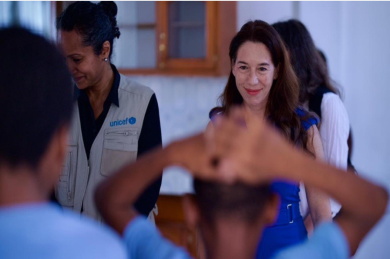
    During her mission, Frazier held consultations with a broad range of national and international stakeholders, including Haitian government officials from the foreign affairs and justice ministries, the leadership of the UN Integrated Office in Haiti (BINUH), UNICEF representatives, members of the diplomatic and donor community, civil society organizations, the Gang Suppression Force (GSF), and directly with children who have survived gang-related violence. She also toured government-run transit centers for former gang-associated children that operate with support from the UN children’s agency.

    Frazier emphasized a core policy priority: any child encountered during security operations must first be recognized as a victim of violence, not a criminal, and immediately transferred to specialized child protection services for care, support and long-term reintegration into civilian life. This guidance aligns with the 2024 handover protocol signed between the Haitian government and the United Nations, which Frazier praised as a critical concrete step forward.

    For the small number of minors linked to gangs who have been involved in serious crimes, Frazier said Haiti must uphold its international obligations under the UN Convention on the Rights of the Child and the Paris Principles, which require that detention only be used as a last resort and that all proceedings follow established juvenile justice standards.

    The UN envoy commended the administration of Prime Minister Alix Didier Fils-Aimé for placing child protection at the center of its national stability agenda, and welcomed ongoing efforts by the newly deployed GSF to build internal child protection protocols and train its frontline contingents on responding appropriately to minors encountered during operations. She noted that this moment, as the GSF rolls out its security mission, represents a critical window of opportunity to embed child protection into national security strategy from the start.

    “Security and child protection cannot be separated,” Frazier said. “Without protecting these children and supporting all children affected by violence, lasting stability in Haiti will not be possible.” She added that the challenges facing Haitian children are extraordinarily complex and multi-layered, unlike the child protection crises seen in other conflict contexts, and that long-term support will be required to address the full scope of harm.

    Reintegration of former gang-associated children remains one of the biggest multidimensional challenges for the Haitian government and its international partners, Frazier acknowledged. But she highlighted a unifying desire shared by every child she spoke to during her visit: they want access to education, the chance to play and grow, and the opportunity to simply be children, rather than survivors of violence. That makes investment in education and learning a non-negotiable core component of any successful reintegration strategy, she stressed.

  • Grange encourages Jamaicans to participate in Labour Day activities

    Grange encourages Jamaicans to participate in Labour Day activities

    KINGSTON, Jamaica — As the island nation gears up for its annual national Labour Day observance, Jamaica’s Minister of Culture, Gender, Entertainment and Sport Olivia Grange has issued a public call for widespread participation from Jamaicans across every corner of the country. The 2026 event will center on the unifying official theme: “One People, One Purpose, In All Things Jamaica Wins”.

    A minor adjustment has been made to the 2026 observance date. While Labour Day is traditionally marked on May 23 each year, the holiday will be celebrated on Monday, May 25 in 2026, as the standard date falls on a weekend this cycle.

    In an exclusive conversation with JIS News, Minister Grange emphasized that the chosen theme is far more than a slogan — it encapsulates the core national identity that has long defined Jamaican people. “It has a nice little rhyme, nice little rhythm to it, and it is the beating heart of who we are as Jamaicans,” Grange shared. “It captures our unbreakable resilience. It captures our unshakable unity and our fierce dedication.”

    She added that when the nation aligns behind a shared goal, no barrier is insurmountable: “When we stand together as one people with one purpose, there is no storm, no challenge, no obstacle too great for us to conquer.”

    Organizers have selected two flagship national projects to anchor this year’s Labour Day volunteer efforts. The first centers on the restoration and upgrade of Kingston’s iconic Sabina Park cricket complex, a landmark that is currently undergoing preparations to welcome back regional and international cricket matches, including upcoming fixtures of the Caribbean Premier League (CPL) T20 tournament.

    Grange explained the significance of selecting Sabina Park for national focus, noting the venue holds deep cultural and historical heritage for Jamaica. The government has maintained long-term investments in the site’s modernization, including a cooperation partnership with India that will deliver a new high-tech scoreboard and upgraded stadium lighting. These ongoing upgrades are all aimed at bringing the facility fully in line with international competition standards. On Labour Day, volunteers will mobilize to clean, repaint, and complete minor repairs across the park to support its upcoming reopening for major sports events.

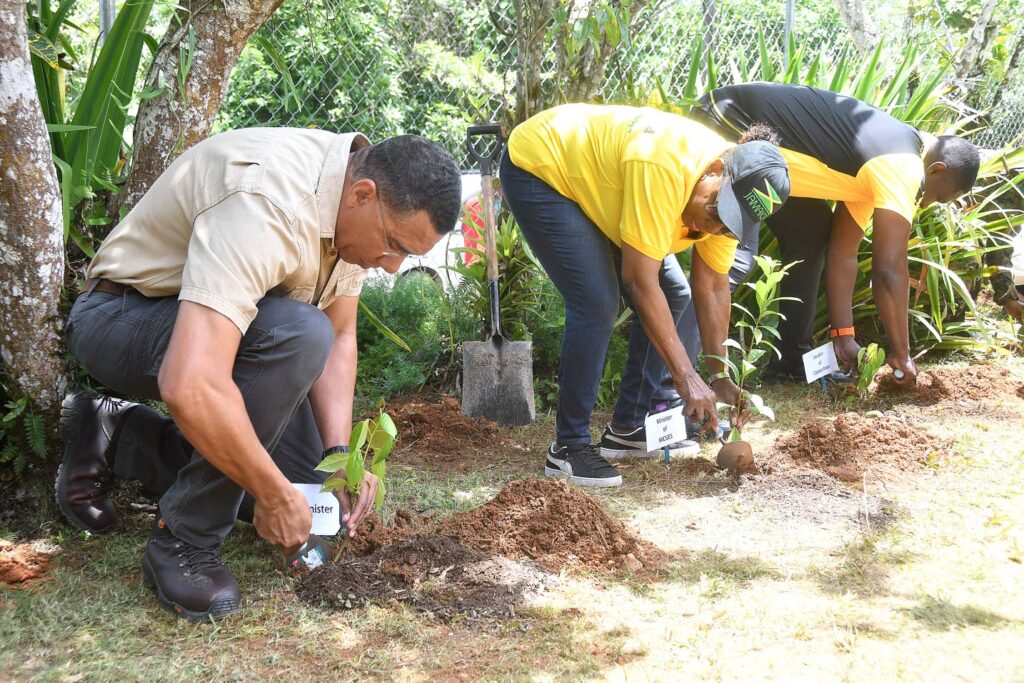
    The second national project is based in Lewis Town, a community in the parish of St Elizabeth. Local teams and volunteers will focus on repairing and replacing the damaged roof of the Lewis Town Early Childhood Institution, which was severely harmed when Hurricane Melissa swept through the area.

    Per the event’s official schedule, Jamaican Prime Minister Dr Andrew Holness is scheduled to visit both flagship project sites on Labour Day to meet with volunteers and observe progress. Meanwhile, sitting members of parliament and local municipal corporations will lead community-level volunteer projects in every region across the island.

    A core priority for the 2026 Labour Day observance is the restoration and rehabilitation of shared community assets, Grange confirmed. These assets include early childhood education centers, neighborhood community centers, and local sports facilities that serve residents across the country.

    “ I want everyone to go out on Labour Day to show that together, as a united people, we will help those who are unfortunate. We will help our neighbours. We will help to restore community centres, early-childhood education institutions, and sports facilities. That is the focus this year,” Grange told JIS News.

  • New Ebola outbreak in DR Congo: What we know

    New Ebola outbreak in DR Congo: What we know

    In a high-stakes announcement that has triggered global public health alert, the World Health Organization has designated the spiraling Ebola outbreak in the northeastern region of the Democratic Republic of the Congo as a Public Health Emergency of International Concern (PHEIC), the body’s second-highest global alert level. As of the latest official update from Congolese Health Minister Samuel-Roger Kamba released Sunday, the outbreak has already been linked to 91 suspected deaths and roughly 350 suspected cases, with a disproportionate impact on working-age adults and women: most infected individuals fall between 20 and 39 years old, and over 60% of all cases are female. Notably, most of these cases remain unconfirmed by laboratory testing, as only a small number of samples have been processed for formal verification to date.

    The epicenter of the current outbreak is the DRC’s Ituri Province, a mineral-rich region bordering Uganda and South Sudan that hosts dense, high-volume cross-border population movement driven by widespread artisanal gold mining. This constant flow of people has raised urgent alarms among regional health bodies: the Africa Centres for Disease Control and Prevention has repeatedly warned that the virus carries a severe risk of spreading to neighboring East African nations, a scenario that could exponentially expand the scope of the crisis.

    What makes this outbreak particularly challenging for global health responders is the specific strain of Ebola driving transmission: the Bundibugyo variant, a strain for which no licensed vaccines or targeted antiviral treatments currently exist. Unlike the Zaire strain that caused the largest Ebola outbreaks in recorded history, which can be prevented with existing approved vaccines, Bundibugyo leaves public health teams relying on basic infection control measures: rapid case detection, rigorous contact tracing, and strict adherence to personal protective protocols to slow transmission. This is not the first time the Bundibugyo strain has caused an outbreak; it was previously detected in limited outbreaks in Uganda in 2007 and the DRC in 2012, with historical mortality rates ranging between 30% and 50% of confirmed cases. Over the past half-century, Ebola outbreaks across Africa have claimed more than 15,000 lives total, underscoring the ongoing threat the virus poses to vulnerable, high-mobility frontier regions.

  • Thailand cuts visa-free stays, citing crime by foreigners

    Thailand cuts visa-free stays, citing crime by foreigners

    BANGKOK, Thailand – In a targeted policy shift designed to crack down on transnational crime committed by foreign nationals, Thailand’s cabinet has approved sweeping cuts to the maximum visa-free stay duration for travelers from over 90 countries, senior government officials confirmed Tuesday.

    As one of Southeast Asia’s most popular tourist destinations, Thailand has long relied on international travel to power its national economy, with the sector contributing more than 10% of the country’s total gross domestic product. Yet even years after the end of global COVID-19 border restrictions, international arrivals have failed to rebound to the pre-pandemic levels that once drove record economic gains. A 3.4% drop in first-quarter visitor numbers compared to the same period in 2025, including a nearly 33% decline in travelers from the Middle East, underscores the unevenness of the sector’s ongoing recovery.

    The policy change comes in the wake of a string of high-profile arrests of foreign nationals connected to serious criminal activity, including drug trafficking, sex trafficking, and unlicensed operation of commercial enterprises ranging from hotels to international schools. These cases exposed vulnerabilities in the country’s previous visa-free framework, which allowed eligible travelers to stay in Thailand for up to 60 days without entry clearance.

    Eligible nations under the existing scheme include all 29 member states of the European Schengen Area, the United States, Israel, and multiple South American countries. Speaking to reporters in Bangkok, Tourism Minister Surasak Phancharoenworakul outlined that the revised maximum stay lengths will be set on a country-by-country basis: most nationalities will see their maximum visa-free stay cut from 60 days to 30 days, while a smaller group of countries will face an even stricter 15-day cap.

    Unlike the previous automatic 60-day approval system, travelers who wish to extend their stay beyond the new visa-free limit will be allowed to apply for a single visa renewal at a local immigration office. Government spokeswoman Rachada Dhnadirek explained that extension requests will be reviewed individually by immigration officers, who will require applicants to provide a clear justification for their extended stay. Prior to the 2024 extension, the maximum visa-free stay was already capped at 30 days – the policy was expanded to 60 days in July 2024 as an emergency stimulus measure to jumpstart tourism after the pandemic.

    Foreign Minister Sihasak Phuangketkeow emphasized last week that the new restrictions are not aimed at any specific country or the vast majority of law-abiding international tourists, who bring critical economic benefits to Thai communities. Instead, the policy targets a small subset of bad actors who have abused the generous visa-free framework to engage in criminal activity within Thailand’s borders.

    Rachada echoed this framing Tuesday, noting that while international tourism delivers widespread economic gains for the country, the previous 60-day visa-free scheme had opened opportunities for exploitation by criminal networks. Despite the new restrictions, the Thai government maintains its full-year projection of 33.5 million international visitors for 2026, a modest increase from the nearly 33 million travelers recorded in 2025.

  • US enforces law to crack down on sexual deepfakes

    US enforces law to crack down on sexual deepfakes

    On Tuesday, the United States officially implemented a groundbreaking federal rule targeting the rapid spread of abusive AI-generated content: the Take It Down Act, a law that compels digital tech platforms to remove non-consensual intimate imagery including sexual deepfakes, even as policy experts and free speech advocates sound the alarm over unaddressed gaps in the legislation and its potential for overreach and misuse.

    The framework, first signed into law by former President Donald Trump in 2023, goes beyond setting content standards—it actually criminalizes the intentional online distribution of non-consensual sexual material, most of which is now produced using low-cost, widely accessible artificial intelligence tools that can generate realistic fake content in minutes.

    According to guidance released by the Federal Trade Commission (FTC), the nation’s top consumer protection regulator, the new enforcement mandate requires all covered tech platforms to build a formal, accessible process that lets victims of non-consensual intimate content submit takedown requests. Platforms must process and remove valid requests within a 48-hour window, and any company that fails to comply will face formal penalties. The agency did not outline specific fine amounts, but noted that it has full authority to levy civil penalties for repeated violations.

    FTC Chairman Andrew Ferguson confirmed Tuesday that the agency had sent formal advance notifications to more than 15 major technology companies ahead of the enforcement date, including industry leaders Meta Platforms, TikTok, X (formerly Twitter), and Snap Inc.’s Snapchat. “We stand ready to monitor compliance, investigate violations, and enforce the Take It Down Act,” Ferguson stated in his official remarks, adding that “Protecting the vulnerable — especially children — from this harmful abuse is a top priority for this agency and this administration.”

    Major platforms have already moved to signal their commitment to complying with the new rule. On Monday, X’s official safety account published a public statement reinforcing the company’s existing policies, noting that “there is no place in our society for predators to share intimate photos and videos of others without their consent. X has zero tolerance for non-consensual intimate images, unwanted sexual content, or any kind of exploitative behaviour.”

    The company’s assurance comes in the wake of major controversy earlier this year, when X owner Elon Musk’s generative AI tool Grok sparked global backlash after it was revealed the model could generate non-consensual deepfake nudity of women and underage minors. Independent researchers documented that Grok generated an estimated 3 million sexually explicit deepfake images in just a few days after its unrestricted public launch.

    Despite broad support for cracking down on abusive deepfake content, many policy analysts and free speech advocates warn the Take It Down Act carries significant unintended risks that have not been resolved, and ultimately falls short of being a comprehensive solution to the growing crisis of non-consensual AI imagery.

    Riana Pfefferkorn, a policy fellow at the Stanford Institute for Human-Centered Artificial Intelligence, argues the law’s strict 48-hour deadline and penalty structure creates an incentive for over-censorship, creating what she describes as a “shoot first, ask questions never” dynamic. In comments to *Indicator*, a digital deception investigative newsletter, Pfefferkorn noted the law’s incentive structure pushes platforms “in the direction of just remove it, remove it, remove it” regardless of whether the content is actually unlawful or non-consensual.

    Pfefferkorn also warned the law’s broad provisions could be deliberately weaponized against marginalized groups: trans people seeking to share legitimate, consensual content about their lives, consensual adult sex workers, and political speakers who hold views that conflict with the current administration’s priorities.

    These concerns are echoed by a broad coalition of free speech advocates, who argue the threat of penalties will encourage platforms to proactively remove even non-offending, legally protected content to avoid the risk of fines or regulatory action, resulting in widespread unnecessary censorship of legitimate speech.

    The urgent push for regulation comes as the global spread of non-consensual deepfakes has outpaced policy responses around the world. The proliferation of easy-to-use AI tools, including consumer-facing “nudification” apps that can turn any public photo into explicit deepfake content, has created a booming market for abusive material that regulators are still scrambling to catch up to.

    While high-profile cases targeting public figures — including pop star Taylor Swift, who was targeted by a widespread non-consensual deepfake porn campaign earlier this year — have drawn national media attention, researchers emphasize that ordinary women are just as vulnerable to abuse. In recent months, dozens of US K-12 and high schools from California to New Jersey have reported widespread AI deepfake porn scandals, where male students created non-consensual explicit deepfakes of hundreds of female classmates, prompting bullying, harassment, and mental health crises across affected school communities.

    Public health researchers and advocates warn that non-consensual intimate imagery, regardless of whether it is deepfake or real, inflicts severe long-term harm: victims routinely face sustained harassment, extortion and blackmail, and devastating impacts on mental health that can lead to anxiety, depression, and even suicidal ideation in extreme cases.

  • Triple jumper Scott says change in mindset key to success

    Triple jumper Scott says change in mindset key to success

    As the 2024 outdoor track and field season kicks into high gear, Jamaican triple jump standout Jordan Jordan Scott entered Sunday’s Coqui International Cup — a World Athletics Continental Tour Silver-level competition hosted in Puerto Rico — with one clear goal: to gauge his competition readiness ahead of a stacked schedule of major championship events this summer. What unfolded on the day exceeded even his quiet expectations, as the two-time World Athletics Indoor Championships finalist delivered a personal best and world-leading leap of 17.66m with zero wind assistance, a mark that improves upon his 2023 Diamond League personal best of 17.52m.

    The competition was held on an elevated runway in a public park adjacent to the main stadium, an unconventional venue that did nothing to slow Scott down. After a few opening attempts to acclimate to the space, he hit his game-changing jump, confirming his strong form ahead of upcoming key meets.

    Speaking with the Jamaica Observer on Monday, Scott opened up about his preparation heading into the competition. “We never really went into the meet with any real expectations. We had an idea of where we were because we competed at Penn Relays a couple weeks ago — from a short approach, in the cold — and we jumped 17.23 from behind the board so we knew we’re in a good spot,” explained the former University of Virginia NCAA indoor champion. “This was the first meet this year that I jumped from a full approach so we knew there was a lot that we needed to iron out. We weren’t sure if it was going to go as smoothly as we wanted to — in all honesty, it wasn’t as smooth as we wanted it to be. But, I mean, we were able to get a good job out there, and opted to shut it down to kind of just save ourselves for upcoming meets.” The 29-year-old (who will celebrate his birthday next month) has steadily built his athletic career from his high school days competing for Jamaica’s Campion College, before moving to the United States to compete collegiately first at the University of Southern California for one year, then for the University of Virginia.

    After flying under the radar for several seasons, Scott broke into global headlines in 2023: he claimed fourth place at the World Indoor Championships in China, went on to win three Diamond League events, and closed out the season with a fifth-place finish at the outdoor World Athletics Championships in Japan. He carried that momentum into 2024, capturing a historic silver medal at the World Indoor Championships in Glasgow, Poland — the first ever World Indoor Championships medal won by a Jamaican man in the triple jump event.

    Scott attributes his recent string of breakthrough performances to a shift in both mindset and training camp, a change that has re-energized his love for the sport. Now based in Maryland, Scott trains alongside Dominica’s 2024 Paris Olympic Games women’s triple jump gold medalist Thea LaFond, under the guidance of LaFond’s husband and coach Aaron Gadson.

    “It’s amazing to be training with the best of the best. I mean, I feel like I have one of, if not the best, training partner in Thea LaFond,” Scott said. “She’s been at the bottom of the bottle, and she’s been at the top of the top, so she knows what it takes to get there. And, I mean, I am just following her footsteps to ensure that I’m doing everything, everything to the best of my ability, and making the right decisions to be successful.” Training alongside LaFond, whose underdog Olympic gold medal run shocked the global track world, has given Scott a new perspective on what he can achieve this season.

    Even with the world-leading mark and historic medal already under his belt in 2024, Scott says he is still far from reaching his full potential, and remains focused on trusting the incremental process of improvement. “I think we’re still in the process of figuring things out so, I mean, I say it can only get better but I mean I actually believe it can only be better,” he noted.

    Scott’s top priority for the 2024 summer season is the upcoming Commonwealth Games, set to take place in Glasgow, Scotland this August. “The plan, obviously, is to medal at the Commonwealth Games,” he said. Before he competes for Commonwealth Games glory, he has two key stop on his international schedule: he is slated to compete at the JBL Jump Fest, a unique street-style jumping event held in temporary triple jump pits on the streets of Košice, Slovakia on May 26, followed by the Rome Diamond League meet on June 6.

  • Miss Universe Jamaica makes first public appearance since fall in Thailand

    Miss Universe Jamaica makes first public appearance since fall in Thailand

    Nearly seven months after a life-altering on-stage accident left her with serious injuries at the Miss Universe competition in Thailand, Dr. Gabrielle Henry, the 2025 Miss Universe Jamaica, has stepped back into the public eye for a high-profile charitable event. As first reported by *People* magazine, Henry appeared as a featured speaker at the Integrity Children’s Fund’s annual Dinner en Rouge Gala, held May 16 in Atlanta, Georgia. For the engagement, she delivered her remarks from a seated position on stage as she continues her ongoing recovery process. The non-profit organization that hosted the gala, founded in 2002 and based in Georgia, works directly to address persistent childhood illiteracy, a cause Henry has prioritized supporting even amid her own health challenges.

    In November 2024, Henry suffered traumatic head injuries and multiple additional wounds when she fell from the competition stage during the preliminary evening gown round of the Miss Universe pageant held in Thailand. The accident forced her to withdraw immediately from the international competition, derailing what she had hoped would be a chance to represent her home country at the highest level of the pageant world.

    In a reflective Instagram post shared earlier this year in February, Henry opened up about the emotional and physical journey of her recovery. “This season has redefined restoration and renewal for me,” she wrote at the time. “At a time when I wanted only to represent Jamaica at my fullest, I faced the most unexpected injury of my life. It shifted everything. Yet I have learned that a fall can uncover a depth of strength you did not know you possessed. My greatest strength has been in choosing to rise, even while I am still on the journey.” She also extended public gratitude to the medical teams in both Thailand and Jamaica who have supported her care throughout her recovery.

    Speaking at the Atlanta gala, Henry reaffirmed her commitment to her advocacy work, explaining that even months of intensive rehabilitation could not keep her away from an event supporting a mission close to her heart. “Despite the prolonged recovery I have been going through, I could not miss being present to support such a remarkable event,” she told attendees. She went on to recognize the contributions of Jamaican diaspora members who have dedicated their time and resources to advancing the organization’s work: “Today we recognise and celebrate the amazing efforts of our fellow brothers — members of the Jamaican diaspora who have poured out their hearts and souls into something so meaningful.”

    Looking ahead, Henry emphasized that her accident does not mark the end of her public journey, but rather the start of a new chapter focused on impact and legacy-building. “This period has given me space to reflect. I know my story is still unfolding,” she said. “What happened was not an ending; it marked the beginning of building a stronger legacy, creating impact and leaving a meaningful mark. I remain committed to making my country proud and to inspiring every person I encounter along the way.”

  • Labour ministry’s Early Stimulation Programme boosted by mobile units

    Labour ministry’s Early Stimulation Programme boosted by mobile units

    KINGSTON, Jamaica — Jamaica’s Ministry of Labour and Social Security is moving to dramatically expand its flagship early childhood development support program for disabled children, rolling out a new initiative called Access Jamaica that will bring specialized care directly to isolated rural populations through two custom mobile therapy units.

    Minister Pearnel Charles Jr. unveiled the expansion plan Tuesday while delivering his address during the annual Sectoral Debate in Jamaica’s House of Representatives, framing the move as a critical step toward closing the equity gap in social support services across the island.

    For years, the ministry’s Early Stimulation Programme (ESP) has served as a cornerstone of the country’s social protection infrastructure, delivering a full spectrum of therapeutic and developmental interventions to young people ages birth to six who live with cognitive, physical, or developmental disabilities. Currently, the program operates in partnership with private service providers, public early childhood education facilities, and faith-based community groups, already supporting more than 3,600 children across every region of Jamaica.

    But in recent years, demand for these life-changing early intervention services has skyrocketed. Minister Charles Jr. told legislators that new referrals to the ESP have jumped 33% since the start of 2023, pushing the program’s existing fixed-site assessment and treatment centers past their operational capacity. For families living in remote rural parishes, long travel distances and limited access to specialized care have meant even longer wait times and many children have gone without the support they need to thrive.

    To address this unmet need, the Access Jamaica expansion will deploy fully staffed mobile units that travel directly to rural communities, eliminating the barriers of distance and transportation that have locked many families out of care. The rollout will launch first in three underserved parishes: Trelawny, Westmoreland, and St Mary. Each mobile unit will carry a complete multidisciplinary clinical team, including board-certified behavior analysts, physiotherapists, early intervention specialists, and other clinical experts, who will provide on-site assessments, ongoing therapy, and support for caregivers.

    Minister Charles Jr. laid out clear, ambitious targets for the initiative’s first year of operation: cut wait times for rural families by 40%, and extend life-changing early intervention support to an additional 1,000 children who would otherwise have been stuck on waitlists or unable to access care.

    “No child should be left behind because of where they live,” Charles Jr. emphasized during his address. “With Access Jamaica, we are delivering hope, help, and high-quality interventions on the road.”

    The minister framed the ESP and its Access Jamaica expansion as far more than a social service: it is a long-term national investment in the dignity, potential, and future of Jamaica’s youngest vulnerable citizens. “In every child supported, every parent trained, and every life transformed, we reaffirm our commitment to inclusion, resilience, and opportunity for all,” he added.