
In a significant move to bolster economic stability, the Haitian government has unveiled a $3.7 billion gourdes initiative under the Multisectoral Emergency Program (PUM). Spearheaded by Prime Minister Alix Didier Fils-Aimé, this financial package aims to enhance the purchasing power of Haitian families while stimulating national economic recovery. The program targets 286,833 households, focusing on those most impacted by the ongoing economic crisis. Between September and October 2026, three key groups will benefit: parents of schoolchildren (70%), vulnerable households (19%), and workers in the textile and domestic production sectors (11%). Cash transfers, facilitated through Mon Cash and Nat Cash, will provide approximately 15,000 gourdes per recipient, with the government covering all withdrawal fees. Workers will receive their support either through employers or directly into their bank accounts. As of October 11, 2025, over 94,000 transfers had been processed within 48 hours, demonstrating the program’s rapid implementation. The identification of beneficiaries relies on robust databases and institutional partnerships, including SIGE (MENFP) for parents of schoolchildren, SIMAST (MAST) for vulnerable households, and ADIH and labor unions for industrial sector employees. Prime Minister Alix Didier emphasized the moral and national responsibility to support Haiti’s most vulnerable populations, stating, ‘Education remains the cornerstone of development and the pathway to a brighter future for our beloved Haiti.’
标签: Haiti
海地
-

FLASH : Fight against early and forced unions in Haiti
On October 11, 2025, coinciding with the International Day of the Girl Child, Plan International Haiti initiated a nationwide campaign to combat early and forced unions, advocating for a safer and more promising future for Haitian girls. The campaign, themed ‘Girls Free from Forced Unions,’ highlights the critical need to protect young girls from harmful practices and uphold their fundamental rights. Despite legal prohibitions against child marriage in Haiti, early and forced unions persist, depriving countless girls of their childhood, education, and autonomy. Prospery Raymond, Country Director of Plan International Haiti, emphasized the dire economic conditions that compel families to make devastating choices, leaving girls vulnerable to exploitation and trafficking. He stressed the urgency of implementing measures to safeguard their safety, freedom, and well-being. Social norms and gender expectations surrounding early marriage remain deeply entrenched, slowing progress toward eradicating this practice. Plan International is actively engaging with girls and their communities to end early marriage and violence, empowering young girls to lead initiatives within their communities. The organization calls for increased support through funding, mentorship, and platforms to amplify their voices. This campaign underscores Plan International’s commitment to freeing girls from forced unions and violence, marking a significant step toward gender equality and child protection in Haiti.
-
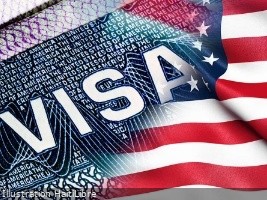
FLASH : Visa refusal in the United States, Haiti the 3rd most affected country
A recent report from the U.S. Department of State has unveiled a concerning trend in visa refusals, with citizens of Cuba, El Salvador, and Haiti facing the highest rejection rates for U.S. visa applications. The data, reflecting the end of fiscal year 2024, shows that more than half of B1/B2 visa applications (for tourism or business) were denied for Cubans, at a staggering 53.35%. El Salvador followed closely with a 52.65% refusal rate, while Haiti recorded a 47.35% rejection rate. This stark contrast highlights the immigration challenges faced by these nations, particularly in comparison to other Latin American countries like Panama, Argentina, and Brazil, where acceptance rates are notably higher. In Haiti’s case, the high refusal rate is attributed to ongoing political and economic instability, which raises concerns among U.S. consular officers about the risk of irregular migration. Conversely, countries with greater economic stability and lower migratory pressure, such as Uruguay, Chile, and Argentina, enjoy significantly lower refusal rates. Experts predict that rejection rates will remain elevated in nations grappling with economic crises and political tensions. They recommend that applicants submit comprehensive documentation, demonstrate strong ties to their home country, and prepare thoroughly for consular interviews to improve their chances of approval. This advice comes amid a broader context of increasingly stringent U.S. immigration policies.
-

News : Zapping…
In a significant development for Haiti’s education sector, the Spanish Embassy has launched a groundbreaking training program at the State University of Haiti (UEH). Utilizing the Moodle platform and generative AI, the initiative aims to equip instructors with the tools to integrate artificial intelligence into virtual classrooms, marking a leap forward in digital education. Meanwhile, in Jacmel, the Montagne Lavoûte sub-police station witnessed a leadership transition as Divisional Inspector Boursiquot Jean Bernard assumed the role of Head, following an assessment by Acting Departmental Director Magalie Belneau. On the economic front, a report by the Economic Commission for Latin America and the Caribbean (ECLAC) revealed that Cuba ranks last in regional labor productivity, citing low growth, social inequality, and skilled migration as key factors. In contrast, countries like Guyana, the Bahamas, and Barbados are thriving. In cultural news, the Haitian community in France continues to grow, with over 4,880 students currently pursuing their education there. Back in Haiti, Port-au-Prince is gearing up for Burger Fest 2025, a culinary extravaganza set to celebrate Haitian creativity and local partnerships from October 17th to 19th. The event will feature Heineken Happy Hour, Bingo Night, and Family Day activities. Lastly, Haitian literature shines as Yanick Lahens advances to the second selection of the 2025 Prix Goncourt with her novel ‘Passagères de nuit,’ competing among eight finalists for the prestigious literary award.
-

Social : 50 Haitian role models and inspirations 2025 (list, video)
On October 8, 2025, the Network of Haitian Women Models and Inspirers (REFEHMI) unveiled plans for its 6th annual tribute ceremony, set to take place on January 9 and 10, 2026, in Port-au-Prince. Titled ‘Fanm se rasin’ (Women are the roots), the event will honor 50 Haitian women who have made significant contributions to society, emphasizing their pivotal role in fostering stability and upholding values. Since its inception in 2020, REFEHMI has recognized over 250 women across diverse fields, including education, governance, culture, health, entrepreneurship, and environmental advocacy. This year’s honorees are being celebrated for their dedication to advancing the Sustainable Development Goals (SDGs), particularly SDG 5, which focuses on gender equality. Eunice Cincir, the founder of REFEHMI, described the theme as a declaration of acknowledgment, stating, ‘Haitian women are the memory, strength, and lifeblood of a resilient nation.’ Rodia Pyram Chavannes, Chair of the 6th edition’s organizing committee, highlighted the initiative’s goal to institutionalize the recognition of female leadership and amplify the voices of women who work tirelessly to propel Haiti forward. Dr. Esther Chrysostome, Head of the Communication and Citizen Engagement Subcommittee, emphasized that REFEHMI’s mission extends beyond celebration, fostering active citizenship and collective commitment to building an inclusive Haiti. The complete list of the 50 honorees is available for download in PDF format.
-
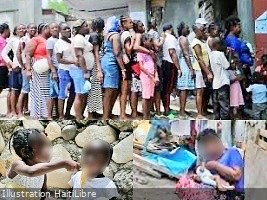
Social : «An alarming reality» hunger continues to gain ground in the country
Haiti is grappling with a deepening hunger crisis, as revealed in a recent report presented on October 10, 2025. The findings, shared during a session organized by the National Coordination for Food Security (CNSA), highlight that over half of Haiti’s 11 million population now suffers from acute food insecurity, with nearly two million in emergency situations. The event was attended by key figures, including Presidential Transition Advisor Louis Gérald Gilles, Axène Joseph from the Prime Minister’s Office, and Vernet Joseph, Minister of Agriculture and Natural Resources, alongside representatives from the FAO and the World Food Programme (WFP).
In Port-au-Prince and beyond, markets are emptying, prices are skyrocketing, and families are forced to cut back on meals. Between August 2024 and July 2025, consumer prices surged by over 30%, with food costs rising by a third year-on-year. Field surveys indicate that households in the capital’s working-class neighborhoods spend up to 65% of their income on food.
The report underscores that four out of ten households face moderate to severe hunger, with nearly half resorting to debt to feed themselves. The most vulnerable are those dependent on small businesses, transportation, or subsistence farming—sectors now crippled by ongoing clashes and roadblocks. Regions such as the Northwest, Artibonite, La Gonâve, and displaced persons camps in Port-au-Prince are classified as experiencing urgent food insecurity. Areas like Cité Soleil, Croix-des-Bouquets, Tabarre, Delmas, and Pétion-ville are also in critical condition.
While no areas are currently classified as facing famine, the report warns that the situation could worsen rapidly if humanitarian aid diminishes. In several departments, at least a quarter of households rely on food assistance to survive. Six million Haitians now live below the poverty line, surviving on less than $2.41 a day. Analysts describe the crisis as a shift from a temporary emergency to a permanent state of hunger.
In response, the Presidential Transitional Council and the Government have launched the Food and Nutrition Security Crisis Redress and Response Plan. This initiative aims to mobilize resources swiftly, ensure transparent financial monitoring, and strengthen sector governance. Councilor Louis Gérald Gilles announced that the CNSA would be transformed into the National Office for Food and Nutrition Security to enhance coordination and crisis response. In his address, Gilles called for collective action, stating, ‘Together, we can save lives, protect livelihoods, and strengthen the country’s food resilience.’
-

FLASH : HOPE/HELP Law between optimism and concern in the Haitian textile sector
The Haitian Hemispheric Opportunity Through Partnership for Encouragement (HOPE) laws and the Haiti Economic Lift Program (HELP) law, which expired at the end of September 2025, have left the Haitian textile sector in a state of uncertainty. These laws, initially approved by the U.S. Congress in 2005 and 2010, allowed Haiti to export clothing to the U.S. market duty-free, accounting for 90% of the country’s exports. The benefits also extended to the Dominican Republic, where textile mills produced fabrics and yarns sent to Haiti for garment production. In 2018, the sector employed 62,000 people, but due to security concerns, this number has plummeted to 26,000, with at least 15 factories closing. Fernando Capellan, president of the Industrial Development Company (CODEVI), remains optimistic about the laws’ renewal within the next 90 days, citing support from the White House and the program’s impact on the U.S. supply chain. However, Haiti’s Minister of Trade and Industry, James Monazard, expressed concern over the alarming situation, warning that without renewal, many companies in the subcontracting sector—a cornerstone of Haiti’s economy—could face closure. Political disagreements in the U.S. Congress have further delayed any decision, with the Trump administration expected to make a final call by December 19, 2025. The future of Haiti’s outsourcing sector hangs in the balance as stakeholders await a resolution.
-

News : Zapping…
In a significant move to streamline the processing of Haitian passport applications, the Chancery has announced a reduction in fees. Effective immediately, the cost for an adult passport has been lowered to US$125 from US$170, while minors will now pay US$100, down from US$160. Additionally, emergency or extreme emergency services have been discontinued to ensure a uniform process for all applicants. The updated fee structure is now available on the Embassy of Haiti in the United States’ website.
In a separate development, eight armored vehicles and over thirty police officers from specialized units of the Haitian National Police (PNH) arrived in Saint-Marc, Artibonite region, on Thursday. This deployment follows a temporary blockade by residents in Pont Sondé. Operations targeting the ‘Gran Grif’ and ‘Korkorat San Ras’ gangs are set to commence once all necessary equipment and personnel are in place.
Meanwhile, Presidential Advisor Emmanuel Vertilaire has confirmed that the term of the Presidential Transitional Council (CPT) will conclude on February 7, 2026, as per the April 3, 2024 agreement. While Vertilaire is prepared to step down, he remains open to continuing his service if a new consensus is reached among stakeholders.
In the realm of education, the Digicel Foundation has initiated its 195th school construction project at Calvaire Sainte Thérèse in Cap Haïtien. Funded with US$600,000, this project also honors the late artist Michael Benjamin, known as Mikaben, who served as an ambassador for Digicel.
Additionally, the Embassy of Haiti in Canada will be closed on October 13, 2025, in observance of Thanksgiving, with operations resuming the following day. Similarly, the Embassy of Haiti in Washington, D.C., will be closed on October 13, 2025, for Columbus Day, with regular activities resuming on October 14, 2025.
In healthcare, the Ministry of Public Health, supported by the United Nations agency for sexual and reproductive health (UNFPA) and the ‘Timama 2’ project, has inaugurated a new operating room at the South Departmental Hospital’s maternity ward. This initiative includes the provision of materials, equipment, supplies, and human resources.
-

FLASH : At least 24 armed attacks in Artibonite in 9 months (investigation report)
A recent investigative report by the National Human Rights Defense Network (RNDDH), released on October 9, 2025, has unveiled a disturbing surge in violence in Haiti’s Artibonite department. Between January and September 2025, at least 24 armed attacks and massacres were carried out by notorious gangs, including ‘Kokorat San Ras,’ ‘Gran Grif,’ and ‘Taliban/Mawozo.’ These brutal incidents occurred across 25 localities and cities within eight municipalities, with Petite-Rivière being the most heavily targeted area, suffering eight attacks. The Artibonite region, once hailed as Haiti’s agricultural heartland, has now become a focal point of escalating insecurity and lawlessness. The report highlights daily occurrences of armed clashes, extrajudicial executions, rapes, arson, looting, and mass displacement of citizens. Hundreds of homes were looted or burned, nearly 100 people were killed, and numerous vehicles, including police armored cars, were destroyed or stolen. Additionally, at least six state institutions, such as police stations and magistrates’ courts, were vandalized or set ablaze. The full 25-page report, available for download, provides a comprehensive account of the crisis.
-
Economy : «Economic conditions in Haiti remain fragile» dixit FMI
A recent virtual mission conducted by the International Monetary Fund (IMF) from September 30 to October 8, 2025, has underscored the fragile economic conditions in Haiti. Led by Mr. Camilo E. Tovar, the mission assessed Haiti’s progress under its Staff-Monitored Program (SMP), an informal agreement designed to monitor economic reforms and pave the way for potential IMF financial assistance. The findings reveal a seventh consecutive year of economic contraction, with inflation soaring at 32 percent year-on-year. Despite these challenges, remittance inflows have surged, bolstering the current account balance and supporting international reserves, which stood at over US$3.1 billion as of July 2025. Fiscal policy remains constrained by security issues and institutional weaknesses, though social spending has increased by 34 percent, aided by IMF support. Public debt is projected to be the lowest in the Latin America and Caribbean region at 12.4 percent of GDP by the end of FY2025. However, risks persist, including gang-related disruptions and potential shifts in international migration and trade policies. On a positive note, the UN Security Council’s authorization of a new multinational Gang Suppression Force could mark a turning point in restoring security and fostering economic growth. The SMP continues to prioritize governance reforms, revenue mobilization, and strengthening the central bank’s policy frameworks. Despite progress, Haiti urgently requires international financial support, preferably in the form of grants, to address its humanitarian and developmental needs and ensure sustainable growth.