标签: Haiti

海地

  • Health : More than twenty ambulances repaired and put back into service

    Health : More than twenty ambulances repaired and put back into service

    Haiti’s healthcare infrastructure has received a significant boost with the successful restoration of more than twenty ambulances previously sidelined by mechanical failures. This comprehensive rehabilitation initiative, spearheaded by the National Ambulance Center (CAN) since early 2025, represents a strategic nationwide effort to strengthen emergency medical response capabilities across all departments.

    Under the coordinated leadership of CAN Director General Renand Aristide and Administrative and Financial Director Leconte Dor, the program has achieved remarkable regional successes. The Great South region has witnessed the reactivation of over ten emergency vehicles through extensive repairs and systematic maintenance performed by CAN’s specialized technical teams.

    The Northern Region has demonstrated particularly impressive outcomes. In the Northwest territory, a dedicated team of four mechanics under Garage Head Carlo Mompoint executed central administration directives to restore eight long-dormant ambulances to operational status. Complementing these efforts, the department received an additional new vehicle to further enhance its emergency fleet capacity.

    Concurrent operations in the North and Fort-Liberté areas addressed three ambulances suffering from critical mechanical failures. These targeted interventions have substantially improved regional emergency response readiness, ensuring communities regain access to rapid and functional medical transportation services.

    The sight of mechanics working tirelessly on vehicle maintenance has transformed into operational ambulances now actively serving populations again. This systematic approach to rebuilding emergency medical infrastructure marks a crucial step in addressing healthcare accessibility challenges throughout Haiti’s diverse regions.

  • Qatar 2026 World Cup Qualifiers : Our U-17 Grenadiers in the final stretch

    Qatar 2026 World Cup Qualifiers : Our U-17 Grenadiers in the final stretch

    Haiti’s Under-17 men’s national soccer team has entered its crucial final preparation phase ahead of the FIFA World Cup qualifiers. Under the guidance of head coach Kovsky Saintvil, the squad has relocated to Ouanaminthe in Haiti’s Northeast Department, where they will train at the facilities of local club Vapor.

    The team commenced initial training sessions in Port-au-Prince earlier this month with an expanded roster of over 35 players. Following rigorous technical assessments, the selection has been refined to a focused group of 20 athletes, including three goalkeepers, who traveled to the training camp on January 24.

    The squad anticipates reinforcement from approximately four overseas-based players in the coming days, while physical trainer Gabriel Garcia Xatrat is scheduled to join the coaching staff to complete the technical team.

    Haiti’s Group C qualifying matches will be held at Guatemala’s Estadio Cementos Progreso between February 3-12, 2026. The competition schedule features encounters against Grenada (February 5, 5:00 AM), Antigua and Barbuda (February 7, 6:00 AM), and host nation Guatemala (February 10, 8:00 AM).

    Following their participation in the recent Qatar 2025 U-17 World Cup, which concluded disappointingly for the Caribbean nation, the Grenadiers aim to secure qualification for the tournament’s next edition. A first-place finish in Group C would guarantee advancement to the final phase of the U-17 World Cup, scheduled for Qatar in October-November 2026.

    The Haitian delegation is set to depart for Guatemala on February 2 to commence their competitive campaign.

  • Economy : Business Associations and Chambers of Commerce gravely concerned

    Economy : Business Associations and Chambers of Commerce gravely concerned

    PORT-AU-PRINCE, Haiti – Major business associations and chambers of commerce have issued a stark warning about Haiti’s escalating political instability, expressing profound concern that current tensions could derail the nation’s fragile transition process.

    In a collectively signed statement released this week, six prominent private sector organizations emphasized that Haiti stands at a critical juncture as it approaches significant institutional deadlines. The business coalition urgently called for restraint and responsible leadership, arguing that the country cannot afford further confrontation or hasty decision-making during this delicate phase.

    The organizations threw their unequivocal support behind Laurent Saint-Cyr, Coordinator of the Presidential Transitional Council, endorsing his January 20th appeal for structured dialogue across all sectors of national life. They stressed that institutional accountability and maintained stability constitute essential prerequisites for safeguarding Haiti’s national interests.

    Acknowledging recent security improvements achieved under Prime Minister Alix Didier Fils-Aimé’s administration, the business leaders noted tangible progress in combating insecurity through coordinated efforts of the Haitian National Police, Armed Forces, and international partners. However, they cautioned that these hard-won gains remain fragile and could be rapidly undone by political instability.

    The statement outlined multiple concerning repercussions of continued political turmoil: compromised coordination of security operations, jeopardized international support, demoralization of security forces engaged in high-risk operations, potential reversal of advances against armed groups, and intensified suffering among the civilian population.

    Emphasizing that the current transitional framework establishes clear deadlines and responsibilities, the signatories called upon all institutional actors to immediately cease any unilateral or destabilizing actions. They urged prioritization of dialogue and consensus-building among Haiti’s vital societal forces, appealing for historically responsible leadership toward the Haitian people.

    The organized private sector reaffirmed its commitment to contributing to lasting stability, preserving institutional continuity, defending the rule of law, and supporting an effective transition leading to credible elections—identified as the only viable path to democratic renewal.

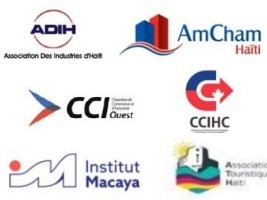
    Signatory organizations included the Association of Industries of Haiti (ADIH), American Chamber of Commerce in Haiti (AmCham), Chamber of Commerce and Industry of the West (CCIO), Haitian-Canadian Chamber of Commerce and Industry (CCIHC), Haitian Tourism Association (ATH), and the Macaya Institute.

  • Security : Overview of the GSF deployment schedule in Haiti

    Security : Overview of the GSF deployment schedule in Haiti

    The multinational Gang Suppression Force (GSF) has unveiled its operational timeline for deployment in Haiti, with initial contingents scheduled to arrive in April 2026 and full operational capacity expected by October 2026. The announcement came from Jack Christofides, the designated Special Representative of the force, who is poised to officially assume his command position in February.

    Christofides confirmed that financial backing for the mission has been secured for an initial twelve-month period, providing crucial stability for the international intervention aimed at combating gang violence and restoring security in the crisis-ridden nation.

    In a significant diplomatic development, Christofides recently convened with Roberto Álvarez, the Dominican Republic’s Foreign Minister, as part of coordinated international efforts to support Haitian stabilization. The meeting underscored the regional commitment to addressing Haiti’s security challenges, with Christofides expressing appreciation for the Dominican Republic’s cooperative stance and announcing plans for an official visit to Santo Domingo upon assuming his duties.

    Parallel diplomatic engagements saw Minister Álvarez meeting with Carlos Ruiz Massieu, the UN Secretary-General’s Special Representative and head of the United Nations Integrated Office in Haiti (BINUH). Their discussions centered on the critical need to extend BINUH’s mandate beyond its January 31, 2026 expiration and strategize more effective responses to Haiti’s deteriorating security situation.

    Álvarez reaffirmed the Dominican Republic’s commitment to supporting the international mission through medical evacuation services for GSF personnel and providing logistical support from Dominican territory, highlighting the cross-border nature of the security crisis and the regional response required to address it.

  • FLASH : Presidential advisors confirm their decision to dismiss the PM

    FLASH : Presidential advisors confirm their decision to dismiss the PM

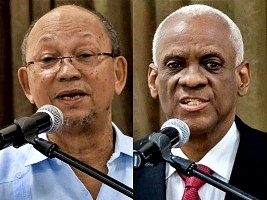
    In a bold move that challenges international influence, Haiti’s Presidential Transitional Council (CPT) has confirmed the dismissal of Prime Minister Alix Didier Fils-Aimé despite mounting global pressure. The decisive action unfolded during a Friday press conference at Villa d’Acceuil, where presidential advisors Leslie Voltaire and Edgard Leblanc Fils announced the majority-backed resolution to remove the sitting PM.

    The council members—comprising Fritz Alphonse Jean, Leslie Voltaire, Louis Gérald Gilles, Edgard Leblanc Fils, and Smith Augustin—cited failed public expectations and inadequate governmental performance as primary reasons for their decision. Voltaire emphasized that despite the CPT’s extensive efforts to support government operations, the population’s needs remained unaddressed.

    Edgard Leblanc Fils declared the international community must respect Haiti’s autonomous decisions, stating they should ‘acknowledge our decisions and support us according to the guidelines we define for the country.’ The council plans to appoint an interim Prime Minister for a 30-day term to ensure political continuity as the CPT approaches its February 7 mandate expiration.

    However, significant institutional obstacles emerge as Laurent Saint-Cyr, the Council’s President pro tempore and official Gazette publisher, vehemently opposes the dismissal. No physical evidence of the signed resolution or publication in Le Moniteur has been provided to media outlets, nor has the identity of the proposed successor been revealed.

    Adding complexity to the political landscape, Haiti’s security forces have reportedly aligned with Prime Minister Fils-Aimé and President Saint-Cyr, marking their most substantial political involvement since 1994. This development creates unprecedented tension between civil governance and military institutions during Haiti’s critical transition period.

  • Security : Graduation ceremony for 877 new police officers

    Security : Graduation ceremony for 877 new police officers

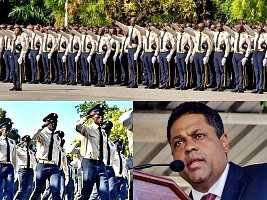
    In a significant stride toward reclaiming national stability, Haiti celebrated the graduation of 877 new police officers on January 23, 2026. The ceremony at the National Police Academy (ENP) marked the completion of training for the 35th promotion of the Haitian National Police (PNH) and the inaugural class of the ambitious P4000 program.

    The event drew high-level attendance from Haiti’s political and security leadership, including Prime Minister Alix Didier Fils-Aimé and Laurent Saint Cyr, President pro tempore and Coordinator of the Transitional Council (CPT). The ‘Aurore’ class graduation symbolized rigor and steadfast commitment to national service, witnessed by presidential advisors, the Justice Minister, military commanders, and international diplomats.

    Prime Minister Fils-Aimé, who also chairs the Superior Council of the National Police, emphasized the strategic importance of Project P4000, which aims to train 4,000 new officers between 2026 and early 2027. He characterized this initiative as a decisive response to the national security emergency, reaffirming the government’s determination to restore state authority and reclaim territories currently controlled by criminal organizations.

    ‘The State is no longer backing down. It is fully assuming its mission,’ declared Fils-Aimé, describing the program as a comprehensive strategy for ‘regaining, stabilizing, and consolidating State authority.’

    The Prime Minister extended gratitude to international partners including the United States, Canada, and the European Union for their sustained support in security restoration, economic revitalization, and election organization.

    Laurent Saint Cyr addressed the security forces, urging unwavering focus on restoring security despite destabilization attempts. ‘I pledge that decisions made at the highest levels of government will always be aligned with the fundamental aspiration of the people: the restoration of security,’ he stated, emphasizing that security remains prerequisite for national stability, credible elections, and normalcy.

    Justice Minister Patrick Pélissier charged the new officers with serving their country honorably, protecting the population diligently, and operating within legal boundaries and respect for fundamental rights.

    U.S. Chargé d’Affaires Henry Wooster affirmed that Haiti’s security remains America’s top priority, noting that ‘Haitians have suffered enough from gang violence.’ He characterized the 40% personnel increase over 16 months as not merely a numerical target but a strategic response to the country’s security realities.

  • Politic : Statement from the OAS General Secretariat on the situation in Haiti

    Politic : Statement from the OAS General Secretariat on the situation in Haiti

    The Organization of American States (OAS) has issued a critical statement addressing Haiti’s ongoing political transition, emphasizing the impending expiration of the current transitional government’s mandate on February 7, 2026. This deadline stems from the April 3, 2024 agreement that established the transitional framework.

    In its comprehensive assessment, the OAS General Secretariat underscored that determinations regarding Haiti’s future governance structures must originate from domestic leadership and key national stakeholders. The international body stressed that any emergent political arrangement should feature clearly defined parameters and temporal limitations to preserve the transitional nature of these mechanisms.

    The OAS outlined essential components for successful transition, prioritizing security restoration and electoral organization through a results-driven methodology. The organization emphasized that operational effectiveness will require robust coordination mechanisms, including constructive collaboration with international partners. Most significantly, the Secretariat highlighted the necessity for national unity, placing Haitian citizens’ welfare at the core of all political deliberations.

    Characterizing Haiti’s current situation as a historical crossroads, the OAS acknowledged the nation’s simultaneous grappling with urgent security concerns while working toward reestablishing democratically elected institutions. The organization noted that maintaining existing stability, preserving institutional continuity, and fostering dialogue remain crucial during this delicate period.

    The General Secretariat concluded with an appeal to all political actors and national leaders to exercise responsibility in service of peace and public interest. Reaffirming Haiti’s priority status within the organization, the OAS reiterated its commitment to supporting stable governance and strengthening democratic institutions in accordance with its established mandates and principles.

  • Education : Launch of the National Conference on the Refounding of the Education System

    Education : Launch of the National Conference on the Refounding of the Education System

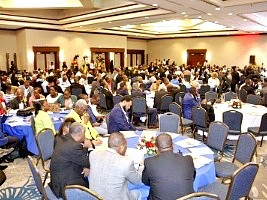
    Haiti has initiated a comprehensive national dialogue to fundamentally restructure its beleaguered education system. The Ministry of National Education officially commenced the National Conference on the Refounding of the Haitian Education System this week in Pétion-ville, framing the three-day event under the ambitious theme “For Transformative Education.”

    The conference, running from January 21-23, 2026, represents a critical response to the systemic challenges plaguing Haiti’s educational infrastructure. The gathering brings together teachers’ unions, parent associations, educational experts, private sector representatives, and diaspora members to diagnose structural deficiencies and develop strategic solutions.

    At the core of the reform effort are four strategic pillars: operationalizing the High National Council for Education, restoring educational governance and school authority, improving learning environments and school infrastructure, and combating academic failure and dropout rates.

    The discussions align with Haiti’s Ten-Year Education and Training Plan 2020-2030, addressing ten critical themes including educational access and equity, teacher development, digital education innovation, infrastructure improvement, school safety, and crisis resilience.

    Prime Minister Alix Didier Fils-Aimé, represented by Ms. Axène Joseph, reaffirmed the government’s commitment to allocating 4% of GDP to education, characterizing the overhaul as an “imperative national necessity” amid the country’s multidimensional crisis. The Prime Minister emphasized that these consultations aim to mobilize national resources toward achieving meaningful social and economic mobility through education reform.

    Education Minister Antoine celebrated the broad participation as evidence of a shared commitment to addressing the challenges jeopardizing the future of Haitian youth. Conference Coordinator Guy Serge Pompilus emphasized that the success of this transformation will depend on the substantive contributions of all participants, with the proceedings expected to produce strategic documents capable of reversing the education system’s decline.

  • Politic : Democrats try to force a vote on extending TPS for Haiti

    Politic : Democrats try to force a vote on extending TPS for Haiti

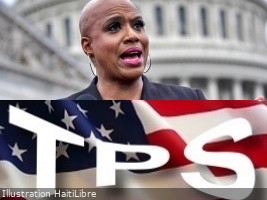
    WASHINGTON — Congressional Democrats initiated a procedural maneuver on Thursday to compel a House vote extending Temporary Protected Status for approximately half a million Haitian immigrants facing imminent deportation threats.

    Led by Representative Ayanna Pressley, co-chair of the Congressional Haiti Caucus, lawmakers filed a discharge petition that would bypass standard committee procedures and force floor consideration of a three-year TPS extension. The controversial parliamentary tactic requires 218 signatures to succeed, representing a majority of the House membership.

    The urgent legislative action comes with Haiti’s TPS designation set to expire on February 3, 2026, potentially exposing between 350,000 and 500,000 Haitian nationals to removal proceedings. Many beneficiaries have established deep roots in American communities and occupy critical positions in healthcare and elder care sectors.

    At a Capitol Hill press conference, Pressley was joined by Representatives Maxwell Frost (FL-10) and Yvette D. Clarke (NY-09), alongside a coalition of immigration advocates and healthcare representatives. They emphasized the devastating human consequences of termination and its potential disruption to already strained medical systems.

    Industry representatives presented compelling data showing immigrant workers constitute approximately 25% of healthcare facility staff and over 30% of home care aides. While TPS holders represent a small demographic segment, they comprise 15% of all non-citizen healthcare professionals. Notably, more than 20% of Haitian immigrants work within healthcare sectors.

    The timing creates a particularly complex policy challenge as demographic projections indicate America’s population aged 65 and over will grow by 50% before 2050, while simultaneously facing an estimated shortage of 3.5 million healthcare professionals by 2030.

    Among organizations endorsing the extension were the American Business Immigration Coalition, National TPS Alliance, SEIU, Black Alliance for Just Immigration, National Domestic Workers Alliance, LeadingAge, Haitian Bridge Alliance, and Goodwin Living.

  • FLASH : Dismissal of the PM raises tensions between the international community and the CPT

    FLASH : Dismissal of the PM raises tensions between the international community and the CPT

    Haiti faces escalating political turmoil as the Presidential Transitional Council (CPT) has defiantly moved to dismiss Prime Minister Alix Didier Fils-Aimé, directly challenging pressure from the United States and other international partners. This controversial decision has triggered a significant diplomatic confrontation just weeks before the Council’s mandate expiration on February 7, 2026.

    The dismissal process encountered internal resistance from Laurent Saint-Cyr, the Council’s President pro tempore and Coordinator, who has blocked the resolution’s implementation. Saint-Cyr formally opposed what he characterized as “any resolution aimed at undermining governmental stability as February 7th approaches” in official correspondence to CPT members.

    The political drama intensified with the fluctuating position of Presidential Advisor Smith Augustin, who initially withdrew his signature from the dismissal resolution on January 21st, only to reverse course the following day and confirm his support for the Prime Minister’s ouster via WhatsApp message.

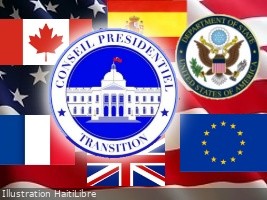
    International reaction has been swift and severe. The U.S. Embassy declared any government composition change by the non-elected CPT “null and void,” warning that supporters of such “disruptive steps” would be considered as “favoring the gangs” and acting against Haitian and international interests.

    The U.S. State Department’s Western Hemisphere Office delivered particularly harsh criticism, asserting that Haiti’s chronic instability stems from “corrupt Haitian politicians who use gangs and other armed groups to create chaos.” The statement explicitly labeled CPT members following this path as “criminals like the gangs they conspire with” rather than Haitian patriots.

    Canada expressed deep concern that replacing the Prime Minister would “weaken the stability and security of the country,” while the European Union, Germany, Spain, and France jointly warned that any leadership change would “jeopardize the encouraging momentum of the security forces against criminal gangs.”

    The United Kingdom similarly characterized the proposed government changes as “inopportune and destabilizing,” emphasizing that such moves would undermine security efforts precisely as the CPT’s mandate approaches expiration.

    This developing crisis represents a critical test for Haiti’s transitional governance amid ongoing security challenges and gang violence, with the international community presenting a united front against the CPT’s actions.