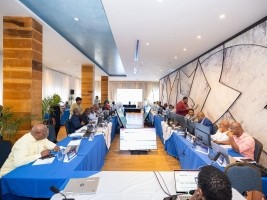
Haiti’s educational landscape is undergoing a significant transformation as the newly created National Agency for Higher Education and Scientific Research (ANESRS) assumes comprehensive control over the nation’s tertiary education system. The Ministry of National Education and Vocational Training has officially announced that all matters pertaining to higher education and scientific research now fall under ANESRS’s jurisdiction.
Established through a presidential decree in December 2025 and formally inaugurated on January 14, 2026, by the Presidential Transitional Council, ANESRS represents a monumental shift in Haiti’s educational governance. The agency will be responsible for standardizing academic programs, establishing faculty competency benchmarks, allocating research funding, and validating degrees and curricula across all public and private higher education institutions.
According to Delima Pierre, Director General of the National Office for Partnership in Education, the agency’s primary mission is to regulate, harmonize, and elevate the quality of higher education and research throughout Haiti. This initiative aims to modernize academic governance and stimulate scientific innovation within the country’s educational framework.
The Ministry of National Education will continue processing existing cases until February 27, 2026, after which all administrative, academic, and informational inquiries must be directed to ANESRS’s General Secretariat at their temporary headquarters in Delmas 83 or via email at desrs@menfp.gouv.ht.
However, this restructuring has faced opposition from the Council of the State University of Haiti (CUEH), which has publicly denounced and contested the new entity. The seven-member ANESRS council includes representatives appointed by the executive branch, university leadership, educational ministry, scientific associations, and employer organizations, with Dr. Hérold Toussaint serving as president.