标签: Guyana

圭亚那

  • GCAA probing aircraft accident at Port Kaituma airstrip

    GCAA probing aircraft accident at Port Kaituma airstrip

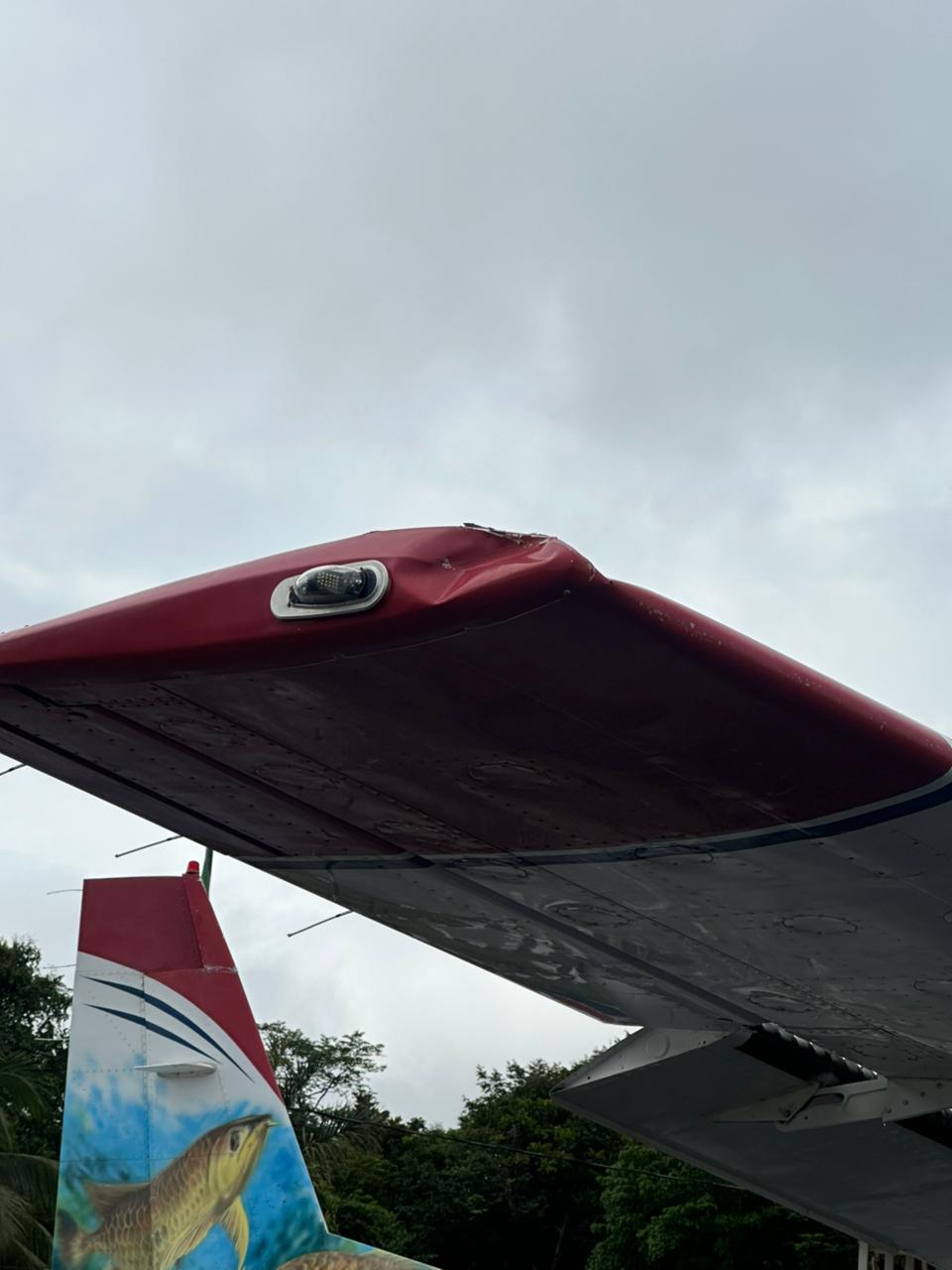
    Aviation authorities in Guyana have initiated a formal investigation following a ground collision incident involving two aircraft belonging to Trans Guyana Airways at Port Kaituma Airstrip. The incident occurred when a departing aircraft’s wing made contact with another plane parked on the tarmac, resulting in visible damage to at least one wing.

    Retired Lt. Col. Egbert Field, Director-General of the Guyana Civil Aviation Authority (GCAA), confirmed the regulatory body’s active investigation into the matter. Preliminary assessments suggest that operational consequences may follow for one or both pilots involved, pending the investigation’s findings.

    Aviation industry sources revealed to Demerara Waves Online News that the underlying issue extends beyond pilot operation to fundamental infrastructure limitations. The Port Kaituma Airstrip’s restricted parking capacity presents significant challenges when accommodating multiple aircraft simultaneously, creating potentially hazardous conditions.

    Industry insiders have identified the airstrip’s constrained dimensions as a critical safety concern, particularly when three aircraft attempt to utilize the facility concurrently. This incident has prompted renewed calls for infrastructure expansion at the regional aerodrome to address capacity constraints and enhance operational safety measures.

    The investigation will likely examine multiple factors including pilot procedures, ground operations protocols, and the adequacy of current infrastructure to handle domestic flight operations safely. The GCAA’s findings are expected to influence both immediate operational adjustments and long-term infrastructure planning for regional airstrips across Guyana.
  • PAS Cargo launches new logistics, off-site commercial GRA customs facilities

    PAS Cargo launches new logistics, off-site commercial GRA customs facilities

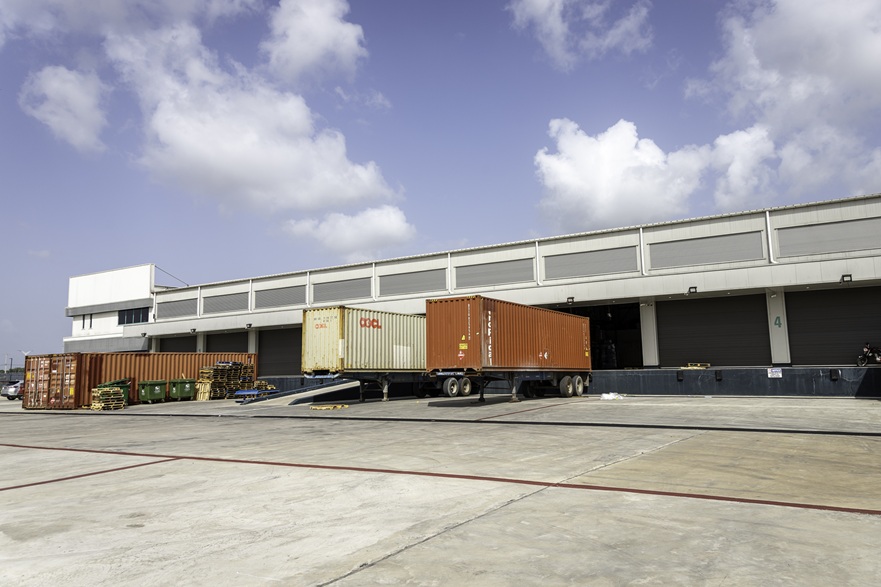
    In a significant development for Guyana’s trade infrastructure, Florida-based PAS Cargo USA has inaugurated groundbreaking logistics and customs facilities at its East Bank Demerara location, promising to transform the nation’s cargo clearance processes. Sector leaders unanimously hailed the March 25, 2026 opening as a solution to longstanding congestion issues that have plagued Guyana’s supply chain operations.

    Colin Moore, President of the Guyana Customs House Brokers and Clerks Association, characterized the new facility as addressing “one of the biggest nightmares” in cargo clearance. “Especially in Guyana, we have a system here where there is a lot of congestion and this because we’re a small country, we are now developing,” Moore stated during the official launch at Georgetown Marriott Hotel. He emphasized that brokers typically achieve satisfaction when processing cargo within 30 minutes—a benchmark PAS Cargo has consistently met.

    The facility represents Guyana’s first approved offsite commercial customs facility by the Guyana Revenue Authority (GRA), featuring state-of-the-art racking systems that enable rapid cargo location and retrieval, contrasting sharply with previous one-week waiting periods. Moore particularly praised the adequate accommodations provided for customs officers, addressing a critical operational concern.

    Komal Singh, Chairman of the Shipping Association of Guyana (SAG), highlighted the facility’s role in addressing storage space shortages on wharves while preparing the nation for future manufacturing expansion. “We cannot wait until the time when we have excess and massive amounts of exports in place and start working then to increase our efficiency,” Singh cautioned, emphasizing the need for proactive infrastructure development to meet international standards.

    Shridat Naraine, Vice President of PAS Cargo USA, described the “first-of-a-kind” secure off-port bond facility as offering spacious vehicle maneuverability and comprehensive parking solutions. The facility addresses environmental concerns and operational inefficiencies previously experienced at Demerara River port locations, positioning the company to serve industrial, commercial, and oil gas sectors with enhanced capability. “This is a statement that Guyana deserves world-class infrastructure; a statement that local talent, innovation and vision can compete at the highest level,” Naraine asserted.

    The technological integration allows customers to seamlessly navigate documentation, customs clearance, and cargo collection within a single location, significantly streamlining supply chain operations.

    Thandi McAllister, Parliamentary Secretary in the Ministry of Public Utilities and Aviation and Guyana’s representative to the International Maritime Organisation, framed the development within broader international trade conventions. She noted that states are bound by international agreements to simplify administrative formalities in international trade, describing the facility as exemplifying “powerful synergies” between public policy and private sector innovation. McAllister hailed the project as a “landmark achievement” in national trade development that would generate increased job opportunities while addressing inconsistent and excessive port clearance processes that have historically frustrated users and hindered efficiency.

  • Guyana contributing rice to Cuba’s relief effort

    Guyana contributing rice to Cuba’s relief effort

    In a significant demonstration of regional solidarity, Guyana has pledged a substantial rice consignment to Cuba as part of a Caribbean Community (CARICOM) humanitarian assistance program. President Irfaan Ali confirmed the initiative on Wednesday, March 25, 2026, emphasizing his nation’s ongoing commitment to regional cooperation and crisis response.

    President Ali explicitly stated to Demerara Waves Online News that “We’re part of this effort, we have always been, and we’re committed to have rice supplied,” underscoring Guyana’s consistent role in supporting neighboring Caribbean nations during times of need. While specific quantitative details regarding the shipment volume were not immediately disclosed, the characterization of the consignment as “huge” indicates a substantial contribution that will likely address significant food security needs in Cuba.

    This humanitarian gesture occurs within the broader framework of CARICOM’s collective relief mechanisms, which mobilize resources from member states to address emergencies and shortages throughout the Caribbean region. Guyana’s agricultural capacity, particularly in rice production, positions it as a key contributor to such regional food security initiatives. The announcement reflects ongoing diplomatic efforts to strengthen inter-Caribbean relations and mutual support systems, particularly important given the complex economic challenges facing several nations in the region.

    The timing of this commitment suggests continued cooperation despite evolving global economic pressures and shifting international alliances. Such bilateral assistance within the CARICOM framework reinforces the organization’s founding principles of economic integration and functional cooperation among member states, demonstrating practical application of these principles through tangible humanitarian assistance.

  • CCJ says process contract must be “recognised” in Guyana’s procurement process

    CCJ says process contract must be “recognised” in Guyana’s procurement process

    In a landmark judicial decision with far-reaching implications for commercial law, the Caribbean Court of Justice (CCJ) has formally recognized the doctrine of process contracts within Guyana’s legal framework. The ruling emerged from the protracted case of Cara Investments Limited versus Christopher Ram, Receiver of Hotel Towers Limited (HTL), which originated from a 1999 receivership sale.

    The regional court, serving as Guyana’s final appellate authority, determined that process contracts may arise in both public and private tender processes when the intention of parties—objectively derived from tender documents and surrounding circumstances—supports such a conclusion. Justice Maureen Rajnauth-Lee, delivering the lead judgment, emphasized that this legal doctrine enhances competitive bidding integrity by imposing binding obligations of fairness, good faith, transparency, and accountability throughout tender proceedings.

    The case centered on whether Cara Investments’ response to a 1999 Request for Proposal (RFP) constituted a binding process contract (termed ‘Contract A’). The court meticulously examined the submission, which was explicitly framed as a conditional Expression of Interest subject to due diligence completion and additional information provision. Justice Rajnauth-Lee concluded that the proposal lacked necessary elements for contract formation, functioning instead as a preliminary inquiry rather than a compliant bid.

    Critical to the determination was the court’s finding that Cara’s conditions—including altered timelines and pending financial backer approval—demonstrated absence of intent to form immediate contractual relations. The CCJ further noted that Cara’s premature initiation of legal proceedings potentially disrupted the tender process, undermining its own claims.

    The unanimous judgment upheld prior decisions from Guyana’s High Court and Court of Appeal, dismissing Cara’s allegations of contractual breach, unfair treatment, and misrepresentation. The court affirmed that without the foundational ‘Contract A,’ no claims for damages or lost opportunities could be sustained.

    Legal representatives for the Receiver expressed satisfaction with the clarification provided by the CCJ, acknowledging the guidance established for future jurisprudence. The ruling establishes significant precedent for tender processes across the Caribbean community, balancing bidder protections with procedural realities in commercial transactions.

  • Guyanese ethnomusicologist contributes to prestigious Palgrave Encyclopedia

    Guyanese ethnomusicologist contributes to prestigious Palgrave Encyclopedia

    Guyanese ethnomusicologist Rohan Sagar has achieved academic recognition through his groundbreaking contribution to the prestigious Palgrave Encyclopedia of Cultural Heritage and Conflict. His chapter, titled “Caribbean Sonic Humanities: Digital Archives, Music Pedagogy, and Computational Preservation,” presents an innovative framework for safeguarding the Caribbean’s diverse musical traditions and cultural expressions against modern threats.

    Sagar’s work integrates digital humanities, computational ethnomusicology, and SEED-SCALE methodology to create sustainable cultural preservation models. Rather than advocating for artificial intelligence, his approach emphasizes data science techniques that enable researchers to identify patterns, relationships, and gaps in cultural materials that were previously undetectable through traditional methods.

    The ethnomusicologist explained that his methodology allows for the identification of key characters, their frequency of appearance in texts, and their contextual relationships to thematic elements. This computational approach provides educators and students with tools to analyze cultural materials through coding, mathematical functions, and logical systems that produce reproducible results.

    Sagar described the publication process as rigorous, involving multiple iterations and expert validation from data science specialists to ensure methodological authenticity. Despite the significance of this academic achievement, Sagar expressed mixed emotions, noting that the publication represents years of intensive work that often felt overwhelming.

    The researcher expressed hope that regional educational bodies, particularly the Caribbean Examinations Council (CXC), would recognize the potential of his digital preservation model to address concerning trends in Caribbean education. While hesitant to approach Guyanese policymakers due to previous rejections of innovative ideas, Sagar hopes his work might spark Caribbean-wide conversations about integrating digital tools in cultural education and preservation.

  • Antigua PM says election will be held in 90 days

    Antigua PM says election will be held in 90 days

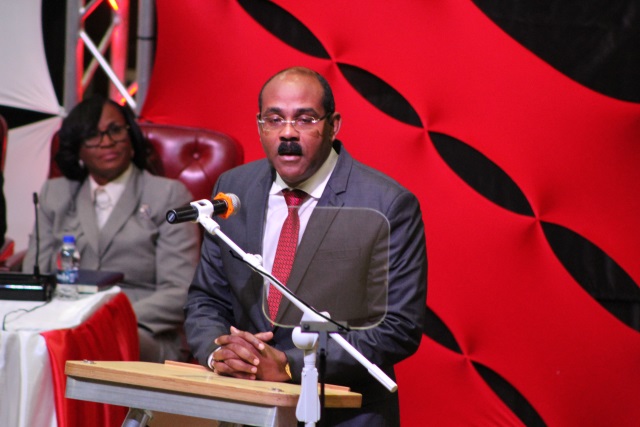
    ST. JOHN’S, Antigua – Prime Minister Gaston Browne has officially declared that general elections in Antigua and Barbuda will be conducted within the next 90 days, signaling a strategic move to capitalize on his party’s recent political momentum. The announcement came during Browne’s weekly radio address on Saturday, where he directed ruling Antigua and Barbuda Labour Party (ABLP) candidates to initiate immediate door-to-door campaigns to ensure voter re-registration.

    Browne, who made history as the first prime minister to secure three consecutive terms, emphatically urged citizens to ‘do the responsible thing’ by updating their registration promptly. ‘I would say within 90 days and the earlier you go to get your card, the better,’ he stated, framing the election timeline as both urgent and inevitable.

    This calculated decision follows a decisive by-election victory last Monday in St. Philip North, where ABLP candidate Randy Baltimore secured a landslide win with 924 votes (69.5%) against main opposition United Progressive Party (UPP) candidate Alex Browne’s 406 votes (30.5%). The seat had been held for five decades by Sir Robin Yearwood before his retirement.

    Regional political analyst Peter Wickham of Barbados had previously advised Browne to call early elections, noting the ABLP’s strengthened position following the by-election. Wickham highlighted concerning trends within the opposition UPP, including leadership challenges under Jamale Pringle, loss of key constituencies, and defection of candidates. He suggested the UPP requires urgent leadership reconsideration through a special conference.

    The current parliamentary composition shows ABLP holding nine of 17 seats, with UPP controlling six, the Barbuda People’s Movement holding one, and one independent seat. Recent political shifts include UPP’s gain following the murder of opposition legislator Asot Michael, countered by UPP legislator Anthony Smith’s defection to ABLP where he now serves as Agriculture Minister.

    The upcoming election will test whether Browne’s early call can convert recent by-election success into a renewed governing mandate, while opposition forces grapple with internal restructuring challenges.

  • Man arrested for attempting to smuggle drugs to North West District- CANU

    Man arrested for attempting to smuggle drugs to North West District- CANU

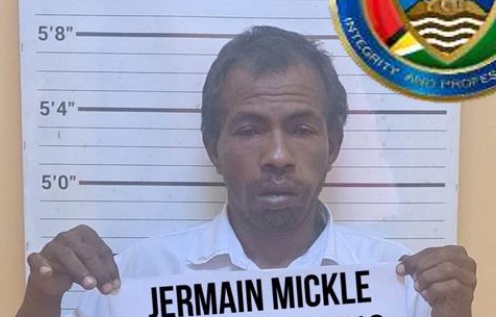
    In a significant narcotics interception, Guyana’s Customs Anti-Narcotics Unit (CANU) has apprehended a 46-year-old man allegedly attempting to transport substantial quantities of marijuana and cocaine to the North West District. The operation unfolded on Friday at the Transport and Harbours Department Goods Wharf in Kingston, Georgetown.

    According to CANU officials, Jermaine Mickle of Mon Repos, East Coast Demerara was intercepted while in possession of two cardboard boxes containing illicit substances. The seizure included 12.1 kilograms of marijuana packaged in 13 separate parcels alongside 1.2 kilograms of rock cocaine.

    James Singh, Head of CANU, revealed that the narcotics were destined for distribution and sale within remote communities of the North West District. The interception prevented these drugs from reaching vulnerable populations in the region.

    The operation demonstrates CANU’s ongoing efforts to combat drug trafficking through Guyana’s transportation networks. The suspect remains in custody as investigations continue into potential distribution networks and accomplices involved in the attempted smuggling operation.

    This seizure represents one of the more significant narcotics interceptions at Guyana’s maritime transport facilities in recent months, highlighting continued challenges in controlling drug trafficking through the country’s transportation infrastructure.

  • APNU calls for “warranty” of new roads, govt says there is “design life”

    APNU calls for “warranty” of new roads, govt says there is “design life”

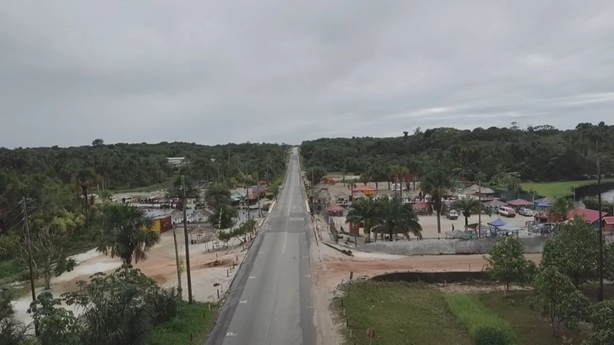
    A significant political dispute has emerged in Guyana regarding the quality and longevity of major road infrastructure projects, pitting the opposition against the governing administration. The controversy centers on the ongoing US$161 million reconstruction of the crucial Soesdyke-Linden Highway, a vital transportation artery connecting key regions of the country.

    The opposition People’s National Congress Reform (PNCR)-led A Partnership for National Unity (APNU) has raised serious concerns about construction standards and demanded transparency regarding warranty provisions. PNCR Leader Aubrey Norton openly criticized the methodology being employed, stating, ‘When you’re going up, you see the scraping off the top, not doing a proper foundation, and then they put the bitumen over it. When there were problems at the foundation, you don’t have to be an engineer to know that they are doing nonsense.’

    APNU parliamentarian Saiku Andrews highlighted historical context, noting that the original Soesdyke-Linden Highway completed in 1968 under a previous PNC-led government came with a 20-year warranty. He emphasized that ‘efficient infrastructure development must mean the delivery of quality work and not work that must be redone shortly after completion,’ advocating for lifetime warranties to be incorporated into all road construction contracts.

    In response, Public Works Minister Juan Edghill provided technical clarification, explaining that current road construction contracts operate differently. Rather than traditional warranties, infrastructure projects include a one-year defects liability period following completion. Additionally, engineers prepare design life reports estimating roadway longevity based on projected traffic patterns and vehicle weights.

    Technical sources revealed that the Soesdyke-Linden Highway has been designed for a 30-year lifespan, though this projection could diminish with increased heavy-duty vehicle traffic beyond initial forecasts. Engineering experts noted that achieving the designed lifespan requires maintaining vehicular loads within specified parameters over time.

    The minister also addressed concerns about lane configurations, explaining that traffic studies justified maintaining the highway as a two-lane roadway rather than expanding to four lanes. ‘The highway doesn’t have in the short-term or medium term that amount of traffic that require four lanes there,’ Edghill stated, noting that strategic sections have been widened to accommodate emergency parking.

    The debate extends beyond this specific project to encompass the recently constructed Heroes Highway, which has shown significant deterioration in less than five years, prompting government plans to apply bitumen capping to address structural issues.

  • 100 kilometres of Linden- Mabura road completed, says Brazilian construction company

    100 kilometres of Linden- Mabura road completed, says Brazilian construction company

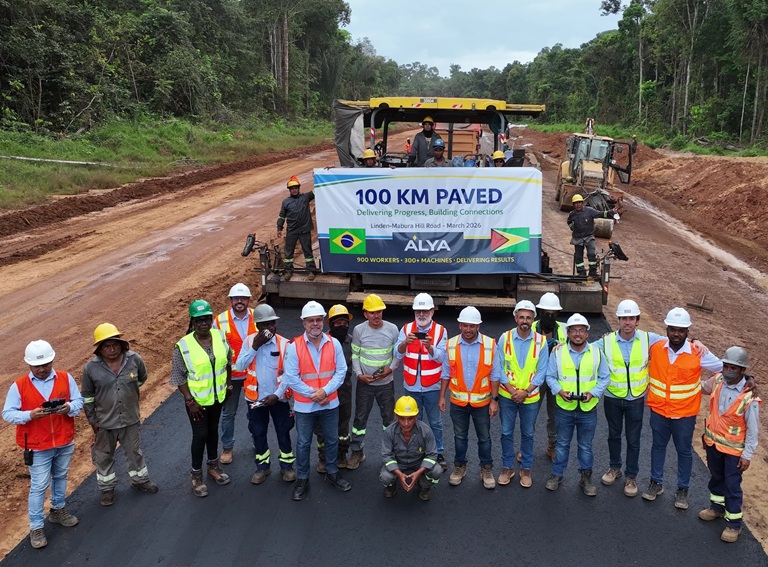
    Guyana’s transformative infrastructure project, the US$190 million Linden-to-Mabura Hill Road development, has achieved a significant construction breakthrough with approximately 100 kilometers of roadway successfully converted from historically challenging terrain into a modern asphalt highway. Brazilian construction firm Álya Construtora announced this milestone on Friday, March 20, 2026, marking substantial progress in the nation’s coastal-hinterland connectivity enhancement initiative.

    The project represents a dramatic upgrade from what was previously described as a ‘mud and slush’ trail that posed significant transportation challenges, particularly during rainy seasons. President Irfaan Ali acknowledged the achievement through social media, emphasizing its importance for Guyana’s infrastructure development trajectory.

    Engineering teams have implemented comprehensive terrain stabilization techniques, including advanced soil reinforcement using quicklime and cement applications to create durable sub-base layers capable of withstanding high-moisture conditions. The construction effort has mobilized an impressive arsenal of over 300 heavy equipment units and approximately 900 personnel working in challenging environmental conditions.

    According to Daniel Amaral, Contractor’s Representative for Álya Construtora, the transformation signifies more than mere pavement installation: ‘What used to be a grueling journey through mud is now a functional transport corridor aligned with Guyana’s ongoing infrastructure development.’ The company reported current road-specific works at approximately 83% completion despite earlier delays that pushed the projected finish date to September 2026.

    Financial backing for the 121-kilometer roadway comes from multiple international sources, including a US$112 million loan from the Caribbean Development Bank, a US$66 million grant from the United Kingdom, and US$12 million from the Guyanese government. The enhanced corridor is anticipated to significantly boost economic activity between coastal regions and the hinterland while improving transit efficiency toward the Brazilian border.

    Álya Construtora, specializing in complex environment infrastructure projects, indicates that subsequent phases will continue extending the corridor southward while maintaining established technical standards and construction methodologies.

  • Irish court rejects appeal by Guyanese repeat sex offender who raped teen

    Irish court rejects appeal by Guyanese repeat sex offender who raped teen

    Ireland’s Court of Appeal has decisively rejected what it termed an ‘extraordinary’ legal challenge from Randy Gladstone, a 42-year-old Guyanese national convicted of sexually assaulting an 18-year-old woman just two weeks after arriving in the country. The court upheld Gladstone’s conviction and 10-year prison sentence, dismissing his claims of an unfair trial.

    Presiding Judge Brian O’Moore delivered the ruling on Thursday, addressing multiple grounds of appeal from the convicted sex offender. The most notable argument centered on Gladstone’s legal team voluntarily withdrawing evidence claiming he was of ‘good character’—specifically testimony from his mother describing him as ‘too friendly and kind.’ Judge O’Moore characterized this as a ‘tactical move’ to prevent the jury from learning about Gladstone’s previous convictions for rape, kidnapping, and false imprisonment in other jurisdictions.

    The original trial, held in January last year, heard how Gladstone had lured his victim into his room at a Co Dublin holiday complex on August 25, 2023, where he falsely imprisoned and raped her. The court was told the terrified young woman did not fight back due to fear, and that Gladstone callously told her to ‘come back later for more’ after the assault.

    Evidence revealed Gladstone had arrived in Ireland from Suriname via the Netherlands on August 11, 2023. In addition to his rape conviction, he received an additional six-month sentence last June for failing to notify Irish authorities of his sex offender status within seven days of arrival, as required by law. The court also noted Gladstone had previously been deported and barred from entering the United Kingdom.

    The appellate judges systematically addressed each argument, including claims about jury instructions regarding false imprisonment and the timing of WhatsApp messages exchanged between Gladstone and the victim. The court found no merit in any of the appeal grounds, emphasizing that the trial had been conducted properly and the jury had reached a justified verdict based on overwhelming evidence.