标签: Guyana

圭亚那

  • Private university faces closure if Critchlow Labour College Inc wins possession court battle

    Private university faces closure if Critchlow Labour College Inc wins possession court battle

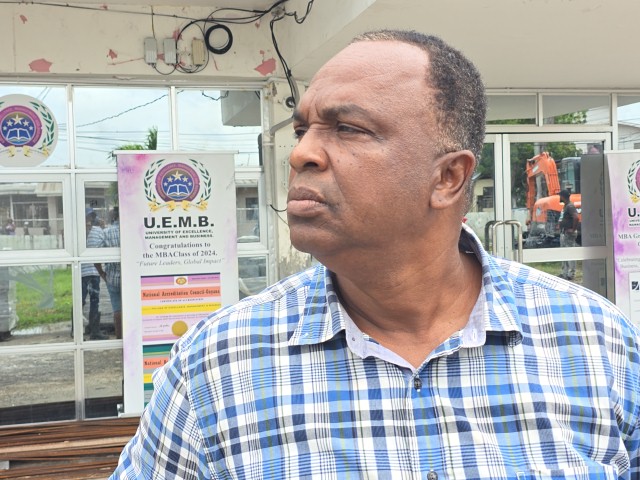
    A looming legal battle over property rights has pushed a private Guyanese higher education institution to the brink of permanent closure, with its top leader warning that an unfavorable court ruling would immediately end all operations. As of Monday, April 6, 2026, Stanley Paul, President of the University of Excellence, Management and Business Inc. (UEMBI), confirmed the private university is set to wind down operations by December 2026 if the High Court rules against it in the ongoing possession dispute over the Critchlow Labour College (CLC) building in Georgetown.

    The core of the legal conflict centers on the validity of a 15-year commercial lease agreement UEMBI signed with former CLC principal Ivor English in June 2025. The lease, which grants UEMBI access to the Woolford Avenue property originally leased to CLC by the Mayor and City Council of Georgetown in 1968, was struck at a time when Critchlow Labour College Inc. (CLCI), the legal entity behind the college, had been struck off Guyana’s Companies Register. CLCI was removed from the register in November 2013 and only restored in November 2025, months after the lease was signed. CLCI argues that English never held authorization as a director or officer of the institution to sign the lease, making the entire agreement a legal nullity.

    In its court filings, CLCI is seeking multiple court orders: an injunction barring UEMBI from any construction activity on the property, a formal ruling that UEMBI’s continued occupancy constitutes trespassing, and compensatory damages totaling GY$3,106,000 per month dating back to September 2025 for unlawful possession. CLCI also adds that UEMBI’s ongoing construction work violates Georgetown’s municipal building bylaws, as no legally approved construction plan was ever secured. Paul, however, has staunchly defended the lease’s validity, noting he had no prior notice of CLCI’s struck-off status or English’s alleged lack of authority, and that English openly represented himself as an authorized agent for the institution during negotiations. Per the terms of the agreement, Paul says UEMBI paid GY$4 million in advance rent, with monthly rent set at GY$1 million starting September 1, 2025, and the agreement includes an automatic renewal clause after the initial 15-year term.

    Complicating UEMBI’s position ahead of the scheduled April 7, 2026 hearing, the institution has now lost its fourth consecutive legal representative, after attorney Joelle Harmon-Alstrom withdrew her representation effective April 1, 2026. Paul told reporters the split stemmed from disagreements over case strategy: Paul pushed to highlight new, critical points raised in CLCI’s latest court submissions, while Harmon-Alstrom opted not to proceed with that framing. To date, Paul says UEMBI has spent GY$2.5 million on legal representation across four different lawyers, and he remains dissatisfied with all of the work the firm has provided.

    Paul confirmed that following Harmon-Alstrom’s withdrawal, he notified enrolled students of the planned December 2026 closure, but added that the shutdown is contingent on two key outcomes. First, the closure will only move forward if the High Court rules to eject UEMBI from the property. UEMBI’s accreditation is explicitly tied to its current location, meaning the university cannot relocate or continue operations elsewhere if it loses the building. Second, Paul says the university remains open to a transfer arrangement if a qualified, credible buyer steps forward before the end of 2026 to take over operations, a provision included to protect student interests and maintain continuity of education. The National Accreditation Council of Guyana has responded to Paul’s closure notice, calling for him to issue a more clear, definitive plan rather than attaching caveats to the proposed shutdown.

    Ahead of Tuesday’s hearing, Paul says he intends to request additional time from Justice Fidela Corbin-Lincoln to secure new legal representation, as well as permission to file a newly drafted reply affidavit. The final outcome of the ruling will determine the future of the private university and its student body, with one of Guyana’s newer private higher education institutions facing complete dissolution over the disputed property agreement.
  • Guyana secures 3rd place in EU-backed Caribbean maritime security competition

    Guyana secures 3rd place in EU-backed Caribbean maritime security competition

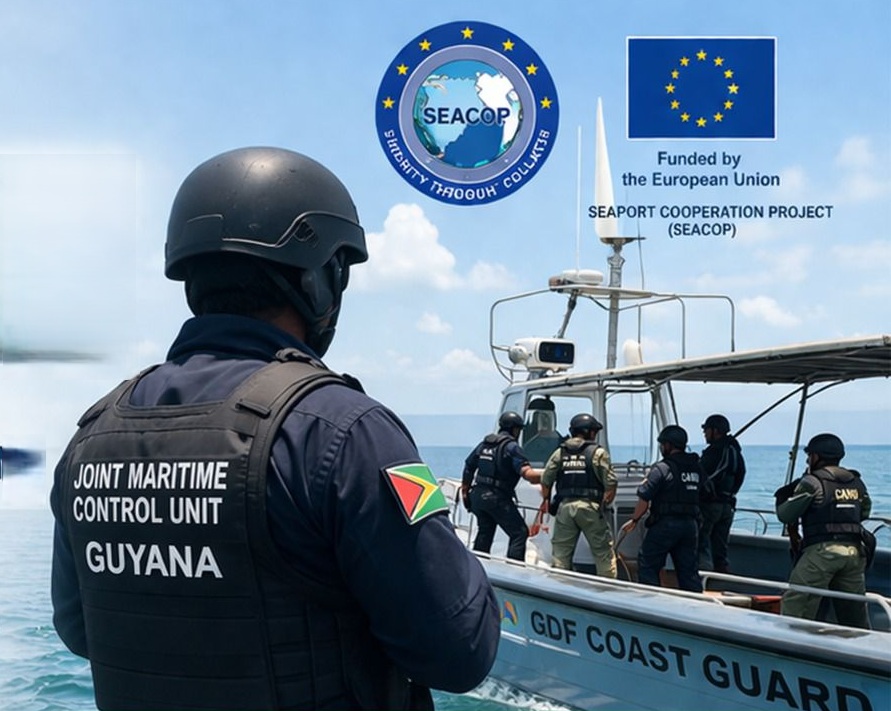
    On Monday, Guyana’s Customs Anti-Narcotics Unit (CANU) announced that the country has earned third place in the 2026 Joint Maritime Control Unit (JMCU) Caribbean Competition, held under the European Union-funded Seaport Cooperation Project (SEACOP), a regional initiative focused on countering maritime illicit trafficking.

    The annual competition is designed to benchmark and elevate the capabilities of Caribbean law enforcement teams to carry out high-risk vessel inspections for contraband, most notably illegal narcotics, while adhering to global safety and procedural standards. It brings together maritime enforcement agencies from across the Caribbean region to test practical skills, share best practices, and strengthen cross-border cooperation against transnational organized crime.

    Guyana’s delegation was made up of personnel from three leading national security agencies: CANU, the Guyana Police Force (GPF), and the Guyana Defence Force (GDF) Coast Guard. The team scored 72 out of a total 80 possible points, equal to a 90% overall rating. This result tied Guyana with Saint Kitts and Nevis for third place, trailing only regional leaders Barbados and Trinidad and Tobago, which scored 75 points (94%) to claim the top two positions.

    Assessments for the competition were conducted against a strict 80-point evaluation framework that graded teams across multiple core competency areas. Judges evaluated operational safety protocols, tactical search methodologies, internal communication, inter-agency teamwork, decision-making during high-pressure scenarios, adherence to legal and procedural rules, professional conduct, and command effectiveness.

    In its official statement, CANU emphasized that Guyana’s strong performance reflects the nation’s growing and robust maritime interdiction capacity, built through sustained investments in targeted training, improved inter-agency coordination, and intelligence-led enforcement operations. The result also cements Guyana’s commitment to collaborative regional security, as participating nations work collectively to shut down illicit trafficking routes that span Caribbean waters.

    Alongside Guyana, Barbados, Trinidad and Tobago, and Saint Kitts and Nevis, the competition drew participants from a range of Caribbean nations including Suriname, Jamaica, and Antigua and Barbuda, demonstrating the widespread buy-in for coordinated regional security action across the bloc.

    CANU noted that the SEACOP JMCU Competition serves as a critical developmental platform for Caribbean maritime law enforcement, helping agencies align operational standards, improve interoperability during joint operations, and adopt proven best practices from peer nations. For Guyana, the third-place finish confirms the country’s position among the top tier of regional maritime interdiction units, with clear room to advance to the top of the rankings through continued refining of operational protocols and training.

  • Shipping assn chief rubbishes Suriname’s proposed exemption system for vessels plying Corentyne River

    Shipping assn chief rubbishes Suriname’s proposed exemption system for vessels plying Corentyne River

    A cross-border trade dispute over new steep shipping levies on the shared Corentyne River has intensified in early 2026, with the top shipping industry leader in Guyana rejecting Suriname’s proposal for selective cargo vessel exemptions and pushing for full diplomatic negotiations to scrap the fees entirely.

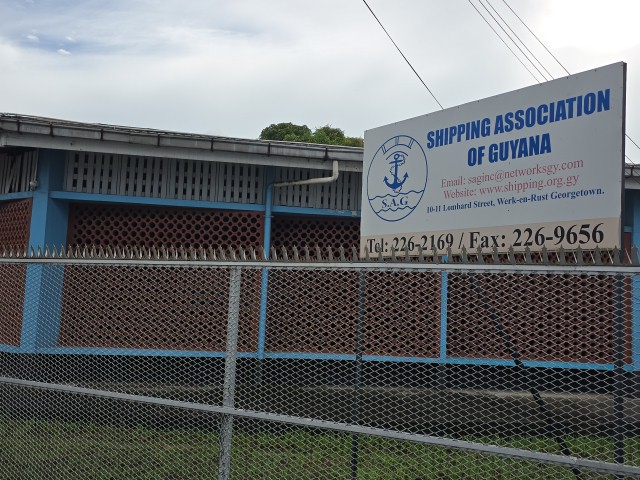
    Komal Singh, Chairman of the Shipping Association of Guyana (SAG), has publicly pushed back against Suriname’s suggestion that the Guyanese government submit a formal diplomatic request to exempt additional Guyanese cargo vessels from the recently implemented charges. Speaking to Demerara Waves Online News, Singh explained that a piecemeal exemption framework would create an unfair, uneven playing field by allowing selective benefit allocations.

    “The Corentyne River sees constant, mixed movement of goods and people: Guyanese carriers ship construction materials, timber and tourism traffic to domestic destinations along the waterway, while Suriname moves its own supplies west into Guyana. We cannot draw arbitrary lines to prioritize some shippers over others. That is no way to maintain a fair cross-border trade ecosystem,” Singh said.

    Suriname’s current Jennifer Geerlings-Simons administration has already noted that vessels operating on behalf of the Guyana Sugar Corporation have held a long-standing exemption from the river tariffs, and has encouraged Guyana to pursue additional exemptions through official diplomatic channels. To date, Guyana’s Ministry of Foreign Affairs has declined to comment publicly on the ongoing negotiations.

    Singh, however, argues that no Guyanese vessels moving cargo originating from Guyanese operations along the upper Corentyne should be charged at all. He joined a growing chorus of Guyanese private sector groups calling for high-level diplomatic talks to resolve the dispute entirely, and has called on Suriname to implement an immediate moratorium on the new levies to restore free cross-border trade.

    “This waterway has always operated as an open shared resource, with no tariffs impeding movement. This is not a one-sided arrangement: both nations’ economies and communities benefit from the commercial activity that takes place here every day,” Singh added. In a separate formal statement, SAG reaffirmed its commitment to supporting multi-stakeholder dialogue and collaboration to ensure the Corentyne River remains an equitable shared asset that delivers mutual economic benefits for both countries.

    The new levies carry steep costs for Guyanese shippers, according to details released by the Upper Corentyne Chamber of Commerce and Industry (UCCI). Shippers are currently charged a $2,500 pilot license fee per trip, plus broker fees ranging from $1,000 to $1,500 per voyage. Multiple industry sources have confirmed additional tonnage-based fees for quarried products, running between $1.00 and $1.50 per tonne for vessels carrying 1,000 tonnes or more of aggregate.

    UCCI President Krishnand Jaichand noted that Guyanese vessels have historically paid a small licensing fee to traverse the Corentyne, a timeline that is corroborated by Surinamese legal expert and former ambassador Aashna Kanhai. Kanhai told Suriname’s LIM FM that the underlying authority to charge fees dates back to the Desi Bouterse presidency in Suriname, and that past exemption requests confirm Guyana has long acknowledged the baseline requirement for fees.

    Singh has indicated he is open to exploring a small, flat nominal fee for river access, but stressed that any such proposal would require rigorous review to confirm it would not drive up costs for end consumers in Guyana. For his part, Jaichand argues the sharp increase in fees is intended to protect two Surinamese stone aggregate exporters that do not face the same tax burden when selling into Guyana, putting local Guyanese producers at an unfair disadvantage. “Our local stone producers simply cannot compete with the imported product under these new cost structures,” Jaichand said.

  • Ali, CARICOM Chairman mourn passing of former CARICOM secretary general Rainford

    Ali, CARICOM Chairman mourn passing of former CARICOM secretary general Rainford

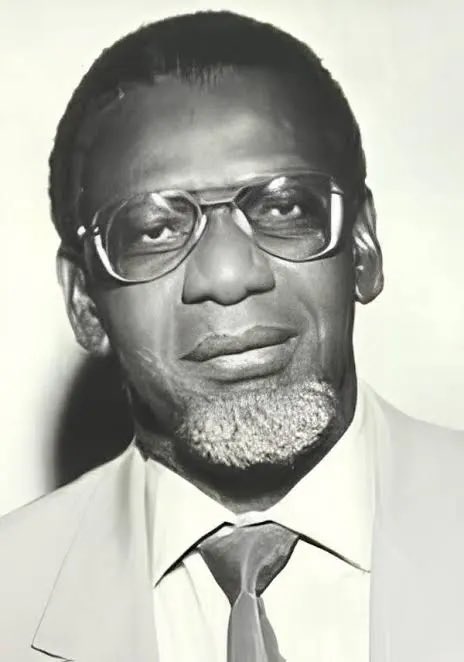
    The Caribbean Community (CARICOM) is in mourning this weekend following the death of former Secretary-General Roderick Rainford, who passed away Saturday afternoon at his home in Jamaica. Leaders across the 15-nation bloc have paid tribute to the Jamaican diplomat, whose decades of service laid critical groundwork for the regional integration project that defines CARICOM today.

    Guyana’s President Irfaan Ali, whose country hosts the CARICOM Secretariat, joined CARICOM Chairman and St Kitts and Nevis Prime Minister Terrance Drew in honoring Rainford’s legacy on Sunday. Ali highlighted Rainford’s transformative leadership at the helm of the Secretariat during one of the most volatile eras for regional cooperation, noting his central role in advancing the Caribbean Single Market and Economy (CSME) — the framework that created a single market for goods, labor, and capital across member states.

    “His consequential role in laying the foundation for the Caribbean Single Market and Economy, in strengthening regional institutions, and in preparing the Caribbean for a future shaped by trade and economic liberalisation is part of his outstanding service to regionalism,” Ali said of Rainford, who led the organization from 1983 to 1992 after previously serving as Deputy Secretary-General.

    Drew recalled that Rainford assumed the top post at CARICOM amid a period of significant global upheaval: sky-high global oil prices, intensifying Cold War tensions that rippled through the Western Hemisphere, and the 1983 military invasion of Grenada that tested regional unity. In the face of these cascading challenges, Drew said Rainford’s calm demeanor, sharp analytical mind and deep diplomatic expertise allowed him to keep regional integration on a stable, forward trajectory.

    That steady leadership ultimately paved the way for the 1989 Grand Anse Declaration, the landmark policy document that formally set the course for the CSME by establishing the bloc’s Common External Tariff. Beyond trade and economic integration, Drew highlighted a long list of lasting achievements from Rainford’s tenure: the early framework for a regional stock exchange, negotiated terms for the Caribbean Investment Fund, the revival of the Caribbean Festival of Arts (CARIFESTA), and a sharpened regional focus on environmental stewardship.

    Under Rainford’s direction, CARICOM developed the bloc’s first uniform building code to standardize construction and infrastructure standards across member states, and consolidated or established key regional institutions including the Caribbean Environmental Health Institute (CEHI) and the Caribbean Disaster Emergency Response Agency (CDERA, now renamed the Caribbean Disaster Emergency Management Agency, CDEMA).

    A lifelong advocate for deepening economic and functional integration to lift living standards for all Caribbean people, Rainford was awarded the highest honor of the bloc, the Order of the Caribbean Community, in 2024 in recognition of his decades of public service.

    “Mr Rainford’s patience, equanimity, team spirit and analytical skills are fondly remembered by those who worked with him in the CARICOM Secretariat and across the Region,” Drew said. “Our community is stronger for his dedication and service. CARICOM conveys deepest condolences to his wife, Nesha, other family members and all who mourn his passing.”

  • Big refrigerator for Rupununi to push food supply – Ali

    Big refrigerator for Rupununi to push food supply – Ali

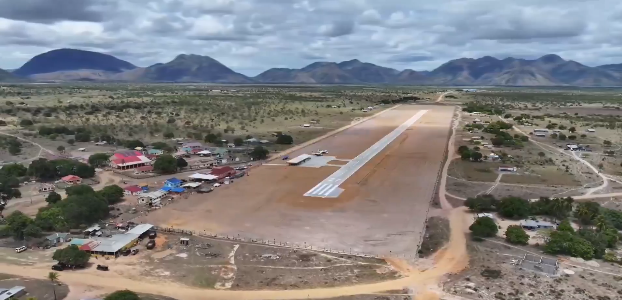
    Following the official inauguration of the upgraded Karasabai Airstrip in Guyana’s remote Region Nine on Saturday, President Irfaan Ali has announced a suite of targeted investments designed to turn the Rupununi region into a high-output agricultural hub, addressing long-standing logistical barriers that have stifled local economic growth for decades.

    The airstrip, which serves roughly 1,200 local residents, received a total investment of GY$1.53 billion for its expansion and modernization. Beyond enabling improved access to remote communities, the upgraded infrastructure is the cornerstone of the government’s plan to boost large-scale commercial agriculture in the area, which has already shown promising early output. President Ali confirmed that a 20-tonne industrial blast freezing refrigerator will be deployed to the region in the coming months to preserve fresh produce, meat, and other perishable goods before they are transported via air and road to markets in Georgetown and other population centers across Guyana.

    “Our goal is to maximize the economic value this new airstrip delivers to local communities,” Ali explained during the commissioning ceremony. “This 20-tonne unit will blast-freeze even locally produced meat, helping us build the cold storage capacity we need to reliably move fresh goods from Rupununi to national markets.”

    The government’s agricultural expansion strategy focuses on scaling up production of high-value crops including coffee, peanuts, ginger, and onions, in close partnership with smallholder farmers across Karasabai and surrounding areas. President Ali noted that the administration is actively facilitating private sector partnerships with local small farmers to turn agriculture into the region’s primary economic driver, unlocking sustained value from the upgraded airstrip infrastructure.

    Early results from existing commercial production in Rupununi already point to major untapped potential. Local Toka region is renowned for its large, high-quality watermelons: one farm produced 100,000 watermelons for shipment to Georgetown last year alone, with another 4,000 units shipped out just last week. Local tomato production has also hit industrial-scale output, reaching 20 kilogrammes of tomatoes per plant. For onion production, which Guyana first attempted to scale in the interior roughly 50 years ago, transportation bottlenecks have long derailed past efforts. Today, President Ali confirmed that full approval has been granted for large-scale onion cultivation, as long as local villages commit large tracts of land to the project. The government will centralize regional logistics and invest in purpose-built transportation vehicles to move onion harvests from Rupununi to national markets.

    “We’re not asking for anything more than for local villages to commit to production,” Ali said. “Follow the example of the successful watermelon farms and scale up output – that’s all we need to make this work.”

    Beyond agricultural development, the upgraded airstrip will also deliver critical public benefits to the remote region. President Ali announced that the government has reached an agreement with Jag’s Aviation to launch once-weekly scheduled commercial passenger flights to Karasabai, improving connectivity for residents. The expanded runway is also engineered to accommodate delivery drones, which will be used to transport emergency blood supplies from Lethem to Karasabai, cutting response times for critical medical emergencies.

    At the same time, the announcement leaves one key outstanding question unanswered: it remains unclear how large-scale agricultural operations will be protected against the widespread severe flooding that regularly impacts large swathes of the Rupununi region, a recurring natural challenge that could threaten crop stability and long-term output.

  • Call off Corentyne River bridge talks unless Suriname scraps tariff for Guyanese cargo vessels – private sector

    Call off Corentyne River bridge talks unless Suriname scraps tariff for Guyanese cargo vessels – private sector

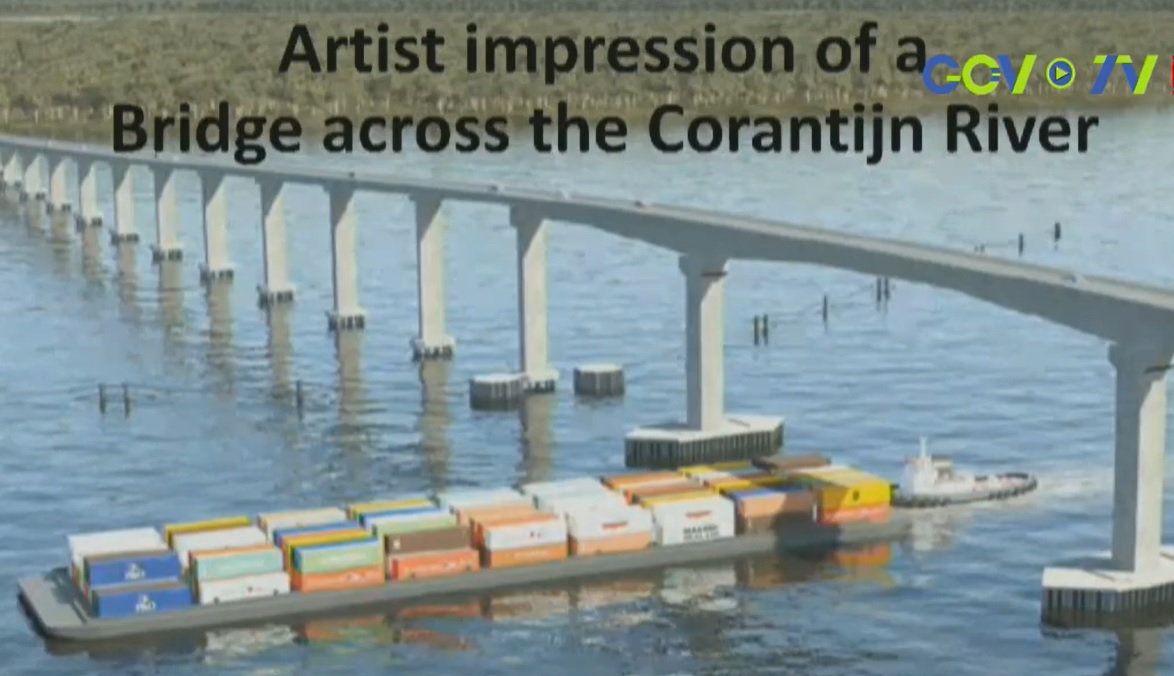
    Tensions between Guyana and neighboring Suriname over cross-border trade on the Corentyne River have reached a new boiling point, with Guyana’s leading business organizations now calling for a full suspension of planned discussions to build a cross-border bridge linking the two nations, until long-simmering trade disputes are fully resolved. What began as a public complaint from Guyanese President Irfaan Ali over Suriname’s new fees for Guyanese cargo vessels navigating the shared river has expanded into a broad pushback from the private sector, which has linked the levies to deeper trade grievances and a long-standing border territorial dispute.

    Following Ali’s initial public critique of Suriname’s policy earlier this month, the Guyanese central government has declined to comment publicly on the negotiations, with senior foreign ministry officials only confirming that back-channel discussions between the two administrations are ongoing, shrouded in complete secrecy. For its part, Suriname has pushed back against Guyanese criticism, arguing that the fee structure is rooted in long-standing domestic regulations, not a new policy, and notes that Guyana may formally request exemptions for its vessels through standard diplomatic channels.

    The Georgetown Chamber of Commerce and Industry (GCCI), a leading private sector body with close ties to Guyana’s ruling People’s Progressive Party Civic administration, first tabled the call to pause bridge talks in an official public statement. The organization argues that no progress on the cross-border infrastructure project can move forward until Suriname reverses the vessel fees and addresses a list of other persistent trade issues, most notably the widespread dumping of counterfeit, illicit, and substandard goods from Suriname into Guyana’s domestic market.

    This call comes amid already stalled momentum for the bridge project, which has languished since the National Democratic Party (NDP), led by Dr Jennifer Geerlings-Simons, won Suriname’s general election less than a year ago. Severe budget constraints and strict fiscal oversight from the International Monetary Fund have left the new Suriname administration unable to secure funding for its share of the east-west connectivity project, a pledge the previous Santokhi-led government had made ahead of last year’s election if it retained power.

    One week after President Ali emphasized that any cross-border cooperation must be rooted in reciprocal benefit, the GCCI echoed that sentiment, arguing that Guyana should not extend goodwill to a neighboring partner that does not extend the same treatment in return. “The GCCI calls on the Government of Guyana to halt discussions on the development of the Corentyne River Bridge linking Guyana and Suriname unless these issues are permanently resolved,” the chamber’s statement read. The organization added that Guyana should only direct public resources toward cross-border projects that deliver mutual, balanced benefits, “and ought not include partners who frustrate and obstruct our people’s advancement.”

    Ali has already left the door open to retaliatory action if Suriname does not reverse the fees, which apply to vessels carrying Guyanese quarry products and timber along the Corentyne. “For me, reciprocity is very important and let’s see how this goes in another few days and, you know, as a country we will have to make the necessary adjustments to ensure that we are not placed at a disadvantage with the other businesses from Suriname,” he said last week.

    Other Guyana business bodies have echoed the GCCI’s frustration, warning that the fees will have severe cascading impacts on border communities and local economic competitiveness. The Upper Chamber of Commerce and Industry (UCCI) noted that remote river communities including Orealla and Siparuta will “feel the full brunt” of Suriname’s policy, as the additional costs are passed directly to consumers, eroding the competitiveness of local businesses in regional markets. “This certainly will have a deleterious effect on the local economy with catastrophic repercussions,” the UCCI warned.

    The UCCI detailed the steep cost burden placed on Guyanese operators: vessels are charged up to $2,500 USD per trip for pilot license fees, on top of broker fees ranging from $1,000 to $1,500 USD. The chamber described these charges as “exorbitant, extortionate, and unaffordable, far beyond the ability of the river users to pay.” To eliminate total reliance on Suriname’s control of the river, the UCCI is calling on the Guyanese government to fast-track construction of an overland road connecting Crabwood Creek to Orealla. “This unfortunate development has once again reignited the call and determination to expedite the completion of the road linking Crabwood Creek and Orealla. This would obviate the need to become totally dependent on Surinamese discretion and approval. The road will be ours to use,” the statement said.

    The Guyana Manufacturing and Services Association (GMSA) added that the fees threaten to raise operating costs across a wide range of sectors tied to the Corentyne River, including trade, transport, timber, and quarrying. Beyond individual businesses, the association warned that the unilateral fees will damage broader cross-border supply chains, hurt investment confidence between the two nations, and harm livelihoods in border communities.

    In one of the most serious allegations to emerge from the dispute, the GCCI argued that the new river levies are not an isolated policy, but part of a broader campaign to advance Suriname’s long-standing colonial-era territorial claim to the 6,000-square-mile New River Triangle in southeastern Guyana. “The pursuit of Suriname of this illegal claim seems to be one of the key motivations for the creation of impediments to the rapid pace of development being undertaken in Guyana, including in Berbice, and aimed at preventing this country from reaching its peak potential,” the GCCI said.

    The chamber added that the current dispute has brought decades of unaddressed unfair trade practices to a head. For years, Guyanese business owners and fishing crews have faced systemic barriers from Surinamese authorities, the organization said. In addition, Guyana’s adherence to the free movement rules of the Caricom Single Market and Economy (CSME) has left the country vulnerable to a flood of illicit and counterfeit goods from Suriname, ranging from counterfeit cigarettes to banned pesticides and toxic mosquito coils that pose severe public health risks to Guyanese consumers. Beyond the health threat, the influx of these unregulated products has created unfair competition for legitimate domestic manufacturers in Guyana, the GCCI added.

    The Berbice Chamber of Commerce and Development Association (BCCDA), which represents the border region most impacted by the dispute, has put forward a three-pronged strategy for the Guyanese government to resolve the standoff: pursue a diplomatic resolution with Suriname, issue clear guidance and formal protection for Guyanese operators working on the river, and deploy permanent Guyanese official presence in the upper Corentyne region to monitor conditions and assist affected citizens.

    “These unilateral fees represent a significant escalation that our small business owners and residents cannot absorb. We are witnessing a situation where Guyanese are being penalized for utilizing shared water-space that has always been used freely for legitimate trade and travel. This action directly impedes the ease of doing business and disrupts the longstanding relations between our border communities,” BCCDA President Samantha Reid said in the organization’s statement.

    While pushing for urgent action to reverse the fees, the GMSA reaffirmed its commitment to closer cross-border economic integration between the two nations, calling on Suriname’s authorities to reverse the policy to preserve regional goodwill and long-standing cooperation. “The GMSA says Guyana and Suriname must continue to pursue closer economic collaboration, not policies that restrict movement and make cross-border trade more costly and uncertain,” the association said, urging Suriname to roll back the levies in the interest of shared regional development.

  • GWI continues to pour millions down recurring city leaks near Bank of Guyana

    GWI continues to pour millions down recurring city leaks near Bank of Guyana

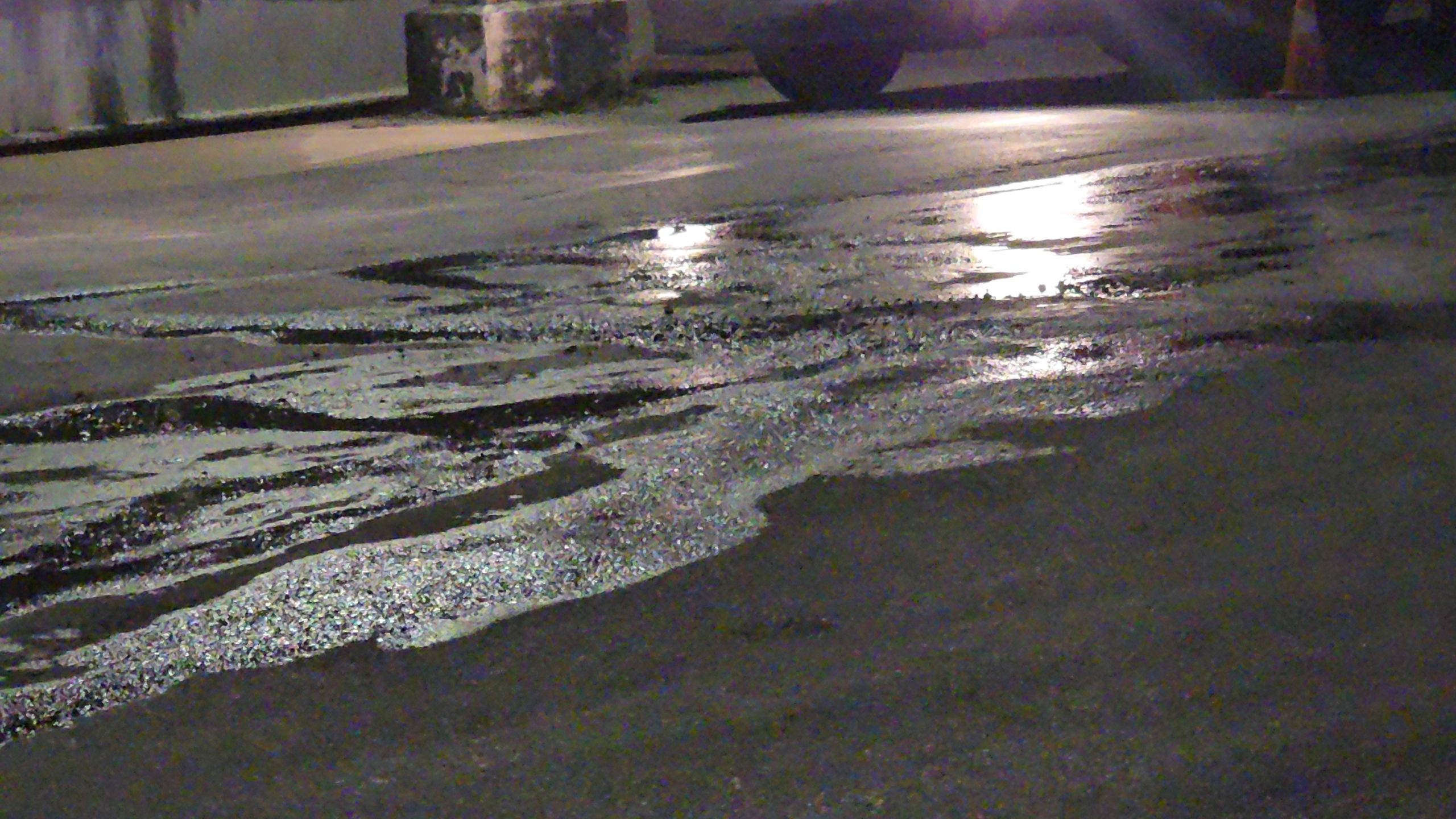
    For years, a stretch of over 100-year-old water mains along Georgetown’s Church Street has been a persistent, costly problem for Guyana’s state-owned water utility, Guyana Water Incorporated (GWI). Despite repeated public promises to fully replace the aging infrastructure years ago, the company has only carried out temporary patchwork repairs – racking up millions of Guyanese dollars in annual expenses for recurring leak repairs that could have been avoided with a full replacement.

    The problem is concentrated in a high-traffic central district near key Guyanese institutions: the National Library, the Bank of Guyana, and Guyana Stores. Local industry sources familiar with the issue confirm that the pipeline network suffered at least 12 major bursts in 2025 alone, with four more leaks already recorded in the first four months of 2026.

    Each leak comes with staggering hidden and direct costs for the utility. In 2025, data shows excavation, pipe repairs, and subsequent road restoration cost GWI more than GY$1 million per individual incident. When the Ministry of Public Works is unable to complete road repairs after GWI fixes a leak, the utility is forced to hire private contractors to restore the roadway for vehicle access, adding further unplanned expenses. Beyond direct repair costs, GWI also loses significant revenue every time a break occurs: workers must cut or reduce water pressure to complete repairs, which prevents residential water tanks from being refilled overnight, cutting into the utility’s billed water output.

    The persistent leaks and repeated repair work have also caused collateral damage to public infrastructure in the area. A section of the pedestrian sidewalk directly outside the National Library has been completely destroyed, weakened by ongoing water seepage from the burst pipes and repeated vehicle movement from repair crews and passing traffic that has eroded the damaged walking surface.

    Why has the full replacement project, promised repeatedly by GWI leadership, not moved forward? The main justification cited by officials has been concerns over traffic disruption in the already congested central business district.

    As far back as July 2025, GWI Chief Executive Officer Shaik Baksh publicly assured residents and stakeholders that the old water mains would be fully replaced before the end of that year. At the time, he explained the phased approach was designed to limit gridlock: “Because of the heavy traffic flow, we don’t want to disrupt traffic along that whole area so have to do phase by phase.” When the project did not break ground by the end of 2025, it remained unstarted into 2026.

    Speaking to Demerara Waves Online News on March 21, 2026, current Public Utilities Minister Deodat Indar repeated the same traffic concerns, noting that any full pipe replacement would require special traffic management arrangements to mitigate widespread disruption. “We have to schedule to work as there would be a major disruption of traffic,” Indar stated. When pressed, however, the minister was unable to provide any concrete timeline for when full replacement work would actually begin. The most recent leak in the area has already worsened, bringing renewed urgency to the long-unresolved problem, with no clear end in sight.

  • Renaming of former Convent of the Good Shepherd as Waveney Benjamin Building

    Renaming of former Convent of the Good Shepherd as Waveney Benjamin Building

    In a solemn ceremony blending spiritual reverence with community recognition, the Anglican Diocese of Guyana has permanently immortalized the legacy of women’s rights advocate Waveney Benjamin through architectural dedication. The former Convent of the Good Shepherd at the Queenstown intersection of Lance Gibbs and Oronoque Streets now officially bears the name The Waveney Benjamin Building, housing the Mothers’ Union Day Care Centre that she helped establish.

    The ceremonial redesignation occurred during Evening Prayer services on March 25, 2026—a date carrying profound symbolic significance. Presided over by The Right Reverend Charles Davidson, Bishop of Guyana, the event gathered clergy, Mothers’ Union representatives, and community members in a collective tribute to Benjamin’s transformative social work.

    Reverend Mother Wendell Roberts, former MU president, delivered a commemorative address highlighting Benjamin’s nineteen-year tenure as Diocesan Worker. Her pioneering efforts expanded the organization’s reach across Guyana’s diverse regions, including remote hinterland communities. Beyond geographical expansion, Benjamin’s visionary leadership materialized through the creation of the Mothers’ Union’s inaugural daycare facility—an institution sustaining early childhood education for over thirty years.

    The temporal alignment of the ceremony revealed multiple layers of significance: March 25th marked both Benjamin’s original MU membership date and the liturgical observance of Lady Day within the Anglican tradition. Serendipitously, the date also coincided with Bishop Davidson’s ordination anniversary, creating a multidimensional celebration of spiritual service.

    The late Mrs. Benjamin, spouse of Major the Reverend Canon Neil Benjamin, extended her humanitarian commitments beyond the Mothers’ Union to various Anglican and interdenominational initiatives. Pending final architectural renovations, formal commemorative plaques will be installed to permanently designate the building that now eternally honors her community legacy.

  • Policemen under close arrest after Haslington man dies in custody

    Policemen under close arrest after Haslington man dies in custody

    Two officers from the Guyana Police Force have been placed under close arrest following the death of 30-year-old Jordan Payne while detained at the Cove and John Police Station in East Coast Demerara. The incident has triggered multiple investigations and drawn significant political attention.

    The police force confirmed through an official statement that its Office of Professional Responsibility (OPR) has initiated a comprehensive investigation into the circumstances surrounding Payne’s death. Investigators have interviewed multiple police and civilian witnesses and obtained formal statements as part of the ongoing probe.

    The political opposition party A Partnership for National Unity (APNU) has become directly involved in the case. The party announced that former Health Minister Dr. Karen Cummings would serve as an independent medical professional to witness Friday’s post-mortem examination of Payne’s body.

    Additionally, APNU dispatched a delegation including attorneys Dexter Todd and Ronald Daniels, along with party representatives Robin Sion and Delon Carter, to meet with Senior Superintendent Dennis Stephens, the acting commander of Region Four. The meeting was characterized as part of ongoing efforts to demand clarity and accountability in the case.

    The police force has sought to reassure the public that the matter is being treated with appropriate seriousness and that all necessary procedures are being followed throughout the investigation. The case continues to develop as both official and independent investigations proceed.

  • Guyana protests Suriname charging Guyanese to use Corentyne River

    Guyana protests Suriname charging Guyanese to use Corentyne River

    Guyana has officially lodged a diplomatic protest against Suriname’s controversial decision to impose fees for usage of the shared Corentyne River, President Irfaan Ali announced Thursday. The Guyanese government characterized the move as a “troubling development” that primarily affects Guyanese timber and quarry operators who rely on the bordering waterway for commercial activities.

    In a statement published on his official Facebook page, President Ali revealed that his administration has formally communicated its objections to Surinamese authorities and is currently awaiting their response. The President emphasized that Suriname’s unilateral action carries significant implications for established economic activities and long-standing bilateral arrangements between the two South American nations.

    Ali expressed hope that Suriname would reconsider the fees in the interest of preserving bilateral trade relations, fostering private sector development, and maintaining principles of good neighborly relations. He cautioned that such measures risk creating unnecessary commercial barriers and could undermine business confidence that depends on predictable operating conditions.

    The Guyanese leader reminded Suriname that Surinamese businesses have historically enjoyed non-discriminatory access to economic opportunities within Guyana’s borders. “This openness has been a cornerstone of our engagement. Reciprocity remains a fundamental principle underpinning our relationship,” President Ali stated.

    The protest was raised in the spirit of diplomatic dialogue and mutual respect, with Guyana emphasizing the importance of preserving cooperative relations between the neighboring countries. President Ali called for urgent attention to the matter, expecting Surinamese authorities to “reconsider and ultimately desist from any actions that may be perceived as arbitrary or detrimental to the shared objective of deepening cooperation.”