标签: Guyana

圭亚那

  • Ali mum on US sending third country nationals to Guyana, removal of Maduro

    Ali mum on US sending third country nationals to Guyana, removal of Maduro

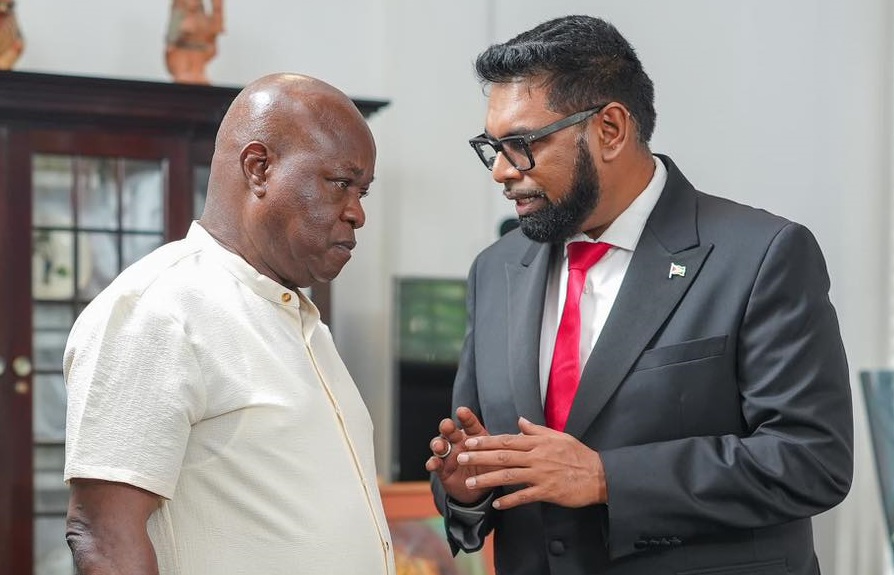
    Guyanese President Irfaan Ali maintained a firm stance of silence on Friday regarding two sensitive diplomatic matters involving the United States, deflecting mounting pressure from political opponents demanding governmental transparency. The President declined to elaborate beyond an official statement issued days earlier concerning ongoing negotiations with the US about potentially relocating third-country nationals to Guyana.

    When pressed by journalists in Rosignol, West Coast Berbice, about whether an agreement had been reached to accept US deportees rejected by their native countries, President Ali simply referenced the January 5th statement from Foreign Secretary Robert Persaud. “You’ve heard a statement out of the Foreign Secretary. There is nothing to add to that statement at this time,” the President asserted.

    The previously released communique indicated that Guyana and the US were engaged in “productive discussions on a framework of understanding” aligned with Guyana’s national priorities while simultaneously supporting American objectives.

    This diplomatic reticence sparked sharp criticism from opposition leaders. Aubrey Norton, leader of the People’s National Congress Reform and A Partnership for National Unity (APNU), condemned the potential acceptance of non-Guyanese deportees as “unacceptable,” arguing that welcoming individuals deemed undesirable by another society would prove detrimental to Guyana.

    Norton, a political scientist and former foreign service officer, employed a striking environmental analogy, comparing the potential migrant transfer to dumping toxic materials across international borders. “APNU cannot understand the logic behind accepting deportees that another society does not want,” he stated, demanding immediate cessation of these “insane” negotiations that he believes contradict national interests.

    Simultaneously, President Ali similarly avoided commentary on another contentious issue: the United States’ removal of Venezuelan President Nicolás Maduro to face trial in New York on drug and weapons charges. Norton criticized this action as a violation of international law, emphasizing that all international proceedings should occur within established legal frameworks.

    While refusing to address the Maduro situation directly, President Ali had previously expressed his position on social media platform X on January 3rd, stating that “stability, respect for law, and democratic transition are critical to the future of Venezuela and the broader Americas.”

    The developments occur against a backdrop of strengthened security and military cooperation between Guyana and the United States, with Guyana and Trinidad and Tobago remaining key US allies in the region. Opposition groups including the We Invest in Nationhood and the Forward Guyana Movement have called for parliamentary scrutiny of these diplomatic engagements, advocating for greater transparency in international agreements.
  • 25.5% reduction in serious crimes; 3.7% increase in road deaths in 2025 – police

    25.5% reduction in serious crimes; 3.7% increase in road deaths in 2025 – police

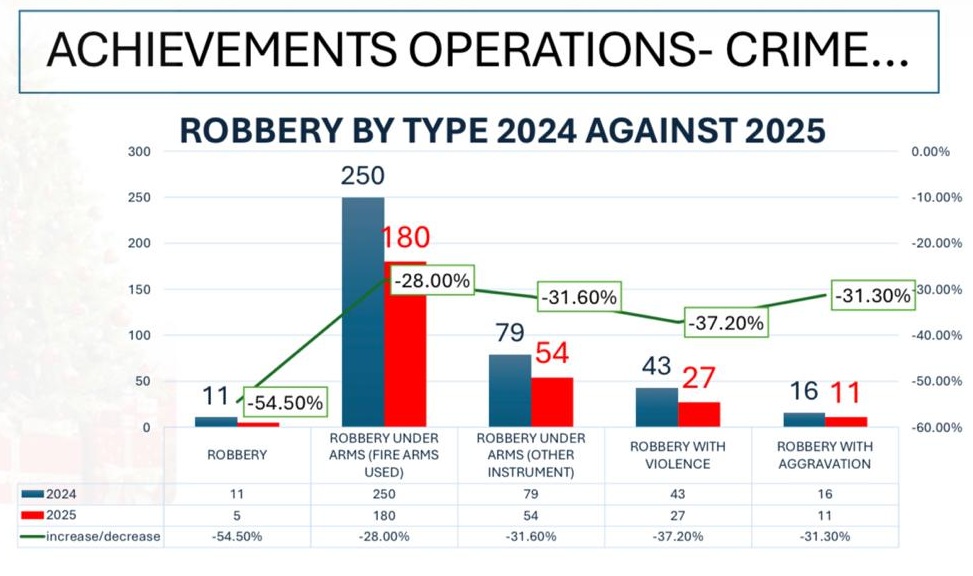
    The Guyana Police Force (GPF) has released its comprehensive annual report revealing contrasting public safety trends for the year 2025. While serious criminal activities witnessed a substantial decline, road traffic fatalities showed a concerning increase compared to previous year’s statistics.

    According to official data compiled from January 1 to December 31, 2025, Guyana experienced a remarkable 25.5% reduction in serious crimes, dropping from 1,235 reported cases in 2024 to 920 cases last year. This significant decrease encompassed multiple major offense categories including robbery, burglary, break-and-enter incidents, larceny, rape, and kidnapping cases, indicating widespread improvement in crime prevention efforts nationwide.

    Conversely, road safety statistics presented a more complex picture. The report documented 124 fatal accidents throughout 2025, resulting in 137 road traffic deaths. This represents a 3.7% increase from the 132 fatalities recorded in 2024 from 117 fatal accidents. Despite this rise in fatal incidents, other accident categories including serious, minor, and damage-only collisions all showed reductions, contributing to an overall decline in total road accidents from 2,405 in 2024 to 2,177 in 2025.

    The GPF addressed previous delays in releasing these statistics, explaining that annual crime and traffic data undergo a rigorous structured process of compilation, verification, and approval before public dissemination. While provisional data had been presented during the Christmas policing briefing in November 2025, the reporting year had not yet been formally closed at that time, and figures required final verification across all divisions.

    Police authorities reaffirmed their commitment to sustained crime-fighting strategies, enhanced community engagement initiatives, and proactive policing measures as they continue working toward ensuring comprehensive safety and security for all citizens.

  • Nandlall publicly praises Chancellor, dismisses questions on alleged plot against Justice Cummings

    Nandlall publicly praises Chancellor, dismisses questions on alleged plot against Justice Cummings

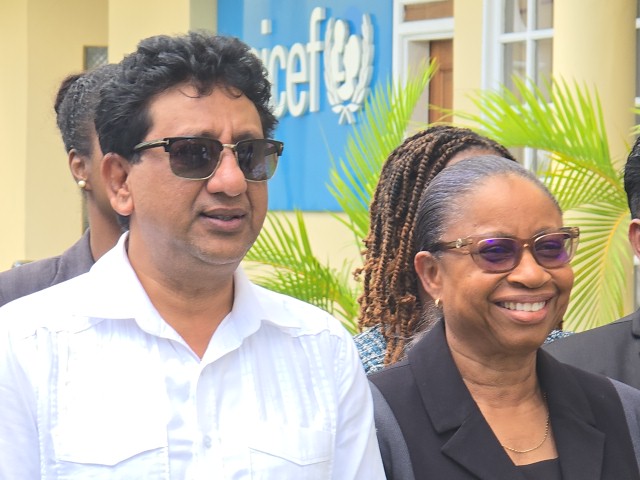
    In a significant development within Guyana’s judicial landscape, Attorney General Anil Nandlall has publicly commended Acting Chancellor Roxane George-Wiltshire’s contributions to the justice system while vehemently rejecting allegations of government conspiracy against former judiciary member Justice Yonnette Cummings.

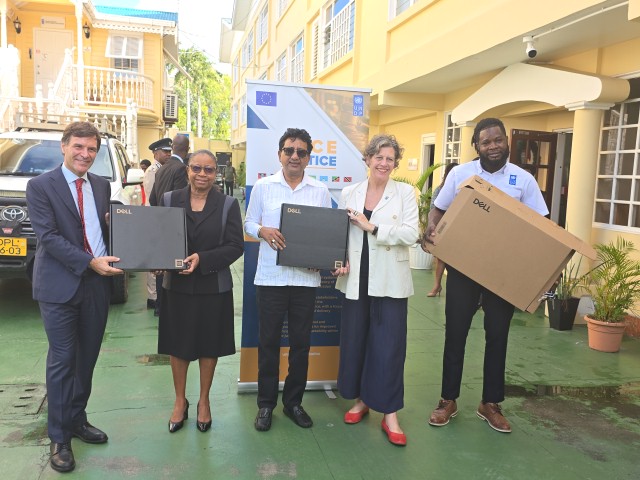
    The statements emerged during a ceremonial event at the United Nations complex in Georgetown, where substantial IT equipment and software valued at US$400,000 were transferred to multiple law enforcement and judicial agencies. This technological enhancement initiative falls under the Partnership of the Caribbean and the European Union (PACE) Justice Project, representing a major investment in modernizing Guyana’s legal infrastructure.

    Nandlall characterized Chancellor George-Wiltshire as possessing “extremely high ideals” and praised her dedicated work ethic, describing her as “a special asset” to the nation’s judicial framework. The ceremony highlighted the government’s commitment to strengthening judicial capabilities through technological advancement.

    Following the event, journalists pressed the Attorney General regarding circulating media reports suggesting possible government involvement in Justice Cummings’ departure from the judiciary. Nandlall dismissed these allegations as “ridiculous” during an impromptu exchange, asserting that Justice Cummings remained “a qualified, very respected jurist” who would not submit to such conduct.

    The controversy stems from recent correspondence by Former Chief Magistrate Kalam Juman Yassin, who speculated about a potential coordinated effort against Justice Cummings-Edwards. This occurred amidst a backdrop of public criticism from government officials, including Vice President Bharrat Jagdeo and former Local Government Minister Nigel Dharamlall, regarding the Guyana Court of Appeal’s decisions in several politically sensitive cases.

    The judicial landscape has undergone notable transitions since late October 2025, when President Irfaan Ali announced Justice Cummings’ move into pre-retirement status, subsequently maintaining Navindra Singh as Acting Chief Justice and George-Wiltshire as Acting Chancellor.

    Notably, the Caribbean Court of Justice has upheld the majority of Chancellor George-Wiltshire’s judicial decisions during her tenure as Chief Justice, even after several were previously overturned by the Guyana Court of Appeal, underscoring her judicial competence and the complex dynamics within Guyana’s legal system.

  • Overhauled regulation of juries coming- Attorney General

    Overhauled regulation of juries coming- Attorney General

    Guyana’s Attorney General Anil Nandlall announced on Thursday a sweeping modernization initiative for the nation’s justice system, with particular focus on establishing a formal regulatory framework for jury operations—a system currently operating without statutory foundation.

    Speaking at a ceremony marking the delivery of US$400,000 in information technology equipment to key justice institutions, Nandlall revealed ongoing discussions with Chancellor of the Judiciary Roxane George-Wiltshire to develop comprehensive jury regulations. “The Chancellor and I are discussing some type of framework to regulate juries and the way juries function,” Nandlall stated, acknowledging that Guyana currently operates without the formal jury systems common in other jurisdictions.

    The technology transfer, facilitated through the Partnership of the Caribbean and the European Union (PACE) Justice Project, will bolster the capabilities of multiple agencies including the judiciary, Director of Public Prosecutions’ Chambers, Guyana Police Force, and forensic services. Chancellor George-Wiltshire confirmed that eight additional Liberty court recording systems would join recently acquired equipment, bringing the total to 18 courtrooms equipped with modern recording technology. “These systems will definitely enhance court efficiency. A modern judiciary requires clear and reliable systems to ensure a secure official record of court proceedings,” she emphasized.

    Nandlall identified critical gaps in Guyana’s current jury system, noting the absence of standardized procedures for juror oaths, protection mechanisms, exemption protocols, transportation expenses, and overnight sequestration arrangements. He further highlighted that dozens of new companies and agencies remain excluded from the jury pool, necessitating comprehensive reform.

    Beyond jury reform, the Attorney General outlined additional legislative modernization efforts, including plans to replace the 1893 Evidence Act inherited from British colonial rule—legislation he described as “clearly out of sync with modern realities.” Additional initiatives include legislation enabling judge-alone trials, completion of an Alternative Sentencing Bill, and review of the Summary Jurisdiction Offences Act to eliminate outdated provisions. “We don’t necessarily have to wait for the judiciary to strike them down as unconstitutional or as outmoded. We can aggressively and proactively do that,” Nandlall asserted, indicating planned tabling of relevant legislation in the National Assembly.

  • WIN, FGM slam govt’s plan to settle foreigners from US

    WIN, FGM slam govt’s plan to settle foreigners from US

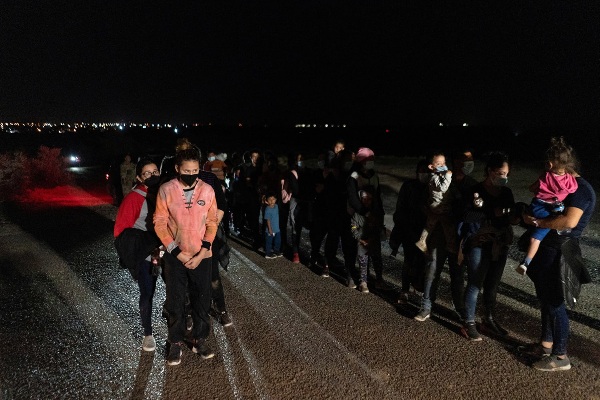
    Guyana’s political landscape erupted in controversy as two major opposition parties vehemently condemned the government’s clandestine negotiations with the Trump administration regarding the settlement of third-country nationals from the United States.

    The We Invest in Nationhood (WIN) and Forward Guyana Movement (FGM) issued separate statements on Wednesday, January 7, 2026, castigating President Irfaan Ali’s administration for engaging in talks about accepting deportees or refugees without parliamentary oversight or national consultation. Both parties characterized the negotiations as a fundamental breach of democratic principles and national sovereignty.

    FGM denounced the potential agreement as a ‘direct affront to the sovereignty of the Guyanese people,’ particularly given the absence of a functioning Parliament to provide legislative scrutiny. The party emphasized that any policy substantially altering Guyana’s demographic composition or imposing new social responsibilities must undergo rigorous parliamentary debate and national consultation.

    Foreign Secretary Robert Persaud confirmed on January 5 that ‘productive discussions’ were underway with the US to establish a ‘framework of understanding’ consistent with Guyana’s national priorities while supporting US objectives. This initiative forms part of the Trump administration’s broader strategy to relocate unwanted migrants, with several Caribbean nations including Antigua and Barbuda, Dominica, and Belize having already signed similar agreements.

    The opposition parties raised multifaceted concerns spanning security, economic, and social dimensions. FGM challenged the government to disclose the agreement’s contents publicly, subject it to parliamentary debate, and conduct comprehensive security and economic impact assessments. Critical questions emerged regarding the verification systems for migrant backgrounds, administrative oversight mechanisms, and the potential strain on Guyana’s already stretched infrastructure.

    WIN explicitly rejected supporting any agreement until the government provides full disclosure, ensures parliamentary oversight, and presents a clear plan prioritizing Guyanese citizens’ well-being. The party highlighted the existing pressure from over 100,000 Venezuelan migrants on hospitals, schools, housing, and essential services, questioning how additional influxes would be managed.

    Both opposition groups demanded transparency regarding financial contributions from the US, long-term integration plans, housing arrangements, and the potential diversion of resources from Guyanese citizens already facing challenges in accessing land and affordable homes. The parties insisted that any demographic transformation affecting the nation’s future stability and security must not be decided through secretive negotiations without clear disclosure to the Guyanese people.

  • Guyana can withstand oil price decline if US sells Venezuela’s crude

    Guyana can withstand oil price decline if US sells Venezuela’s crude

    Amidst global oil price fluctuations, Guyana’s burgeoning petroleum sector demonstrates resilience against potential market pressures from US marketing of Venezuelan crude. Business analyst Christopher Ram asserts that while increased Venezuelan oil supplies could drive prices down to the early $50s range—representing a 12-15% decline—Guyana’s simultaneous production scaling will counteract revenue impacts through volume increases.

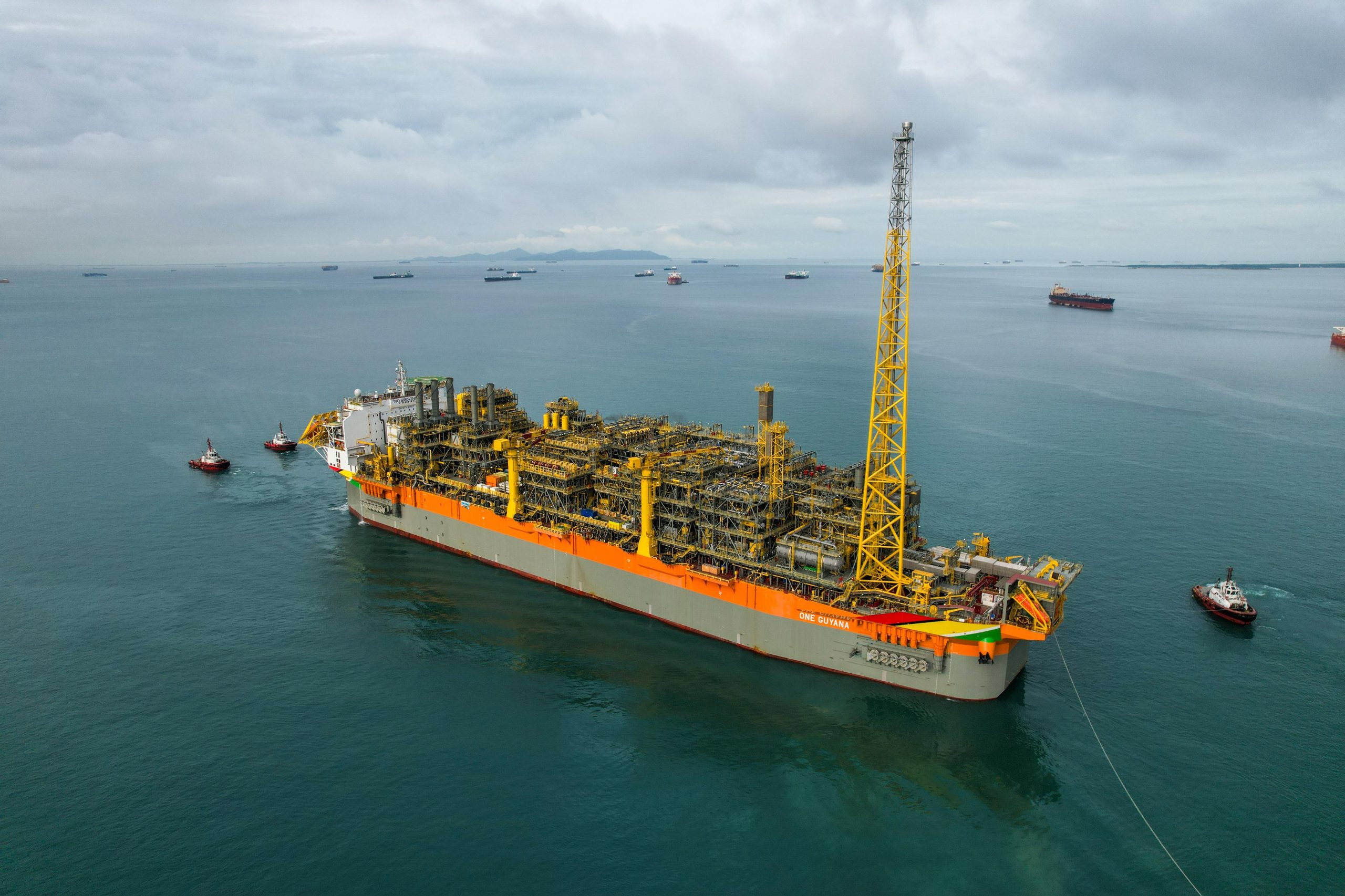
    ExxonMobil’s current Stabroek Block operations yield approximately 900,000 barrels daily from Liza 1, Liza 2, and Payara developments. The consortium, including China National Overseas Oil Corporation and Chevron, anticipates reaching 1.7 million barrels per day by 2029 as additional projects (Uaru, Whiptail, Longtail, and Hammerhead) commence operations. Ram emphasizes that Venezuela’s heavy crude presents no direct competitive threat to Guyana’s premium light sweet oil due to fundamental quality differences.

    The market context reveals significant oversupply concerns, with Brent crude closing at $59.96 per barrel on January 7, 2026—well below Guyana’s projected $71.90 average for the previous year. Actual 2025 prices averaged $69.00 annually, declining from January’s $79 peak to December’s $63 low—the weakest monthly performance since early 2021.

    Meanwhile, civil society activists including Ram and Vanda Radzik staged symbolic protests near the US Embassy in Kingston, condemning the military capture of Venezuelan President Nicolás Maduro and First Lady Cilia Flores. The demonstration, constrained by police barriers, featured accusations of US oil-motivated interventionism and demands for evidence regarding narco-terrorism charges against Maduro. Radzik characterized the operation as undermining Caribbean peace initiatives and regional sovereignty.

    International relations expert Professor Mark Kirton warns that Venezuelan production resurgence could introduce competitive pressures within an already saturated market, potentially affecting Guyana’s revenue streams. However, energy analysts note that substantial investment in Venezuela’s deteriorated infrastructure remains prerequisite to significant output restoration, creating natural market buffers for Guyana’s continued development.

  • New One Communications CEO appointed

    New One Communications CEO appointed

    In a significant leadership transition, Guyana’s telecommunications sector witnesses the appointment of Abraham Smith as the new Chief Executive Officer of One Communications. The announcement, made on January 7, 2026, positions Smith to steer both residential operations and the corporate division Brava through a period of accelerated national development.

    Smith brings substantial regional expertise to the role, boasting over twenty years of executive experience across Caribbean and Latin American markets. His most recent position was as Strategic Advisor at ATN International, the parent company of One Communications, following his tenure as CEO of Digicel Trinidad and Tobago which concluded in July 2025.

    The appointment follows the departure of Richard Stanton, who held the CEO position for less than one year. Company Chairman Brad Martin emphasized the critical timing of this leadership change, noting Guyana’s ongoing dynamic economic expansion requires robust telecommunications infrastructure.

    “Abraham recognizes the profound responsibility that comes with leading telecommunications during a nation’s transformative growth period,” Martin stated. “His proven leadership, cultural understanding, and commitment to balancing commercial objectives with community value make him ideally suited to reinforce One Communications’ role as a developmental partner to Guyana.”

    Smith’s mandate focuses on three primary objectives: enhancing customer experience for both commercial and residential clients, strengthening network resilience, and expanding enterprise partnerships throughout the region.

  • Rodrigues rejects WIN’s corruption allegations over Florida house purchase

    Rodrigues rejects WIN’s corruption allegations over Florida house purchase

    Guyana’s Minister of Trade, Tourism, Industry and Commerce, Susan Rodrigues, has publicly refuted corruption allegations regarding her acquisition of a Florida property, asserting that the purchase was legitimately financed through mortgage arrangements and rental income. The allegations were initially raised by Azruddin Mohamed, the United States-sanctioned leader of the We Invest in Nationhood (WIN) party.

    In a detailed Facebook post on Tuesday, Rodrigues acknowledged ownership of one Florida property at 8601 NW 46th Ct. Lauderhill through a company in which she holds shares, while dismissing claims of owning three additional properties. She presented an annual tax and interest statement indicating an outstanding mortgage principal of US$378,000 as of December 31, 2024, though she did not confirm Mohamed’s claim that the property was purchased for US$540,000 in March 2024.

    The minister explained that the property was acquired with financing from AD Mortgage, a U.S. financial institution, and is currently rented out with the income servicing the mortgage obligations. Rodrigues emphasized that all her overseas assets have been properly declared to Guyana’s Integrity Commission, and she complies with enhanced banking requirements as a Politically Exposed Person.

    The political opposition, including the 12-seat APNU coalition and the 16-seat WIN party, has seized on the allegations, demanding Rodrigues’ resignation and independent investigations into ministers’ wealth accumulation. WIN specifically questioned the effectiveness of anti-money laundering laws when senior officials can acquire luxury properties without consequence.

    Rodrigues countered that Mohamed’s allegations represent a ‘desperate narrative’ and highlighted the irony of corruption accusations coming from someone facing extradition proceedings to the United States for alleged mail fraud, wire fraud, and money laundering related to gold trading activities.

    The minister also addressed additional properties mentioned by Mohamed, denying ownership of a residence at 946 Herstelling and clarifying that her partner owns the land dating to 2016. Similarly, she refuted claims of owning a Georgetown gas station, explaining that her partner operates the business on property owned by Shell Antilles and Guianas Limited since 1962.

  • US Secretary of State praises Ali for leadership in regional security

    US Secretary of State praises Ali for leadership in regional security

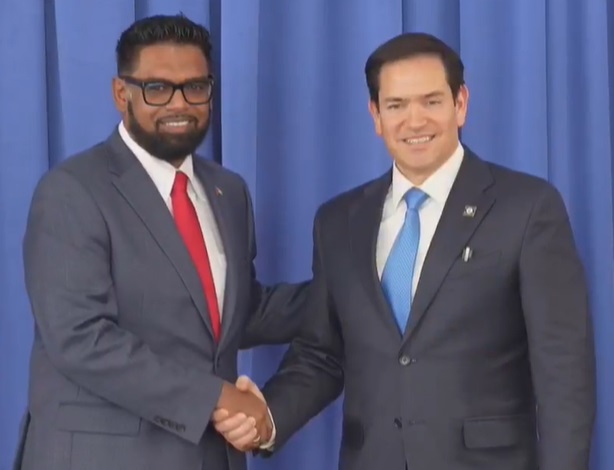
    In a significant diplomatic engagement, US Secretary of State Marco Rubio commended Guyanese President Irfaan Ali for his assertive leadership in regional security matters during their Tuesday morning discussion. The high-level conversation, confirmed by Principal Deputy Spokesperson Tommy Pigott, highlighted Guyana’s expanding role as a crucial security partner in the Western Hemisphere.

    The dialogue occurred against the backdrop of escalating regional tensions, specifically referencing recent US military operations in Venezuela that resulted in the capture of President Nicolas Maduro on narco-terrorism charges. Secretary Rubio utilized the opportunity to reinforce Washington’s commitment to enhancing security collaboration with Guyana, focusing particularly on combating transnational criminal networks, illicit narcotics trafficking, and firearms smuggling that threaten regional stability.

    Both leaders emphasized the critical need for continued cooperation in disrupting foreign terrorist organizations while simultaneously strengthening law enforcement capabilities and border security infrastructure. President Ali received reassurances regarding US support for Guyana’s sovereignty and territorial integrity—a pointed reference to ongoing Venezuelan claims over Guyana’s Essequibo Region.

    Guyana’s Foreign Secretary Robert Persaud confirmed the discussions extended to recent Venezuelan developments and broader hemispheric concerns. President Ali acknowledged US leadership under President Trump and Secretary Rubio, reiterating Guyana’s unwavering commitment to democratic principles, rule of law, and free elections. The Guyanese leader further emphasized his nation’s dedication to collaborative efforts against transnational crimes including drug trafficking, gold smuggling, and narco-terrorism.

    The diplomatic exchange builds upon the expanded military cooperation agreement signed between the two nations in December 2025, though specific details remain classified. Facing persistent Venezuelan territorial claims, Guyana has strategically strengthened defense partnerships with the United States, Britain, and France as protective measures against potential military aggression.

  • No heavy trucks allowed on sinking High Street bridge

    No heavy trucks allowed on sinking High Street bridge

    The Guyanese Ministry of Public Works has declared an immediate weight restriction on the structurally compromised High Street bridge spanning the Cummings Canal in Kingston. Effective Tuesday, January 6, 2026, vehicles exceeding 10 tons are prohibited from using the critical infrastructure link between Lamaha and Cowan Streets.

    This emergency measure follows the discovery of both visible cracking and significant settlement—or sinking—of the bridge structure over recent months. Ministry officials attribute the deterioration to two primary factors: consistent stress from overloaded commercial vehicles and the advanced age of the structure itself.

    The bridge serves as a vital transportation artery for Guyana’s commercial and industrial sectors, facilitating round-the-clock movement of oil sector equipment, construction materials (including sand, cement, and stone), and agricultural products such as rice and paddy. The new regulation will necessitate substantial rerouting for heavy freight operators.

    While the immediate restriction aims to prevent catastrophic failure, the ministry has confirmed that the long-term solution requires complete reconstruction of the bridge. Officials acknowledge the project’s complexity due to the structure’s central location and have pledged to schedule rebuilding operations with minimal disruption to public mobility and commerce.

    The Public Works Ministry has issued formal advisories urging all truck operators to identify alternative routes and comply with the 10-ton weight limit to ensure public safety.