标签: Grenada

格林纳达

  • What is a health system, and where do you fit in it?

    What is a health system, and where do you fit in it?

    When asked to define a health system, most people immediately point to the tangible, visible elements: the local general hospital, the neighborhood health center, the clinician they visit when illness strikes. This common framing is understandable—these are the touchpoints that patients interact with directly, the parts of care that we experience firsthand. But according to Grenadian health expert Dr. Ishma Harford, a functional health system runs far deeper than the surface-level components the public sees, much like an anthill where only a fraction of the colony’s complex infrastructure is visible above ground.

    To illustrate this dynamic, Harford draws an analogy between health systems and anthills. From the outside, any casual observer can see worker ants moving back and forth, foraging for food and tending to the colony’s daily needs. What remains hidden from view is the extensive network of underground tunnels, storage chambers, and coordinated organizational structures that make all that above-ground activity possible. The ant carrying a leaf across the anthill’s surface is just the final, visible outcome of a massive, unseen infrastructure—just as a nurse attending to a patient at a health center is the endpoint of a sprawling, underrecognized system that shapes every interaction.

    Many of the most frustrating problems patients face do not originate at the point of care, Harford argues. When a patient waits multiple hours to be seen by a provider, the issue is not simply a slow reception desk. When a needed medication goes out of stock, the breakdown does not start at the hospital pharmacy. These negative patient experiences are just surface-level symptoms of deeper failures rooted in the hidden layers of the system: inadequate public funding for healthcare, underinvestment in ongoing workforce training, and unaccountable governance structures that lack mechanisms for course correction when problems arise.

    Worse still, Harford notes that some systemic failures do not stay hidden. Many gaps in care are identified, documented, and debated by stakeholders, yet no action is ever taken to address them. This inaction, he emphasizes, is also a systemic failure—and it is perhaps the most inexcusable one of all.

    This is why adopting a whole-system perspective that examines both visible service delivery and hidden underlying structures matters so much. Taking this view is not about excusing poor quality care; it is about identifying the true root causes of negative patient experiences. The care a patient receives on the surface is shaped long before they walk into a health facility, shaped by decisions made behind closed doors and debates about resource allocation that patients are never invited to join. Understanding this is not an abstract academic exercise: it equips patients and advocates to direct their questions to the right actors and hold decision-makers accountable for failures.

    Back in 2007, the World Health Organization (WHO) outlined six core building blocks that form the foundation of every functional health system, covering everything from the healthcare workforce to medication access, health technology, leadership, and governance. In the WHO framework, patients were positioned as the end goal of the entire system—the final outcome that all six building blocks exist to serve. But in recent years, public health researchers have pushed back against this framing, arguing that treating patients only as the final destination of care allows system designers, funders, and governing bodies to ignore patient voices, needs, and lived experiences throughout the process of building and running the system.

    Harford goes even further in his argument: patients are not just the end goal of a health system—they are its core premise. The most critical component of any health system is you: every current or future patient who relies on care. Without patients, a health system has no function, no mandate, no reason to exist. Every budget line, every policy, every structural building block exists for one single purpose: to protect and improve your health. Harford argues that systems must be built around this central fact, not treat it as an afterthought added once the structure is already in place.

    In closing, Harford poses a central question for Grenada’s healthcare system: Are the core building blocks of Grenadian healthcare actually structured around the needs of patients? And if they are not, what steps must stakeholders take to steer the system back on course?

    Dr. Harford is a medical clinician with five years of hands-on experience working within Grenada’s health system, and currently a Master’s candidate in Health Analysis, Policy and Management. His column *The Health Imperative* is an educational, politically neutral platform exploring the meaning of health, the systems that deliver care, and the broader implications of health policy for communities. NOW Grenada notes that it is not responsible for the opinions and statements shared by contributing writers, and provides a channel for readers to report abusive content.
  • Co-op Bank: Shareholders’ Outreach Forum

    Co-op Bank: Shareholders’ Outreach Forum

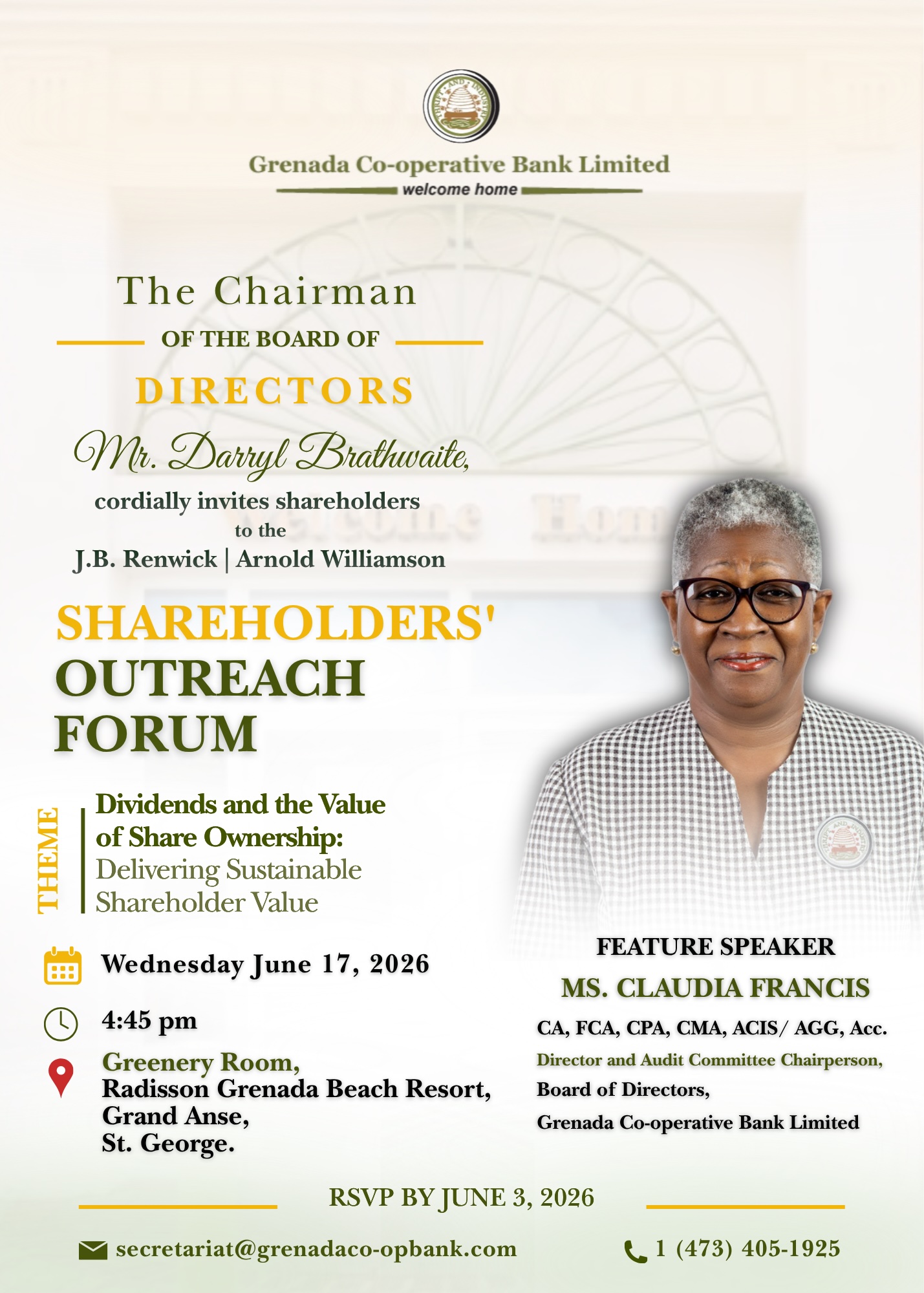
    Grenada Co-operative Bank has officially announced the upcoming J B Renwick | Arnold Williamson Shareholders’ Outreach Forum, an event designed to strengthen communication between the institution’s leadership and its investment stakeholders. In a formal public announcement, Board Chairman Darryl Brathwaite has extended a warm invitation to all registered shareholders of the bank to attend the collaborative gathering.

    Shareholders interested in participating in the forum are required to confirm their attendance by the official RSVP deadline of June 3, 2026. Confirmations can be submitted via two convenient channels: email to [email protected], or by phone to the dedicated contact line +1 (473) 405-1925.

    This outreach forum is framed as a key engagement opportunity for shareholders to discuss matters relevant to their holdings, including potential conversations around dividend policy, institutional performance, and future strategic direction for the Grenada Co-operative Bank.

    A standard content disclaimer accompanies the announcement, noting that outlet NOW Grenada does not take responsibility for opinions, statements, or third-party contributed media content shared alongside the announcement. Readers are provided with a pathway to report any content that violates platform guidelines in cases of abuse.

  • Hon. Ron Redhead appointed Minister for Digital Transformation

    Hon. Ron Redhead appointed Minister for Digital Transformation

    The Government of Grenada has made a landmark announcement to advance its national digital agenda, confirming the appointment of Honourable Ron Livingston Redhead to two key positions: Minister of State in the Office of the Prime Minister and designated Minister for Digital Transformation. His appointment will officially take effect on 1 June 2026, placing him at the helm of all government initiatives related to Information and Communications Technology (ICT) and the country’s broader national digital transition. Redhead’s new portfolio spans six core priority areas that form the backbone of Grenada’s digital transformation strategy. First, he will oversee the development of national ICT infrastructure, including the formulation of telecommunications policy, expansion of broadband access across rural and underserved regions, and the improvement of nationwide connectivity. Second, he will lead digital government reform, which covers the modernization of public service delivery, the rollout of national digital identity systems, and the development of shared cross-government digital platforms. Third, Redhead will take charge of national data governance, covering open data promotion, data protection and privacy regulation, and the establishment of interoperability standards for disparate government IT systems. Fourth, national cybersecurity will fall under his remit, including the development of a unified national cybersecurity policy, strengthening systemic resilience against cyber threats, and protecting critical national information infrastructure. Fifth, he will drive growth in the digital innovation ecosystem, with a focus on supporting start-ups and expanding the technology-driven digital economy. Finally, Redhead will lead the development of a cross-sector national artificial intelligence policy integrated into Grenada’s broader digital transformation framework. This appointment is framed as a clear signal of the Grenadian government’s commitment to accelerating digital transition, closing connectivity gaps, and positioning the country as a competitive, forward-looking technology-led economy in the Caribbean region. In his new leadership role, Redhead will be responsible for steering national policy and cross-sector initiatives that strengthen digital infrastructure, expand equitable access to ICT services, and foster innovation across both public and private sectors. Prime Minister Honourable Dickon Mitchell formally welcomed Redhead to the new role, highlighting the unique value he brings to the portfolio. “Hon. Ron Redhead brings a strong vision and youthful energy to public service,” Mitchell noted. “His leadership in the Digital transformation portfolio will be pivotal as we continue to modernise government services, bridge the digital divide, and create new opportunities for economic growth through technology.” For his part, Redhead expressed gratitude for the opportunity to lead this critical national initiative. “I am honoured to serve as Minister for Digital Transformation at this important time,” he said. “The digital transformation of our nation is essential to our future prosperity. I look forward to working with stakeholders across government, industry, and the wider community to ensure that all citizens benefit from the opportunities technology can provide.” The government reaffirmed its long-term commitment to building a fully digitally inclusive society, where widespread connectivity and continuous innovation drive sustainable economic development and deliver measurable improvements to quality of life for all Grenadian citizens. This announcement was released via the Office of the Prime Minister of Grenada. Disclosure: NOW Grenada holds no responsibility for the opinions, statements or third-party contributed content referenced in this announcement, and provides a channel for users to report content that violates community guidelines.

  • Grenada launches major regional tourism and health programme

    Grenada launches major regional tourism and health programme

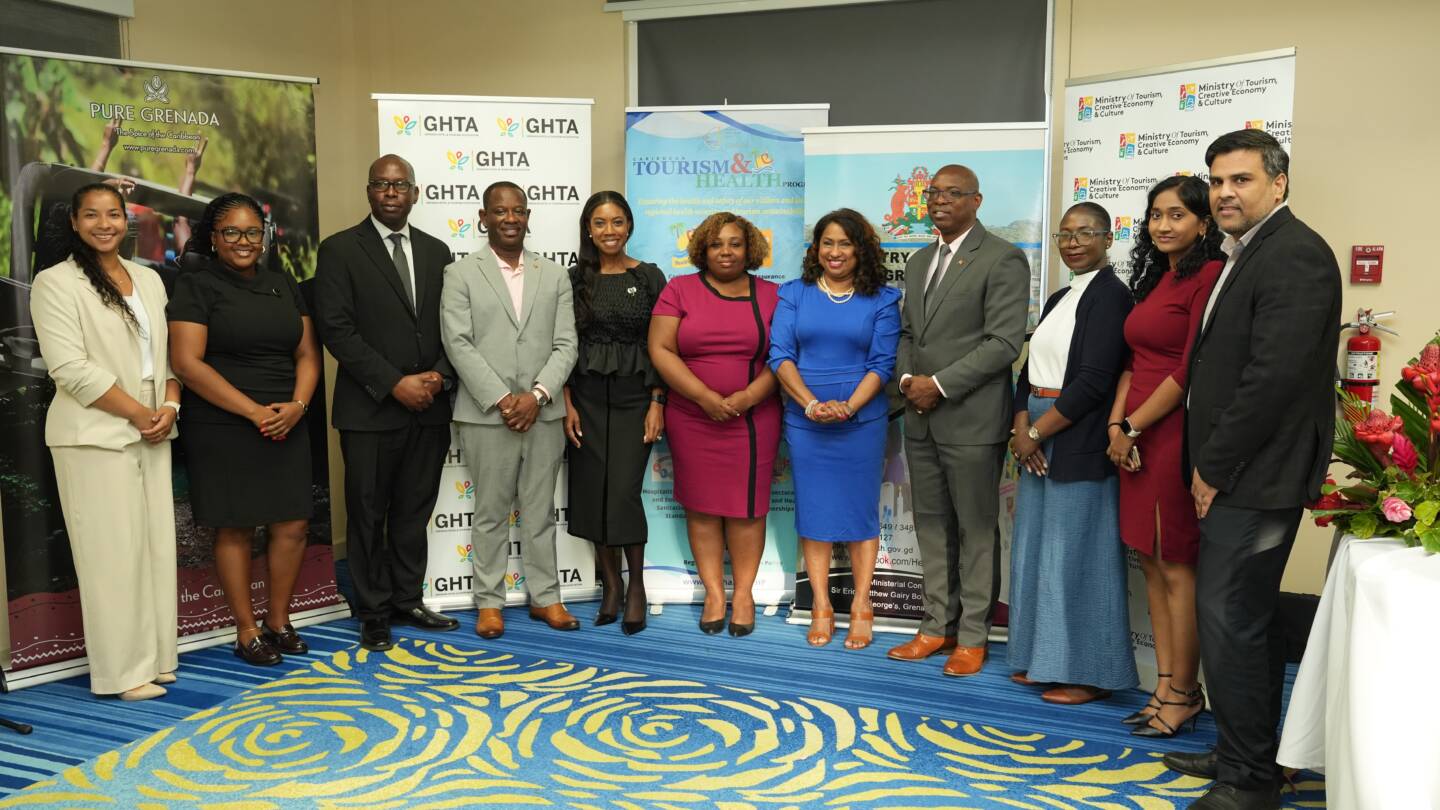
    Grenada has marked a major milestone for its critical tourism sector, becoming the 13th Caribbean nation to adopt the Caribbean Public Health Agency (CARPHA)-led Regional Tourism and Health Programme (THP). This region-wide initiative is designed to reinforce the long-term resilience, environmental sustainability, and global competitiveness of Caribbean tourism through targeted investments in cross-sector health security. The official launch of the programme took place on 28 May 2026 at Grenada’s Radisson Grenada Beach Resort, kicking off local implementation that will upgrade the island nation’s ability to track and address public health risks tied to travel and tourism. Through upgraded surveillance infrastructure, early threat detection systems, and coordinated multi-agency response protocols, THP will equip Grenada to respond faster to emerging public health events that could disrupt its tourism economy. Speaking at the launch ceremony, Minister of Health Hon. Philip Telesford, who officially inaugurated the programme, framed the initiative as both a critical public health safeguard and a high-impact strategic investment in Grenada’s economic future. “Tourism accounts for more than a quarter of Grenada’s gross domestic product and is one of our largest employers,” Telesford noted. “This new surveillance system acts as a persistent watchman, enabling us to identify potential public health threats at their earliest, most manageable stage. This effort is far more than a standard public health intervention: it is a strategic step to boost Grenada’s appeal as a travel destination, strengthen our industry’s ability to withstand shocks, and improve our overall preparedness.” Minister Adrian Thomas, who holds portfolios for Tourism, the Creative Economy and Culture, added that THP forms a core component of a broader national strategy to develop a healthier, safer, and more shock-resistant tourism sector. He extended recognition to CARPHA and the wide network of national and regional collaborating partners whose ongoing work has supported Grenada’s efforts to raise health and safety standards across every segment of its tourism industry. Thomas emphasized that the global COVID-19 pandemic laid bare the deep, inseparable connection between public health outcomes and tourism sector performance. “Uncertainty around health, safety, and food security can erode traveler confidence, deter cross-border travel, undermine investor trust, alter cruise line itineraries, threaten local jobs, and cut national revenue,” he explained. “We must maintain our commitment to training frontline tourism workers, strengthening surveillance systems for hotels and visitor sites, upgrading food safety and environmental health standards, integrating reliable health response planning to support our growing sports tourism goals, and ensure the Grenada tourism brand retains its reputation as a trusted, competitive, and resilient global destination.” Grenada’s Chief Medical Officer Dr. Shawn Charles also welcomed the launch of THP, stressing that timely detection and rapid response are non-negotiable for mitigating public health threats. “The ability to quickly detect, respond to, and report health-related incidents is critical to limiting disease transmission, stopping outbreaks from escalating, and protecting local communities,” Dr. Charles stated. “The Ministry of Health welcomes the standardized sharing of real-time data on health events across the tourism sector, and we are fully prepared to guide and support the rollout of evidence-based control measures as needed.” The launch ceremony also included addresses from Keston Daniel, CARPHA’s Visitor-Based Surveillance Coordinator, as well as Stacey Liburd, Chief Executive Officer of the Grenada Tourism Authority (GTA), and Arlene Friday, Chief Executive Officer of the Grenada Hotel and Tourism Association (GHTA). All three stakeholder leaders emphasized that the programme will play a key role in strengthening domestic and international confidence in Grenada’s tourism industry, and enhancing the destination’s long-standing reputation for safety and proactive preparedness. Parallel to the launch ceremony, a CARPHA delegation conducted an in-country working mission from 25 to 29 May 2026. During the mission, the team visited eight local tourism facilities to roll out training and introduce the Tourism Health Information System (THiS), a custom-built web-based platform that enables early reporting and real-time monitoring of public health events specifically for tourism properties. Six of the eight visited facilities have already completed registration on the THiS platform, bringing the total number of registered tourism entities across Grenada to 19. In addition to onboarding facilities to the new surveillance platform, the CARPHA delegation held working sessions with surveillance and environmental health officers from Grenada’s Ministry of Health to discuss the upcoming implementation and national rollout of two additional regional surveillance systems: the Caribbean Vessel Surveillance System and the Tourism and Mass Gathering Surveillance System. Both systems will further expand Grenada’s national public health surveillance capacity, creating a more robust, interconnected network of safeguards to protect both visitors and local communities.

  • Liberty Caribbean prepared for 2026 hurricane season

    Liberty Caribbean prepared for 2026 hurricane season

    As the 2026 Atlantic Hurricane Season approaches, regional telecommunications provider Liberty Caribbean – parent company of major brands Flow, Liberty Business and BTC – has formally announced it is fully prepared to maintain connectivity and support local communities when the season officially kicks off on June 1.

    With more than 100 years of operating experience across the Caribbean archipelago, the firm has made continuous investments to upgrade its emergency preparedness, network resilience and rapid response capabilities, positioning it to support residential customers, government agencies and entire communities through potential weather-related crises. The company’s announcement comes one year after Hurricane Melissa caused widespread damage across Jamaica, a disaster that highlighted just how critical resilient communications infrastructure and fast emergency response are for Caribbean nations.

    “Hurricane Melissa reminded us once again that connectivity is far more than technology. In moments of crisis, it becomes a lifeline for families, businesses, emergency responders, and governments,” explained Inge Smidts, Chief Executive Officer of Liberty Caribbean. “The lessons from that experience have further strengthened our resolve and accelerated our investments in network resilience, operational preparedness, and recovery capabilities across the region. We remain committed to ensuring our customers and communities can rely on us when it matters most.”

    Over the past 12 months, Liberty Caribbean has rolled out a series of targeted resilience upgrades across its multiple market footprints. In Jamaica, this has included large-scale investments in an enhanced next-generation mobile network, expanded spectrum capacity, diversified transport routes, hardened physical network infrastructure, expanded backup power systems, and additional network redundancy measures, all designed to boost service reliability and cut down recovery time after storms. Beyond infrastructure upgrades, the company has also run regular large-scale emergency simulation drills, updated fuel and logistics contingency plans, and coordinated closely across cross-functional teams in every operating market to guarantee rapid mobilization when extreme weather hits. Most recently, Flow Grenada completed a full emergency response drill in February 2026, with a second exercise scheduled immediately after the start of the season in June.

    Smidts emphasized that while no communications network can be completely immune to damage from extreme weather events, the company’s core priority remains building stronger, more adaptive and more resilient systems that can support Caribbean communities through both disruptions and post-storm recovery. “Our teams have worked tirelessly to modernise our infrastructure, strengthen operational readiness, and improve how we respond during emergencies. While no network is immune to extreme weather events, our focus remains on building stronger, smarter, and more resilient systems capable of supporting the Caribbean through disruption and recovery alike,” Smidts added.

    According to the latest 2026 Atlantic hurricane season forecast from the U.S. National Oceanic and Atmospheric Administration (NOAA), the season that runs from June 1 through November 30 has a 55% chance of being below average in activity, a 35% chance of being near average, and only a 10% chance of seeing above-normal storm activity. NOAA projects the season will bring between 8 and 14 named storms, defined as systems with sustained winds of at least 39 mph (63 km/h). Of these, 3 to 6 are expected to strengthen into hurricanes with winds of 74 mph (119 km/h) or more, and 1 to 3 of those are forecast to become major hurricanes (Category 3, 4 or 5) with winds exceeding 111 mph (178 km/h). By comparison, an average Atlantic hurricane season sees 14 named storms, seven hurricanes, and three major hurricanes.

    “We understand the responsibility that comes with serving the Caribbean. Our commitment extends beyond connectivity alone. It is also about supporting the resilience of the communities we serve and standing beside them before, during, and after times of crisis,” Smidts said.

    Lincoln Baptiste, Country Manager for Flow Grenada, noted that upgrades put in place after the impact of Hurricane Beryl have put the territory in a strong position. “We are confident in the upgrades made to the network and provisions made after the impact of Hurricane Beryl. Although we do not wish for a repeat of such natural disasters we are prepared for any disaster that may impact Grenada, Carriacou & Petite Martinique,” Baptiste said.

    To wrap up its preparedness announcement, Liberty Caribbean and Flow are urging all residential and business customers across the region to review their own personal and operational hurricane preparedness plans, and to stay updated on weather forecasts and official alerts throughout the 2026 season.

  • Two community-based groups raise concerns on behalf of Woodford residents

    Two community-based groups raise concerns on behalf of Woodford residents

    In the parish of St John, Grenada, a growing public debate over a large-scale industrial project in Woodford has put critical questions of planning governance, environmental stewardship, and community voice at the forefront of national discussion. Two grassroots community organizations have stepped forward to advocate on behalf of local residents, pushing for full compliance with existing laws and meaningful inclusion of local perspectives in development decision-making.

    The first organization, WE ACT — short for the Woodford Environmental Alliance for Community Transformation — was formed specifically in response to the proposed industrial development. The community-led group centers its work on upholding lawful development processes, protecting public health, and ensuring that national environmental and planning regulations are enforced consistently. Currently, WE ACT is pursuing legal action to challenge portions of the approvals and procedural steps granted to the project by Grenada’s Planning and Development Authority (PDA).

    The second group, the Future Builders Community Network, is a grassroots collective made up of young people and residents from Woodford and surrounding neighborhoods including Brooklyn, Concord, and Cotton Bailey. The organization’s broader mission focuses on building robust, inclusive community institutions, encouraging active civic engagement, amplifying youth participation, and guaranteeing that local input shapes long-term development outcomes for the region.

    Both groups have united to raise concerns over the ongoing industrial development, which is led by Rayneau Construction Group — a St. Lucia-based industrial and construction firm headed by prominent businessman Rayneau Gajadhar. The proposed project includes facilities for asphalt production, concrete batching, quarry-related operations, and supporting industrial infrastructure.

    Notably, residents are quick to clarify that their campaign is not a rejection of development entirely. Instead, their objections center on the procedural and regulatory approach taken by developers and regulatory bodies, particularly around compliance with planning legislation, the implementation of environmental safeguards, and the sequence of approvals relative to the start of construction work.

    Key among the community’s concerns are allegations that major construction activity began before full environmental assessments and regulatory reviews were completed. Residents have raised formal questions over whether the required Environmental Impact Assessment (EIA) and Environmental and Social Impact Assessment (ESIA) processes were fully finalized and approved before large-scale works commenced on the site.

    At its core, the dispute is a question of process and legal compliance: community organizers argue that planning and environmental laws are designed to govern development before construction breaks ground, not to be retroactively applied after significant, irreversible changes have already been made to the landscape. Additional concerns center on whether Woodford, a region characterized by residential neighborhoods and active agricultural land, is an appropriate location for heavy industrial activity that will bring increased heavy truck traffic, airborne emissions, dust pollution, and persistent noise pollution that disrupts daily life.

    As a small island developing state, Grenada’s economy is heavily dependent on tourism, agriculture, fisheries, and the ecological health of its natural environment. For residents, this means robust environmental protection is not just a quality-of-life issue — it is directly tied to the nation’s long-term economic survival and sustainable development. The debate has also been amplified by controversial comments made by Rayneau Gajadhar during a segment of the public broadcast *The Bubb Report*, appearing approximately two hours and 13 minutes into the program, where Gajadhar shared views on Caribbean labor history and development.

    Many listeners have characterized Gajadhar’s remarks as historically insensitive, particularly his framing of Caribbean labor and development narratives. Community leaders are calling for critical scrutiny of such perspectives when discussing development models for small island developing states, where the needs of local communities often take a backseat to large-scale industrial projects.

    Residents repeatedly emphasize that their concerns stem from a demand for better governance and greater accountability, not opposition to economic progress. They are calling for development that is transparent, fully compliant with national law, appropriately regulated, and inclusive of meaningful community consultation before permanent changes are made to residential landscapes. The groups also note that Grenada already faces multiple existing environmental pressures across the country, and adding heavy industrial activity near populated residential areas creates unacceptable cumulative risks to public health, community safety, and overall quality of life for local residents.

    WE ACT and the Future Builders Community Network stress that their stance is not anti-development — it is pro-process, pro-accountability under the law, and pro-meaningful community participation. Their core goal is development that strengthens local communities rather than displacing them, with a central argument that residential areas should never be treated as sacrifice zones for unregulated industrial expansion. Proper zoning and planning frameworks, they note, exist explicitly to prevent exactly this type of outcome.

    As small island states across the globe continue to navigate the delicate balance between pursuing economic growth and protecting environmental health and social stability, the controversy unfolding in Woodford serves as a high-profile example of why full legal compliance and meaningful public participation must be central to any development process.

  • CAIPO supports Grenada Chocolate Festival

    CAIPO supports Grenada Chocolate Festival

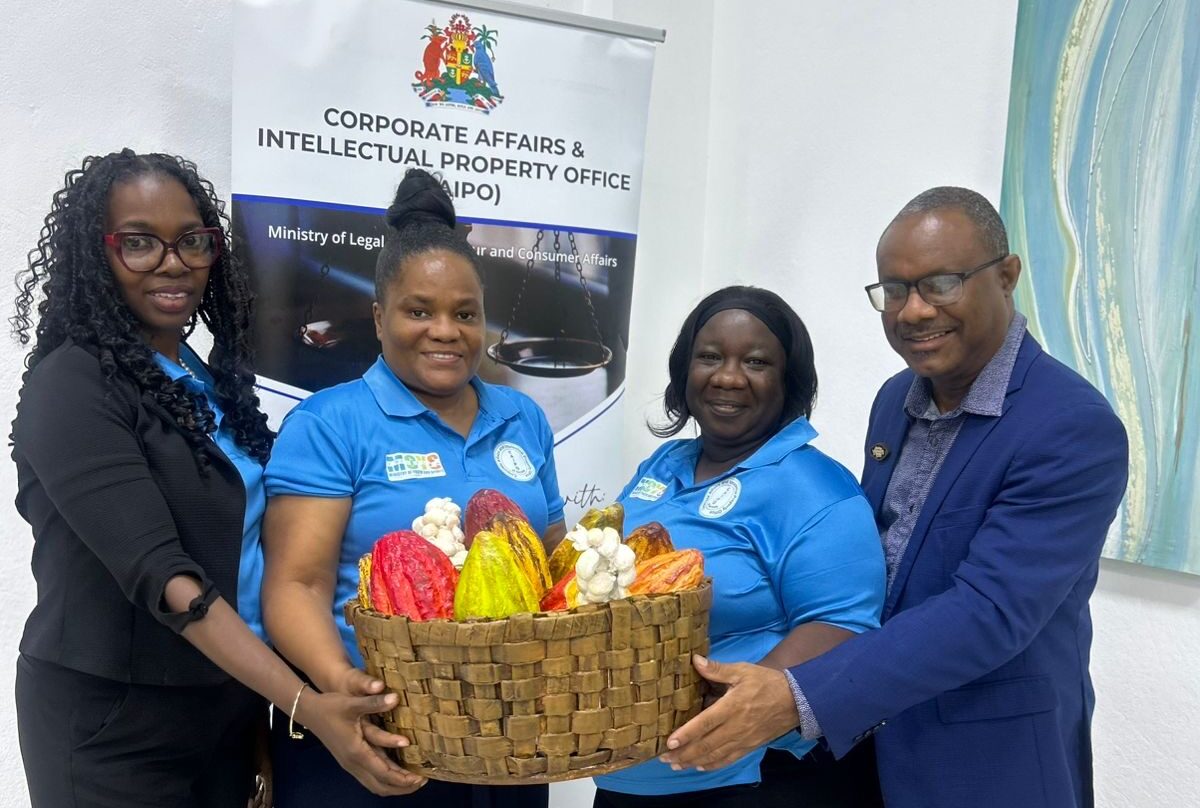
    The 13th iteration of Grenada’s iconic annual Chocolate Festival officially kicked off recently, with the opening ceremony backed by a collaborative partnership between the Corporate Affairs and Intellectual Property Office (CAIPO) operating under Grenada’s Ministry of Legal Affairs, Labour and Consumer Affairs, and the festival’s organizing committee. This year’s gathering centers on the theme “From Roots to Renaissance,” celebrating both the longstanding heritage of Grenada’s cocoa industry and its evolving future on the global stage.

    The opening event drew a diverse cross-section of key stakeholders spanning multiple connected sectors: from cocoa cultivation, chocolate production, and agriculture to tourism and intellectual property regulation. Attendees included leadership from the Grenada Cocoa Association, the Grenada Cooperative Nutmeg Association (GCNA), multiple government ministries, international development partners, independent artisan chocolatiers, smallholder and large-scale cocoa farmers, and visiting industry and policy experts from across the globe.

    Speaking on behalf of the Government of Grenada, Sen. The Hon. Claudette Joseph used her address to spotlight the island nation’s well-established international reputation as a leading producer of premium fine-flavoured cocoa. She emphasized that generations of dedicated Grenadian farmers have been central to nurturing the one-of-a-kind flavor profile and uncompromising quality that set Grenadian cocoa apart from global competitors. Beyond celebrating the festival’s milestone, the opening ceremony doubled as a critical national platform to advance conversations around formalizing Geographical Indication (GI) status for two of Grenada’s most iconic agricultural exports: Grenada Cocoa and Grenada Nutmeg. For context, Geographical Indications are a globally recognized form of intellectual property protection designed to safeguard products whose unique quality, reputation, and core characteristics are intrinsically tied to their geographic origin.

    CAIPO used the occasion to reaffirm its ongoing commitment to strengthening Grenada’s intellectual property regulatory framework, specifically through the active development of a national GI policy, supporting legislative frameworks, and formal technical standards for both Grenada Cocoa and Grenada Nutmeg. This regulatory work is being carried out in close coordination with key domestic stakeholders, including the Grenada Cocoa Association, GCNA, the Grenada Bureau of Standards, the Ministry of Agriculture, and the Ministry of Tourism. Robert Branch, Registrar of Corporate Affairs and Intellectual Property, explained that the GI initiative is a core component of the Grenadian government’s broader economic strategy to boost the global competitiveness of local origin-linked products, expand strategic branding opportunities, and increase the overall market value of these iconic goods.

    The 13th Chocolate Festival also created space for stakeholders to explore the future possibility of extending GI protection to Grenada Chocolate, a move that would further support the growth of value-added finished products within the island’s cocoa and chocolate sector. CAIPO also publicly acknowledged the ongoing support from its international development partners, particularly the Caribbean Intellectual Property Initiative (CarIPI) Project and the World Intellectual Property Organisation (WIPO). These organizations have provided critical technical guidance that has allowed Grenada to build out its GI regulatory infrastructure and expand productive engagement with industry stakeholders across the country.

    Attendees also highlighted an upcoming capacity-building initiative: the CarIP MentHERship Programme, titled “Women@Work With IP.” This targeted program is designed to support women entrepreneurs and professionals working in the chocolate sector and across Grenada’s broader intellectual property ecosystem, advancing gender equity in the industry.

    As Grenada continues to grow its international recognition for its premium, high-quality agricultural products, CAIPO has committed to continuing its work alongside local producers, industry partners, and global development agencies. The office’s core goal is to ensure Grenadian products receive robust intellectual property protection, gain targeted global promotion, and hold a strong competitive position in international markets. To close the event, CAIPO extended formal congratulations to the Grenada Chocolate Festival Committee, Grenada Cocoa Association, GCNA, local chocolatiers, and cocoa farmers for their ongoing work to preserve and elevate Grenada’s centuries-old cocoa heritage.

  • Cocoa and Spice fundraiser supports GHTA National Culinary Team

    Cocoa and Spice fundraiser supports GHTA National Culinary Team

    Against the backdrop of Grenada’s annual Chocolate Festival, the Grenada Hotel & Tourism Association (GHTA) brought the island’s food and hospitality community together on May 26 for its much-anticipated *Cocoa and Spice Everything is Nice* fundraiser, held at the popular waterfront venue Chez Louis. The evening blended vibrant local flavor, live entertainment, and collective community momentum, featuring musical performances from Grenadian artists Sabrina Francis and Cardell Byam to set a warm, festive atmosphere for attendees.

    Far more than a culinary celebration, the fundraiser served a critical purpose: rallying financial and public backing for the GHTA National Culinary Team, which is gearing up to compete for the top gold medal at the 2026 Taste of the Caribbean regional competition. Ahead of their big regional debut, the team used the event as an opportunity to showcase their competition-ready dishes and signature techniques to invited guests, highlighting the unique culinary identity the squad aims to bring to the international stage.

    Under the overall leadership of GHTA CEO Arlene Friday, the team is led by Team Manager Chef Andre Church, with logistical backup and mentorship from accomplished local and international culinary figures including Chef Belinda Bishop, Chef Ramces, and Francesco Schmidt. Attendees got an up-close look at the work of the team’s core members: Senior Chef Elvis George, Junior Chef Rashid Cromwell, Pastry Chef Sasha Lessey, and Mixologist Antonio Bayne. Every creation served throughout the evening drew direct inspiration from Grenada’s world-famous native cocoa and spice exports, turning each bite and sip into a celebration of the island’s agricultural and culinary heritage.

    In remarks during the event, Friday emphasized the unifying power of community-focused culinary gatherings like the fundraiser. “Events like Cocoa and Spice bring our culinary community together and build the momentum our team needs,” Friday said. “We are grateful to our partners and volunteers for their continued support as we prepare to represent Grenada on the regional stage.”

    The fundraiser would not have been possible without robust support from a broad coalition of local and regional sponsors, including GHTA’s Tourism Enhancement Fund, Westerhall Rums, SIFH Group, Umbrellas Beach Bar, Huggins, Blue Light Gin, Crayfish Bay, North South Wines, RTA Services, Flavours of Grenada, and venue host Chez Louis. Additional hands-on support came from culinary students at TAMCC and award-winning mixologist Lyndon from Silversands, whose contributions helped the event run smoothly.

    Team Manager Chef Andre Church echoed Friday’s gratitude, noting that every public demonstration and feedback session from the fundraiser helps the squad refine their craft ahead of competition. “Every tasting, critique and demonstration helps sharpen our performance,” Church said. “We’re proud to carry Grenada’s flavours with us and thankful to everyone who has supported our journey.”

    Looking ahead, the national culinary team will enter a months-long period of intensive training and preparation to fine-tune their menu and performance for the 2026 competition. GHTA has opened the door for members of the public and potential new supporters who wish to follow the team’s progress or contribute to their campaign: interested parties can reach the association directly at [email protected] for more information.

  • UN Tourism in support of Grenadian entrepreneur

    UN Tourism in support of Grenadian entrepreneur

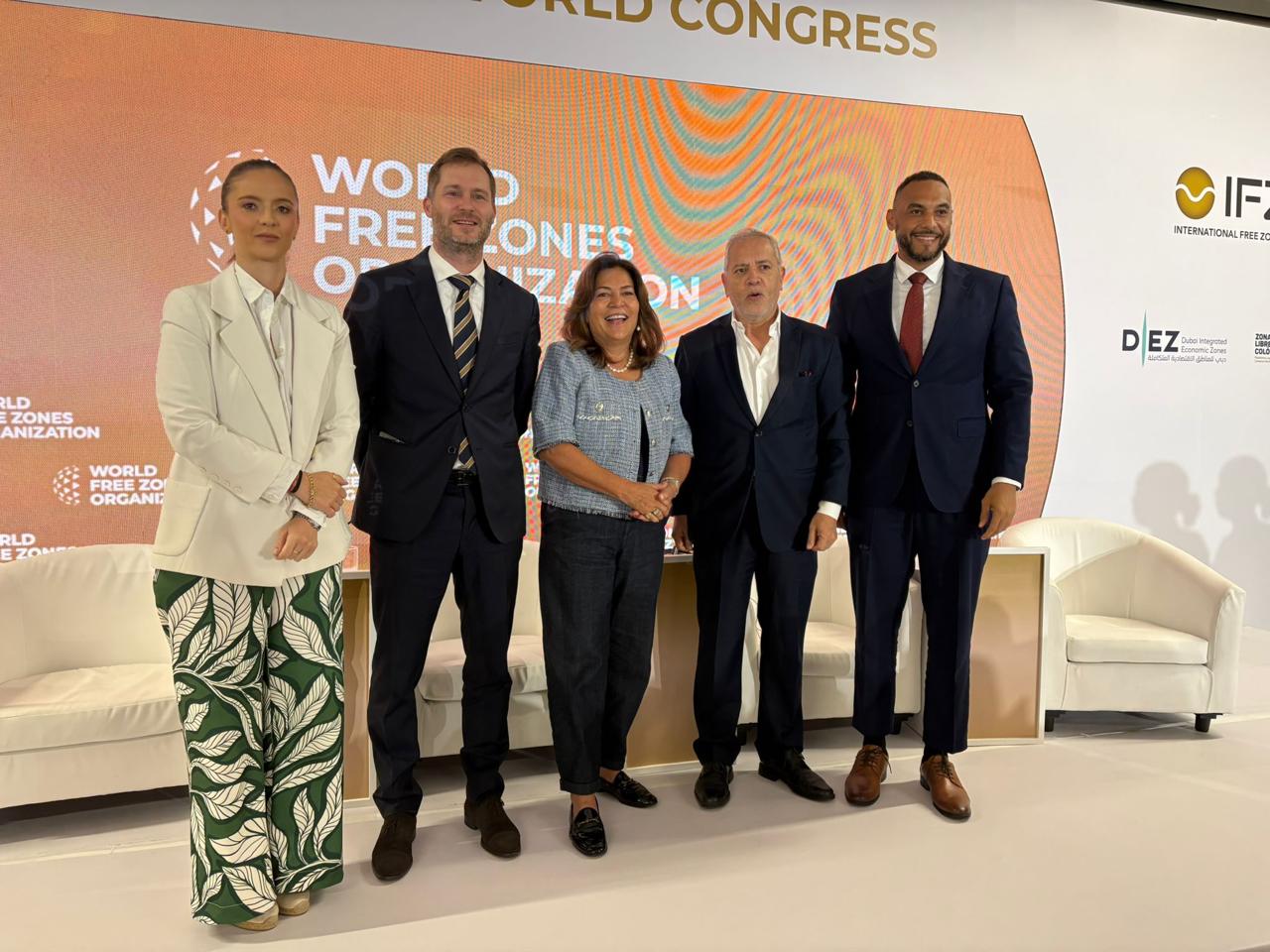
    At the 12th World Free Zones Organisation (WFZO) World Congress held in Panama, a landmark new joint report from UN Tourism and WFZO has placed Tourism Special Economic Zones (TSEZs) firmly at the center of global economic development discourse, with Citez Grenada Ltd. emphasizing the transformative potential of this model for small island developing states across the Eastern Caribbean. Titled *Rethinking Investable Destinations: An Approach to Tourism Special Economic Zones*, the report arrives at a critical juncture for the region, where governments and private stakeholders are actively pursuing new pathways to attract foreign capital, diversify traditional tourism offerings, uplift local cultural enterprises, and strengthen their overall global investment competitiveness.

    Cory Zufelt, founder of Grenada-based economic development firm Citez Grenada Ltd., joined a high-profile panel discussion at the congress titled Anchoring Tourism and Culture in the Knowledge Economy, alongside an international lineup of sector leaders including Peter Janech, UN Tourism’s Coordinator of Education, Innovation and Investments; Liriola Pitti, Executive Director of AEI Panama; and Juan Carlos Abud, Minister of Economic Development of Jujuy, Argentina. The conversation, moderated by Juliana Villegas Restrepo, Director of International Promotion and Business Development at Araújo Ibarra Consultores en Negocios Internacionales, centered on a paradigm shift in how global tourism is evaluated: no longer is success measured solely by annual visitor arrival numbers, but by tourism’s capacity to drive broad-based gains including cross-sector investment, innovative enterprise development, cultural export growth, high-skilled job creation, expansion of digital services, scaling of local small businesses, and long-term improvements to national economic competitiveness.

    Currently, Citez Grenada is collaborating directly with UN Tourism to advance planning for a more than 100-acre pioneering economic development project in the Eastern Caribbean, designed to test and demonstrate a modern, zone-integrated model that unites tourism, cultural enterprise, digital trade, workforce upskilling, streamlined investment facilitation, and inclusive local business participation.

    For small island developing states like Grenada, Zufelt argued, the rising global focus on TSEZs is inseparable from the region’s long-term economic future. “Tourism can no longer be seen only as a visitor economy,” he noted. “For small island states like Grenada, tourism must become a platform for investment, knowledge economy, business creation, skills development, digital services and export growth. The opportunity is to move from simply attracting visitors to building systems that allow visitors, investors, founders, diaspora members and local businesses to participate in the economy in a deeper way.”

    Citez Grenada’s analysis positions the country as having unique potential to emerge as a regional leader in this emerging development model, provided it moves quickly to update its national economic zone regulatory framework, and aligns public policy with priorities including expanded digital infrastructure, workforce development, and targeted investment attraction.

    The new UN Tourism-WFZO report formalizes TSEZs as a core pillar of next-generation special economic zone development, noting that modern TSEZ competitiveness extends far beyond traditional tax incentives. Instead, successful zones are defined by the quality of their overall ecosystem: including transparent, effective governance, fit-for-purpose infrastructure, end-to-end investor support, robust environmental stewardship, inclusive community participation, and strong interconnected supply chains that link the zone to the broader national economy.

    Zufelt emphasized that Grenada’s competitive edge extends well beyond its well-known natural beauty and tourism appeal. The country’s unique combination of strong business tourism infrastructure, growing digital connectivity, rich cultural heritage, established reputation for safety and quality of life, existing talent pool, deep diaspora connections, and strategic geographic location creates a powerful foundation for building a globally competitive, investment-ready TSEZ platform. “Grenada already has an emotional attraction. People love the country. The question now is how we convert that attraction into long-term value. How do we turn a visitor into an investor, a cultural experience into an export, a local product into a global brand, and a tourism destination into a knowledge economy platform?” he said.

    The proposed TSEZ model being developed for Grenada is structured to be led by the private sector, while building intentional, direct linkages that create opportunities for local workers, small and medium-sized entrepreneurs, domestic suppliers, cultural practitioners, and diaspora investors to participate in and benefit from the zone’s growth.

    Across the globe, Zufelt noted, nations are increasingly turning to zone-based development tools to attract global capital, improve national investment readiness, deliver critical infrastructure, diversify tourism economies, and build new sustainable engines of employment. With forward-thinking policy alignment, he argued, Grenada can capture a first-mover advantage across the Eastern Caribbean to position itself as a regional hub for TSEZ-led development.

    “This is a moment for Grenada to be bold but strategic,” Zufelt added. “The world is now looking at Tourism SEZs as platforms for sustainable investment and broader economic transformation. Grenada has the culture, the people, the location, and the brand but it must act fast. What is needed now is the framework to organise that opportunity.”

    Headquartered in Grenada, Citez Grenada Ltd. is a locally owned economic development company focused on building integrated platforms for trade, investment, business services, migration, workforce development, digital onboarding, tourism, culture, and future-focused industries. It is a member of the global Citez Global network, with a core mission to position the Eastern Caribbean as a strategic connection point for global business, investment, tourism, culture, innovation, and sustainable development. UN Tourism is the United Nations’ specialized agency leading global efforts to advance responsible, sustainable, and universally accessible tourism, serving as the leading global forum for tourism policy dialogue and a central source of sector knowledge for governments, destinations, investors, and industry stakeholders. The World Free Zones Organisation is the leading global body supporting special economic zones, free zones, and industrial parks, facilitating cross-border cooperation, knowledge sharing, policy dialogue, and dissemination of best practices to position zones as catalysts for inclusive, sustainable economic growth.

  • Can a lawyer serve 2 masters?

    Can a lawyer serve 2 masters?

    As Managing Partner of K C Legal Consultancy, Kevon K K Charles draws on years of frontline legal practice to unpack a growing tension at the heart of modern transactional law, particularly within the Caribbean legal landscape. For legal practitioners, scenarios that demand navigating conflicting duties are far from uncommon: a client brings a clear, straightforward transactional instruction, expecting their attorney to advance their goals, yet independent of the client relationship, a separate set of binding legal obligations requires lawyers to step beyond their role as a mere advocate for the client’s agenda. This conflict, Charles argues, is where the modern attorney’s most persistent professional challenge begins.

    The core identity of the legal profession has long been anchored to four non-negotiable foundational principles: unwavering loyalty to a client’s interests, strict protection of client confidentiality, preservation of independent professional judgment, and upholding legal professional privilege. These are not hollow theoretical concepts; they form the bedrock of trust that allows clients to speak openly to their legal advisors, disclose sensitive information, and seek guidance without fear of exposure. In recent decades, however, this traditional framework has been layered with an ever-expanding web of regulatory compliance obligations, most acutely felt in transactional work spanning property transfers, corporate structuring, and cross-border or domestic fund movements.

    Regulators now expect attorneys to conduct due diligence, ask targeted questions about transaction origins and intentions, and in some cases report suspicious activity to relevant authorities – obligations that do not stem from a client’s retainer, and that often exist in tension with traditional duties of loyalty and confidentiality. In practice, this conflict is rarely black and white. A transaction may appear fully legitimate on its face, the client may be a longstanding contact the attorney has worked with for years, and the corporate or property structure may be entirely conventional. Still, a subtle red flag can demand that an attorney pause, step back from advancing the transaction, and conduct further inquiry – a position that is rarely comfortable for either the practitioner or the client.

    This tension creates a two-pronged reality that all modern transactional attorneys must grapple with. First, practitioners are bound by strict rules of professional conduct laid out in the Legal Profession Act, which require attorneys to act with integrity, maintain independent judgment, and avoid facilitating unlawful or improper conduct. This means an attorney is never simply a passive conduit for a client’s instructions; they bear an independent responsibility to assess whether a transaction is legally proper, not just whether it can be executed.

    The second core consideration, and one that lies at the heart of public trust in the legal profession, is client confidentiality. For legal practice to function, clients must be able to speak freely and openly with their attorneys about every detail of their affairs. Without this guarantee of trust, an attorney’s ability to provide thorough, accurate legal advice is fundamentally undermined. The challenge of modern regulation, Charles explains, is that growing compliance expectations now operate alongside this longstanding principle. These new rules do not eliminate the protection of legal professional privilege, but they do demand that attorneys develop a far clearer understanding of where privilege ends and regulatory obligations begin.

    Many clients naturally ask: can information shared with my attorney still remain confidential? Charles confirms the answer remains yes – but it is no longer an unqualified absolute. The attorney-client relationship is still rooted in trust, but it now operates within a regulatory framework that imposes enforceable duties that extend beyond the bilateral client-lawyer relationship.

    In the Caribbean context, this balancing act is uniquely delicate. As Charles notes in his ongoing series of articles on wealth, property and regulation in the region, many Caribbean transactions grow out of decades-long personal and professional relationships, often built on informal arrangements and legacy structures that have evolved organically over generations. Information and arrangements that are universally understood within a family or local community do not always easily translate into the documented, verifiable proof that modern compliance frameworks require. This does not make the transactions improper, but it does demand a level of due diligence and care that was not required of Caribbean attorneys in decades past.

    Charles concludes by addressing the core question this tension raises: can attorneys truly serve two competing sets of obligations, or must the profession adapt to a new normal? Contrary to the framing of this conflict as serving two masters, Charles argues that modern practice simply requires attorneys to accept that both sets of obligations now exist side by side, and that the role of the contemporary attorney is to navigate this balance carefully. While this is rarely an easy position to occupy, it is one that is becoming increasingly familiar across the Caribbean legal sector, as regulation evolves to meet global standards.

    This analysis forms part of a continuing series examining the evolving intersection of wealth, property ownership, and regulatory compliance across the Caribbean. NOW Grenada notes that it is not responsible for the opinions and statements shared by contributing authors, and invites readers to report any abusive content via official channels.