标签: Grenada

格林纳达

  • Temporary suspension of services at Physical Ministry of Education location

    Temporary suspension of services at Physical Ministry of Education location

    Starting Wednesday, June 3, the Ministry of Education in Grenada will suspend all in-person services at its Tanteen, St. George headquarters for an initial 10-day period to allow for planned environmental upgrades to the building, the government agency confirmed in an official public announcement.

    The temporary closure of the physical office location is designed to enable contractors to complete environmental improvement work efficiently and without service disruptions to ongoing work. Ministry officials emphasized that while in-person visits will be paused, all core public services will remain fully operational through remote delivery channels, including dedicated phone lines and official email addresses for every department.

    In a statement released to the public, the Ministry noted that it does not expect the closure period to extend beyond the initial 1.5-week timeline. The public will receive timely, official updates on any adjustments to the schedule and confirmation when regular in-person service resumes at the Tanteen location.

    Leadership and staff of the Ministry have extended a sincere apology to all residents and service users for any inconvenience caused by this temporary operational shift, and expressed gratitude for the public’s patience and cooperation during the upgrade work.

    To ensure continued access to all services, the Ministry has published full contact details for every department, which are as follows:
    – General inquiries: [email protected]
    – Administrative Unit: [email protected]
    – Minister’s Secretary: [email protected]
    – Permanent Secretary’s Secretary: [email protected]
    – CEO’s Secretary: [email protected]
    – Senior Administrative Officer: Phone (473) 418-0714, (473) 423-0938
    – Personnel Unit: [email protected], Phone (473) 536-0723
    – Accounts Unit: [email protected] (email only)
    – Registry: [email protected] (email only)
    – School Administration and Management Unit: [email protected], Phone (473) 417-0739
    – Curriculum Unit: [email protected] (email only)
    – Examinations Unit: [email protected], Phone (473) 417-8795
    – Student Support Services Unit: [email protected], Phone (473) 415-1458
    – School Feeding Officer: [email protected] (email only)
    – Food Aid Coordinator: [email protected], Phone (473) 456-4054
    – Information Technology Unit: [email protected], [email protected], Phone (473) 406-9648
    – Human Resource Development Unit (Scholarship Desk): [email protected], [email protected], [email protected], [email protected], Phone (473) 417-9762
    – Early Childhood Education Unit: [email protected], [email protected] (email only)
    – Special & Inclusive Education Unit: [email protected], Phone (473) 534-0724
    – School Maintenance Unit: [email protected] (email only)
    – Projects Unit: [email protected] (email only)
    – Planning Unit: [email protected] (email only)
    – Lifelong Learning Unit: [email protected], Phone (473) 417-9762 / (473) 423-3859
    – Public Relations Unit: [email protected], Phone (473) 418-4403
    – Juvenile Administration Unit: [email protected], Phone (473) 415-1458
    – OECS Skills and Innovation Project (SKIP): [email protected] (email only)
    – Programme for Educational Advancement and Relevant Learning (PEARL): [email protected] (email only)
    – Youth Transformational Skills Programme (YTSP), Skills Delivery Unit: [email protected], Phone (473) 423-3939
    – UNESCO Secretariat: [email protected] (email only)
    – Drug Control Secretariat: [email protected] (email only)

    This announcement was published via NOW Grenada, which notes that it is not responsible for contributor statements or content, and invites users to report abusive content through official platform channels.

  • Grenada represented at 28th Caribbean Postal Union Conference

    Grenada represented at 28th Caribbean Postal Union Conference

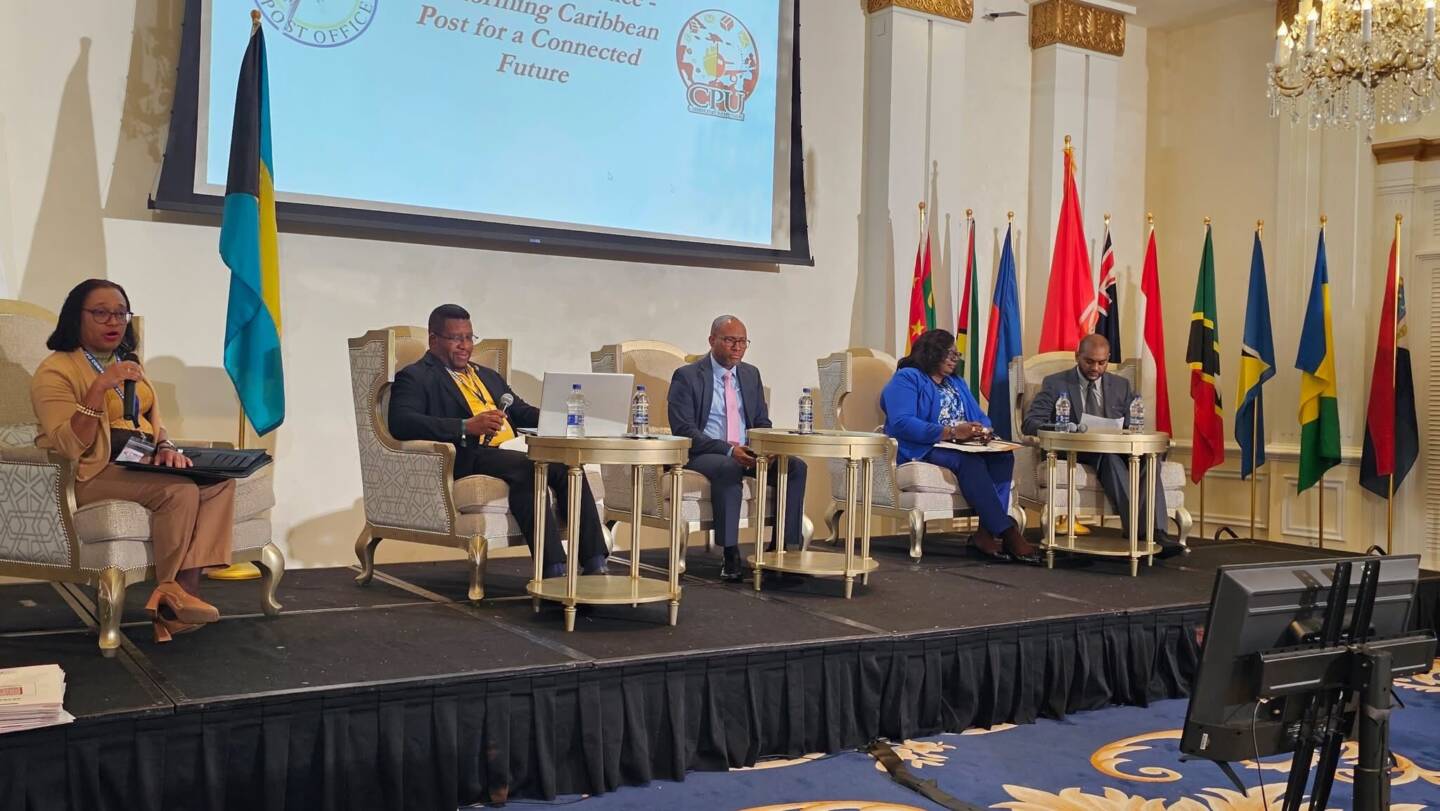
    The 28th Caribbean Postal Union Conference, themed “Leading for Resilience —Transforming Caribbean Posts for a Connected Future”, brought regional postal leaders together in Nassau, Bahamas from May 25 to 29, 2026, and the Grenada Postal Corporation (GPC) emerged as a key contributor to shaping the sector’s future across the Caribbean.

    Grenada sent a high-level delegation to the important regional gathering, led by Post Director Randal Robinson and Deputy Post Director Abeesha Toussaint-Maximay. Both delegates took active part in pivotal conversations focused on modernizing and strengthening postal services throughout the region, with GPC holding a prominent position in the conference’s technical program.

    On the second day of the conference, Toussaint-Maximay took on the role of moderator for a targeted panel discussion centered on artificial intelligence, digital transformation, and innovation in postal operations. The session delved into critical questions around how regional postal providers can adapt to sweeping industry changes, retain their competitive edge in an evolving digital landscape, and secure long-term operational and financial sustainability.

    The following day, Robinson joined the panel for discussions dedicated to postal sector growth, the rising impact of e-commerce, navigating evolving competitive markets, and building systemic resilience. During his participation, he outlined actionable strategies for developing customer-centric delivery ecosystems that meet modern consumer expectations, while also emphasizing the urgent need to strengthen interconnected regional postal networks to better serve cross-border communities and trade.

    According to GPC representatives, the organization’s active leadership and visible participation in these high-level regional discussions signals that Grenada’s postal expertise is earning growing recognition across the Caribbean. The delegation’s involvement also reaffirms GPC’s longstanding commitment to three core priorities: driving innovation, building systemic resilience that can withstand economic and operational shocks, and delivering consistent service excellence to Grenadian residents and regional partners.

    As the conference concluded, GPC noted that the organization remains dedicated to collaborative work alongside other regional postal entities to continue shaping a more connected, innovative, and resilient future for postal services across the entire Caribbean region.

  • Road closure: Scott Street, St George’s

    Road closure: Scott Street, St George’s

    Grenada’s traffic enforcement division, operating under the Royal Grenada Police Force (RGPF), has issued an official public advisory alerting all drivers and local residents to an upcoming long-term nightly closure of Scott Street. The shutdown is being implemented to make way for critical asphalt paving projects overseen by the National Water and Sewerage Authority (NAWASA), infrastructure work aimed at improving local road conditions.

    The traffic restriction is scheduled to launch on Tuesday, June 2, 2026, running nightly between the hours of 9 p.m. and 3 a.m. The closure will remain active indefinitely, with no set end date announced as of the advisory’s release. Authorities have confirmed the measure will stay in place until project leaders confirm the paving work is fully completed.

    To accommodate the Scott Street closure and prevent widespread traffic disruption across the downtown area, the RGPF Traffic Department has rolled out a series of adjusted traffic regulations and detour routes for motorists traveling through the affected neighborhood.

    For drivers heading along Halifax Street who need to reach HA Blaize Street, the official detour requires a left turn onto Church Street, followed by a right turn onto Lucas Street to connect to the destination. This re-routing is designed to distribute traffic flow evenly across adjacent side streets and avoid bottlenecks around the construction zone.

    Along with the detour, Church Street will shift to one-way traffic operations for the duration of the paving project. The single direction of travel runs from the street’s intersection with Halifax Street toward Cemetery Hill, a change that aligns with the detour layout to prevent two-way traffic conflicts.

    Three additional access restrictions have been put in place to support the adjusted traffic plan. No vehicles will be permitted to enter Church Street from its intersection with Market Hill, Young Street from its intersection with the Carenage public road, or Monckton Street from its intersection with Matthew Street. These no-entry rules are intended to keep the modified traffic network flowing smoothly.

    Parking restrictions have also been enacted for the project’s duration: all on-street parking on Scott Street will be prohibited for the entire length of the paving works, to create clear space for construction vehicles and equipment.

    In closing the advisory, the Royal Grenada Police Force extended a formal apology for any travel delays or inconvenience the road closure and adjusted regulations may cause for local residents, commuters, and businesses. Officials also noted they are expecting full cooperation and compliance from all road users throughout the project to help ensure work is completed as quickly and safely as possible.

    The advisory was officially released by the Office of the Commissioner of Police, the governing body of the RGPF.

  • Jamora Alves secure NCAA Finals spot

    Jamora Alves secure NCAA Finals spot

    Grenadian track and field standout Jamora Alves has delivered a career-defining performance at the NCAA Division I East First Round, hosted in Lexington, Kentucky, shattering her own Grenadian national senior record in the women’s discus throw to punch her ticket to the national championships. The Carriacou native, who competes collegiately for St. John’s University, logged a stellar winning throw of 57.56 meters on Saturday, May 30, 2026, beating her previous national record mark of 55.89 meters and claiming third place overall in the qualifying event.

    Alves’ latest record-breaking achievement cements her status as the most decorated student-athlete in St. John’s University track and field history. Over the course of her collegiate career, the 2026 graduating senior has amassed nine individual conference and event titles, the highest number of individual titles ever claimed by any athlete in the university’s program history. Her dominant 2026 season came on the heels of a groundbreaking 2025, when she erased a 43-year-old school shot put record that had stood for decades. Earlier in 2026, she added another historic milestone to her resume, shattering a 28-year-old school discus record at the Big East Championships. At that same conference event, Alves secured gold medals in both the women’s shot put and discus throw, earning her the honor of Women’s Most Outstanding Field Performer and clinching her second career outdoor shot put conference title. Most recently, her 2026 indoor season performance earned her Indoor Track and Field MVP honors at the St. John’s Athletic Department’s 79th Annual Awards Celebration, in recognition of her consistent excellence.

    With her result at the East First Round, Alves has officially secured a spot at the 2026 NCAA Division I Outdoor Track and Field National Championships, which will run from June 10 to 13 at Eugene, Oregon’s iconic Hayward Field. This appearance marks the third time the Grenadian star has qualified for the prestigious national finals, a rare feat that underscores her sustained elite performance. She previously competed at the 2023 finals, where she placed 22nd overall with a 50.08-meter throw, and returned to the event in 2025 to place 19th with a personal best 52.70-meter throw at the competition.

    On the global rankings front, Alves’ new personal best has cemented her rising status in international track and field. She currently holds the number one ranking in the Organization of Eastern Caribbean States (OECS) sub-region, 10th in the Central American and Caribbean (CAC) region, 14th across the Commonwealth, 31st in the North American, Central American and Caribbean Athletic Association (NACAC) region, and 81st in the global women’s discus rankings. These strong rankings position her as a near-certain selection for the Grenadian national team for upcoming regional and international competitions. She last represented Grenada on the international stage at the 2025 Pan American Junior Championships.

    In a heartfelt social media post reflecting on her journey as she prepares to graduate from St. John’s, Alves opened up about the sacrifices that brought her from her small Caribbean home to the upper echelons of U.S. collegiate athletics. “They’ll see the medals, the records, and the NCAA appearances, but they’ll never fully see the sacrifices it took to get here,” Alves wrote. “Being a student-athlete taught me strength beyond the throwing circle. From Grenada to the NCAA stage, I carried not only my dreams, but the dreams of everyone who believed in me.”

    As a member of the St. John’s Class of 2026 heading to the Oregon national finals, Alves not only carries the top athletic honors for the “Spice Isle” of Grenada in the discus event, but also stands as a leading ambassador for Grenadian sport on the global collegiate and international stage.

  • Jamara Patterson first Grenadian woman over 400m

    Jamara Patterson first Grenadian woman over 400m

    Grenada’s rising track and field star Jamara Patterson has etched her name into the country’s athletic history books, delivering a series of record-breaking performances on the U.S. collegiate circuit that have cemented her status as one of the region’s most exciting young quarter-milers. A former athlete at St Joseph’s Convent St George’s who now competes for Louisiana Tech University, Patterson is the first Grenadian woman since iconic sprinter Hazel-Ann Regis to break the 51-second barrier in the women’s 400-meter dash.

    Patterson’s historic post-season run kicked off at the 2026 Conference USA Outdoor Track and Field Championships, held on Saturday, May 16. She claimed the 400m title at the event with a then-personal best time of 51.43 seconds, a mark that shattered the 19-year-old meet record of 51.74 seconds set by Houston’s Ebonie Floyd back in 2007.

    Carrying the momentum of that championship win, Patterson headed to the 2026 NCAA Division I East First Round in Lexington, Kentucky, where she delivered an even more impressive performance. In the preliminary heats on Thursday, May 28, she clocked a massive new personal best of 50.98 seconds, and backed up that world-class result in the quarterfinals to secure her spot among the top elite collegiate 400m runners in the United States.

    This historic result also moves Patterson to second place on Grenada’s all-time women’s 400m rankings, sitting only behind Regis’ long-standing national record of 50.64 seconds. On the regional and global stage, Patterson’s breakthrough has turned heads across the track and field community: this season, she ranks second in the Organization of Eastern Caribbean States (OECS) region, trailing only Vincentian Olympian Shafiqua Maloney, while climbing to 11th in the Central American and Caribbean (CAC) rankings and 15th across the Commonwealth.

    With two major international championship events on the 2026 summer calendar, local sporting officials in Grenada are closely tracking Patterson’s rapid development ahead of her scheduled appearances. The XXV CAC Games are set to run from July 24 to August 8 in Santo Domingo, Dominican Republic, while the 2026 Commonwealth Games will kick off later this year in Glasgow, Scotland.

    Johnell Mitchell, First Vice President of the Grenada Athletic Association (GAA), highlighted the significance of Patterson’s achievement for the small Caribbean nation. “Jamara’s performance speaks volumes since it’s been some time that we’ve had a female quarter miler threatening the national record,” Mitchell explained. “Additionally, this is a reminder that as a federation we need to continue on the present trajectory of providing opportunities for our budding athletes to showcase their talents.”

    Both the GAA and the Grenada Olympic Committee (GOC) are continuing to monitor Patterson’s progress as she solidifies her reputation as a top contender for the tri-island nation ahead of the busy summer international competition window.

  • Canada-funded STAR-Fish ramps up clean energy interventions for Caribbean fisheries

    Canada-funded STAR-Fish ramps up clean energy interventions for Caribbean fisheries

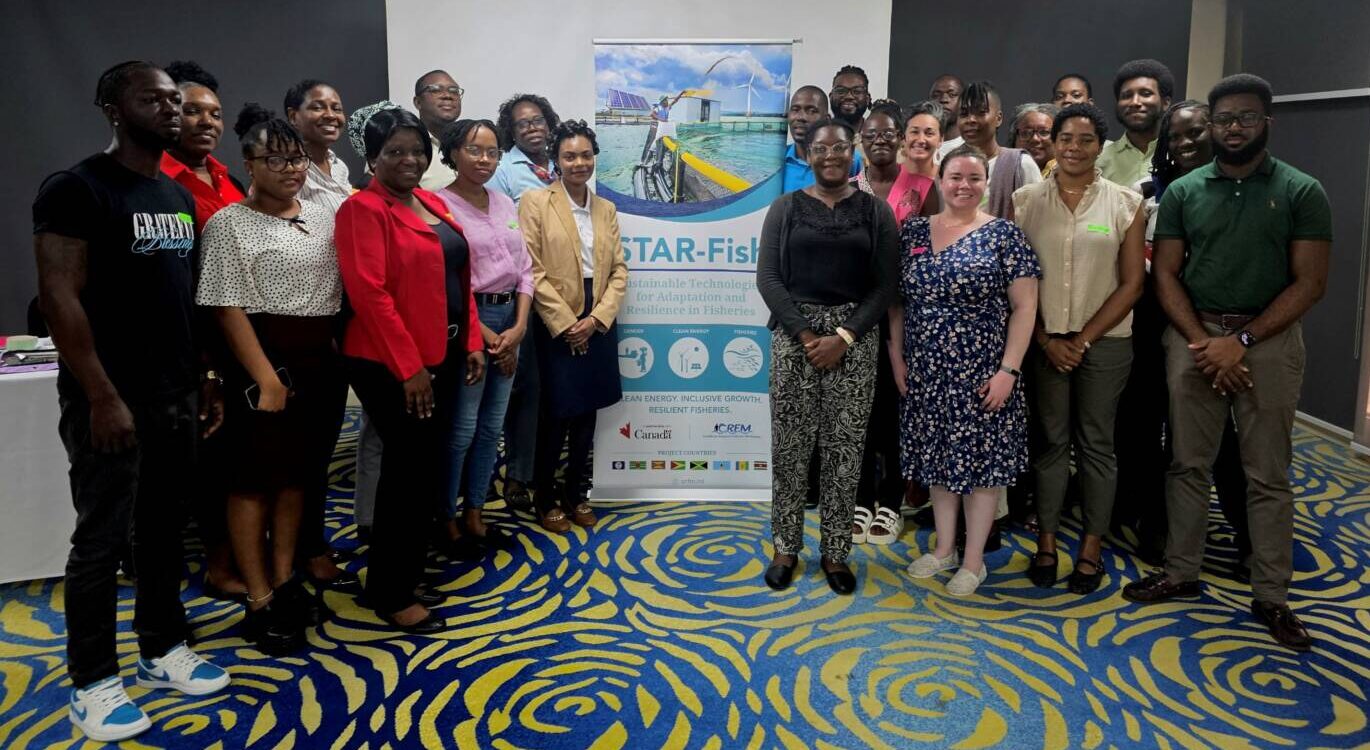
    The Caribbean’s fisheries and aquaculture sectors, long foundational pillars of regional food security, livelihoods, and economic growth, face mounting dual pressures: skyrocketing global energy costs and accelerating climate change impacts that threaten the sustainability of small and large fishing operations across the region. In response, the Caribbean Regional Fisheries Mechanism (CRFM) is accelerating the rollout of clean energy interventions through its $4.324 million CAD flagship initiative, the STAR-Fish Project, short for Sustainable Technologies for Adaptation and Resilience in Fisheries.

    Eight Caribbean nations are participating in the project: Belize, Dominica, Grenada, Guyana, Jamaica, St Lucia, St Vincent and the Grenadines, and Suriname. The core mission of the initiative is to boost both the resilience and market competitiveness of regional fisheries and aquaculture by shifting to low-carbon development models and deploying accessible clean energy infrastructure. Planned interventions span multiple stages of the fisheries value chain, from on-shore processing to distribution: key activities include identifying and rolling out appropriate renewable energy technologies, building energy-efficient cold storage facilities to strengthen cold chain logistics and reduce post-harvest waste, and providing targeted support for participating fisheries to earn international low-carbon sustainability certification.

    At the project’s second Regional Project Steering Committee Meeting, held May 14, 2026, Sherron Barker, the STAR-Fish Project’s Regional Coordinator, formally presented the approved 2026–2027 Work Plan and Budget, which will guide the initiative’s third implementation phase. Near-term priorities outlined in the new work plan include developing bankable, locally adapted business models to attract private and public investment in clean energy technologies, supporting the conversion of existing fossil fuel-powered fish processing facilities to low-carbon energy systems, and expanding market access for fisheries that earn low-carbon certification.

    Ena Ćimić, STAR-Fish Project Lead at the High Commission of Canada to Jamaica, which funds the initiative through Global Affairs Canada (GAC), opened the meeting by acknowledging the outsized role the sector plays across the Caribbean. “The Caribbean’s fisheries and aquaculture sectors are important drivers of economic activity, livelihoods, and food security across the region,” Ćimić noted, adding, “the sectors also remain highly vulnerable to climate change, rising energy costs, and evolving market demands.”
    Ćimić emphasized that the project’s design addresses these vulnerabilities holistically: “The activities implemented through this project position STAR-Fish to further strengthen institutional capacity, advance gender-responsive approaches, and support the adoption of sustainable energy technologies within the fisheries and aquaculture sector, while also improving access to finance, enhancing competitiveness, and building resilience to climate and disaster risks across participating countries.”

    Reflecting on the project’s progress over the previous implementation year, CRFM Secretariat Executive Director Dr. Marc Williams noted that the second year marked a critical turning point for the initiative, moving from foundational planning and research to coordinated, on-the-ground implementation across all participating nations. Key technical milestones achieved in the prior year included advancing work on renewable energy business model development, standardized carbon footprint measurement for fisheries operations, and establishing frameworks for low-carbon certification. One of the most significant achievements of the reporting period, Dr. Williams highlighted, was the completion of groundbreaking work on gender equality and social inclusion in the clean energy transition for Caribbean fisheries. This work has deepened regional understanding of how gender and social disparities shape access to the benefits of clean energy upgrades, supported the development of national and regional Gender Action Plans (GAPs) for Belize, Grenada, Jamaica, and St. Vincent and the Grenadines, and expanded gender-responsive capacity building and inclusive stakeholder engagement across all participating countries.

    GAC has welcomed the project’s intentional gender-inclusive approach, Ćimić confirmed, noting that this focus is critical to ensuring that the gains of the clean energy transition are shared equitably across all segments of fishing communities. “This aligns with Canada’s priorities of advancing gender equality, climate action, and sustainable, inclusive growth, while also supporting expanded trade opportunities in the region,” she said, reaffirming GAC’s long-term commitment to supporting the CRFM-led initiative.

    As the project enters its third implementation year, Dr. Williams noted that the initiative now has all the foundational structures in place to deliver tangible results: “We enter Project Year 3 with activities underway, strengthened governance arrangements, and a clearer pathway toward the practical application of renewable energy solutions across fisheries value chains in the Caribbean.”
    Ćimić closed the meeting by reaffirming the shared commitment of all partners to the project’s mission: “We look forward to continuing to work with all of you to support effective implementation and to contribute to a more resilient, sustainable, and inclusive Caribbean fisheries sector.”

  • Anderson Peters starts 2026 Diamond League campaign with Rabat victory

    Anderson Peters starts 2026 Diamond League campaign with Rabat victory

    Two-time world champion and Olympic bronze medalist Anderson Peters of Grenada launched his 2026 Wanda Diamond League season with a statement win, claiming the men’s javelin gold at the Rabat leg of the series in Morocco with a top mark of 86.08 meters. The result marks a promising opening to the 2026 international track and field circuit for Peters, who has long held his status as one of the globe’s top-ranked javelin throwers. Currently sitting 4th in the World Athletics men’s javelin world rankings, Peters has consistently cemented his place among the sport’s elite in recent seasons, and his opening victory in Rabat has only built early momentum for his 2026 campaign. Next up, Peters is set to compete at the Golden Gala Pietro Mennea, the Rome stop of the Diamond League, scheduled for June 4. The men’s javelin event is slated to kick off at 7:10 p.m. local time in Rome, which translates to 1:10 p.m. in Peters’ home country of Grenada. Fans across Grenada, both at home and in diaspora communities abroad, are already tuning in to follow his progress as he carries the nation’s flag on one of track and field’s biggest global stages. Reflecting on his opening win, Peters emphasized the significance of a strong start while keeping his focus locked on upcoming competitions. “Opening the season with a win is always a good feeling,” he shared. “Rabat was a solid start, but the focus now is on continuing to build, staying consistent, and sharpening for the meets ahead. Every competition is an opportunity to grow, and I am proud to keep representing Grenada at this level.” Off the track, Peters continues to receive sustained backing from both local and international brand partners that enable him to compete at the highest level. Domestically, he holds a brand partnership with Republic Bank (Grenada) Limited, while he also serves as a global ambassador for sportswear giant Adidas. These partnerships highlight both the international draw of Peters’ athletic profile and the foundational support that has helped fuel Grenadian sporting success on the world stage. As he finalizes preparations for his Rome appearance, Peters remains a source of immense national pride for Grenada, inspiring a new generation of athletes in the small Caribbean nation with his consistent elite performances. With a winning opening already in the books, all eyes in Grenada and across the track and field world will be on Peters when he steps into the field in Rome this Thursday.

  • Central Procurement Unit to host symposium on strengthening public procurement

    Central Procurement Unit to host symposium on strengthening public procurement

    Grenada’s Central Procurement Unit (CPU), operating under the country’s Ministry of Finance, has partnered with the Climate-Resilient Water Sector in Grenada (G-CREWS) Project to organize a landmark two-day national procurement symposium. Slated for June 10 and 11, 2026, the event will be hosted at the Radisson Beach Resort in Grand Anse, with daily sessions kicking off at 9:00 a.m. and centered around the official theme “Smart Bidding, Stronger Partnerships.”

    The symposium is designed to convene a broad cross-section of stakeholders active in Grenada’s public procurement ecosystem, including sitting public officers, private contractors, local and national suppliers, independent consultants, and other key industry players. Core goals of the gathering include deepening participants’ working knowledge of official government procurement protocols, reinforcing adherence to regulatory compliance standards, and building more productive collaborative ties between the country’s public and private sectors.

    This strategic initiative is a core component of the Government of Grenada’s broader long-term push to modernize the nation’s public procurement systems. Beyond procedural updates, the government aims to boost transparency across all procurement activities and expand equal access to contracting opportunities for vendors operating in every region of the country. Attendees will gain actionable insights through a structured program of expert-led presentations and interactive working sessions, covering core topics from standard procurement procedures and mandatory compliance rules to the emerging framework of green procurement aligned with Grenada’s climate action goals.

    Several targeted highlights are baked into the symposium’s agenda. First, sessions will walk participants through industry best practices for developing bids that are both competitive and fully compliant with current regulatory requirements. Second, leading regulatory experts will share clear, up-to-date insights into Grenada’s latest procurement regulations, step-by-step procedural workflows, and official bid evaluation processes. Third, the event will build in dedicated time for direct, one-on-one engagement between attending vendors and senior procurement professionals, as well as technical specialists from the CPU.

    The Ministry of Finance has issued an open call to all contractors, suppliers, service providers, and public officers engaged in any form of procurement activity across the country to register and take part in this pivotal industry forum. In a statement announcing the event, the CPU reaffirmed its ongoing commitment to nurturing a fair, transparent, and modern procurement environment that directly advances Grenada’s national development priorities and creates new, sustainable growth opportunities for domestic businesses of all sizes.

    *Disclaimer: NOW Grenada holds no responsibility for opinions, statements, or third-party media content shared by contributing entities. Individuals may report content violations through the platform’s official abuse reporting channel.*

  • Grenada hosts validation workshop

    Grenada hosts validation workshop

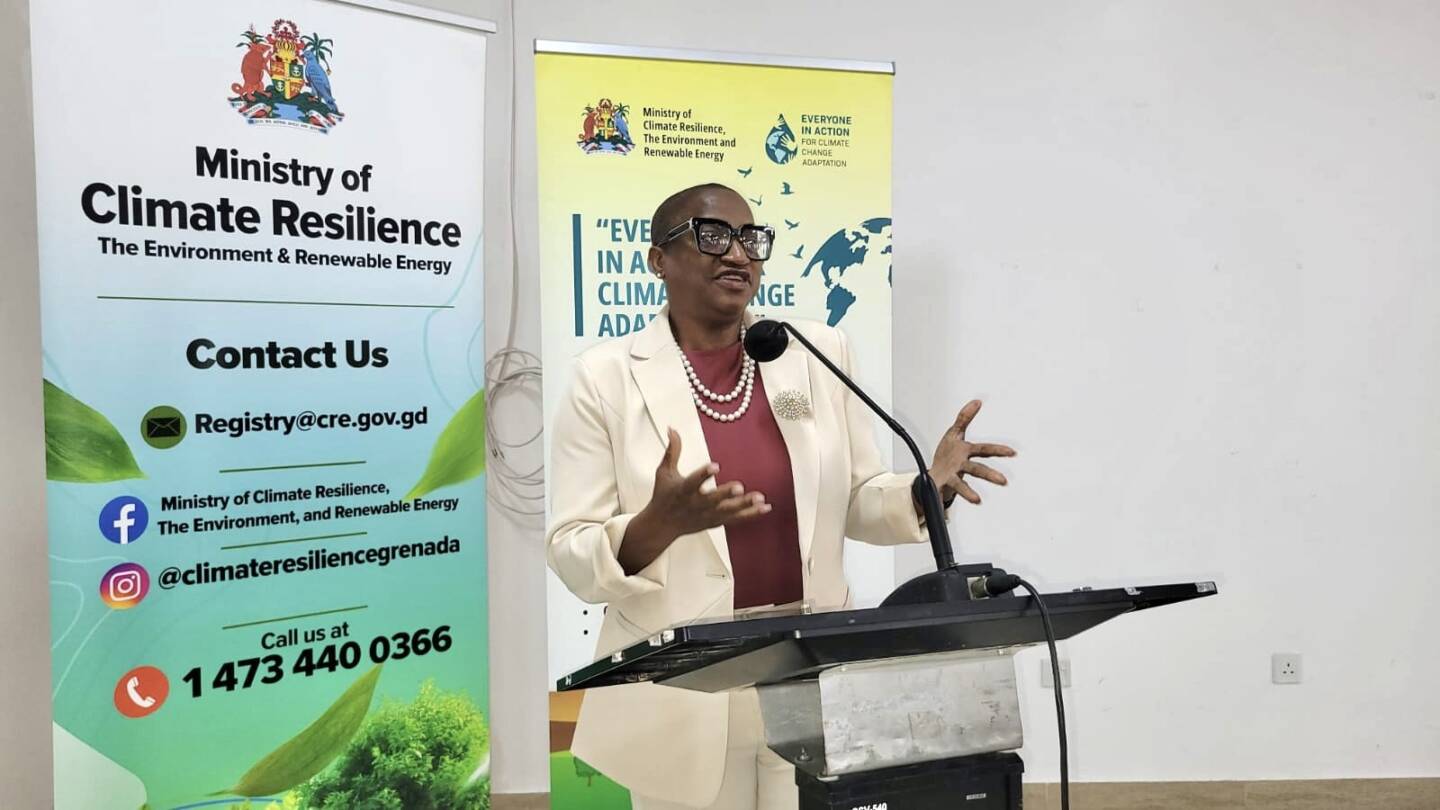
    On June 1, 2026, Grenada’s Ministry of Climate Resilience, the Environment and Renewable Energy marked a major milestone in the island nation’s ongoing push to strengthen climate preparedness, hosting a full stakeholder validation workshop for the *Citizen’s Guide to Climate Change Adaptation for Grenada, Carriacou and Petite Martinique* at St. George’s Kirani James Athletic Stadium.

    The workshop gathered a cross-section of key actors, from senior government ministry and agency officials to civil society leaders, community organizers, academic researchers, youth delegates, and international development partners. The group’s core task was to review and sign off on the revised draft of the guide before it enters its final editing stage and official public release. This validation session forms an integrated part of the ministry’s broader work to boost public awareness, inclusive participation, and collective ownership of climate adaptation initiatives outlined in Grenada’s updated 2025–2030 National Adaptation Plan (NAP).

    The revised draft presented at the June workshop was built on iterative stakeholder feedback collected during an earlier Focus Group Session held on April 27, 2026. During that initial meeting, participants conducted a line-by-line review of the guide’s zero draft and submitted detailed recommendations to refine its structure, accessibility, clarity, on-the-ground relevance, and practical usability. All of these suggestions were integrated into the revised version, with key updates including simplified, jargon-free language, clearer alignment with national climate adaptation priorities, real-world examples of actionable adaptation measures, and enhanced visual design to make the content more approachable for general readers.

    In his opening address to attendees, Permanent Secretary Peron Johnson emphasized that the core mission of the guide is to demystify national climate policy for everyday Grenadians. “The National Adaptation Plan is a critical national framework for building resilience across all sectors of our economy and society. However, formal policy documents can often be highly technical and inaccessible to the average person. The Citizen’s Guide is intended to bridge that gap by translating complex adaptation concepts into information that households, communities, schools, businesses, civil society organisations, and citizens can understand, relate to, and act upon.”

    Johnson went on to stress that climate resilience cannot be delivered by the government alone; it requires collective, informed engagement from every segment of Grenadian society. “Climate resilience will only be achieved when adaptation becomes everyone’s business. This Guide is designed to empower citizens with the knowledge needed to understand climate risks, identify opportunities for action, and contribute meaningfully to building a more resilient Grenada, Carriacou and Petite Martinique.”

    National Adaptation Plan Officer Dr. Roxanne Graham-Victor highlighted that inclusive stakeholder engagement has been central to the guide’s entire development process, noting that the validation workshop was a critical step to ensure the final document meets the practical needs of its target audience. “The objective of this process is to ensure that the Guide is clear, practical, accessible, and useful to the people it is intended to serve. Stakeholder feedback remains central to achieving that objective,” she explained.

    Acting Director of Climate Resilience Titus Antoine added that the guide will serve as a cornerstone public resource to support full implementation of the National Adaptation Plan and deepen ongoing public participation in national climate action.

    The ministry extended formal gratitude to all workshop participants for their input and sustained commitment to advancing Grenada’s climate resilience goals. It also gave special recognition to the National Adaptation Plan Global Network and the International Institute for Sustainable Development (IISD) for their long-standing technical and financial support to strengthen Grenada’s adaptation planning systems and make the development of the Citizen’s Guide possible.

    Following the conclusion of the workshop, the guide’s drafting team will implement the final round of stakeholder recommendations. Once finalized, the document will be distributed across all three islands as a foundational public resource to support climate adaptation education, awareness, and local action.

  • The Archbishop and the Chambermaid

    The Archbishop and the Chambermaid

    For decades following the end of colonial rule, small Caribbean nation-states have navigated a persistent, unresolvable contradiction at the heart of their regional identity and foreign policy. These countries publicly uphold the values of national sovereignty, cross-border solidarity, anti-imperialism, and regional fraternity, but they must operate in a global order defined by crippling power asymmetries—economic, military, and political—that tilt the playing field sharply against smaller actors. Nowhere is this tension more acute than in the region’s current fraught positioning between Cuba, Venezuela, and the United States.

    On the surface, the choice appears to be a simple binary: stay loyal to Cuba, a decades-long ally and benefactor to the region, or realign to align more closely with Washington, the undisputed dominant superpower of the Western Hemisphere. But the reality is far more nuanced, with Venezuela sitting at the core of the calculus across economic, ideological, geographic, and military lines. Today, Caribbean nations find themselves pulled in conflicting directions by gratitude, strategic fear, moral principle, and the raw imperative of national survival.

    Cuba’s role in the Caribbean extends far beyond transactional diplomatic exchange. For generations, Havana has supported the region in ways that major global powers never prioritized. Cuban medical professionals have staffed under-resourced rural clinics across dozens of Caribbean islands, and Cuban disaster response brigades have deployed immediately after hurricanes, disease outbreaks, and other catastrophic events when international support was slow to arrive. When Western university education was out of financial reach for most Caribbean young people, thousands earned full scholarships to study medicine in Havana. Today, entire national healthcare systems across the region remain deeply dependent on Cuban medical personnel.

    This bond is rooted in more than aid: it grows from a shared history of colonial exploitation, racial justice struggles, geographic vulnerability, and collective resistance to external domination. Like individuals, nations remember unwavering loyalty when it was offered when no one else would step forward.

    The regional solidarity network deepened dramatically with the launch of Venezuela’s PetroCaribe initiative. The program offered Caribbean nations heavily subsidized oil on generous concessionary terms, giving fragile, debt-burdened regional economies critical breathing room during periods of energy crisis, fiscal collapse, and global market shock. PetroCaribe was never just an economic program: it was a deliberate act of oil diplomacy, converting Venezuela’s energy wealth into regional political influence and collective solidarity.

    At the heart of this arrangement was the tight strategic partnership between Cuba and Venezuela. Caracas provided the subsidized energy that kept regional economies afloat, while Havana contributed technical expertise, intelligence support, and ideological legitimacy to the project. Caribbean nations reaped the benefits of both, turning what could have been a crippling energy burden into a foundation for modest growth and stability. For many regional governments, this alignment was never about ideological alignment—it was a matter of basic national survival.

    But that calculus of survival has shifted dramatically in recent years. As Venezuela descended into deep economic collapse, growing authoritarianism, and increasingly assertive territorial claims in the region, the moral and strategic equation has flipped, particularly for two key Caribbean states: Guyana and Trinidad and Tobago.

    Guyana currently faces what it frames as an existential territorial threat from Venezuela over the long-running Essequibo border dispute, a resource-rich region that Caracas claims as its own. Trinidad and Tobago, which sits just miles off Venezuela’s coast, confronts the constant risk of cross-border spillover from Venezuelan instability, including surges of irregular migration, the expansion of transnational organized crime, and heightened strategic vulnerability to external pressure.

    At the same time, many members of the Caribbean Community (Caricom) remain wary of Trinidad and Tobago’s close alignment with the current U.S. administration’s regional policy, especially when that approach is seen as overly interventionist or heavy-handed. This dynamic lays bare a new reality for the region: governments are no longer simply choosing between old friendship and great power influence. Increasingly, they are forced to navigate a raw tension between inherited historical loyalties and urgent contemporary security needs.

    In this context, moral clarity becomes impossible to maintain. Core principles remain important, but when a state’s core security and territorial integrity are perceived to be on the line, absolute ethical positions often give way to painful trade-offs and deeply uncomfortable choices.

    This unenviable predicament echoes a famous thought experiment proposed by philosopher William Godwin in his work *An Enquiry Concerning Political Justice*, widely known as “The Archbishop and the Chambermaid.” Godwin asked the public to imagine choosing which person to save from a burning building: a prominent archbishop whose work benefits thousands of people, or an unknown chambermaid whose death would impact only a small circle. Godwin’s utilitarian conclusion was that morality demands saving the archbishop, as his survival creates greater collective good.

    Critics quickly countered with a devastating question that upends the utilitarian logic: what if the chambermaid is your mother, your spouse, or a lifelong benefactor who saved your life when no one else would? That is exactly the Caribbean’s dilemma with Cuba.

    Purely strategic logic would seem to point toward alignment with the United States. Regardless of the contradictions and moral flaws of U.S. foreign policy in the region, only Washington possesses the combination of military and economic power capable of deterring Venezuelan aggression against Guyana or containing wider regional instability.

    But for the Caribbean, Cuba is never just an abstract piece on a geopolitical chessboard. Cuba is the ally that showed up when major powers turned away. Abandoning Cuba under pressure from Washington feels to many regional leaders and populations less like pragmatic diplomacy and more like a betrayal of a trusted friend.

    Philosopher Bernard Williams further refined this moral dilemma, arguing that if a person pauses to calculate whether morality permits them to save their own wife from a fire before acting, they have already had “one thought too many.” Williams’ core point is that human morality cannot function by treating loved ones as interchangeable with strangers; loyalty itself is a core moral good that gives meaning to collective and individual life.

    Yet national governments are not private individuals. States hold a fundamental obligation not just to honor old friendships and historical gratitude, but to protect the survival and well-being of their current citizens. In moments of crisis, nations often practice a brutal form of political triage: prioritizing the survival of the state and its people, even when the choice inflicts deep moral harm.

    This is why the Caribbean’s predicament cannot be resolved through abstract moral rules alone. Immanuel Kant’s ideal of acting only on principles that one would want to be universally applied becomes impossible to uphold when the very existence of a small state is at stake. Absolute loyalty to old alliances can become national suicide, but unbridled self-interest destroys the regional trust and solidarity that small nations depend on to counterbalance great power influence.

    The cruelest irony of this dilemma lies in the role of the United States itself. Washington often frames its demands on the region in moral terms, but its own history in Latin America and the Caribbean is marked by unilateral interventions, economic embargoes, covert operations, and deeply inconsistent commitments to democracy and national sovereignty, undermining any claim to moral high ground.

    Even so, Caribbean nations face an uncomfortable, unignorable truth: if Venezuela truly moves to threaten Guyana’s territorial integrity or trigger wider regional instability, only the United States has the credible military and economic power to deter that action. Not Cuba, not Caricom, not international law alone can provide that deterrence.

    This is the core tragedy of small-state power politics: moral discomfort does not eliminate the reality of strategic dependence. Great powers can afford to speak in the abstract language of principle, because they never face the existential consequences of their choices. Small nations rarely have that luxury.

    For every Caribbean state, every diplomatic choice carries existential stakes. Aligning with Cuba risks jeopardizing critical security partnerships and economic access to U.S. and global markets. Aligning with the United States feels like abandoning a loyal friend that stood by the region for decades. Opposing Venezuela carries the risk of immediate retaliation, while accommodating Caracas opens the door to future coercion.

    There is no morally clean path forward, because Caribbean states do not control the global and regional power structure that forces these choices on them. That is the deepest lesson of this crisis: abstract ethical theories are easy to defend when one’s survival is not on the line. For small nations living next to great powers and unstable neighbors, morality is never an abstract intellectual exercise. It is negotiated every day under the weight of historical memory, fear, necessity, and the constant, unending calculation of survival.

    Today, the Caribbean’s challenge is no longer simply balancing principle against power. For states facing immediate security threats, it has become a painful, ongoing struggle to reconcile decades of cross-regional political solidarity with urgent, immediate concerns for territorial integrity, domestic stability, and national survival.